
“The mischievous Raven existed at that time because he always had.”

“The mischievous Raven existed at that time because he always had.”

I use the term here deliberately to recover this older semantic association with disclosure, rather than using it in the narrower modern sense of apocalyptic cinema as a genre concerned primarily with catastrophe, end times, or eschatological judgment. At the same time, the term should not be detached from the longer history of apocalyptic discourse, in which revelation is often connected to transcendent, cosmological, or eschatological visions.
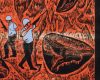
“Through appropriation, the vitality of Black history, literature, and poetry—and the importance of preserving and propagating this legacy—are interwoven into Catlett’s imagery, serving as both an expression of resilience and a force for resistance.”
A collection of all the articles we’ve published over the past month, for those who like to savor their Magpies’ tidings as an issue.
Trying the strength of the thin yet oddly strong threads that connect my thoughts like spider webs.
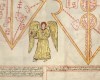
“Mastering the full range of subjects taught in medieval universities normally required many years of hard and expensive study. From the thirteenth century on, however, an anonymous work known as the Ars notoria promised, through diagrams, incantations, and arcane rituals, to rapidly transmit to scholars the total knowledge of anything they might need.”
“And though it’s always sweet sorrow to part, you know you’ll always remain in my heart, Good night, sleep tight and pleasant dreams to you, Here’s a wish and a prayer that every dream comes true.”
3 poems from Mykyta Ryzhykh
In a world that constantly pushes us toward speed, replacement, adaptation, and whatever comes next, perhaps the most meaningful form of resistance is not to stop time. It is to commit enough time to something that it can begin to matter.
“A human painting is produced inside a life. The painter gets tired. Attention shifts. A hand hesitates. A decision made in the morning may be reconsidered at night. A mark can be the result of confidence, frustration, correction, discovery, or fatigue. Some of these conditions are visible in the final work and some are only indirectly present, but they belong to its formation. The painting has duration.”