

By Amir Zadnemat
There is a familiar contemporary feeling that everything is temporary.
News appears and disappears. Trends become visible and then fade from attention. Jobs change, technologies change, institutions change, and people are repeatedly encouraged to adapt to whatever comes next. We are surrounded by movement, novelty, information, and demands for responsiveness.
Technology has made communication remarkably fast. Information can travel across the world in seconds, while social conditions can change before individuals have fully adjusted to them.
But perhaps the deeper problem is not simply speed.
Perhaps the deeper problem is the relationship between time and consequence.
We spend enormous amounts of time doing things, responding to things, producing things, and adapting to things. Yet it is possible to remain uncertain about what all that activity has actually produced.
A person can be extremely busy and still feel that nothing lasting has happened. An idea can circulate widely without being fully developed.
A relationship can remain constantly connected without necessarily becoming intimate. A career can involve continuous adaptation without providing a convincing sense of direction. And a life can contain years of activity without yielding a clear sense of meaning.
This essay explores that problem through the work of Hartmut Rosa and Gilles Deleuze and then brings their ideas into conversation with Akira Kurosawa’s 1952 film Ikiru.
Rosa’s theory of social acceleration distinguishes three major dimensions: the acceleration of technical processes, the acceleration of social change, and the acceleration of the pace of life. His major study, Beschleunigung: Die Veränderung der Zeitstrukturen in der Moderne, was published in German in 2005 and later appeared in English as Social Acceleration: A New Theory of Modernity in 2013. Rosa also develops the idea of the “shrinking of the present,” referring not to a literal change in the speed of physical time but to a shortening of the period during which expectations based on past experience can still be applied with reasonable reliability to the future.
Deleuze, writing from a different philosophical perspective, describes an emerging form of social control that differs from the relatively fixed enclosures associated with disciplinary societies. In his “Postscript on the Societies of Control,” first published in French in 1990 and later published in English in October in 1992, Deleuze describes control in terms of continuous variation and modulation rather than primarily through fixed institutional enclosures.
Neither theorist was writing about Ikiru. Rosa’s systematic theory of social acceleration appeared more than five decades after Kurosawa’s film, while Deleuze’s “Postscript” appeared nearly four decades after it. The comparison should therefore be understood as a retrospective interpretation rather than as a claim that the film directly illustrates either theory.
Instead, Ikiru offers something more interesting: a contrast.
Kurosawa’s film presents a world in which time is not primarily experienced as acceleration. It is experienced as repetition, delay, bureaucracy, and routine. Yet that world produces a problem closely related to the one that concerns us here: time can pass without generating a strong sense of purpose or consequence.
This essay therefore develops the concept of durable consequence.
The term is not borrowed from Rosa or Deleuze. It is an interpretive concept used here to describe an action whose effects continue beyond the moment in which it is performed and beyond the continued presence of the person who performed it.
Durable consequence does not mean immortality.
It does not mean that something lasts forever.
It means that a finite action can continue to matter because its effects reach into a future that the actor will not fully experience.
That possibility is at the center of Ikiru.
The real question, then, may not be simply how fast life has become.
It may be this:
What does our time leave behind?
The Eroding Present
There is a particular kind of anxiety that seems increasingly familiar in contemporary life: the feeling that the present disappears before we have fully inhabited it.
Something happens, we notice it, and then something else quickly replaces it.
This experience cannot be explained by one technology or one institution. It is better understood as the possible result of several interacting conditions, including faster communication, rapid social change, constant information, and growing expectations of responsiveness and adaptability.
Hartmut Rosa’s theory of social acceleration provides a powerful framework for thinking about this condition.
Rosa distinguishes three major forms of acceleration.
The first is technical acceleration: the increasing speed of goal-directed processes such as transportation, communication, and production.
The second is the acceleration of social change: the increasing rate at which social practices, institutions, relationships, and forms of knowledge change, thereby shortening periods of relative stability.
The third is the acceleration of the pace of life: the increase in the number of episodes of action or experience that individuals attempt to fit into a given unit of time.
These dimensions are analytically distinct, but they can reinforce one another.
Faster communication can increase expectations of responsiveness. Rapid social change can make established knowledge and routines obsolete more quickly. Rising demands for productivity can encourage people to fit more activities into the same limited amount of time.
Rosa connects these conditions to what he calls the “shrinking of the present.”
The phrase does not mean that the present has literally become shorter in a physical sense. It refers instead to the shrinking period during which past experience remains a dependable basis for anticipating the future.
A technique learned yesterday may still be useful, but its usefulness may expire sooner than expected.
A plan that seemed reasonable a year ago may no longer fit the circumstances in which it must be implemented.
A social role that once appeared stable may suddenly require revision.
The result is not simply speed.
It is a weakened continuity between past, present, and future.
This helps explain a particular contemporary experience: the feeling that things are provisional.
“Everything feels temporary” is not Rosa’s terminology. It is a formulation used here to describe one possible subjective experience of accelerated social conditions.
That distinction matters.
The argument is not that modernity literally makes everything temporary. It is that accelerating change can reduce the period for which previous experience remains a reliable guide, making the present feel less stable and the future more difficult to anticipate.
At the same time, Rosa does not claim that every aspect of modern society is always becoming faster. Acceleration can coexist with delay, inertia, rigidity, and stagnation.
That observation becomes crucial for Ikiru.
Kurosawa’s film shows that the loss of meaningful continuity does not require a world that moves rapidly. Time can also be wasted through repetition.
The Marketplace of Attention
Digital media provides one particularly visible context in which rapid replacement can occur.
Today, enormous quantities of information, entertainment, music, images, and commentary can be accessed almost instantly. One video can be followed by another. One headline can be replaced by another. One conversation can disappear from public attention while another takes its place.
The internet supports serious scholarship, artistic creation, political discussion, education, and meaningful forms of human connection. Depth is clearly possible online.
The issue is not whether meaningful engagement can occur.
It can.
The issue is that attention is often placed under competing demands.
Many digital environments make movement between objects extremely easy. Because interruption, switching, and replacement are readily available, sustained attention can compete with a nearly continuous stream of alternatives.
This does not mean that digital culture is inherently shallow.
Research on media multitasking and task switching suggests that frequent switching can, in some contexts, impose cognitive costs. One influential study reported poorer performance among heavy media multitaskers on several laboratory measures of cognitive control. However, later replication studies and a meta-analysis produced more mixed results, and some of the original findings did not remain consistently reproducible. The evidence therefore does not support a simple claim that media multitasking inevitably weakens attention. A more cautious conclusion is that frequent switching and interruption can, under some conditions, make sustained attention more difficult, while the strength and reliability of these effects vary across tasks and study designs.
Research on workplace interruption has likewise suggested psychological costs associated with interruption, including greater stress, frustration, and perceived effort, even though interrupted participants in one influential study sometimes completed their assigned tasks more quickly. These findings do not establish that interruptions are always harmful; rather, they indicate that interruption can impose costs even when short-term task completion appears efficient.
These findings do not justify the stronger claim that digital media inevitably produces shallow attention. A more defensible conclusion is that environments characterized by frequent interruption and switching can, under some conditions, make sustained concentration more difficult.
The problem is not that screens have destroyed attention.
It is that some environments make the abandonment of an object of attention unusually easy. This creates a tension between abundance and continuity.
We can access more cultural material than any one person could possibly absorb while spending less sustained time with any particular object.
Yet many meaningful things require duration.
A difficult book requires time.
A philosophical argument requires time.
A creative project requires time.
A friendship requires time.
Their significance can develop through repetition, revision, memory, and continued attention. The problem, then, is not that attention has disappeared.
It is that attention can be repeatedly redirected.
An experience can remain available without becoming deeply integrated into memory, identity, or long term understanding.
That is not a universal law of psychology.
It is a possibility created by particular media environments.
The crucial distinction is therefore not between digital and non-digital life.
It is between continuous availability and sustained engagement.
When Speed Becomes a Moral Value
Acceleration is not only technological.
It can also become a social expectation.
In some workplaces and social environments, rapid responses and immediate availability are treated as signs of competence. Taking time to think can appear less valuable than reacting quickly. A person who responds immediately may seem more productive than someone who takes longer but thinks more deeply.
Under such conditions, slowness can begin to look like failure.
Patience can look like passivity.
Reflection can look like indecision.
Slow creative work can look inefficient.
But not everything valuable can be produced quickly.
Some things need time precisely because they are made through time.
A friendship develops through repeated shared experience.
A serious idea becomes stronger through revision.
A work of art may require months or decades to mature.
A person may need long periods of uncertainty before understanding what they value or what kind of life they want to build.
For this reason, resisting acceleration does not require rejecting technology or romanticizing the past. Sometimes it simply means protecting spaces in which things are allowed to take the time they require. Slowness can be a choice rather than a failure.
But there is an important qualification.
Slowness by itself does not create meaning.
A person can live slowly and still spend decades without a clear sense of purpose. The real question is therefore not simply:
How fast are we living?
It is:
What is our time moving toward?
That question introduces a distinction between duration and direction.
A long life is not necessarily a meaningful life.
A slow life is not necessarily a meaningful life.
Meaning requires more than time.
It requires a relationship between time and value.
The Provisional Self
Contemporary life can also create pressure to continually revise the self.
People may need to change professional identities, acquire new skills, adapt to new technologies, reconsider social roles, and repeatedly adjust how they present themselves to others.
One way to describe this experience is through the phrase “provisional self.”
This is not a technical concept taken directly from Rosa or Deleuze. It is an interpretive phrase used here to describe a person who experiences the self as something repeatedly revised rather than gradually settled.
The idea has an affinity with Rosa’s discussion of situational identity, which examines how identity is related to changing social situations and to the temporal organization of modern life. The phrase “provisional self,” however, belongs to this essay rather than to Rosa.
Deleuze approaches a related problem from the perspective of power.
In “Postscript on the Societies of Control,” he describes a shift from disciplinary societies organized around relatively fixed spaces of enclosure toward forms of control characterized by continuous variation and modulation.
The distinction matters.
Disciplinary institutions are associated with recognizable spaces and stages: school, factory, barracks, hospital, and prison.
Control works differently.
It operates through ongoing adjustment.
The subject is not simply enclosed.
The subject is continually subjected to changing demands, assessments, training, and forms of evaluation. 7
Adaptation itself can become part of the process.
The important point is not that adaptation is inherently bad.
Flexibility can be liberating.
It can enable people to leave restrictive institutions, acquire new abilities, and respond creatively to changing circumstances.
The problem can emerge when adaptation has no clear endpoint.
A person may keep changing without ever experiencing the feeling of arrival.
We adapt.
We update.
We respond.
We improve.
Then we adapt again.
The claim that we can become “very good at changing while becoming less familiar with the experience of staying” is an interpretation developed in this essay. It is not a quotation or direct thesis of Deleuze.
The deeper question is whether continuous adaptation can coexist with durable commitment. Can a person remain open to change without turning every commitment into a temporary arrangement? Can the self remain flexible without becoming entirely provisional?
And perhaps most importantly:
Can a life keep changing while still becoming something?
Music and the Experience of Duration
Music offers a simple way to think about this problem.
Streaming services provide immediate access to enormous libraries. We can move from one song to another almost instantly.
There is nothing inherently wrong with this.
The range of choice can be liberating.
But musical meaning can develop through repetition and association.
We hear a song again.
We connect it to a person.
We remember where we were when we first heard it.
We associate it with a particular period of our lives.
Over time, the song may become part of our personal history.
Its meaning is no longer contained in the sound alone.
It becomes connected to duration.
The issue is therefore not that contemporary music is less meaningful than older music. Nor is it that streaming inevitably produces superficial listening.
The issue is temporal.
Abundance and easy replacement can change the conditions under which experiences are revisited, repeated, and incorporated into personal memory.
Different listeners use digital platforms in very different ways, and repeated listening can be just as intentional in a streaming environment as it was in any earlier medium.
The point is not that every experience needs to last forever.
It is that some kinds of meaning require continuity.
A song can become our song not merely because we heard it, but because repeated listening binds it to different moments, relationships, and stages of our lives.
Meaning accumulates.
Duration is one of the ways it accumulates.
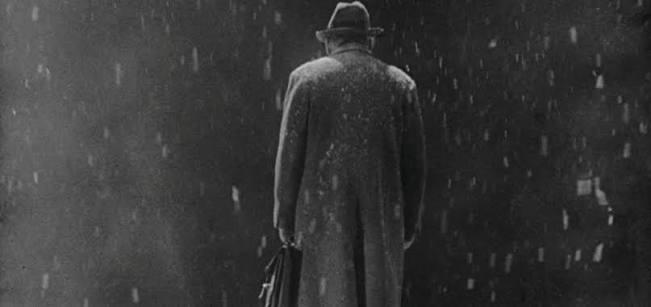
Connection and the Duration of Intimacy
The same question can, more cautiously, be applied to relationships.
Digital technology has made connection easier across distance. People can maintain relationships with those who live far away, meet people they might never otherwise encounter, and communicate across geographic boundaries.
These are genuine benefits.
But easy connection is not automatically the same thing as intimacy.
Deep intimacy can develop through repeated encounters, vulnerability, shared experience, disagreement, forgiveness, and accumulated history. The exact conditions vary across relationships and cultures, but continuity and repeated interaction can play an important role.
Some digital environments can also introduce additional opportunities for interruption, comparison, and rapid disengagement.
This does not mean that digital relationships are inherently shallow.
Nor does it mean that relationships in the past were automatically deeper.
It means something more modest:
Connection can become easier without necessarily becoming deeper.
The tension is not between technology and intimacy.
It is between the ease of connection and the duration through which intimacy can develop. An intimate relationship is not simply a sequence of interactions.
It is an accumulated history.
That history takes time to build.
Ideas That Disappear Before They Develop
Ideas can be caught in a similar cycle.
A new argument can become visible very quickly.
People praise it, criticize it, summarize it, turn it into a slogan, repeat it, and then move on. But there is a difference between circulating an idea and developing an idea.
An idea can travel extremely fast without becoming intellectually mature.
Here Rosa’s shrinking present becomes useful by analogy.
If the environment of knowledge changes rapidly, intellectual continuity can become more difficult to maintain. Not because acceleration automatically destroys thought, but because rapid replacement can reduce the opportunity for an idea to undergo sustained examination.
The danger is therefore not only misinformation.
It is also the loss of intellectual duration.
When attention is repeatedly redirected from one topic to another, we may spend more time encountering ideas than developing them.
We may become very informed about what has appeared without becoming deeply educated by what we have encountered.
Knowledge without enough time for reflection can remain information without formation. That final formulation belongs to the argument of this essay, not to Rosa’s terminology. The distinction matters.
Information tells us what has arrived.
Reflection asks what it means.
Knowledge can accumulate.
Understanding has to develop.
Rosa and Deleuze: Two Different Ways Time Becomes Unstable Rosa and Deleuze should not be treated as if they were describing exactly the same problem.
Rosa is primarily concerned with the temporal organization of modern society: technical acceleration, the acceleration of social change, and the acceleration of everyday life.
Deleuze is primarily concerned with changing forms of power: the movement from relatively fixed disciplinary institutions toward more continuous and flexible forms of control.
Their questions are different.
Their vocabularies are different.
Their philosophical projects are different.
But taken together, they allow us to examine a subject who may increasingly be expected both to move quickly and to remain adaptable.
Rosa helps explain how rapidly changing social conditions can weaken the continuity between past experience and future expectation.
Deleuze helps us think about forms of power organized through continuous adjustment and modulation rather than through fixed institutional boundaries alone.
Yet neither thinker provides a complete theory of meaning.
Neither tells us what a meaningful life must produce.
That is where Ikiru becomes important.
The film introduces a different problem:
What happens when activity becomes disconnected from consequence?
Ikiru: Bureaucratic Time and the Discovery of Meaning
Akira Kurosawa’s Ikiru, released in 1952, follows Kanji Watanabe, a municipal civil servant and section chief played by Takashi Shimura. At the beginning of the film, Watanabe has spent decades working within the municipal bureaucracy, performing repetitive administrative work.
His life has become organized around procedure.
Then Watanabe comes to understand that he has stomach cancer and may have only about six months to live.
The film opens with an X-ray image of Watanabe’s stomach, immediately placing the body—and therefore mortality—at the center of the story.
His doctor does not tell him directly that his illness is terminal. Instead, Watanabe is given a reassuring explanation involving an ulcer. He becomes suspicious, and through what he hears and observes, he comes to understand that his condition is far more serious than he has been told.
For Watanabe, this changes the meaning of time.
Before his diagnosis, time was something he moved through without having to think about. After his diagnosis, time becomes a limit.
The future is no longer an abstract assumption.
It becomes finite.
Yet the film does not suggest that awareness of death automatically creates meaning. Watanabe must still discover what to do with the time that remains.
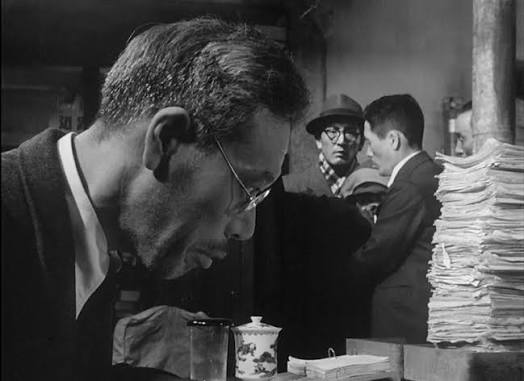
Bureaucracy and the Problem of Activity Without Consequence
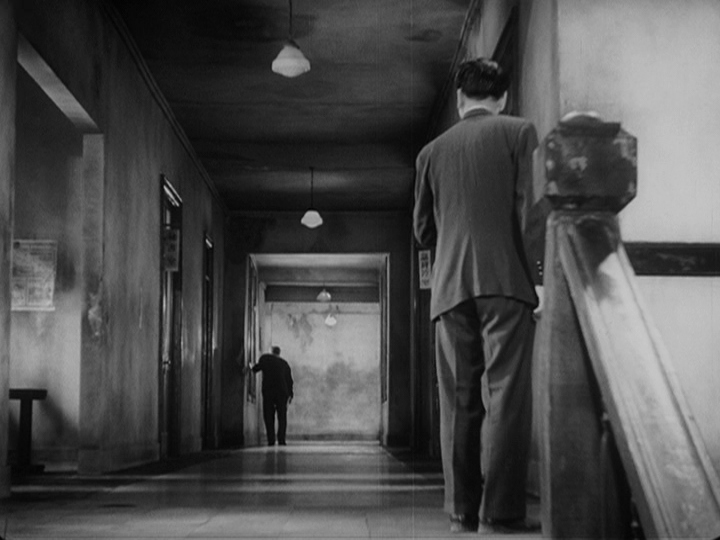
One of the central episodes in Ikiru involves a group of neighborhood women who ask the municipal authorities to drain a cesspool and turn the site into a children’s playground.
Their request is repeatedly redirected between offices, exposing the red tape and institutional inertia of the municipal bureaucracy.
One office redirects it.
Another explains why another department should deal with it.
Files move.
Procedures continue.
Responsibility circulates.
Yet the actual human problem remains.
This is one of the film’s most powerful insights.
A system can be highly active without being meaningfully effective.
There can be enormous movement without significant progress.
This is not social acceleration in Rosa’s strict sense.
It is better understood as institutional stagnation.
And the distinction matters.
Rosa helps us understand societies characterized by accelerating change.
Ikiru shows us a system in which time can instead be consumed through repetition and deferral. One kind of alienation comes from moving too quickly.
Another comes from moving nowhere.
Both can separate action from meaning.
Bureaucratic Time and an Existential Crisis
Watanabe’s life has been built around repetition.
The tragedy is not simply that he is old.
The tragedy is that he suddenly recognizes the gap between the amount of time he has spent and the amount of meaningful consequence he can identify.
He has worked.
He has processed documents.
He has performed his duties.
But what has all of that activity changed?
Once death becomes visible, this question can no longer be postponed.
That is why Ikiru is not simply a film about illness.
It is a film about the revelation of a life through the recognition of its limit.
Death does not create the problem.
Death exposes it.
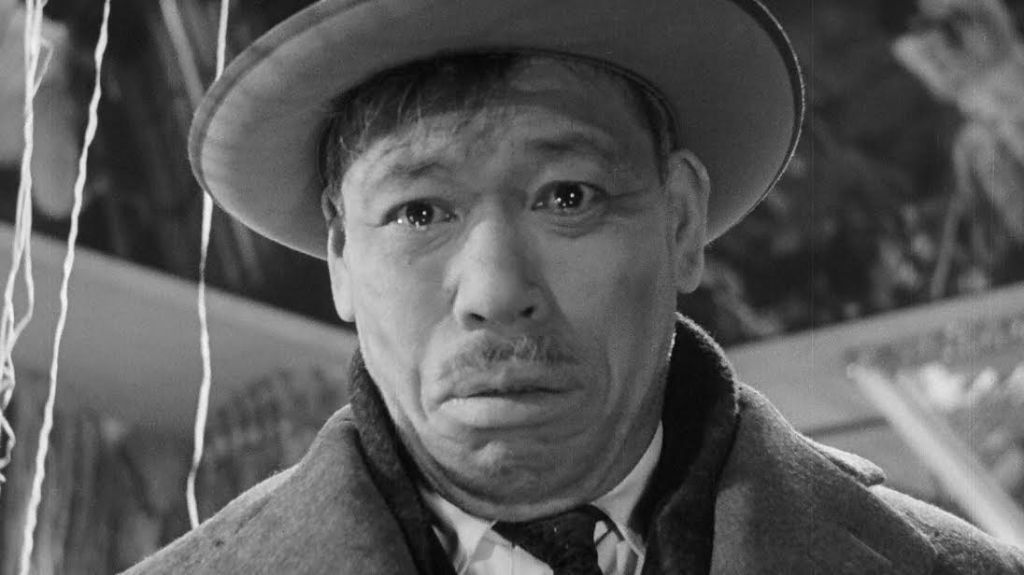
Trying to Escape Through Pleasure
After learning about his illness, Watanabe initially turns toward distraction.
He drinks.
He goes out at night.
He seeks entertainment.
For a period, he is accompanied by a novelist who introduces him to Tokyo nightlife and encourages him to experience pleasure.
For a time, Watanabe seems to imagine that perhaps the answer is simply to fill his remaining days with intense experiences.
But he gradually realizes that intensity is not the same as meaning.
This is why “Gondola no Uta” becomes so important in the film.
The song, written in 1915, has lyrics by Isamu Yoshii and music by Shinpei Nakayama. In the film, its meditation on the brevity of life and the passing of youth acquires a special force because of Watanabe’s condition.
The song does not offer a solution to mortality.
Instead, in the context of the film, it underscores the brevity of life and the urgency of the remaining time.
That recognition matters because Watanabe does not need more experiences simply for the sake of experiencing them.
He needs a reason for the time he still possesses.
Toyo and the Discovery of Creation
Watanabe’s meeting with Toyo Odagiri, a young subordinate played by Miki Odagiri, becomes a decisive turning point. Toyo is in the process of leaving the municipal office, and her new work involves making toys.
What Watanabe encounters through her is not simply youth.
He encounters a visible relationship between activity and consequence.
Toyo’s work produces something concrete.
The result can be seen.
It can be touched.
It can be used.
Her energy and engagement help Watanabe see what is absent from his own working life: not necessarily effort, but a meaningful connection between effort and human result.
He does not simply imitate Toyo’s lifestyle.
Instead, he begins to understand what he wants his remaining time to accomplish. He returns to the bureaucracy.
But he returns differently.
He now has a purpose.
He takes the playground project seriously.
The Playground and Durable Consequence
The playground becomes the clearest image of durable consequence in the film. It is important, however, not to confuse consequence with permanence.
The playground is not literally permanent.
Watanabe is not permanent.
Nothing in the film promises that the structure will exist forever.
What matters, within the interpretation developed here, is that Watanabe’s actions help bring about an effect that extends beyond his own lifetime.
Watanabe does not physically construct the playground himself. His role is to pursue the project through the bureaucracy, overcome institutional resistance, and keep it moving toward completion.
This is precisely where the concept of durable consequence becomes useful.
A finite action can matter because its effects continue beyond the moment when the action itself is completed.
Watanabe does not become immortal.
His action becomes consequential.
The playground also matters because it is not primarily a monument to Watanabe. Its value lies in its use.
Children can play there.
People who never knew Watanabe can use and benefit from something he helped make possible. His relationship to the future therefore changes.
Before the project, the future is something from which he is increasingly excluded. Through the project, he becomes capable of contributing to a future he will not personally inhabit.
That is perhaps one of the deepest forms of consequence a finite life can achieve. Not permanence.
Participation in a future beyond oneself.
This essay does not claim that Ikiru defines meaning exclusively in these terms. Rather, the playground provides the film’s clearest image of one particular form of meaning: action whose significance extends beyond the actor’s own lifetime.
Memory, Death, and the Reconstruction of a Life
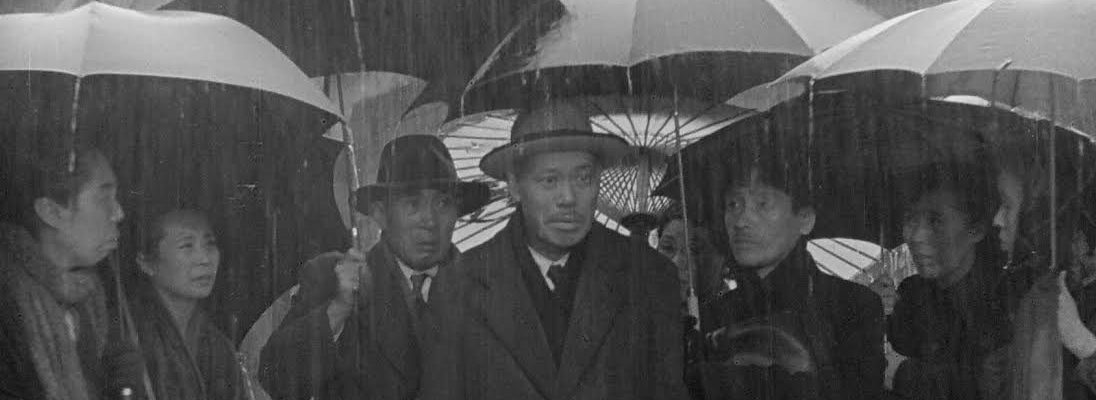
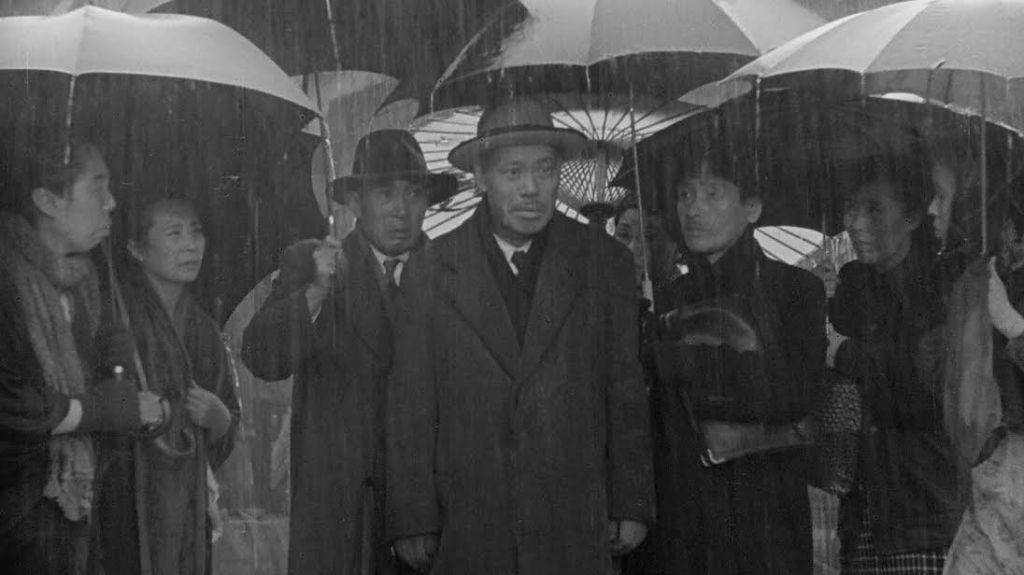
In the film’s second half, Watanabe’s colleagues gather at his wake and attempt to reconstruct what happened during his final months.
The film’s second half retrospectively examines his transformation through the conversations and memories of those gathered at the funeral.
We therefore understand the final period of Watanabe’s life through memories, recollections, disagreements, and interpretations.
His colleagues do not possess a perfectly unified account of his transformation. Some admire him.
Some misunderstand him.
Some doubt his motives.
Some reduce what he did to simple duty.
The film can therefore be read as suggesting that meaning does not require perfect recognition.
Watanabe’s colleagues do not need to understand him completely for the consequences of his actions to matter.
This is where the playground becomes particularly important.
Memory is unstable.
Recognition is incomplete.
But consequences can remain materially present even when the intentions behind them are forgotten or misunderstood.
The person disappears.
The consequence continues.
That sentence is an interpretation offered by this essay, not a literal thesis stated by Kurosawa. Its purpose is to describe the temporal structure created by the film.
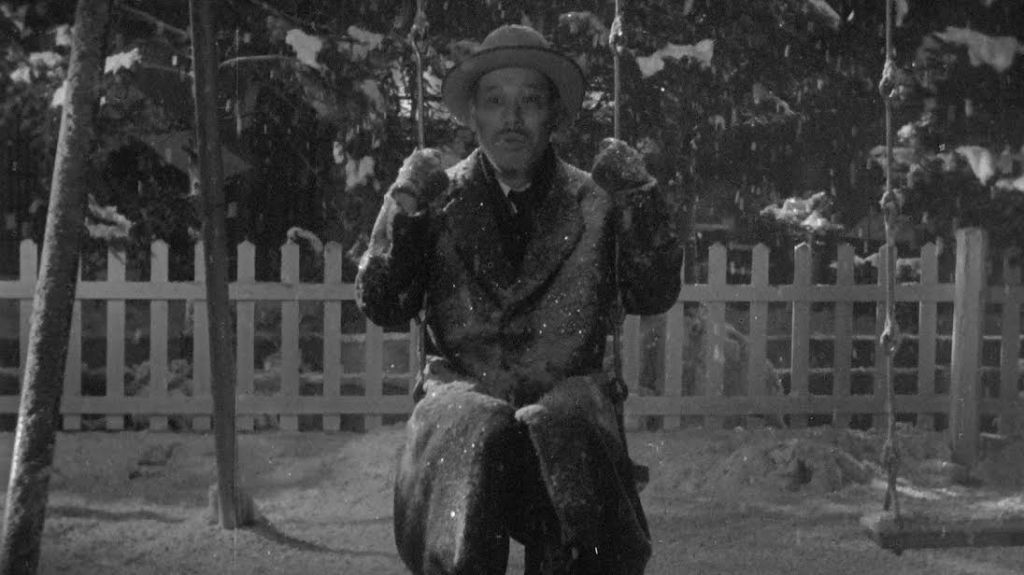
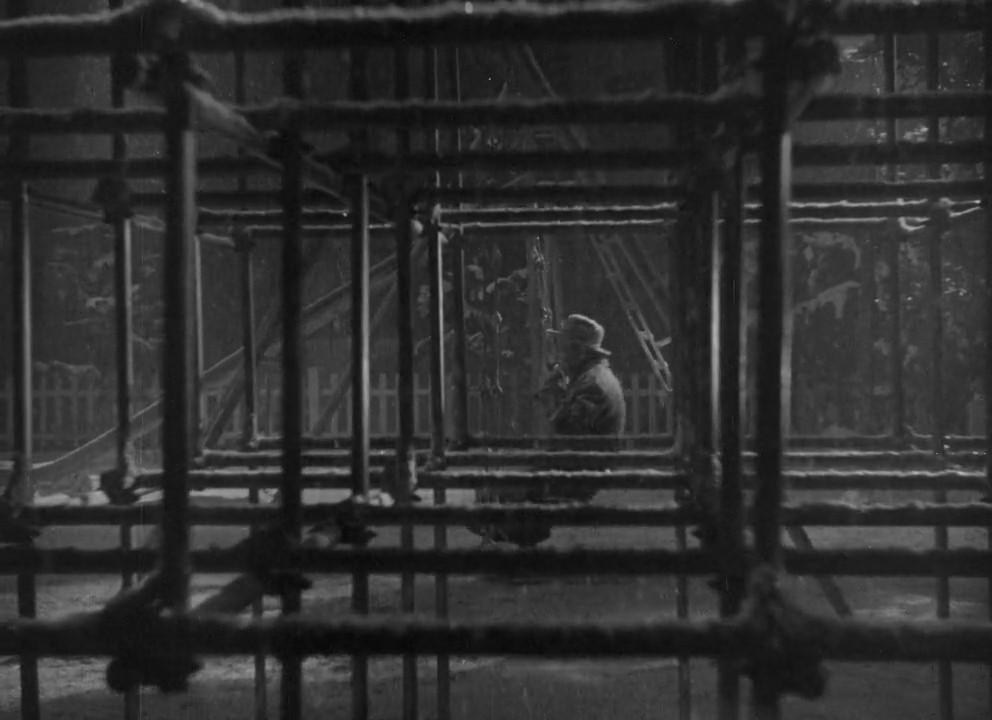
The Swing, the Snow, and the Acceptance of Finitude The famous swing scene is perhaps the film’s most powerful image of mortality.
Watanabe sits on the swing in the newly completed playground while snow falls around him. He sings “Gondola no Uta.”
Nothing in the scene suggests that he has escaped death.
He has not.
The snow continues to fall.
The swing continues to move.
The song does not stop time.
What changes is Watanabe’s relationship to the fact that time has an end.
Earlier in the film, he experiences his past largely through regret.
Now he is able to inhabit a remaining moment without attempting to make it infinite.
The scene can therefore be read as an acceptance not of death as a triumph, but of finitude as a condition of meaningful action.
He does not defeat mortality.
He does not transcend the passage of time.
He simply discovers something that can be done within it.
The meaning lies not in extending the moment forever, but in inhabiting it differently. Why Ikiru Is Not Simply a “Society of Control” Story Deleuze’s theory can still be useful here, but only if the comparison remains carefully limited.
It would be inaccurate to say that Watanabe is simply a “subject of the society of control” in Deleuze’s exact sense.
The bureaucracy in Ikiru is more clearly characterized by hierarchy, paperwork, routine, institutional divisions, and relatively fixed administrative structures. In this respect, it is closer to the logic of institutional enclosure and disciplinary organization than to Deleuze’s paradigm of continuous modulation.
That distinction is theoretically important.
Deleuze contrasts relatively fixed disciplinary institutions with forms of control based on continuous variation and modulation.
The municipal office in Ikiru does not resemble the fully modulated control environments that Deleuze has in mind.
Its problem is almost the reverse.
It is too stable.
Its procedures continue even when their connection to human purposes becomes difficult to see. The comparison with Deleuze therefore works best at a broader level.
The film portrays Watanabe as trapped inside a system in which institutional procedures can continue functioning without requiring meaningful reflection on their purpose.
The institution works.
But what is it working for?
Watanabe does not solve this by simply escaping society.
He returns to the institution.
He uses his position within it to make a bureaucratic function answerable to a human consequence. This is a crucial point.
Meaning, in Ikiru, is not discovered solely through withdrawal.
It is discovered through responsible action.
Watanabe does not become meaningful by leaving the system.
He becomes meaningful by making his role produce something that matters to other people. Acceleration, Stagnation, and Meaning
The comparison between Rosa, Deleuze, and Ikiru becomes most interesting when we stop treating speed and slowness as simple opposites.
The film suggests that both acceleration and stagnation can produce forms of alienation.
In one kind of life, rapid change can make continuity, memory, and long-term commitment more difficult to sustain.
In another, everything is so repetitive that years pass without a clear sense of consequence. One world moves too quickly.
The other keeps moving without really arriving.
And contemporary life can contain both conditions at once.
A person may experience rapid change online while working inside an institution that barely changes. Someone can answer dozens of messages in a day and still feel that nothing important happened. Someone can be constantly productive and still struggle to identify what that productivity is for. Someone can adapt endlessly without feeling that they are becoming anything.
This suggests that the deepest problem is neither speed nor slowness by itself.
It is disconnection.
A disconnection between action and consequence.
A disconnection between effort and value.
A disconnection between present activity and future significance.
That is why the central question of this essay is not:
How fast are we living?
It is:
What is our time producing?
A Life That Does Not Simply Evaporate
If contemporary life is increasingly shaped by speed, replacement, adaptation, and fragmented attention, the answer cannot simply be “slow down.”
A slower life is not automatically a meaningful life.
Ikiru offers something more demanding:
Give your time a direction.
Stay in a conversation long enough for genuine understanding to develop.
Return to a difficult book instead of immediately replacing it with something easier. Let a friendship survive boredom, disagreement, silence, and repair.
Stay with an idea long enough for it to become more complicated.
Work on something whose value does not depend on your own continued presence. These are not necessarily acts of resistance in a dramatic sense.
They are forms of temporal commitment.
They create continuity.
And continuity gives actions the possibility of producing consequences that outlast the moment in which those actions occur.
Watanabe cannot make his life longer.
He cannot recover the years he has already lost.
He cannot defeat death.
But he can change what the remaining time means.
That is why the playground matters.
It is modest.
It is ordinary.
It is not eternal.
And yet it connects his finite life to the lives of people who come after him.
That is not immortality.
It is durable consequence.
The Search for Value
At this point, the question of time becomes a question of value.
What makes one use of time more meaningful than another?
Neither Rosa nor Deleuze offers a simple answer.
Rosa gives us a theory of temporal structures and their consequences for modern life. Deleuze gives us a theory of changing forms of power and control.
But neither theory, by itself, tells us what we ought to value.
Ikiru approaches the question differently.
It stages a transformation.
Watanabe begins the film by living according to institutional routine.
He ends it by acting for the sake of people he does not personally know and will not continue to see. The difference is not merely emotional.
It is ethical.
His time acquires value because it becomes oriented toward something beyond himself. This is why the playground matters more than any abstract statement about “living fully.”
The film can be understood as suggesting that to live meaningfully is, at least in part, to make one’s finite existence consequential for others.
This does not mean that every meaningful life must produce a public monument. Most lives will not build playgrounds.
Most forms of care are quieter.
A parent raises a child.
A teacher helps a student understand something difficult.
A friend remains present during a crisis.
An artist makes something that someone else carries into their own life.
A person repairs something that would otherwise be discarded.
These actions are not immortal.
They are simply capable of outlasting the moment in which they occur.
They pass from one person to another.
They enter lives that the original actor may never fully see.
That is what durable consequence means.
Conclusion
Everything feels temporary not necessarily because everything has objectively become shorter, but because some conditions of contemporary life may make sustained attention, continuity, and long-term commitment more difficult to maintain.
Hartmut Rosa helps us understand how technical acceleration, rapid social change, and the growing pace of everyday life reshape our experience of time. His concept of the “shrinking of the present” helps explain why expectations formed from past experience can remain reliable for a shorter period as social conditions change.
Gilles Deleuze offers a different perspective by describing forms of social control based increasingly on continuous variation and modulation rather than only on fixed institutional spaces.
But neither theory should be mechanically imposed on Ikiru.
Kurosawa’s film belongs to a very different historical moment. Its central problem is not digital acceleration. It is bureaucratic routine, institutional stagnation, and the painful realization that years of activity can pass without a clear sense of human consequence.
And that difference is precisely what makes the film valuable.
Ikiru shows us that temporal alienation can take more than one form.
We can move too quickly.
Or we can remain trapped in repetition.
We can constantly adapt.
Or we can become so fixed that our actions lose their purpose.
In either case, time can pass without becoming meaningful.
Watanabe’s transformation offers another possibility.
He does not escape time.
He does not defeat death.
He does not recover the years he has lost.
He simply begins to use his remaining time in a way that reaches beyond himself. The playground becomes more than a symbol of personal legacy.
It becomes a material form of consequence.
Watanabe dies.
The people who knew him continue.
The children use what he helped create.
The swing moves.
The song returns.
Life continues without him.
That is not a promise of immortality.
It is something smaller, and perhaps more believable:
A finite life can still create consequences that outlast the moment in which they were created.
In a world that constantly pushes us toward speed, replacement, adaptation, and whatever comes next, perhaps the most meaningful form of resistance is not to stop time.
It is to commit enough time to something that it can begin to matter.
To stay with a person.
To stay with an idea.
To stay with a piece of work.
To stay with a responsibility.
To build something whose value does not depend on our own continued presence. Perhaps the question of a meaningful life is therefore not simply how much time we have. It is what kind of future our time enters.
That is the lesson Ikiru leaves behind.
Life is short.
Death is unavoidable.
Recognition is incomplete.
Nothing is guaranteed to last forever.
And yet none of these facts makes a finite life worthless.
On the contrary, finitude may be what gives action its urgency.
The point is not to live forever.
The point is to live in such a way that some part of what you do can continue to matter after you are gone.
In a world that often asks us to keep moving, perhaps value begins when we decide what is worth staying for.
Amir Zadnemat is an Iranian writer with an MA in Literature from the University of Gilan, Iran. His writing engages with cinema as a poetic language shaped by light, shadow, and narrative.


