

By KAIXUAN WANG
When generative image systems became part of everyday visual culture, I found myself thinking less about whether a machine could make a convincing image and more about what a painting carries that an image alone cannot show. The question did not begin as a defense of painting. It came from the studio, from watching water move across paper and from noticing how much of a work’s meaning is formed before there is anything that could be called a finished picture.
Many generative image systems begin with language. A prompt is written, parameters are chosen, and an image appears through a process that is largely invisible to the viewer. Painting develops under different conditions. A painting is also shaped by intention, but intention is continuously revised by the resistance of materials, by the movement of the body, by time, and by events that were not fully planned. The finished work can contain the history of those encounters.
Watercolor makes this especially clear to me. Water does not behave like a neutral delivery system for pigment. It spreads, gathers, stains, blooms, dries too quickly or too slowly. A passage may become lighter than expected; another may harden at the edge. Paper remembers pressure and moisture. Some decisions can be altered, but many cannot be restored to an earlier state. The painter has to respond while the material is changing.
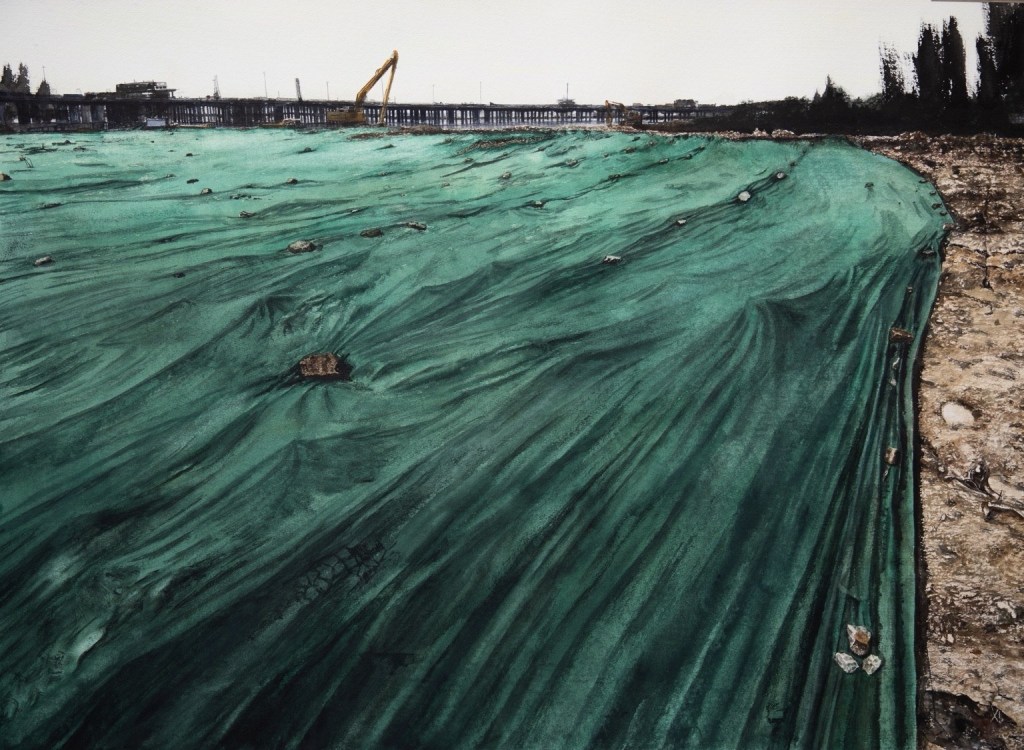
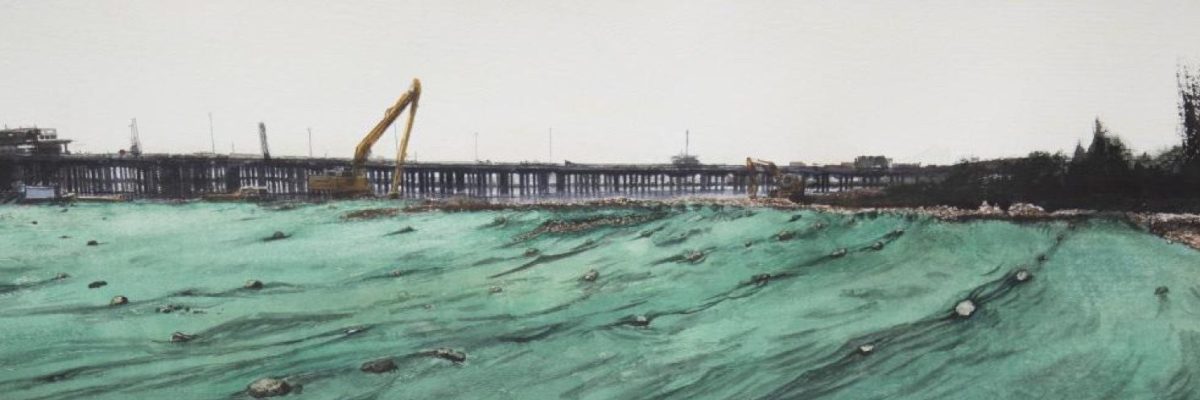
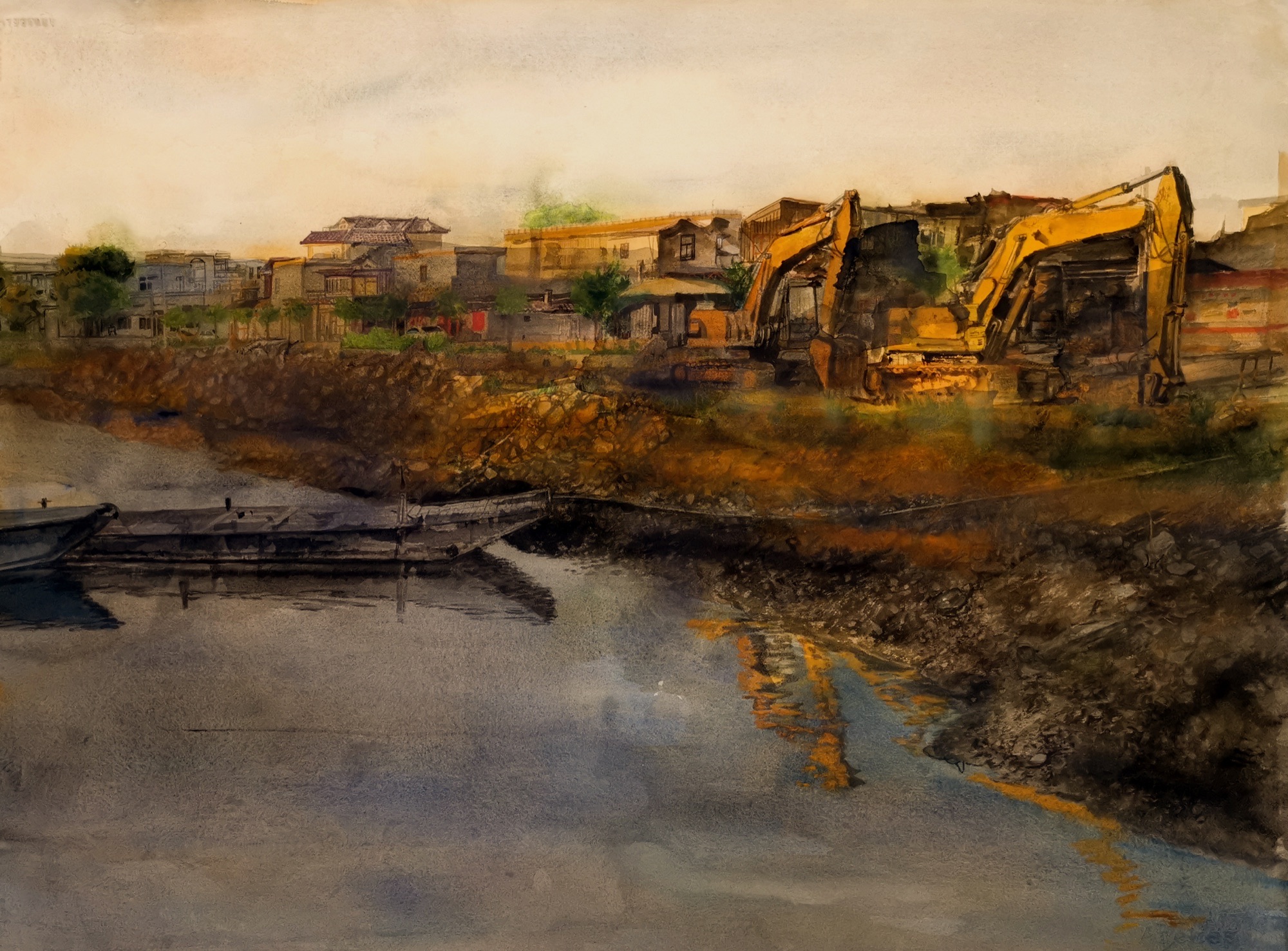
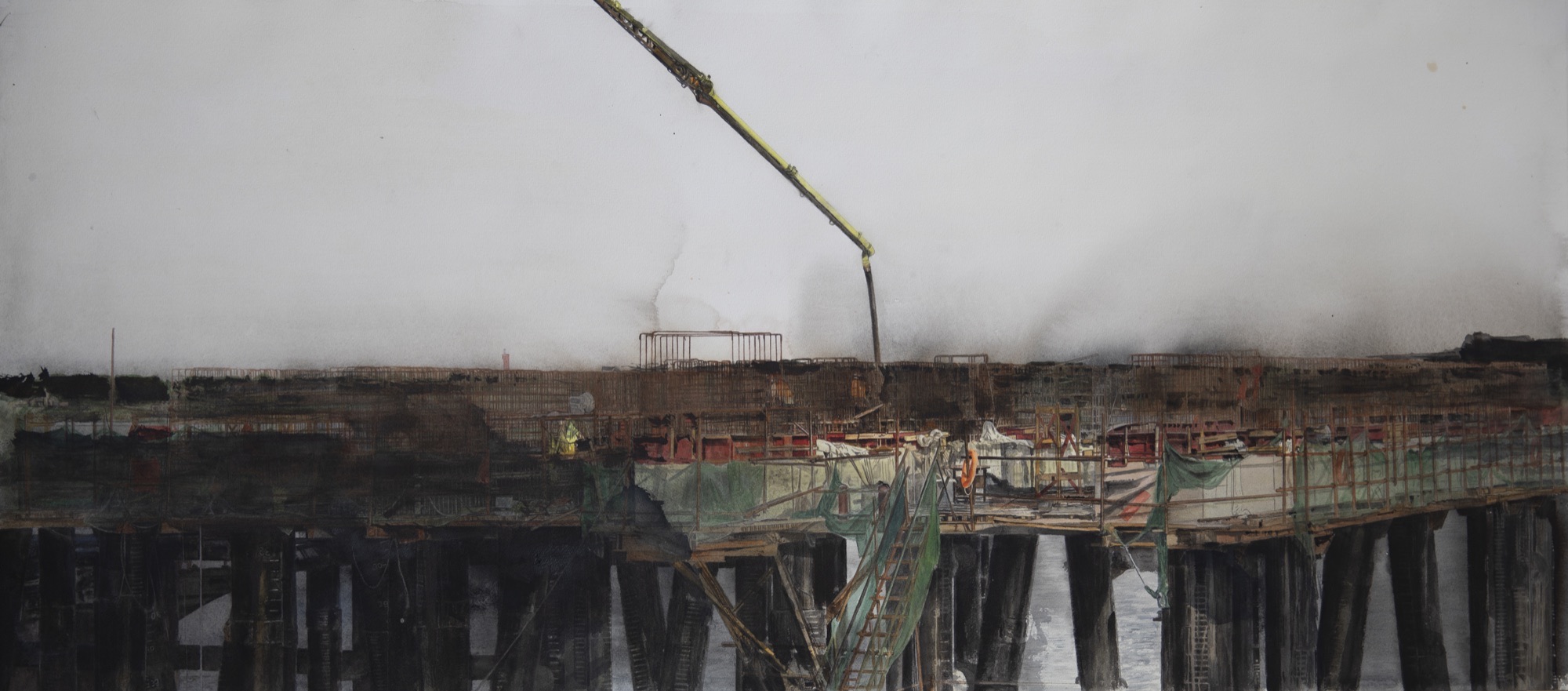
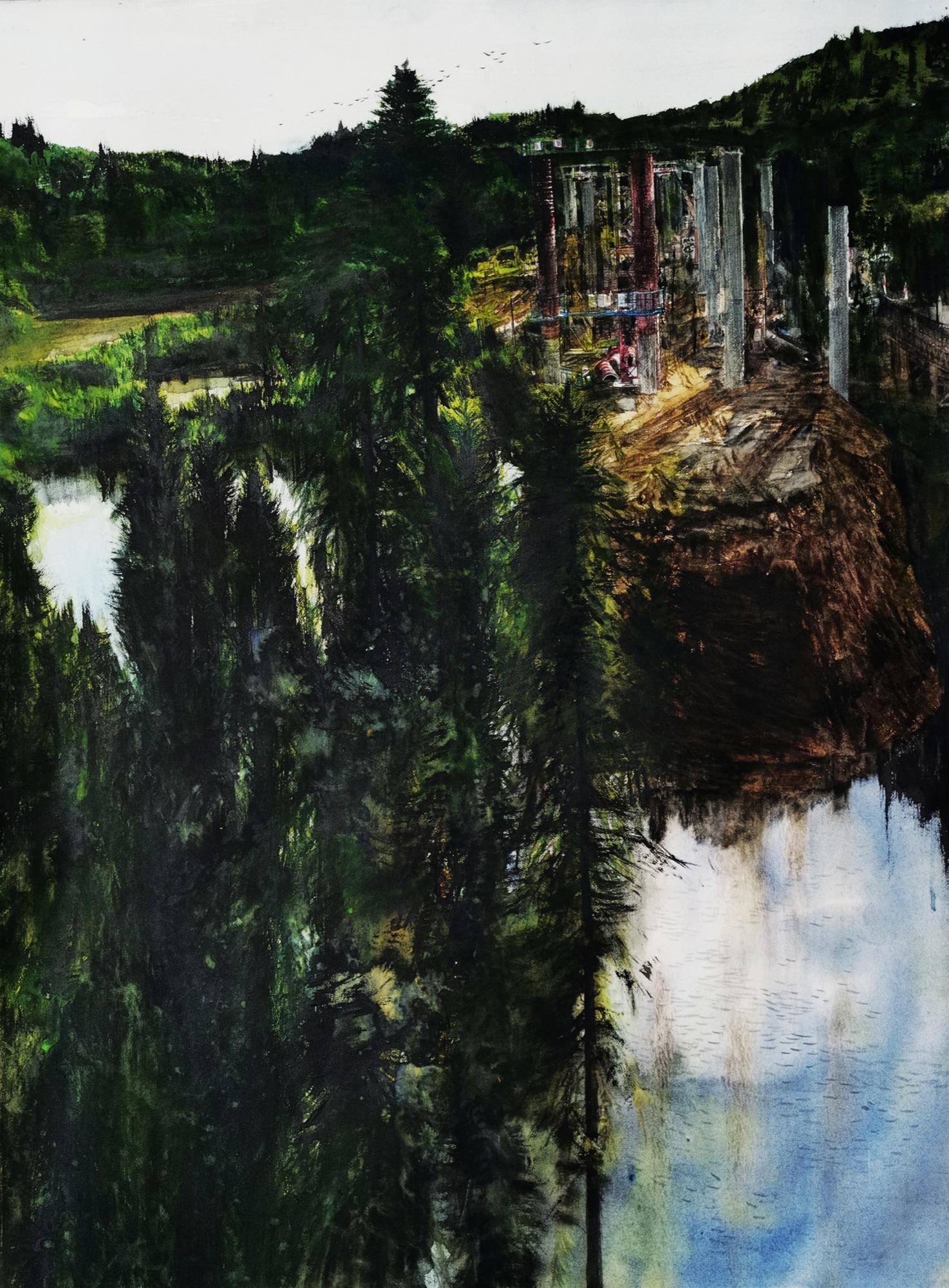
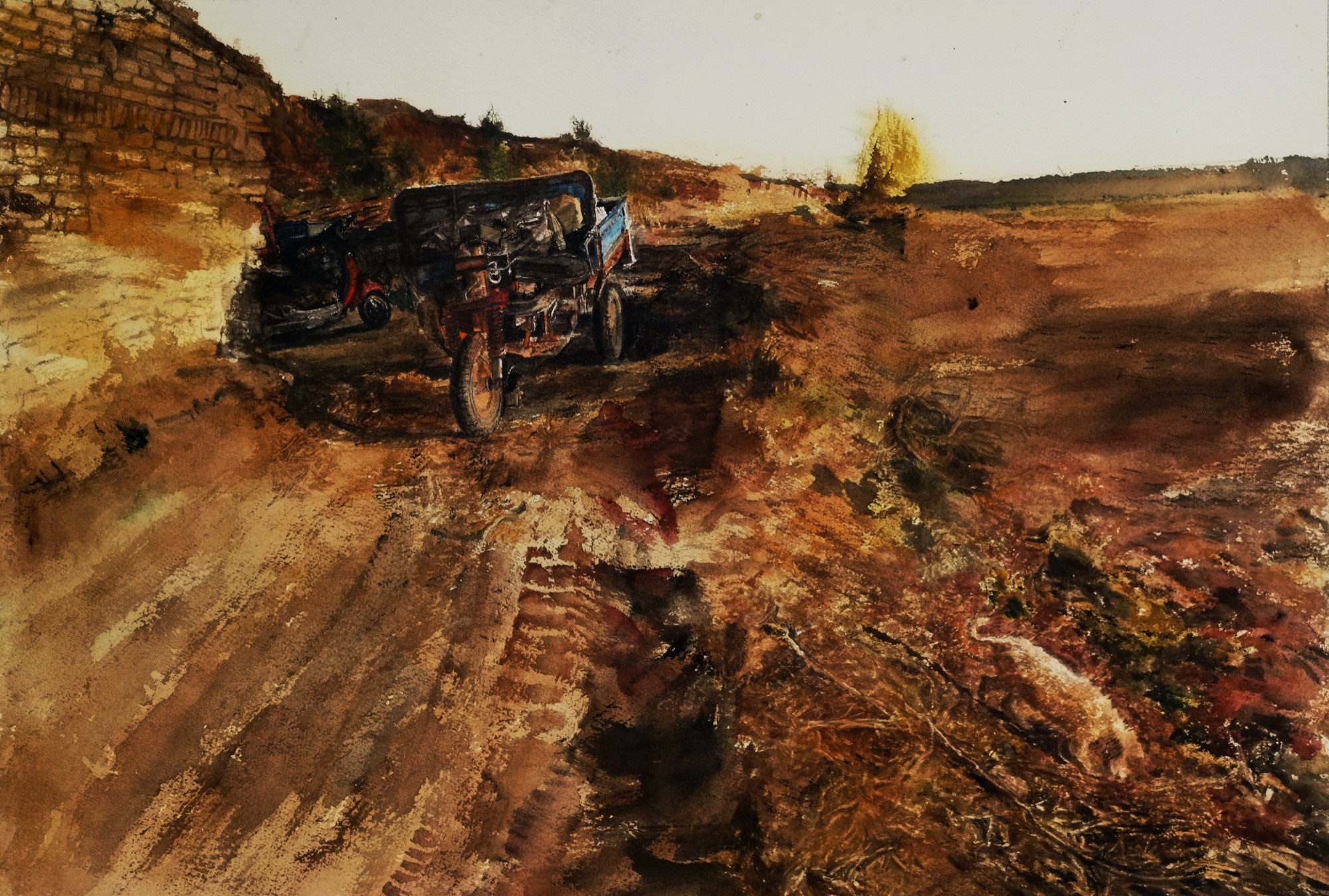
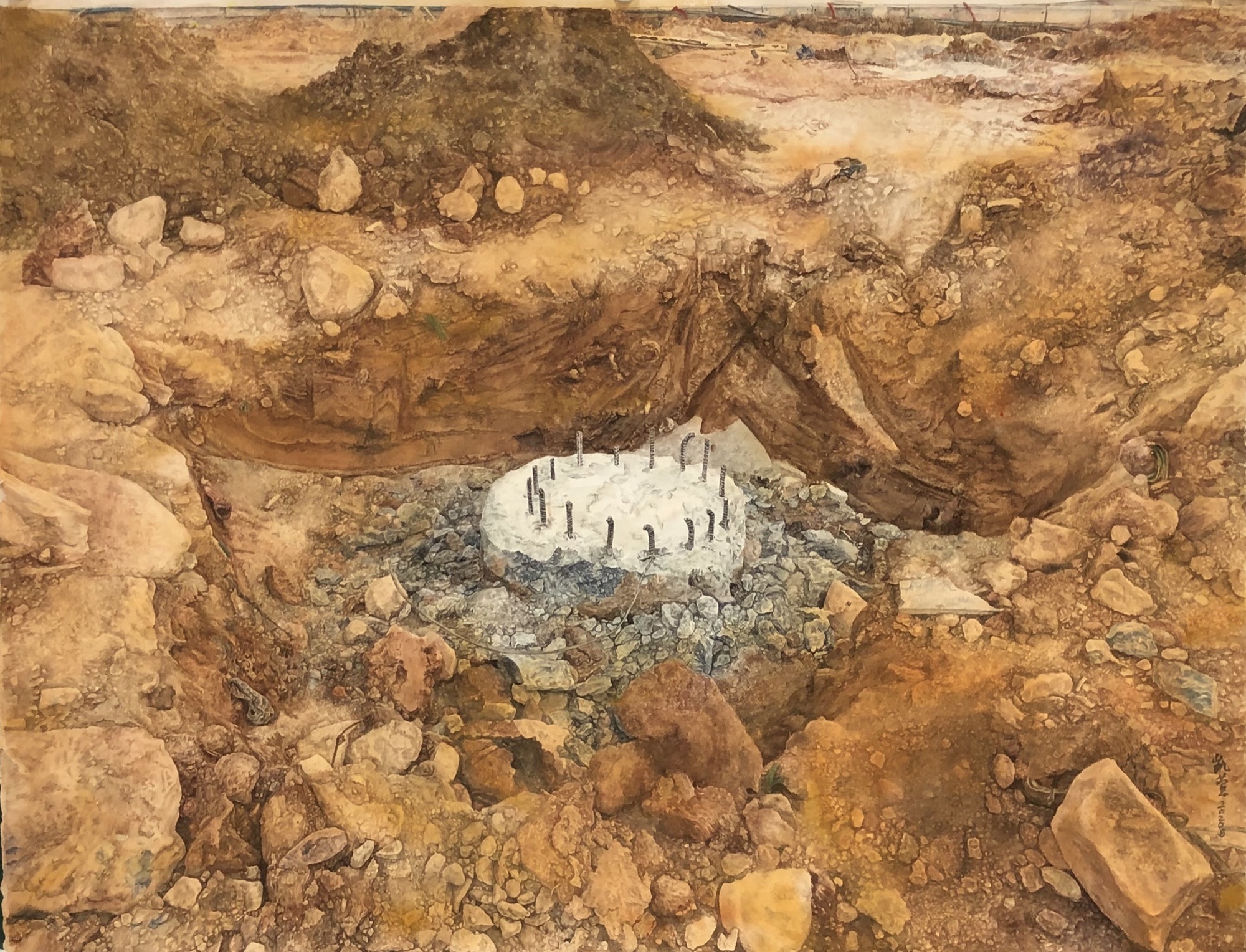
For years, my paintings began from observed places: construction sites, rooms, roads, trees, ports, people at rest. I was interested in how a place holds human activity even when a figure is absent. Qianhai Green Curtain, painted in 2022, came from a rapidly changing urban landscape in Shenzhen. The construction netting, temporary structures, machinery, and exposed ground were not simply subjects to reproduce. They were evidence of a city in transition and of the labor hidden inside that transition. The watercolor itself became another unstable structure: transparent layers accumulated, edges dissolved, and forms were held together by light.
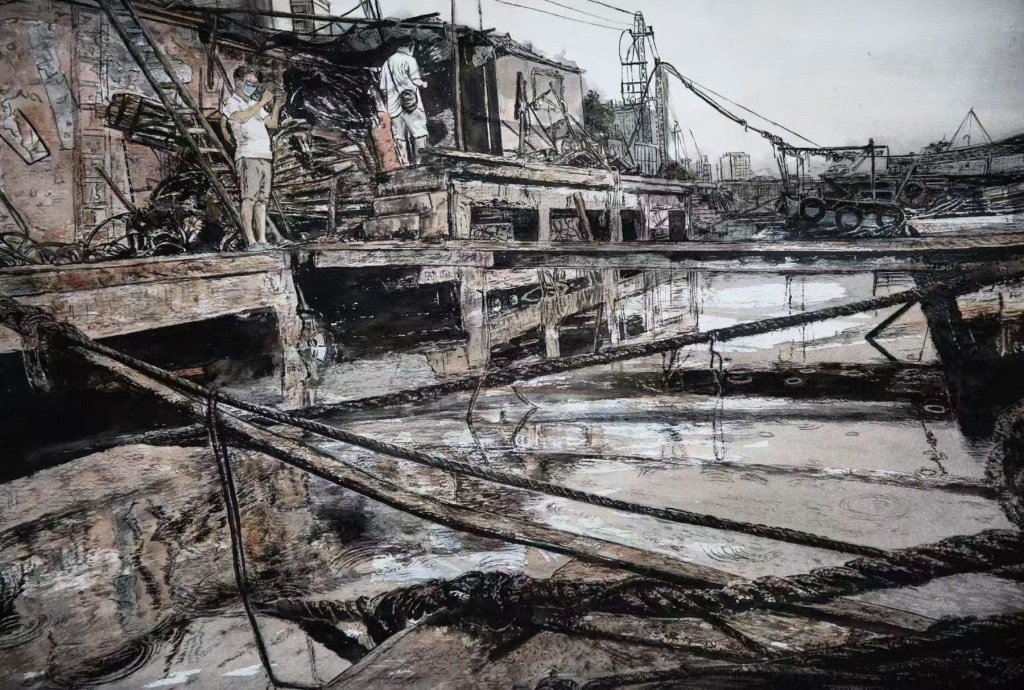
In Traces, also from 2022, I became more conscious of the residue left by use, movement, and making. This concern later became central to my practice. A trace can be physical—a stain, scrape, correction, or broken contour—but it can also be temporal. It tells us that something happened here.
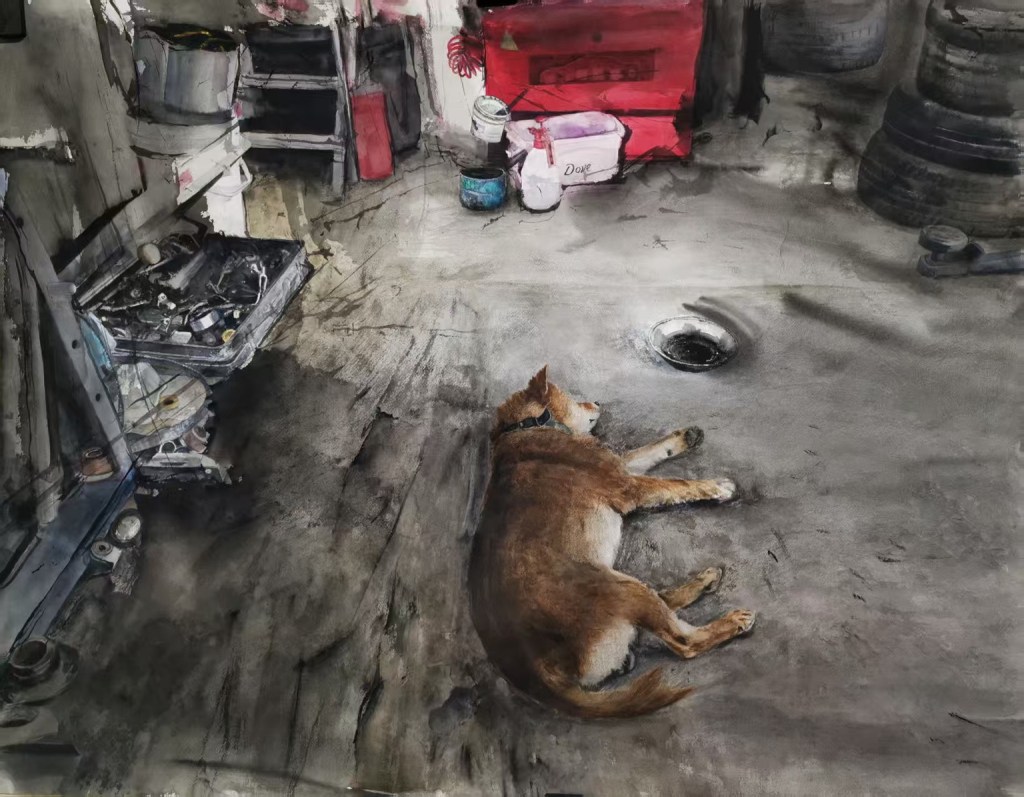
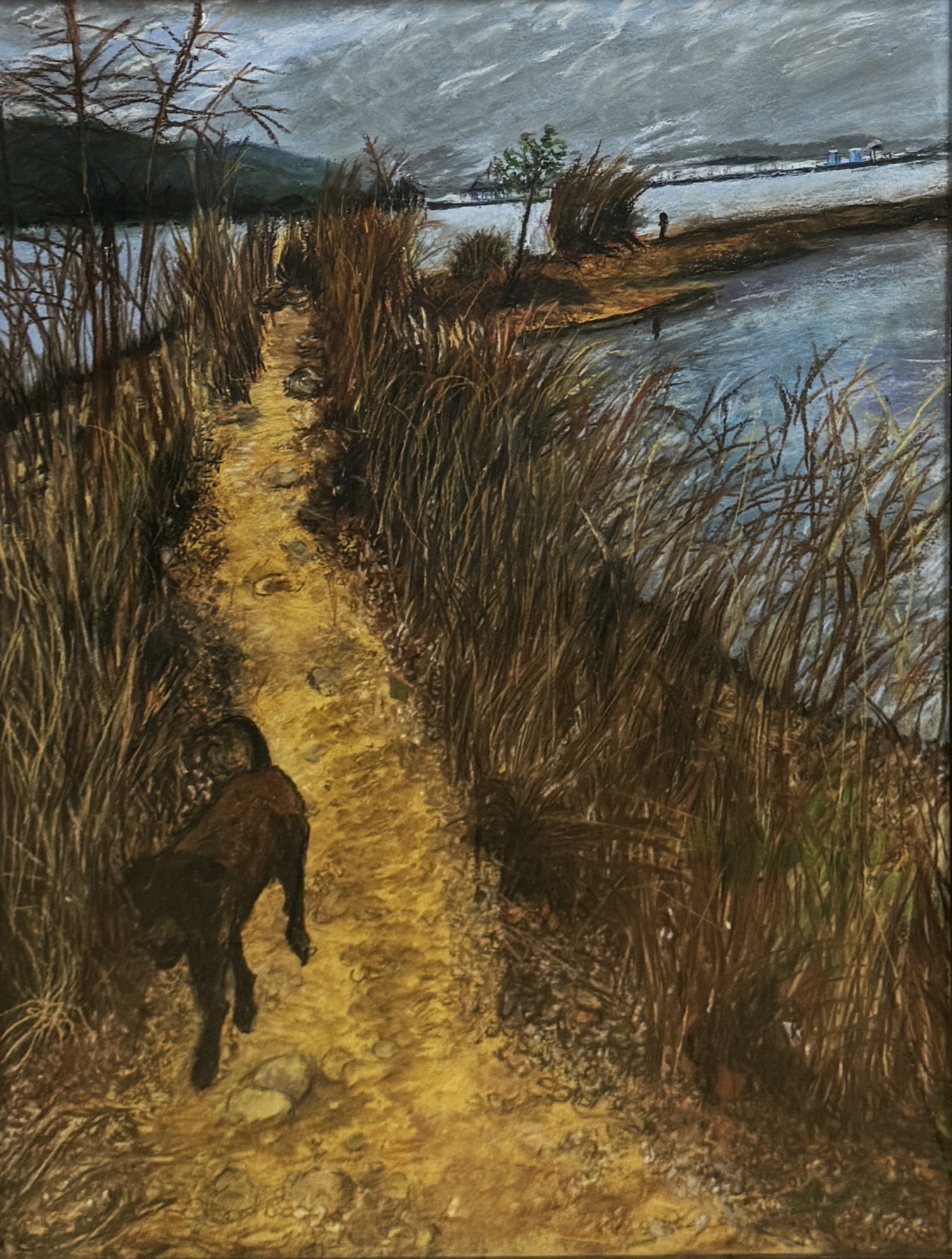
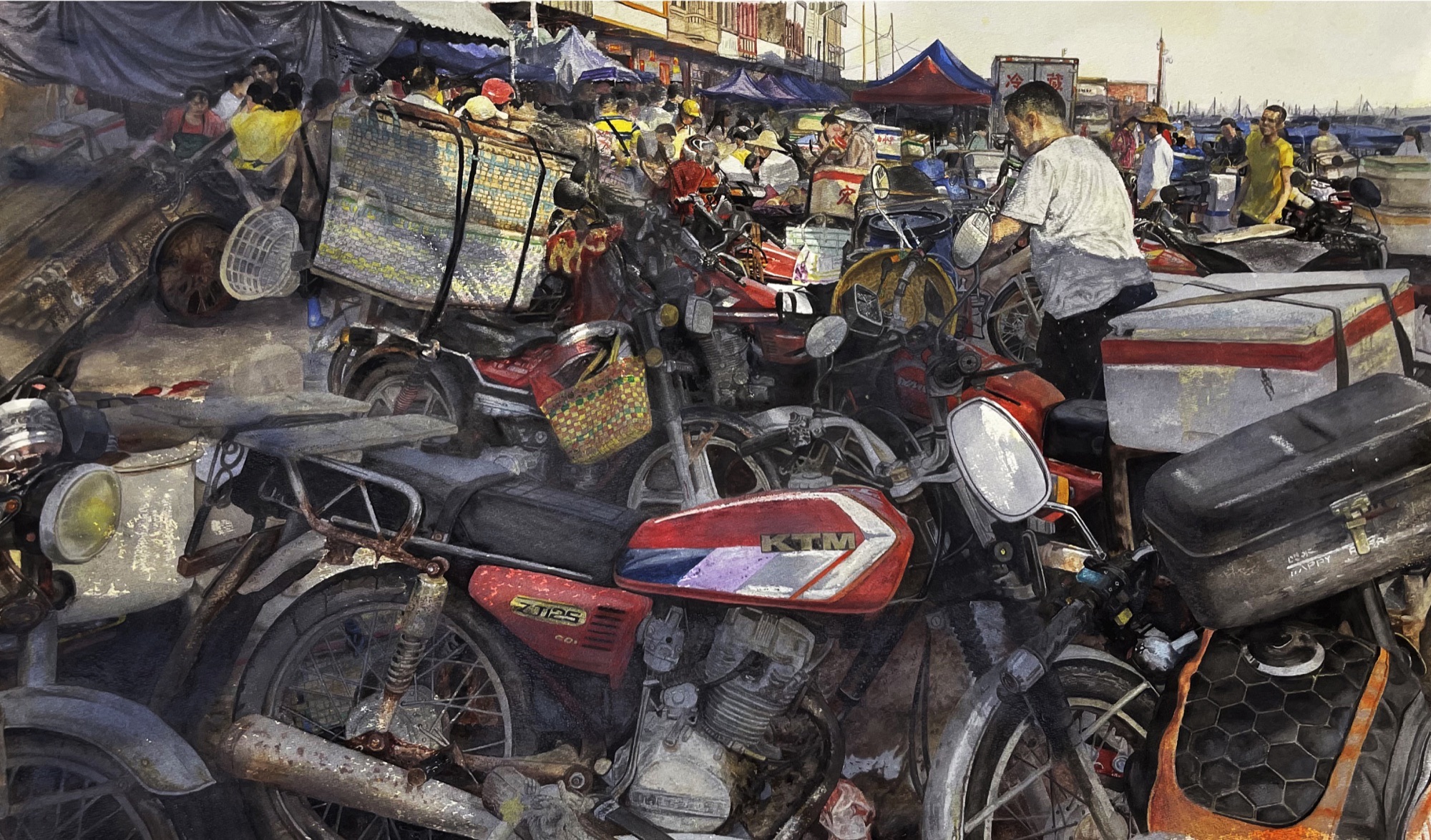
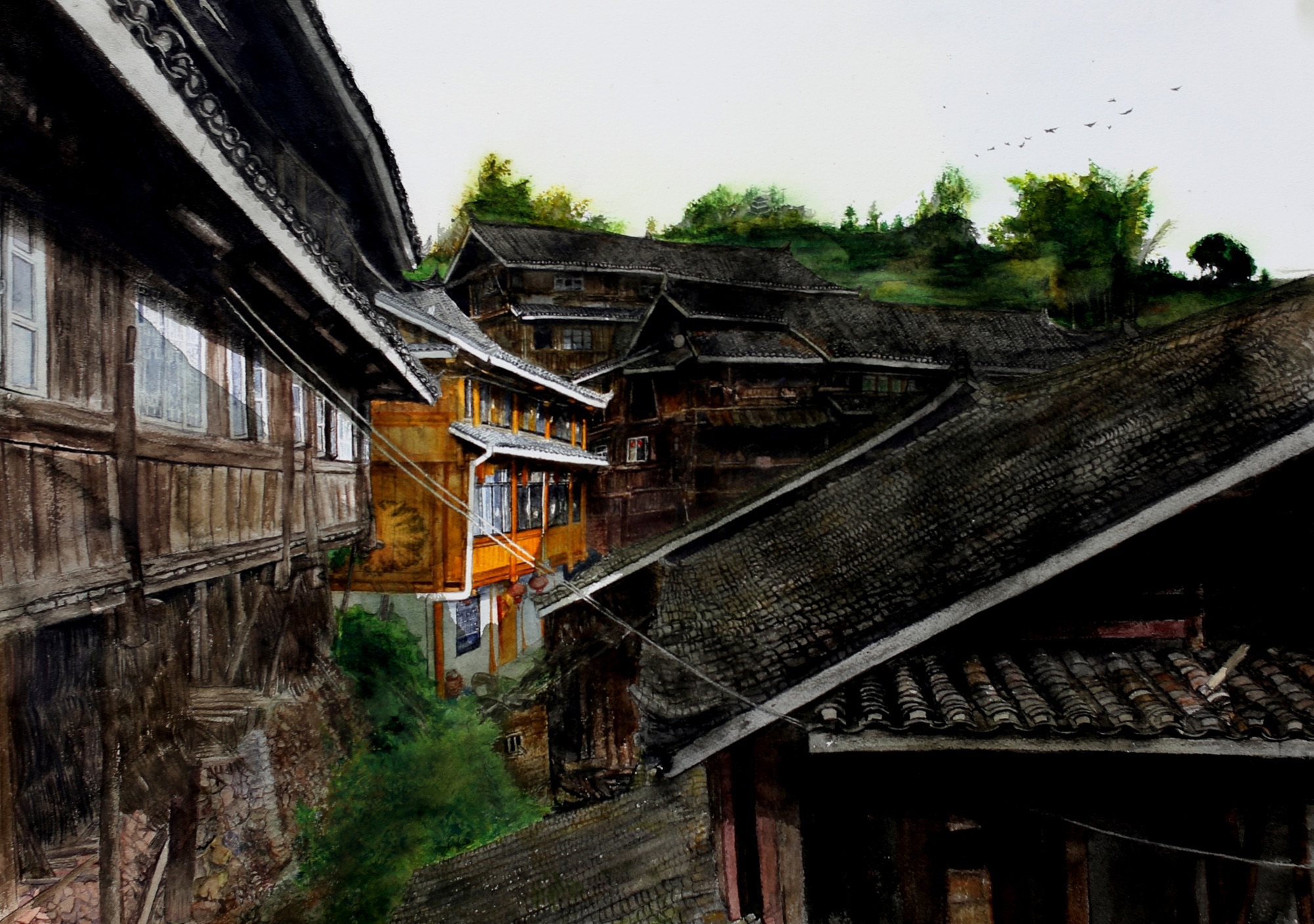
That idea has gradually changed how I paint. I still value observation and figuration, and I do not see my recent work as a rejection of them. Kai Feng from the South and Afternoon Nap remain connected to recognizable spaces and bodies. What interests me is allowing representation to become porous enough that material events can participate in the image. A painted room does not need to be sealed into perfect description. A figure can remain partly unresolved. The life of a painting can emerge through the friction between what I know I am looking at and what the material begins to suggest.
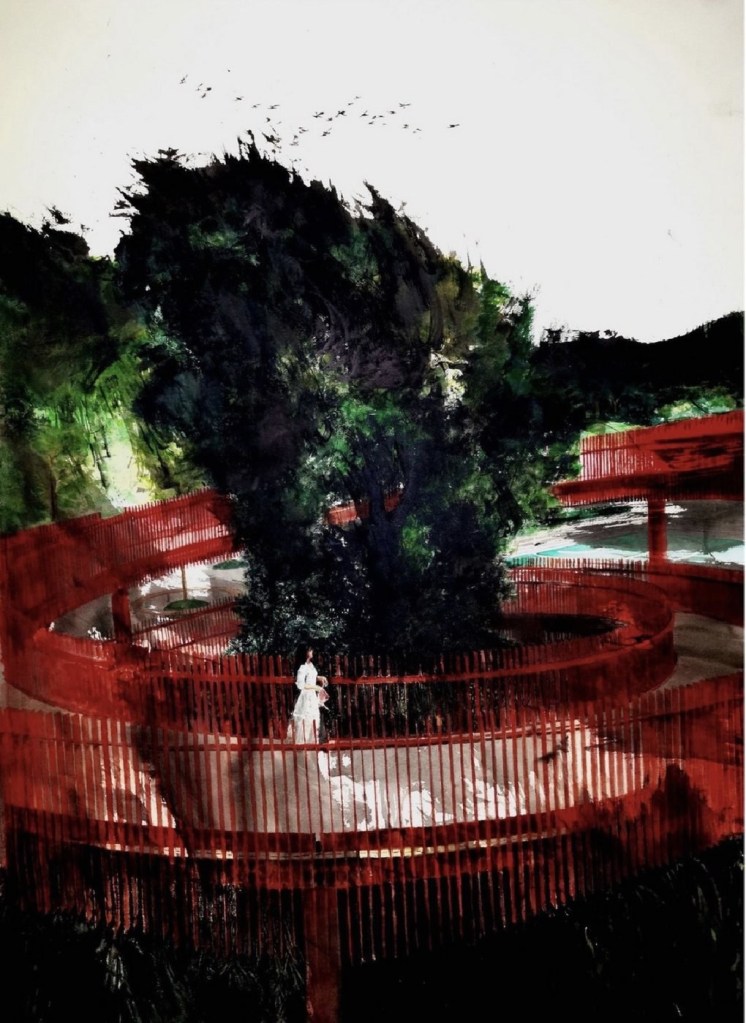
114 × 80 cm
This is related to an idea I have been developing in my writing: the artist as participant. I do not understand painting as an act of complete command. The artist initiates, chooses, edits, and takes responsibility, but also listens. The paper, pigment, water, gravity, previous marks, surrounding world, and the painter’s changing attention all enter the work. Participation does not mean passivity. It requires alertness and judgment. The painter must decide which accident carries meaning and which is merely noise, what to preserve and what to remove, when to intervene and when to stop.
I have described a related principle as the primacy of softness. Softness, for me, is not a synonym for weakness or prettiness. It is a way of understanding form through responsiveness rather than domination. Watercolor taught me this before I had language for it. Water can yield and still alter everything it touches. A soft edge can organize an entire field. A transparent layer can restructure a space without covering what came before.
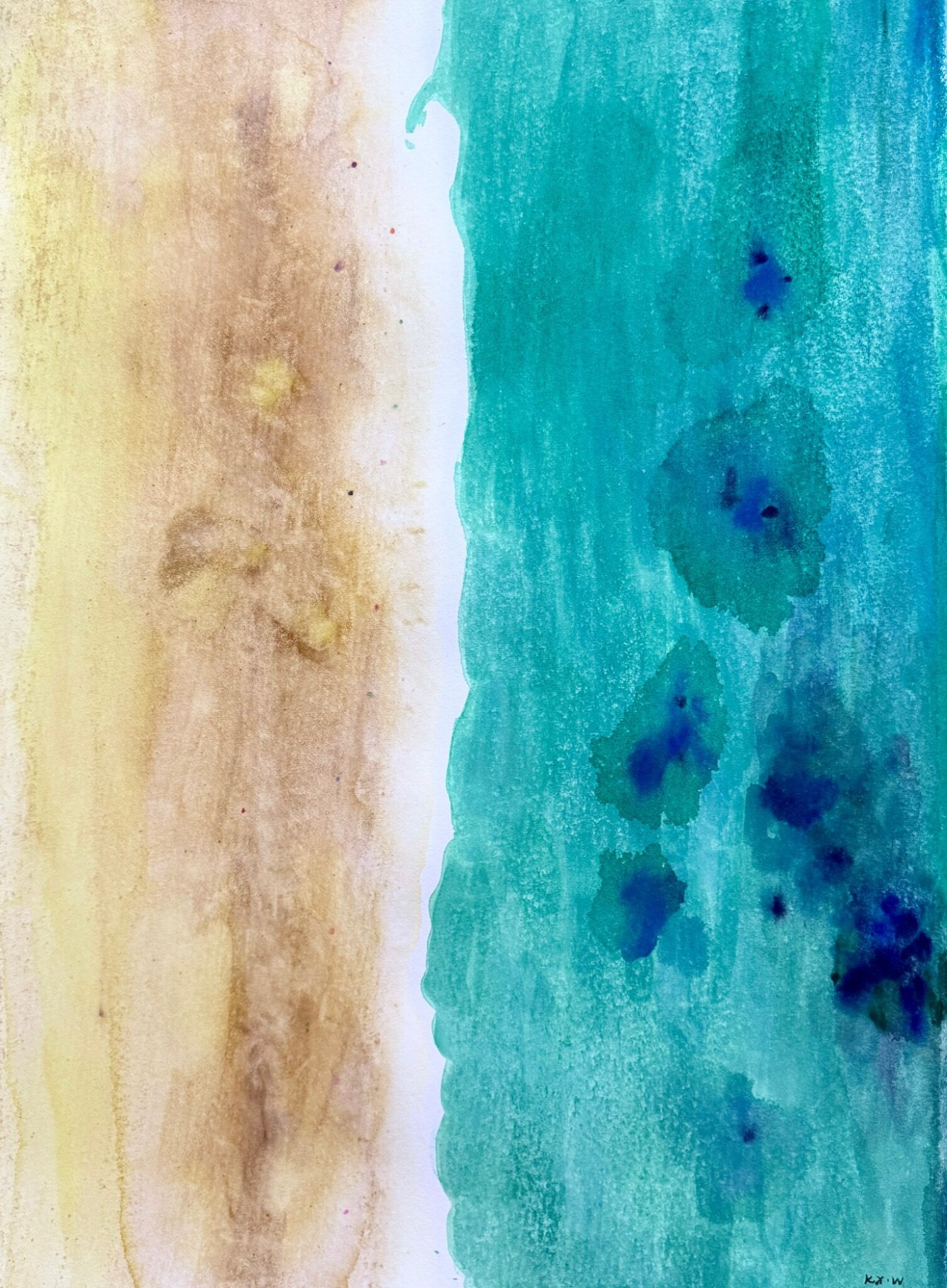
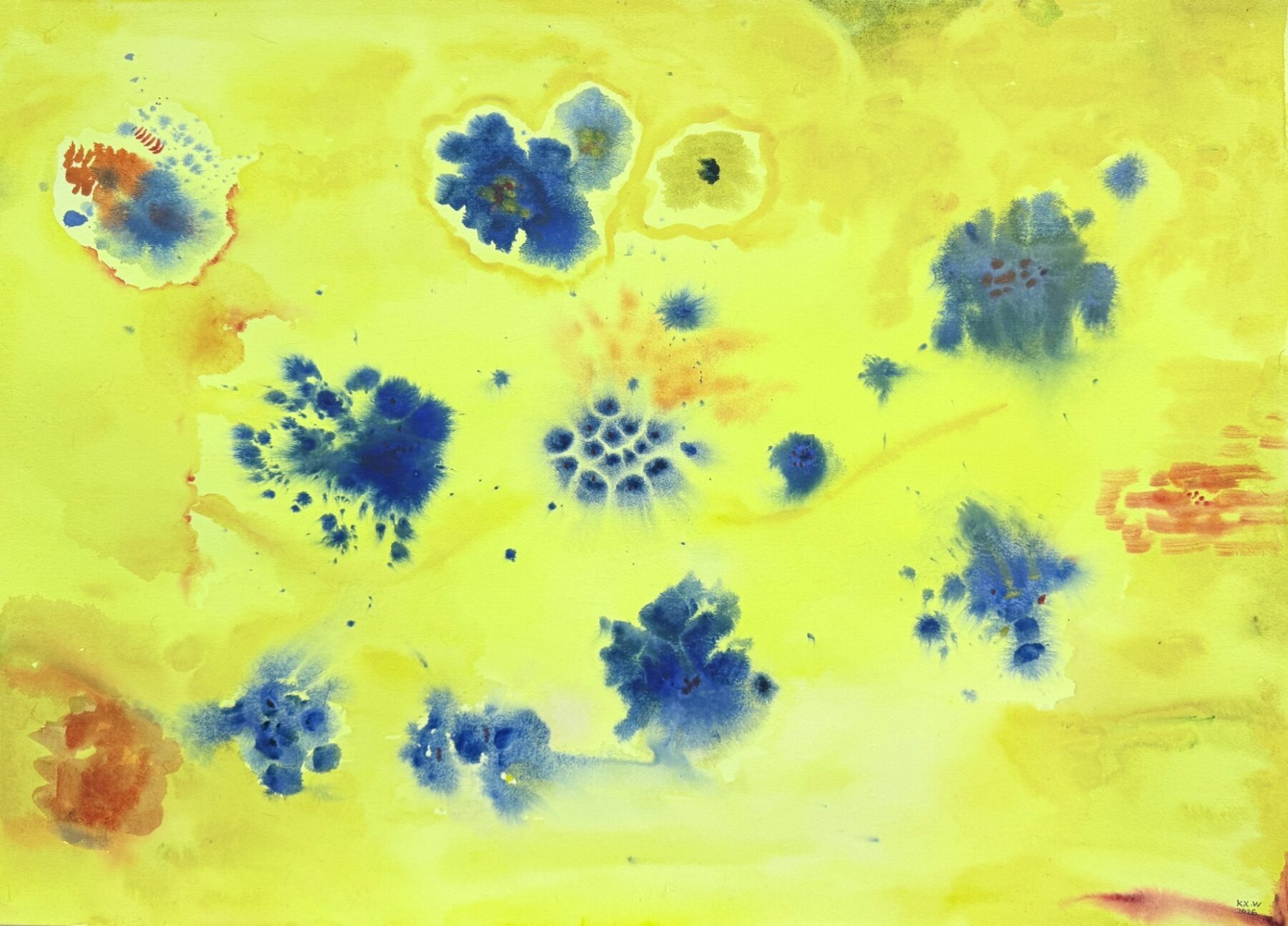
This became more visible in recent works such as Facing and Within the Outside. Recognizable references are still present, but bodies, enclosures, membranes, openings, and terrain begin to exchange qualities. I am interested in forms that seem almost biological without becoming illustrations of organisms. They can suggest a body, a room, a passage, or a landscape at the same time. The ambiguity matters because it keeps the viewer inside an active process of recognition rather than delivering a single fixed answer.
AI has sharpened my awareness of why this process matters, but I do not think the value of human painting depends on proving that a machine cannot imitate its appearance. Visual imitation will continue to improve. The more important distinction lies elsewhere.
A human painting is produced inside a life. The painter gets tired. Attention shifts. A hand hesitates. A decision made in the morning may be reconsidered at night. A mark can be the result of confidence, frustration, correction, discovery, or fatigue. Some of these conditions are visible in the final work and some are only indirectly present, but they belong to its formation. The painting has duration.
This duration changes the meaning of an image. When I look at a historical painting, I am aware that someone stood in relation to that surface, making decisions one after another. The object before me crossed the same time that the painter crossed. Even when the image is highly controlled, its material existence is evidence of an encounter between a person and the world.
This is why I resist thinking of painting only in terms of the result. The result matters, of course. A weak painting does not become significant simply because it took a long time to make. Process is not automatically valuable. What matters is whether the process has been transformed into form—whether decisions, accidents, pressure, revision, attention, and material behavior have become necessary to what the work is.
The presence of AI makes this question more urgent because we are surrounded by images that arrive with increasing speed. Speed is useful. It can also make us forget that seeing and making are forms of time. Painting asks for a different tempo. Water has to move. Paper has to dry. A mistake has consequences. The painter has to remain with uncertainty long enough for it to become structure.
I do not want painting to become a nostalgic refuge from technology. I use digital tools in ordinary life, and I am interested in what new technologies reveal about perception and authorship. But I want to preserve a space in which images are still made through sustained physical relation: hand, material, place, memory, hesitation, and time.
For me, that is where human painting continues to matter. Its value is not secured by being slower, older, or handmade. It lies in its capacity to make a lived process perceptible. A painting can carry evidence that someone was present, paying attention, changing course, and allowing the world and the material to change them in return.
KAIXUAN WANG is a contemporary visual artist, teacher, and independent theorist based in Shenzhen, China. Working primarily in watercolor, with additional work in oil painting, printmaking, and mixed media, she explores human presence, lived environments, material process, and relation. Her writing includes The Primacy of Softness, which develops softness as a framework for responsive, non-dominating agency in art and life. See more of her work here.



This is spot on! I couldn’t agree more about a painting being evidence of someone, a human being, who stood in front of a canvas or blank paper and made many decisions, went through many revisions and moods that led to the final image or picture. Our love and obsession with technology leaves unable to take in or appreciate such subtle, human interactions. This is an incredibly timely essay and the paintings show the beauty and delicacy of what can be created by the human eye, hand, and brain.
LikeLiked by 1 person