By Chimezie Chika
To look at Fayokunmi Adeyemi’s art, one must begin with the abundance of flowering things. It is the same place in which we could begin to look at, say, the paintings of Van Gogh or Monet, from their famous flowers. That entrance can reveal, more than anything, how an artist values colour, hue, ambiance, and natural states. Most relatedly, when we parse the detailing and particular positioning (and significance, no doubt) in Adeyemi’s flowers, we can see some affinities with the vast, populated floral backgrounds of her famous countryman, Kehinde Wiley.
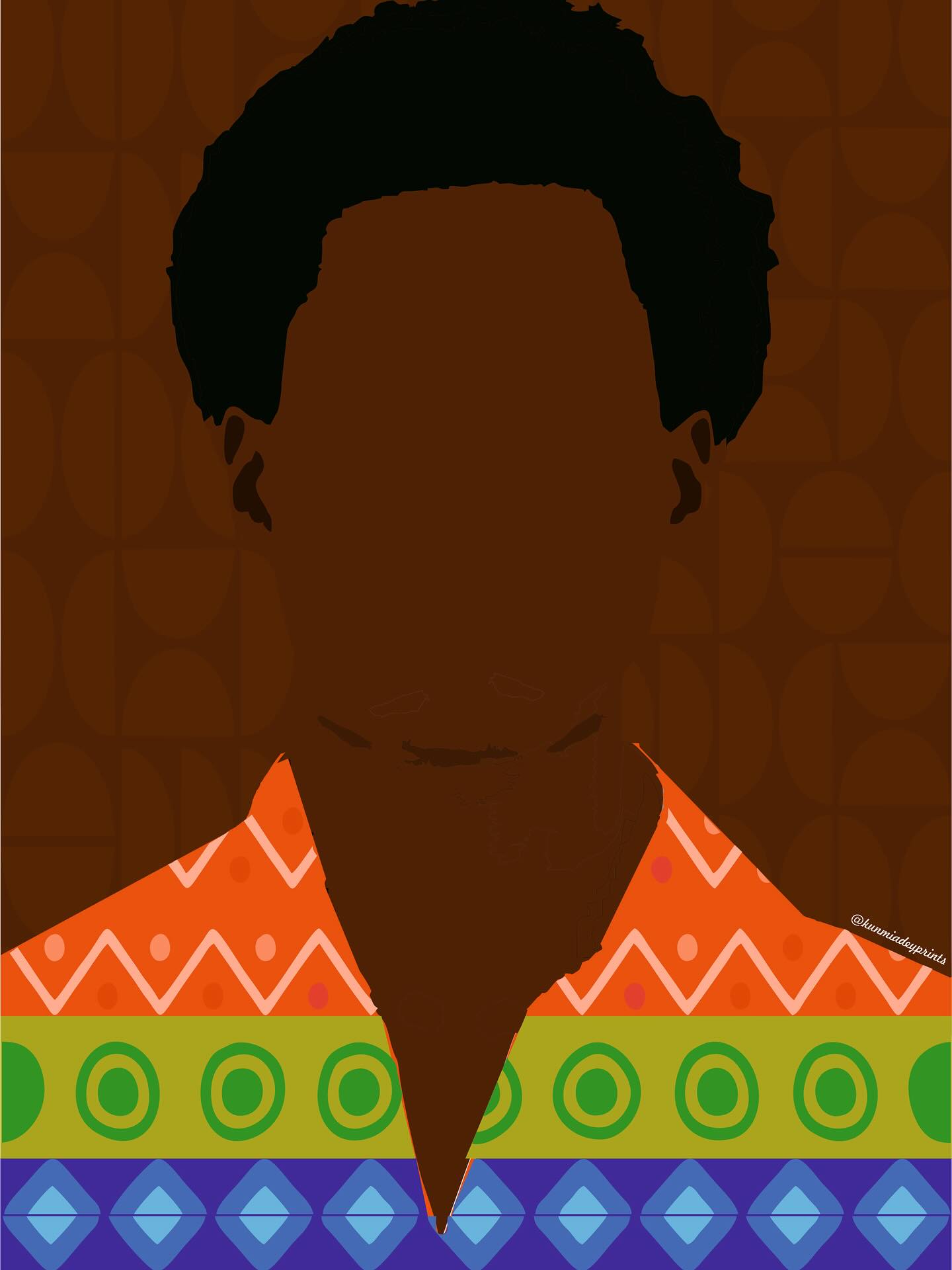
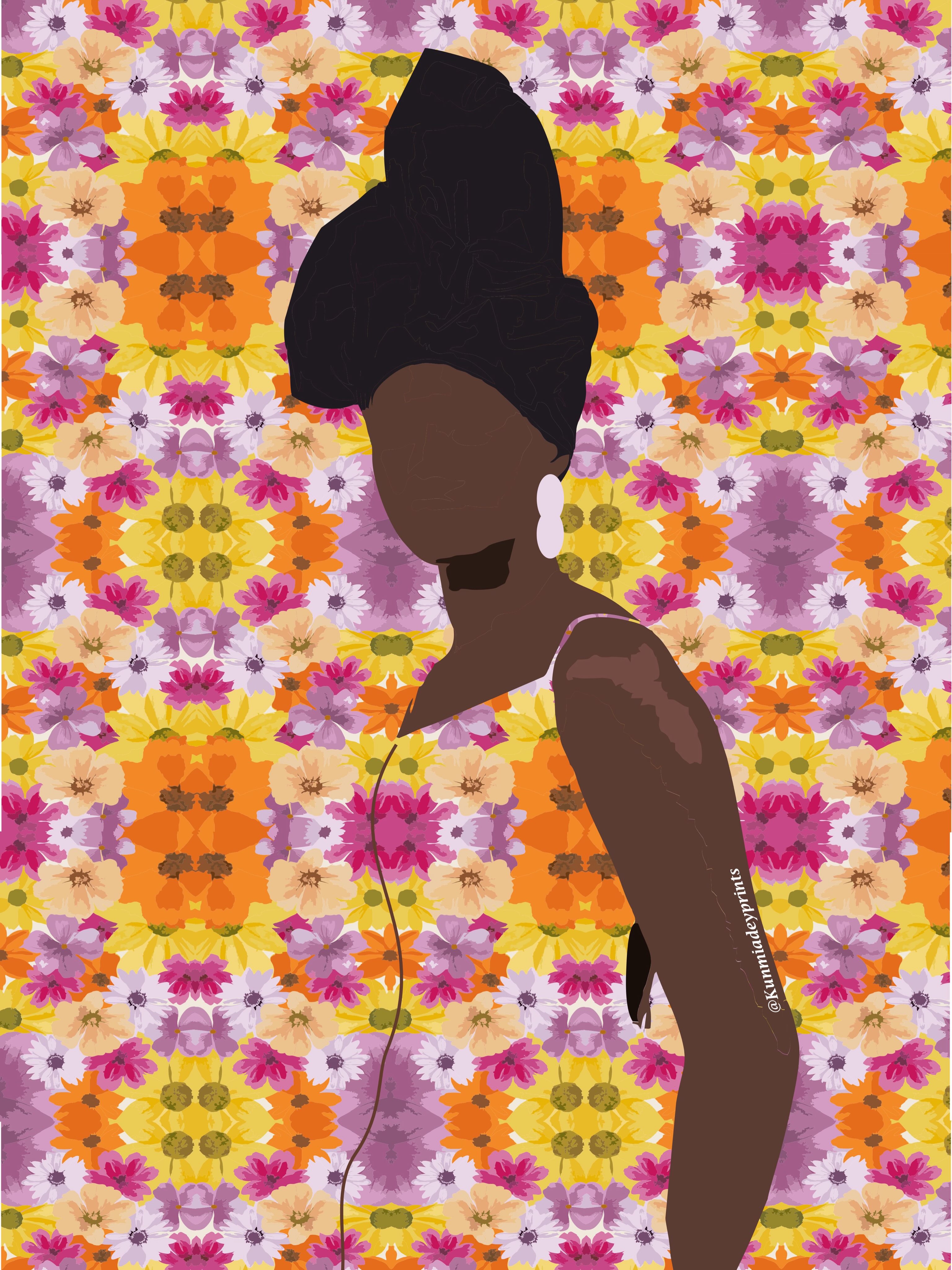
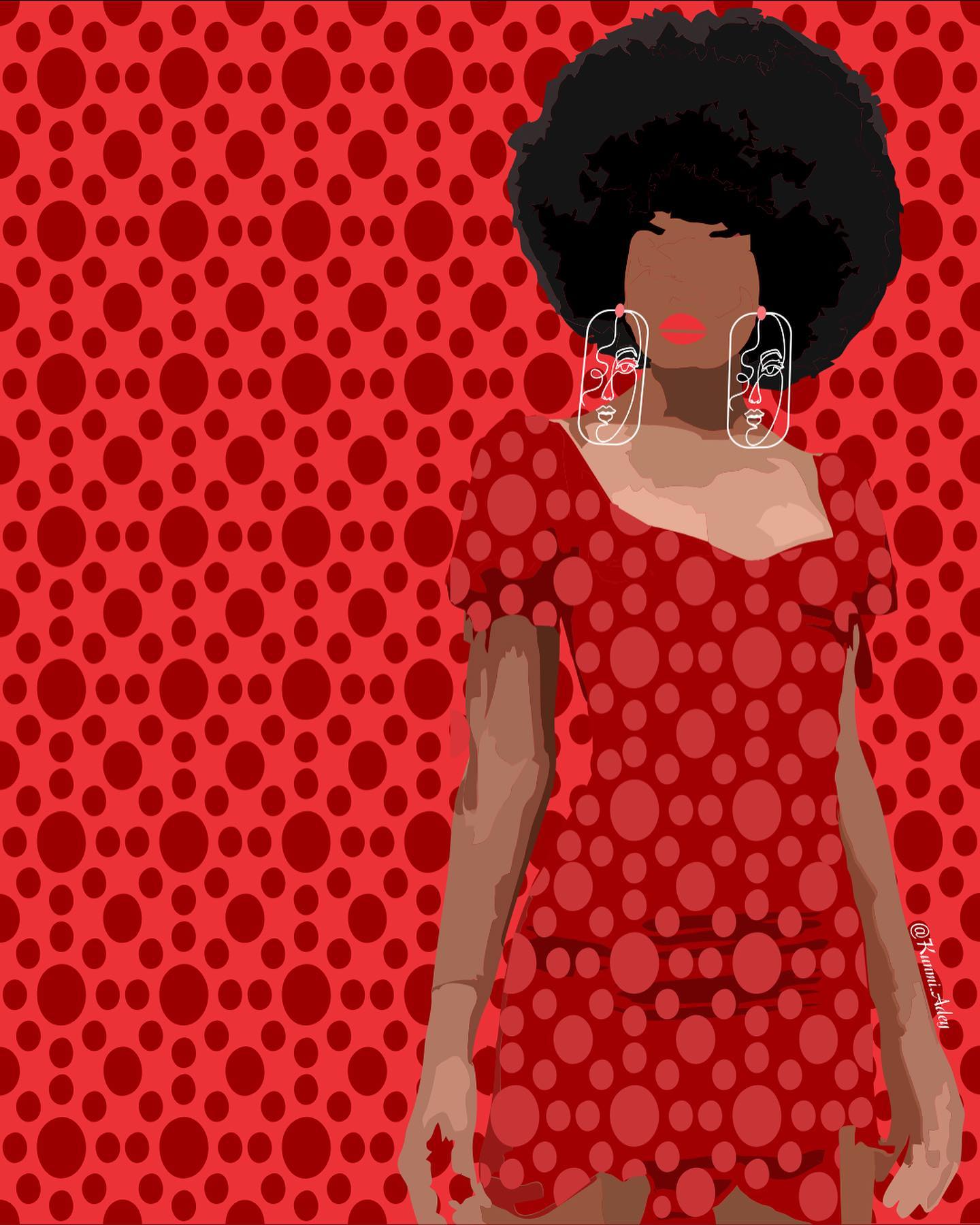
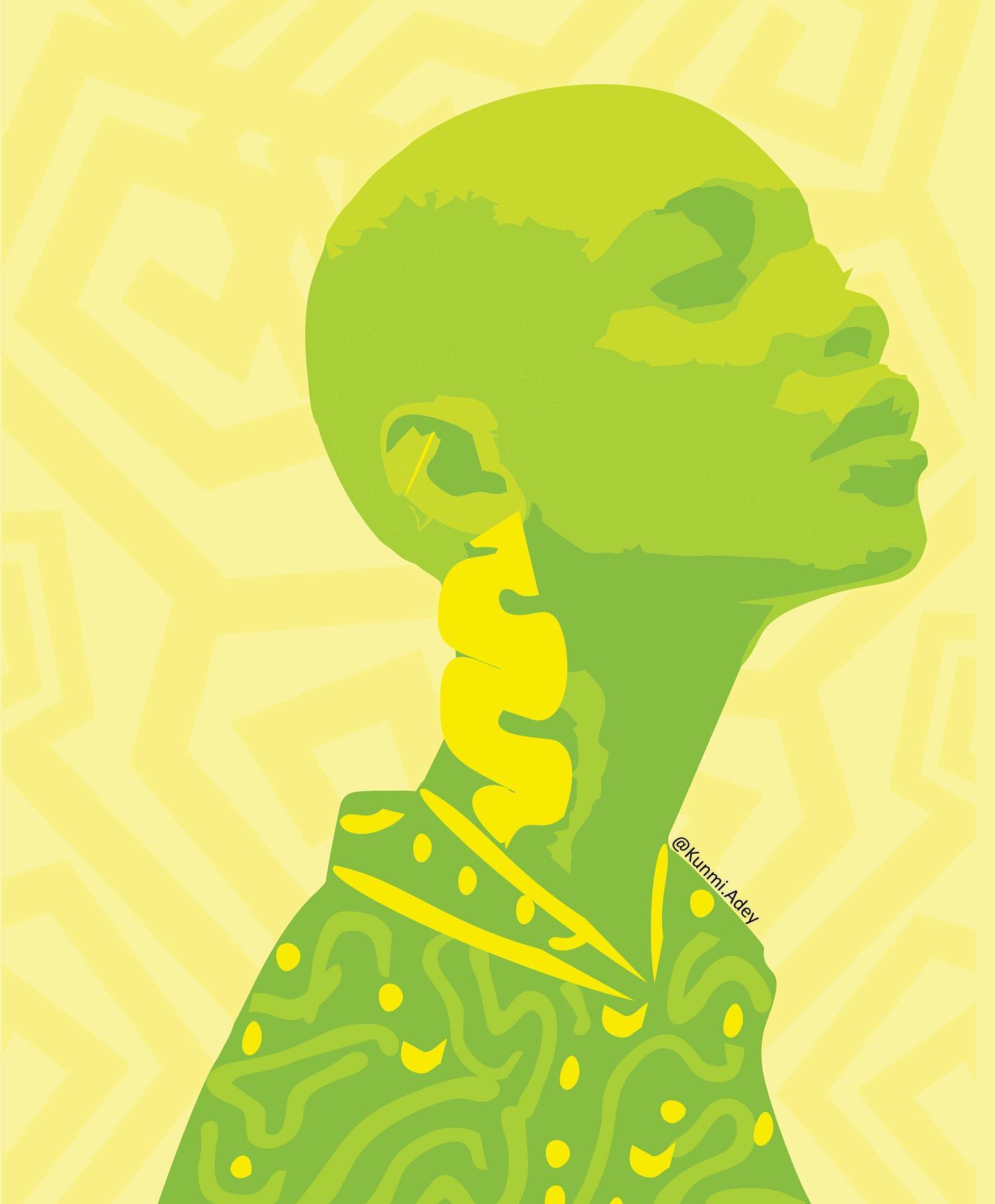
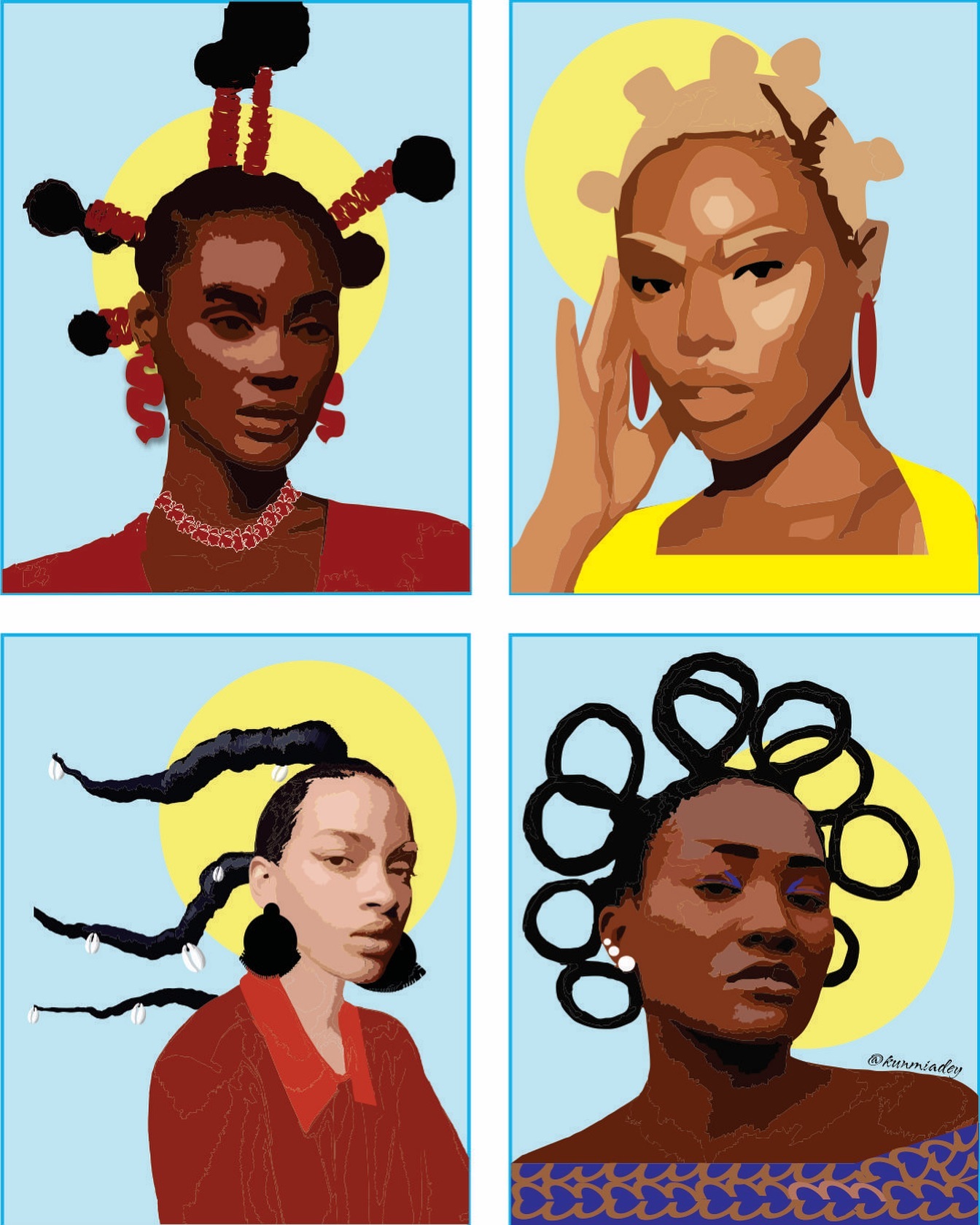
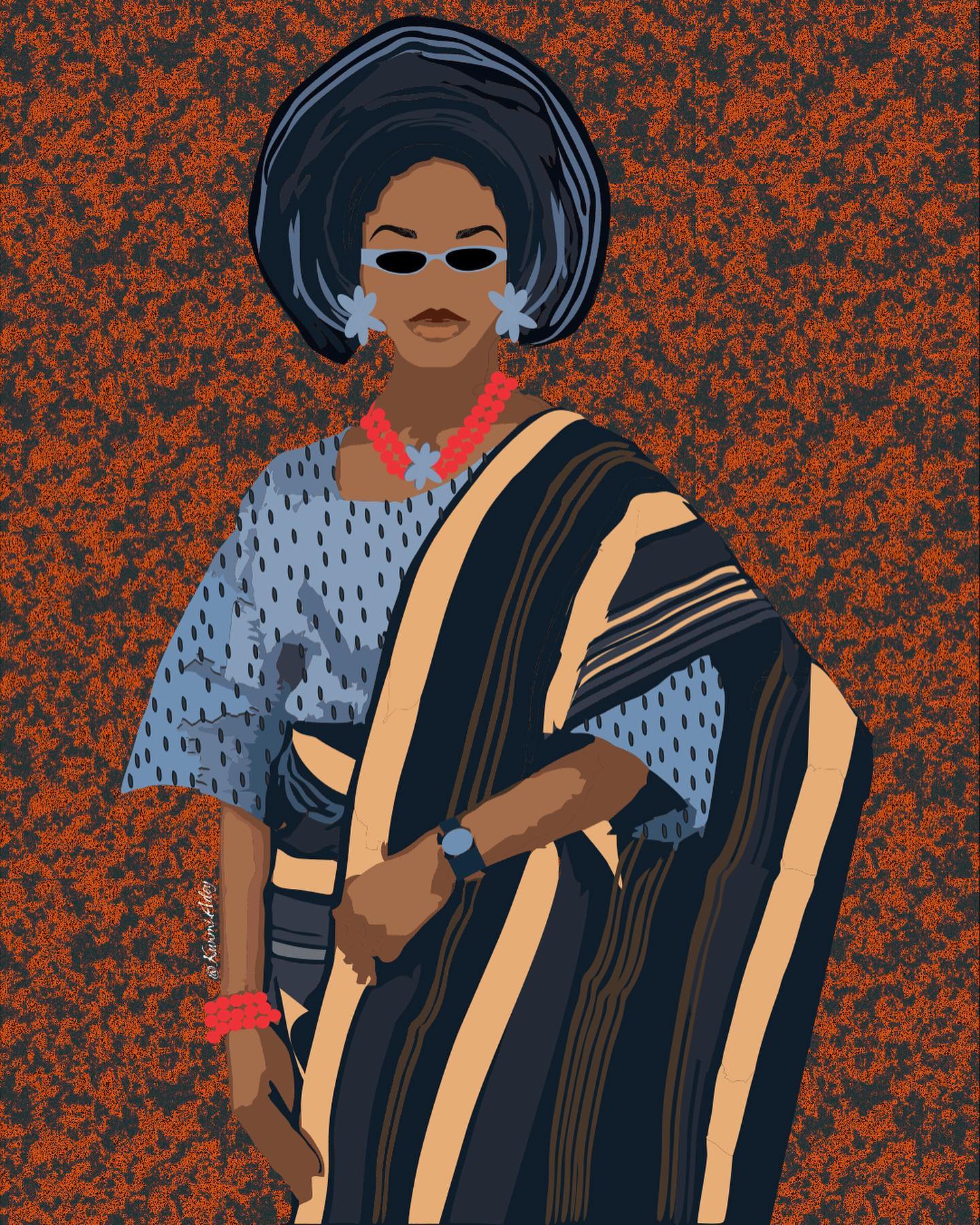
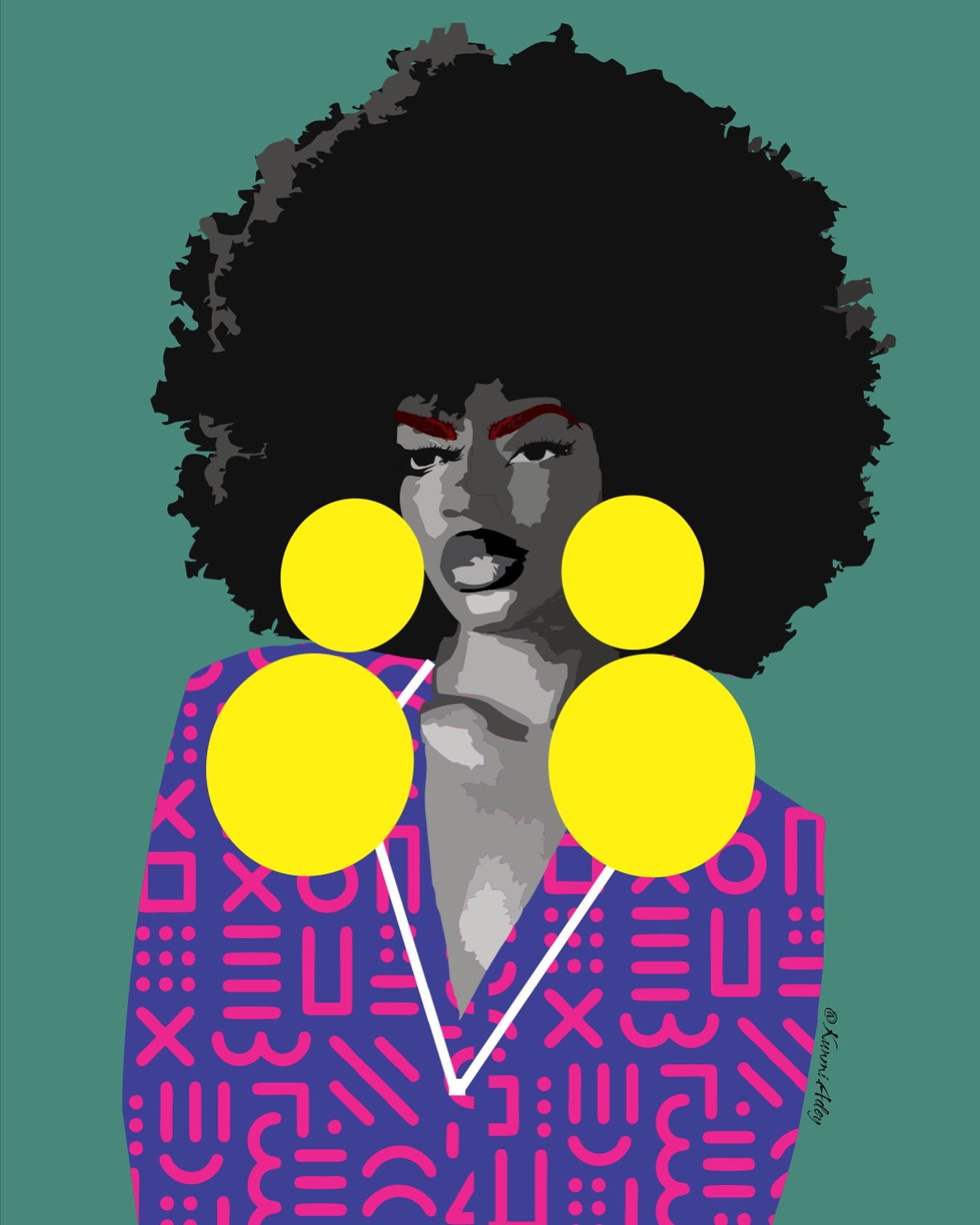
Though Adeyemi, unlike Wiley, drives the vehicle of her practice with digital art, the kinship of craft here is not diminished for that reason. It provides instead a way to get into her works and to see clearly what she is trying to do. Wiley’s floral backgrounds enclose naturalistic portraits of black excellence and beauty; in Adeyemi, we find that beauty blooms from flowers to young black women and representations of femininity. She seems to celebrate an incipient season of self-discovery and self-confidence when black beauty (and its styles) is not maligned as a peripheral aesthetic but as a valid standard of beauty and being.
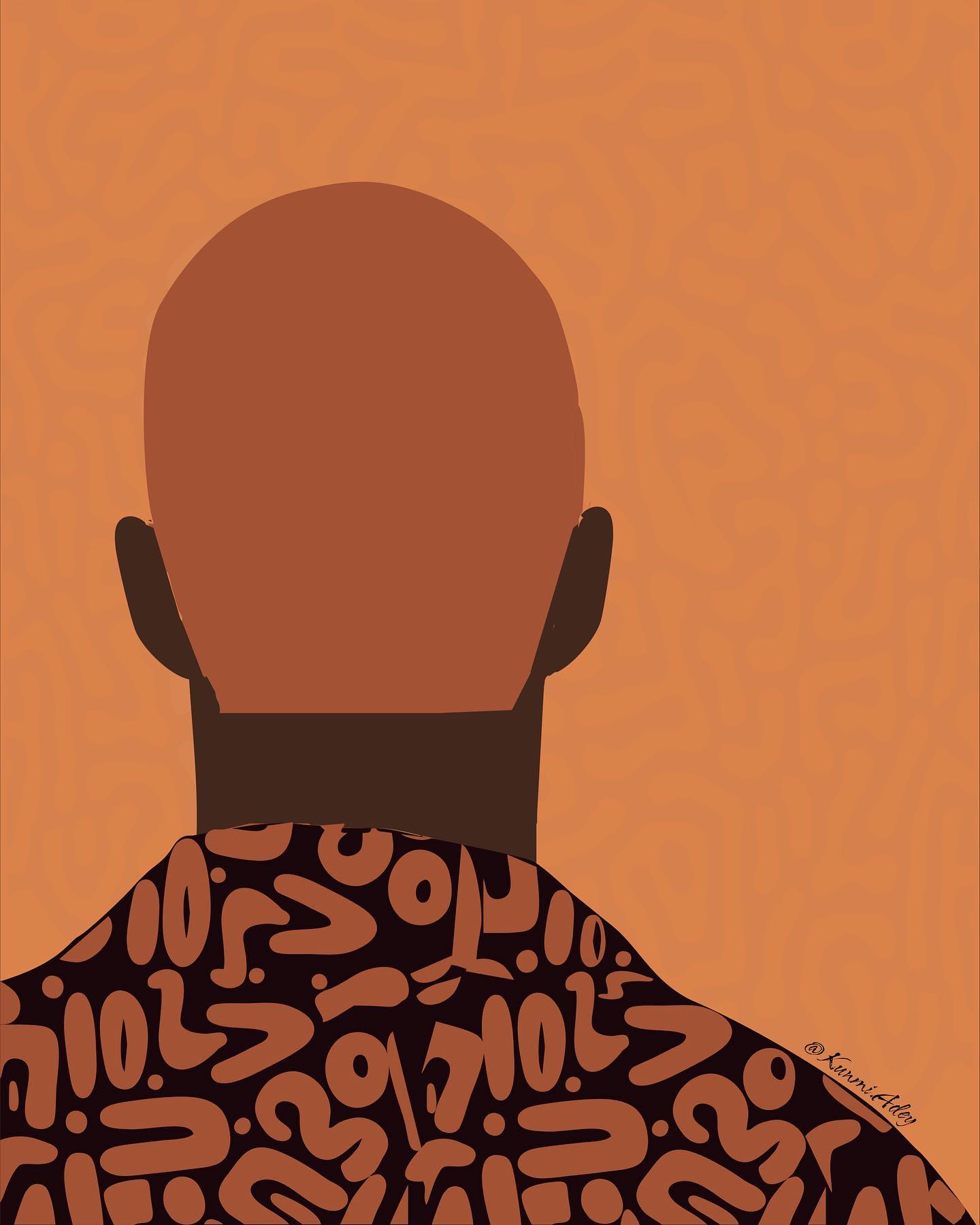
In the idea of beauty—in black women and in nature—resides Adeyemi’s artistic commitment to nature. Her work is interested in how people are seen or how we perceive things in nature. The visual representation of this is achieved majorly through portraiture, but also through the complex layering of shades, textures, tones, imagery, and patterns to create her usual floral motifs, and in some cases, the semblance of abstract forms.
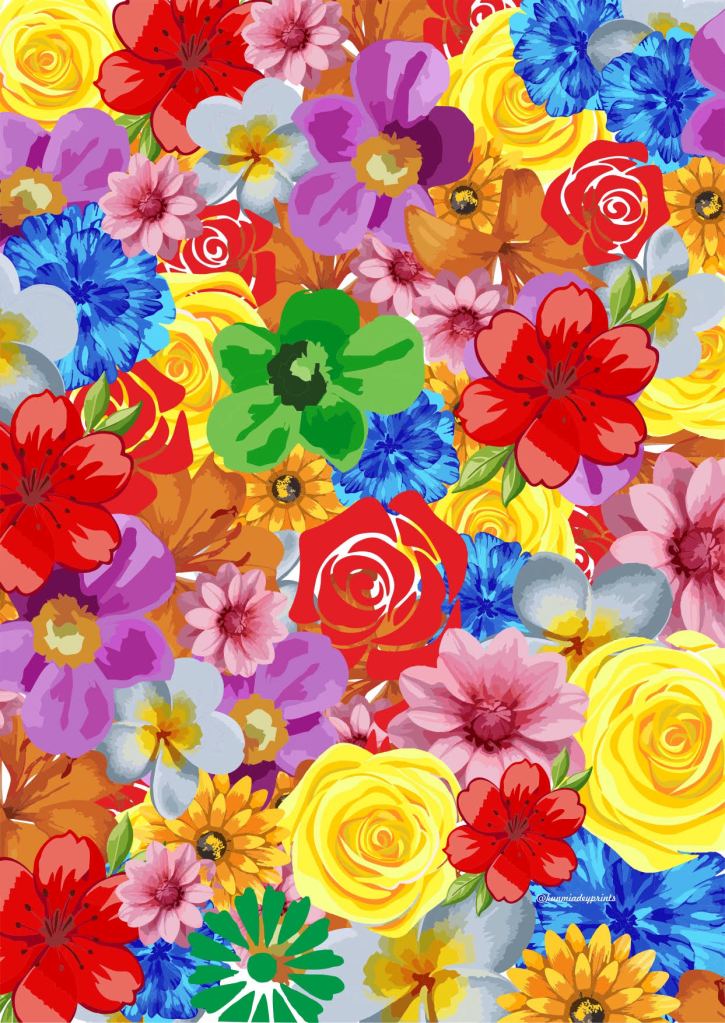
The work titled “Summer Garden” is a good entry point into Adeyemi. The artwork is of flowers of different shades and species all thrown closely together as if the artist alighted upon them in a rich field of exotic flowers and decided to paint them en plein air. One can assume this for a number of reasons. The first is the vibrancy of colours on display: red, pink, indigo, lavender, yellow, green, emerald, grey, brown, beige, and different shades of blue and brown.
The second is that these shades are made out of the primary colours of the major flowers to reflect the action of sunlight on their petals. But we also note the brilliance the artist is showing us in how each flower, alongside its colour, takes in sunlight. So that we can see that whatever it is (a rose, a sunflower, a daisy, a hibiscus, an iris), they do not handle light in the same way. Adeyemi also expresses liberties here in how she endows unconventional hues to flowers that are usually not of that persuasion. For example, we see yellow and beige roses.
While everything we see in “Summer Garden” can perhaps be best called digital impressionism, we must always understand Adeyemi’s art is also about the imagery of flowers and its representation of beauty and bloom. The Wileyey symbols get ever more visible in subsequent artworks.
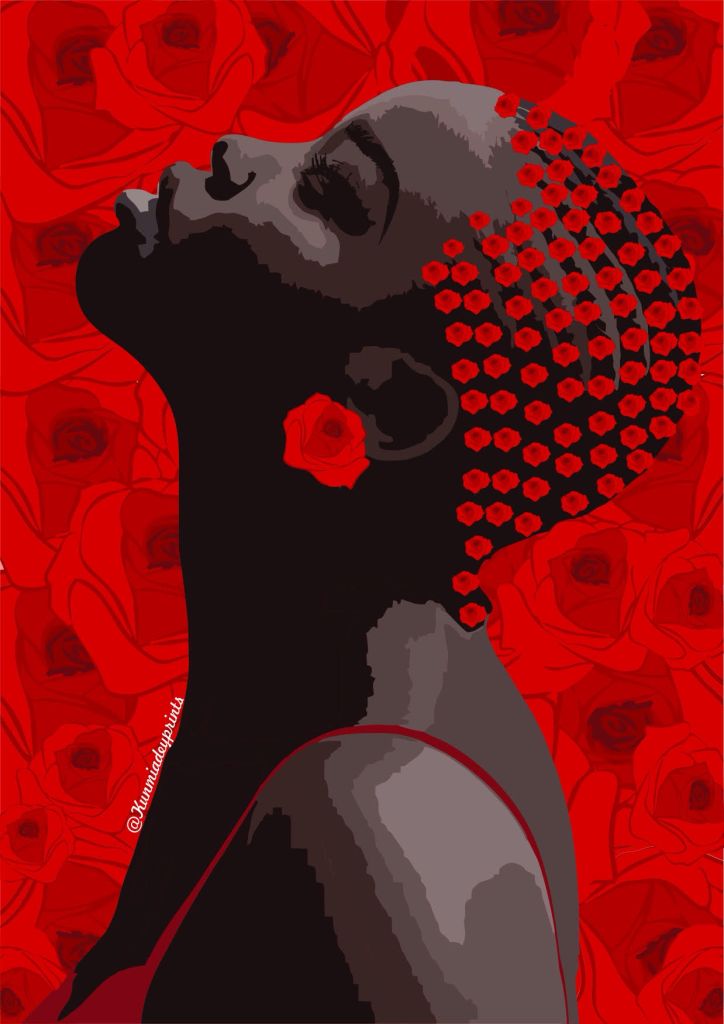
One significant one is“Red Bloom”, a digital portrait of a profiled woman in a red background. On closer inspection, all that red turns out to be a carpet of roses. The woman’s plaited weave is filled with tiny roses, just as we also see that a rose is blooming on her ear in place of an earring. What the artist has given us of her is from one side; so that her organs, particularly those on her head, can only be seen in halves, the other side of them unknown to us. Her jaw is tilted upwards, so that we get the impression that she is breathing in the nature around her.
Her skin is a mass of deep brown, grey, and black hues. Sensual tones, so holistically feminine, in the colours and the position of the woman are undeniable. At one glance, we can imagine that this is a young woman in the bloom of love and romance.
In the now characteristic floral motif, Adeyemi’s exploration of femininity continues in “Journey to Tomorrow” and “Flower Girl”—two paintings ruled by the same spirit. In both, we find images of young women painted into a yellow background. In “Journey to Tomorrow”, the yellow is sprinkled lighter and deeper around spots of black, orange, and beige, to create the bust of a brown-skinned young woman in a yellow scarf. Surrounded by a forest of sunflowers, her expression seems blurred by what we can assume is the effect of the sun. If we can imagine for a moment that she is from Lagos, what would the molue bus designs on her scarf mean? Melancholy?
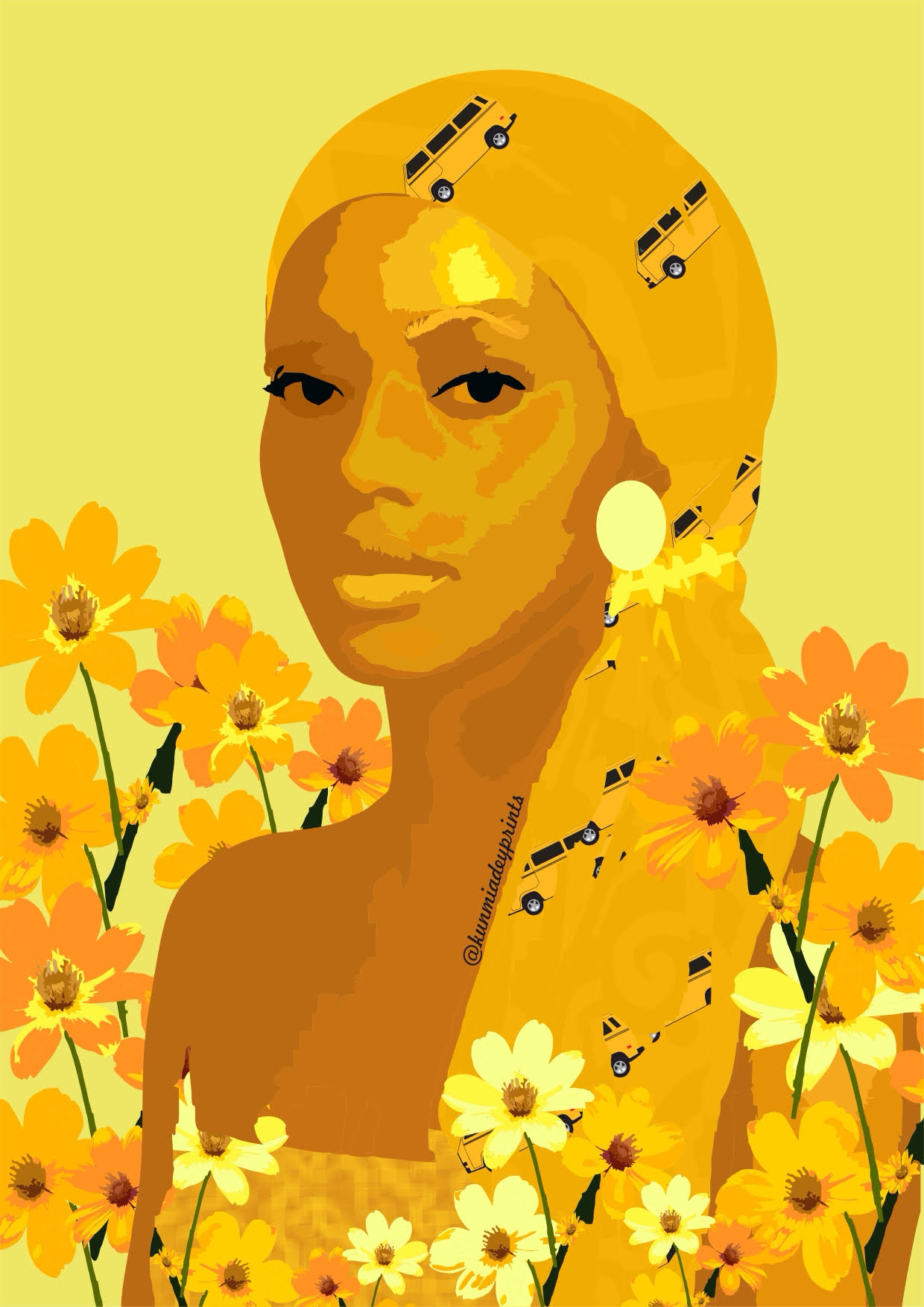
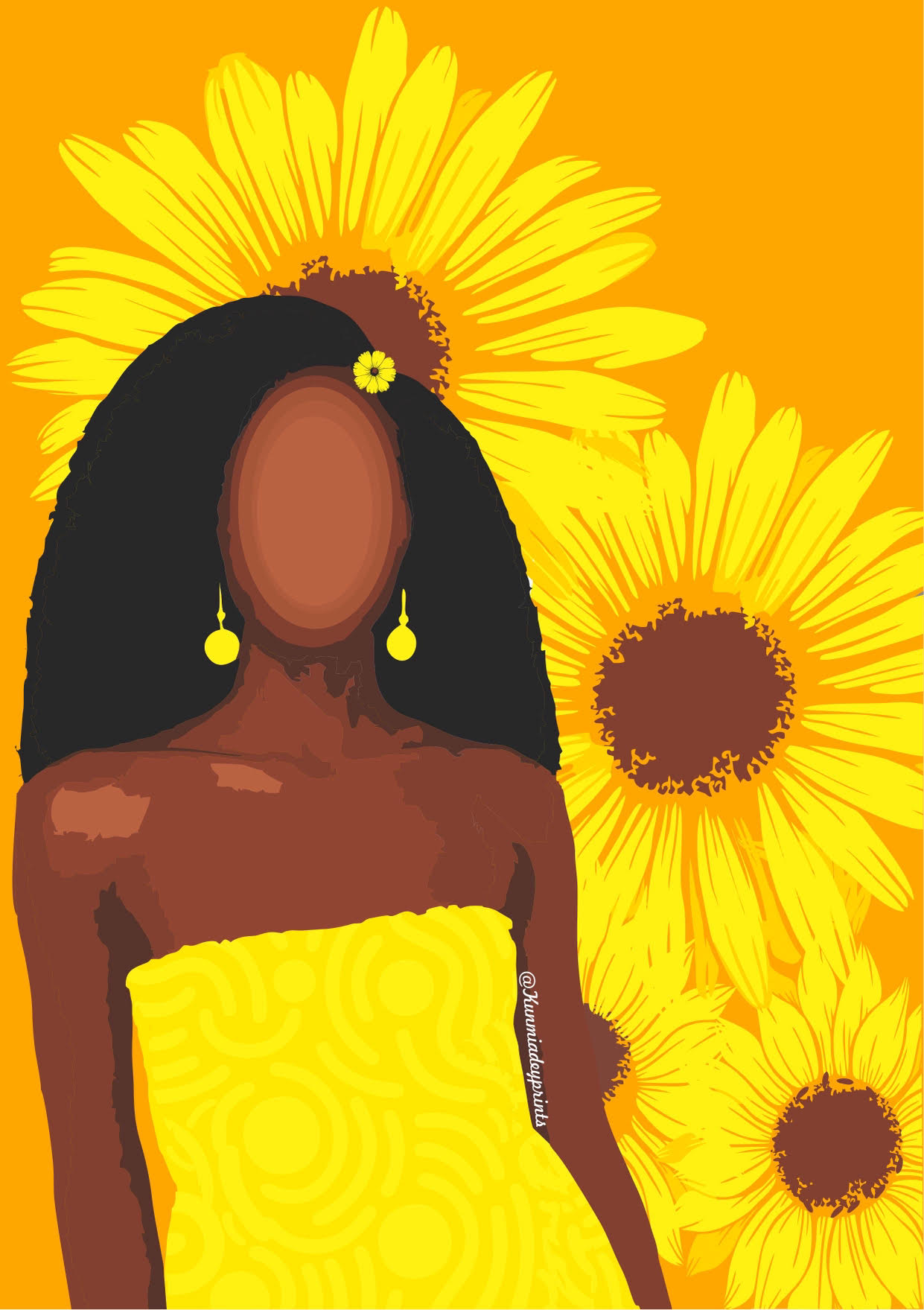
If that is the case, then “Flower Girl” stands at the opposite end of this yellow fête. The artwork is bright in its sight and soul. In its physical aspect, the yellow background, an air of a sunny day in the dry season comes to us. Here’s a brown-skinned girl with a flower tucked in her flamboyant hair, a yellow gown, yellow earrings (possibly gold, if we project), surrounded by yellow daisies.
Flowers. Always the flowers.
In Adeyemi’s work, they are so pivotal as to set the mood and tell us, the viewers, all we need to know.
This is because, for Adeyemi, to be a young woman is to bloom, to be a flower, even. Thus, flowering becomes the act of embodying femininity.
A similar artwork to “Flower Girl”, but one, which, like all of Adeyemi’s works, is in conversation with other artworks in her oeuvre, is “Blossom”. The work represents the “what” of Adeyemi’s artistry and embodies her view of flowering as femininity. In this sense, it could represent what one may call the artist’s Flower-and-Girl series. Select pieces from it have been exhibited both in the UK and internationally. She has had work featured at the Clover Gallery (EU) and Open Gallery. As part of Distant Voices, a group exhibition organised by Fuse Manchester, she was selected to exhibit at Saan1 Gallery in Manchester. One is sure to see more of her work in exhibitions, as she becomes more recognisable in the contemporary art scene.
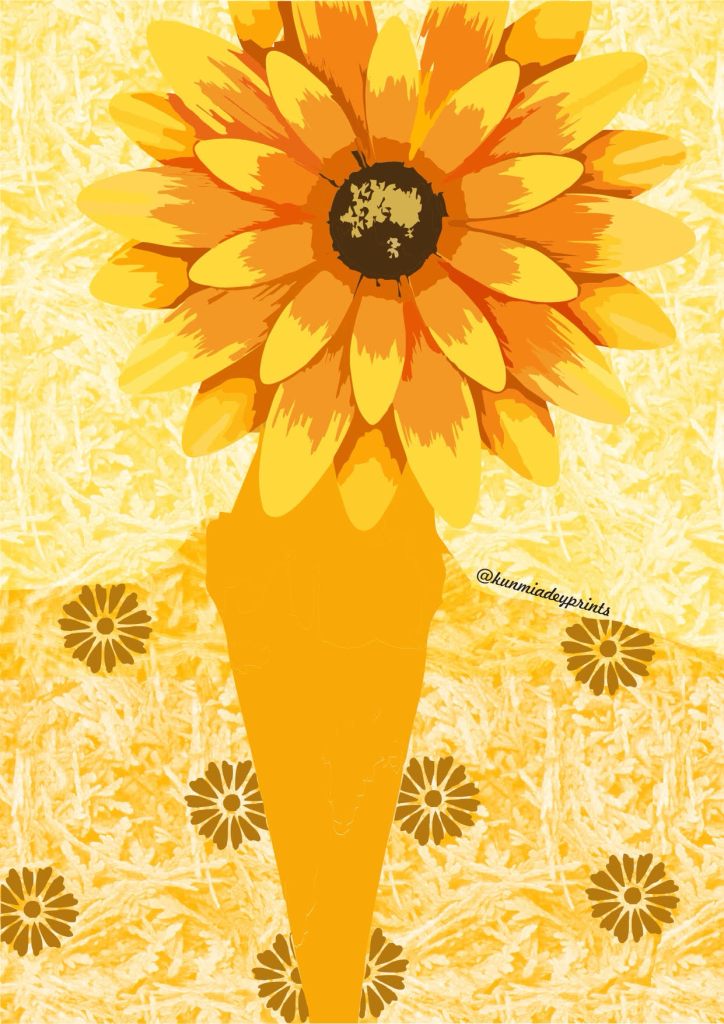
“Blossom” leans more into symbolism than into the generally vague digital impressionism we find in most of her paintings. The image is of a front-facing bust of a young woman in a kind of Ankara kimono with flower patterns. Significantly, the flower on the garment and her skin tone are nearly the same. The only anomaly here is that she does not have a face. In place of a human face, her neck carries a mammoth sunflower, as if to say: Here comes the sun.
“Blue Bloom”, perhaps Adeyemi’s most recognisable painting, contains as much the same leitmotif as the rest of her work. We get the same portrait of a young black woman in a floral background; but here it’s a domination of aquamarine—the lapels of aquamarine flowers which segue into the large hoop earring that accentuates the sensual details of the woman’s expression.
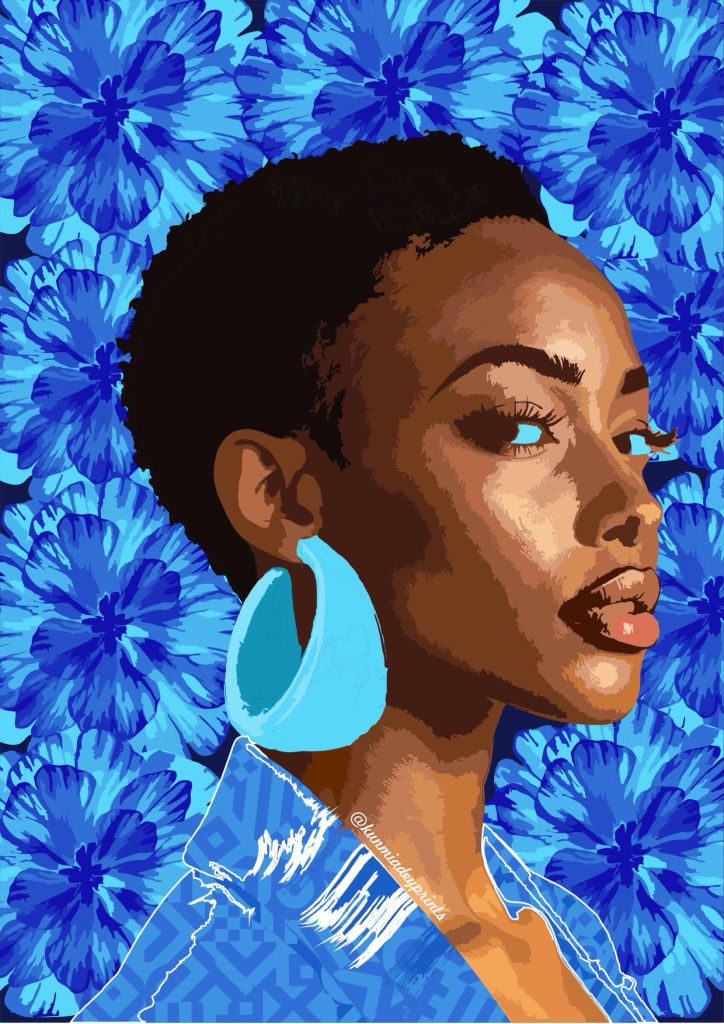
In aspects of mythology, history, and popular culture around the world, blue has often been a colour that occupies widely disparate psychological states. On one hand, one might talk about its relation to class and royalty, with a certain propensity to cold or chill; on the other hand, it might intimate the risky, the risque, the sensual, and the extreme sexual. One can think of this because of the existence of another of Adeyemi’s Flower-and-Girl digital portraits, “Beauty Defined”, featuring a bloody splash of blue.
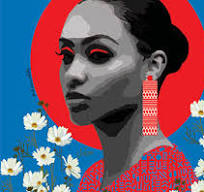
The young woman here has a colder, insouciant gaze. The architecture of the face, with its red eye shadow, grey skin, and dark hair, tells us all we need to know. There’s a red halo around her head and she is wearing what looks to be a red-and-blue adire. Of a truth, this would have been an ordinary portrait, if it weren’t for the daisies occupying the lower peripheries of the work. Suddenly they brighten up everything, soften all the hardness visible, in the only way daisies can. They make us see all we’ve been looking at differently. The redefinition is Adeyemi’s vision of flowering.
She has excelled in this. Her colours—which can be bright and bold, but also garish and neon-like—and her deliberate use of shades to show light and time elevate her art into the work of an artist who may yet show us what purpose and artistic vision can do over time.

Chimezie Chika is an essayist, fiction writer, and art critic. His writings have appeared in The Republic, The Iowa Review, Afrocritik, and elsewhere.
Categories: art, featured, featured artist