
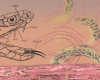
A beautiful meditation on personal and communal memory, art, and an unfathomable landscape from poet Michael Ladd.

A beautiful meditation on personal and communal memory, art, and an unfathomable landscape from poet Michael Ladd.

“The mischievous Raven existed at that time because he always had.”
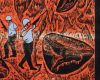
“Through appropriation, the vitality of Black history, literature, and poetry—and the importance of preserving and propagating this legacy—are interwoven into Catlett’s imagery, serving as both an expression of resilience and a force for resistance.”
A collection of all the articles we’ve published over the past month, for those who like to savor their Magpies’ tidings as an issue.
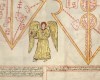
“Mastering the full range of subjects taught in medieval universities normally required many years of hard and expensive study. From the thirteenth century on, however, an anonymous work known as the Ars notoria promised, through diagrams, incantations, and arcane rituals, to rapidly transmit to scholars the total knowledge of anything they might need.”
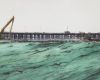
“A human painting is produced inside a life. The painter gets tired. Attention shifts. A hand hesitates. A decision made in the morning may be reconsidered at night. A mark can be the result of confidence, frustration, correction, discovery, or fatigue. Some of these conditions are visible in the final work and some are only indirectly present, but they belong to its formation. The painting has duration.”
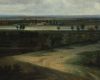
A collection of all the articles we’ve published over the past month, for those who like to savor their Magpies’ tidings as an issue.
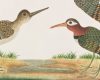
Set between the muddy paddy fields of Taiwan and a cold college room in California, this story weaves together Taiwanese bird ecology , traditional Taiwanese street delicacies and a linguistic misunderstanding. It explores how food, nature, and intergenerational love can cross geographical and historical oceans when words fail.
“Sometimes I wonder, perhaps naively, if all the problems of the country could be solved by sitting the folks in Washington down at a table with a lump of clay and some encouragement. They can bring their dirty laundry if it helps them find the time.”

“Her work is an abstract reflection of her life. The colourful, idyllic childhood, the loneliness and isolation of institutional care and, above all, the connection with her sister Joyce.”


