

By Amir Zadnemat
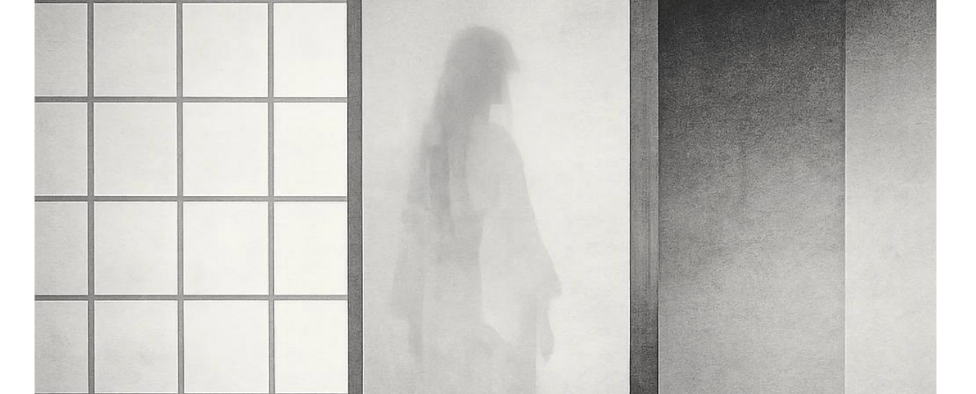
Japanese ghosts rarely arrive with spectacle. They do not burst in, scream, or jolt the viewer. They remain. In period horror cinema—kaidan jidaigeki—the ghost is not a break in history but its residue: what could not be resolved, buried, or redeemed. These films do not create fear; they recall it.
Rooted mostly in the Edo period, kaidan jidaigeki grows out of a cultural memory shaped by strict hierarchies, moral indebtedness, and recurring violence. Here, the supernatural appears less as a show of power than as a consequence. Spirits return because something in the social fabric was left unfinished—an unacknowledged injustice, a normalized cruelty, a promise broken within a rigid order that leaves little room for repair.
In contrast to many Western horror traditions, where fear announces itself as an intrusion into ordinary life, Japanese period horror understands terror as already embedded in the everyday. The past does not erupt; it seeps. This sensibility reflects a historical condition: Edo society was tightly organized yet deeply unequal, held together by codes of loyalty and obedience that often concealed systematic brutality. Cinema translates this quiet, structural violence into enduring haunting.
The figure of the onryō—the vengeful spirit—crystallizes this logic. Typically female, wronged, and silenced in life, she returns not to unleash random terror but to insist on redress. Her rage is exacting. She does not overturn the moral order; she exposes its collapse. In this way, the ghost functions less as a monster than as an ethical indictment.
A film like Ugetsu (1953) makes this dynamic especially clear. Mizoguchi’s ghosts are not alien invaders but reflective surfaces for human failings—ambition, betrayal, abandonment, forgetfulness. The supernatural unfolds slowly, almost with courtesy, so that when horror arrives it feels less like a shock than like something that was always on its way. History itself becomes uncanny.
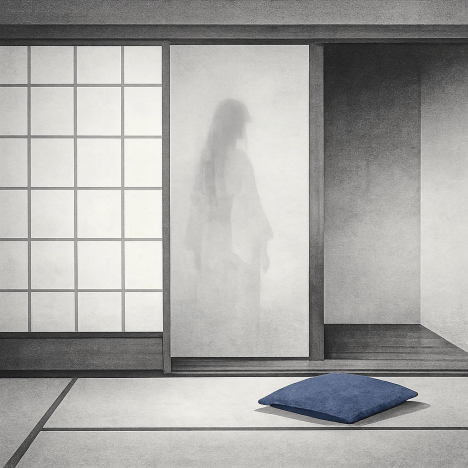
What kaidan jidaigeki offers, then, is a redefinition of fear as a mode of historical memory. These films are not primarily concerned with what startles us, but with what refuses to disappear. The ghost lingers because the wound never received care; it was merely covered over with ritual, discipline, or silence.
This sensibility sets Japanese period horror apart from many later global horror trends. Graphic violence is uncommon. Fear arises from duration, from the repetition of images and events, from the sense that time no longer flows cleanly forward. The past is not behind the characters; it surrounds them and observes.
The same logic persists as Japanese horror moves into modern settings. Films like Ringu replace feudal estates with cramped urban interiors, but the underlying structure remains. The ghost still returns not through sheer physical force but through unresolved transmission—copied images, replayed tapes, histories that circulate instead of concluding. New technologies do not erase the past; they accelerate its movement.
The continuity between kaidan jidaigeki and contemporary J-horror is therefore less a matter of shared visuals than of shared ethics. Both treat horror as something inherited. Fear is not arbitrary; it is passed down. What was suffered without justice in one generation reappears, unannounced, in another.
Closure, in this cinema, is rare. Even when a spirit is appeased, some remainder resists absorption. The viewer is left with unease rather than relief—a sense that the story may have ended, but the history has not.
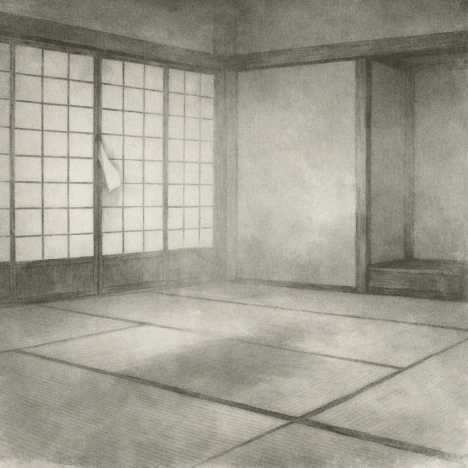
This resistance to neat endings reflects a broader skepticism toward final resolution. Moral debts accumulate. Time, by itself, does not purify. Ghosts endure because forgetting is not the same as absolution.
In this way, kaidan jidaigeki operates as a kind of historical conscience. By turning social trauma into spectral presence, it allows film to speak about forms of violence that official histories prefer to stabilize, excuse, or ignore. Horror becomes a way of remembering without preaching.
The ghosts of Edo do not need to scream. Their mere persistence testifies to what history failed to reconcile. They do not exist to frighten us into obedience, but to insist that fear often begins at the point where memory was refused.
In Japanese period horror, history does not return as a lesson or a warning. It returns as weather, as air—as atmosphere. Once it settles over the frame, it does not depart.
Amir Zadnemat is an Iranian writer with an MA in Literature from the University of Gilan, Iran. His writing engages with cinema as a poetic language shaped by light, shadow, and narrative.


