

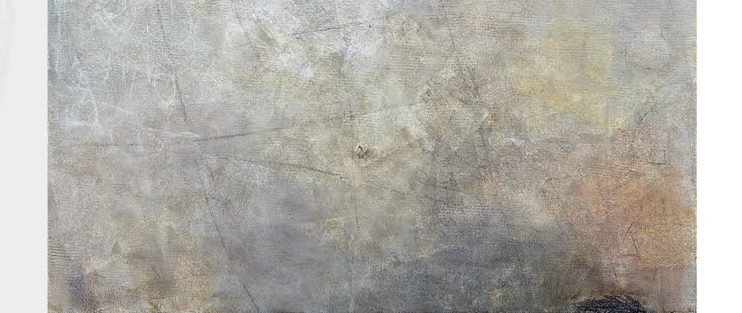
Mare McClellan will have a solo show, An Echo Familiar, at the Morepeth Contemporary Gallery in Hopewell, New Jersey, May 2-24, 2026.
Though there is a beautiful stillness radiating from Mare McClellan’s paintings, as you look at them, you have a sense of something stirring and shifting underneath the surface, something growing or soon to grow. It’s almost like looking into a cloud-moving sky or wind-rippled water — you know there is life there, operating to its own mysterious purpose, growing and thriving and dying, weaving together threads of a story we don’t need to understand. Those connections become more tangible, are made real, in her dimensional work, in which you can feel the movement and warmth and skill of her hands, the glow of her affection for the workings of the natural world, the reverence of the promises she makes to moths. You feel a profound connection not only to McClellan as an artist, but also to all the beautiful strange busy-ness of the world around us, which despite our best and worst efforts and intentions as humans, we are inextricably a part of and cannot live without. We were grateful for a chance to ask McClellan a few questions about her work.
Magpies: I find it fascinating that your work is inspired by nature, particularly by the work of caterpillars in building their cocoons. I understand the formal connection, but I found myself wondering if there’s some shared motivational connection as well – we can only imagine that the caterpillars work through some combination of instinct and the necessity or desire to create a place to transform themselves. I think for most artists, the question “why do I create?” is a complex one. Do you find that you identify with the caterpillars’ motivation for creation as well as with the form and substance of the work they create?
Mare McClellan: I am definitely a homebody so making nests and cocoons comes naturally. Making in general comes naturally.
I’m just thrilled that my phone camera allows me to get clear views I would otherwise miss. I’m a meditator and stillness comes easily to me so I seem not to interrupt the caterpillars or moths as I get very close and take videos. I love to slow down the video afterwards and watch the way wings and ovipositors and spinnerets look up close and in slow motion. I think the visuals inspire me most immediately. I love the poetics of scientific terms, like in a chrysalis it’s described as imaginal cells, what a beautiful word to describe the pure potential that precedes the new winged form.
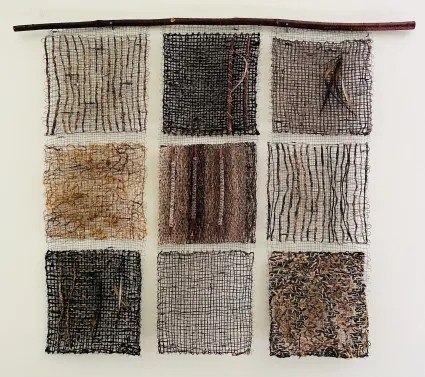
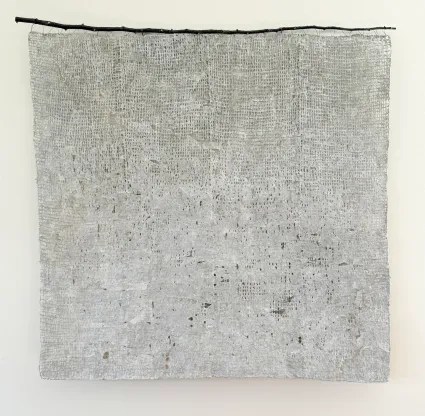
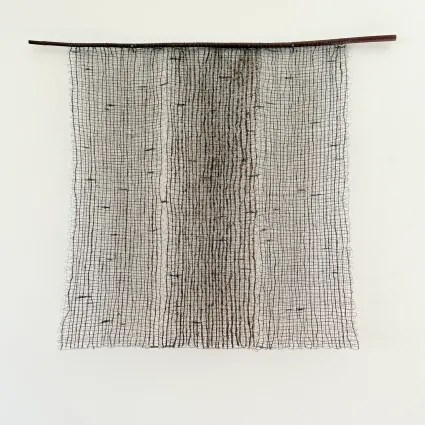
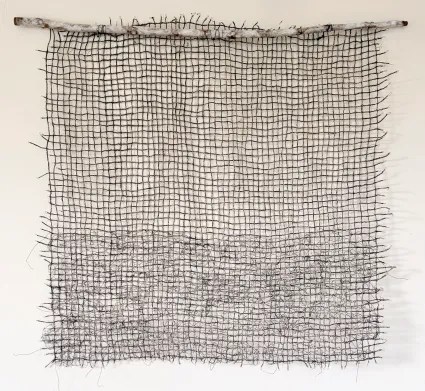
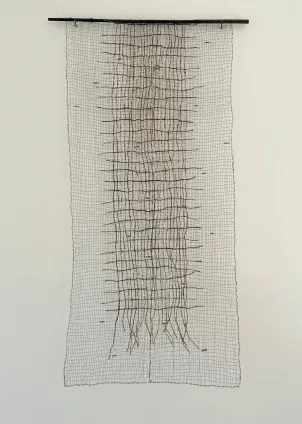
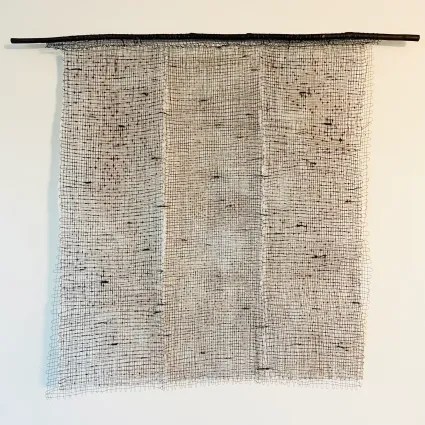
In watching the caterpillars at work in your video, I was struck by the fact that their actions are so methodical, but the form they create seems, to the human eye, to be wild or even random. When you’re making your constructions, are you thinking of/working in a certain pattern? Is there some balance between abstraction and something constructed to certain rules with a certain preconceived outline?
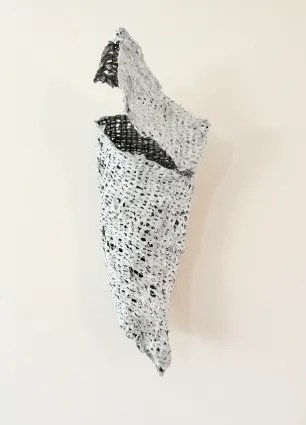
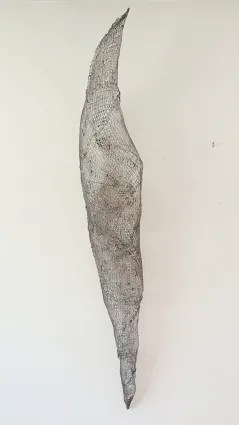
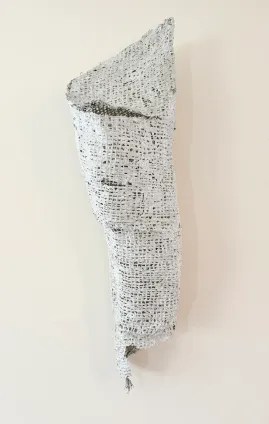
The Cecropia caterpillar was using the structure of the plant to start the cocoon, guide wires of silk from this branch, to the stem, to that leaf stalk, to just the right size to fit their body. After that initial sketching out of dimensions they methodically weave back and forth, up and down until enough silk builds up to form the cocoon. It felt like a transmission from the vulnerable heart of a master craftsperson to see Cecropia at work. They are so embedded in their world. And gorgeously functional. I hope my work can convey something of the transmission. Somehow communicate an insight into the reality of interconnection. Plant a seed of remembering humans too are part of this whole.
Weaving on a loom introduced more initial structure into my process. I’ve been wrapping wire over twine for decades. It’s soothing to me. Earlier nest like structures were woven but more randomly organized. The cocoons feel steadier, perhaps calmer. The materials and my hands feel seamless. The form is revealed in the process.
Similarly, I guess, thinking about why caterpillars create, or how they determine the steps that they take to make the thing they’re making, it strikes me how much we don’t understand about the natural world. We try to impose our ideas and rules when coming to an understanding of nature, but there’s such a sense that there’s a huge space between what we notice, how we understand it, and how or why it really works the way it does. We almost don’t even have a language for it, and it’s something much deeper than our understanding, or perhaps it transcends our understanding. I feel like your artwork (particularly the paintings) somehow finds the language to explore that space, that gap in our understanding. Is this something you think about in your work?
It does feel beyond understanding how a being’s form can have evolved to function in concert with a particular flower shape, or to protect from predation either by signaling danger to the predator or blending in by crypsis to escape detection. And that all that understanding can be coded into genes or spirit and continue through a lineage. I think what I feel and absorb is wonder at the workings of all these moving parts, through time and space, that can appear as separate but is such an interwoven whole. I experience a connection, wordless. A timeless feeling — ancient, current, and one hopes, continuing. And an impulse to make something perhaps to express the connection.
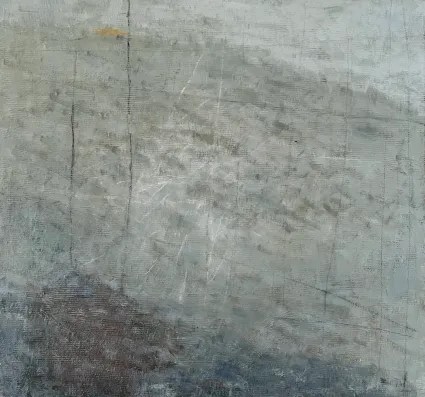
Paintings are the most wordless. Thoughts or formal aims constrict the flow. The paintings paint themselves when conditions are ripe. Otherwise it’s a lot of pushing paint around and rather muddled. When the magic is happening it’s a lofty state that more than makes up for the muddle and keeps me coming back to the easel again and again. My hope is that viewers feel the flow and benefit from living with the work.
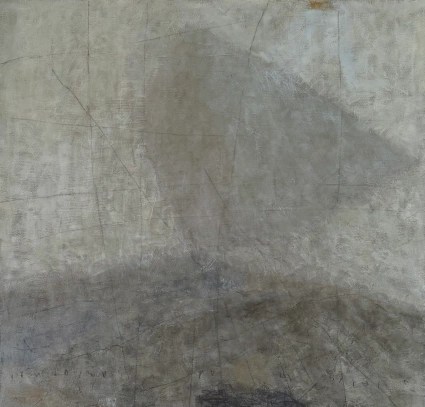
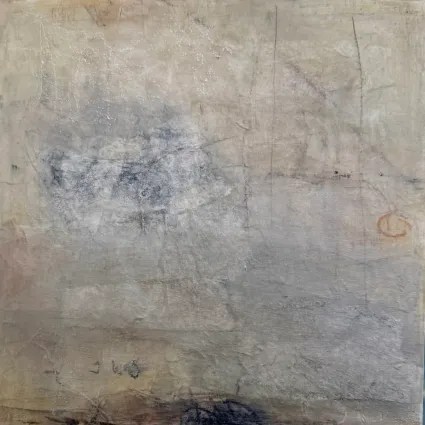
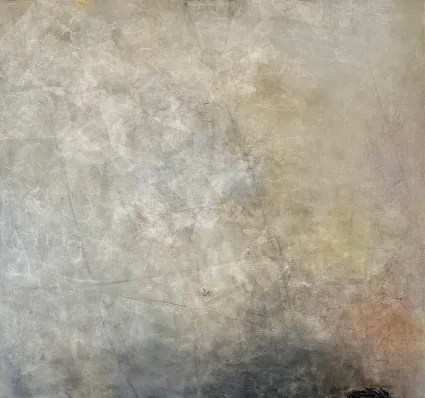
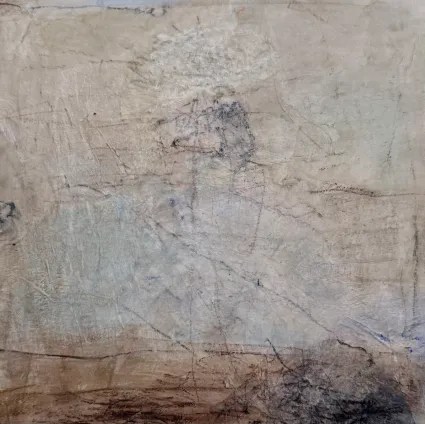
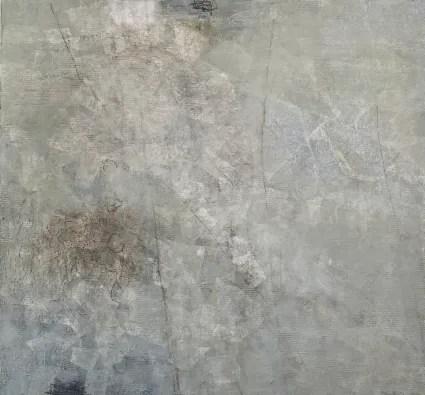
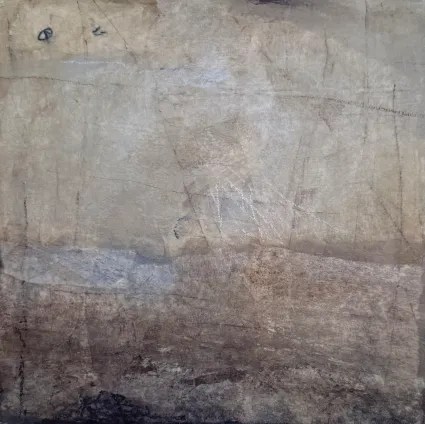
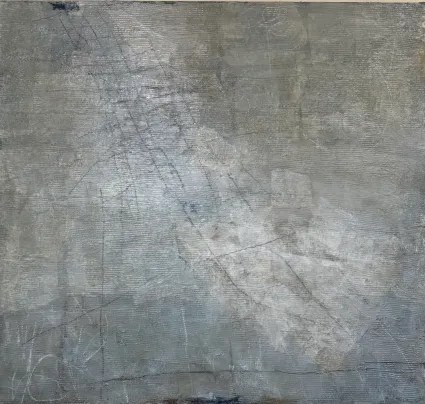
To me, your work is a beautiful expression of the rhythms of nature – birth, life, decay, the changing seasons. The fact that a decaying leaf might reveal the same delicate-strong patterns that newly-created webs do. Paintings and sculptures are by necessity frozen in time, in stasis. Do you have an idea that you’re exploring ways to capture the rhythms and changes, or are you thinking of capturing a moment in the process? Is this idea applied differently to your paintings and your sculptures?
I love exploring encyclopedic information of plants and their faunal associations but the art making is largely intuitive for me, without concepts and language, trusting that my heart’s familiarity and kinship guides my hand.
Speaking of that rhythm, in nature there’s a fallow season, an overwintering, during which it might seem like nothing is growing and changing, but perhaps the most growth and change occurs then, though we can’t always see it. Do you find that with your art you need these fallow periods, these pauses to build and grow away from the hands-on process itself? How does that play out in your work?
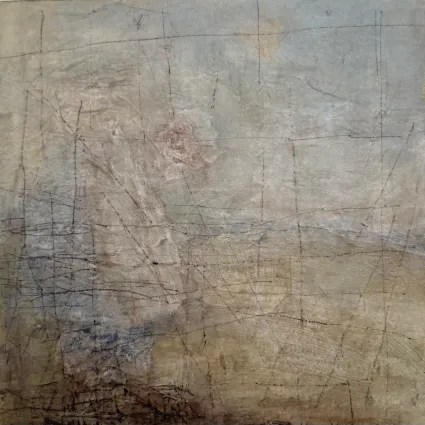
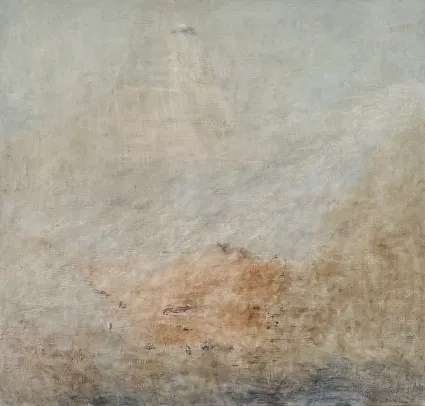
The way my life has played out is that I’ve worked in gardens and now in the nursery during spring, summer, and fall and spend concentrated time in the studio in winter. Rather than hibernating in cold, I’m working mostly undisturbed on art pieces. So while my time is limited in the studio during the growing season, it is then that I am outside immersed in nature. I feel the energy and inspiration collecting in me and trust it will come through when more studio time comes round again. The videos help me store the memories of the experiences.
Speaking of hands-on, I’m curious about your different approaches to painting and making dimensional work. The dimensional work seems so tactile and active, whereas the process of painting can feel a little distant, because there’s a brush or a scalpel knife between you and the canvas. Can you discuss a little about how the processes differ for you? When or why you turn to one or you turn to the other, and what the hand-heart-mind balance is in the creation of each?
The dimensional work is as you say tactile and active. It’s almost always accessible to me anytime of year and grounds me. Painting requires a certain concentration and letting go, a spacious allowing of energy to come through. Mysterious and not always attainable. Weaving and wrapping can help me enter the place where painting can happen.
I’ve worn glasses since first grade and remember walking out of the doctors office when I got my first pair and being amazed at seeing the leaves on trees so clearly for the first time. So without glasses, unless something is a few inches from my eyes everything is beautifully blurred, and sunlight coming through trees creates a dance of glowing orbs. Painting has always seemed to reflect my vision without glasses even though I need them on to see the canvas.
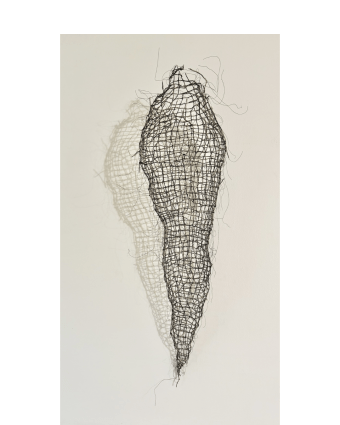
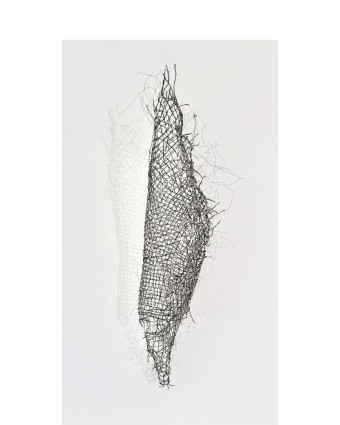
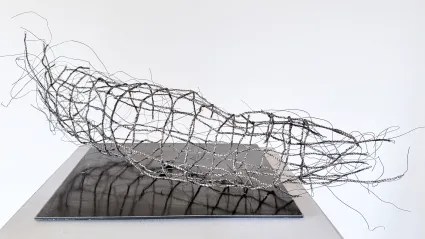
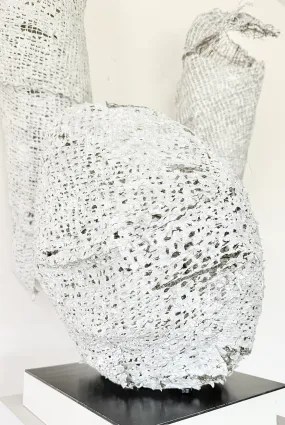
I love the idea that you’re receiving messages from the caterpillars/moths, and making promises to them. I’m not sure how to frame this question, but it feels mystic or religious, somehow – but based on what for me would be the true religion, (though that is not the right word) – on some notion of the workings of the world or the universe that we don’t understand. That’s the “divine” mystery to me. Apologies if this is an odd question, but do you feel that there’s something spiritual in your work, however you define that term?
I’ve learned that a majority of insects have specialist relationships with host plants. They have evolved to be able to digest the compounds in particular plants. Without those plants they cannot live. And without insects birds can’t feed their young. And so on through ecosystems. This understanding is so meaningful to me. In my work at a local native plant nursery we purposely grow plants who support the most caterpillars and pollinators. We attract a good amount of them, and I notice them. The more I get to know them, the more likely I am to notice them in other places and it does feel as if they are sometimes calling out to me or waving me over. We seem to recognize each other and share a resonance.
There’s a quote from a reading (by the late Bo Lozoff, cofounder of the Human Kindness Foundation) of a version of the Hindu epic, the Ramayana that has always spoken to me so deeply. “Summon patience, all the universe is but a sign, to be read rightly. Colors and forms are only put here to speak to us, and all is spirit. There is nothing else in existence…There is a sacred space in which all of this heaviness exists, and that space is lightness itself…”
Mare McClellan holds a BA in Fine Art from Rutgers University and has been represented by Morpeth Contemporary since 2017. She has exhibited her work extensively in the NJ/PA Delaware River region, New York and Connecticut, including the Hrefna Jonsdottir Gallery, New Hope Arts Center, and Phillips Mill.



fascinating. And I thought i knew everything but once again proven wrong.
LikeLike