
November ramblings.

November ramblings.
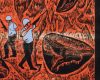
“Through appropriation, the vitality of Black history, literature, and poetry—and the importance of preserving and propagating this legacy—are interwoven into Catlett’s imagery, serving as both an expression of resilience and a force for resistance.”
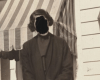
“In the end, gendered insult reveals that language is one of the most durable carriers of inequality. It stores contempt in ordinary forms. It turns hierarchy into shorthand. It allows long histories of valuation to survive in single syllables and familiar phrases.”

“Her work is an abstract reflection of her life. The colourful, idyllic childhood, the loneliness and isolation of institutional care and, above all, the connection with her sister Joyce.”

At its core, criticism asks a fundamental question: how do artistic works produce meaning?

“South Africa’s anti-apartheid photographers did not merely record brutality. They preserved evidence, built collective memory, and transformed the camera into a weapon of political education and international solidarity.”

“Langston Hughes’ words sent chills down my spine. It gave me the wherewithal to truly understand that fascism is not at all a foreign term, nor is it strictly related to Europe or even novel in twenty-first century American life.”

“I might add that portraiture is also a tender art. It tries to hold onto what can’t be contained, which is life itself and a clear view of it.”
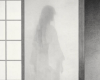
“Spirits return because something in the social fabric was left unfinished—an unacknowledged injustice, a normalized cruelty, a promise broken within a rigid order that leaves little room for repair.”

“Although he personally describes his art as Afro-realism, when we look at it with historical circumspection, we will be more attuned to link it to the larger zeitgeist of a slew of known and unknown artists operating presently in the Internet and social media spaces, so that it almost feels like a movement.”