

By Benjamin Munyao David
When I go back home, I do not want the village to recognise me by the clothes I wear, the shoes on my feet, or whatever the world may have taught me to carry in my pockets. I want the soil to recognise the weight of my footsteps. I want the old footpaths to remember the boy who once ran along them with dust rising behind his heels like smoke from a small and stubborn fire. I want the wind moving through the dry grass to whisper that somebody who left with questions has finally returned carrying answers, though some of those answers may still be broken. When I go back home, I will not arrive like a stranger returning from a distant country. I will arrive like a lost sentence finally finding its place in the old story. I will stand somewhere between the houses and the hills, look across Musoka village, and understand that home was never merely a place I had left behind. Home was the wound that kept calling my name without ever speaking it. Home was the silence beneath every achievement, the shadow behind every smile, the old road that remained inside me even when my feet learned to walk upon other roads.
When I go back home, I will remember the mornings when the village woke before the sun had properly opened its eyes. The darkness would still be hanging over the hills, and yet somewhere a door would creak, a cooking fire would begin to breathe, a metal basin would strike against a stone, and footsteps would move through the cold like prayers that had forgotten their words. There were people who possessed almost nothing and yet somehow possessed the courage to begin another day. They carried jerrycans, hoes, baskets, children, debts, disappointments and dreams upon the same shoulders. Nobody called them heroes. Nobody wrote their names in newspapers. Nobody built statues for them. But they continued. That was their greatness. They planted when the sky looked unwilling to give rain. They walked when the road was long. They smiled when their hearts were tired. They sent children to school while wondering whether there would be enough food for supper. They borrowed tomorrow from neighbours because today had already spent everything it possessed. And still, every morning, they rose. Perhaps that is what courage has always looked like in the villages of this county—not a sword held above the head, but a woman waking before dawn to light a fire when she does not know what she will cook.
When I go back home, I will walk towards Yathui market and realise how much a market can remember. It remembers the laughter that once spilled between stalls, the bargaining voices rising and falling like instruments in an orchestra, the old men sitting beneath shade and discussing the country as though they had personally advised every government that ever existed, the women measuring flour with hands that knew exactly how much a family could survive on, the young people standing at the edges of possibility, wondering whether their lives would ever become larger than the horizon they could see. A market is never merely a place where things are bought and sold. It is a mirror. It reflects what a society has, what it lacks, what it hopes for and what it fears. In Yathui, I would see the beauty and pain of an entire community gathered beneath one sky. I would see ambition standing beside poverty, laughter beside grief, faith beside doubt. I would see people who had learned to make dignity out of scarcity. And perhaps I would finally understand that development is not a word to be pronounced from distant offices. Development is the mother who wants clean water. It is the child who needs a better classroom. It is the farmer who deserves a fair price. It is the young person who should not have to leave home merely to discover that his dreams were worth something.
When I go back home, I will enter the heart of Kyamatula sublocation with a different pair of eyes. The roads will not look like roads alone. They will look like promises waiting to be fulfilled. Every pothole will become a question. Every broken path will ask how many years a community can wait before somebody decides that its suffering matters. Every classroom with walls that have begun to surrender to weather will remind me that children should never inherit the poverty of their parents as though poverty were a family name. Every grandmother sitting quietly outside her house will remind me that there are entire histories disappearing without ever being written down. Every young man standing idle beneath a tree will remind me that unemployment is not simply the absence of a salary; sometimes it is the slow erosion of confidence, the gradual shrinking of dreams until a person begins to believe that he was born only to survive. Every girl walking home with books against her chest will remind me that education is one of the few fires that can be carried from one generation into another without becoming smaller.
When I go back home, I will search for the people who never left, because they are the ones who kept the village alive while the rest of us were learning to live elsewhere. I will look at the old faces and wonder how many funerals they attended, how many children they buried, how many weddings they celebrated, how many droughts they survived, how many governments promised them a better tomorrow. Their faces will be maps of a history that no textbook could contain. There will be wrinkles that were not created by age alone but by seasons of worry, years of labour, nights of waiting and mornings of endurance. Some will ask me where I have been. I will have no simple answer. I could speak of cities, streets, ambitions and failures, but none of those words would explain the distance between the person who left and the person who returned. I will simply say that I went looking for myself, only to discover that pieces of me had remained behind—in the dust of the road, in the sound of distant cattle, in the laughter of children, in the smell of rain approaching over the hills.
When I go back home, I will remember the children. They will be running barefoot along roads that have witnessed generations of footsteps, their laughter breaking through the seriousness of the afternoon. They will chase tyres, improvise footballs, invent kingdoms from stones and sticks, and transform ordinary soil into an entire universe. They will not yet understand how difficult life can become. They will not know that some dreams require years of rejection before they become reality. They will not know that some people will tell them they are not good enough, that some doors will close without explanation, that poverty can make even a simple ambition feel like a mountain. And perhaps that innocence will be the most precious thing I see. I will want to protect it—not by lying to them about the world, but by making the world worthy of their dreams. A child should not have to become old merely because society failed to become better.
When I go back home, I will think about those who left and never returned. Some went to Nairobi chasing employment. Some crossed borders carrying little more than hope. Some disappeared into the enormous machinery of cities and became strangers even to themselves. Some returned only in coffins, their journeys ending where all journeys eventually end. Others remained away because home had become too painful, too poor, too quiet, or simply too full of memories. Yet even those who leave carry something from the village. They carry the accent of their childhood, the names of forgotten neighbours, the taste of food cooked over charcoal, the memory of rain falling on iron sheets, the sound of evening conversations drifting between houses. You can remove a person from a village, but it is difficult to remove the village from a person. Home travels. It hides inside the heart. It waits.
When I go back home, I will also remember the mistakes we made. We have sometimes allowed politics to divide people who shared the same wells, the same roads, the same schools and the same cemeteries. We have allowed temporary leaders to convince permanent neighbours that they are enemies. We have argued over colours while our children remained hungry. We have defended people who forgot us immediately after receiving our votes. We have celebrated promises more enthusiastically than results. We have sometimes watched corruption from a distance as though it were somebody else’s problem, forgetting that every stolen public coin eventually becomes a missing medicine, a broken road, a classroom without desks, a child without opportunity. We cannot continue inheriting the same disappointments and calling them destiny. A society must eventually become brave enough to examine itself in the mirror.
When I go back home, I will not return only to remember what was lost. I will return to ask what can still be built. There is still time. There are still hands. There are still minds. There are still young people whose hunger for a better life has not been completely extinguished. There are still women whose resilience could hold together entire communities. There are still farmers who know the language of the earth better than many educated people know the language of books. There are still teachers who understand that a classroom is not merely a room but a doorway through which a child may escape the limitations of circumstance. There are still elders carrying wisdom that has survived generations. There are still children who believe tomorrow can be beautiful. What is needed is not pity. What is needed is dignity, opportunity, responsibility and the courage to build.
When I go back home, I will walk slowly. I will not hurry past the houses. I will listen. I will listen to the old woman who speaks about the years when the rains were different. I will listen to the farmer who knows precisely where the soil has become tired. I will listen to the young person who wants to leave but secretly wishes there were a reason to stay. I will listen to the child who thinks school is the beginning of everything. I will listen to the silence of those who have lost too much to speak easily. Sometimes a community does not need another person to tell it what it should become. Sometimes it needs somebody willing to listen long enough to understand what it has already been saying.
When I go back home, I will visit the places where people once gathered and where some now gather no more. I will remember those whose voices have disappeared from the evenings. There are people whose names may no longer be spoken every day, but whose lives remain woven into the community like threads in an old garment. Death does not erase a person completely. It leaves behind gestures, sayings, habits, photographs, memories and the strange emptiness of a chair that nobody sits upon anymore. We carry our dead without knowing it. They accompany us in the choices we make, in the stories we tell, in the traditions we preserve, and in the lessons we refuse to forget. Perhaps this is why going home can be painful: the living welcome you while the dead quietly ask whether you have remembered them.
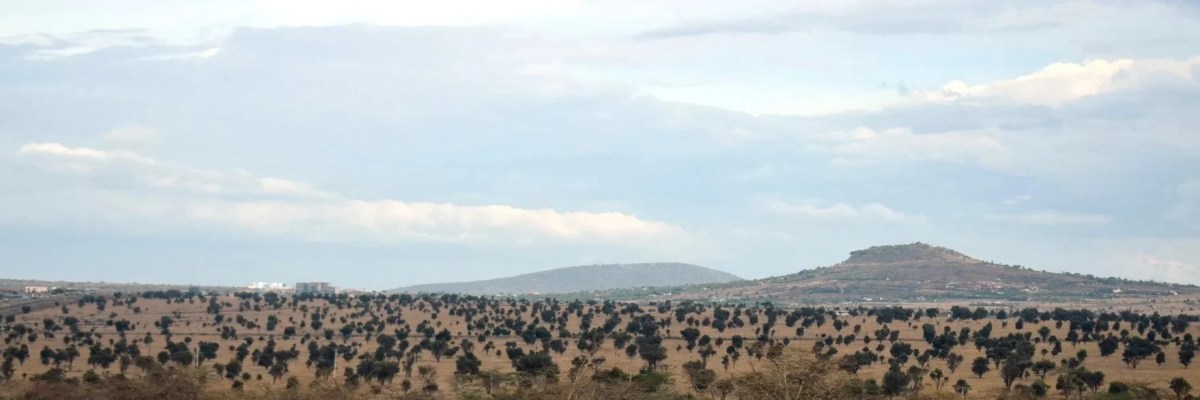
When I go back home, I will stand somewhere beneath the vast Machakos sky and realise that the land has witnessed more suffering than any single person could explain. It has seen drought and harvest, celebration and mourning, poverty and ambition, departure and return. It has watched generations rise, struggle and disappear. Yet it remains. The hills remain. The paths remain. The trees continue growing as though they have never heard of human despair. The morning still arrives. Birds still sing above houses where people once cried. Children still laugh beside graves where adults once wept. Life, in its cruel and beautiful wisdom, continues. And perhaps that is the lesson the land has been trying to teach us all along: nothing remains exactly as it was, but nothing is completely lost either. The future is always being born from the ruins of yesterday.
When I go back home, I want to carry something more valuable than money. I want to carry responsibility. I want to understand that belonging to a place means more than claiming it when it is convenient. It means asking what I have done for the people who shaped me. It means remembering that success becomes hollow when it cannot illuminate the road behind you. It means refusing to become so educated that you forget the hands that raised you, so successful that you become ashamed of where you began, or so busy chasing tomorrow that you abandon the people still fighting through today. If I have learned anything from leaving, it is that the distance between a person and his beginning can never be measured in kilometres. Sometimes the farthest journey is the journey back to gratitude.
When I go back home, I will not promise miracles. I will not stand before the people and speak as though I possess every answer. I will simply say that we must begin somewhere. We must teach one child. Help one family. Plant one tree. Repair one road. Support one farmer. Encourage one young person. Listen to one elder. Lift one woman. Protect one dream. Refuse one act of corruption. Tell one truth. Small things are not insignificant when thousands of hands perform them together. A river is not born as a river. It begins as drops that refuse to believe they are too small to matter.
And when evening finally settles over Musoka village, I will sit quietly and watch the last light disappear beyond the hills. Perhaps smoke will rise from cooking fires. Perhaps voices will drift from distant homes. Perhaps somewhere a child will be called indoors. Perhaps someone will close a shop in Yathui market and begin the walk home. Perhaps a farmer will look at the sky and wonder what tomorrow’s weather will bring. Perhaps somewhere in Kyamatula, a mother will count the little she has and still find a way to feed her family. The ordinary miracle of survival will continue.
Then I will understand why I came back.
I came back because there are places that do not merely exist on maps; they exist inside the blood. I came back because no matter how far a person travels, there is a particular dust that remembers his feet. I came back because the village that raised us deserves more than nostalgia. It deserves attention. It deserves roads that do not punish the poor for being poor. It deserves schools where children can dream without apology. It deserves healthcare that does not force a family to choose between medicine and food. It deserves leaders who remember that power is borrowed from the people and must eventually be returned as service. It deserves young people who believe they can build rather than merely escape. It deserves elders who can grow old with dignity. It deserves a future that does not require its brightest children to abandon it before they can succeed.
When I go back home, I will kneel and touch the earth.
Not because the earth is perfect.
Not because the village has given me everything.
But because it gave me somewhere to begin.
And perhaps, after all the years of running toward distant horizons, I will finally understand that home was never waiting for the person I would become. Home was waiting for me to remember the person I had been.
I will rise from the soil with dust upon my hands.
I will look toward the hills.
And for the first time in a very long time, I will not feel that I have returned to the place I came from.
I will feel that I have finally returned to myself.
Benjamin Munyao David is a Kenyan writer, author, and poet whose work rises from the quiet places where memory, humanity, struggle, and hope meet. A storyteller drawn to the beauty hidden within ordinary lives, Benjamin writes with a voice shaped by experience, imagination, and an enduring belief in the power of words to illuminate what the world often leaves unseen. His writing carries the fragrance of home, the ache of nostalgia, the resilience of the human spirit, and the poetry of lives lived between darkness and dawn. He is the author of his debut book, ONE STEP THROUGH THE FIRE, a work born from the conviction that even through life’s fiercest flames, the human spirit can endure, transform, and emerge carrying its own light. Through fiction, poetry, and reflective storytelling, Benjamin seeks not merely to tell stories, but to leave footprints upon the hearts of those who read them—reminding us that every life holds a story worth preserving, every wound can become wisdom, and sometimes a single sentence can become a doorway through which a reader finds themselves. He continues to write with the hope that his words will travel beyond borders, speak across generations, and become a lasting testament to the extraordinary stories hidden inside ordinary human souls.


