

By Amir Zadnemat
Introduction: Philosophy as the Ultimate Ars Vitae
In the hyper-accelerated, technologically saturated landscape of the modern world, philosophy is frequently mischaracterized as an esoteric discipline, confined to the sterile corridors of academia and detached from the visceral realities of daily life. However, from the sun-drenched stoas of ancient Athens to the existentialist cafes of mid-century Paris, the true vocation of philosophy has always been ars vitae—the art of living. The human condition is inexorably tethered to uncertainty, adversity, and suffering. Perhaps the most pervasive cognitive distortion of the modern era is the conviction that absolute tranquility and the absence of problems constitute the “default state” of the universe.
To navigate the inevitable tempests of human existence, we must return to the roots of practical wisdom. We require a philosophical framework that neither reduces us to passive nihilism nor deceives us with toxic positivity. In this comprehensive essay, we will deconstruct four foundational principles derived from various philosophical traditions, offering a robust, actionable blueprint for confronting existential challenges.
The Ontology of Suffering: Shattering the Illusion of the “Perfect Life”
The first crucial step in addressing life’s problems is to acknowledge their ontological necessity. Modern consumer culture perpetuates a dangerous psychological fallacy, often termed the “arrival fallacy”: the belief that once a specific milestone is achieved—a debt is paid, a promotion is secured, or a relationship is formalized—we will cross a threshold into a permanent state of frictionless bliss.
To dismantle this illusion, we must turn to the wisdom of Eastern philosophy, particularly Buddhism, and the pessimism of Western thinkers like Arthur Schopenhauer. In Buddhist philosophy, the First Noble Truth introduces the concept of Dukkha (suffering or unsatisfactoriness). Dukkha is not merely an anomaly; it is the fundamental texture of existence. Schopenhauer echoes this sentiment, positing that human life inherently wrestles with dissatisfaction.
Rather than viewing this as cause for despair, recognizing the inevitability of struggle is profoundly liberating. The Buddhist parable of the “Two Arrows” perfectly illustrates this. The first arrow is the unavoidable pain of existence—loss, illness, or external hardship. The second arrow is our psychological resistance, our anger, and our refusal to accept the first arrow. We cannot dodge the first arrow, but the second arrow is entirely self-inflicted. When we accept that problems are not interruptions to our lives but the very substance of life itself, we drop the second arrow and drastically reduce our overall suffering.
The Dichotomy of Control: The Golden Doctrine of Stoicism
When confronting crises, arguably no philosophical school is as rigorously practical as Stoicism. The philosopher Epictetus, born a slave and later a prominent teacher in Rome, built his framework upon a profound yet deceptively simple binary, outlined in the opening of his Enchiridion: “Some things are in our control and others not.”
We cannot control the macro-economic climate, the inevitability of illness, the passing of time, or the judgments and actions of others. However, our internal appraisals, our desires, our aversions, and our deliberate responses reside entirely within our sovereign domain. The modern predicament is characterized by an inversion of this dichotomy: we expend immense psychological capital attempting to manipulate external variables while neglecting our internal architecture.
The Stoic sage recognizes that any mental energy invested in agonizing over the uncontrollable yields absolutely no return and only generates high psychological distress. Therefore, practical wisdom dictates a radical shift in our mental economy. By reclaiming our psychological capital from the deterministic events of the external world and reallocating all of our focus to our deliberate choices, we achieve Apatheia—not apathy in the modern sense, but a state of mind undisturbed by the passions of external turmoil. Marcus Aurelius applied this constantly, noting that the mind can convert any obstacle into fuel: “The impediment to action advances action. What stands in the way becomes the way.”
The Alchemy of Meaning: An Existential Approach to Crisis
If Stoicism teaches us how to manage our reactions, Existentialism teaches us how to forge purpose from the raw material of our suffering. The existentialist tradition, particularly the Logotherapy developed by psychiatrist and Holocaust survivor Viktor Frankl, posits that the primary human drive is not the pursuit of pleasure or the pursuit of power, but the “will to meaning.”
Drawing on his harrowing experiences, Frankl observed that survival was intimately linked to a person’s ability to locate meaning within their suffering. He famously quoted Friedrich Nietzsche: “He who has a why to live for can bear almost any how.”
When faced with insurmountable problems, the human psyche often defaults to the paralyzing, passive question: “Why is this happening to me?” This question assumes a victimhood status. Existentialism demands a radical reframing. Instead of asking what life is doing to us, we must ask what life is demanding from us. The question shifts to: “Who must I become to transcend this crisis?”
This is the alchemy of the soul. Difficulties are the crucible in which the impurities of our former selves are burned away. If, amidst a severe personal loss, a catastrophic career failure, or a deep emotional betrayal, an individual can extract a lesson in compassion, resilience, or humility, they have effectively conquered the problem. The external reality may remain tragic, but the internal narrative is transformed from senseless tragedy to a necessary stage in self-actualization.
Pragmatism and the Micro-Ethics of the Present Moment
While grand existential meaning is vital, the sheer scale of our problems can sometimes lead to cognitive paralysis. When we gaze upon the entirety of a crisis, the cognitive load is too vast to process, leading to severe anxiety and procrastination. Here, the American philosophical tradition of Pragmatism—championed by thinkers like William James and John Dewey—offers a vital corrective.
Pragmatism evaluates the truth or meaning of concepts by their practical consequences. In the context of life’s problems, over-analyzing the macro-structure of a crisis is philosophically useless if it leads to inaction. The Pragmatic approach dismantles “paralysis by analysis” and the tyranny of perfectionism by fiercely restricting the temporal horizon to the immediate present.
The past is merely a neurological construct (memory), and the future is an abstract probability. The only true arena of agency is the present moment—the now. Pragmatism teaches us to stop looking at the summit of the mountain and to focus exclusively on the mechanics of the very next step.
This philosophy of incrementalism relies on the compounding nature of small actions. If we focus on making a situation infinitesimally better each day, rather than attempting to solve it completely in one grand gesture, the results accumulate exponentially over time. What small, tangible action can be executed today to shift the reality of the problem by a mere fraction? Executing that micro-action is the highest philosophical good in that moment.
Synthesizing the Philosophy: Becoming the Sculptor of Your Existence
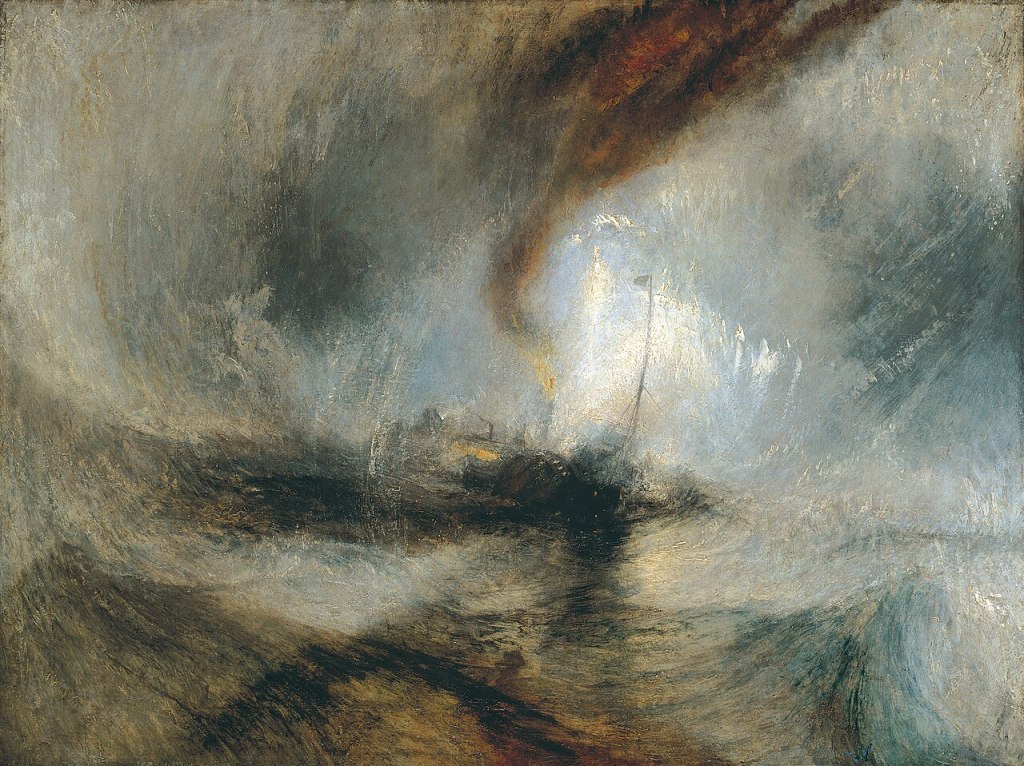
To integrate these philosophies is to forge a resilient armor for the mind. The journey begins with the ontological acceptance that the storm is natural. We then draw a strict boundary around our locus of control, refusing to expend energy on the uncontrollable winds. Within the storm, we forge a deep, personal meaning out of our struggle, refusing to be passive victims. Finally, we navigate the tempest not by trying to teleport to the shore, but by pragmatically adjusting the sails, one moment at a time.
Consider the metaphor of the sculptor, echoing Nietzsche’s concept of Amor Fati (love of one’s fate). We are simultaneously the raw, unshaped stone and the sculptor holding the chisel. Life does not hand us a polished masterpiece; it hands us a jagged, heavy block of marble, full of faults and impurities, representing our circumstances, our traumas, and our crises.
The unphilosophical mind curses the heavy stone and demands a lighter, smoother block. The philosophical mind, however, picks up the chisel. Every problem, every heartbreak, and every failure is a strike of the hammer. Directed by wisdom, these strikes do not shatter the stone; they chip away the superfluous, the ego, and the trivialities, slowly revealing the magnificent character beneath.
Conclusion
Philosophy is not an escape from reality; it is the ultimate engagement with it. You are not a helpless casualty of circumstantial chaos. By abandoning the futile quest for a life devoid of hardship, embracing the limits of your control, extracting profound meaning from your suffering, and committing to practical action in the present moment, you reclaim your agency. You cannot command the oceans, nor can you dictate the trajectory of the winds. But the mastery of the helm—the art of adjusting the sails—is, and forever remains, your sovereign right. It is in this courageous, deliberate struggle that the true beauty and depth of the human experience are forged. Do not merely endure the storm; learn the art of dancing within it.
Amir Zadnemat is an Iranian writer with an MA in Literature from the University of Gilan, Iran. His writing engages with cinema as a poetic language shaped by light, shadow, and narrative.
Categories: featured, literature



this is particularly meaningful to me right now. I had a heart attack in April, almost died, and spent 42 days in the hospital. My life is utterly changed. recovery means doing many small things every day. I’m not contemplating the future, only the daily increments of my new life.
LikeLike
Oh, I’m sorry to hear that! Wishing you a speedy recovery. I think from time to time about your meditation on walking (The Path). I find it very beautiful. Walking is one of the most important things to me for clearing my mind or thinking what I need to think about. I hope you can find solace and healing in lovely walks!
LikeLike
thanks! We walk every day.
thanks! we walk every day.
LikeLike