

By Amir Zadnemat
The Liminal Moment
It is 3:47 AM—a threshold where night has not yet surrendered to morning. In these fleeting minutes, waking up evokes a profound sense of estrangement, as if time itself has entered a state of liminality. However, while a threshold typically functions as a bridge between two states, this moment feels like a collapse of transition. Your phone remains illuminated, yet no messages arrive; the streets are paralyzed in silence. You are inhabiting a pocket of time recorded in no calendar. We all recognize these suspended intervals: the midnight train station where no one boards, or the second between sleep and waking when identity feels fluid. Gaston Bachelard spoke of “interior spaces”—realms that exist more in feeling than on maps. If we extend this to chronology, we find these are not just transitions, but “dead times”—not because they have ended, but because they have stepped outside the rhythmic pulse of life, becoming hours that do not flow, but merely persist.
Dead Times: The Labyrinth of Hours
In ancient cultures, the night was never a uniform void; it was a sequence of distinct atmospheres. Medieval Europe feared the “Wolf Hour,” and Eastern traditions revere the “time before dawn” as a sacred bridge between darkness and light. These were liminal thresholds—intuitive recognitions of the shifting quality of time. Modernity, however, has flattened this topography. Time has been reduced to standardized units: minutes, work schedules, and digital displays. In our current system, 3:47 AM is identical to 3:47 PM—merely a coordinate on a grid. Yet, the human psyche rejects this equality. When the sacred bridge of liminality is replaced by the mechanical grid, we enter the “Dead Times.” At midnight, reality recedes, allowing the “Uncanny” (Unheimlich) to surface. As Jorge Luis Borges suggested, time is more a labyrinth than a river; dead times are those side corridors no one was intended to enter, yet we find ourselves there nonetheless.
Living Ghosts: The Architecture of Absence
We often attribute the supernatural to the dead, yet the most haunting ghosts are among the living. In the modern metropolises, we witness what Kenneth J. Gergen described as ‘absent presence.’ On the morning metro, hundreds stand shoulder to shoulder, yet their gazes are worlds apart, anchored to small screens. This silence is not peace; it is distance. Houses, too, can embody this void. A home may be filled with the clatter of dishes, the glow of televisions, and the movement of bodies, yet lack a shared reality. Each inhabitant resides in a separate digital or mental chamber. Haruki Murakami frequently depicts characters who feel a vital part of themselves has been left elsewhere, leaving behind a “living ghost”—a person who breathes, works, and speaks, but whose essential presence has withdrawn. They are physically present, yet existentially absent.
The Intersection: Where the Uncanny Resides
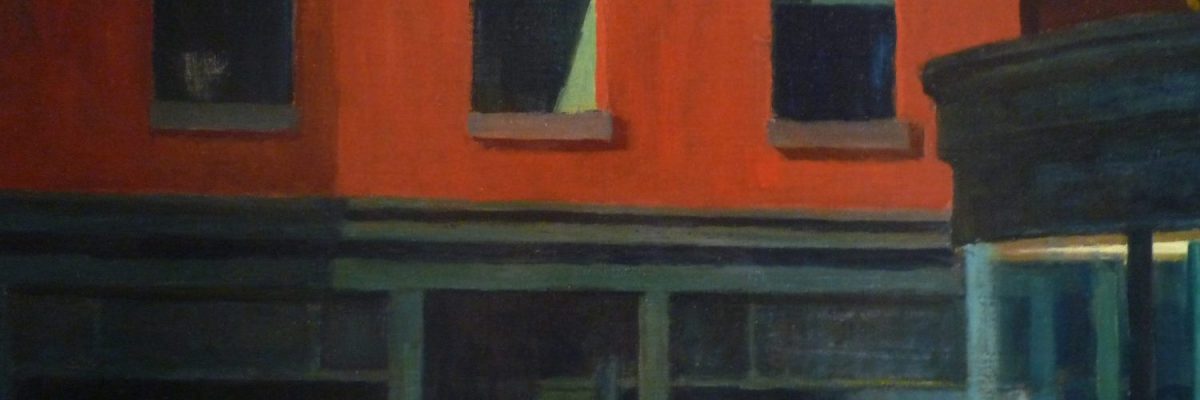
The most profound experience occurs at the intersection of these two phenomena: a half-present person inhabiting a half-real hour. In the stillness of a sleepless night, one begins to notice the details that the day ignores: the weight of a shadow on the wall, the rhythmic creak of the floor, or the reflection of one’s own face in a dark window. For a fraction of a second, before the rational mind intervenes, that reflection appears as a stranger. This brief lapse in recognition reveals the fragile distance between us and ourselves. This is the true nature of the “Uncanny”—not the sight of something supernatural, but the sight of the ordinary from an impossible angle. In these dead times, the world slows down, allowing the hidden depth of everyday life to rise to the surface.
Presence as an Act of Will
The supernatural does not require foggy graveyards; it is closer and far more mundane. It manifests in a midnight kitchen, a crowded yet silent subway car, or a house where silence moves between rooms like an uninvited guest. These moments create cracks in the fabric of reality, reminding us that human presence is not an automatic state. It is something that must be consciously built, maintained, and rediscovered.
Perhaps this is why certain hours feel heavier than others, and why some homes feel empty despite the people within them. Somewhere between the dead hours and the silent rooms, we are forced to confront the simplest, yet most haunting question of all:
Are we truly here?
Amir Zadnemat is an Iranian writer with an MA in Literature from the University of Gilan, Iran. His writing engages with cinema as a poetic language shaped by light, shadow, and narrative.


