

By John Wreford
I woke in the early hours to a one-word text message: “Mabrouk.”
It was Nour. I knew immediately why she was saying congratulations.
I had hardly slept all the last week, following the news unfolding in real time on social media: the advance of the Syrian opposition forces on the regime cities of the north. Assad’s fiefdom was falling like a house of cards. After the most brutal of decades, the text message implied it was all over. I immediately dived back into my Twitter feed and my eyes filled with tears. More text messages followed from my sleep-deprived Syrian friends scattered around the world, all incredulous.
And now, one year later, I would walk into an arrivals hall at Damascus airport filled with Syrian families crying and hugging separated sons, now-married daughters, and children that have never seen their homeland. So many tears.
I strolled over to the taxi desk, where a group of middle-aged men were smoking, and asked the price of a car into town.
“$35 for VIP,” one of the men said.
“How much for non-VIP?” I asked.
The others laughed and the man said, “Okay, $25.”
In the car Abu Khalid apologised for the stuck, rattling window.
“Bullet damage,” he explained
The airport road has seen better days — like that time in 1994 when Basel Al-Assad wrapped his Merc around a crash barrier and propelled his idiot brother to next in line for the throne. Would things have been any different had he kept to the speed limit, I wondered. Probably not.
We passed a metaphor of trucks loaded with the mangled carcasses of military vehicles heading for the scrapyard. Behind them trailed thick black bootleg diesel smoke that would soon mix with the toxic fumes of winter fuel-burning stoves. Abu Khalid pulled over and bought me coffee. Slowly it was beginning to sink in that I was back in Syria, a place that in equal measure brought me so much joy and pain.
I hadn’t told many people of my plans to return and wondered who would still be here. Faisal was dead. So was Basel, and Obaida. How happy they would have been to see this day.
As we exited the motorway I lost my bearings for a second, and then suddenly I recognised the drab concrete blast walls of Security Branch 235.
I blurted out, “Ha, Far’ Filistin!”
Abu Khalid laughed hysterically.
“Ah, so you know Far’ Filistin.”
I did — but Abu Khalid knew it better than me, as did most Syrians.
How ironic, I thought, that the last place I ever wanted to see again in Damascus would be the first. I have yet to share on these pages the details of my final traumatic weeks in Damascus back in 2013, but that concrete monstrosity played a large part.
As I walked towards the Old City, the streets were as busy as ever. But the last time I walked this route the soundtrack wasn’t only the unharmonious honking of chaotic downtown traffic but also the sound of artillery batteries battering the suburbs. In those days it was relentless.
Today the clouds in the sky were slipping by silently, tinged only with a hint of the afternoon sun. There was no sight or sound of screaming fighter jets, no helicopters hauling barrels of indiscriminate brutality. And yet, despite the calm and the years that have passed, my body still remembered, and that familiar knot of anxiousness twisted inside me.
Jamil didn’t seem very surprised to see me when I poked my head inside the door of his shop. I hadn’t told my friend of my visit — I thought I would just surprise him. Admittedly a risk, given his heart condition.
He looked well, had gained weight. The last time we met he had only just been released from one of Assad’s prisons. He had been detained at a checkpoint. When he asked why he was being detained, the goon with a gun replied, “We are arresting everyone today.”
Locked up for a month without access to his heart medication, he no longer looked like the ghost he did then.
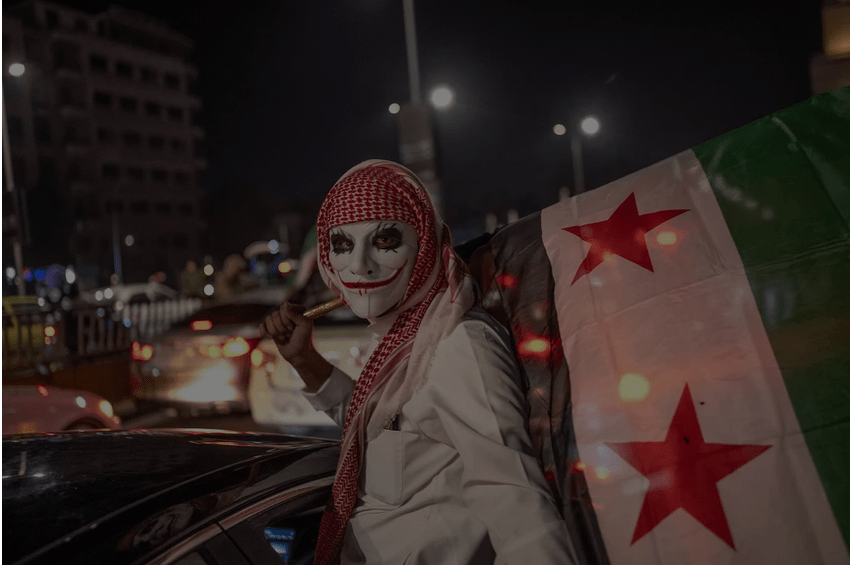
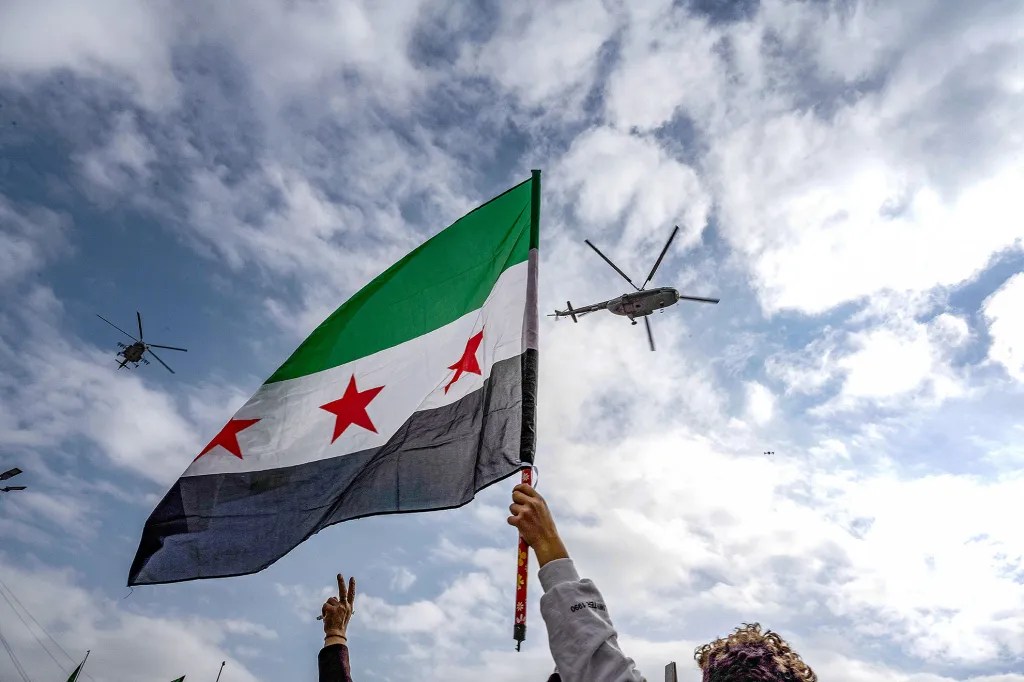
The Old City was crowded. The green revolutionary flags fluttered. People posed for selfies in front of shiny new security trucks. The official anniversary of the liberation was still days away, but the party had already started.

And when the anniversary did arrive, it did so with an unrelenting excitement and fervour that continued unabated for several days. Flags, fireworks, and crowds filled the streets. In side streets drums were banged and the dabke danced. The main roads were bumper-to-bumper with cars, horns blaring and occupants — flares in hand — often hanging from the windows, sprawled on the bonnet, or dancing on the roof. Motorbikes with a minimum of three passengers weaved in and out and over. It was inevitable accidents were going to happen, and hundreds ended up in hospital — not all survived.
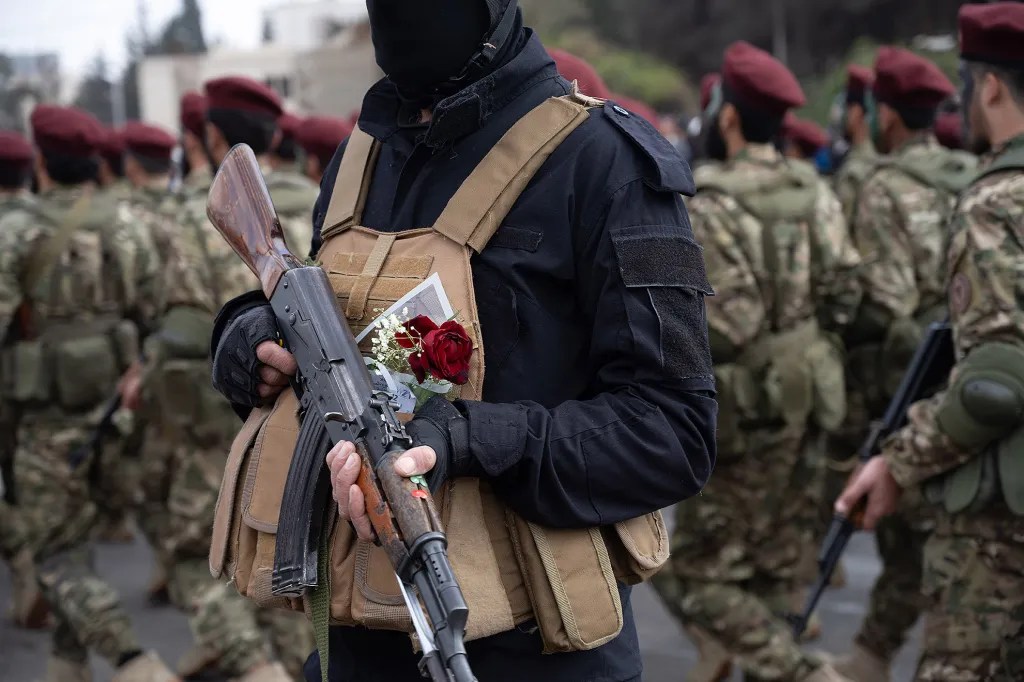
The fledgling interim regime provided a heavy security presence: polite police wearing freshly pressed ninja outfits, a military parade with freshly painted Turkish war toys, skydivers, and choppers dropping messages of peace and hope instead of death and destruction.
The Syrian people have endured a long and brutal war, and the last year has been almost as difficult: the uncertainty of a new, albeit transitional, government, hyperinflation, unemployment, and shortages of gas, electricity, and petrol. The mood wasn’t just one of celebration but one of hope.
Eventually the streets emptied and a melancholy sky cracked, bringing a four-year drought to an end.
I wandered somewhat aimlessly through the streets of the more upscale neighbourhoods of the modern city. In many ways little had changed: the Abu Roummaneh old guard puffing on their fat cigars as waiters in stripy French-style outfits served silly coffee. But the pavements were cracked, the once-clean streets tatty, shops shuttered, industrial-scale generators tethered outside buildings. The city centre had been spared the worst of the war; it was the surrounding suburbs that had been obliterated.
In the souk old women clutching wads of undervalued Syrian lira peeled off notes with the dexterity of blackjack dealers. In the time I have been away the currency has lost 99% of its value. All the shops have electronic money counters, usually reserved only for banks and drug dealers.
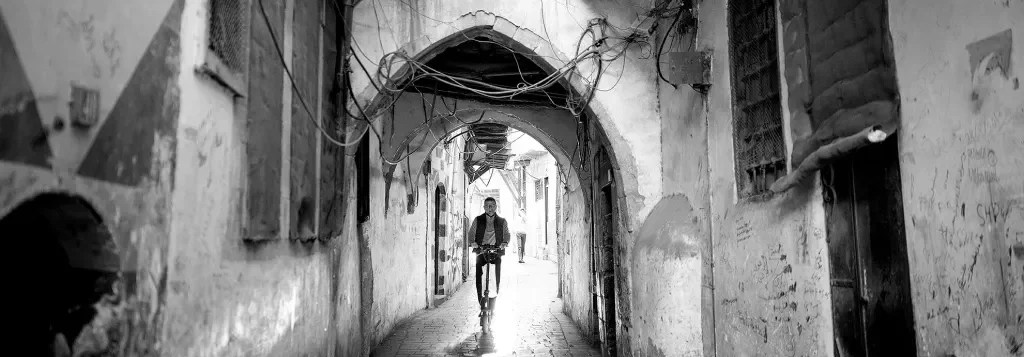
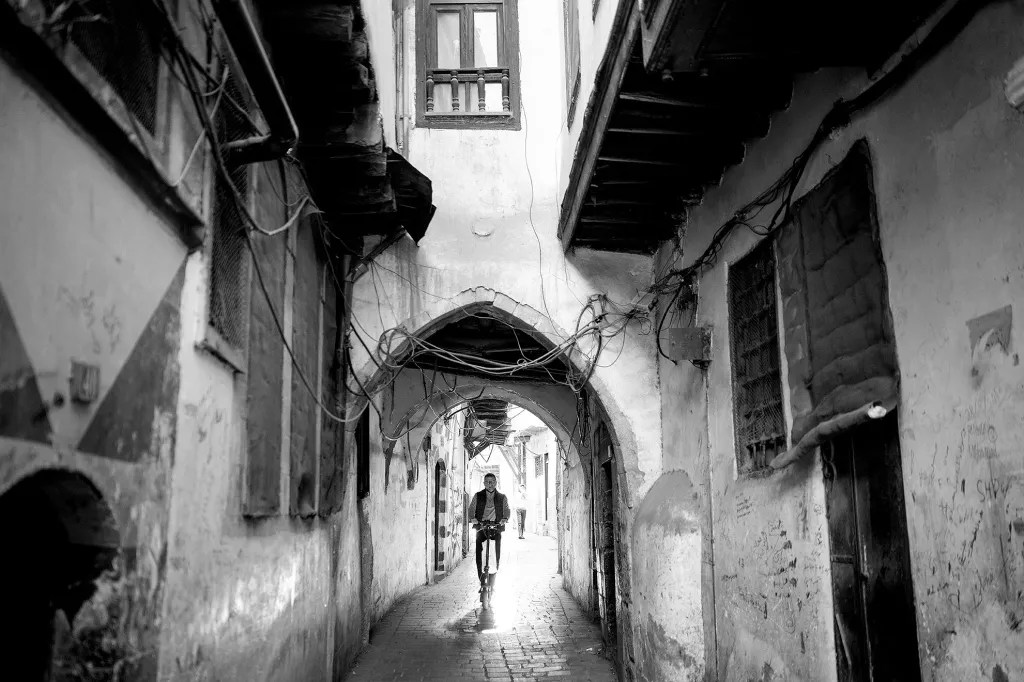
Inevitably I was drawn back towards the Old City, the ancient capital that has seen it all before: its cobbled alleyways echoing empires that have risen and fallen, and stones that have stood stoic and eternal.

I zigzagged through the usual crowds of Al-Hamidiyah and then sidestepped into Al-Hariqa, a busy commercial district named after it was bombed by the French trying to suppress the Syrian revolt against colonial occupiers. The French failed. And almost a century later, in these same streets, Syrians once again began a revolution — this time against Ba’athist oppression.
I dropped in on Jamil. He was stressed. The internet wasn’t working. In the short time I had been in Syria I had been unable to send any images. Everyone had a theory on where to find the best connection, but none were reliable.
“A bit slow, is it?” I asked.
“Three days. Three days, no internet or phone,” he grumbled.
“What, nothing at all?”
“They stole the internet,” he said.
I laughed.
He looked at me with a serious face.
“John, they stole the cables from the ground. Dug them up. Stole them!”
Petty criminality had never been a serious issue in the past, but recently I had been hearing more and more stories — which sadly must be inevitable. Strife-torn Syrians have long been abandoned to fend for themselves.
I sit in Al-Norfra Café, pleased that the waiter remembered me. In many ways my Syrian journey started in this café a lifetime ago. Images flicked through my mind like a series recap. The sound of shisha coal tongs clicking. A group of girls gossiping under clouds of fruity tobacco smoke.
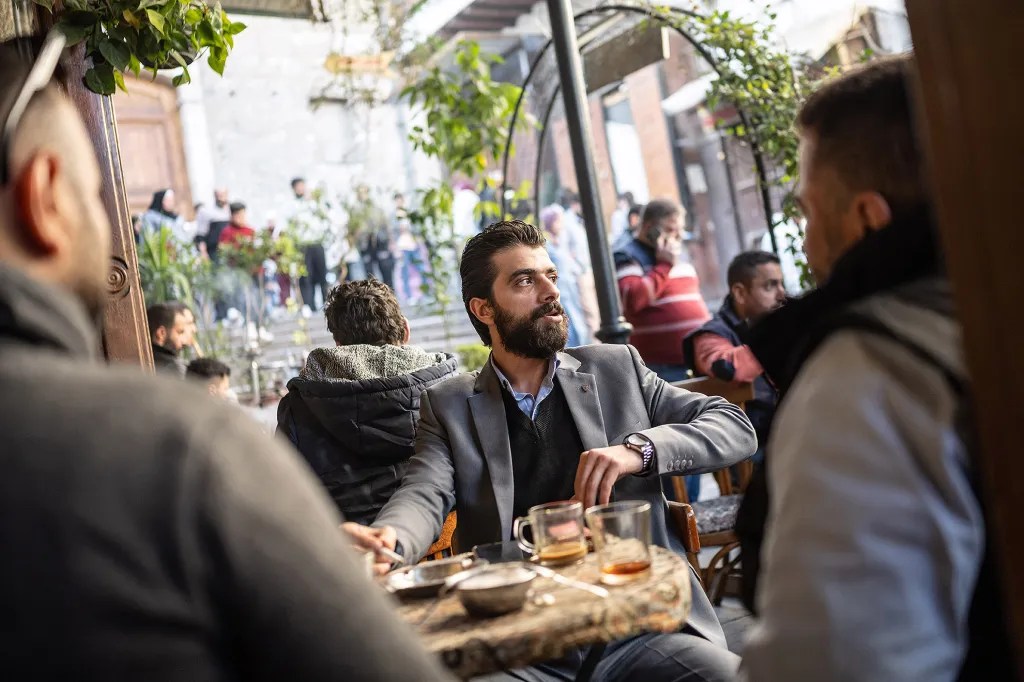
I glanced across the street expecting to see Rudy — grim-faced and stocky in his winter coat — standing guard outside his shop, a legend of the souk. But he too has gone, passing away several years ago.
Later this evening, when the sun has dipped behind the protective Qasyun mountain, the hakawati will arrive. Perched on his wooden throne and waving his wooden stick, he will regale a rapt crowd with his tall tales of myth and mirth — stories of love and loss, a centuries-old tradition of oral storytelling.
Damascus is a city of many stories — a city of saints, caliphs, and kings, and of tyrants — whose population is writing its next chapter: a chapter beginning with the benefit of doubt and dignified resilience.
The posts regarding Syria are mostly from my Damascus diary, where I lived from 2003 until I was forced to leave in 2013. Most of my photographic archive, along with notes and diaries from that time, were lost in the turmoil of a forgotten revolution.
John Wreford is a nomadic storyteller usually found getting into trouble in the Middle East. See/read more at John Wreford Photographer and on Instagram at johnwreford.
Categories: featured, Photo Essay, photography, Travel

 magpiesmagazine.com
Thank you for publishing this 🙂
LikeLike