

From within to without.
The rain fell and the crickets sang all night long. In the morning, the sun warmed the rain out of the ground in a steaming mist that caught in the spiderwebs, and the raindrops rested on outstretched leaves like pearls. Our garden is wild right now. The squirrels have stolen all our tomatoes, the rabbits have topiaried our quince bush, and the trilling wrens’ children chase each other through our fence posts and fly in our door and out our windows. Confusing fall warblers land for a moment in our witch hazel, they’re the same yellowing green as the leaves. Every flower is a surprise this time of year, and a gift, and our garden is teeming with flowers we planted and flowers we didn’t. Even the chives and the sage and the mint are blooming.
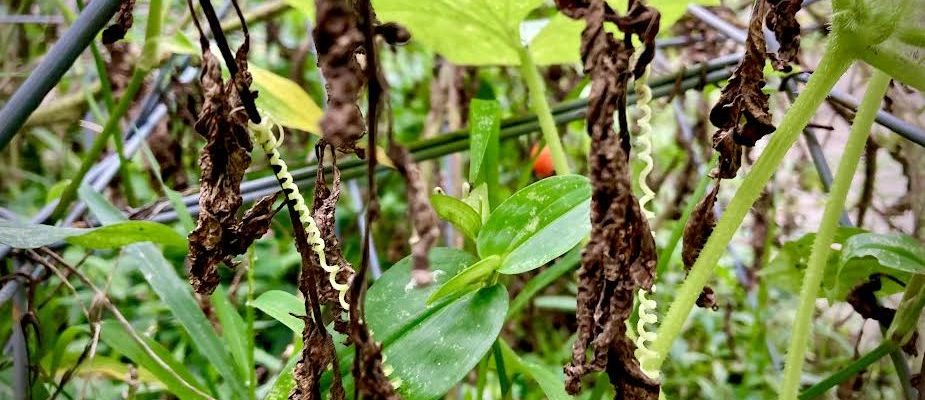
Sometime in the summer I accidentally planted a gherkin in amongst our tomato plants. This accidental plant with a comical name is killing me right now. It has rough blemished leaves the size of an outstretched hand, bright yellow trumpet flowers, and it has beautiful grasping tendrils that I find ridiculously moving. They’re thin and tender, greener than green and lighter than light, they seem fragile, but when they wind themselves around and around something they’re incredibly tenacious. They grow in lovely corkcrews, even if they don’t have anything to hold onto and at the end of the tendril is a delicate tapering, as it reaches for anything to hold. The gherkin’s tendrils hold on to its own branches, to the overtaking weeds with pretty blue flowers, and to the end-of-season tomatoes. It’s holding the wild tangled teeming mess together, it’s making connections. Behind each flower is a small fuzzy ugly gherkin. New life. And at the other end, the spring green tendril grasps black and wizened tomato leaves. A connection of life and death, summer and autumn, birth and decay.
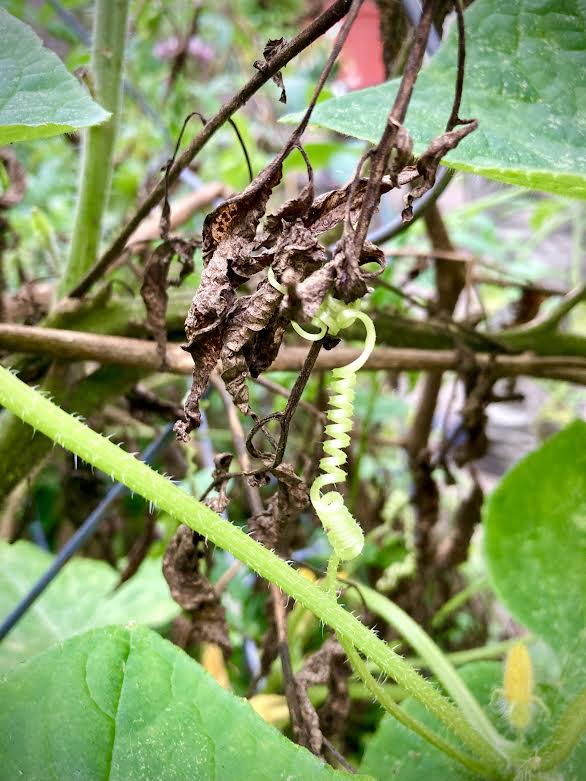
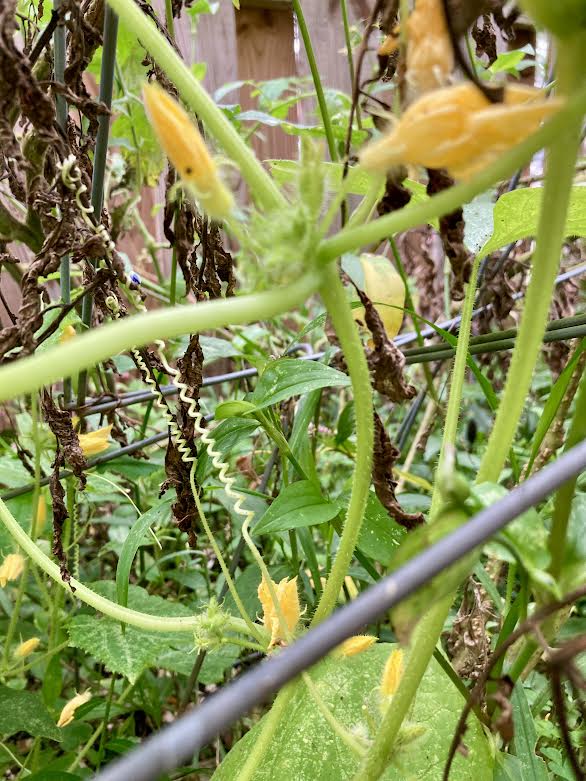
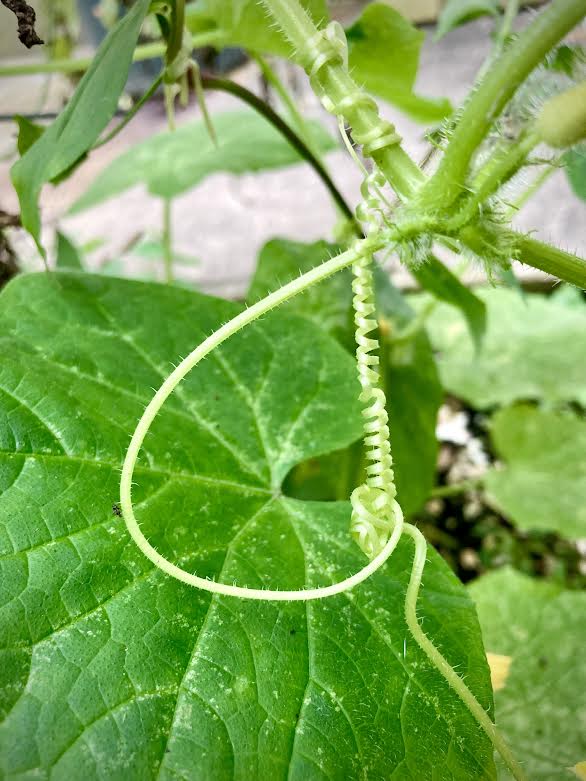
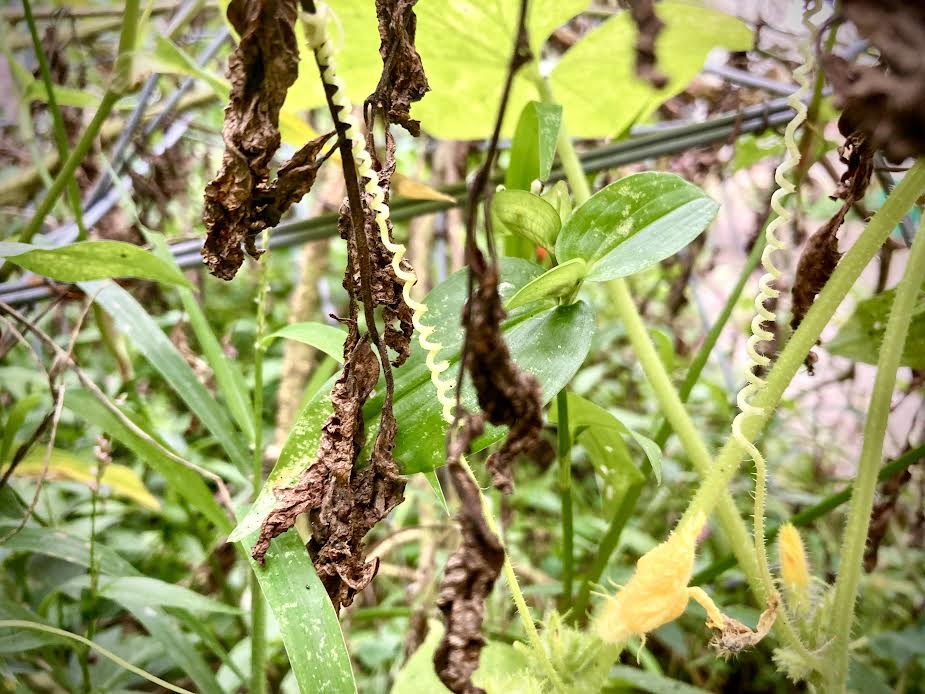
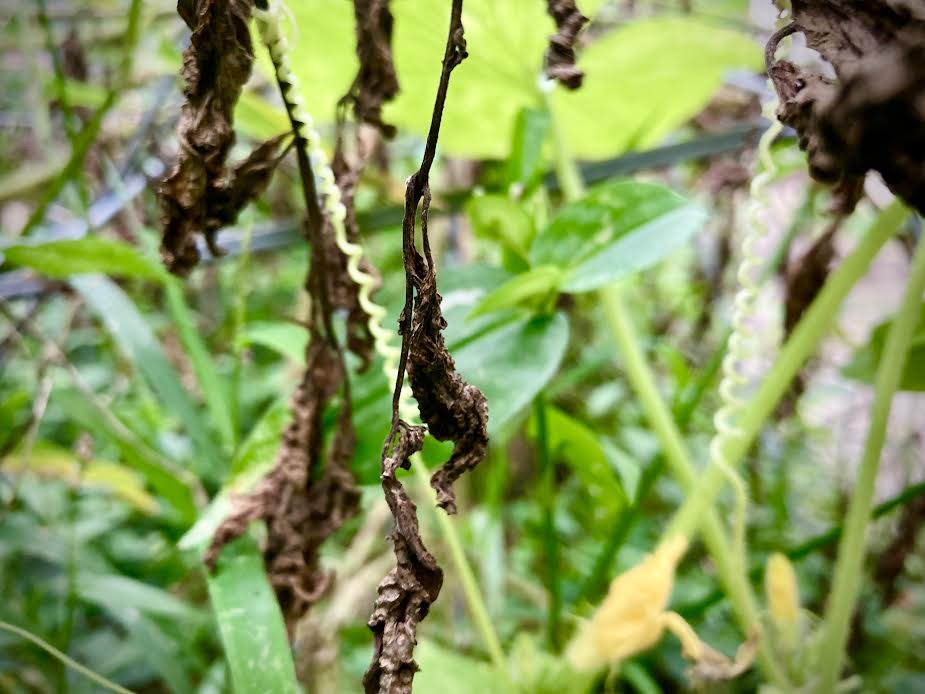
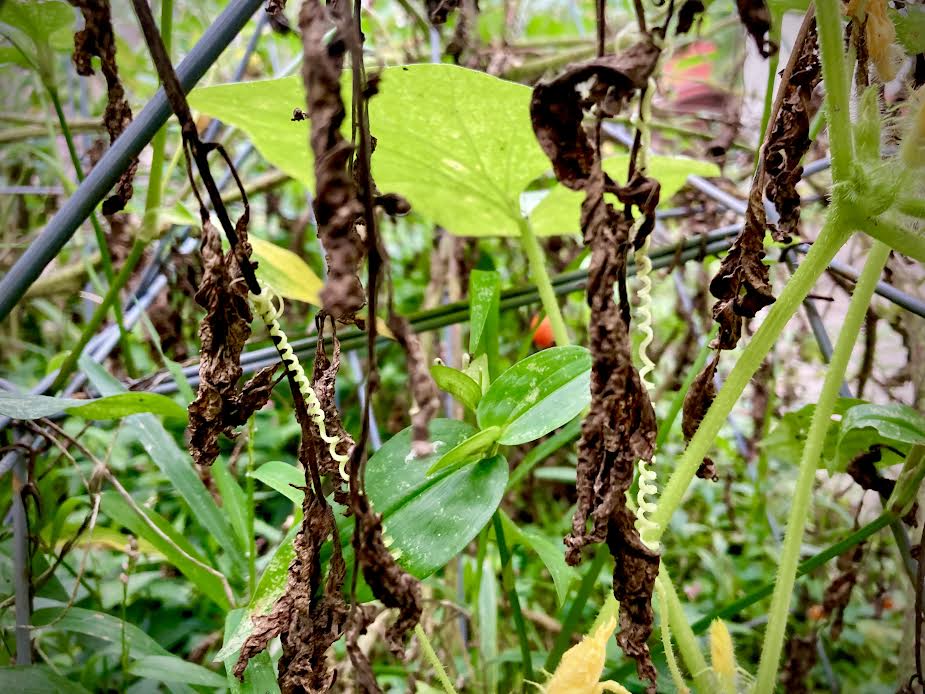
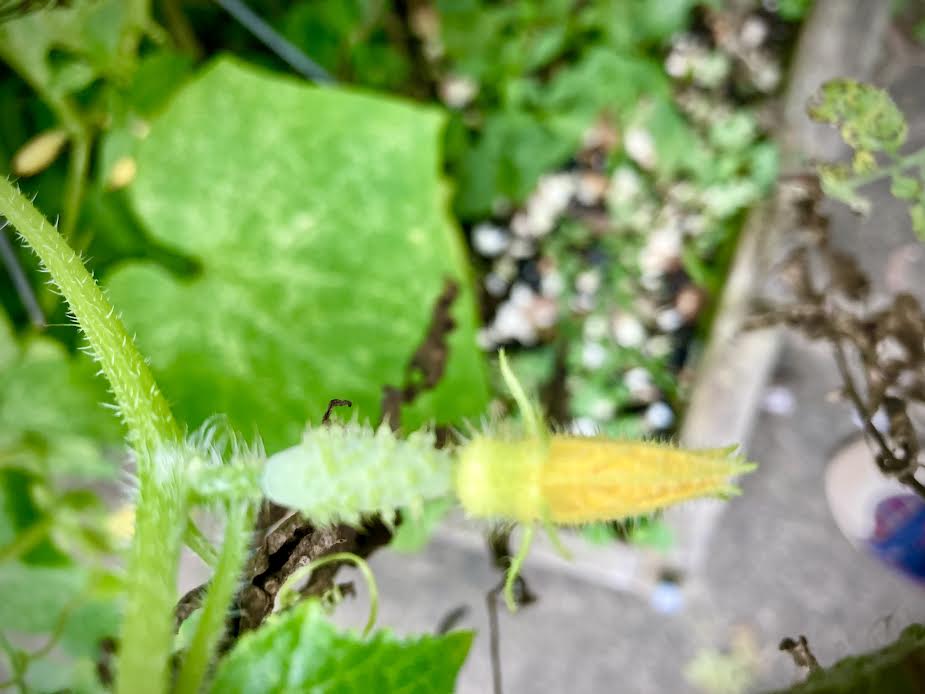
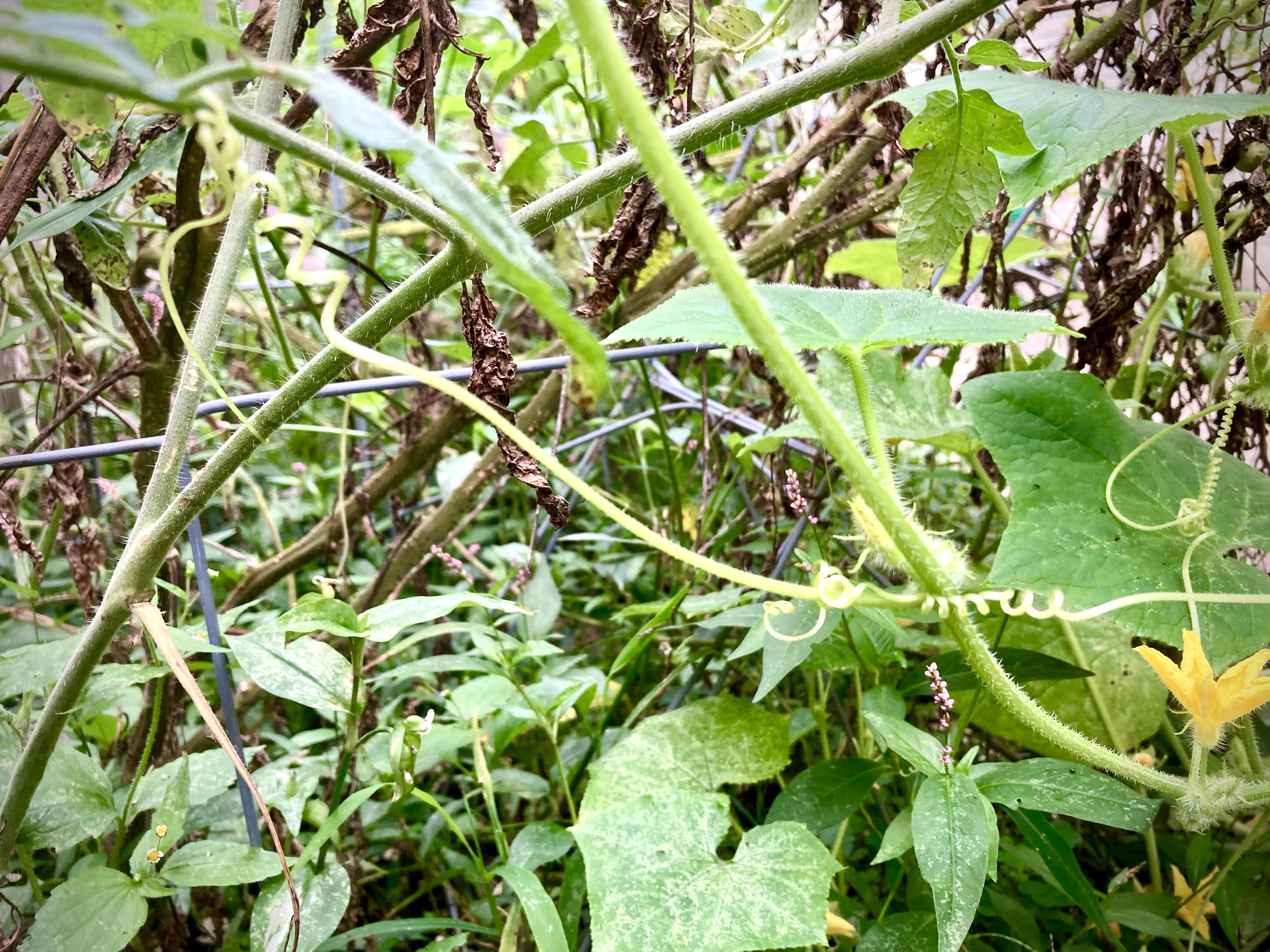
Have I gone on too long about gherkins? Certainly. But I’m feeling extra soft in the head and heart at the moment, with the state of the world and the change in seasons, and the gherkin is giving me strange hope. There’s little in life I love more than connections, and this unexpected physical embodiment of them feels like something I need right now.
And here are some connections I made recently, that feel important to me at this strange time. And they connect to my gherkins because they’re about sharing the bounty from your garden, in a real and a metaphorical sense. The first I’ve spoken about before.
In Candide, we meet a character called The Turk, who doesn’t concern himself with the affairs of the world, but spends his time cultivating his garden with his children because, “work keeps away three great evils: boredom, vice, and need.” Candide, who has undergone, heard about, and even inadvertently caused a really brutal onslaught of human cruelty and misery, reflects deeply on the man’s remarks. In the end, he and his companions say, “Let us work without reasoning, it is the only way to make life endurable.”
And they do work. “All the little society entered into this laudable plan; each one began to exercise his talents. The little piece of land produced much … No one … failed to perform some service.” The Turk is not a misanthropic individual who shuts out the world. He works with his family; they’re creating their world together. And he shares the bounty of his garden with Candide and his friends; sherbet and Turkish cream, oranges and lemons and pistachios. They’re tending to their garden not just to feed themselves, but for the joy of the work itself, and to share their bounty with others.
Just as a farmer does in Taigu Ryoken’s incredibly beautiful poem At Master Do’s Country House. Here’s the middle verse:
Tramping for miles I come upon a farm house
as the great ball of sun sets in the forest.
Sparrows gather near a bamboo thicket,
flutter about in the closing dark.
From across a field comes a farmer
who calls a greeting from afar.
He tells his wife to strain their cloudy wine
and treats me to his garden’s feast.
Sitting across table we drink each other’s health
our talk rising to the heavens.
Both of us are so tipsy and happy
we forget the rules of this world.
[The closing dark! The closing dark! I love that.]
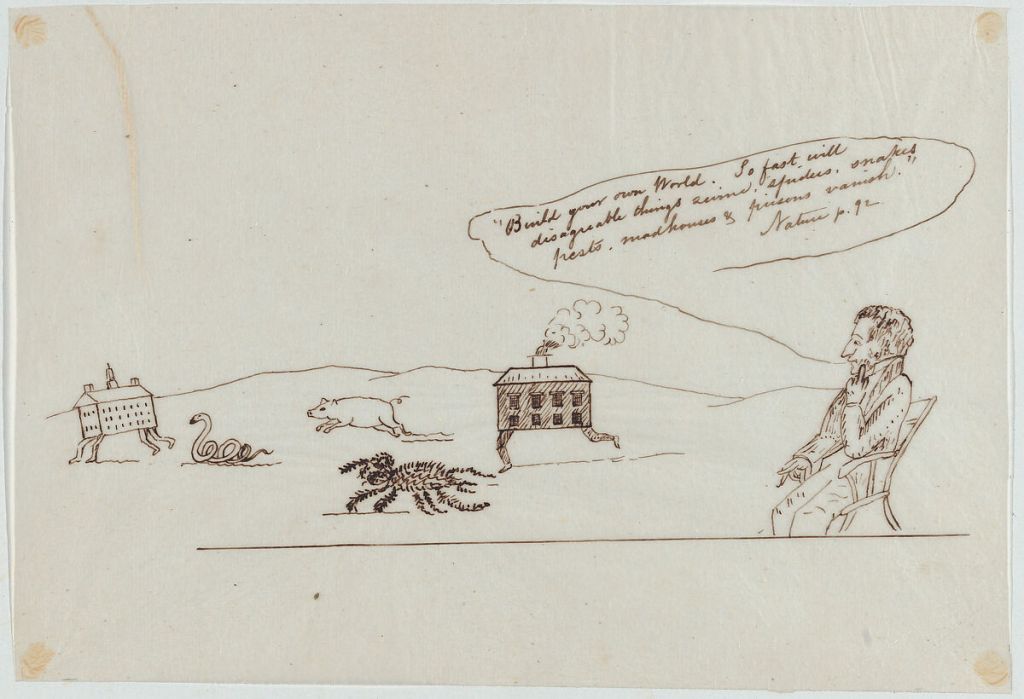
And in Nature, Emerson says, “Every spirit builds itself a house; and beyond its house a world; and beyond its world, a heaven. Know then, that the world exists for you. … Build, therefore, your own world. … So fast will disagreeable appearances, swine, spiders, snakes, pests, madhouses, prisons, enemies, vanish; they are temporary and shall be no more seen.” This is something I think about a lot, and I’ve thought about more and more lately as the “real” world descends into a shambles of greed, hypocracy, and cruelty. Our minds, our imagination, our spirits — however you define that — these are ours. Ours to cultivate and nourish. Ours to build on, to work on, as we see fit. I’d like to say that these things can’t be taken away from us, but, sadly, we know they can. But the more we build them, the more we explore their rooms and corridors and rooftops and alleyways, the more we plant gardens in them and cultivate the fruits and vegetables there — the more we do all that, the more we make them unassailable.
As Donne said, we’re all a little world, but it’s our imaginations that make us immense. And, of course, the fruits we grow there are the things we make, the art we create, the stories we write, the dinners we cook, or even the things we love: the people or pictures or movies or music or walks or pets or light or gherkins. And these things might seem like bright fragile winding tendrils, reaching out for something to hold onto, in these tough times. But once we catch hold of these things and hold them together, once we share the things we create and love, once we make connections between them, we can wind tightly around them. And then we can hang on with tender, surprising tenacity.
Categories: featured

 magpiesmagazine.com
This is a brilliant post. I am filled with pleasure and gratitude after the read. Many thanks.
LikeLike
Beautiful! I love the connections made here, very much ideas and images that have been on my own mind of late. In these trying times we definitely need to create and find our own joy where and when we can!
LikeLike