

By Tim Chambers
This article first appeared on the site Anchor Editions
“A date which will live in infamy.”
December 7, 2016 marked the 75th anniversary of the attack on Pearl Harbor in 1941. That same morning in 1941, FBI agents and Military Police began the systematic arrest and imprisonment of Japanese-American citizens—primarily community leaders, clergy, newspaper publishers and journalists—in Hawaii and the West Coast of the United States.
On February 19, 1942, driven by increasing undercurrents of racism in the media and politics, and at the urging of his military commanders, President Franklin D. Roosevelt signed Executive Order 9066 in which he gave authority to his Secretary of War to establish military zones covering Washington, Oregon, California, and Arizona, and to exclude and remove any people from these zones for reasons of “military necessity.”
Within the next weeks, all Japanese people living in the west coast—approximately 120,000—were rounded up and forced to quickly store, sell, or give up their homes, businesses, and property.
In March of 1942, the military began posting Civilian Exclusion Orders, which ordered “all persons of Japanese ancestry” to report to Civil Control Stations to register, and begin the process of “evacuation” to nearby Assembly Centers and eventual consolidation into Relocation Centers in remote areas across the Western United States. Within the next weeks, all Japanese people living in the west coast—approximately 120,000—were rounded up and forced to quickly store, sell, or give up their homes, businesses, and property. They were imprisoned in concentration camps through World War II, until the camps were slowly decommissioned by 1946. Over two-thirds of those imprisoned were U.S. citizens, and many more had lived in the United States for decades but were prevented from becoming naturalized citizens by existing immigration laws.
A Photographic Record
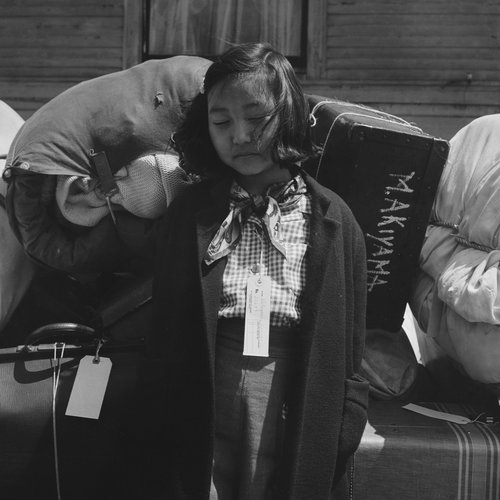
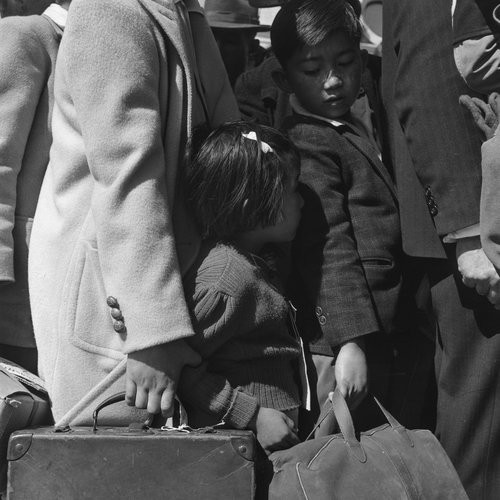
The War Relocation Authority, the government agency established to oversee the roundup and imprisonment of those subject to the Exclusion Orders, hired photographer Dorothea Lange to document the “evacuation” and “relocation” efforts in order to make a photographic record of the process. Lange, well known for her Farm Security Administration photographs of dust-bowl migrants in California in the 1930s, was eager to take the commission, despite being opposed to the effort, as she “believed a true record of the evacuation would be valuable in the future.”
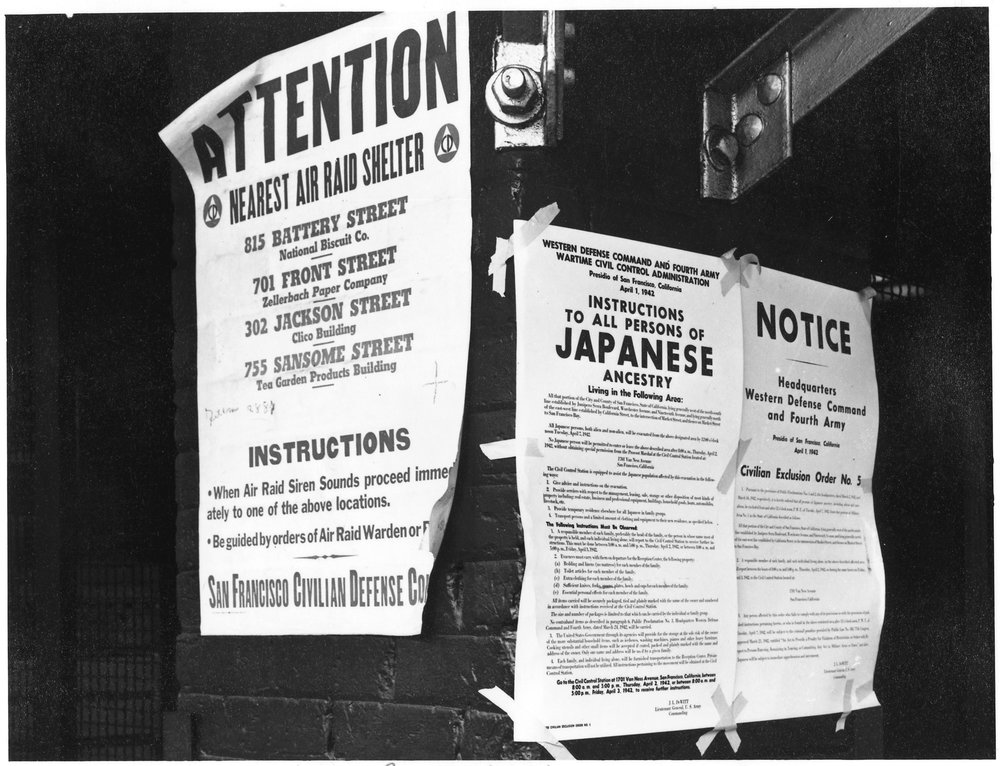
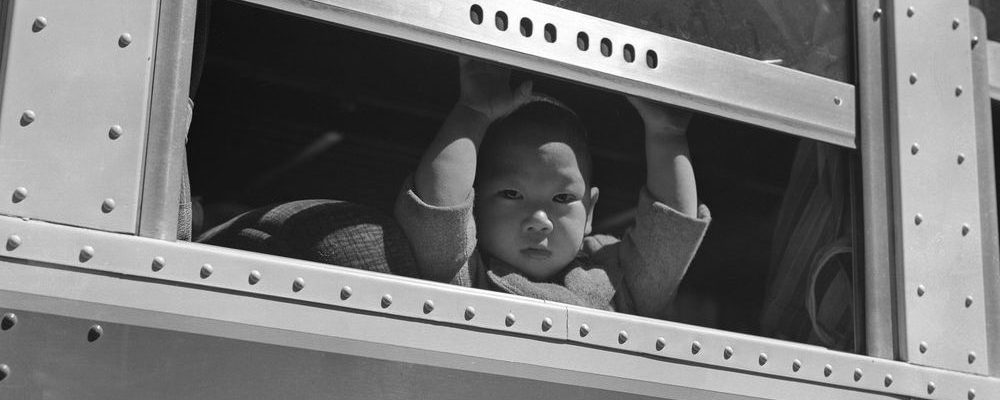
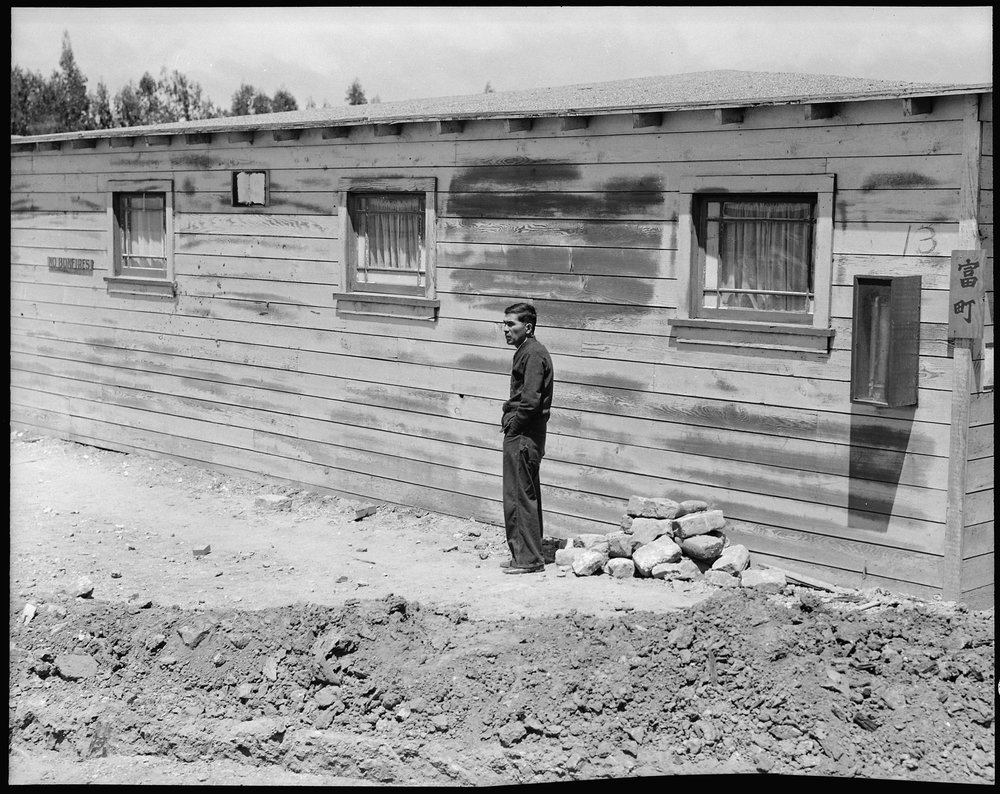
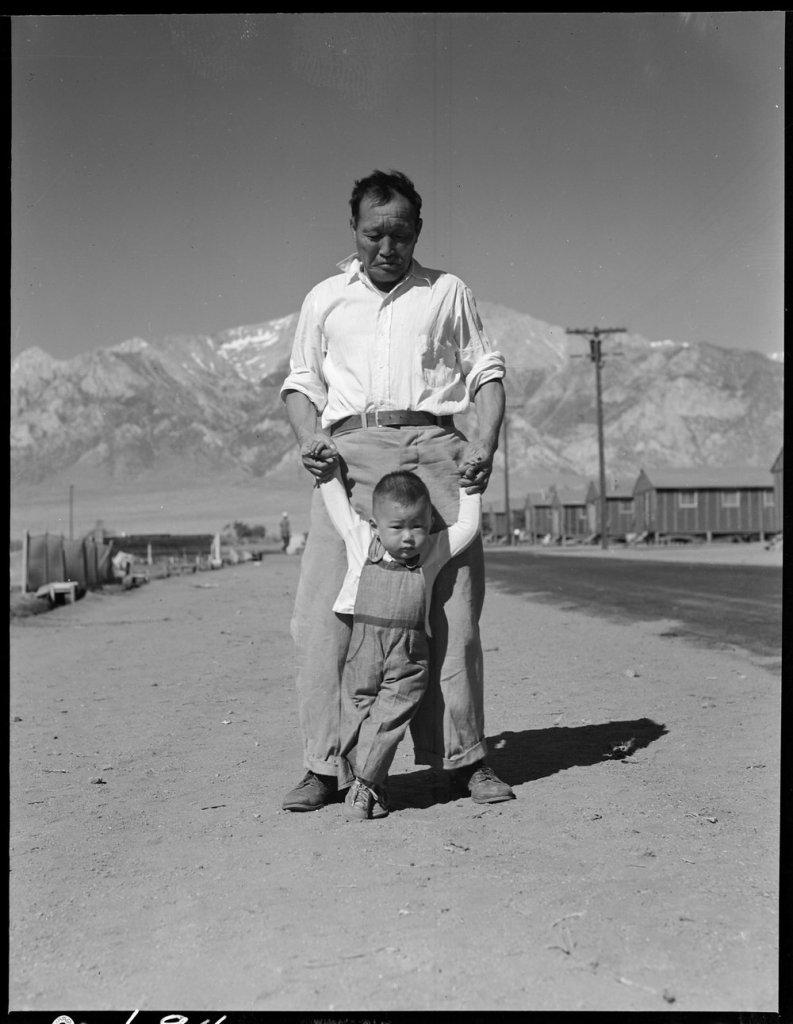
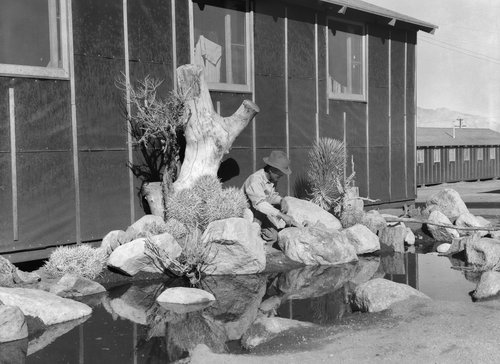
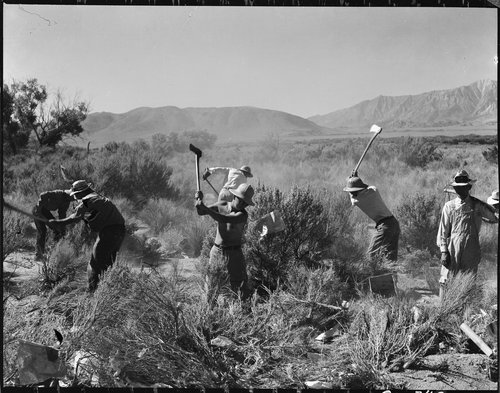
Lange worked nonstop for the next months, traveling to many cities and towns around California to document the Japanese people as they prepared for “evacuation,” as they were herded onto buses and trains, and moved into temporary housing in barracks and stables at horse racetracks and fairgrounds across the west coast. She then spent time at Manzanar, one of the largest concentration camps, situated in the eastern desert of Southern California where she continued to document the conditions and the people who were imprisoned. Despite much resistance from the camp authorities and military police, and several constraints on what she could photograph, she produced over 800 photographs during her assignment.
Impounded and Suppressed
The military commanders that reviewed her work soon realized that Lange’s contrary point of view was evident through her photographs, and seized them for the duration of World War II, even writing “Impounded” across some of the prints. At some point, the photos were quietly deposited into the National Archives, where they remained, largely unseen, until 2006. Not much is known about who decided to suppress the photographs, or under what legal authority, but Lange biographer Linda Gordon notes, “my hunch is that in this wartime situation, army officials felt authorized to make many censorship decisions unilaterally.” She also points out that “Governmental reluctance to Lange’s photographs continues now, well after the internment’s wrong has been recognized and apologized for. For example, the National Park Service’s Web site on Manzanar includes ninety-one photographs, of which eight are by Lange: none are among her most significant, and only one is at all critical.”
Lange’s photographs are not only a useful and informative record of what happened leading up to and including the imprisonment of Japanese-Americans, they are also an exceptional record of her own evolution as a documentary photographer. She continued to develop her portrait-focused style portraying the people of the camps, but also expanded her view to include the environment and the conditions of the roundup and the camps. She followed families as they made arrangements to dispose of their farms and businesses prior to the “evacuation,” and as they adapted to their new lives in the concentration camps. She recorded the evidence that the prisoners continued to lean on their own creativity and resilience to make their environment more hospitable despite the harsh reality of their situation.
Spending time looking through all of her photos, it’s fascinating to get a sense of what she noticed, and observe how she positioned herself and her camera relative to her subjects. She is acutely aware of the emotion in the scenes she captures, and when posing subjects or capturing a candid moment, she raises or lowers her camera to control the viewer’s perspective and elicit an emotional connection between the viewer and the subject. Her compositions are almost always carefully framed, and in only a couple frames does she suggest crops by drawing lines on the negatives.
To learn more about Dorothea Lange and her photographs, check out the wonderful book, Impounded: Dorothea Lange and the Censored Images of Japanese American Internment. The editors Linda Gordon and Gary Y. Okihoro publish an excellent selection of her photographs and original captions, and the accompanying essays they each wrote provide excellent commentary and background for Lange’s photographs and for the broader story of the arrest and incarceration of Japanese-American citizens.
Since Lange’s photographs were commissioned by the government and are in the public domain, I’ve compiled a collection of my favorites alongside some quotes from some of the people who experienced the “evacuation” and “relocation” firsthand. The quotes are gathered primarily from Gary Y. Okihoro’s essay in Impounded, and provide an eye-opening and sometimes heartbreaking interplay with Lange’s photographs.
Dorothea Lange’s Censored Photographs of FDR’s Japanese Concentration Camps
The military seized her photographs, quietly depositing them in the National Archives, where they remained mostly unseen and unpublished until 2006.
Below, I’ve selected some of Lange’s photos from the National Archives—including the captions she wrote—pairing them with quotes from people who were imprisoned in the camps, as quoted in the excellent book, Impounded: Dorothea Lange and the Censored Images of Japanese American Internment.
“A photographic record could protect against false allegations of mistreatment and violations of international law, but it carried the risk, of course, of documenting actual mistreatment.”
— Linda Gordon, Impounded: Dorothea Lange and the Censored Images of Japanese American Internment
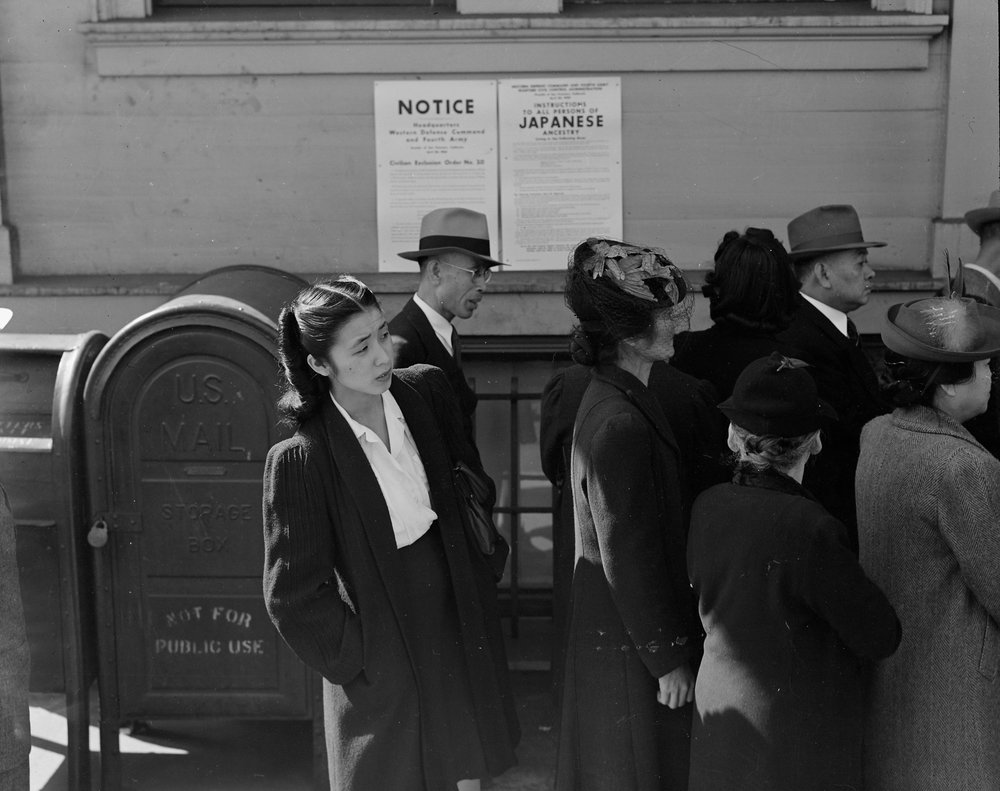


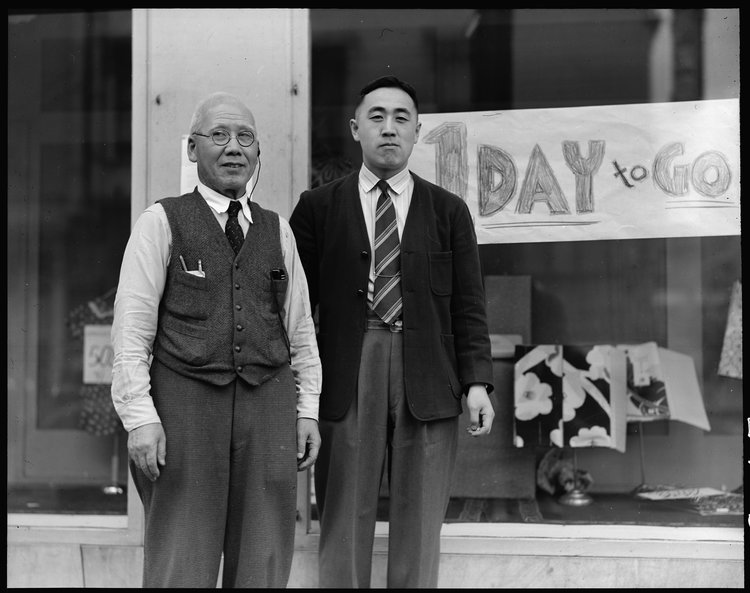


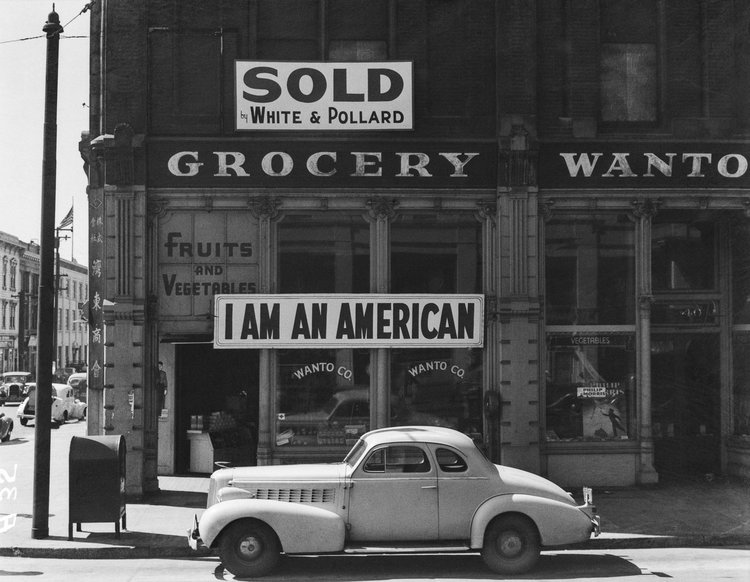
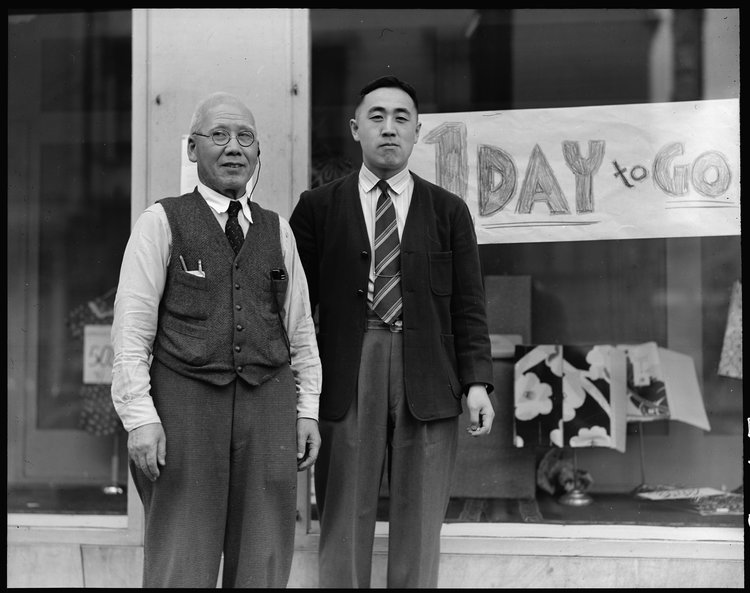
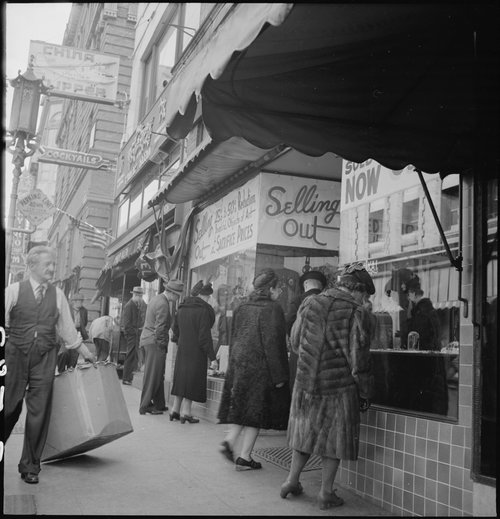


“We couldn’t do anything about the orders from the U.S. government. I just lived from day to day without any purpose. I felt empty.… I frittered away every day. I don’t remember anything much.… I just felt vacant.”
— Osuke Takizawa, Tanforan Assembly Center, San Bruno
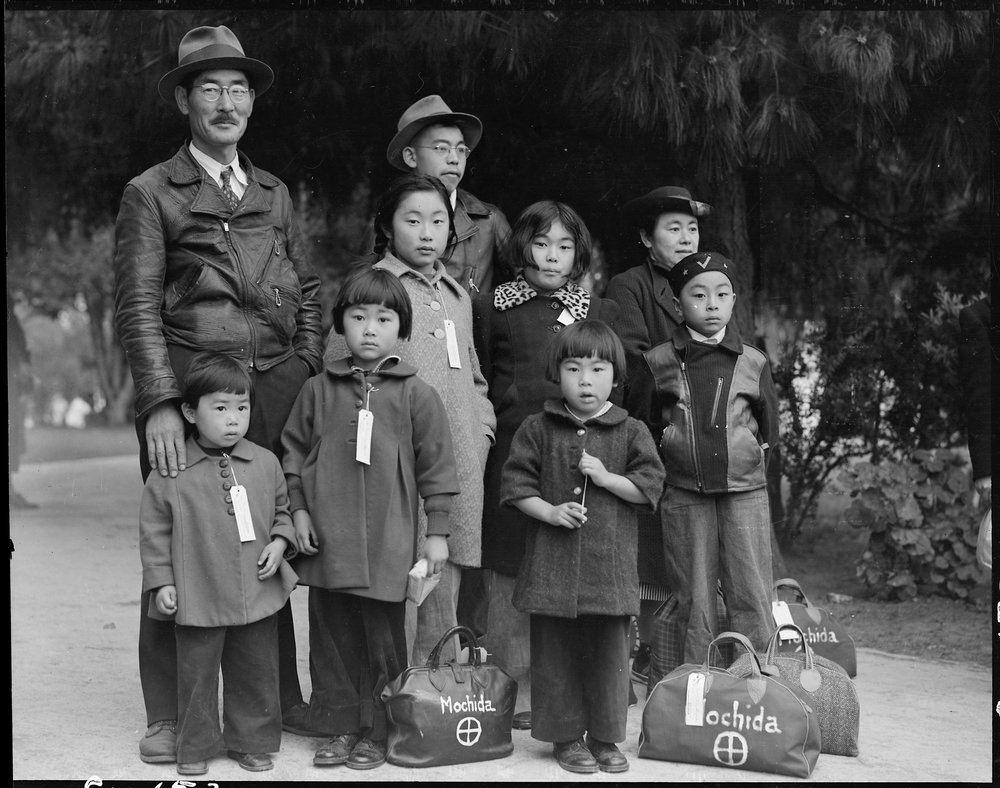
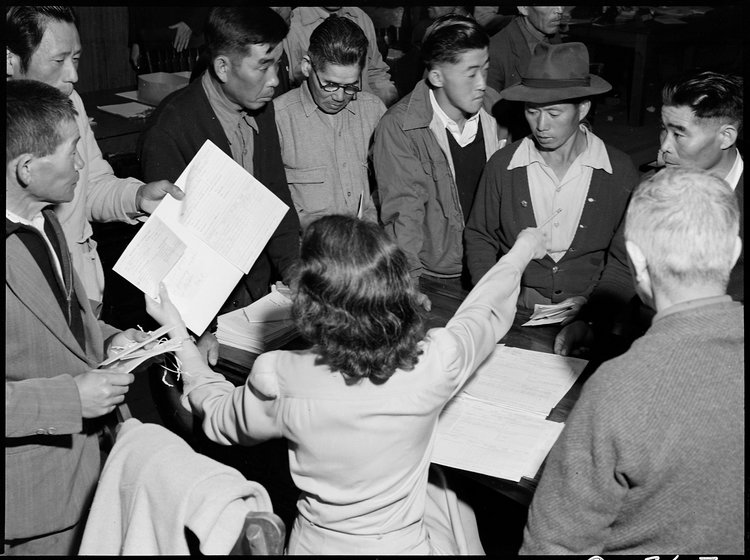
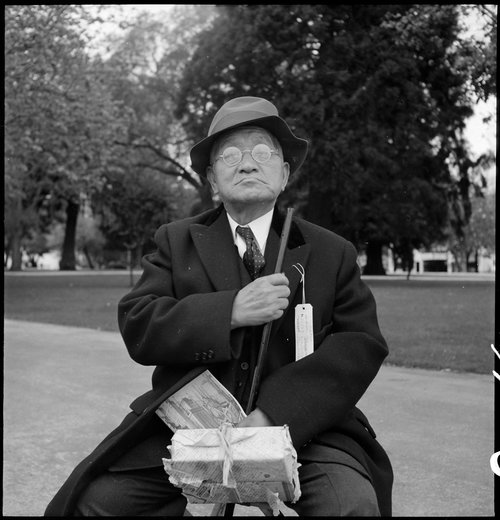
“As a result of the interview, my family name was reduced to No. 13660. I was given several tags bearing the family number, and was then dismissed…. Baggage was piled on the sidewalk the full length of the block. Greyhound buses were lined alongside the curb.”
— Mine Okubo, Tanforan Assembly Center, San Bruno
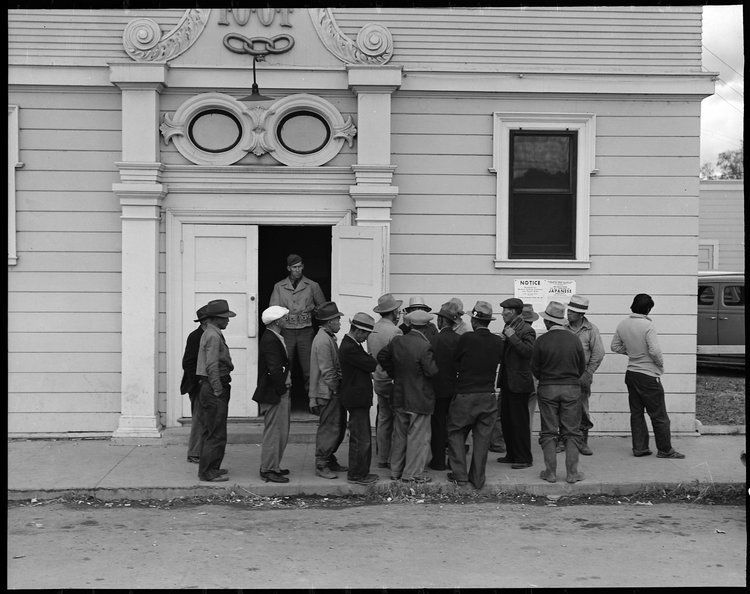
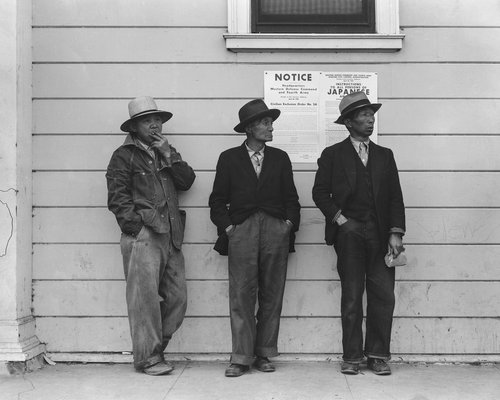
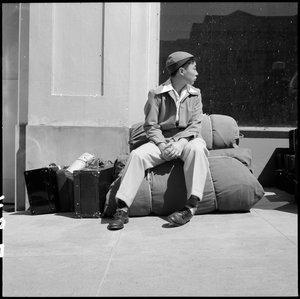
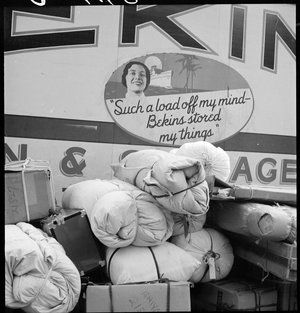
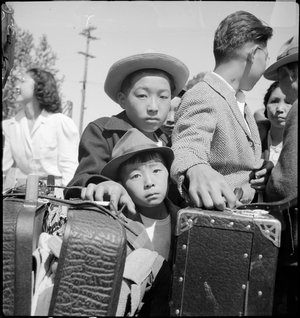
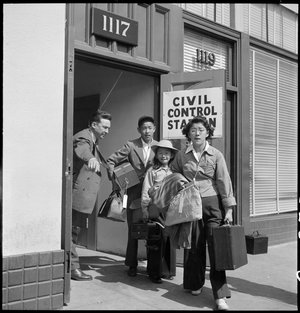
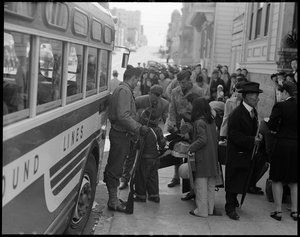
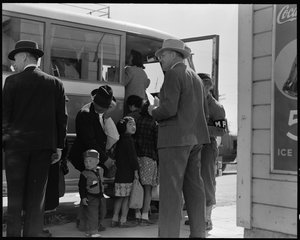
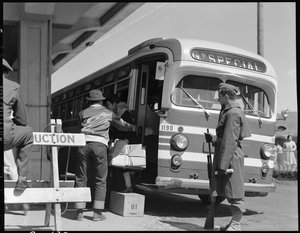

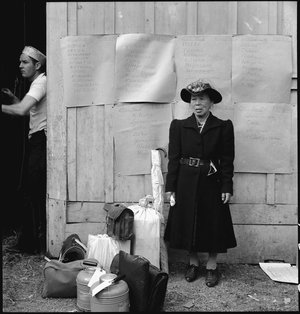
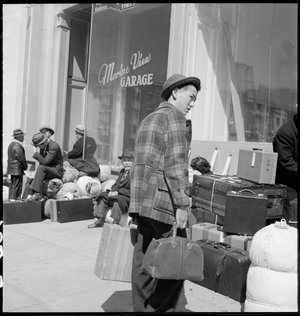


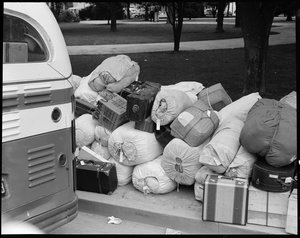
“A Caucasian farmer representing a company was trying to get his workers to continue working in the asparagus fields until Saturday when they were scheduled to leave. The workers wanted to quit tonight in order to have time to get cleaned up, wash their clothes, etc.”
— Dorothea Lange
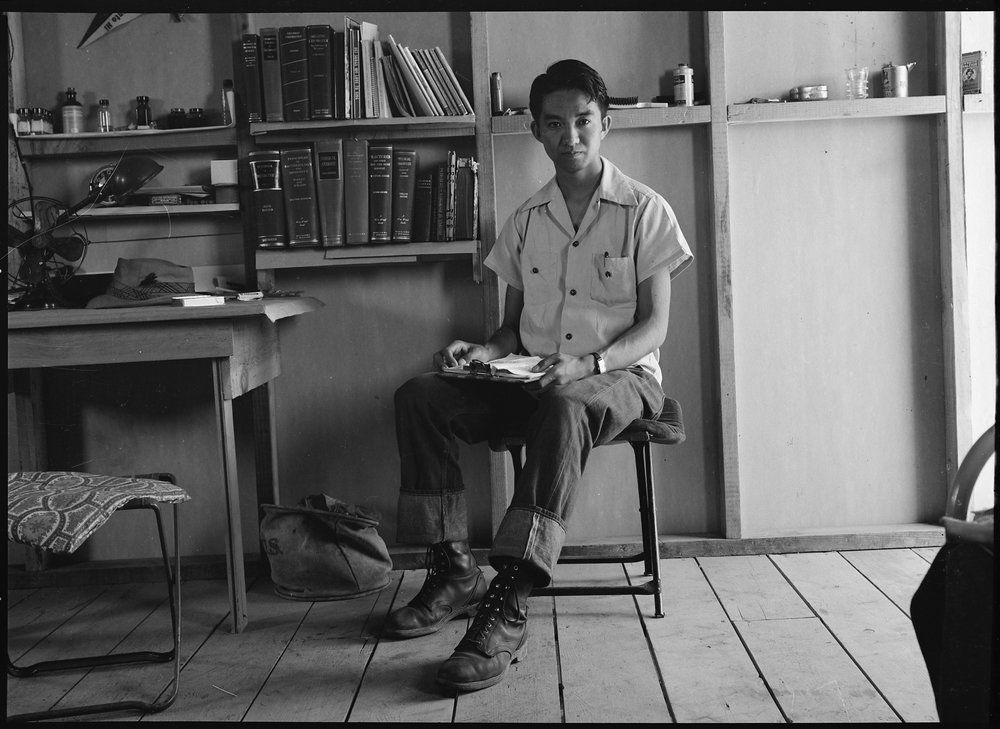
“The Japanese race is an enemy race and while many second and third generation Japanese born on American soil, possessed of American citizenship, have be come ‘Americanized,’ the racial strains are undiluted.
— General John L. DeWitt, head of the U.S. Army’s Western Defense Command
…It, therefore, follows that along the vital Pacific Coast over 112,000 potential enemies, of Japanese extraction, are at large today. There are indications that these are organized and ready for concerted action at a favorable opportunity.
The very fact that no sabotage has taken place to date is a disturbing and confirming indication that such action will be taken.”
“What arrangements and plans have been made relative to concentration camps in the Hawaiian Islands for dangerous or undesirable aliens or citizens in the event of national emergency?”
— Franklin D. Roosevelt, President of the United States, August 10, 1936 in a note to the military Joint Board
“Go ahead and do anything you think necessary… if it involves citizens, we will take care of them too. He [the President] says there will probably be some repercussions, but it has got to be dictated by military necessity, but as he puts it, ‘Be as reasonable as you can.’”
— Secretary of War, Henry L. Stimson, summarizing instructions from President Franklin D. Roosevelt given February 11, 1942
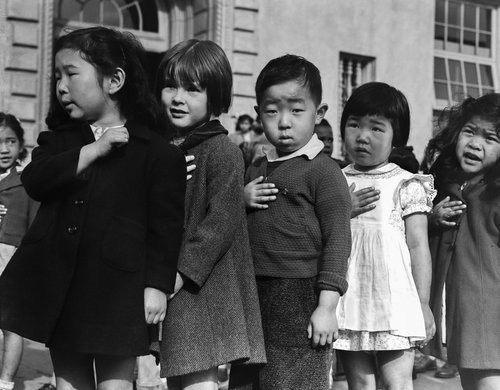
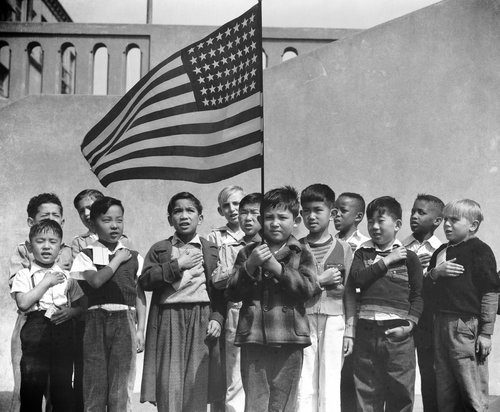
“It is said, and no doubt with considerable truth, that every Japanese in the United States who can read and write is a member of the Japanese intelligence system.”
— FBI Report
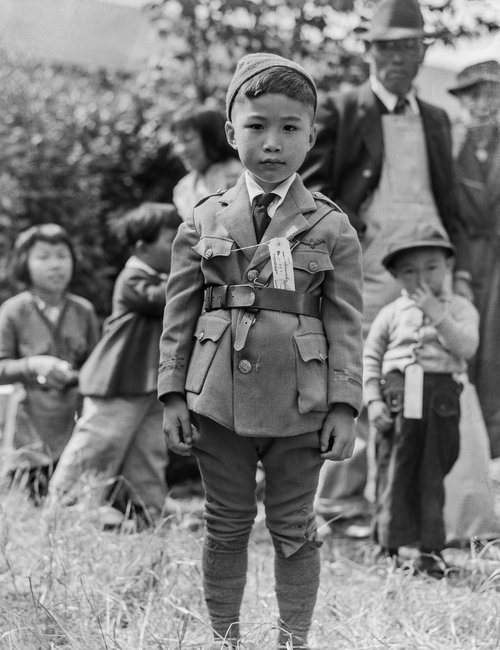
“A viper is nonetheless a viper wherever the egg is hatched—so a Japanese-American, born of Japanese parents—grows up to be a Japanese, not an American.”
— Los Angeles Times, February 2, 1942
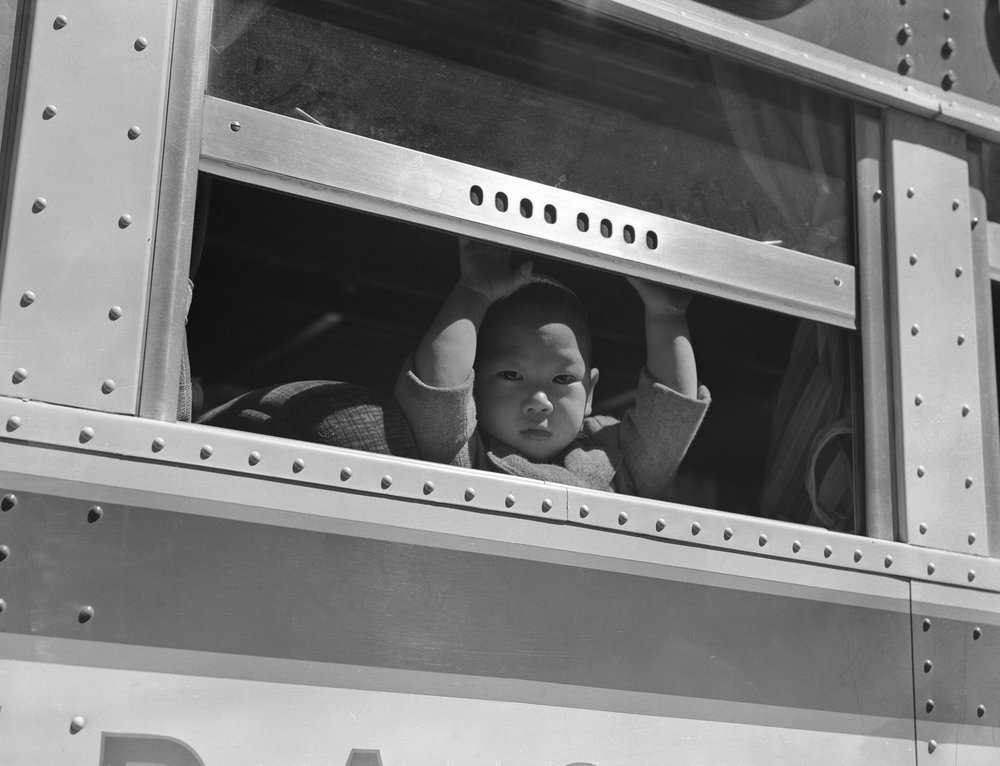
“We were herded onto the train just like cattle and swine. I do not recall much conversation between the Japanese.… I cannot speak for others, but I myself felt resigned to do whatever we were told. I think the Japanese left in a very quiet mood, for we were powerless. We had to do what the government ordered.”
— Misuyo Nakamura, Santa Anita Assembly Center, Los Angeles, & Jerome Relocation Center, Arkansas
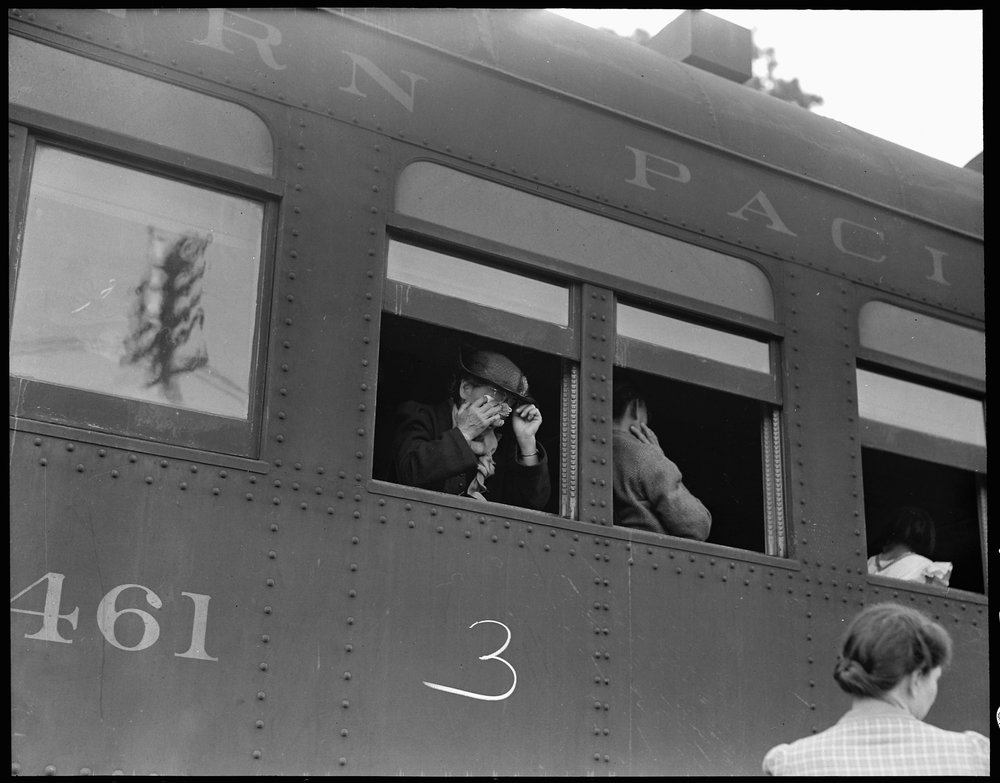
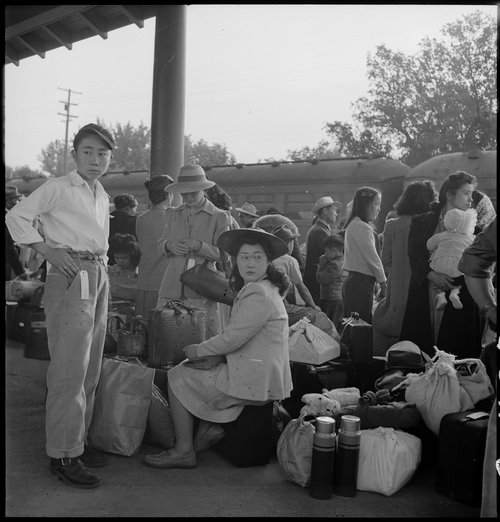
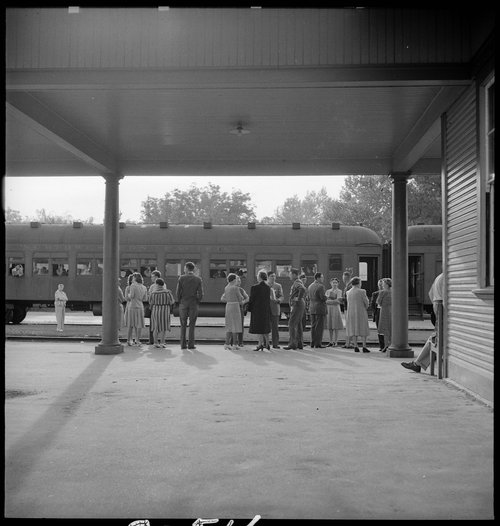
“Although we were not informed of our destination, it was rumored that we were heading for Missoula, Montana. There were many leaders of the Japanese community aboard our train.… The view outside was blocked by shades on the windows, and we were watched constantly by sentries with bayoneted rifles who stood on either end of the coach. The door to the lavatory was kept open in order to prevent our escape or suicide.… There were fears that we were being taken to be executed.”
— Yoshiaki Fukuda, Konko church minister in San Francisco, apprehended December 7, 1941
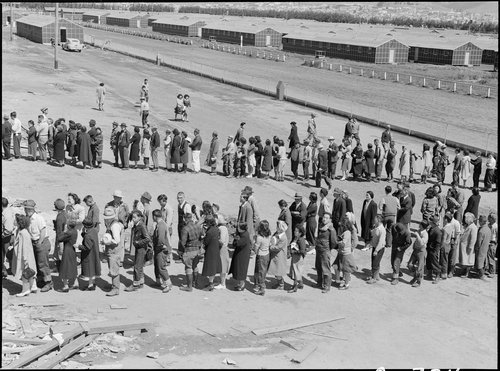
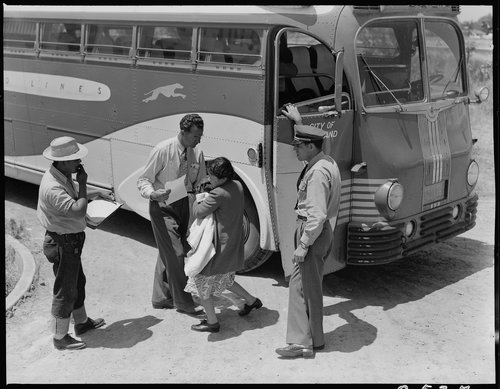
“We went to the stable, Tanforan Assembly Center. It was terrible. The Government moved the horses out and put us in. The stable stunk awfully. I felt miserable but I couldn’t do anything. It was like a prison, guards on duty all the time, and there was barbed wire all around us. We really worried about our future. I just gave up.”
— Osuke Takizawa, Tanforan Assembly Center, San Bruno
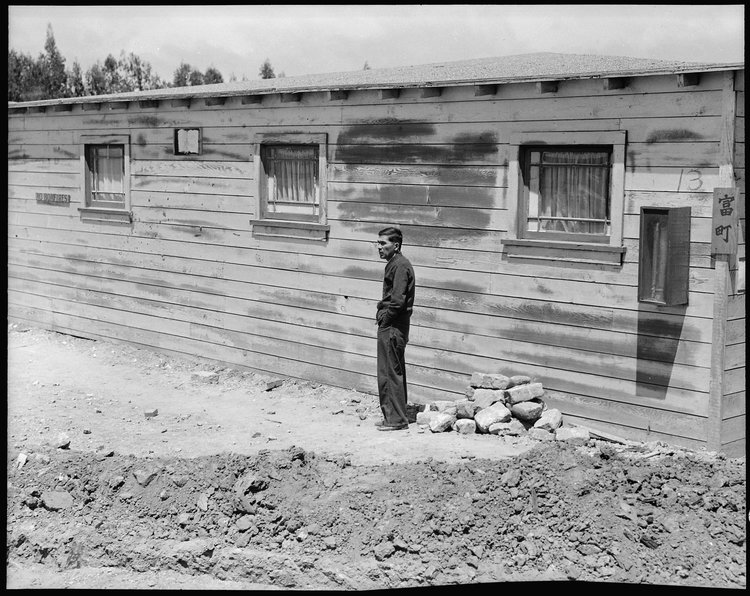
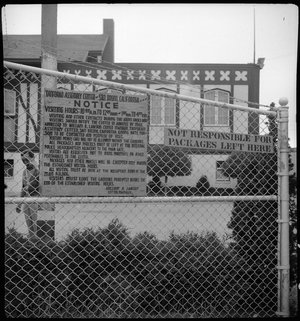
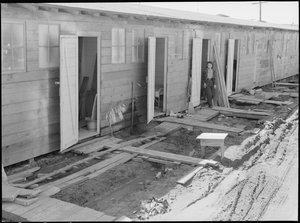
“We walked in and dropped our things inside the entrance. The place was in semidarkness; light barely came through the dirty window on the other side of the entrance.… The rear room had housed the horse and the front room the fodder. Both rooms showed signs of a hurried whitewashing. Spider webs, horse hair, and hay had been whitewashed with the walls. Huge spikes and nails stuck out all over the walls. A two-inch layer of dust covered the floor.… We heard someone crying in the next stall.”
— Mine Okubo, Tanforan Assembly Center, San Bruno
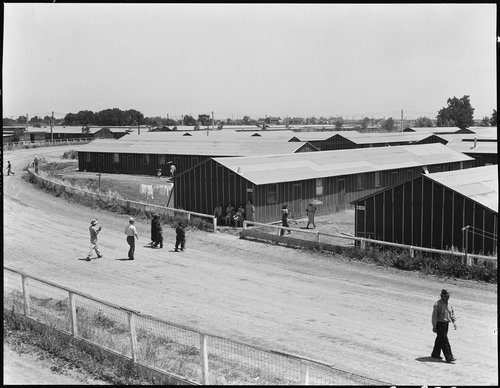

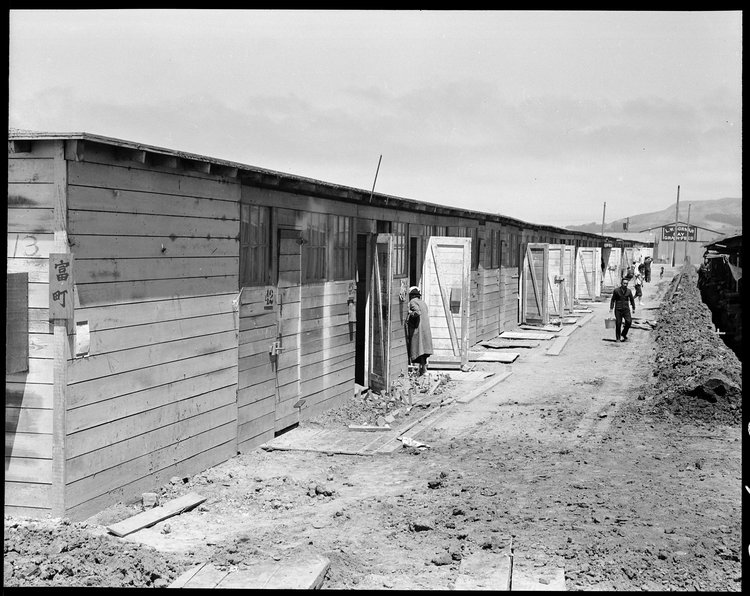
“When we got to Manzanar, it was getting dark and we were given numbers first. We went down to the mess hall, and I remember the first meal we were given in those tin plates and tin cups. It was canned wieners and canned spinach. It was all the food we had, and then after finishing that we were taken to our barracks.
— Yuri Tateishi, Manzanar Relocation Center
It was dark and trenches were here and there. You’d fall in and get up and finally got to the barracks. The floors were boarded, but the were about a quarter to half inch apart, and the next morning you could see the ground below.
The next morning, the first morning in Manzanar, when I woke up and saw what Manzanar looked like, I just cried. And then I saw the mountain, the high Sierra Mountain, just like my native country’s mountain, and I just cried, that’s all.
I couldn’t think about anything.”
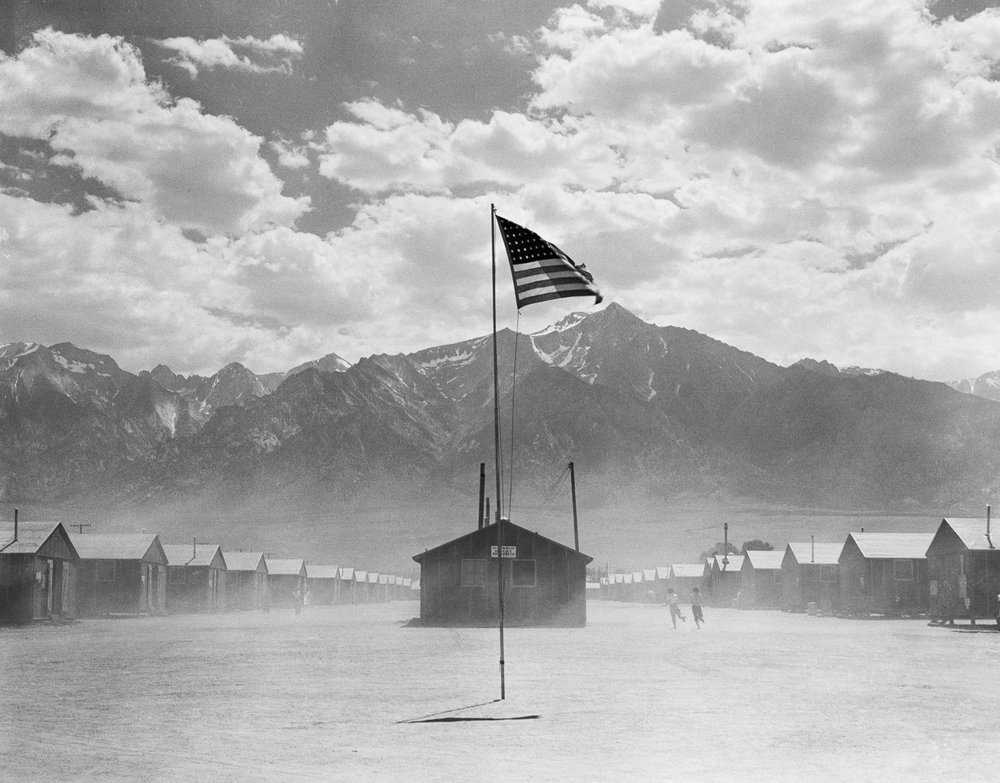
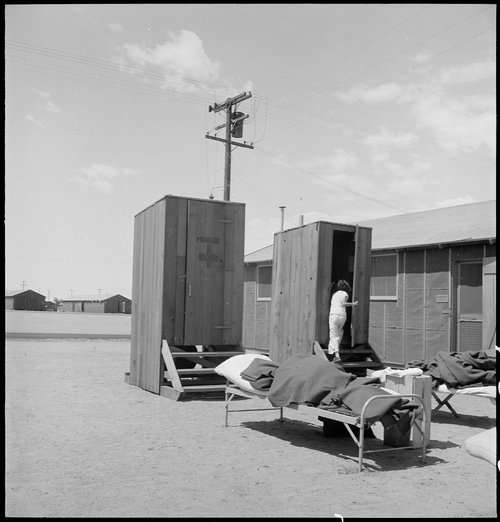
“Good manners eroded as meals were always hurried, reducing the ritual and elegance of Japanese cooking and serving to mere feeding the body. Maintaining personal cleanliness was difficult due to chronic shortage of soap and hot water. Lack of insulation and ventilation made the cubbyholes in which they lived freezing in winter and sweltering in summer. No decent provision for washing diapers. Dust. Mud. Ugliness. Terrible food—definitely not Japanese—doled onto plates from large garbage cans. Nothing to do. Lines for breakfast, lines for lunch, lines for supper, lines for mail, lines for the canteen, lines for laundry tubs, lines for toilets. The most common activity is waiting.”
— Linda Gordon, Impounded: Dorothea Lange and the Censored Images of Japanese American Internment
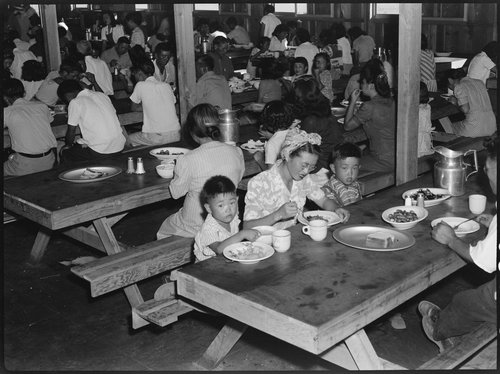
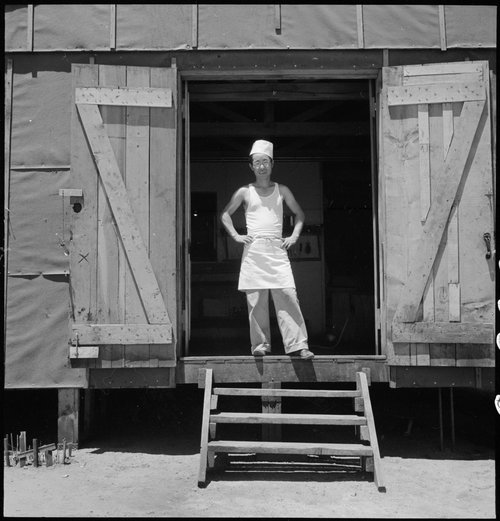
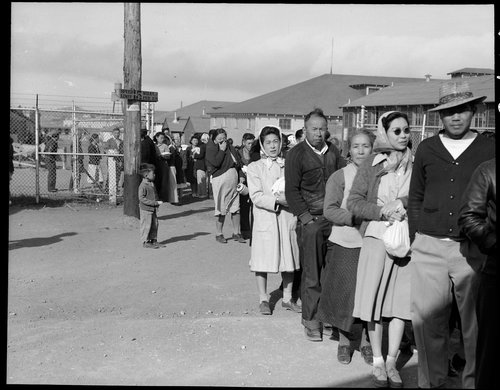
“Each day rolled into weeks and weeks into months and months into years.”
— Ellen Kishiyama, Pomona Assembly Center, Los Angeles & Heart Mountain Relocation Center, Wyoming
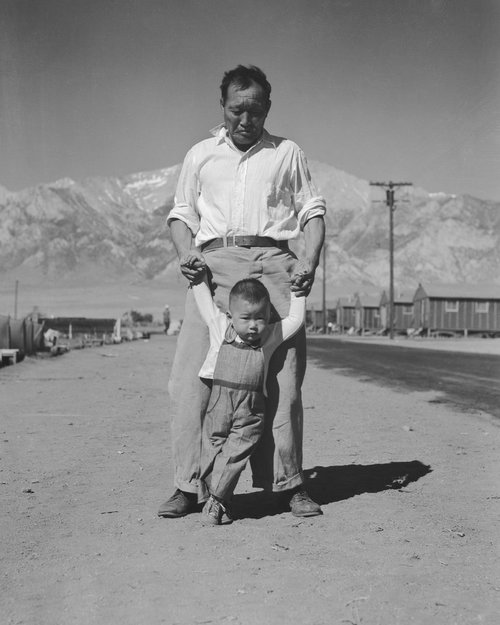
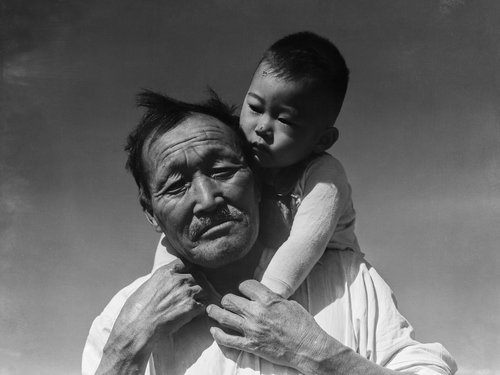
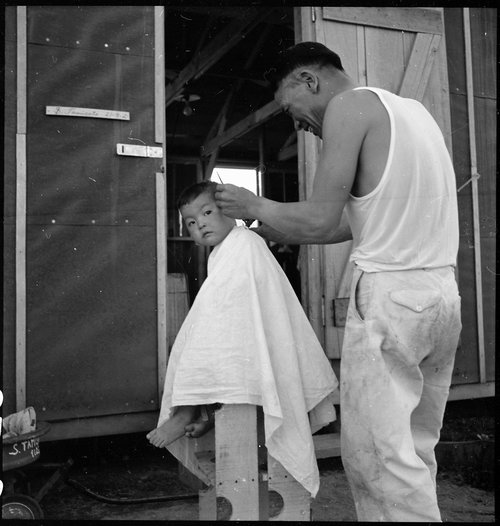
Humor is the only thing that mellows life, shows life as the circus it is. After being uprooted, everything seemed ridiculous, insane, and stupid. There we were in an unfinished camp, with snow and cold. The evacuees helped sheetrock the walls for warmth and built the barbed wire fence to fence themselves in. We had to sing ‘God Bless America’ many times with a flag. Guards all around us with shot guns, you’re not going to walk out. I mean… what could you do? So many crazy things happened in the camp. So the joke and humor I saw in the camp was not in a joyful sense, but ridiculous and insane. It was dealing with people and situations.… I tried to make the best of it, just adapt and adjust.
— Mine Okubo, Tanforan Assembly Center
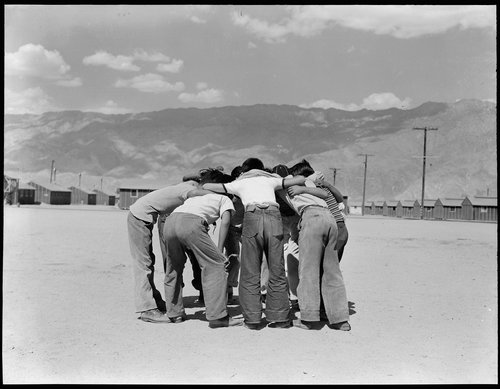


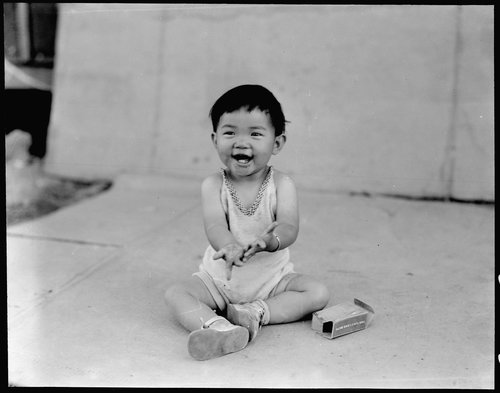
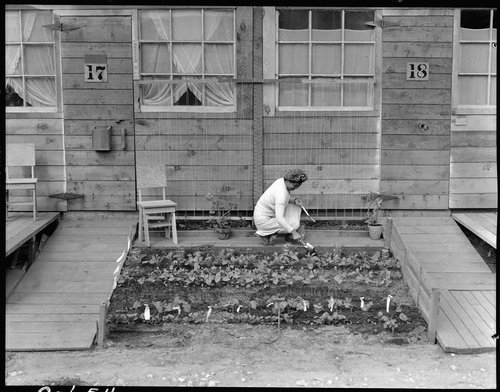
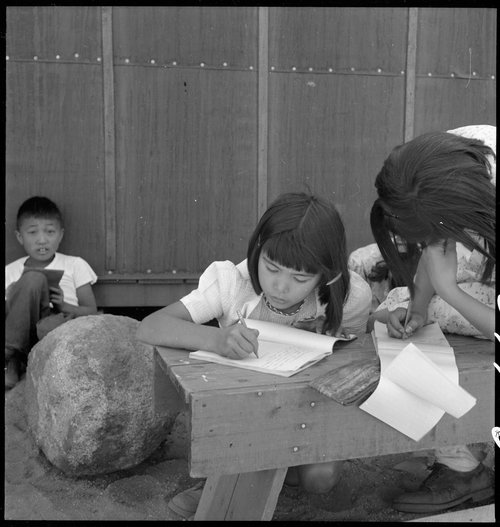
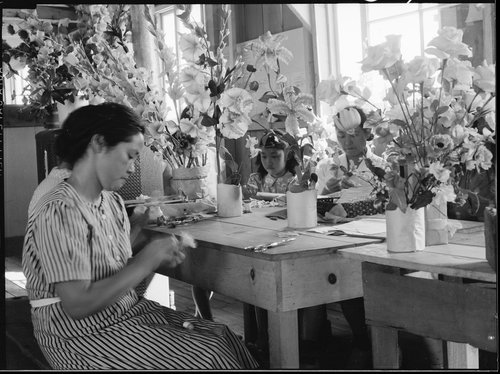
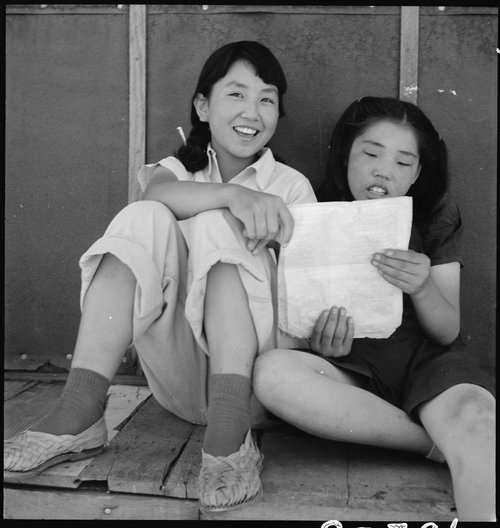
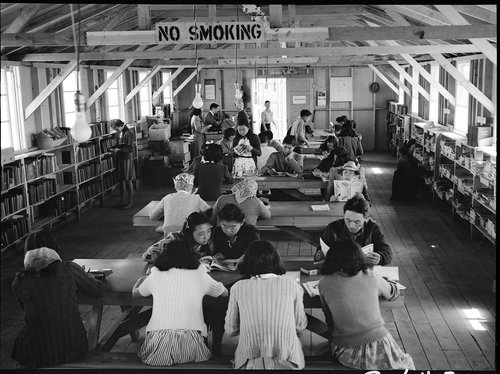
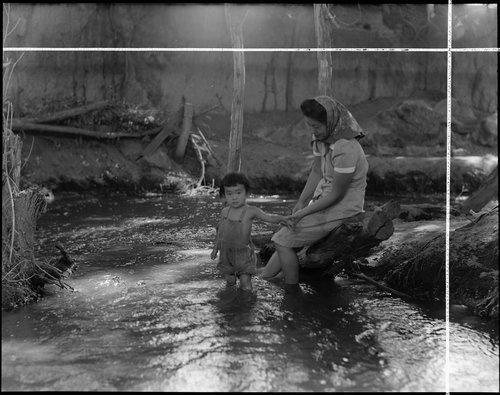
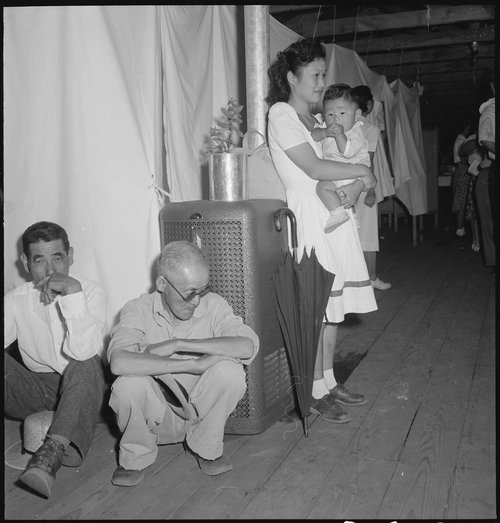
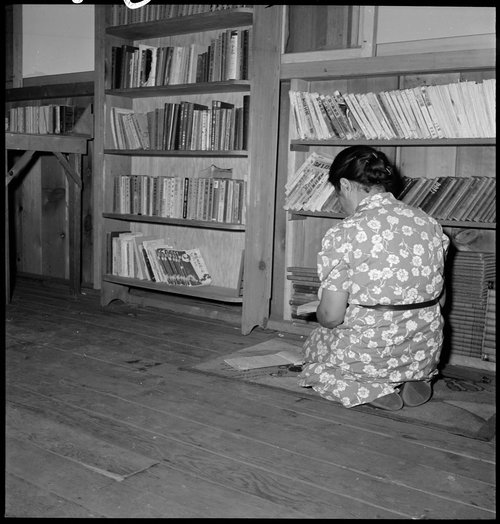
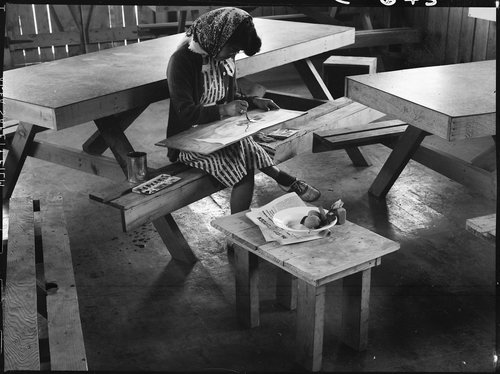
“It was a terribly hot place to live. It was so hot that when we put our hands on the beadstead, the paint would come off! To relieve the pressure of the heat, some people soaked sheets in water and hung them overhead.”
— Hatsumi Nishimoto, Pinedale Assembly Center, Fresno
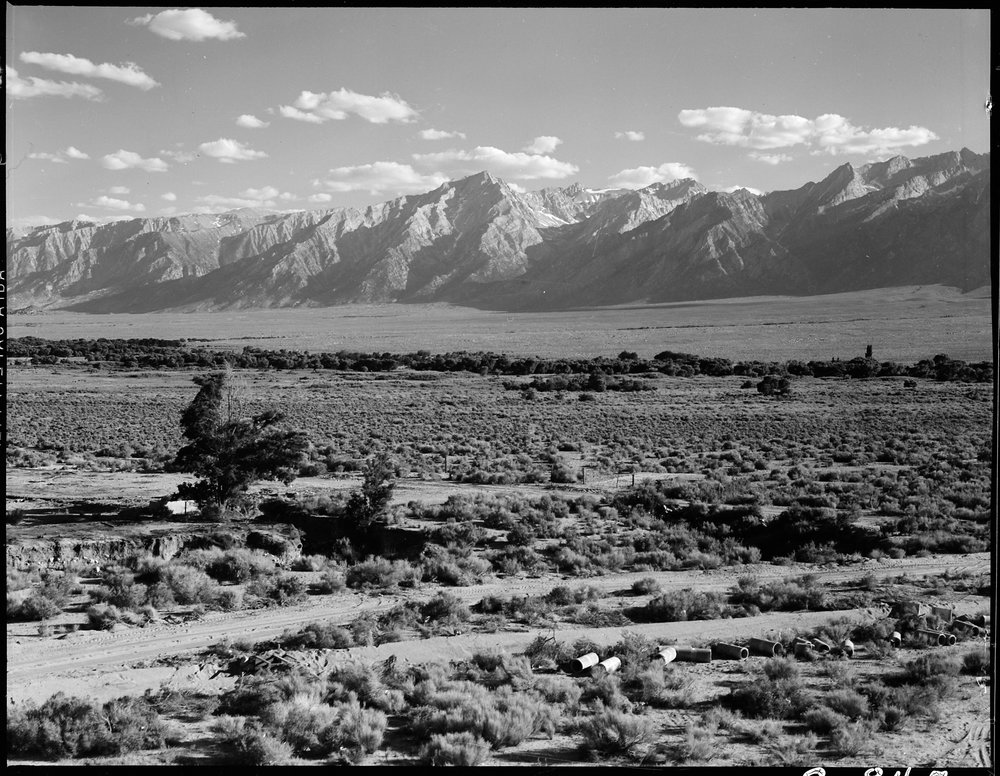
“Meanest dust storms… and not a blade of grass. And the springs are so cruel; when those people arrived there they couldn’t keep the tarpaper on the shacks.”
— Dorothea Lange, at Manzanar
“They got to a point where they said, ‘Okay, we’re going to take you out.’ And it was obvious that he was going before a firing squad with MPs ready with rifles. He was asked if he wanted a cigarette; he said no.… You want a blindfold?… No. They said, ‘Stand up here,’ and they went as far as saying, ‘Ready, aim, fire,’ and pulling the trigger, but the rifles had no bullets. They just went click.”
— Ben Takeshita, recounting his older brother’s ordeal at Tule Lake Relocation Center, where he was segregated for causing trouble
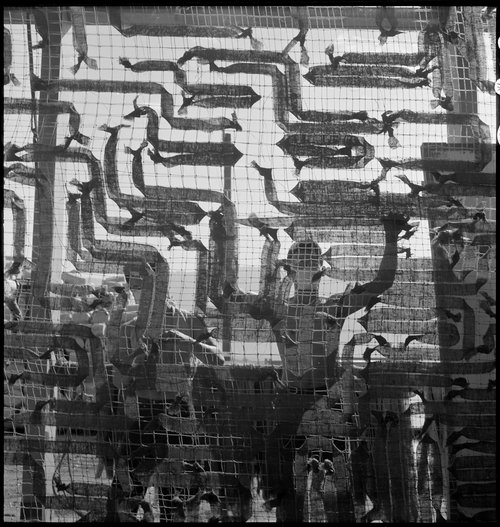
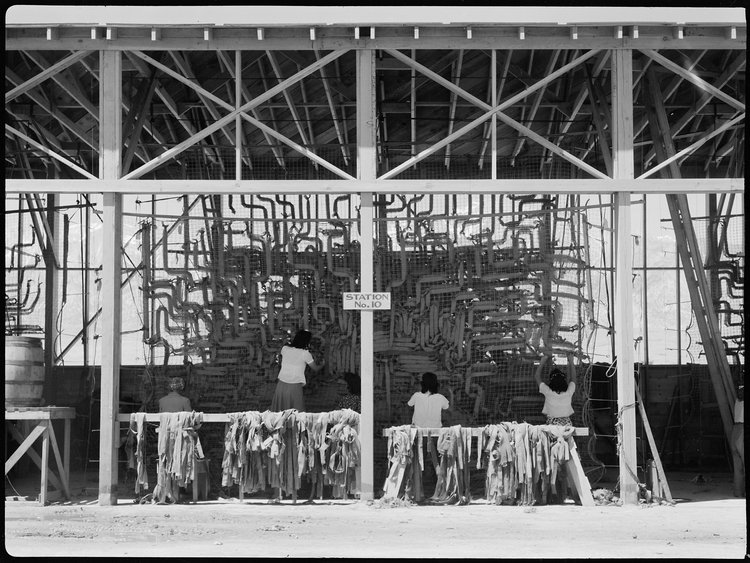
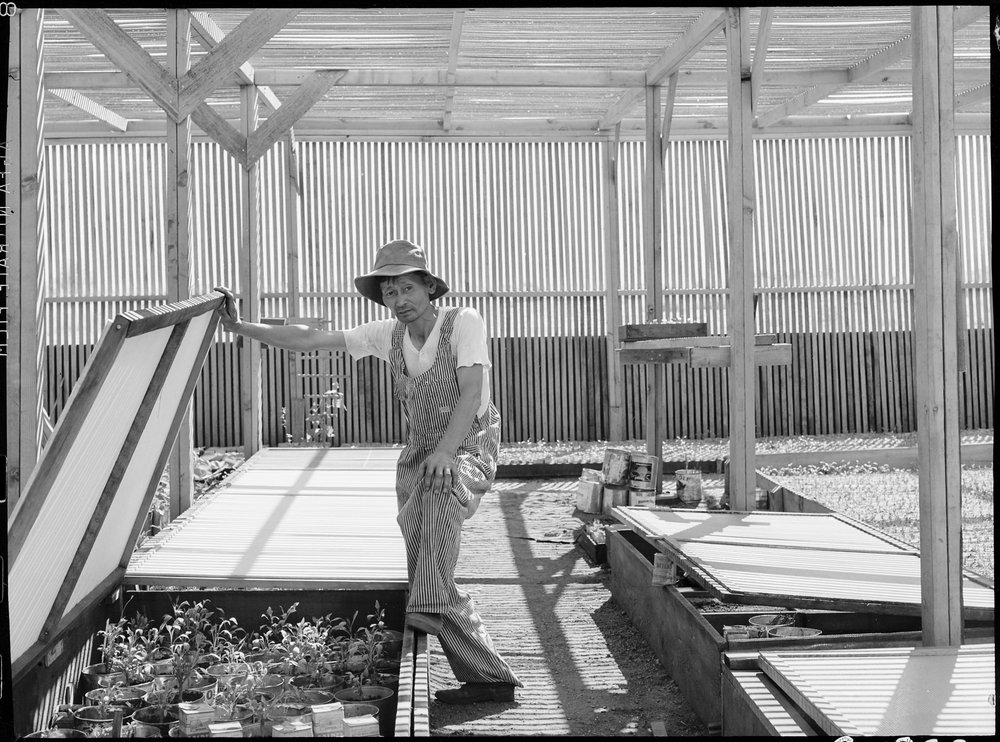
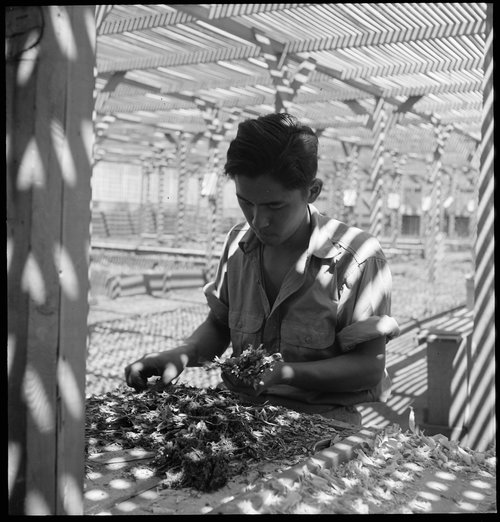
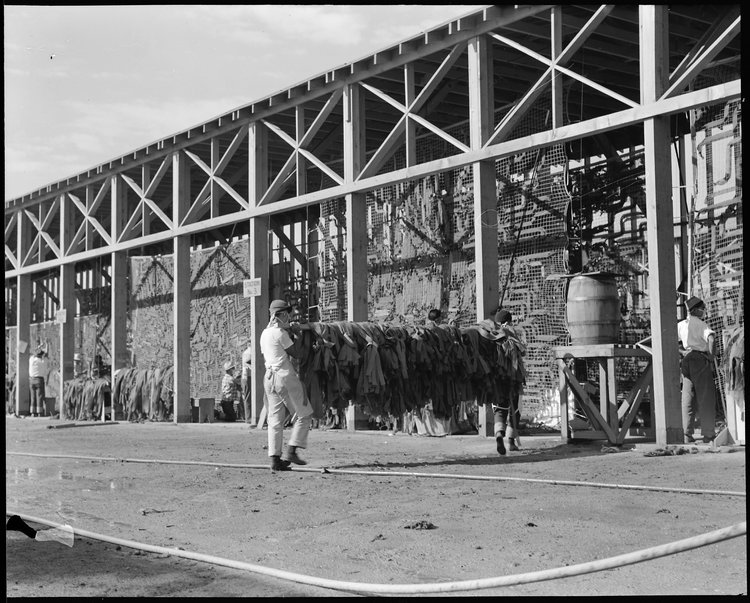
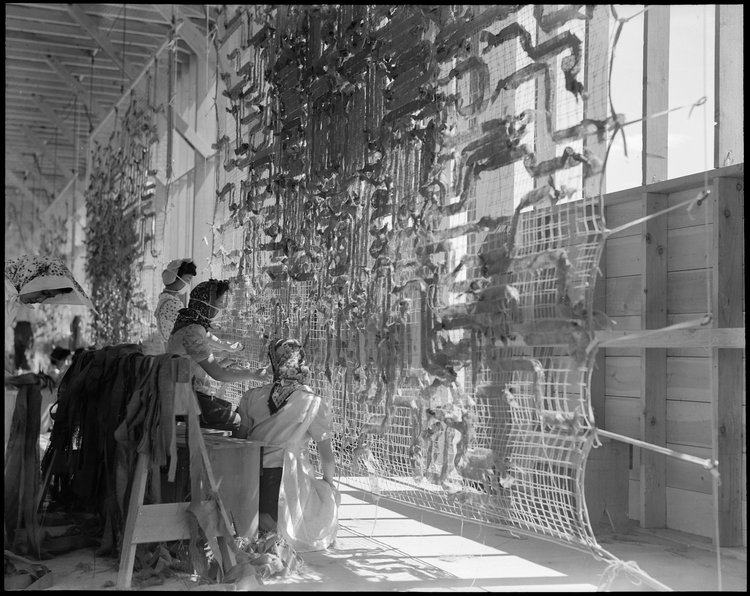
At Manzanar and at the Santa Anita Assembly Center near Los Angeles, army engineers supervised manufacture of camouflage nets. Huge weavings of hemp, designed to fit over tanks and other large pieces of war matériel, they were constructed from cords that hung from giant stands; the workers usually wore masks to protect themselves from the hemp dust. The army claimed that they were volunteers but they were in fact coerced by camp administrators, who were receiving requisitions for large numbers of nets from the army. (One of the first strikes at the camps occurred when 800 Santa Anita camouflage-net workers sat down and refused to continue, complaining of too little food. They won some concessions.) At Manzanar other internees worked in a large agricultural project to grow and improve a plant, guayule, that could become a substitute for rubber. With rudimentary and often homemade equipment, chemists and horticulturalists hybridized guayule shrubs to obtain a substance of tensile strength with low production costs. These undertakings were illegal under the Geneva Convention, which forbade using prisoners of war in forced labor, and as a result only American citizens were usually employed so that the army could claim that these were not POWs.
— Linda Gordon, Impounded
“One Jap became mildly insane and was placed in the Fort Sill Army Hospital. [He]… attempted an escape on May 13, 1942 at 7:30am. He climbed the first fence, ran down the runway between the fencing, one hundred feet and started to climb the second, when he was shot and killed by two shots, one entering the back of his head. The guard had given him several verbal warnings.”
— FBI Report of the death of Ichiro Shimoda, a gardener from Los Angeles who had been taken from his family on December 7, 1941

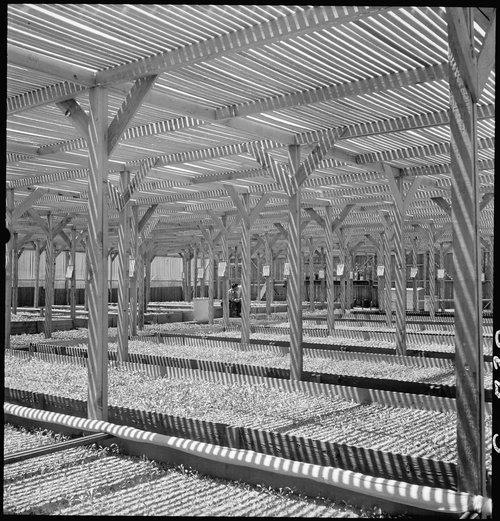
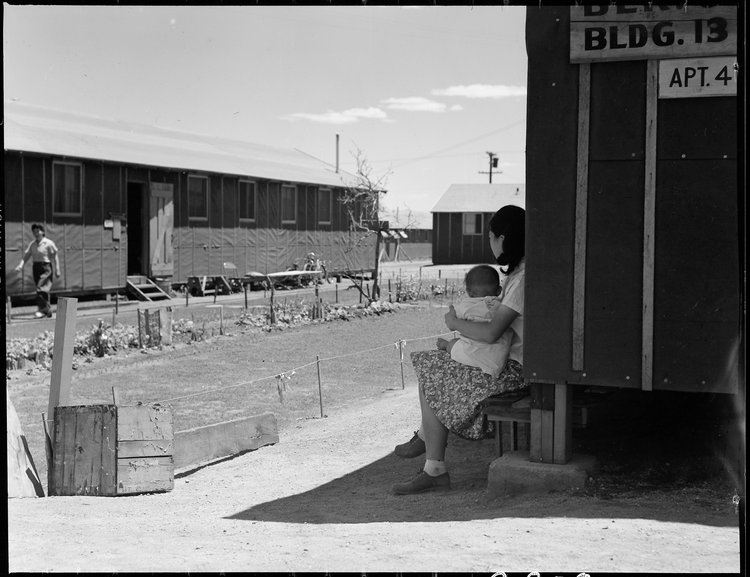

“Without any hearings, without due process of law…, without any charges filed against us, without any evidence of wrongdoing on our part, one hundred and ten thousand innocent people were kicked out of their homes, literally uprooted from where they have lived for the greater part of their lives, and herded like dangerous criminals into concentration camps with barb wire fencing and military police guarding it.”
— A statement by The Fair Play Committee, organized by Kiyoshi Okamoto at Heart Mountain Relocation Center in Wyoming, after Secretary of War Stimson announced on January 20, 1944 that nisei, formerly classed as “aliens not acceptable to the armed forces,” would be subject to the draft
“I remember having to stay at the dirty horse stables at Santa Anita. I remember thinking, ‘Am I a human being? Why are we being treated like this?’ Santa Anita stunk like hell.… Sometimes I want to tell this government to go to hell. This government can never repay all the people who suffered. But, this should not be an excuse for token apologies. I hope this country will never forget what happened, and do what it can to make sure that future generations will never forget.”
— Albert Kurihara, Santa Anita Assembly Center, Los Angeles & Poston Relocation Center, Arizona
The government charged 63 members and seven leaders of The Fair Play Committee with draft evasion and conspiracy to violate the law. The trial judge, Blake Kennedy, addressing the defendants as “you Jap boys,” sentenced the members to three years imprisonment. The seven leaders were sentenced to four years in Leavenworth Federal Penitentiary.
About Anchor Editions
Here’s how it works: every so often, I geek out about some interesting/obscure/cool art that I’d like to have hanging on my wall. I think you might like it too, so I make a limited edition of numbered, archival-quality prints, and ship them to you.
I’m a printer, photographer, graphic designer, cinema geek, and typography nerd, so my interests generally end up in those spheres, but I’m always looking to discover new work, so if you’ve come across something that you think might pique my curiosity, or if you’re an artist with work that would look good as an Anchor Edition, let me know!
Tim Chambers lives in Washington, D.C. and takes pictures of tarts made by his wife Christina Marie who is a pastry chef.
Before that, he and his wife travelled around the world, visiting fifteen countries in three months, and before that, they quit their jobs and spent a summer in Haiti photographing people and projects as fellows for a non-profit organization.
Before that, Tim rode the bus every day from his apartment in San Francisco to his job in Cupertino where he helped make photography software.
Before that, he lived in Sacramento, where he graduated from California State University with a degree in Photography.
Before that, he dropped out of school to work as a graphic designer in a print shop, and before that, he studied graphic design and computer science.
See more of his work at Anchor Editions.
Before that, he worked as a web designer during the first dot com bubble, and before that, he grew up in Northern California.
He was born in Southern California, but doesn’t remember much before that.
References
- Linda Gordon and Gary Y. Okihiro, Impounded: Dorothea Lange and the Censored Images of Japanese American Internment
- John Armor and Peter Wright, Manzanar: Photographs by Ansel Adams, Commentary by John Hersey
- Densho: Controlling the Historical Record: Photographs of the Japanese American Incarceration
- Jonah Engel Bromwich, New York Times: Trump Camp’s Talk of Registry and Japanese Internment Raises Muslims’ Fears
- Carl Takei, Los Angeles Times: The incarceration of Japanese Americans in World War II does not provide a legal cover for a Muslim registry
- ACLU: A Dark Moment in History: Japanese Internment Camps
- WW2 Japanese Relocation Camp Internee Records
- National Archives: Central Photographic File of the War Relocation Authority
Categories: featured, Photo Essay, photography

 magpiesmagazine.com