


For some artists the process of creation is the center of their existence. They have the luxury of devoting all of their time and energy to their art, and their art becomes their work. Whether through the possession of independent means, as a reward for a lifetime of hard work after retirement, or because they’ve achieved such a level of success at their art that they can support themselves through its creation, they can pour all of their focus, energy, and hours into their creativity. And for some artists, their work is so important, so “great” that they sacrifice much for it. Yeats, for instance, seems to have forgotten he had children, and it was his wife’s work to keep them quiet when the poetic spirit possessed him.
For most people, though, it is necessary to find a balance. We must find a way to pay the bills, raise our children, keep up with the housework and with all of the endless chores and worries of daily life. Of course, there are some artists who kept their day jobs and still found time to make work that was important to them and is important to me. TS Eliot worked in a bank, William Carlos Williams worked as a doctor. And so did Anton Chekhov.
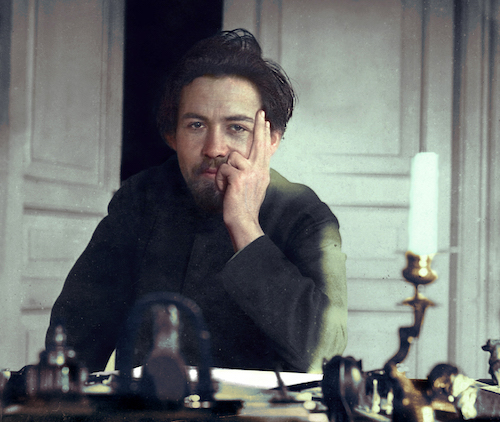
Chekhov’s origins were humbler than those of many of the “great” writers of the day. His grandfather began life as a serf but was eventually able to buy his freedom. His father owned a shop but lost it all by the time Chekhov was a teenager, and fled to Moscow without him. In an upside-down twist, Chekhov began writing to support his medical studies, submitting columns to weekly magazines and newspapers. When he gained a certain level of success as a writer his friends urged him to give up his medical career, but he did not do so until his own ill health required it.
“I firmly believe that my medical studies had a vital influence on my literary activity; they significantly widened the sphere of my observation, enriched me with knowledge whose true value to me as a writer can only be appreciated by someone who is himself a doctor,” Chekhov wrote. And I have long maintained the belief that the experience of serving people — as a doctor or nurse or teacher or waitress or grocery store clerk — can only enhance the empathy, honesty, humanity, and warmth of understanding that is necessary for the creation of truly great art. I also feel that it is valuable to be called away from the rarefied world of creation. I have some of my best and clearest ideas when I’m walking the dog or washing the dishes or making lunch for my son. You can create some necessary space in your head for your thoughts to marinate.
Because, in truth, a person creates differently when they have less time. The process is different, which is something Chekhov describes in his letters with his usual humor and depth of understanding. “Honestly speaking, I would gladly have spent half a year on The Name-Day Party. I like leisure and find no attraction in hasty publication. I would gladly, with pleasure, with feeling and in detail have described all of my main character, his soul while his wife was in labor, his trial, his nasty feeling after the acquittal, I would have described how the midwife and the doctor drink tea at night, I would have described the rain.” (Although perhaps Chekhov would not have resented this forced brevity, as his advice to young writers was to literally tear the beginning and ending out of their story, because it “… is here that writers lie most of all.” And he advised Maxim Gorky, “When you proof cross out as many adjectives and adverbs as you can.”)
When you have less time and energy your creation will have to find other ways to speak to you. If I’m working on a story I can’t actually work on I will feel it standing by my shoulder, just on the edge of my vision, if I turn my head I might be able to catch a glimpse, to capture it. Or it will come to me in the middle of the night, as restless thoughts or in my dreams. I dream of perfect films, beautiful glowing underwater films, often half-done, but enough done that all I have to do is add the perfect finishing touches, and I have no doubt that I will do it, I am happy to do it.
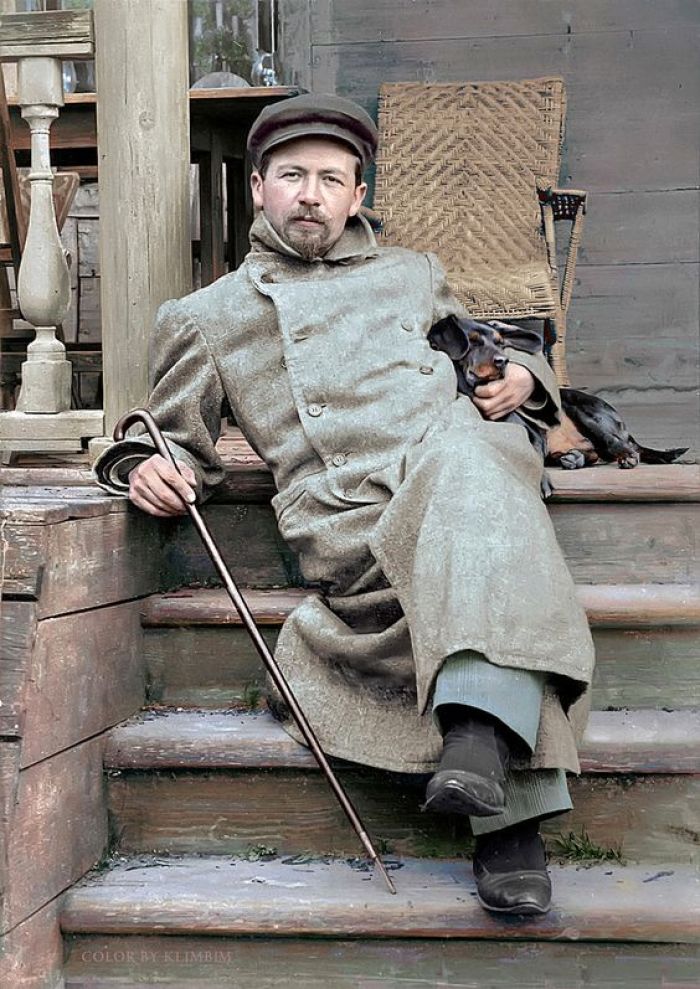
And when you have less time and energy to work on your art, you have a different idea about its importance. “If I do have a gift that should be respected, I confess before your pure heart that up to now I haven’t respected it. I felt that I had it, but got used to considering it insignificant … During the five years I have been roaming around editorial offices I managed to succumb to the general view of my literary insignificance, quickly got used to looking at my work condescendingly, and — kept plugging away! That’s the first reason. The second is that I am a doctor and am up to my ears in medical work … I do not remember working more than a day on any single story of mine, and I wrote The Huntsman … when I went swimming!”
Chekhov did not consider himself a great artist or claimed not to. “My holy of holies is the human body, health, intelligence, talent, inspiration, love, and absolute freedom, freedom from force and falseness in whatever form they express themselves. That’s the platform I’d subscribe to if I were a great artist.” But he would say that not feeling like a great artist, or feeling that your work is not valued or respected is no reason not to create what you must create. “There are big dogs and little dogs, but little dogs must not fret over the existence of the big ones. Everyone is obligated to howl in the voice that the Lord God has given him.”
Who can decide what makes a work of art great — and really, why do we need to? Somebody might be just as moved by graffiti scrawled under a bridge as by a painting in a gilt frame in a museum. Most powerful art is created because it needs to be, because it’s in the artist and it has to come out. We have to ride the waves of discouragement, criticism, and self-doubt and keep plugging away. As Chekhov would advise “You should work, you know … work without stopping … your entire life.”
Categories: art, featured, literature



And Wallace Stevens and Charles Ives were insurance agents!
LikeLiked by 1 person