
“The mischievous Raven existed at that time because he always had.”

“The mischievous Raven existed at that time because he always had.”
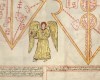
“Mastering the full range of subjects taught in medieval universities normally required many years of hard and expensive study. From the thirteenth century on, however, an anonymous work known as the Ars notoria promised, through diagrams, incantations, and arcane rituals, to rapidly transmit to scholars the total knowledge of anything they might need.”

“In the end, gendered insult reveals that language is one of the most durable carriers of inequality. It stores contempt in ordinary forms. It turns hierarchy into shorthand. It allows long histories of valuation to survive in single syllables and familiar phrases.”
A collection of all the articles we’ve published over the past month, for those who like to savor their Magpies’ tidings as an issue.
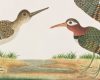
Set between the muddy paddy fields of Taiwan and a cold college room in California, this story weaves together Taiwanese bird ecology , traditional Taiwanese street delicacies and a linguistic misunderstanding. It explores how food, nature, and intergenerational love can cross geographical and historical oceans when words fail.
“Sometimes I wonder, perhaps naively, if all the problems of the country could be solved by sitting the folks in Washington down at a table with a lump of clay and some encouragement. They can bring their dirty laundry if it helps them find the time.”
At its core, criticism asks a fundamental question: how do artistic works produce meaning?

A collection of all the articles we’ve published over the past month, for those who like to savor their Magpies’ tidings as an issue.

The Blazing World — via a dizzy mix of animal-human hybrids, Immaterial Spirits, and burning foes — tells of a woman’s absolute rule as Empress over a parallel planet. Emily Lord Fransee reflects on what the book and its author Margaret Cavendish can teach us about empire, gender, and imagination in the 17th century.

“Taken together, these examples challenge the idea that the past disappears once it is no longer actively remembered. The past often remains present in quieter and less obvious ways. It stays in what is unsaid, in the places people move through, and in the physical traces of those who came before them.”