

By Robert Beck
I WATCHED NEIL ARMSTRONG walk on the moon. At the time, I had a lot of company — some 600 million other people. It was a defining moment, a huge accomplishment shared by everyone in some measure.
Fifty-five years later, many of those people are gone, and those born since see it in historical retrospect, not quite horse and buggy but pre-digital, which is hard to fathom outside of its cultural context.
My father worked for a company that built electrical system components for the Gemini and Apollo missions. They called it power sources, but their work centered around batteries, which you can imagine played a big role a quarter-million miles and eight days from home. For us civilians, batteries were those things you put in a flashlight and not much more. These systems had to survive extreme temperature swings and other severe demands in an age when your car wouldn’t start when the temperature dipped too far below freezing.
One of the first astronauts, Alan Shepard, dryly commented, “Every part of this ship was built by the lowest bidder.” He was right, and every one of those 150,000 parts needed to perform as expected. From conversations at our dinner table, I learned that there were a lot of things they didn’t know how to do that had to be discovered or invented as they went. The laboratory where my father worked had explosion-proof doors.
All of it was risky. Two missions later, a malfunction led to an explosion in the capsule that would have doomed the astronauts had it not happened at the time and place it did. The scientists at NASA hacked a fix using the cover on the flight manual, a pair of socks, hoses from the space suits, and, of course, duct tape; otherwise, the men were goners. NASA was able to swing them around the moon and bring them home. There was no script, no precedence to rely on. You field that line drive just right, or people die. Three astronauts already had.
Space was just one slice of the time. There was the Vietnam War, which cut close to home everywhere across the country, and the music, which was new, brave, and pervasive. Everything had an edge. Despite the moonshot being a big gamble, it wasn’t contentious. People argued about the need and the cost, but once Apollo 11 was up there, on its way to do something not just never done before but inconceivable to most, the world held its breath, crossed its fingers, and prayed.
Some put the odds of a successful moon landing at 50:50. It was the president’s job to help the country, and the world, grieve and move forward if the men didn’t return. He had his speechwriter, Willian Safire, prepare a statement to be read if things went wrong and the men were stranded. Safire created one of the most moving pieces in my memory, discovered in the archives thirty years after Apollo 11 shot into the unknown. It is indicative of the time when all eyes in America and much of the world were in awe of our capabilities, the scale of the undertaking, and the courage of three men sailing the heavens in the confines of the lunar module Eagle.
Fate has ordained that the men who went to the moon to explore in peace will stay on the moon to rest in peace. These brave men, Neil Armstrong and Edwin Aldrin, know that there is no hope for their recovery. But they also know that there is hope for mankind in their sacrifice. These two men are laying down their lives in mankind’s most noble goal: the search for truth and understanding. They will be mourned by their families and friends; they will be mourned by their nation; they will be mourned by the people of the world; they will be mourned by a Mother Earth that dared send two of her sons into the unknown. In their exploration, they stirred the people of the world to feel as one; in their sacrifice, they bind more tightly the brotherhood of man. In ancient days, men looked at stars and saw their heroes in the constellations. In modern times, we do much the same, but our heroes are epic men of flesh and blood. Others will follow, and surely find their way home. Man’s search will not be denied. But these men were the first, and they will remain the foremost in our hearts. For every human being who looks up at the moon in the nights to come will know that there is some corner of another world that is forever mankind.
ADDENDUM
IF YOU ARE LOOKING FOR A GIFT OF REAL SUBSTANCE:
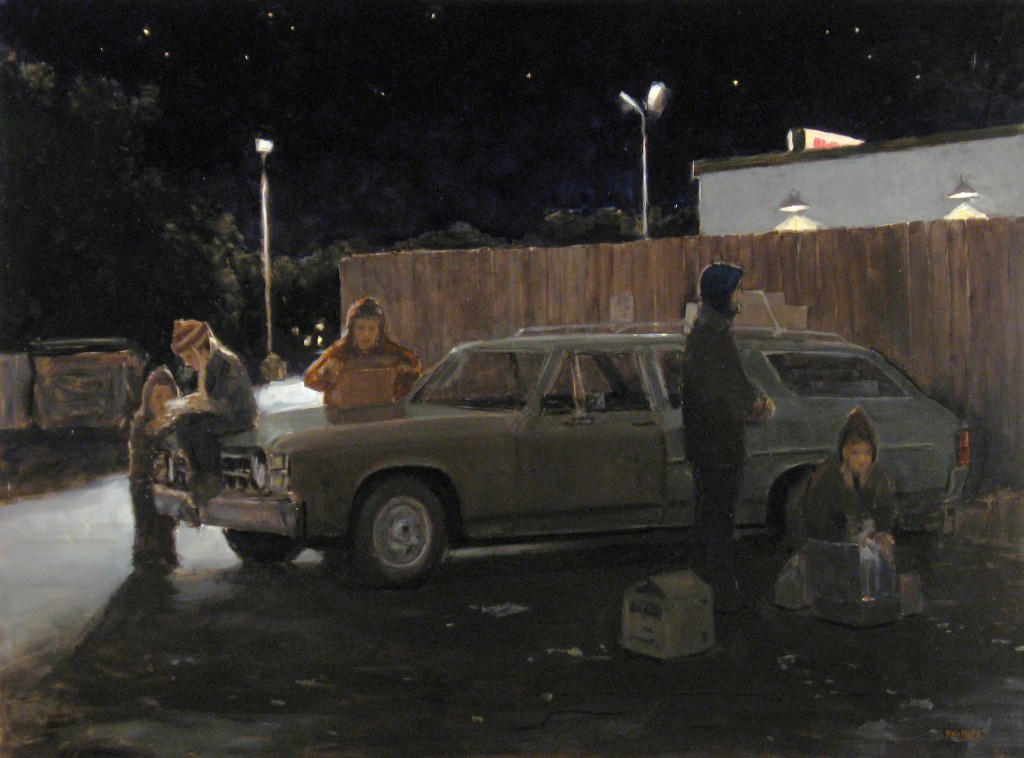
If you are looking to do something in your community—a way to give back or contribute to its well-being—please consider what they do at Fisherman’s Mark. They help people find workable solutions to serious problems when they have no place to turn. They help whoever shows up at the door.
The abused woman and her children who fled to her parents, but were required by law to return to the state, in spite of her having no money for food or shelter.
The elderly man who lost his wife, then his voice to cancer, and was facing eviction.
The parents of three who both lost their jobs, then their house, and all five lived in their car.
Seventeen hundred people served every year in one way or another. None of us is immune to finding ourselves in a tough spot.
Fisherman’s Mark doesn’t give people money; they find a sustainable pathway. That’s how we’ve been keeping our community healthy and vital for more than 40 years, and your support is a crucial part of it. There is no government support. Just people who believe in helping their neighbors. You can volunteer or contribute financially. You can also discuss it with your friends.
It’s important. These are hard times for many. Make a huge difference. Be the help that’s needed. Fishermansmark.org.
Robert Beck is a painter, teacher, curator, lecturer and writer who divides his time between Bucks County, PA and New York City. See more of his work at Robertbeck.net, on Instagram @illhavecoffeethanks, and on Facebook .

 magpiesmagazine.com