

By Chimezie Chika
The budding Nigerian photographer Kanayo Kester’s work has been primarily centered around portraits. He has a knack for creating intriguing set pieces around fabric colour and poses. To go through Kester’s work is to see that his photography practice exploits every possible portraiture scenario. The most prominent features of his practice are his striking subjects and their costumes—the combination of which creates a feast for the senses. Notwithstanding its conceptual basis, these portraits are like going through the exotic archives of a well-travelled photojournalist.
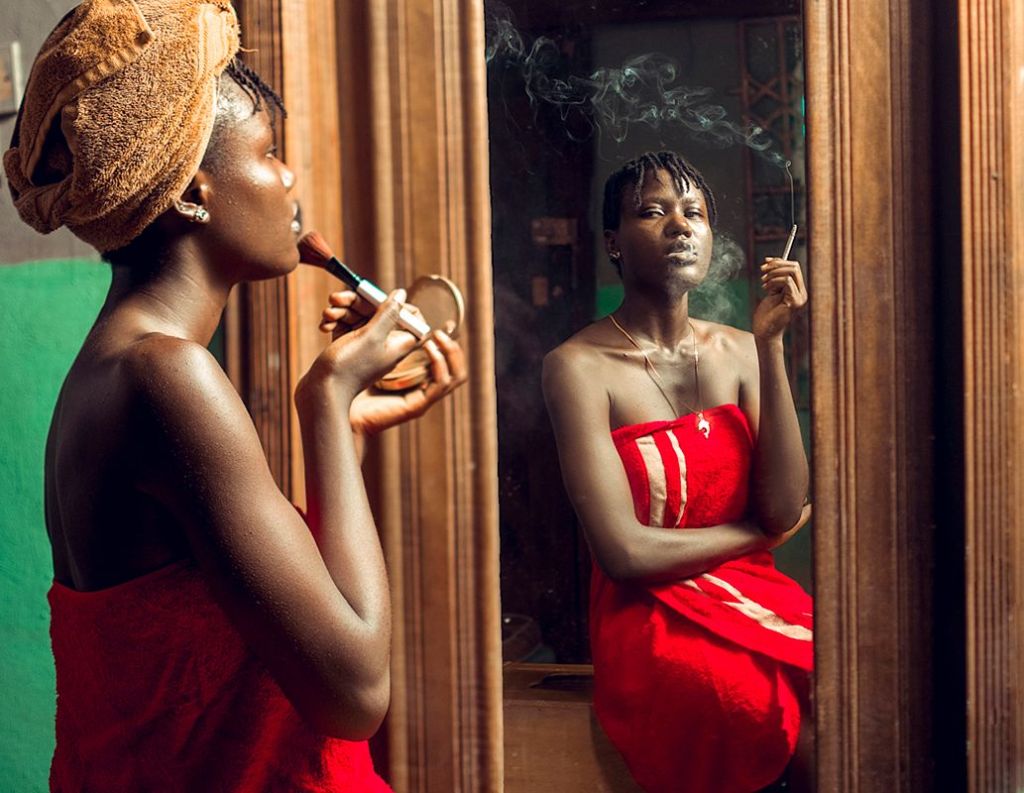
Consider the photo titled “The Man Within”, in which a woman in a red towel is pictured in a room. She’s looking at herself in the mirror while applying makeup. At first, we assume that her reflection in the mirror is the same as her doing make-up, but in a split-second we see that there is a difference in the mirror image: same woman, same red towel, but in the mirror she’s sitting instead of standing, and she’s smoking a blunt instead of applying makeup. On her lifted face, framed by smoke, is a glazed sensual look. That look, the angle of the figure in the mirror, gives the photo a certain sensual charge.
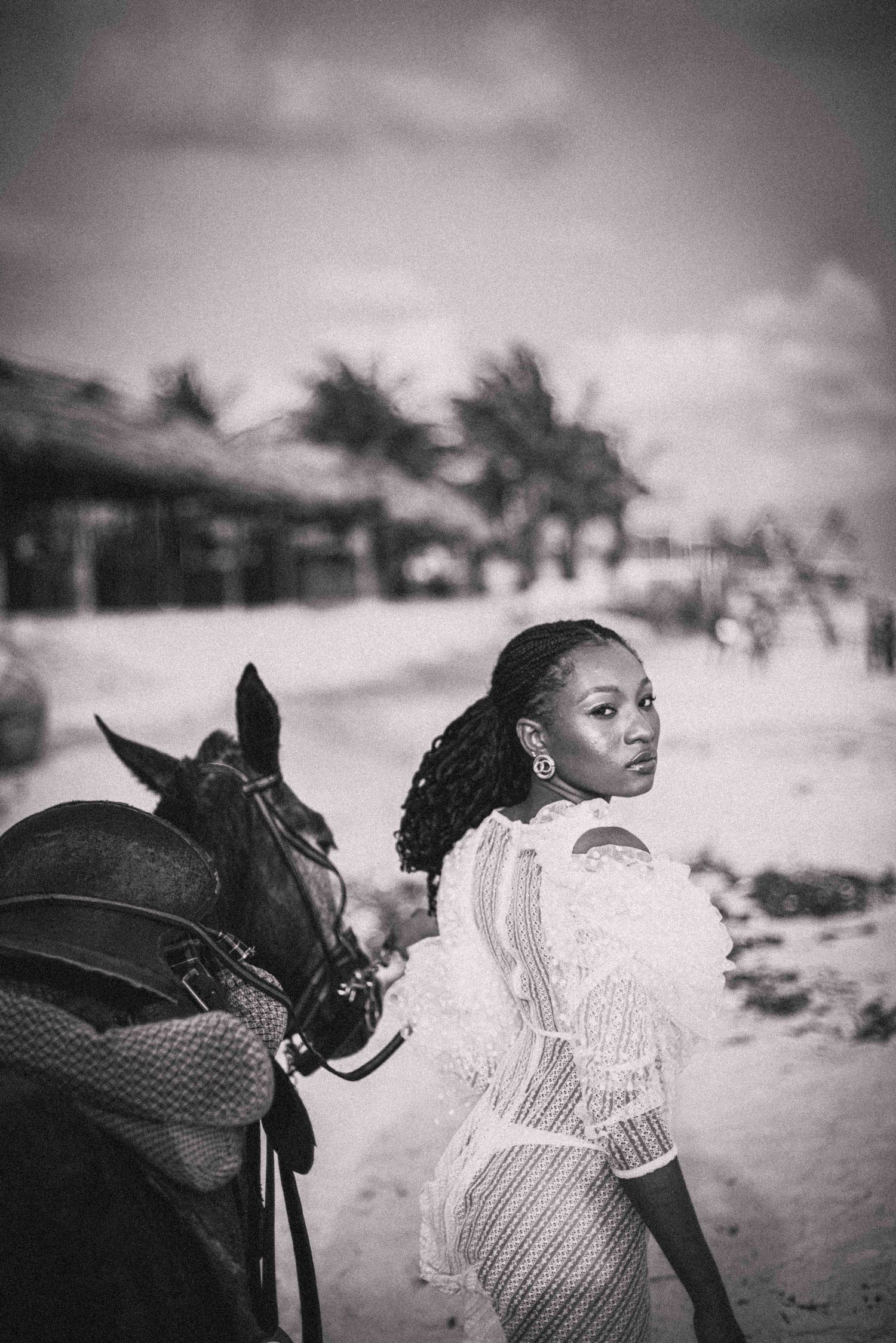
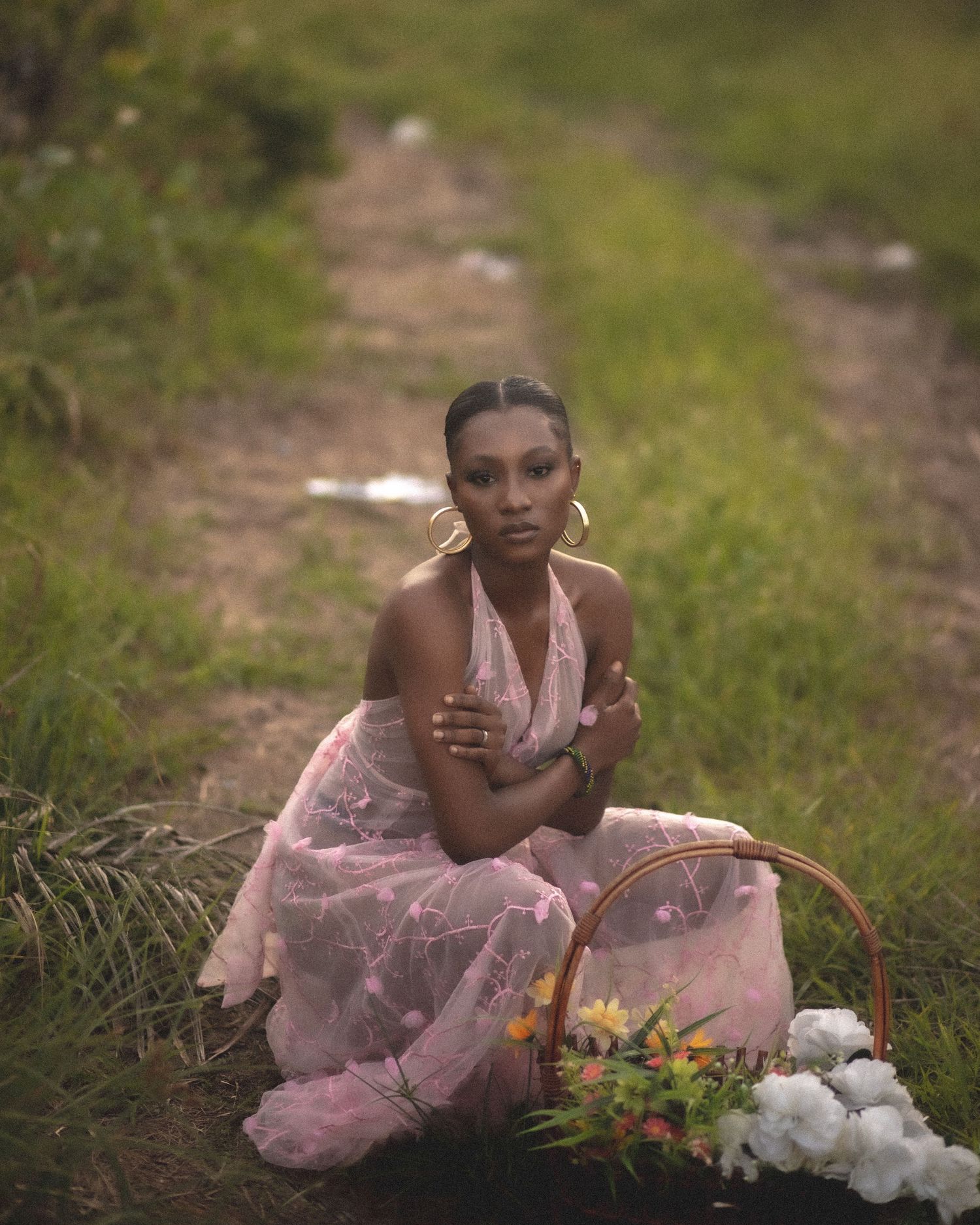
This muted female sensuality is given more literal platform in Kester’s photo series revolving around the word “Lust”, which, in some cases is given an interesting semantic inversion. The first two photos are the ironically titled “The Avoidance of Lust” 1 & 2, which takes the very opposite of its puritanical declaration. These photos are lucid about sexuality and the female figure. Each employs shadows, angles, body exposure, and bare clothing (underwears, bikini) to heighten the voluptuousness of their subjects. Another pair of photographs, titled “Wanderlust” 1 & 2, is taken outdoors—unlike “The Avoidance of Lust”—and the female subject is captured here in two different places, wearing different clothes, posing differently, and while one photo is in colour, the other is in black-and-white. What conjoins both is the distant expression on her face and her suggestively luscent clothing, made to accentuate the sexual symbolism apparent in the photo, as well as the ceremonial atmosphere in each: in the one, the horses and vague beach sand shows what appears to be a blurry recreation area; in the other, the green lawn and a bouquet of flowers seem to celebrate love.
Love is one of Kester’s most recurrent themes, and the media through which he shows it in his photography is through flowers, red colour, and other conventional archetypes, which might be, to an extent, limiting. But what he does with these items is still remarkable. “Escape: Who Will Give Us Flowers” is one of such. It’s a four-part photograph of a woman in a dimly lit room. She’s wearing a thin-armed brownish-red gown, holding a rose, and each photo captures her in a different pose. The first two photos, which show her standing and holding the rose close to her face, project beauty and the ethereal through the effect of light and shadows. The last two photos mix gestural symbols of love and a kind of sexual role play, for here she is sitting and kneeling suggestively with the rose.
*
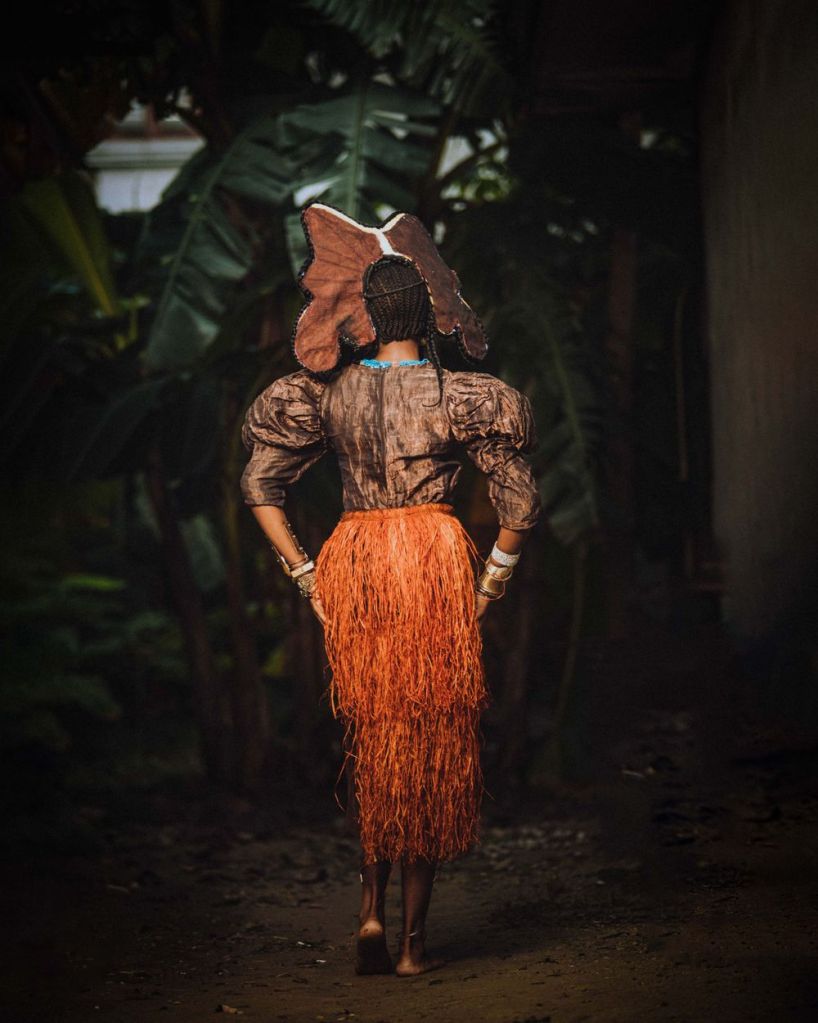
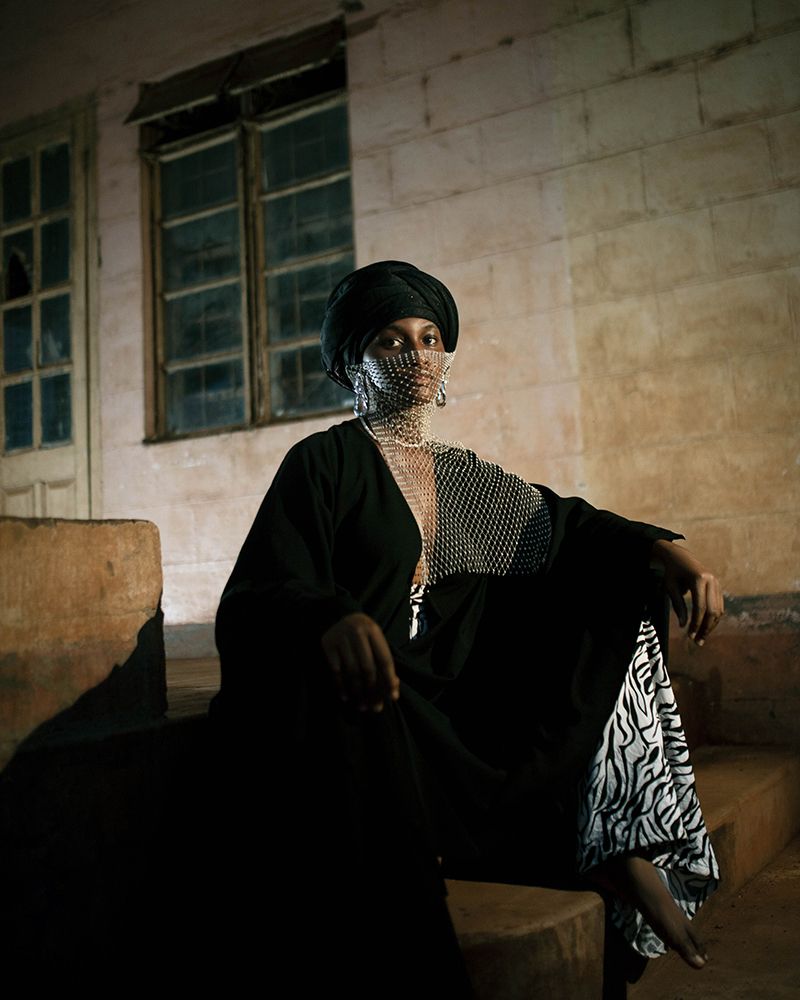
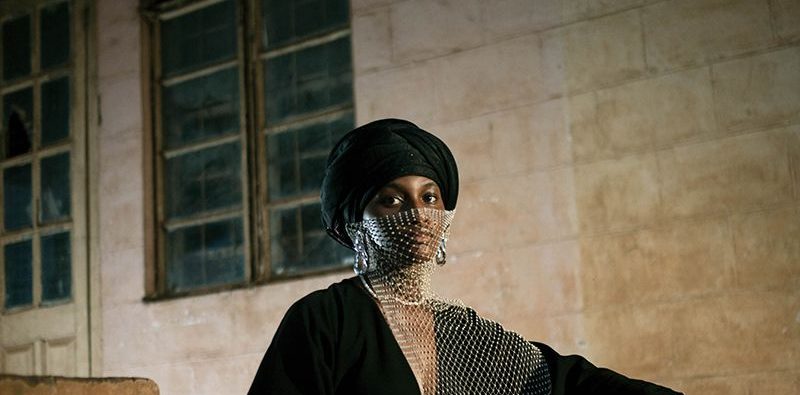
A series of fashion-leaning photos shows women in all kinds of attire. What seems to push these photos a little further is the decidedly cultural spectrum from which they seem to emerge. In “Against the World”, a woman in a jute skirt has her back turned to the camera. She also has a butterfly-shaped headpiece, but we cannot see her face to determine what it gives or not. That jute dress is the traditional dress of any number of tribes and ethnic groups from West to Central to East Africa. “Veiled and Powerful” is a portrait distinguished by the quiet poise of the sitting woman subject. She seems to owe that aura to the classy nobility flowing from the black buobuo she’s wearing and the matching back turban-like headpiece. A veil of netting half-covers her face. The contrast between her surroundings—we can make out 40s to 60s modern African architecture—and her traditional apparel, as well as the shadows and studied light around it, recalls, in a sens,e some of the iconic photos of the legendary Malian photographer, Malick Sidibé.
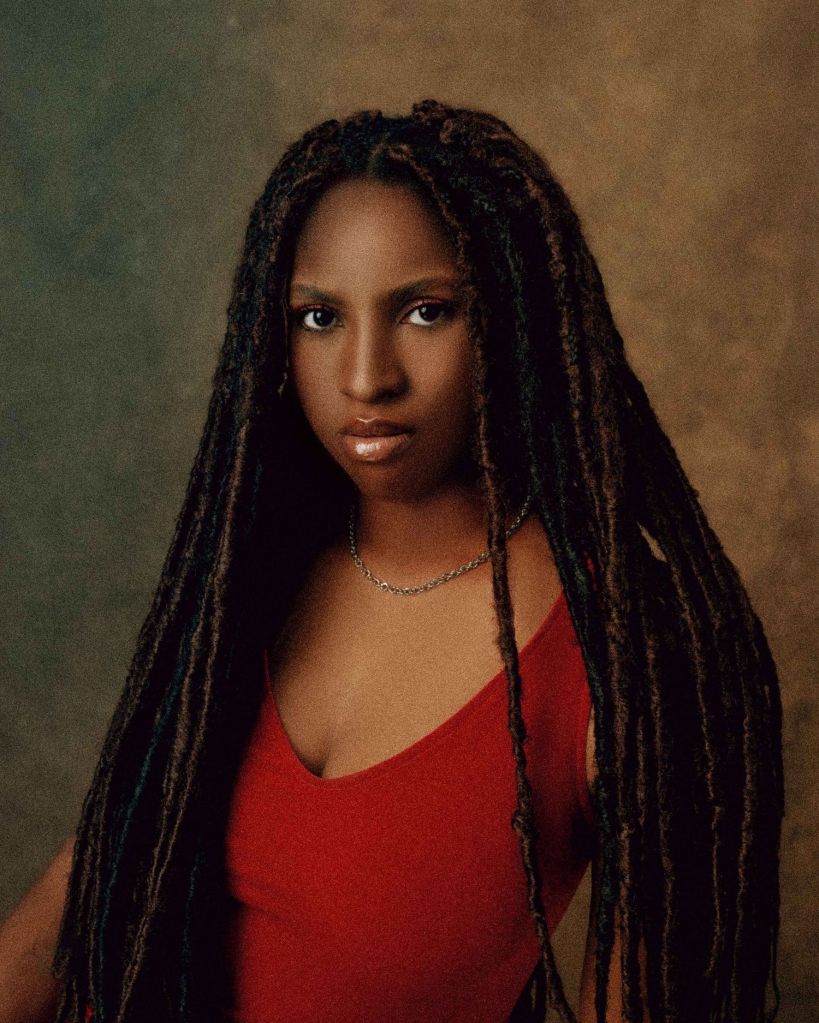
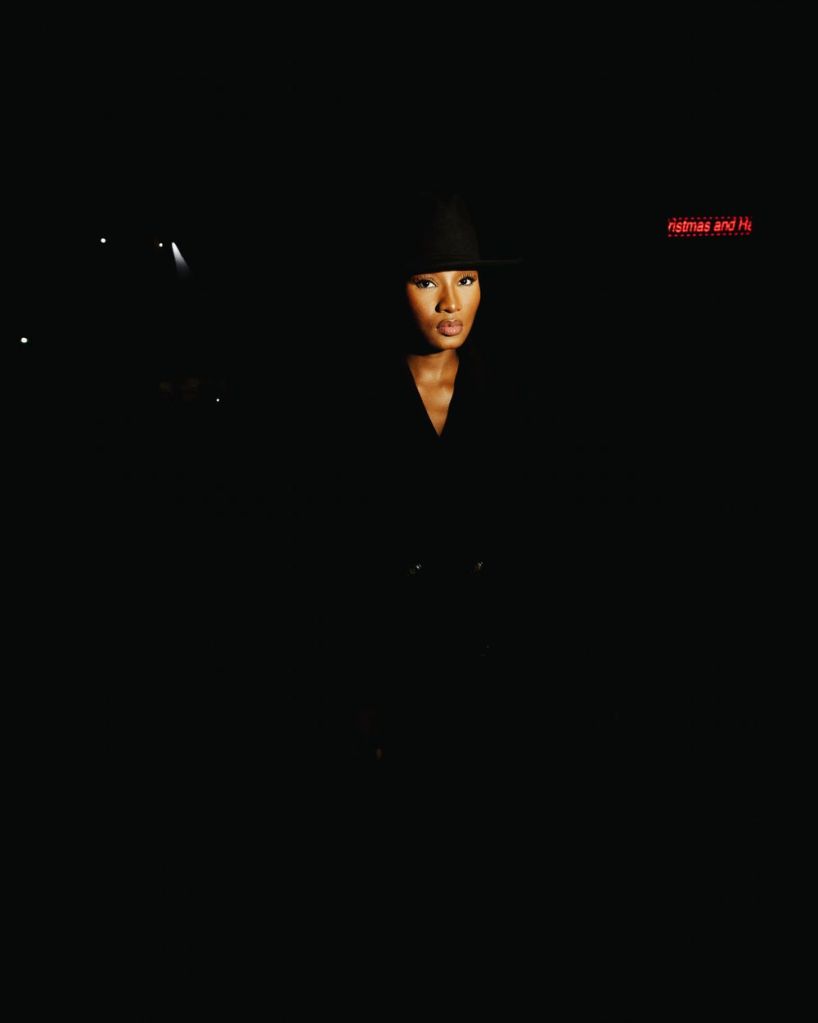
The girl pictured in “Power” projects the stillness and eternally frozen expression of a medieval painting. In short, Kester seems to have modeled this photo on the Mona Lisa. Indeed, the girl we see here is black, is wearing a red blouse, long dreadlocks, and a silver-like necklace, but the pose, the angle of sight, the ochre-toned background colours, and the beatific expression are unmistakable. In contrast, the photo titled “Identity Crises”, banks more on ellipses. A female face is captured in pitch darkness in a place we presume to be a city street. Presume because, around her, the only items visible to us apart from her yellow face are a blurry red neon sign and islands of distant lights. We also assume that her body has been nearly obscured into the darkness by virtue of her dark hair and dark clothes blending in perfectly with the night.
Perhaps the most important cultural documentary project that Kester embarks upon in his work can be seen in the Egedi project. The word “Egedi” in Ika Igbo translates to “old”. With this project, Kester attempts to, in his own words, recreate “photographs of young or old people in old clothes previously worn by their parents in an old photograph, showing how even though we might be so many years apart from our parents, we’re really just so alike, a classic representation of the apple never really falling far from the tree.”
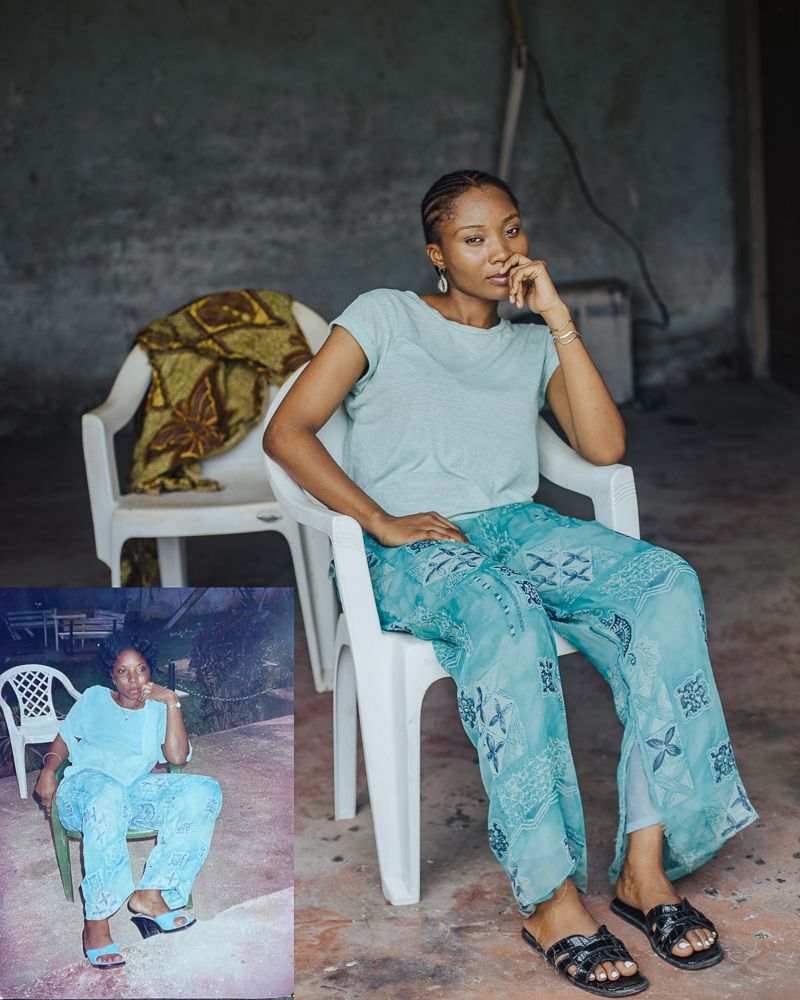
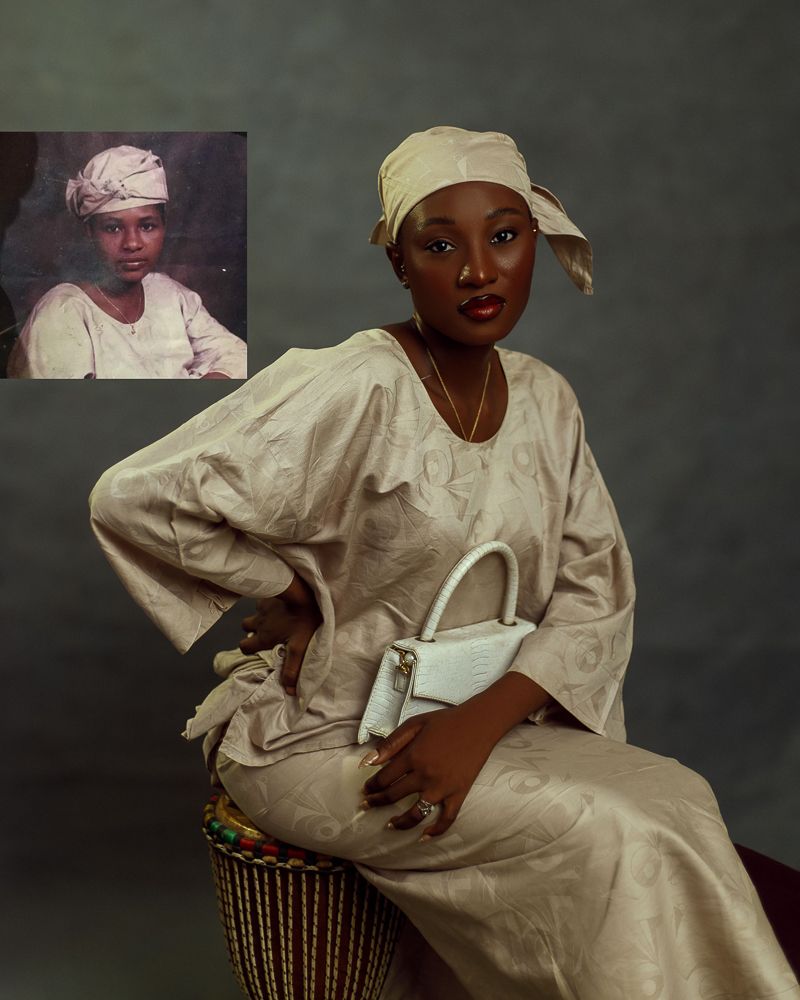
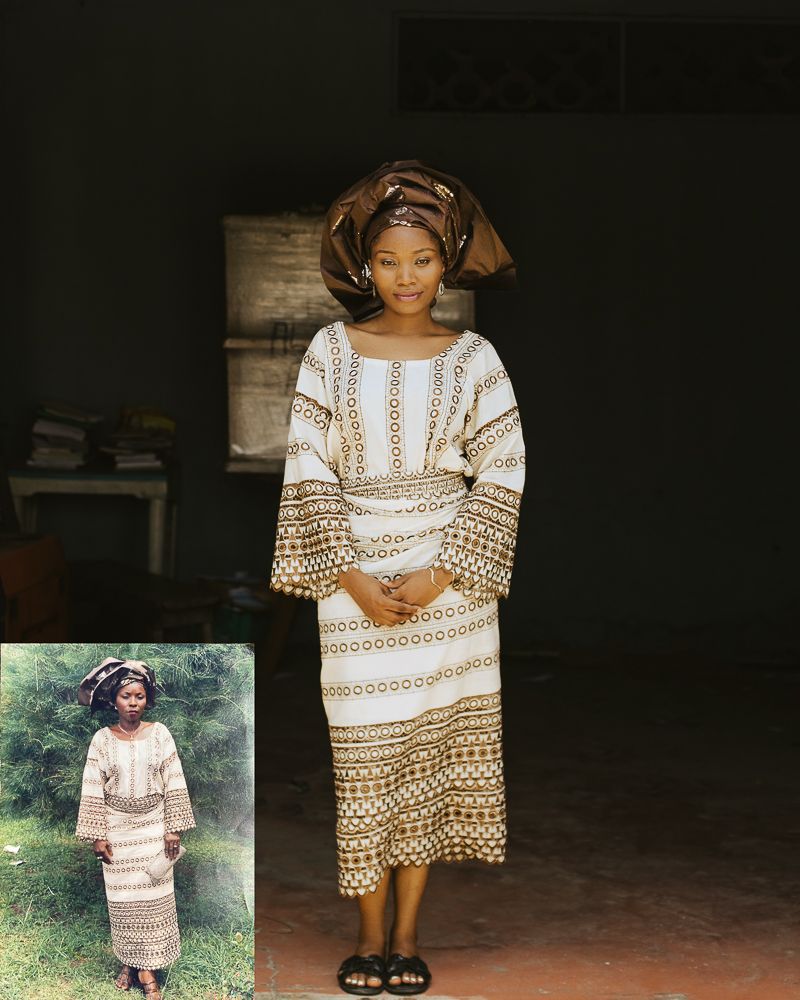
Thus, in the Egedi series, we are treated to daughters recreating old photographs of their mothers, wearing the same exact clothes worn by their mothers in the old photographs, and striking the same pose. It’s clear that Kester is certainly not the first to do this (there have been similar social media trends), but juxtaposing members of a family from different generations touches something vulnerable and mnemonic about the relationship between humanity and Time. The photos here, of daughters in African clothes or in European apparel of bygone eras, occupy the realm of family looms and the fleetingness of our idea of generations. What we see is not a gap between two generations of women, but the similarities between individuals of the same family, no matter the gulf of time that separates them.
I have mentioned Malick Sidibe earlier because what I see all over Kester’s work appears to have, if not a kind of direct reference to the older photographer’s work, at least signs of similarities. In Sidibe’s work, the tenor of cultural transition in Mali’s post-independence era is captured with masterful simplicity, detailing facial expressions, fashion, partying mannerisms, silhouettes, and beauty—all in black and white. Many of these markers of photographic artistry are evident in Kester’s work.
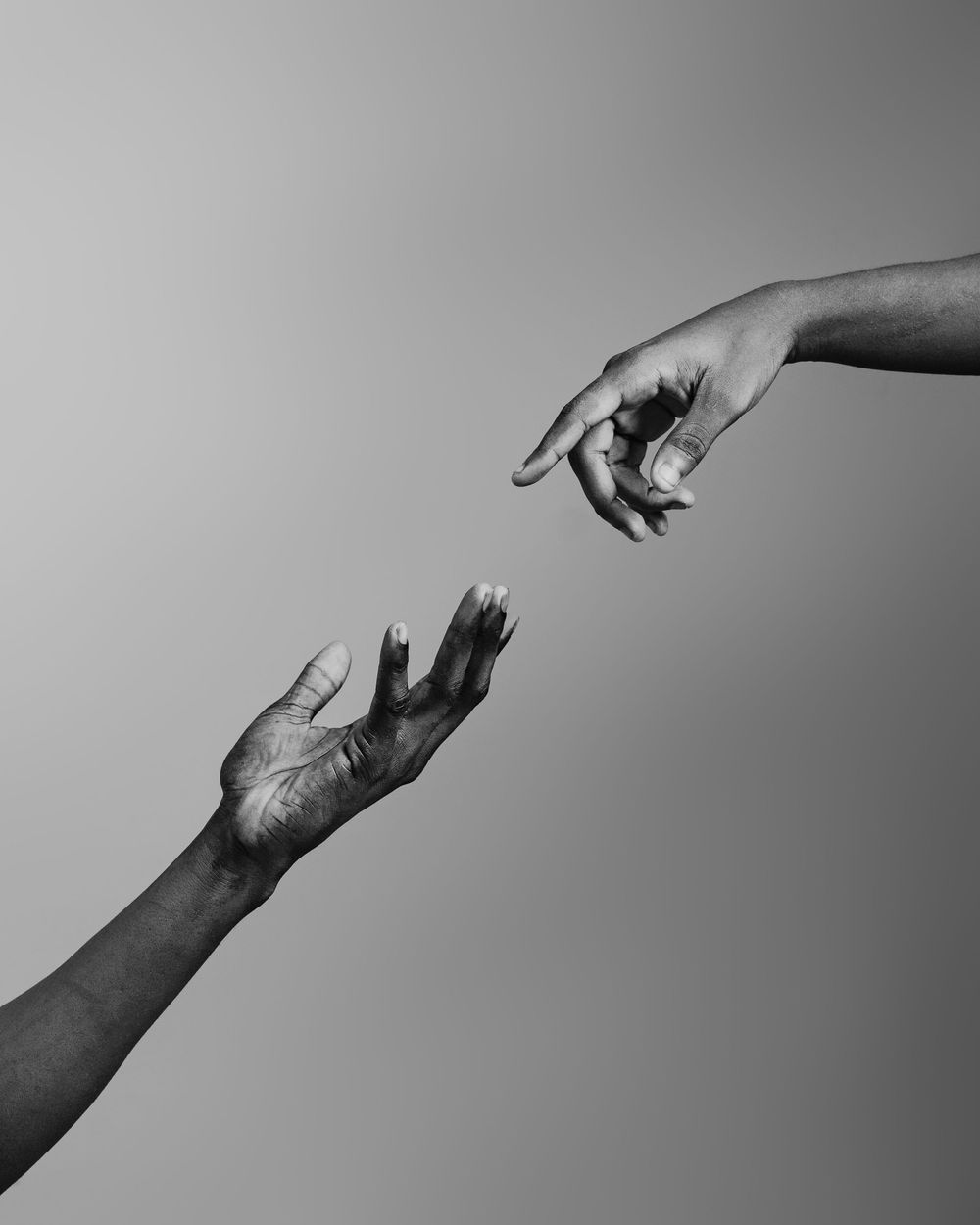
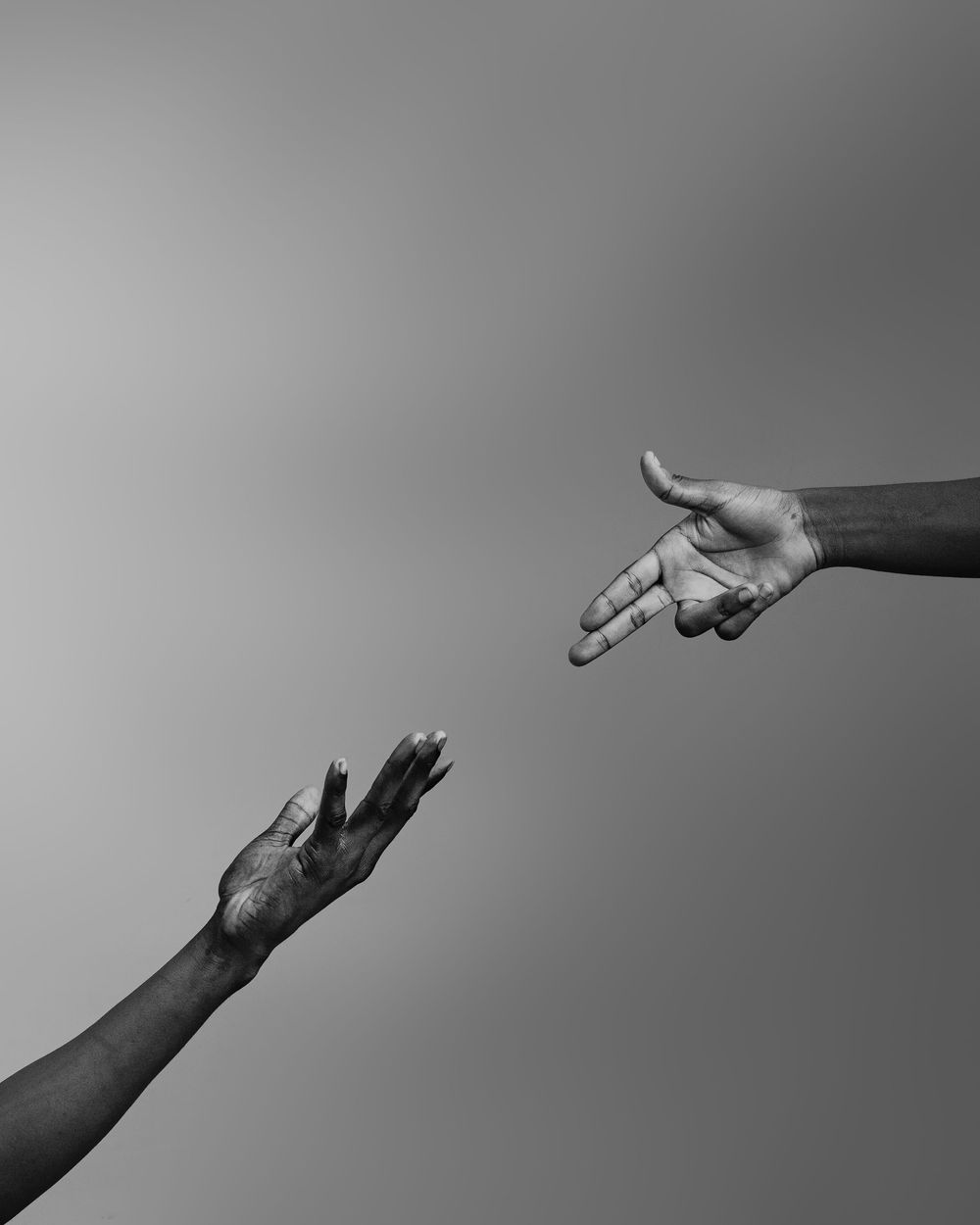
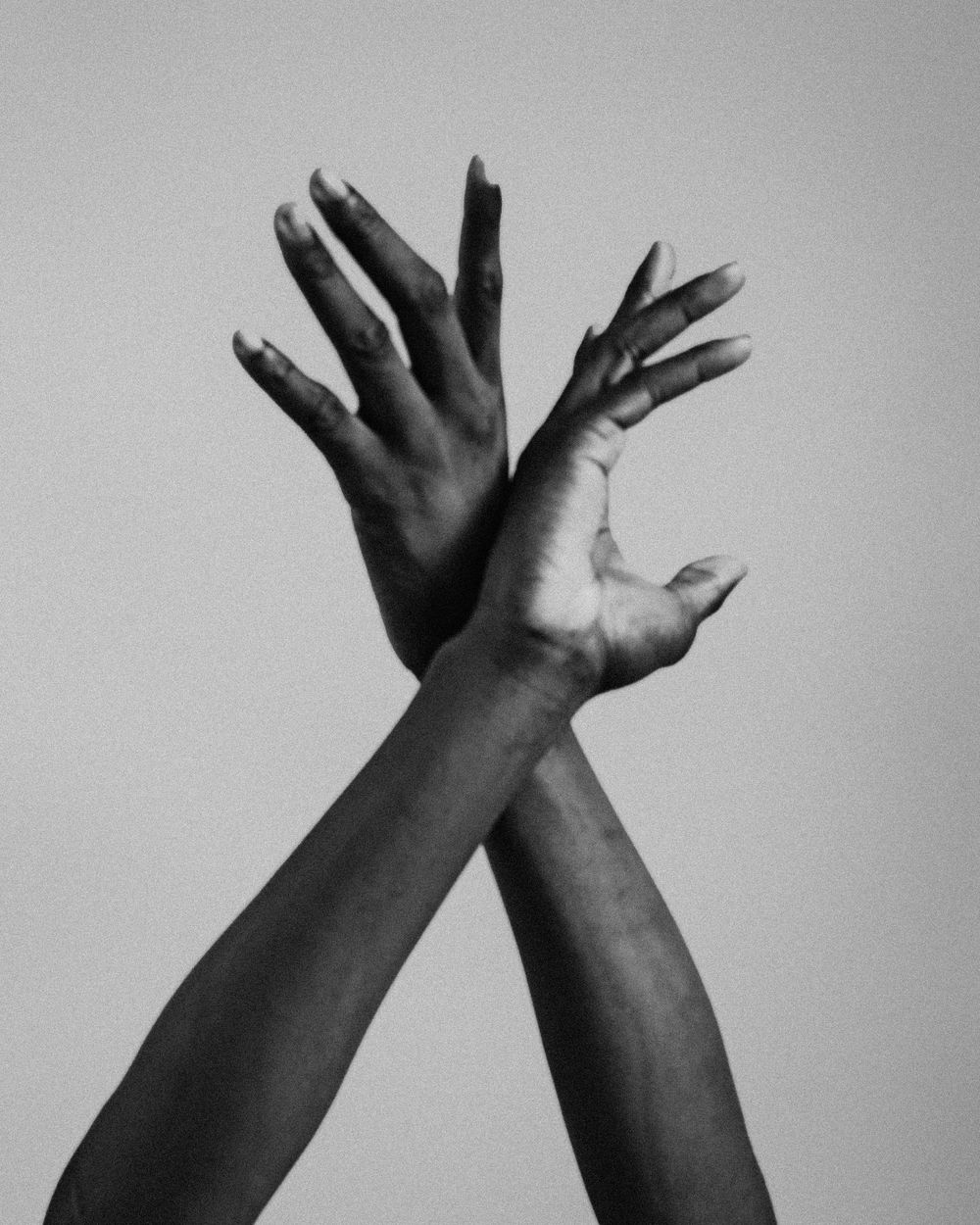
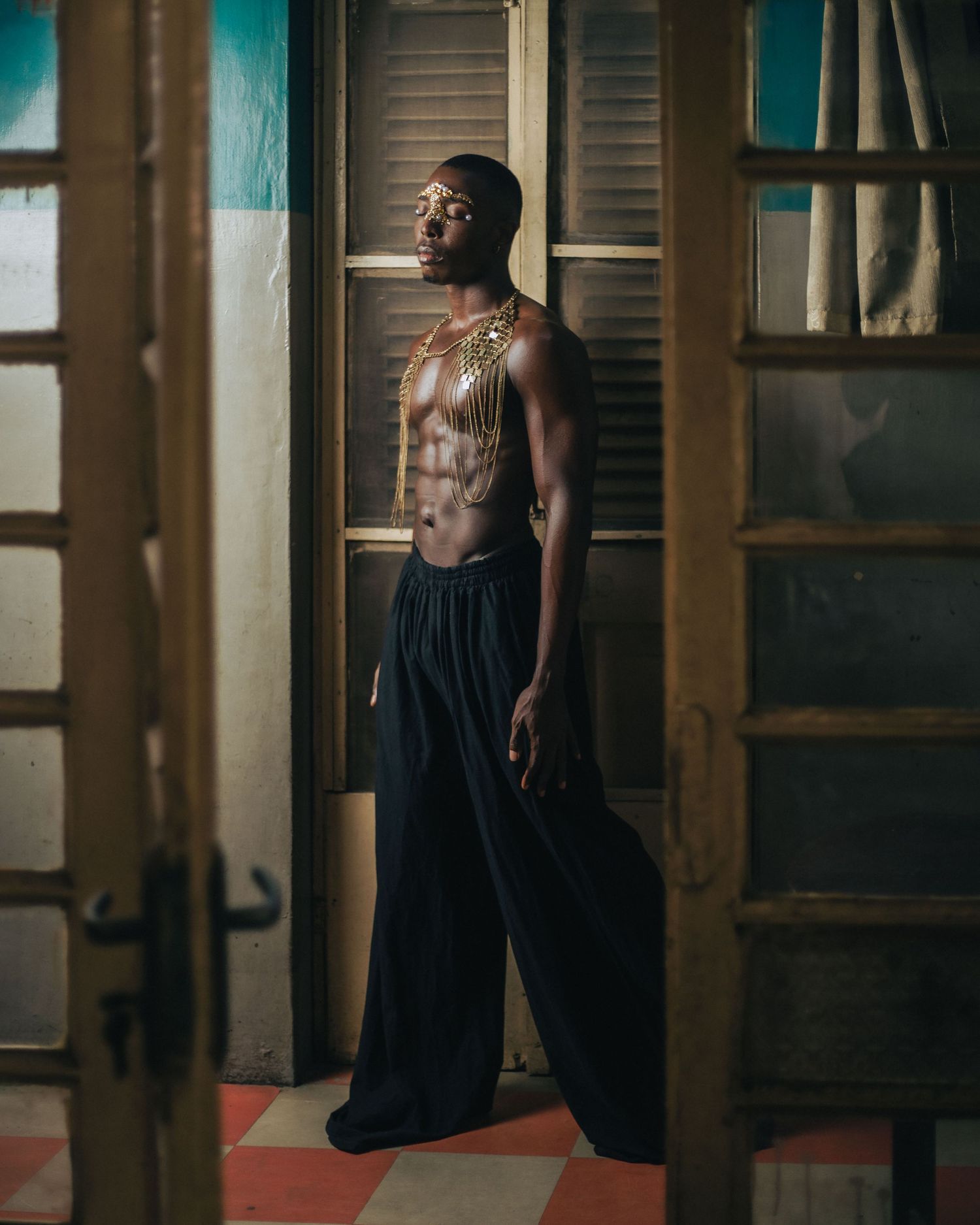
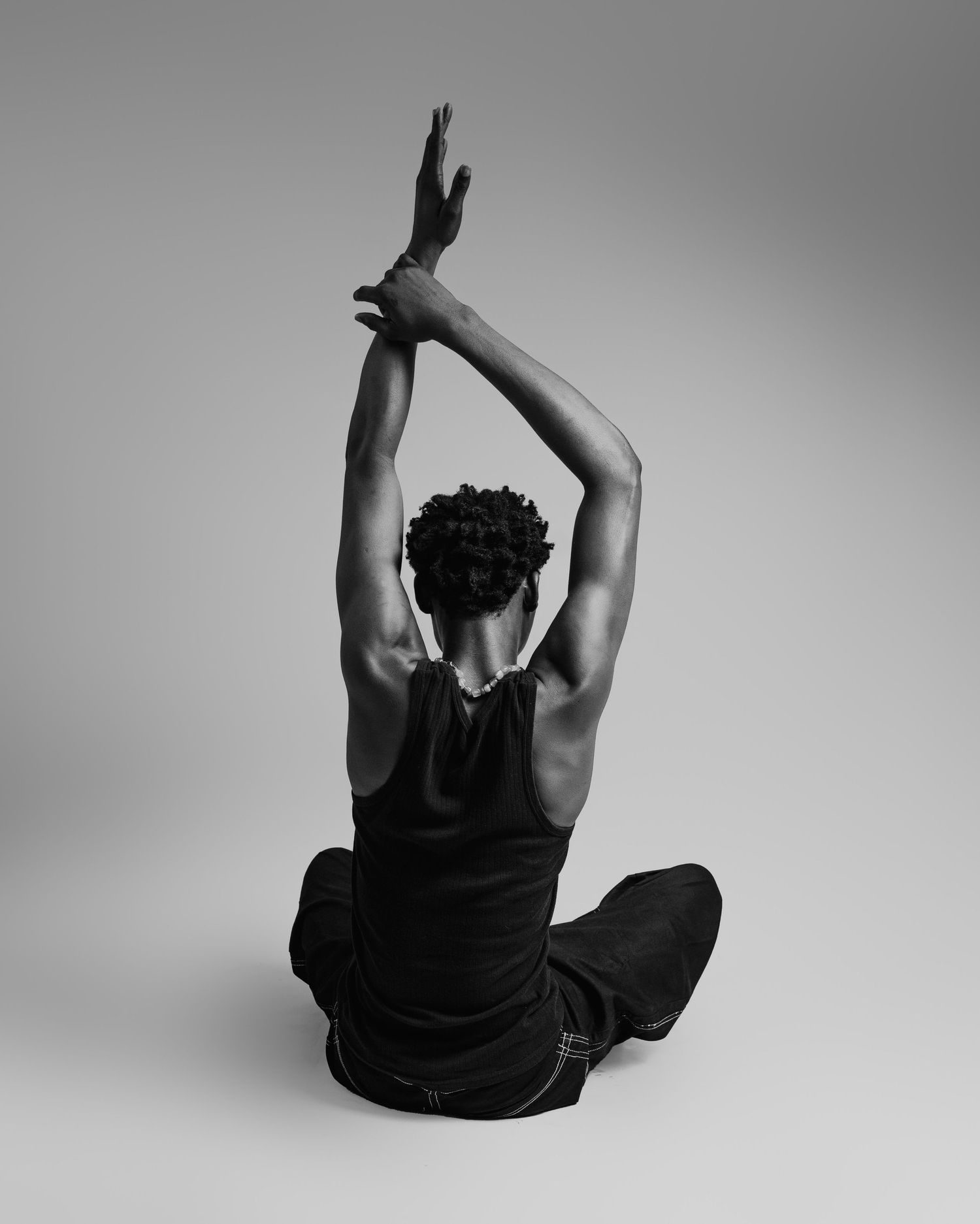
A series titled “Man Know Thyself” appears to celebrate the male body. There are two parts in this series that mark out the fact that he had used two different men in the series. The first part, using the first man, acknowledges postures that heighten androgeny and body-messaging. The figure of the man is heavily decorated in makeup and gold necklace, from head to shoulders to chest. In each of his postures, the camera seems to heighten only bodily allure. The second part uses a different man, whose postures are more about gestures. The majority of the photos here are monochrome and zoom into his hands, which are sometimes entwined or upraised or twisted. Two, in particular, show two hands reaching to touch each other without quite being able to, one pointing as if in accusation, the other pointing in a gun shape.
While the “Man Know Thyself” seems to project that men come in different types, shapes, bodies, cultures, emotions, and environments, it is as much about symbols and archetypes as Kester’s other works. These are the organizing principles that Kester works with. That is, everything around which the human world moves.
Chimezie Chika is an essayist and short story writer. His art criticism has been published in Afrocritik, The Republic, and Tidings of Magpies.
Categories: art, featured, featured photographer, photography

 magpiesmagazine.com