

By Dina Comisarenco Mirkin*
[This article first appeared on the site Hilario]
“poetry with colors, and […painting] based on words.” [1]
Aurora Reyes (1908-1985), known mainly as the first Mexican muralist, was an outstanding and multifaceted artist who, through her creative production, both plastic and literary, documented and interpreted the history and feelings of the people of Mexico. modern.
Identified with the so-called Mexican School, both for her social commitment, her realistic style, and her interest in indigenous culture, Aurora was a true “tlacuila” [2] of the 20th century because throughout her life she dedicated herself to writing by painting and painting by writing. In fact, most of her poems and murals not only narrate the main popular struggles of post-revolutionary Mexico, and especially those waged in defense of women’s rights, but also manifest a great lyrical sensitivity.
Although Aurora was a leading figure in the fascinating artistic and political environment of her time, over the years her work, like that of many of her female artist colleagues, began to be made invisible and forgotten.
Although Aurora was a leading figure in the fascinating artistic and political environment of her time, over the years her work, like that of many of her female artist colleagues, began to be made invisible and forgotten. With this text I propose, then, to review some important aspects of his life and work, not only to begin to settle an important historiographic debt, but mainly, so that we can continue enjoying the historical, political and aesthetic richness of her outstanding artistic production.
The life of the artist
Aurora Reyes was born in Hidalgo del Parral, Chihuahua, Mexico, on September 9, 1908, just two years before the outbreak of the Mexican Revolution. [3] In 1913, Aurora’s father, Captain Léon Reyes, due to the participation of his father, General Bernardo Reyes in the tragic decade, and his political convictions, had to flee his city and remained hidden for around one year, while the rest of his family, also clandestinely moved to the capital, since the threat of punishment fell on all its members. To survive, Aurora’s mother, Luisa Flores, baked bread, which the little girl sold at the Lagunilla market. Suddenly torn from her comfortable life in Chihuahua, Aurora witnessed and suffered firsthand the harshness of life for the country’s most marginalized classes.
Aurora’s experiences in the poorest neighborhoods of the city formed her strong and passionate character, and had a decisive influence on the political convictions that encouraged her to fight, throughout her life, on behalf of the poor, with a commitment and unmatched social awareness.
Aurora’s experiences in the poorest neighborhoods of the city formed her strong and passionate character, and had a decisive influence on the political convictions that encouraged her to fight, throughout her life, on behalf of the poor, with a commitment and unmatched social awareness. The artist herself was aware of the intimate relationship between her personal life and her political convictions, and assuming the power of her situated knowledge, she once stated: “I am interested in these social issues because I have been hungry, I have suffered misery firsthand and because I am people of the town. I am interested in them because I belong to them. And I consider that art is the medium that penetrates the emotion of beings and that is why it constitutes a powerful weapon to fight for the people.” [4]
When Aurora grew up, and the political persecution against her family finally stopped, she began studying at the National Preparatory School and when she turned 13, she joined the National School of Fine Arts, taking painting classes at the night time. Despite all the material hardships she suffered, Aurora graduated in 1924.
Just a year later, in 1925, she achieved the first solo exhibition of her drawings. The same year, when the young artist was only eighteen years old, she married the journalist and writer Jorge Godoy. [5] During the short time in which the couple remained married, Aurora gave birth to two sons, Héctor born in 1926, and Jorge in 1931, almost simultaneously with her divorce, an unusual and very difficult circumstance for a young woman in Mexico in the 1930s. After the divorce, Jorge and Aurora did not see each other again and the responsibility of raising the children fell exclusively on her.
Many of the league’s members were also dedicated left-wing political activists, mainly from the Mexican Communist Party. They considered themselves academic workers and assumed a very important social responsibility that transcended the field of artistic creativity.
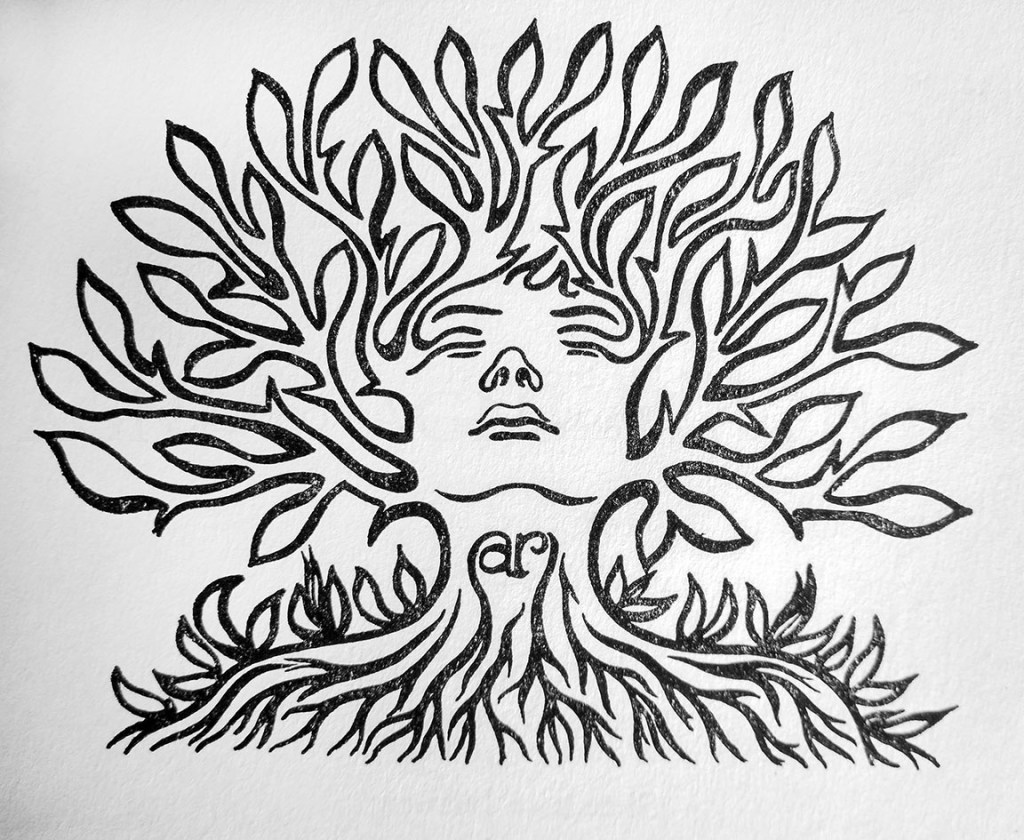
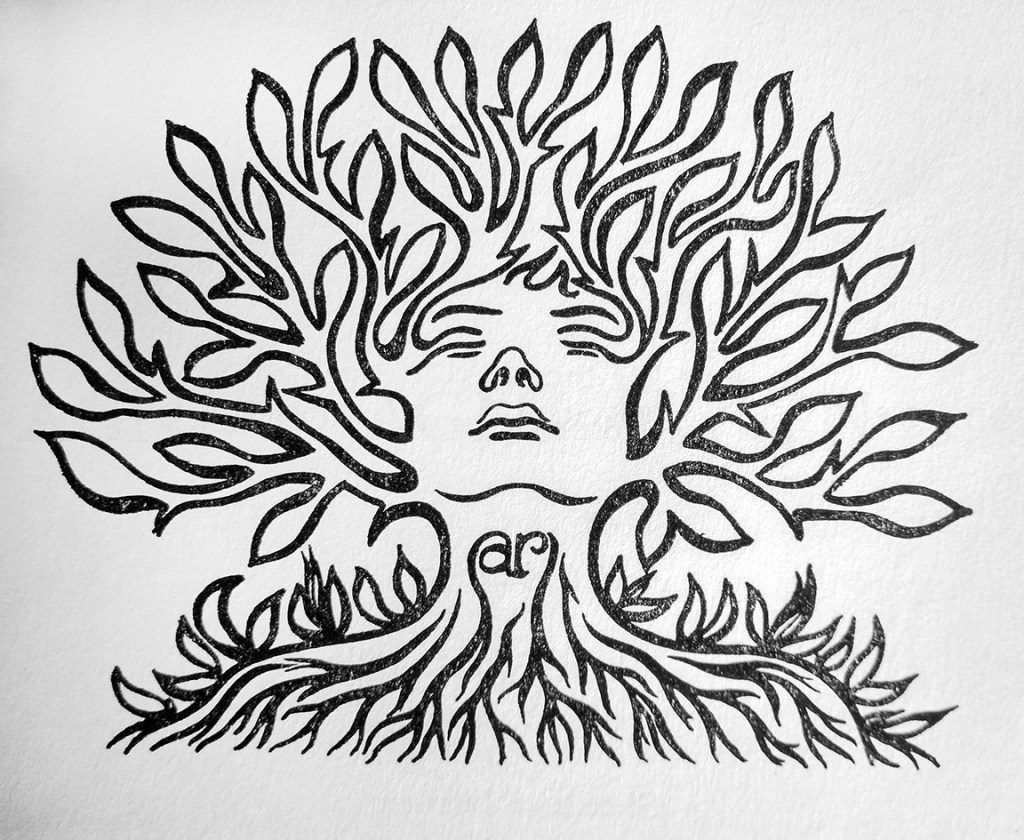
From 1927 onwards she had begun to earn a living as an art teacher in public schools in the capital. In 1930 she exhibited her work with other fellow teachers at the first collective exhibition of posters and photomontages organized in Mexico City. And in 1936 she was a founding member of the very active group of artists known as the League of Revolutionary Writers and Artists (LEAR), which would soon become one of the most creative artistic centers of the decade. Many of the league’s members were also dedicated left-wing political activists, mainly from the Mexican Communist Party. They considered themselves academic workers and assumed a very important social responsibility that transcended the field of artistic creativity. The stimulating discussions, lectures and other activities organized by LEAR members left a great influence on Aurora’s artistic and political career.
During the 1930s, a period of history that was very active in art and politics, Aurora formed deep friendships that would last a lifetime with prominent artists and thinkers of the Mexican intellectual milieu, such as the painters Diego Rivera (1886-1957). ), María Izquierdo (1902-1955), José Clemente Orozco (1883-1949) and Raúl Anguiano (1915-2006); the composer Silvestre Revueltas (1899-1940); the writer Renato Leduc (1898-1986); and the Cuban poets Juan Marinello (1898-1977) and Nicolás Guillén (1902-1989). Her friendship with the visual artist Frida Kahlo (1907-1954), and with the folklorist and activist Concha Michel (1899-1990), represented by Aurora in her work Concha, Aurora and Frida (1949), was particularly close and of great impact. in artistic production and in the fight for women’s rights of all three. [6] Aurora was also very close to the anthropologist Eulalia Guzmán (portrayed by the artist in her mural in the Auditorio 15 de Mayo), whose knowledge of pre-Hispanic Mexico she frequently drew on for her artistic production.
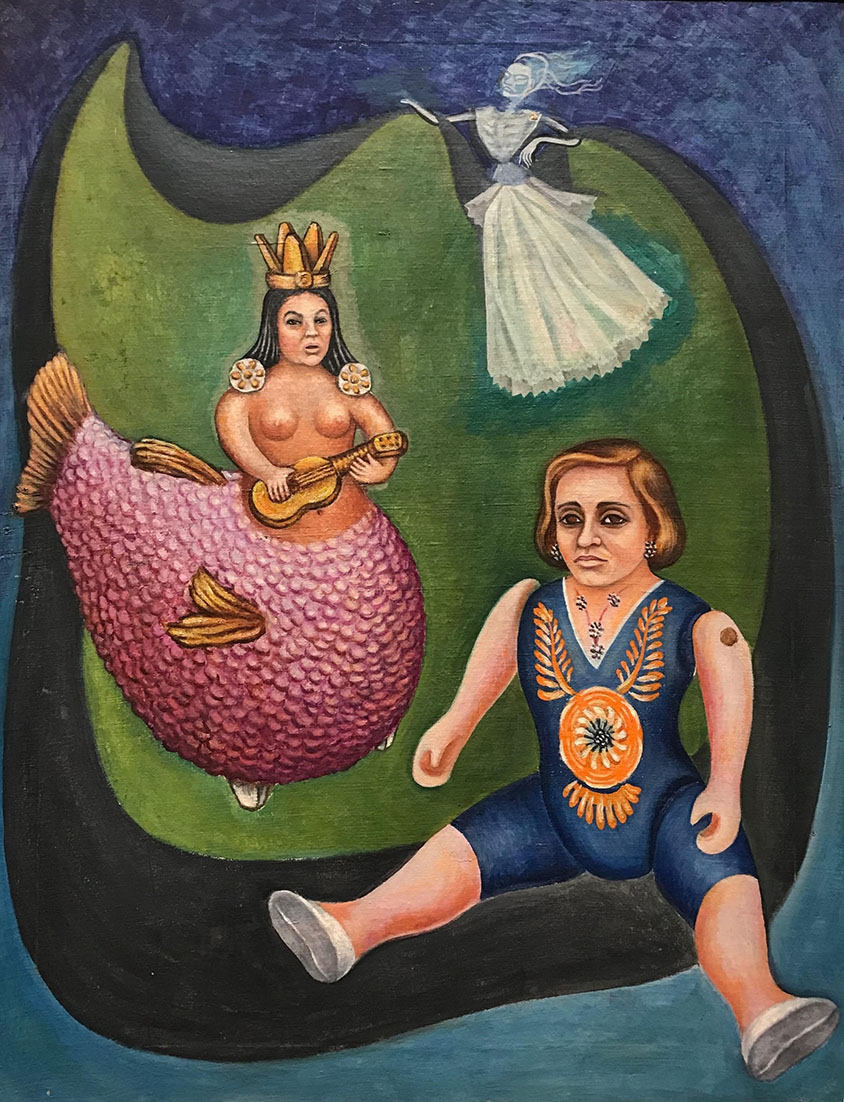
In 1936, Aurora painted her first public work, thus beginning a promising career in the field of mural painting. During the 1940s, Aurora began to write and publish poems, and when she found the time and energy necessary, she continued painting and participating in individual and group exhibitions both in the country and abroad, developing a significant body of work characterized by a great expressive force and a notable social commitment.
Her fight for women’s rights
Aurora’s intense activity as a trade unionist is a significant testimony to the beginnings of the movement for women’s rights in Mexico. From an early age, the artist was a member of the Mexican Communist Party, which she however renounced due to the sexist abuse of her colleagues.
In 1936 she entered the Center for Women’s Social Studies of Mexico where she was chosen to serve as Press Secretary. In 1937 she was a representative of the Union of Technical Schools in the National Congress for Popular Education in Mexico, she was Secretary of Labor and Conflicts in the Executive Committee of the Union of Art Teachers and also participated in the Single Union of Private School Workers. Let us also remember that in 1937, she, together with Michel, founded the Women’s Revolutionary Institute. Starting in 1938 she held important positions in the Union of Teaching Workers of the Mexican Republic (STERM) and in the National Peasant Confederation (CNC).
Through her participation in the teachers’ union, Aurora defended the rights and participation of women, not only within the different teaching organizations of the time, but also in government positions.
Through her participation in the teachers’ union, Aurora defended the rights and participation of women, not only within the different teaching organizations of the time, but also in government positions. Among other important aspects, Aurora promoted the right of women to vote and be voted, the extension of maternity time for women, the recognition of the time necessary to breastfeed the babies of working mothers, and the creation of daycare centers in schools for teachers’ children.
In many of her lectures and writings, she highlighted the need for direct female intervention in the creation of a comprehensive cultural project for the nation. Remembering those years, Aurora once said that “[…] doing an analysis of the process of Culture throughout the History of Humanity, we find that in the culture of this time the set of values that form it are, despite its importance, insufficient to meet the needs of a humanity composed of women and men, since until today, Culture in general, has exclusively masculine characters since it has been developed by them and for them, leaving women to a greater or lesser degree, and in all her activities as a tutor, she is a slave and exploited of the exploiting man or slave […].”[7]
Aurora’s clear and advanced gender awareness, even when it created certain conflicts with other activists with whom she shared her political convictions, consistently guided her personal life, her academic discourse, her public actions, and her artistic career. Aurora, and other distinguished women of the time, such as her friend Concha Michel, knew that socialist ideals were not enough in themselves to solve women’s problems. In the same way that Aurora’s male colleagues denounced the unjust relations between different social classes, the female artist and activist denounced the unequal relations between men and women, an integral part of the capitalist system, usually ignored by political parties and the artistic organizations of the time.
Her literary production
Although Aurora was primarily a professional painter, in art circles she is generally more recognized as a writer. She began this march with Hombre de México in 1947, it was her first poem published in mural sheets published by the Autonomous University of Mexico. Later, in 1950, she wrote Nine Estancias in the Desert and in 1951, Astro en Camino, with which she participated in literary competitions. Her first book, Human Landscapes, was published in 1953. In 1974, Aurora published Words to the Desert, in the book Three Mexican Poets, in collaboration with Roberto López Moreno and Sergio Armando Gómez. In 1981, a compilation of Aurora’s works, including a new poem titled Stellar Harvest, was published under the title Spiral in Return.
Aurora’s interest in pre-Hispanic culture inspired her complex worldview and certain vivid and expressive metaphors, used to express the most essential and universal human concerns such as life, death, nature, love, the passage of time, anguish, absence and transcendence.
Aurora’s verses are very original in their form and very deep in their meaning. Some, including her first and her favorite, Hombre de México, denote her political ideology, although most are rather intimate and lyrical in tone. Aurora’s interest in pre-Hispanic culture inspired her complex worldview and certain vivid and expressive metaphors, used to express the most essential and universal human concerns such as life, death, nature, love, the passage of time, anguish, absence and transcendence.
Her books of poems, illustrated by herself, demonstrate that she was able to create expressive intertextual relationships of great interest, especially due to the power of synthesis achieved in her images, which with a few lines summarize and amplify the deep meaning of the poem. sensitive words from her.
Her pictorial production
Aurora’s paintings are more descriptive and political than her poems, but they also reveal the fine sensitivity, delicacy, and love for life that emerge in her writings. Throughout her life Aurora expressed herself in a wide variety of artistic media and subjects, such as lithographs, for political pamphlets and posters; ink drawings for the illustration of books like those just mentioned; oil paintings on canvas for private commissions such as portraits and genre works; and temperas, frescoes and acrylics for her public commissions.
Aurora’s approach to painting was consistent with the tradition of Mexican art that the artist herself described as “realistic and figurative, and whose content is related to the struggles of the people and the exaltation of their beauty.” [8] Throughout his career, the favorite themes for her posters, easel works and mural paintings relate to her political commitment and her personal interests, such as history, social injustice, women, children, and education.
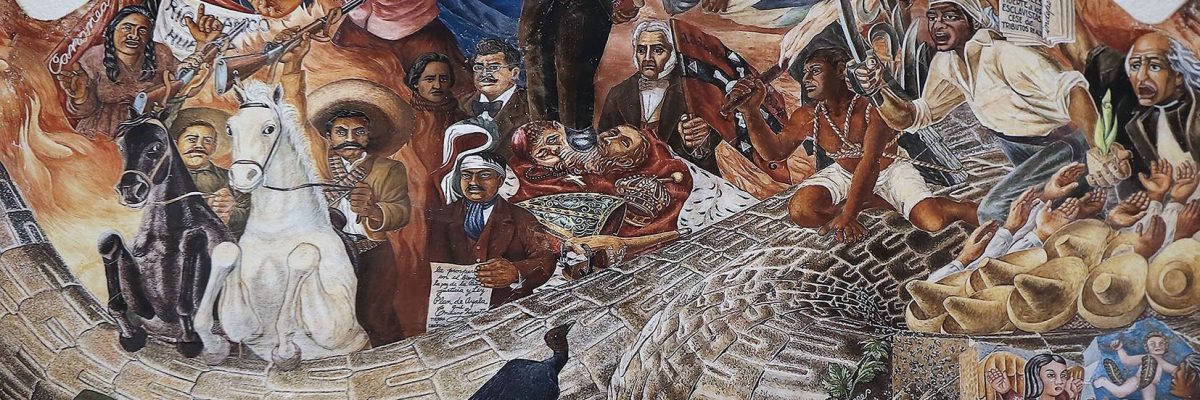
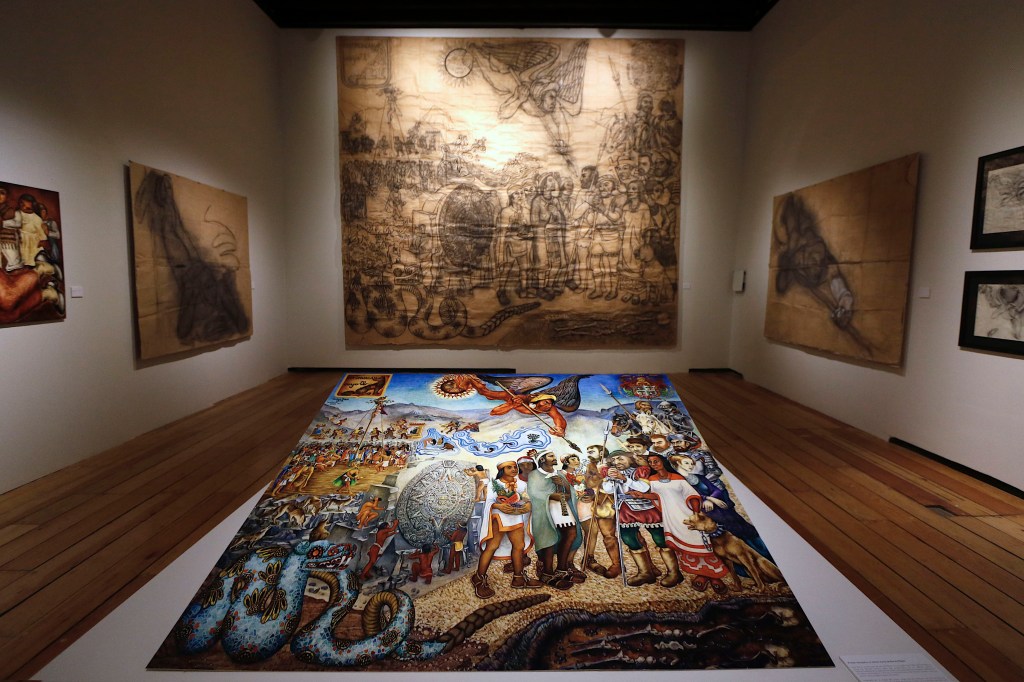
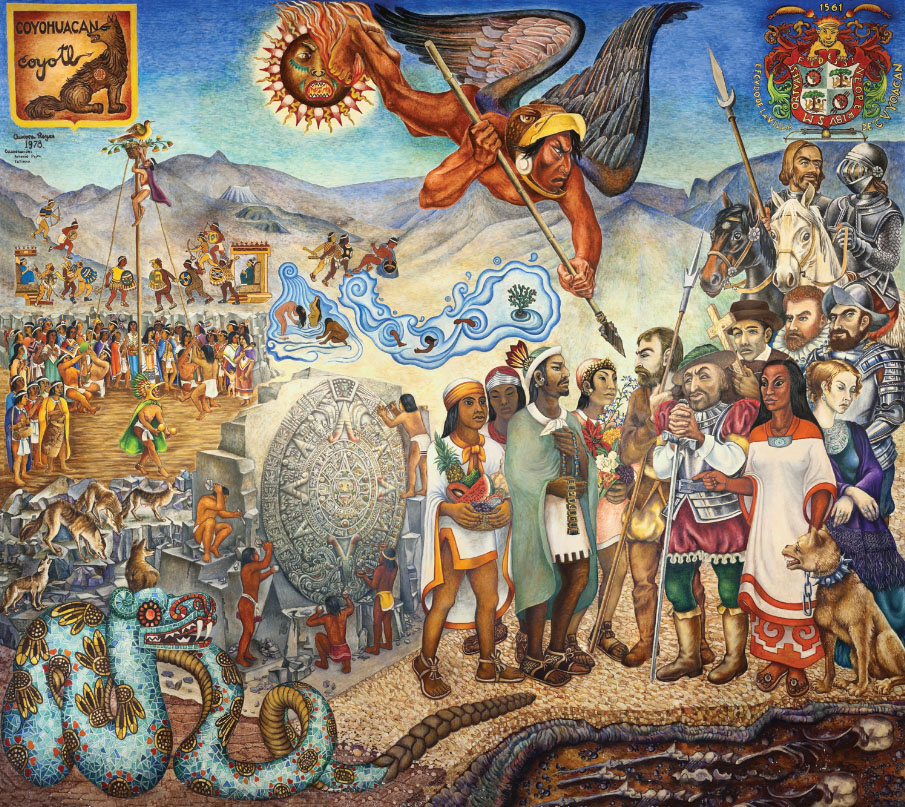
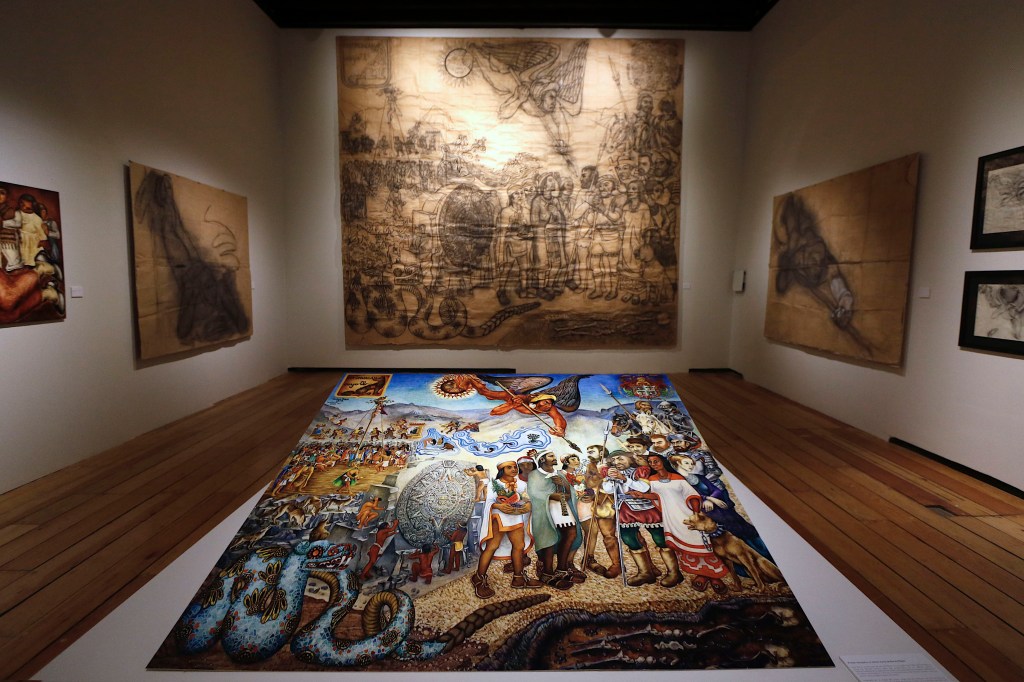
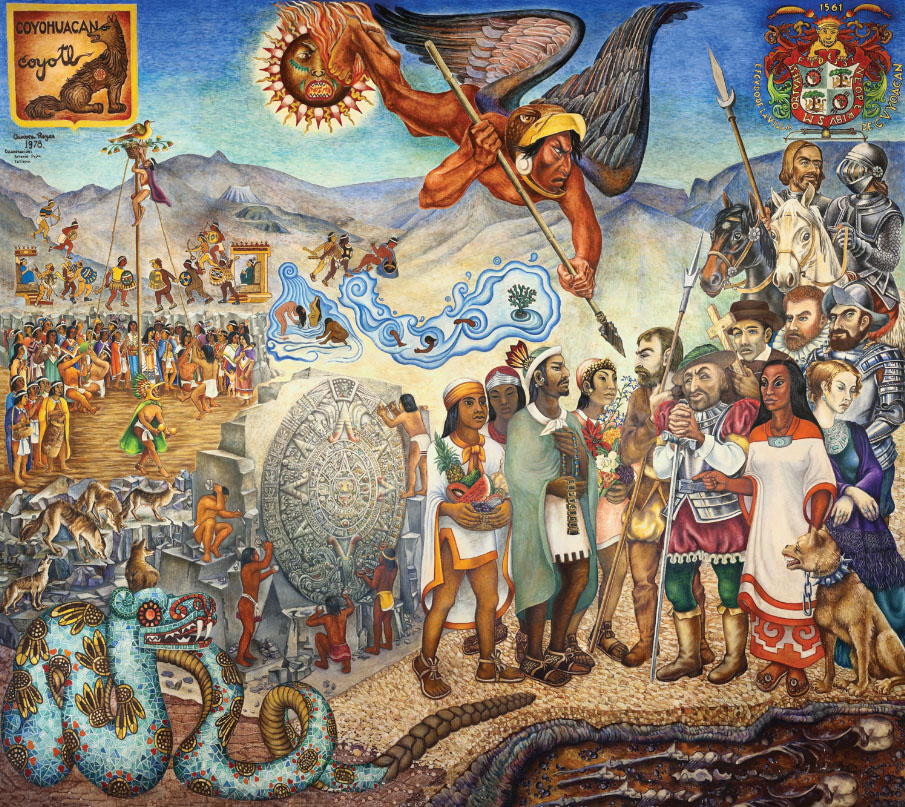
In tune with most of the artists of the Mexican School, she was concerned with the representation and interpretation of the different stages of national history, and with the celebration of the customs and beliefs of the Mexican people. In her last mural, The First Meeting (1977-1978) in the Delegation of Coyoacán, Mexico City, she focused on the dramatic impact of the Spanish Conquest on the native population. In some of her easel paintings she emphasized the fight for Independence, and in other works, such as Scenes of the Revolution (1935), she concentrated on one of the most recurrent themes of the Mexican School, the Revolution of 1910.
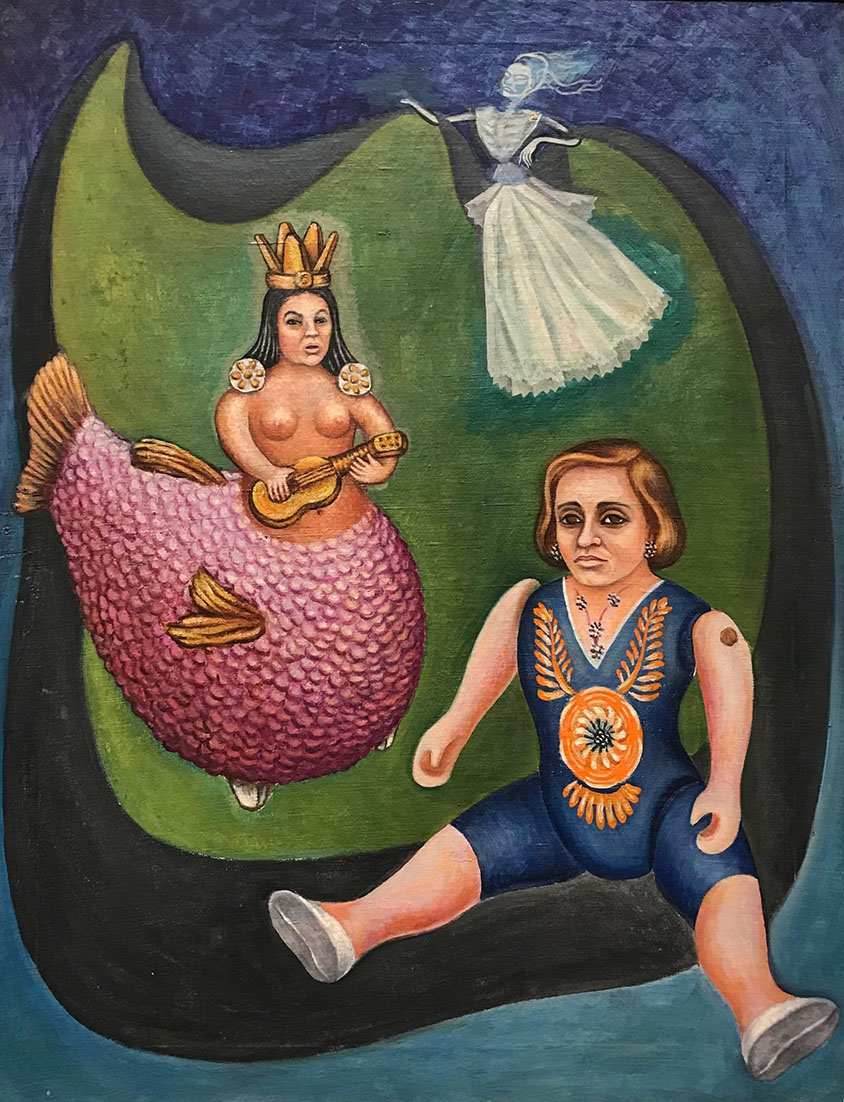
She also produced some beautiful genre paintings; among them Mercado de Juchitán (1953), and portraits of female figures in regional costumes, such as The Golden Bride (1955), which intersect with her concern for exalting the role of women in Mexican society.
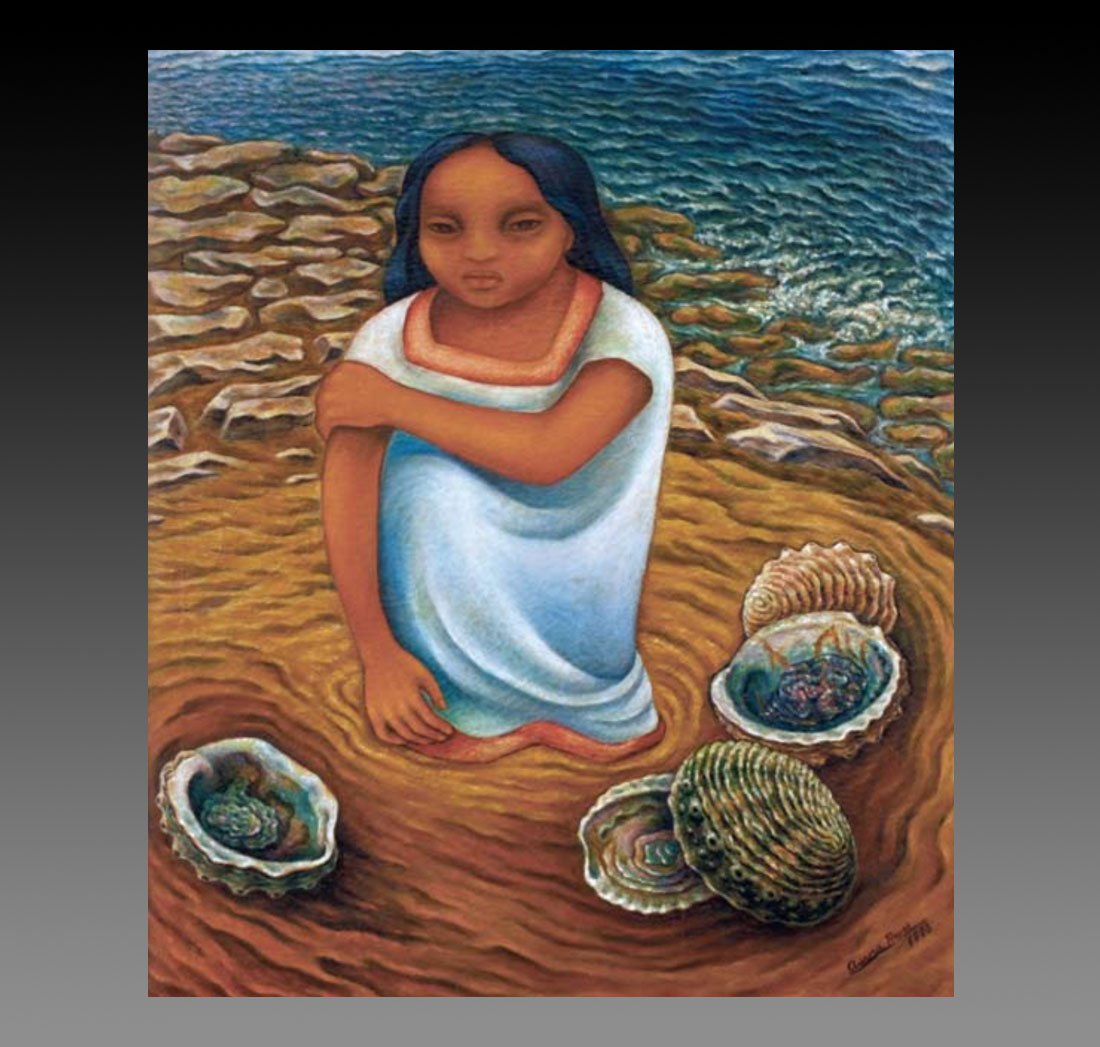
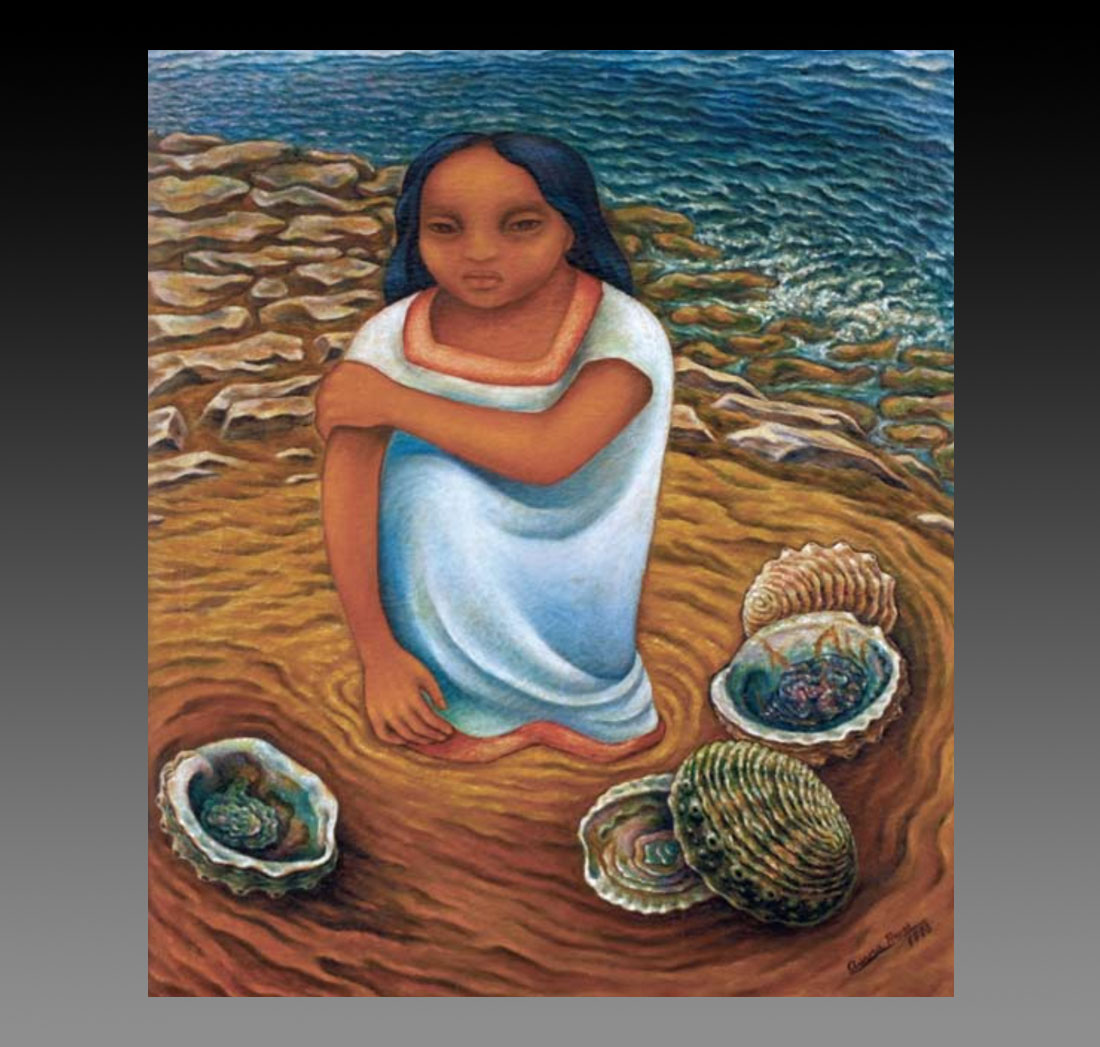
Boy in Front of the Sea (1947), Boys and Star (1948), and La Niña Mareña (1953), are outstanding examples of the tenderness with which Aurora interpreted childhood and the physical and emotional changes typical of the growth process; another of her favorite topics.
Sick Child (1937) summarizes the sensitivity, honesty and passion with which Aurora interpreted childhood. At the same time, the work, with its melancholic tone and the landscape populated by oil towers, denounces the exploitation of the poorest and the cruelty of social inequality that characterized Mexican society during the 1930s. Let us also remember that a year later, in 1938, Aurora would enthusiastically support the oil expropriation of foreign companies ordered by then-president Lázaro Cárdenas (1934-1940).
Some of her allegorical portraits of women, such as War Woman (1937) are extraordinary, profound and sensitive statements about motherhood, as well as a powerful and persuasive call for peace.
The analysis of the role of women in the modern world that animated the political activities and the lectures given by Aurora also found their place in her pictorial production. Aurora was a very keen observer, and the models for some of her portraits, such as Portrait of the Kroupskaia (1930), Portrait of Chabela Villaseñor (1938), and Portrait of Frida (1946), combine her interest in the artistic genre with the decision to highlight the role of women in education, art and culture. Some of her allegorical portraits of women, such as War Woman (1937) are extraordinary, profound and sensitive statements about motherhood, as well as a powerful and persuasive call for peace.
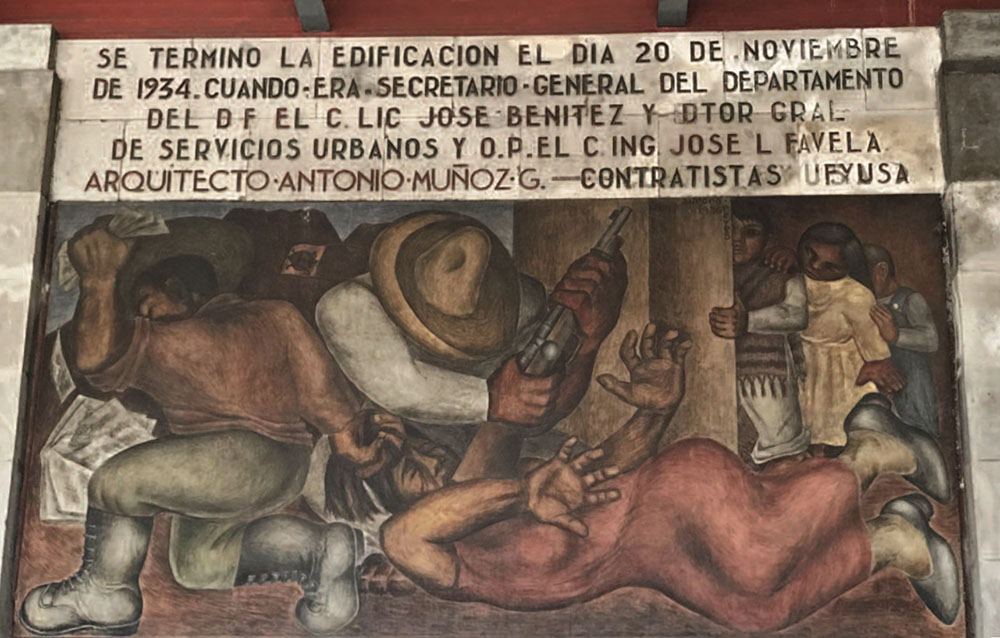
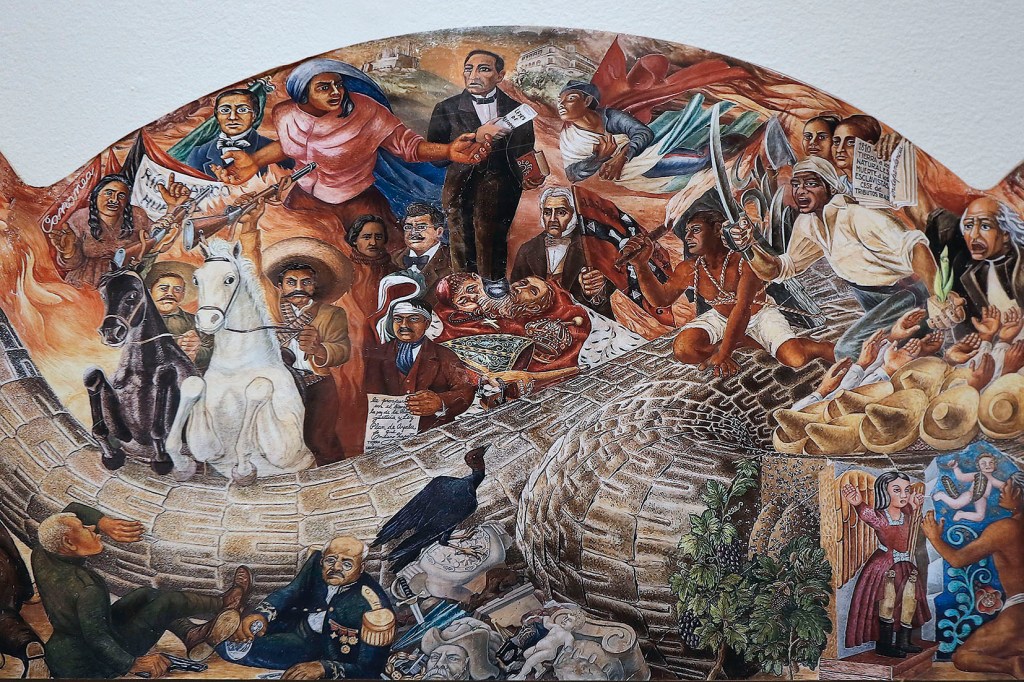
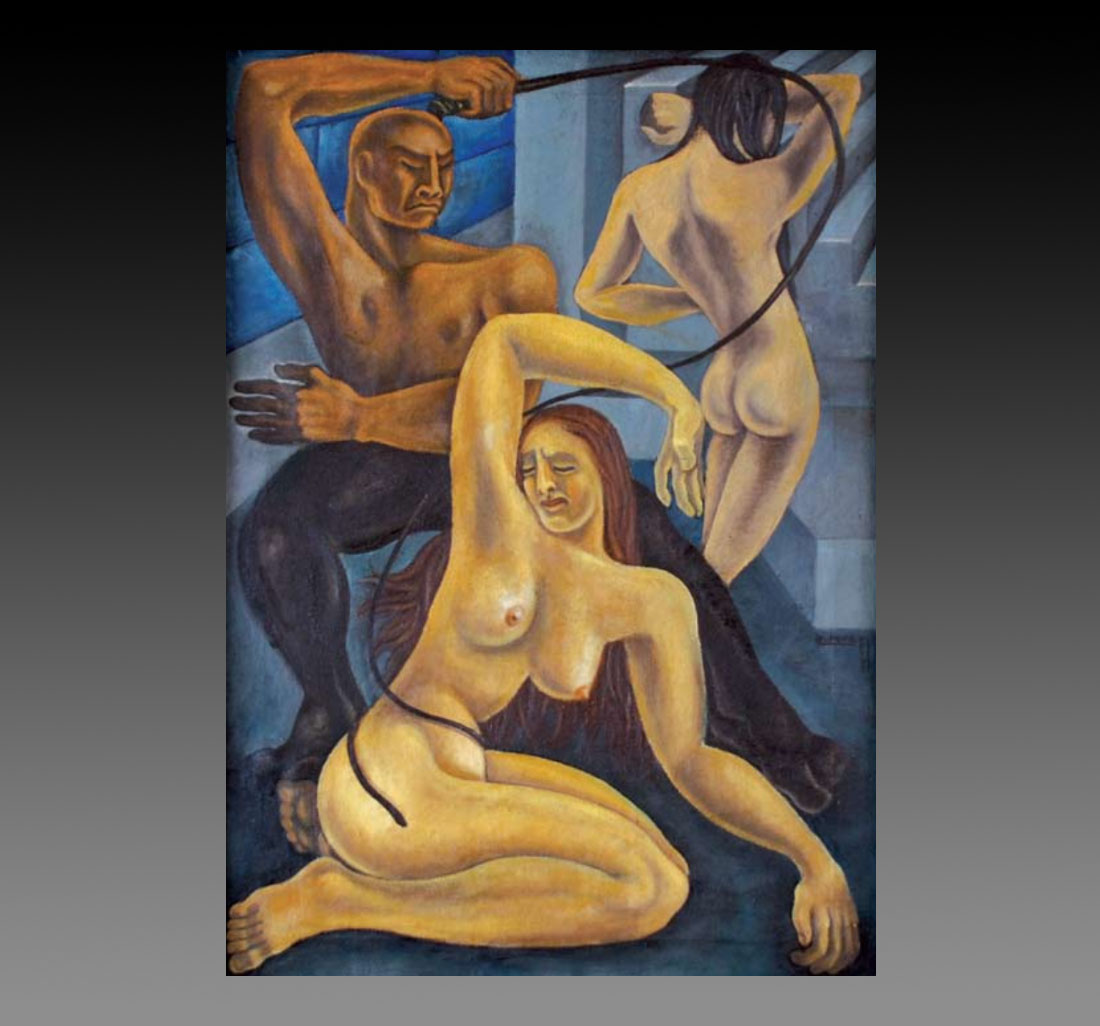
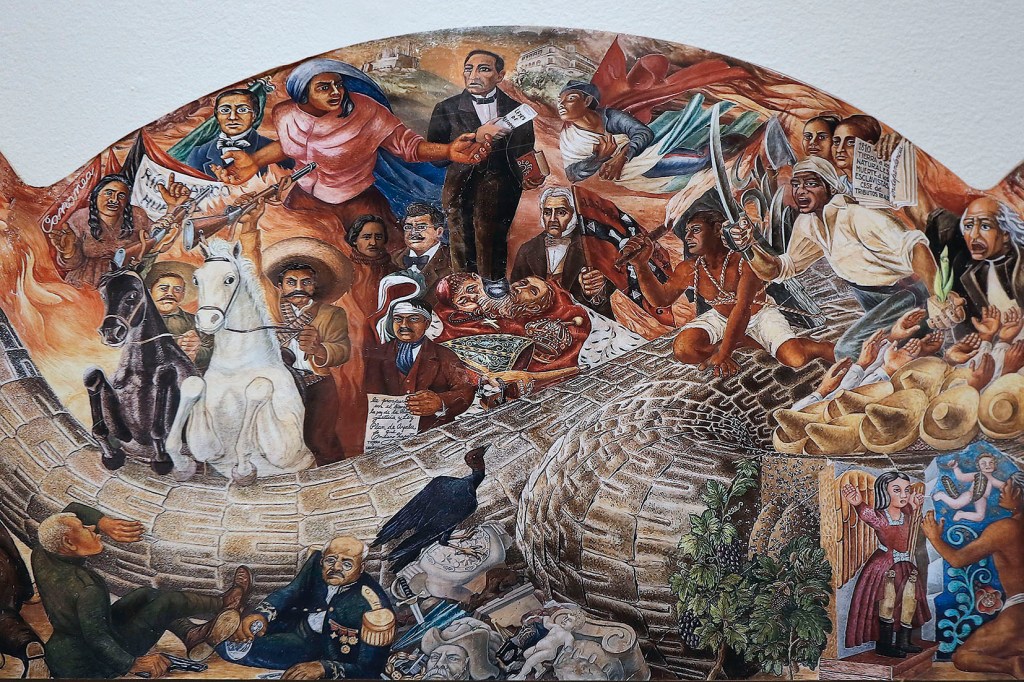
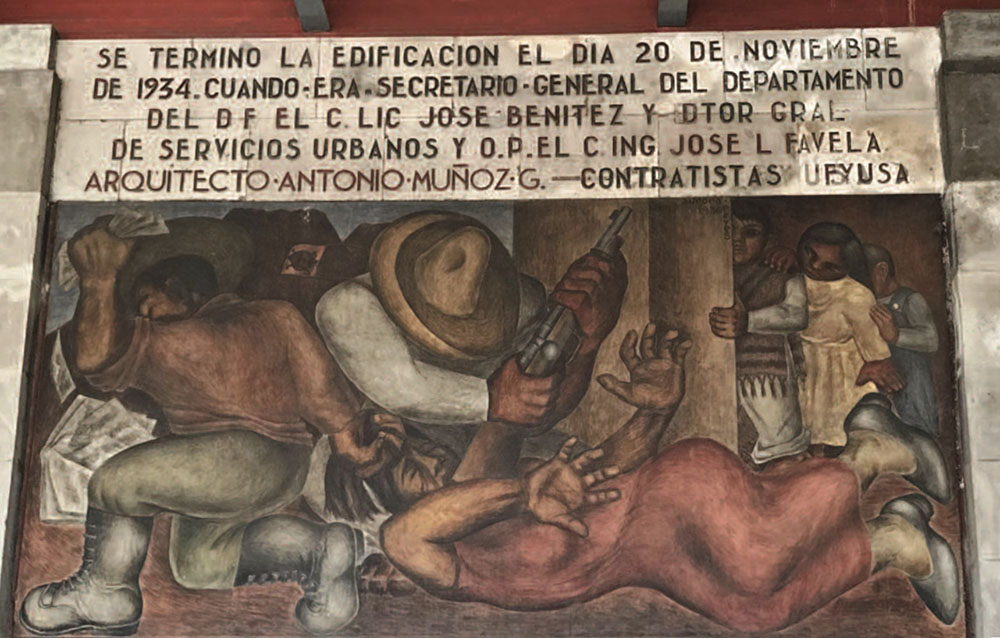
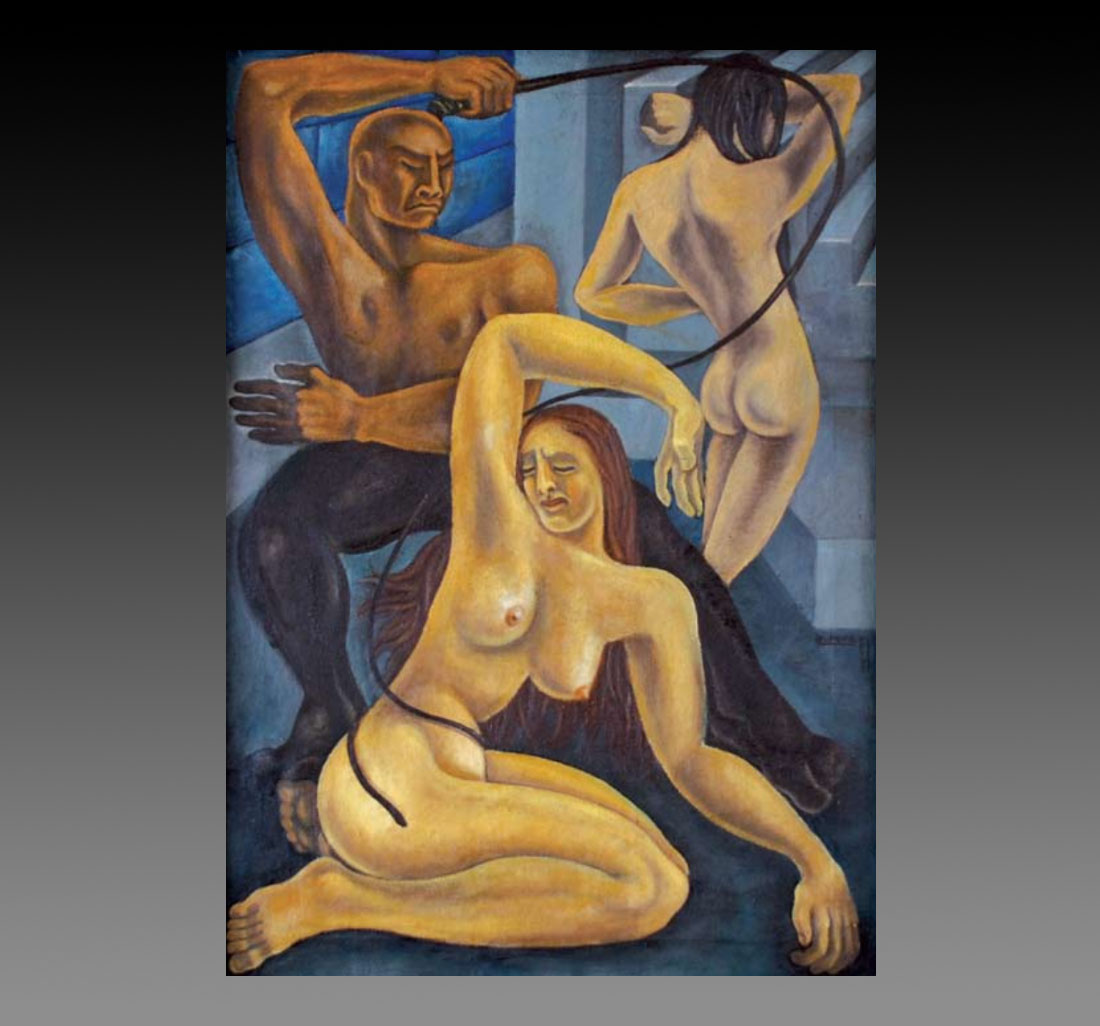
Another of the most recurring issues in her iconography was education, a topic directly related to the artist’s own life and the values in which she believed. Indeed, she was convinced about the fundamental role of educators in the construction of a new society and she addressed this theme throughout her life and work, especially in her murals. From her first public work, Attack on the Rural Teacher (1936), Aurora highlighted the important role played by women in education, at the same time she denounced the violence to which teachers were subjected as a result of their social work, and particularly women. [9] Her most complete sequence of work on the topic of education was her mural cycle entitled Presence of the teacher in the history of Mexico (1959-61), painted by the artist for the National Union of Education Workers (SNTE) . [10]
Conclusions
We can include here, as a final reflection, that the artist Aurora Reyes, despite her extraordinary aesthetic and expressive achievements, and despite the leading role she played in life within the artistic and political movement of the Mexican School, with the exception of a few academic studies and exhibitions, has been unfairly neglected by the historiography of national art.
The writing of this tribute article offers us the extraordinary opportunity to once again appreciate her works, and to reflect on her avant-garde messages regarding the recognition of the role of women in education and art, interpreted from her own voice. the artist, who as a woman and as a precursor of the Mexican national feminist movement, always demonstrated a very deep gender awareness.
Recovering the memory of an artist who, both in her life and in her work, fought for women’s rights helps us recover the genealogy of resistance against the many forms of patriarchal oppression, including the invisibilization of discipline of art history. Today it is essential to recover the messages of Aurora Reyes, the modern tlacuila who made “poetry with colors, and […painted] based on words”, in order to continue our own struggle, with her poetic and political impulse.
* Special for Hilario. Arts Letters Trades
Aurora Reyes: escribir pintando y pintar escribiendo
Por Dina Comisarenco Mirkin*
“poesía con colores, y [… pintura] en base a palabras.” [1]
Aurora Reyes (1908-1985), conocida principalmente como la primera muralista mexicana, fue una destacada y multifacética artista que, a través de su producción creativa, tanto plástica como literaria, documentó e interpretó la historia y el sentir del pueblo del México moderno.
Identificada con la así llamada Escuela mexicana, tanto por su compromiso social, como por su estilo realista, y por su interés en la cultura indígena, Aurora fue una verdadera “tlacuila” [2] del siglo XX pues a lo largo de su vida se dedicó a escribir pintando y a pintar escribiendo. En efecto, la mayoría de sus poemas y murales, no solo narran las principales luchas populares del México posrevolucionario, y en especial, de aquellas libradas en defensa de los derechos de las mujeres, sino que manifiestan también una gran sensibilidad lírica.
Pese a que Aurora fue una figura protagónica del fascinante ambiente artístico y político de su tiempo, con el paso de los años su obra, como la de muchas de sus colegas artistas mujeres, comenzó a ser invisibilizada y olvidada. Con el presente texto me propongo entonces, reseñar algunos aspectos importantes de su vida y obra, no solo para comenzar a saldar una deuda historiográfica importante, sino y principalmente, para que podamos seguir disfrutando de la riqueza histórica, política y estética de su sobresaliente producción artística.
La vida de la artista
Aurora Reyes nació en Hidalgo del Parral, Chihuahua, México, el 9 de septiembre de 1908, solo dos años antes del estallido de la Revolución Mexicana. [3] En 1913 el padre de Aurora, el Capitán Léon Reyes, a causa de la participación de su padre, el General Bernardo Reyes en la decena trágica, y de sus convicciones políticas tuvo que huir de su ciudad y permaneció escondido por alrededor de un año, mientras el resto de su familia, también de forma clandestina se trasladó a la capital, pues la amenaza del castigo cayó sobre todos sus miembros. Para sobrevivir, la madre de Aurora, Luisa Flores, horneaba pan, que la pequeña niña vendía en el mercado de la Lagunilla. Arrancados de forma repentina de su confortable vida en Chihuahua, Aurora fue testigo y sufrió en carne propia la dureza de la vida de las clases más marginadas del país.
Las experiencias de Aurora en los barrios más pobres de la ciudad, formaron su carácter fuerte y apasionado, e influyeron de forma determinante en las convicciones políticas que la animaron a luchar, durante toda su vida, a favor de los pobres, con un compromiso y conciencia social inigualables. La misma artista era consciente de la íntima relación existente entre su vida personal y sus convicciones políticas, y asumiendo la potencia de su conocimiento situado alguna vez sostuvo: «me interesan estos asuntos sociales porque he tenido hambre, he sufrido la miseria en propia carne y porque soy gente del pueblo. Me intereso en él porque a él pertenezco. Y considero que el arte es el medio que penetra en la emoción de los seres y a eso se debe que constituye un arma poderosa para luchar por el pueblo.» [4]
Cuando Aurora creció, y por fin cesó la persecución política contra su familia, comenzó a estudiar en la Escuela Nacional Preparatoria y al cumplir sus 13 años, se incorporó a la Escuela Nacional de Bellas Artes, tomando clases de pintura en el horario nocturno. A pesar de todas las privaciones materiales sufridas, Aurora se graduó en 1924.
Tan solo un año más tarde, en 1925, logró su primera exposición individual de dibujos. El mismo año, cuando la joven artista contaba con tan solo diez y ocho años, se casó con el periodista y escritor Jorge Godoy. [5] Durante el corto tiempo en el que la pareja permaneció casada, Aurora dio a luz a dos hijos, Héctor nacido en 1926, y Jorge en 1931, casi en simultáneo con su divorcio, una circunstancia inusual y muy difícil para una mujer joven en el México de los años 30. Tras el divorcio, Jorge y Aurora no volvieron a verse y la responsabilidad de la crianza de los hijos recayó exclusivamente sobre ella.
Desde 1927 en adelante había comenzado a ganarse la vida como maestra de arte en escuelas públicas de la capital. En 1930 exhibió su trabajo con otros colegas maestros en la primera exposición colectiva de carteles y fotomontajes organizada en la ciudad de México. Y en 1936 fue miembro fundador del muy activo grupo de artistas conocido como la Liga de escritores y artistas revolucionarios (LEAR), que pronto habría de convertirse en uno de los centros artísticos más creativos de la década. Muchos de los miembros de la liga eran, además, dedicados militantes políticos de izquierda, principalmente del Partido Comunista mexicano. Se consideraban a sí mismos trabajadores académicos y asumían una responsabilidad social muy importante que trascendía el campo de la creatividad artística. Las estimulantes discusiones, conferencias y demás actividades organizadas por los miembros de LEAR dejaron una gran influencia en la carrera artística y política de Aurora.
Durante la década de 1930, una etapa de la historia muy activa en arte y en política, Aurora formó profundas amistades que habrían de durar toda la vida con destacados artistas y pensadores del medio intelectual mexicano, tales como los pintores Diego Rivera (1886-1957), María Izquierdo (1902-1955), José Clemente Orozco (1883-1949) y Raúl Anguiano (1915-2006); el compositor Silvestre Revueltas (1899-1940); el escritor Renato Leduc (1898-1986); y los poetas cubanos Juan Marinello (1898-1977) y Nicolás Guillén (1902-1989). Su amistad con la artista visual Frida Kahlo (1907-1954), y con la folklorista y activista Concha Michel (1899-1990), representada por Aurora en su obra Concha, Aurora y Frida (1949), fue particularmente estrecha y de gran impacto en la producción artística y en la lucha a favor de los derechos de las mujeres de las tres. [6] Aurora también fue muy cercana a la antropóloga Eulalia Guzmán (retratada por la artista en su mural del Auditorio 15 de mayo), de cuyo conocimiento del México prehispánico se nutrió frecuentemente para su producción artística.
En 1936, Aurora pintó su primera obra pública iniciando así una prometedora carrera en el campo de la pintura mural. Durante los años 40, Aurora comenzó a escribir y publicar poemas, y cuando encontraba el tiempo y la energía necesaria, continuaba pintando y participando en exposiciones individuales y colectivas tanto en el país como en el exterior, llegando a desarrollar una significativa obra caracterizada por una gran fuerza expresiva y un notable compromiso social.
Su lucha a favor de los derechos de las mujeres
La intensa actividad de Aurora como sindicalista es un testimonio significativo de los inicios del movimiento a favor de los derechos de las mujeres en México. Desde temprana edad, la artista fue miembro del Partido Comunista Mexicano, al que sin embargo renunció por los abusos machistas de sus compañeros.
En 1936 entró al Centro de Estudios Sociales Femeniles de México donde fue elegida para desempeñar el cargo de Secretaria de Prensa. En 1937 fue representante de la Unión de Escuelas Técnicas en el Congreso Nacional por la educación Popular de México, fue Secretaria de Trabajo y Conflictos en el Comité Ejecutivo del Sindicato de Maestros de Arte y también participó en el Sindicato Único de Trabajadores de Escuelas Privadas. Recordemos también que en 1937, junto con Michel fundó el Instituto Revolucionario Femenino. A partir de 1938 desempeñó cargos importantes en el Sindicato de Trabajadores de la Enseñanza de la República Mexicana (STERM) y en la Confederación Nacional Campesina (CNC).
A través de su participación en el sindicato de maestros, Aurora defendió los derechos y la participación de las mujeres, no solo dentro de las distintas organizaciones magisteriales de la época, sino también en puestos gubernamentales. Entre otros aspectos importantes, Aurora impulsó el derecho de las mujeres a votar y a ser votadas, la extensión del tiempo de maternidad para las mujeres, el reconocimiento del tiempo necesario para amamantar a los bebés de las madres trabajadoras, y la creación de guarderías en las escuelas para los hijos de las maestras.
En muchas de sus conferencias y escritos, destacó la necesidad de la intervención femenina directa en la creación de un proyecto cultural integral para la nación. Recordando aquellos años, Aurora dijo alguna vez que «[…] haciendo un análisis del proceso de la Cultura a través de la Historia de la Humanidad, encontramos que a la cultura de esta época el conjunto de valores que la forman son, a pesar de su importancia, insuficientes para llenar las necesidades de una humanidad compuesta por mujeres y hombres, ya que hasta hoy, la Cultura en general, tiene caracteres exclusivamente masculinos puesto que ha sido elaborada por ellos y para ellos quedando la mujer en mayor o menor grado, y en todas sus actividades en calidad de tutorada, esto es esclava y explotada del hombre explotador o esclavo […]». [7]
La clara y avanzada conciencia de género de Aurora, incluso cuando le creaba ciertos conflictos con otros militantes con quienes compartía sus convicciones políticas, de forma consistente guió su vida personal, su discurso académico, sus acciones públicas, y su carrera artística. Aurora, y otras mujeres distinguidas de la época, como su amiga Concha Michel, sabían que los ideales socialistas no eran suficientes en sí mismos como para resolver los problemas propios de las mujeres. De la misma forma en que los colegas masculinos de Aurora denunciaron las injustas relaciones existentes entre las distintas clases sociales, la mujer artista y activista denunció las relaciones inequitativas existentes entre hombres y mujeres, parte integral del sistema capitalista, usualmente ignorado por los partidos políticos y las organizaciones artísticas de la época.
Su producción literaria
Aunque Aurora era principalmente una pintora profesional, en los círculos artísticos es generalmente más reconocida como escritora. Inició esta marcha con Hombre de México en 1947, fue su primer poema publicado en hojas murales editadas por la Universidad Autónoma de México. Posteriormente, en 1950, escribió Nueve estancias en el desierto y en 1951, Astro en camino, con los que participó en certámenes literarios. Su primer libro, Humanos paisajes, se publicó en 1953. En 1974, Aurora publicó Palabras al desierto, en el libro Tres poetas mexicanos, en colaboración con Roberto López Moreno y Sergio Armando Gómez. En 1981, una compilación de las obras de Aurora, incluyendo un poema nuevo titulado Cosecha estelar, fue publicado bajo el título Espiral en retorno.
Los versos de Aurora son muy originales en su forma y muy profundos en su significado. Algunos, incluido el primero y su favorito, Hombre de México, denotan su ideología política, aunque la mayoría son más bien de tono íntimo y lírico. El interés de Aurora por la cultura prehispánica inspiró su compleja cosmovisión y ciertas vívidas y expresivas metáforas, utilizadas para expresar las preocupaciones humanas más esenciales y universales como la vida, la muerte, la naturaleza, el amor, el paso del tiempo, la angustia, la ausencia y la trascendencia.
Sus libros de poemas ilustrados por ella misma, demuestran que fue capaz de crear relaciones intertextuales expresivas de gran interés, especialmente por el poder de síntesis alcanzado en sus imágenes, que con unas pocas líneas resumen y amplifican el sentido profundo de sus sensibles palabras.
Su producción pictórica
Las pinturas de Aurora son más descriptivas y políticas que sus poemas, pero también dejan ver la fina sensibilidad, delicadeza y amor por la vida que emergen en sus escritos. A lo largo de su vida Aurora se expresó en una gran variedad de medios artísticos y temas, tales como litografías, para panfletos políticos y carteles; dibujos en tinta para la ilustración de libros como los que acabamos de mencionar; pinturas al óleo sobre tela para encargos privados como retratos y obras de género; y témperas, frescos y acrílicos para sus comisiones públicas.
El enfoque de la pintura de Aurora era coherente con la tradición del arte mexicano que la misma artista describía como “realista y figurativo, y cuyo contenido se relaciona con las luchas del pueblo y la exaltación de su belleza.” [8] A lo largo de toda su carrera, los temas favoritos para sus carteles, obras de caballete y pintura mural se relacionan con su compromiso político y con sus intereses personales, tales como la historia, la injusticia social, las mujeres, los niños y la educación.
En sintonía con la mayor parte de los artistas de la Escuela Mexicana, se preocupó por la representación e interpretación de las distintas etapas de la historia nacional, y con la celebración de las costumbres y de las creencias del pueblo mexicano. En su último mural, El primer encuentro (1977-1978) en la Delegación de Coyoacán -ciudad de México-, se enfocó en el impacto dramático de la Conquista española sobre la población nativa. En algunas de sus pinturas de caballete enfatizó la lucha por la Independencia, y en otras obras, como Escenas de la revolución (1935), se concentró en uno de los temas más recurrentes de la Escuela Mexicana, la Revolución de 1910.
También produjo algunas bellas pinturas de género; entre ellas Mercado de Juchitán (1953), y retratos de figuras femeninas con trajes regionales, como La novia de oro (1955), que intersectan con su preocupación por exaltar el papel de las mujeres en la sociedad de México.
Muchacho frente al mar (1947), Niños y estrella (1948), y La niña Mareña (1953), son ejemplos sobresalientes de la ternura con la que Aurora interpretó la niñez y los cambios físicos y emocionales propios del proceso de crecimiento; otro de sus temas favoritos.
Niño enfermo (1937) resume la sensibilidad, honestidad y pasión con los que Aurora interpretó la niñez. Al mismo tiempo la obra, con su tono melancólico y con el paisaje poblado por torres de petróleo, denuncia la explotación de los más pobres y la crueldad de la inequidad social que caracterizaba a la sociedad mexicana durante la década de 1930. Recordemos además que un año después, en 1938, Aurora habría de apoyar con mucho entusiasmo la expropiación petrolera de las compañías extranjeras ordenada por el entonces presidente Lázaro Cárdenas (1934-1940).
El análisis del papel de las mujeres en el mundo moderno que animaba las actividades políticas y las conferencias impartidas por Aurora, también encontraron su lugar en su producción pictórica. Aurora era una observadora muy aguda, y las modelos de algunos de sus retratos tales como Retrato de la Kroupskaia (1930), Retrato de Chabela Villaseñor (1938), y Retrato de Frida (1946), combinan su interés por el género artístico con la decisión de destacar el papel de las mujeres en la educación, en el arte y en la cultura. Algunos de sus retratos alegóricos de mujeres tales como Mujer de la Guerra (1937) son extraordinarias, profundas y sensibles declaraciones sobre la maternidad, al mismo tiempo que un llamado potente y persuasivo a favor de la paz.
Otro de los asuntos más recurrentes en su iconografía fue la educación, un tema directamente relacionado con la misma vida de la artista y con los valores en los que creía. En efecto, estaba convencida sobre el papel fundamental de los educadores en la construcción de una nueva sociedad y trató dicho tema a lo largo de su vida y obra, especialmente en la mural. Ya desde su primera obra pública, Ataque a la maestra rural (1936) Aurora destacó el importante papel protagonizado por las mujeres en la educación, al mismo tiempo que denunció la violencia a la que eran sometidos los maestros a raíz de su labor social, y particularmente las mujeres. [9] Su secuencia más completa sobre el tema de la educación fue su ciclo mural titulado Presencia del maestro en la historia de México (1959-61), pintado por la artista para el Sindicato Nacional de Trabajadores de la Educación (SNTE). [10]
Conclusiones
Podemos incluir aquí, a modo de reflexión final, que la artista Aurora Reyes, pese a sus extraordinarios logros estéticos y expresivos, y pese al papel protagónico que desempeñó en vida en el seno del movimiento artístico y político de la Escuela Mexicana, con la excepción de algunos pocos estudios académicos y exposiciones, ha sido injustamente desatendida por la historiografía del arte nacional.
La redacción de este artículo-homenaje, nos ofrece la extraordinaria oportunidad de volver a apreciar sus obras, y de reflexionar sobre sus vanguardistas mensajes en torno al reconocimiento del papel de las mujeres en la educación y en el arte, interpretados desde la propia voz de la artista, que como mujer y como precursora del movimiento feminista nacional mexicano, siempre demostró una muy profunda conciencia de género.
Recuperar la memoria de una artista que tanto en su vida como en su obra luchó por los derechos de las mujeres, nos ayuda a recuperar la genealogía de la resistencia en contra de las muchas formas de la opresión patriarcal, incluida la de la invisibilización de la disciplina de la historia del arte. Hoy en día resulta fundamental recuperar los mensajes de Aurora Reyes, la tlacuila moderna que hacía «poesía con colores, y [… pintaba] en base a palabras», para poder continuar así, con su impulso poético y político, nuestra propia lucha.
Notes:
1. Aurora Reyes interviewed by Armando Carlock, El Nacional, June 7, 1971.
2. Tlacuila: voice that derives from Nahuatl. The tlacuilos were indigenous painters-scribes whose origin dates back to pre-Hispanic times.
3. Most of the information about the life of Aurora Reyes was obtained from personal documents and newspaper clippings contained in the Aurora Reyes Author Fund, CENIDIAP/INBAL, Biblioteca de las Artes, CENART.
4. Fragment of an interview with Aurora Reyes, “De Poetesa a Pintora” Excelsior, February 24, 1953.
5. Jorge Godoy wrote The Book of Viceregal Roses. He died in 1949 at the age of 55.
6. For a detailed study of the friendship between the three artists see my article “Frida Kahlo and Aurora Reyes: Painting to the Voice of Michel,” Woman’s Art Journal, Vol. 40, no. 2, Fall/Winter 2019, pp. 3-13.
7. See Cardona, Patricia, “Aurora Reyes entered the San Carlos Academy for a beating that she gave to a high school prefect” in Periódico Unomásuno, December 30, 1985, p. 115.
8. Aurora Reyes cited in an article in El Nacional titled “About Mexican painting Aurora Reyes spoke yesterday in Bellas Artes,” March 15, 1958.
9. For a detailed analysis of the work see my article The First Mural Created by a Mexican Female Artist: Aurora Reyes’s The Attack on the Rural Teacher, Woman’s Art Journal, Fall 2005/Winter 2006, vol. 26, no. 2, pp. 19-25.
10. I study this work in my article “Recovering our memory: the women of Aurora Reyes in the mural cycle of the 15 de Mayo Auditorium,” in Emilia Recéndiz Guerrero, Norma Gutiérrez Hernández and Diana Arauz Mercado, coordinators, Presencia y Realidades. Research on Women and Gender Perspectives, Zacatecas, Autonomous University of Zacatecas, 2011, pp. 599-609.
* Special for Hilario. Arts Letters Trades
Notas:
1. Aurora Reyes entrevistada por Armando Carlock, El Nacional, Junio 7, 1971.
2. Tlacuila: voz que deriva del náhuatl. Los tlacuilos eran pintores-escribanos indígenas cuyo origen se remonta a la época prehispánica.
3. La mayor parte de la información sobre la vida de Aurora Reyes fue obtenida a partir de los documentos personales y de los recortes de periódicos contenidos en el Fondo de Autor Aurora Reyes, CENIDIAP/INBAL, Biblioteca de las Artes, CENART.
4. Fragmento de una entrevista a Aurora Reyes, “De Poetisa a Pintora” Excelsior, 24, de febrero de 1953.
5. Jorge Godoy escribió El libro de las Rosas Virreinales. Falleció en 1949 a los 55 años.
6. Para un estudio detallado de la amistad entre las tres artistas ver mi artículo “Frida Kahlo and Aurora Reyes: Painting to the Voice of Michel,” Woman´s Art Journal, Vol. 40, no. 2, Fall/Winter 2019, pp. 3-13.
7. Ver Cardona, Patricia, “Aurora Reyes ingresó a la Academia de San Carlos por una golpiza que dio a una prefecta de la prepa” en Periódico Unomásuno, diciembre 30, 1985, p. 115.
8. Aurora Reyes citada en un artículo en El Nacional titulado “Sobre pintura mexicana habló ayer Aurora Reyes en Bellas Artes”, marzo 15, 1958.
9. Para un análisis detallado de la obra ver mi artículo The First Mural Created by a Mexican Female Artist: Aurora Reyes’s The Attack on the Rural Teacher, Woman´s Art Journal, Fall 2005/Winter 2006, vol. 26, no. 2, pp. 19-25.
10. Estudio esta obra en mi artículo “Recuperando nuestra memoria: las mujeres de Aurora Reyes en el ciclo mural del Auditorio 15 de Mayo,” en Emilia Recéndiz Guerrero, Norma Gutiérrez Hernández y Diana Arauz Mercado, coordinadoras, Presencia y Realidades. Investigaciones sobre Mujeres y Perspectivas de Género, Zacatecas, Universidad Autónoma de Zacatecas, 2011, pp. 599-609.
* Especial para Hilario. Artes Letras Oficios
Dina Comisarenco Mirkin
She holds a PhD in Art History from Rutgers University, New Jersey, United States and a Bachelor of Arts from the National University of Buenos Aires, Argentina. She is a researcher, and coordinator and liaison between the National Research Centers and the Subdirectorate of Artistic Education and Research of the National Institute of Fine Arts and Literature (INBAL), and a member of the National System of Researchers of Mexico (SNI, level 2).
In her teaching, research and curatorial work, Comisarenco specializes in the history and historiography of 20th century Mexican art, the history of muralism, and the visual production of women artists, topics that she addresses with an interdisciplinary approach in which combines the sociology of art, psychoanalysis, cultural memory and gender studies.
Among her individual books, the following stand out: Rina Lazo. Xibalbá the underworld of the Mayans (2022); “Forgetfulness is full of memory”: the mural painting of Arnold Belkin (2019); Eclipse of seven moons: female muralism in Mexico (2017); The four seasons of muralism by Raúl Anguiano (2014); and Memory and future: Mexican and international industrial design (2006 and re-edition 2019). As coordinator of collective books, it is worth mentioning: “Fractures of memory: a century of violence and cultural trauma in modern and contemporary Mexican art” (2022); From the Conquest to the Revolution on the walls of the National Museum of History (2018), Side by side: couples of artists in Mexico (2013), To participate in what is fair: recovering the work of Fanny Rabel (2013 and re-edition 2017 ), as well as numerous specialized articles and chapters published in books, catalogs and prestigious national and international magazines. She is currently a professor at CIDI, UNAM.
Her teaching and research work has received several recognitions, such as the Professors who leave a mark recognition, Instituto Tecnológico y de Estudios Superiores de Monterrey, CCM (2018); the FICSAC-Ibero Recognition for academic quality research, Universidad Iberoamericana, CDMX (2018); the Antonio García Cubas Prize, INAH, for the book Eclipse of seven moons: women muralists in Mexico, (2018) and for Frida de Frida (2008); the Rabbi Jacob Goldberg Award for the best academic article (2017); and Alfil de Rey Trophy, recognition of academic excellence, ITESM, CCM (2001).
Dina Comisarenco Mirkin
Doctora en Historia del Arte por la Universidad de Rutgers, New Jersey, Estados Unidos y Licenciada en Artes por la Universidad Nacional de Buenos Aires, Argentina. Es investigadora, y coordinadora y enlace entre los Centros Nacionales de Investigación y la Subdirección de Educación e Investigación Artísticas del Instituto Nacional de Bellas Artes y Literatura (INBAL), y miembro del Sistema Nacional de Investigadores de México (SNI, nivel 2).
En su trabajo de docencia, investigación y curaduría, Comisarenco se especializa en la historia y en la historiografía del arte mexicano del siglo XX, en la historia del muralismo, y en la producción visual de artistas mujeres, temas que aborda con un enfoque interdisciplinario en el que combina la sociología del arte, el psicoanálisis, la memoria cultural y los estudios de género.
Entre sus libros individuales destacan: Rina Lazo. Xibalbá el inframundo de los mayas (2022); “El olvido está lleno de memoria”: la pintura mural de Arnold Belkin (2019); Eclipse de siete lunas: muralismo femenino en México (2017); Las cuatro estaciones del muralismo de Raúl Anguiano (2014); y Memoria y futuro: diseño industrial mexicano e internacional (2006 y re-edición 2019). Como coordinadora de libros colectivos cabe mencionar: “Fracturas de la memoria: un siglo de violencia y trauma cultural en el arte mexicano moderno y contemporáneo” (2022); De la Conquista a la Revolución en los muros del Museo Nacional de Historia (2018), Codo a codo: parejas de artistas en México (2013), Para participar en lo justo: recuperando la obra de Fanny Rabel (2013 y re-edición 2017), así como numerosos artículos y capítulos especializados publicados en libros, catálogos y prestigiosas revistas nacionales e internacionales. Actualmente es catedrática del CIDI, UNAM.
Su trabajo docente y de investigación ha recibido varios reconocimientos, tales como el reconocimiento Profesores que dejan huella, Instituto Tecnológico y de Estudios Superiores de Monterrey, CCM (2018); el Reconocimiento FICSAC-Ibero de investigación de calidad académica, Universidad Iberoamericana, CDMX (2018); el Premio Antonio García Cubas, INAH, por el libro Eclipse de siete lunas: mujeres muralistas en México, (2018) y por Frida de Frida (2008); el Premio Rabino Jacobo Goldberg al mejor artículo académico (2017); y Trofeo Alfil de Rey, reconocimiento a la excelencia académica, ITESM, CCM (2001).
See more at Hilario: Artes Letras Oficios
Categories: art, featured, featured artist

 magpiesmagazine.com
Superb summary of the life and career of a brave woman and fine (but neglected) artist. MPA
LikeLiked by 1 person