

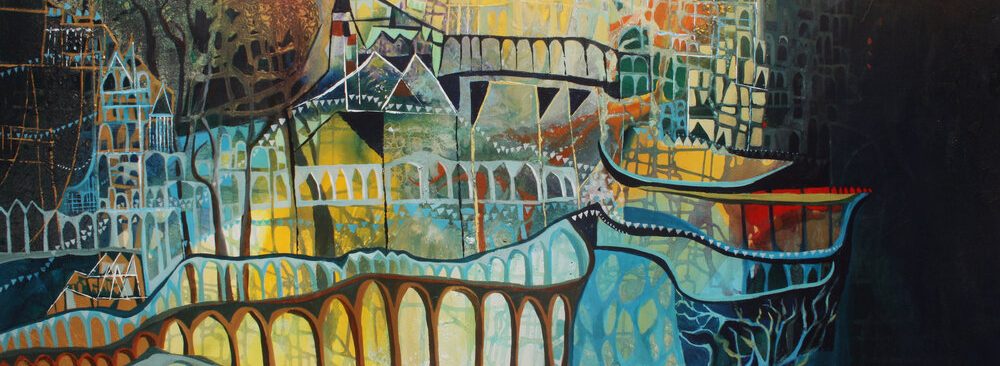
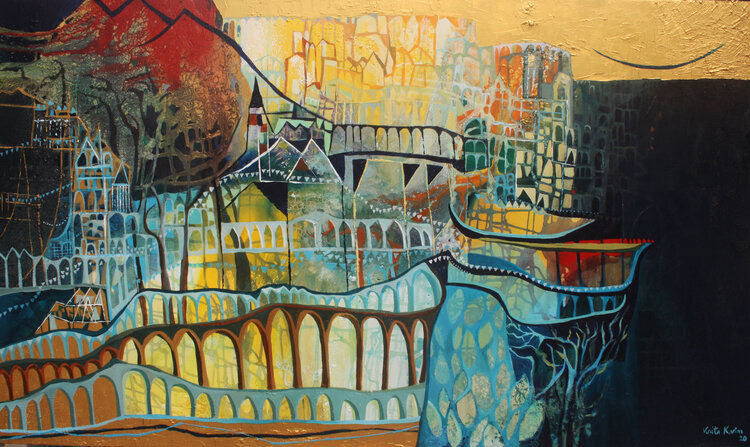
The vibrant, intricate, jewel-like paintings, mixed-media work, and embroidery of Vinita Karim are visually stunning. You could spend hours looking at each one and discover new treasures. You want to climb in and follow the paths to the river and the sea, to travel on the mysterious blue water, and wander the alleys of the teeming towns. But fantastical though they are, they also ask questions about what it means to live together as humans, perched as we are on strange islands between the earth and the sea and the sky. Karim’s work is deeply informed by a life of travel almost, it seems, around the whole world, and the perspective it gives to her art is one of compassion and deep understanding. We were grateful for a chance to ask Vinita Karim a few questions about her remarkable artwork.
Magpies: I’ve never seen anything quite like your artwork. Maybe I sense hints of Paul Klee’s cityscapes, but for the most part it seems completely unique. What are your artistic influences? What artists do you admire?
Vinita Karim: I get this comment quite often, that they have not seen my type of art. And people often ask me what this kind of art is called. It’s quite hard for me to categorize it. In a loose way , one could call it abstract landscape. Because the influences of different cities is very much there, as well as my exposure to a lot of amazing artists. I am very blessed to have lived a life all over the globe. I was born in Burma, went to school in Germany, Sudan, Kuwait, India, and Pakistan. University studies were in Sweden and the Philippines. My father was a diplomat in the Indian Foreign Services so we travelled all the time growing up. My father was very fond of music and art and he encouraged me to pursue art. My elder sister is also an artist and I was surrounded by art since I was born. Later, after I got married, my nomadic lifestyle continued. We lived in Germany, Switzerland, Egypt, the Philippines, Libya, and Bangladesh.
Each and every country that I have lived in has touched me intimately. I have created a home and tried to integrate by learning local languages and cultures. I have worked and produced art in each one of these cities ,and held exhibitions and interacted with the local communities.
These factors have been responsible for creating a very unique and extremely rich foundation for my art-making.
For example, I learned the Arabic script since I was fascinated by it: some of those letters find their way into my work. I am very proud of my Indian heritage, and the bold colors of India are reflected in my work.
Some of the early artists that I admire are Gustav Klimt, Paul Klee, Hunderwasser, Egon Schiele, Ram Kumar and Raza. Amongst the contemporaries, I love the work of Gerhard Richter, Cecily Brown, Peter Doig, and Adrian Ghenie.
Embroideries
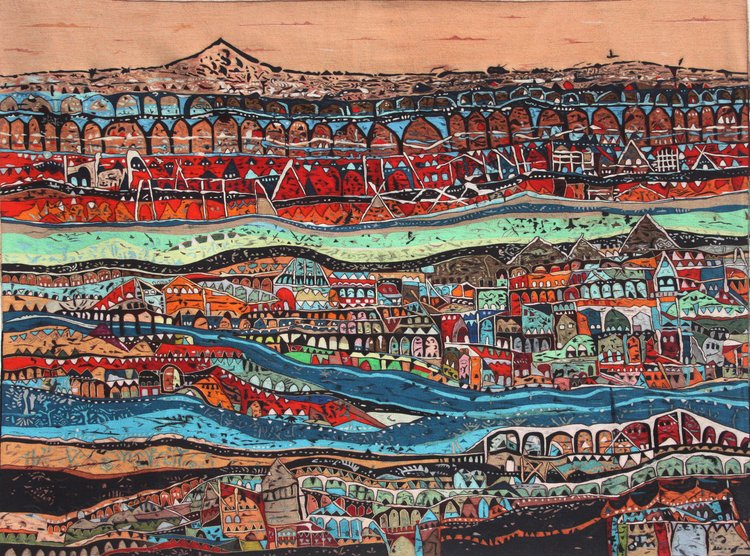
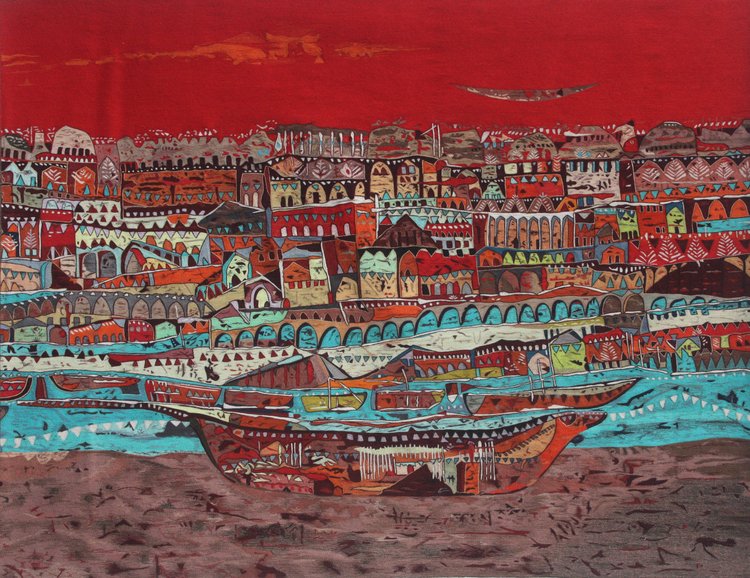
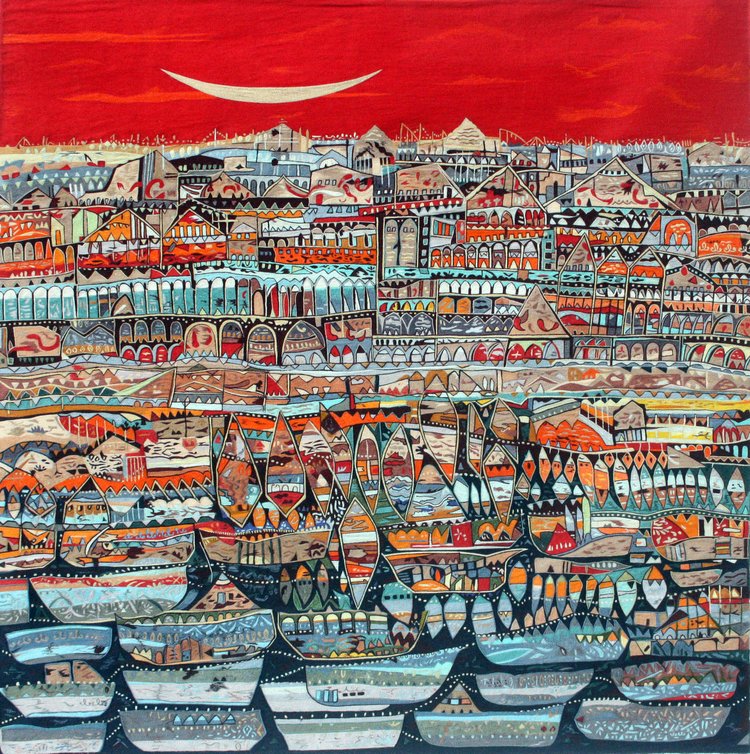
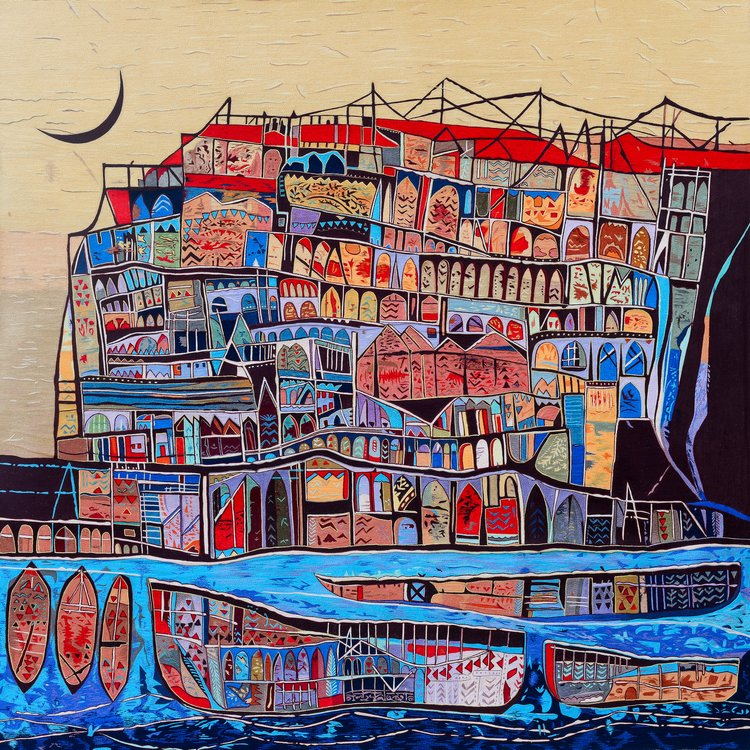
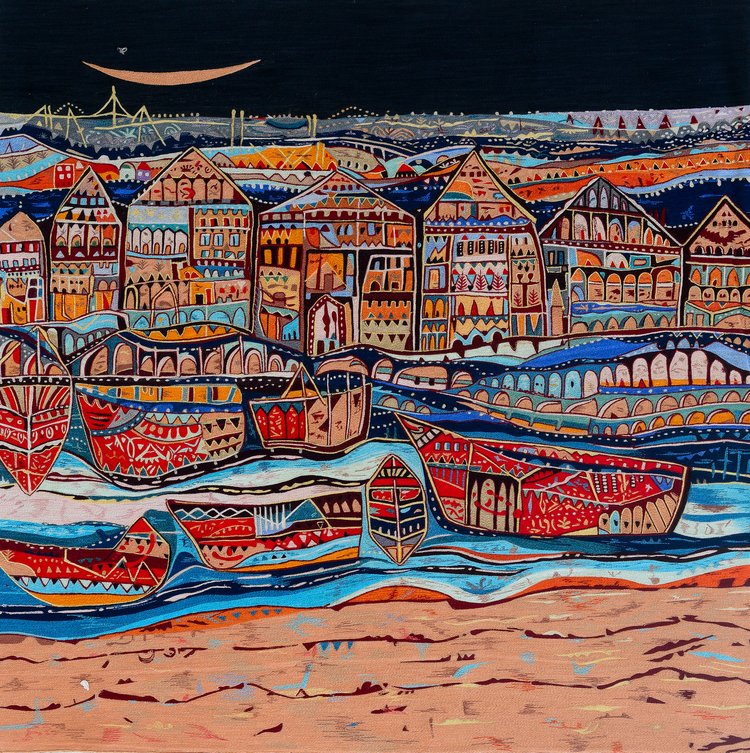
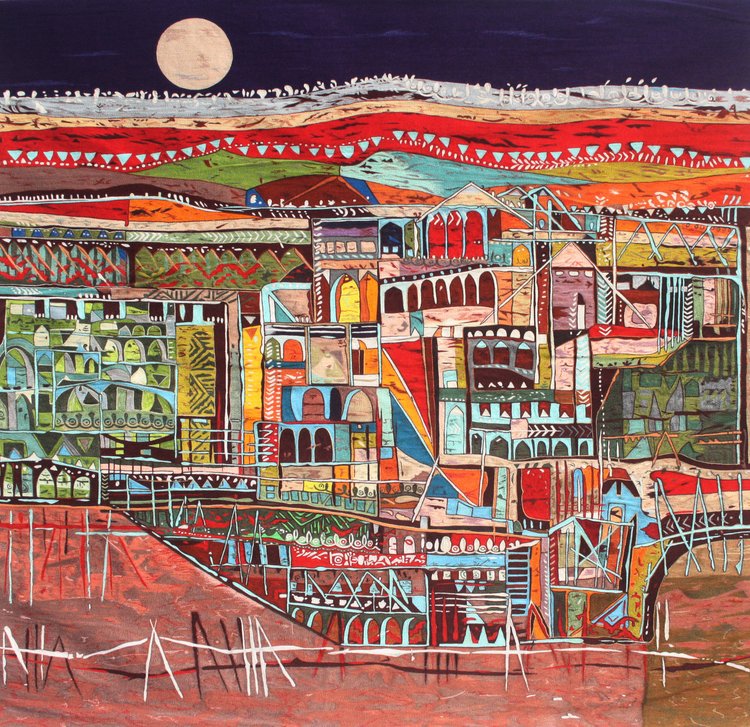
I’m fascinated by your embroidery. Can you describe the process?
I moved to Bangladesh in 2010. I was fascinated by the beautiful embroidered sarees worn by the Bengali ladies here. I started imagining how I could incorporate embroidery in my work. I started training local Karigars (craftsmen) to interpret my work into silk threads. It was important for me that the embroidery would merge seamlessly with my painting. So often people notice the embroidery only after they come up close to the painting.
My paintings are all about layers. The embroidery adds another important layer to my work. One of the beauty and strength of local traditions and crafts.
There’s something so dreamlike about your work. Do you dream of unreal cities? Do you find ideas in dreams of cities you’ve lived in?
The cities that emerge on my canvas are ones which exist in my mind and in my dreams. They may have certain recognizable elements. Some people see Venice in my work and some see Benares. There are elements from all the cities I have lived in.
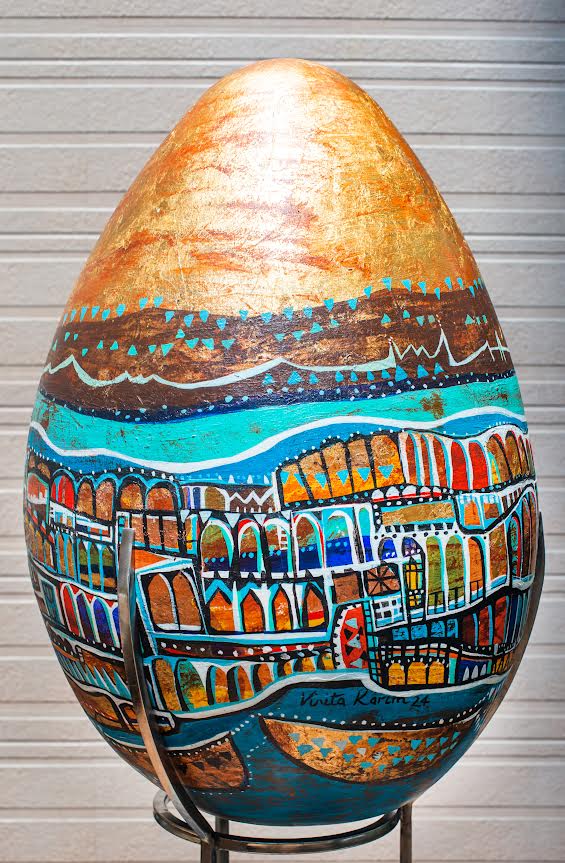
Do you tell yourself stories about the cities you create? Of their history, or of the people who live there, or what life might be like there?
I think of the lives of the people in all these cities. I worry about how unequal the world is. About how so many people lack opportunities and their basic needs are not fulfilled. I worry about the state of our planet and how future generations are going to live on it. I worry about how human beings are so selfish and greedy and about all the meaningless wars going on. I think about how divided humankind is and how power and greed overcomes good. We live in a sad state of the world and I wonder how things will get better. I think about all the wars which take place on the basis of religion. Isn’t religion something so pure that should make you love other human beings? Why is religion used as a reason to wage wars?
Mixed Media
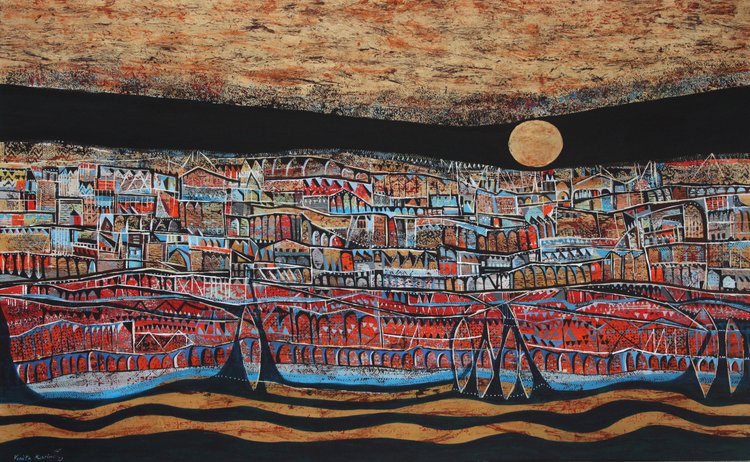

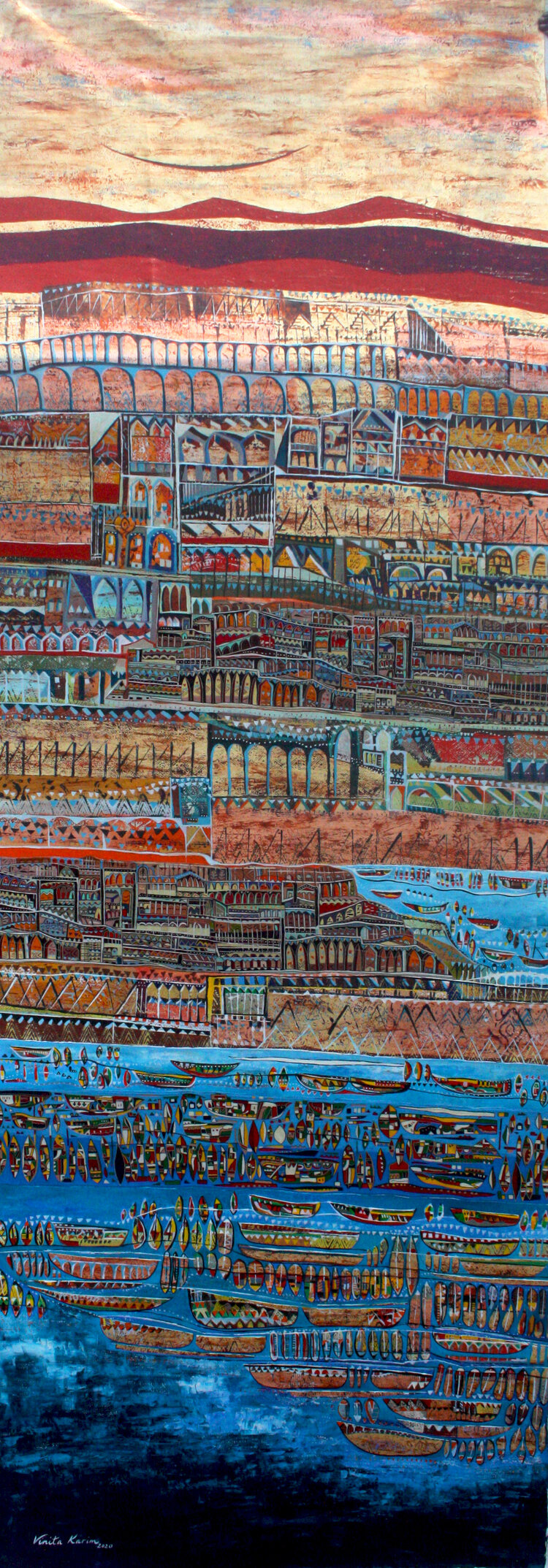
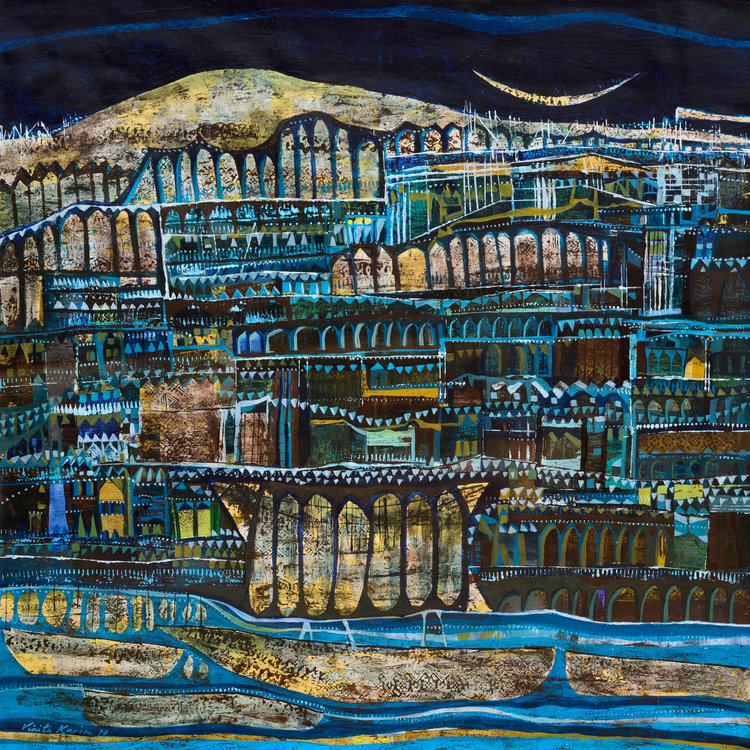
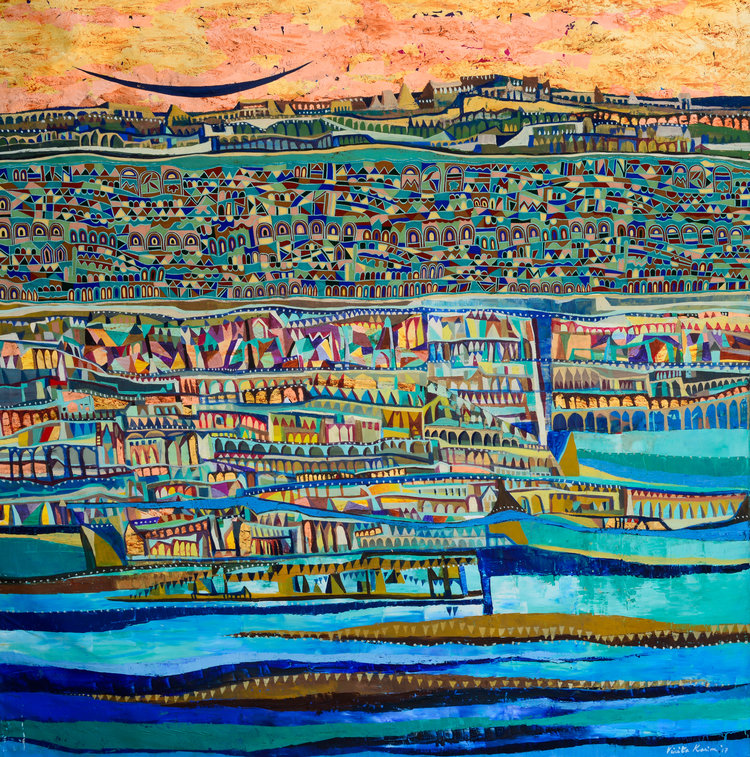
As important as the cities themselves are in your work, they’re hemmed in by the sea and the sky. The sun, moon, and clouds seem to be as much part of the composition and the story. How do you see our place in nature, or the power of nature in relation to humanity?
Nature has given us so much. The biggest mysteries are contained in nature. There is no greater beauty than the beauty of Nature. We are surrounded by so much beauty and wealth which Nature has bestowed so generously upon us. Why are we destroying it? Why are we not nurturing it? It’s such a precious gift.
My paintings celebrate the gifts of Nature as well as the gift of life itself on this little planet amongst so many galaxies in the universe. It is truly a gift to be born on this wonderful planet surrounded by sun and moon and stars.
Water, in particular, seems to be important in your work. Boats on the ocean or a river give your paintings a kind of rhythm, and suggest a world beyond the cities you’ve created. Can you talk about water as a theme in your work?
The presence of water bodies in my life is reflected in my artwork. As a child, I witnessed the point where the blue Nile merged with the white Nile in Khartoum, Sudan. The turquoise blue of the Mediterranean has found its way into my canvas. The ocean with its cycle of ebb and flows is both fascinating and unfathomable. Boats in my work depict the grand adventure that is life itself, of traveling and learning and meeting new cultures and people, of interchange of ideas and dreams. I think travel is the biggest teacher of them all, since it makes one open to new ideas and philosophies.


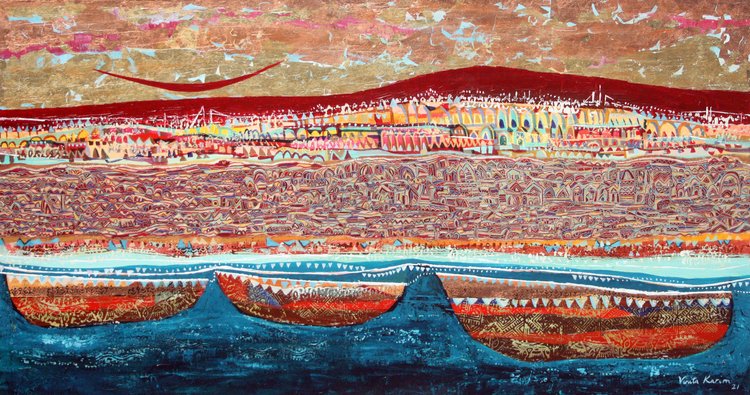
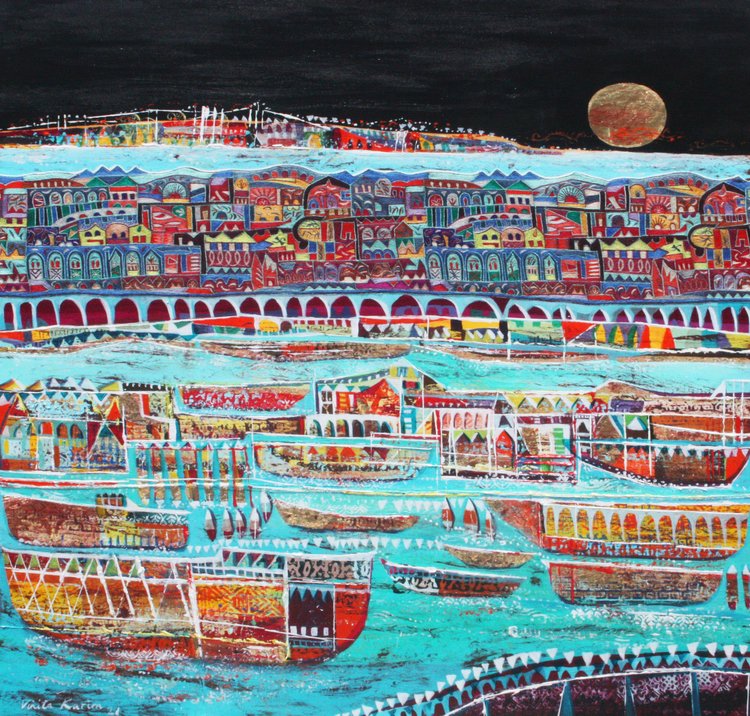
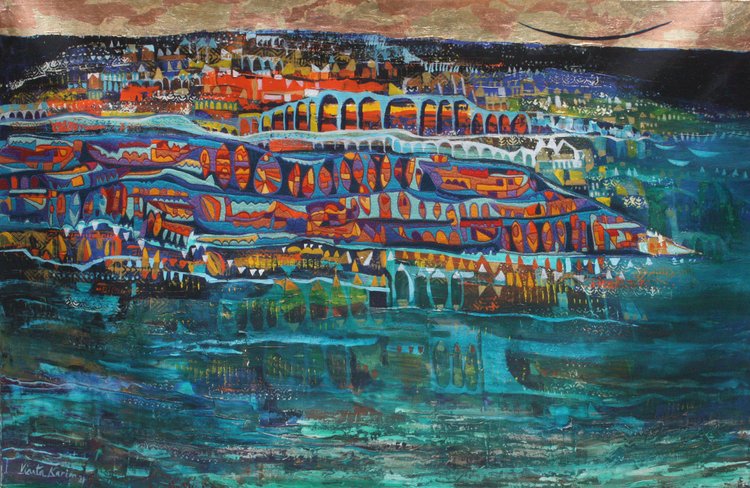
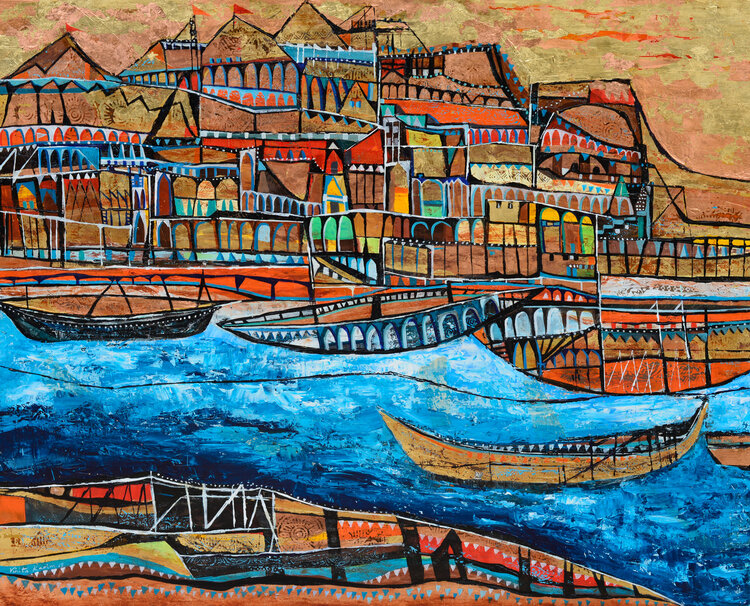
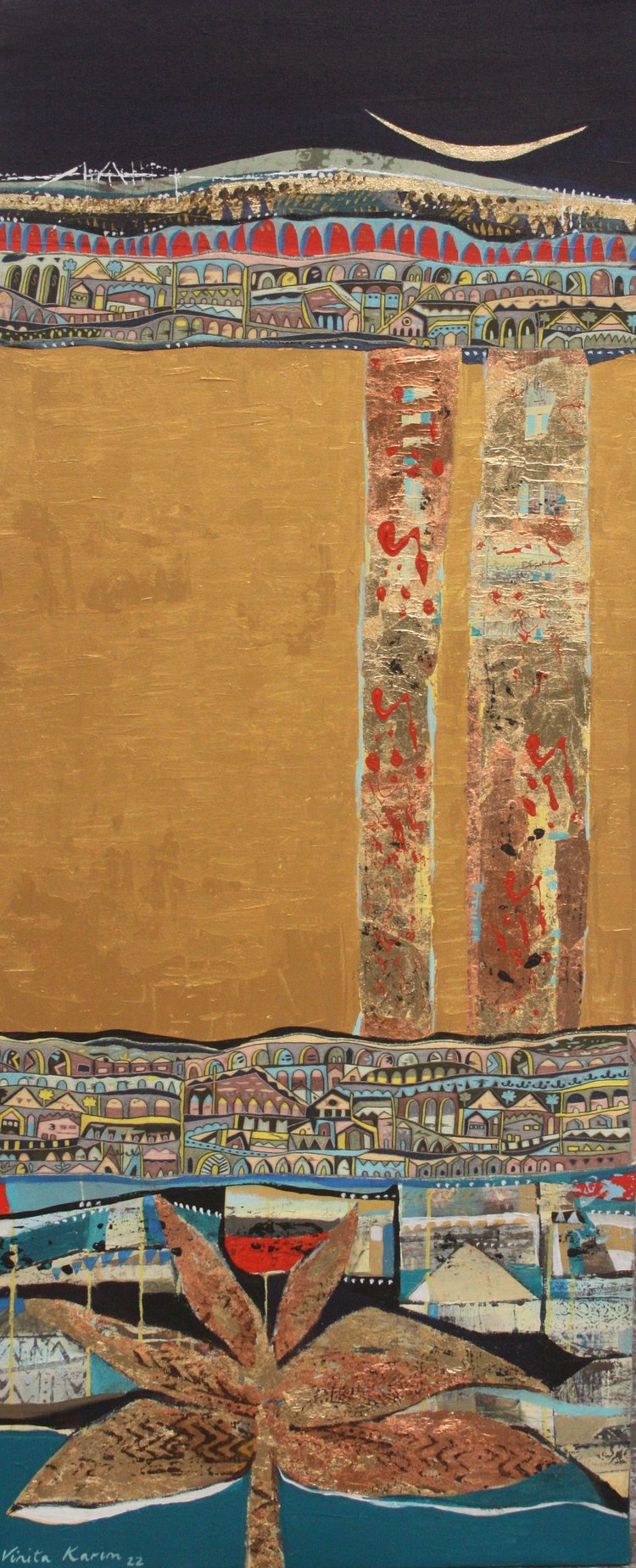
The colors in your work are remarkable to me. Strange, but somehow perfectly realistic – almost as though these are the real colors of the sea and sky and buildings if we took the time to look without preconceived expectations. How do you choose your palette of colors?
My colors are extremely important to me. I usually start a canvas by painting colors on it. I never sketch anything. The colors emerge according to my feelings and mood. I am unashamedly a colorist, I love colors. The idea of doing a black and white work has no appeal for me. I enjoy and use colors just like children do, without any reservations.
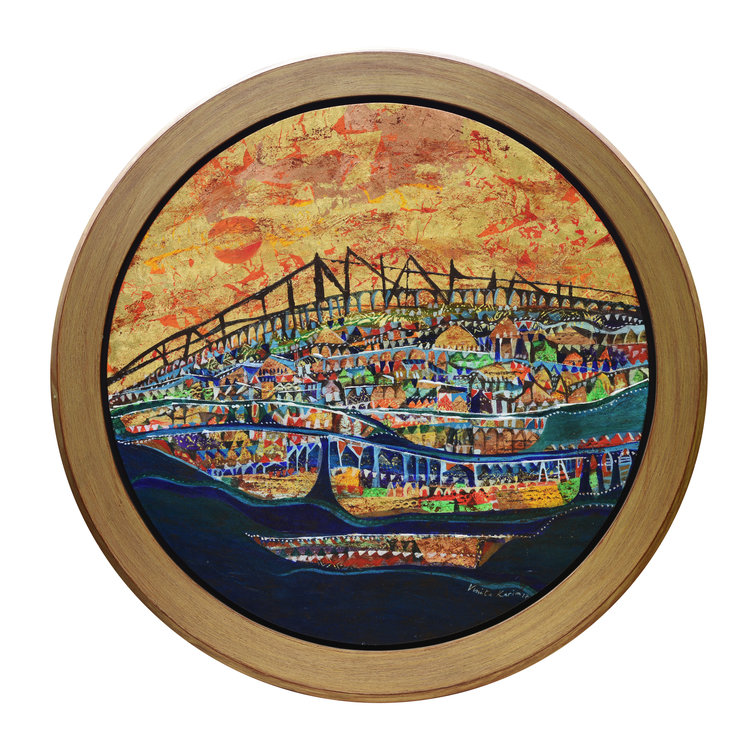
I find your paintings and embroidery very thought-provoking. There’s a fantastical aspect, but they also seem to be about the way humans interact with each other. In urban spaces we’re so crowded together — literally on top of each other. Sometimes it feels that people are kinder to each other in heavily populated areas because they have to be. As a person who has traveled all over and seen so much, what is your idea about the kindness of one human to another?
I have lived in some very extremely heavily populated cities. At present, I live in between Dhaka and Delhi, two of the most heavily populated cities in the world. Each and every square foot is inhabited and people really don’t have the luxury of privacy. Human beings are a resilient species and they adjust to extremely difficult situations. In Cairo, I was fascinated by the city of the dead where generations were living on top of the tombs of their ancestors.
In dense cities, such as Cairo, Dhaka, and Delhi people don’t have the luxury of space, they are often more involved and connected with their neighbors as compared to cities in developed countries where people may or may not choose to connect. Having said that, I should add that the moment you live in wealthy neighborhoods in developing countries, you have the luxury of choosing whether you want to get to know your neighbor or not. The sad fact of the matter is that in developing nations, the disparity between the haves and have-nots is too great and the gap keeps widening. We live in a very unequal world. Only the rich and powerful call all the shots and poor people have little to dream of. Kindness is a very rare quality, most people just want to improve their own lot, sadly.
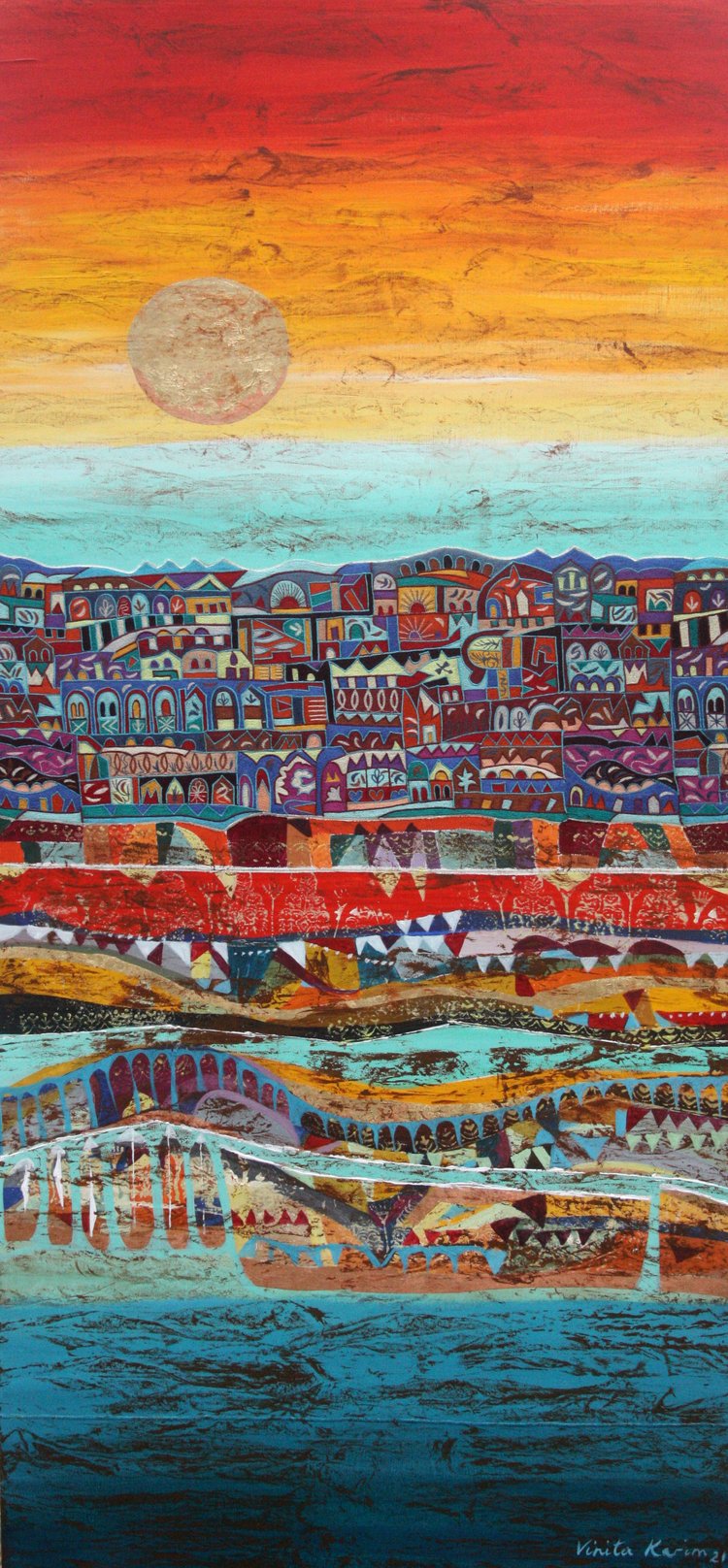
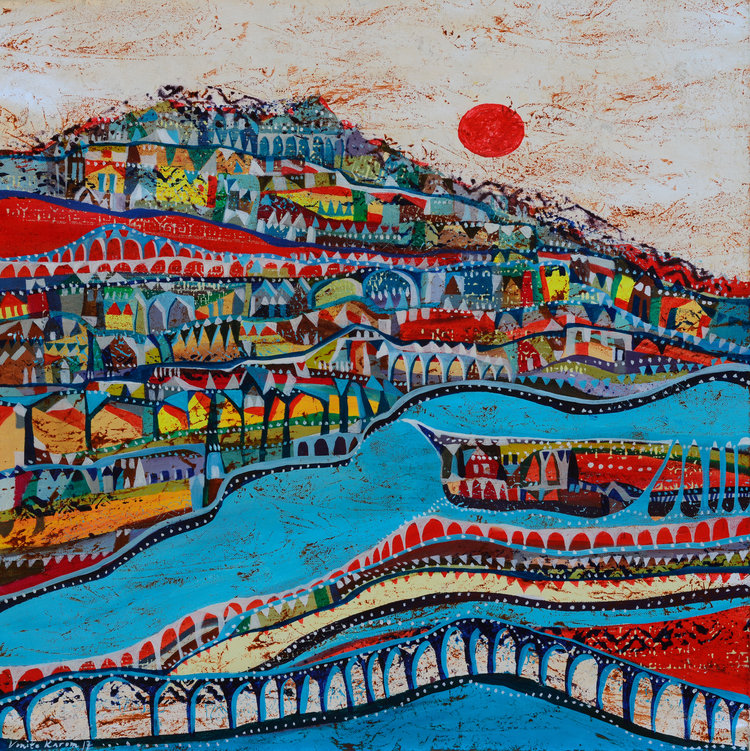

It seems as though you’ve lived in so many places. How do you define “home?”
Home has always been an abstract concept for me. I long to have a home, and I try to create a home everywhere I live, but I know in my heart that it is transient. I comfort myself by telling myself that life itself is also transient. I try to live in the moment and try to celebrate life in its beauty and complexity.
What are a few of your favorite sounds, smells, colors, flavors, and memories of different places you have lived?
There are so many. The olive trees in the desert outside Tripoli, Libya, where we would stop and buy olive oil. The beautiful villa which we called the hurricane house in Manila, which had all these huge glass windows which would rattle during the typhoon season and which had a secret room in the attic, which my children accidentally discovered by tapping on the walls. The cherry and apple trees in our backyard in Bonn, Germany where we would build snowmen as children.
The musical soirees in my homes in Kuwait and Islamabad where some of the top Indian and Pakistani musicians performed for us. I learned to appreciate Indian classical music early on. My beautiful studio in Dhaka, a magical place, where my paintings paint themselves, its as if I am just a medium. My lovely studio in Delhi, generously provided by my sisters, Gita and Anita, where I have painted crazy pieces such as a huge carousel, with racing horses and a series of huge eggs representing feminity and creation. My favorite place is also my balcony which overlooks Gulshan Lake in Dhaka, it may not be very clean water, but I love watching the squirrels scamper up and down the coconut trees growing on the banks of the lake.
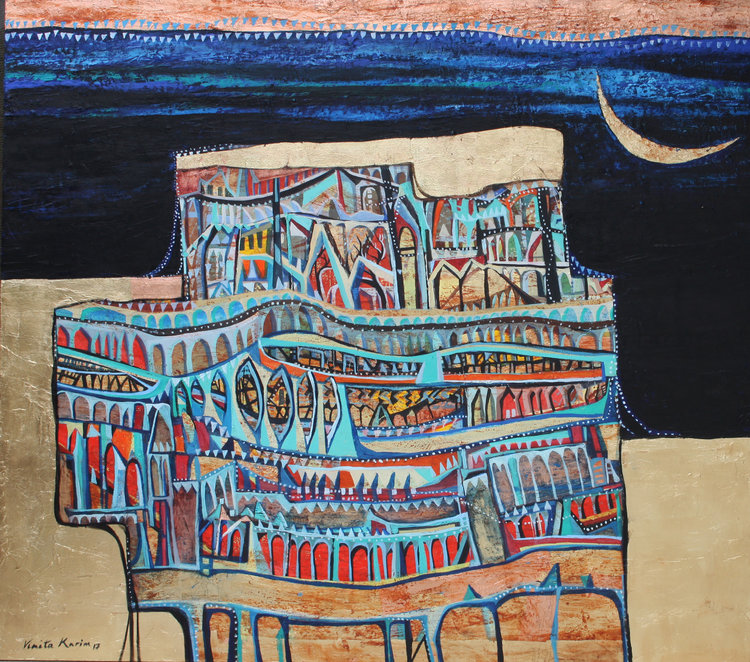

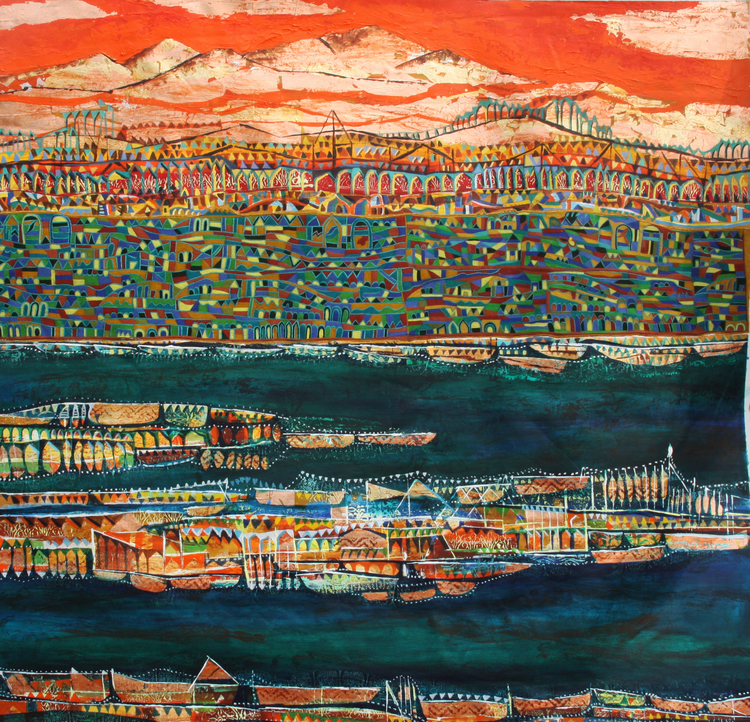
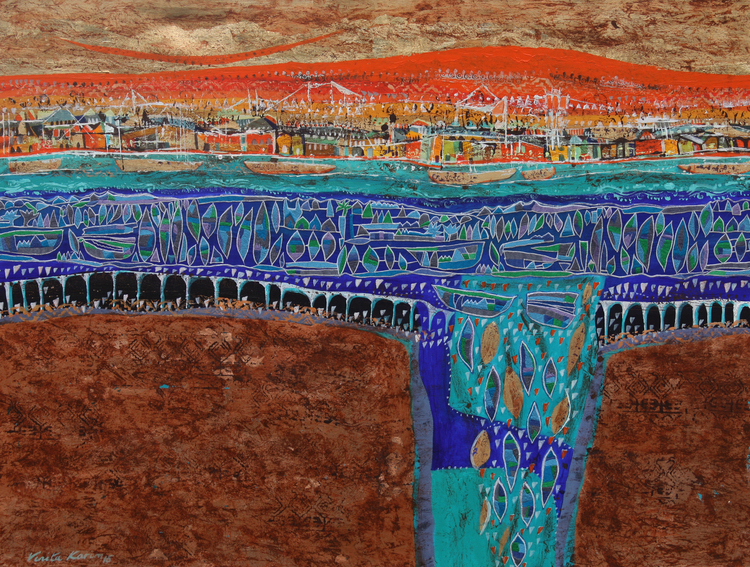
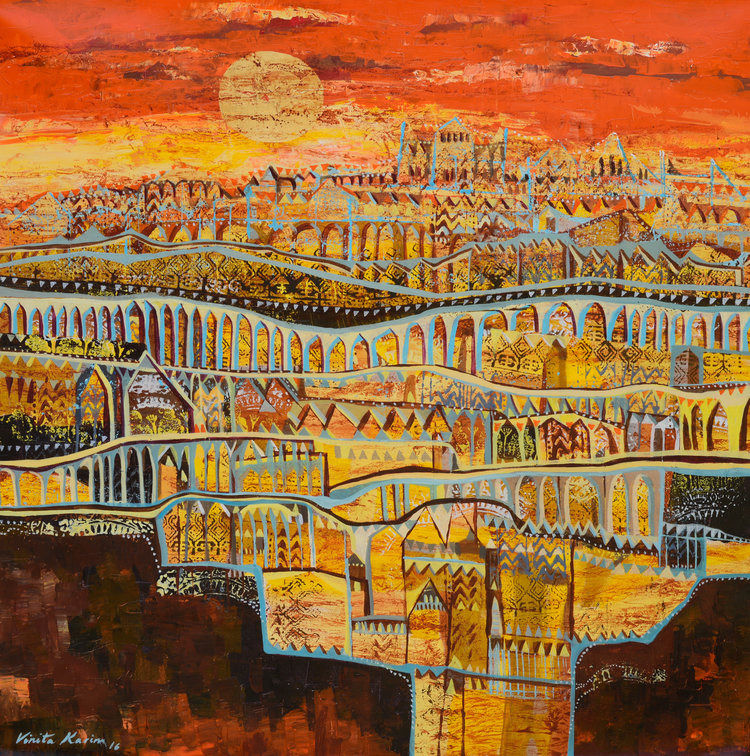
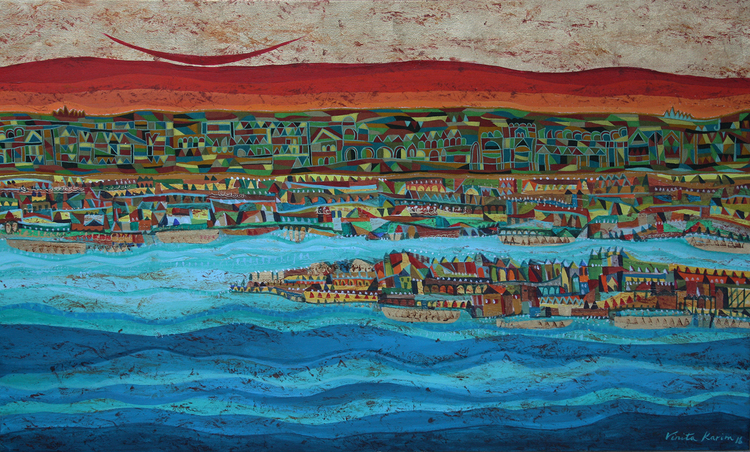
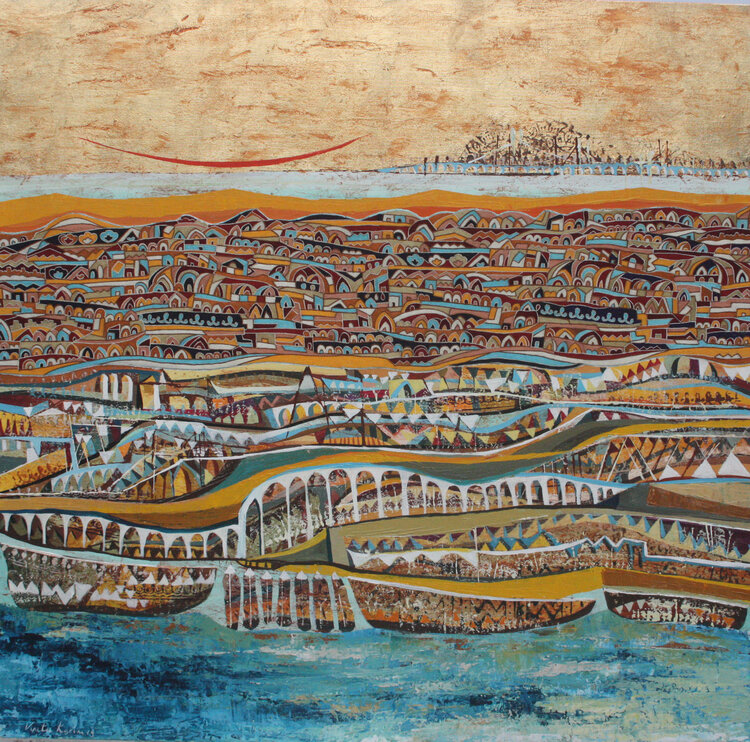
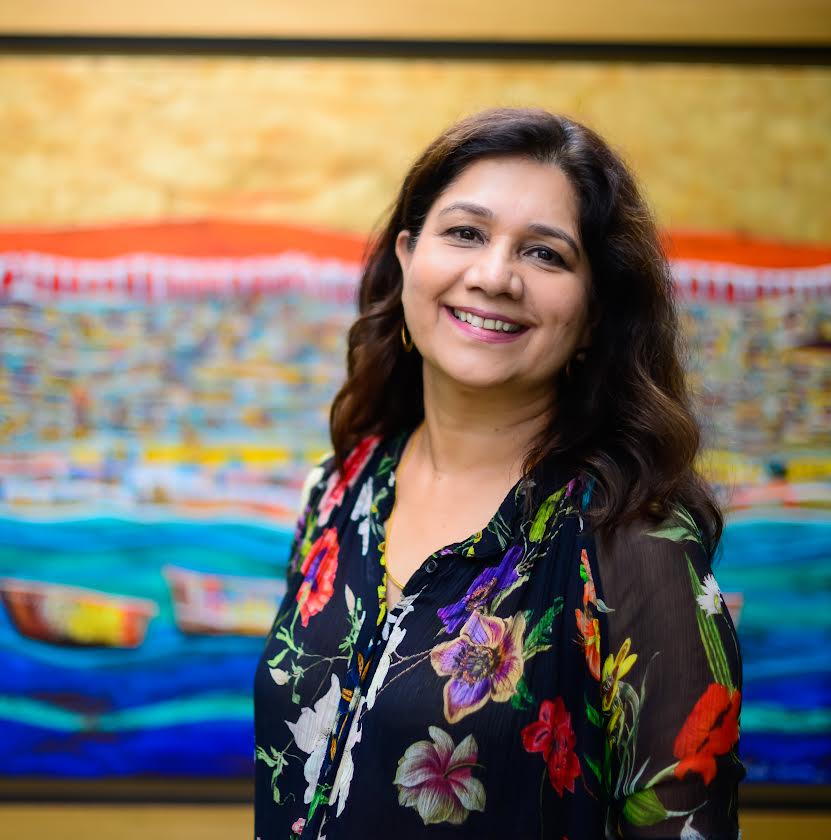
Vinita Karim carries with her the forts of Malta, the sand dunes of the Sahara, the city of Dhaka, a boat, the Mediterranean Sea, and enough paint to color them all. She turns cities into artwork. If only one could reverse the process and enter her dreamy abstract cityscapes. You would see a pure golden sky, deep reds and blues shaping a rolling sea, festively colored buildings, and a thin cloud stretching endlessly across the sky. Hopping from city to city would take you through Vinita’s memories of Tripoli, Berne, Nuremberg, Manila, Stockholm, Cairo, an underwater city, and a few other places you just won’t find in this world. Born in Myanmar, educated in Sweden and the Philippines, but originally from India – Vinita’s nomadic lifestyle has led her all over the world. She has taken full advantage of her constantly changing surroundings and applied it to her passion in art. No matter where Vinita goes, through her paintings, sculptures, and installations, she carries with her the rest of the world.
Vinita Karim is currently residing between Dhaka and Delhi. She has held 25 solo shows around the world.
See more of Vinita Karim’s work at vinitakarim.com and on Instagram at vinitakarim.



Imaginative and often beautiful – wonderful back and forth discussion. MPA
LikeLike