

By Matt Roberts
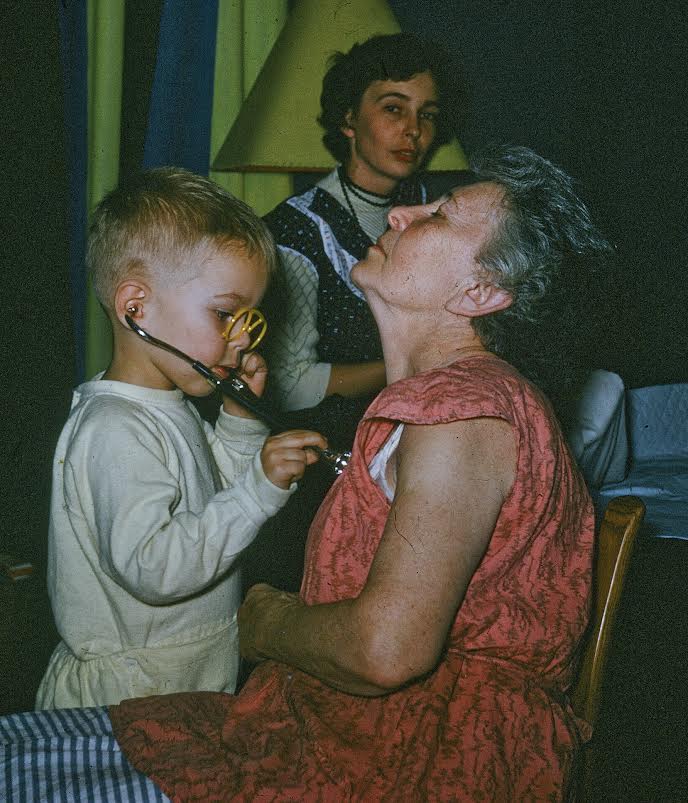
The sense of joy felt by my siblings and I whenever our parents announced that we were being shipped off to “the country” for a few days was intense, and it was palpable. It meant that we kids were going to escape the city to visit Grandma and Grandpa in White Plains, not to be confused with Grandma and Grandpa in Utah.
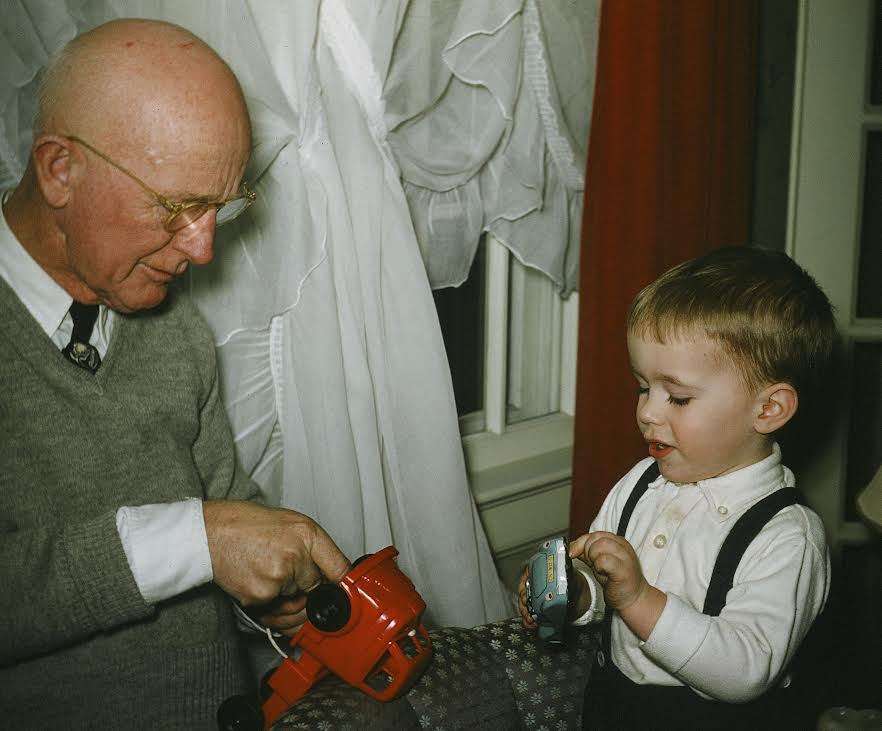
Grandpa would appear at the door of our apartment on 92nd Street, and the adventure for us little Upper-Eastsiders would begin immediately with a cab ride up to the 125th Street train station. Not to put too fine a point on it, but in the early and mid-60s, white people rarely showed their faces above 96th Street unless they absolutely had to. I imagine we did make a bit of a sight — our pale, bald Norwegian grandfather traipsing through the station with three tow-headed kids in tow.
But Grandpa was nothing if not adept at “saving a nickel or two,” and he had correctly calculated that 125th Street was actually closer to 92nd than Grand Central was. Plus, the train fare to White Plains was a little less, so let those other fools keep going down to 42nd street, he would chuckle.
Grandpa’s penny-pinching was really brought home to us when one year we found ourselves inexplicably at a Christmas Eve service (What brought us there? — I haven’t a clue since it was the one and only time I saw my parents and grandparents in church, other than for weddings and funerals.) Regardless, when they “passed the hat,” as Grandpa called it, he plunked a nickel into it. “Stanley,” Grandma hissed. He gave her a desultory oh-all-right look, fished into his pocket, and placed a dollar on the plate — but not before retrieving his original nickel.
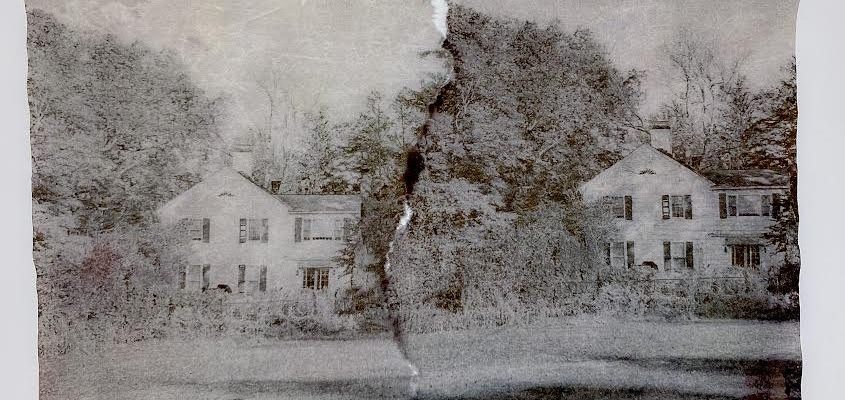
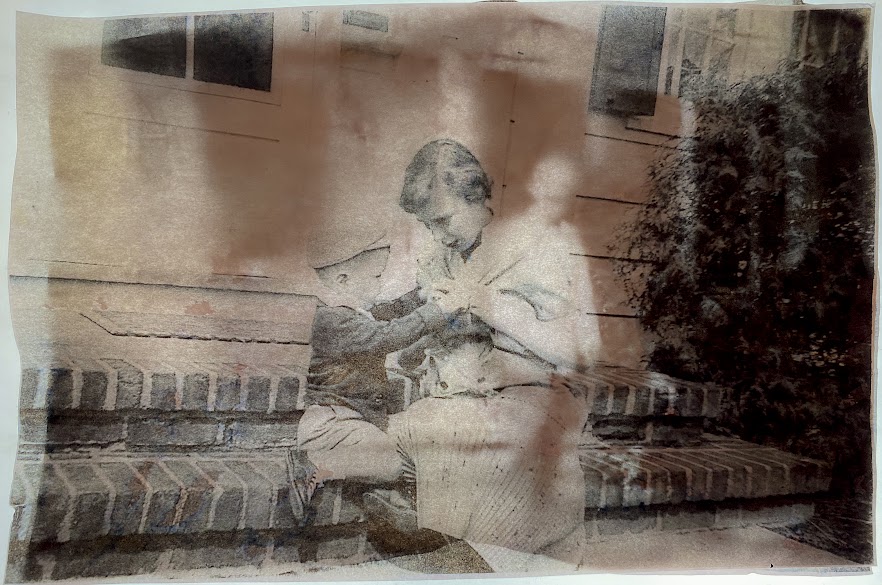
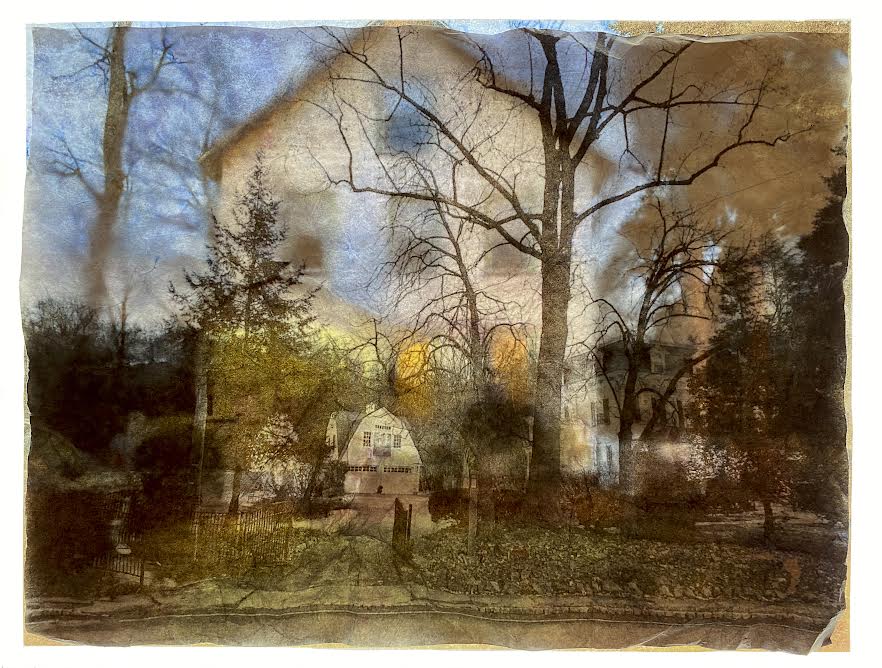
As soon as we arrived at the house in White Plains, Grandma would greet us at the front door and smother us with hugs and kisses, a very welcome gift, since our immediate family didn’t go in for that type of thing. It would be just the first of many gifts we would receive each time we visited. First, there was the house itself — a modest 3 bedroom, 1-and-a-half bath colonial, but a country palace to us kids. There was a patch of lawn that couldn’t have been much bigger than 40×40, but it provided ample space for soccer and wiffleball, and it was literally right out the front door! In the Fall, Grandpa would rake dead leaves into piles which we kids would help carry to the outdoor fireplace. He would then take a cigarette lighter to them, and we would be enveloped in the beautiful, earthy, but slightly acrid smell of burning leaves — a unique olfactory sensation that no one has experienced since the late ‘60s when the practice of leaf burning was outlawed.
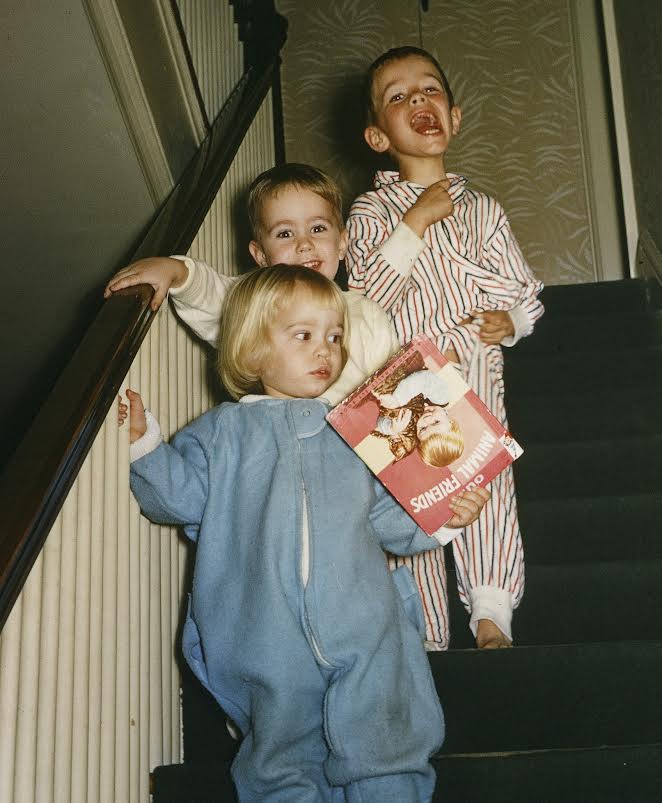
My favorite thing about the house was that it was two stories, with a staircase that we would run up and down before progressing to sliding down the carpeted risers on our bellies, inevitably leading to rug burns that Grandma had to take care of.
We kids had free, unencumbered, unsupervised reign of the house, and we took full advantage, exploring every nook and cranny. We would go through Grandpa’s drawers and find all the sweaters, still wrapped in paper or plastic that he had been gifted at various Christmases. Grandma had exotic bottles of perfume on her bureau, which we kids would spray all over each other without fear of being called out.
There was the mysterious attic accessed by a nondescript door on the second-floor hallway that could have just as easily opened onto a closet. When we got up the nerve to crack the door open, we were immediately met with the smell of air that hadn’t been smelled in a long time: a mix of dust, musk, and cedar — a whiff that gave a sense, even to a kid, of past lives and an odor that we didn’t experience in the city, where every space seemed to be in constant use and never remained closed off for long. As you ascended the steep, unfinished wood stairs the true spookiness of the attic revealed itself with dead bees on windowsills, Grandpa’s WWI uniforms hanging in a closet, and my mom’s and Aunt Leta’s dolls piled in a corner staring at us. We never stayed up there for long.
The basement, or the “cellar” as he called it, was Grandpa’s domain. He would disappear down there for hours to do woodworking projects while listening to Yankee broadcasts on a transistor radio. We didn’t like to disturb him while he was working, but loved to sneak down when he wasn’t around and study all the tools and jars of screws and nails carefully arranged by size and type. We should have gotten used to it, but a cuckoo clock above the work table always managed to scare the bejesus out of us when it popped out on the hour.
Mealtimes were a treat at White Plains — everything from beginning to end was homemade. Not that Grandma was a great cook: the vegetables were consistently overcooked and the meat was generally gray, but we kids never minded and ate pretty much everything and anything that was put in front of us, including foods we would have turned our noses up at in our own home — like liver and onions. Grandma was a terrific baker, though, and iced layer cakes made from scratch were her specialty, and seconds were always forthcoming.
Unfortunately, during one visit she announced that she had made my favorite: pineapple upside-down cake. Where the hell did she get that notion? Sure, I had a sweet tooth, but I really didn’t like that cloying, sticky mess of an excuse for dessert. I didn’t have the heart to tell her, but I certainly never had expressed any love for that cake, and I hoped that she would just forget. She didn’t. On all subsequent visits I had to choke down a hefty chunk of it, followed by seconds of course.
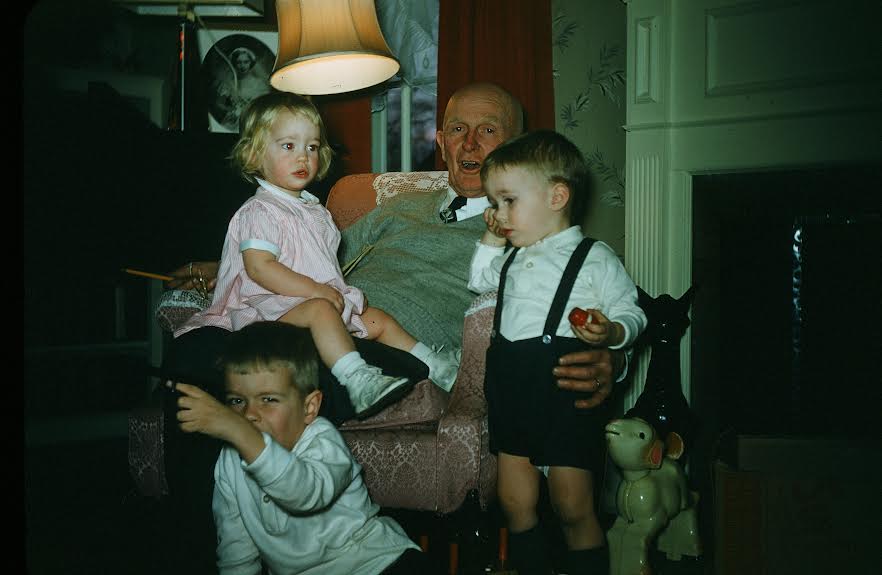
After dinner, we decamped to the living room and parked ourselves in front of the big console TV. Best of all, we could each bring in an ice-cold 8oz Coke in a thick green bottle to sip on as we watched. It didn’t matter if it was getting close to bedtime. My brother, sister, and I were given the option of what to watch. Somehow, in a time of just three networks and a couple of independent channels, the choices seemed endless — 77 Sunset Strip, The Beverly Hillbillies, Gunsmoke, Sea Hunt, Sky King, Mr. Ed. The only exception to kids’ choice was Saturday night, when Grandpa hijacked the TV for himself. He would drag his easy chair to within spitting distance of the set and tune into the Lawrence Welk Hour. By the end of the first half hour, though, his head would tilt back, his mouth would fall open, and the snores would begin — the signal to my sister and myself that it was safe to start dancing in circles around his chair, laughing and pointing at his socks, which always hung down over his shoes (he cut the elastic tops off, saying that he didn’t want to impede his circulation.)
Grandma, for her part, was actually more of a boxing fan when it came to watching TV. I will always remember her and me, both watching in appalled fascination, as Emile Griffith beat the living daylights out of Bernie Paret on a Spring night in 1961. We dutifully tuned into the radio the next few days to check on his recovery, which unfortunately never came. It has never been lost on me that I essentially watched a murder take place on a TV screen.
Once the allotted TV time was up — always at a later hour than back home in NYC — it was the end-of-the-day climb back up the stairs to bed. My brother and I slept in my Mom’s and Aunt Leta’s old bedroom in the front of the house. By the time we occupied it, all traces of “girliness” had been removed, with the exception of delicate lace curtains that let in beautiful diffused light on nights when there was a moon. After Grandma’s goodnight kisses and tuck-ins, another welcome ritual that was rarely performed at home, I would immediately fall asleep. A life-long insomniac, it was the only bed that was able to quickly transport me into dreamland, the ironed sheets cool to the touch, even in summer.
Matt Roberts is a New Jersey-based photographer and collage artist who has been active in photography since the 1970s. He studied photography at Hampshire College and in the MFA program at Pratt Institute. All of his work, whether it is in the genres of street photography, landscape, or family portraiture, is concerned with capturing moments, which while inherently “small”, convey an emotion – a sense of yearning, alienation, joy, or the simple pleasure of seeing something familiar in a different light.
A three-time recipient of individual Fellowships from the New Jersey State Council on the Arts, his work has been shown in a wide range of venues in New Jersey, as well as in group shows in museums and galleries in New York, Rome, Boston, Philadelphia, Vermont, Colorado, and Oregon. You can see more of his work on his website and on Instagram at mattrobertsphotog.
Categories: featured, memoir, Photo Essay, photography

 magpiesmagazine.com
wonderful story!! Takes me back to my youth. Beautifully written.
chris
LikeLike
Wow Matt-I was so very touched by your range of very touching memories both of your Grandparents and visits! It must have been really fun to spend time with such loving Grandparents! Your descriptions are very rich in nature and honestly I didn’t want the piece to end! You are so very talented both in your writing and creative photography! Please write more!
LikeLike