

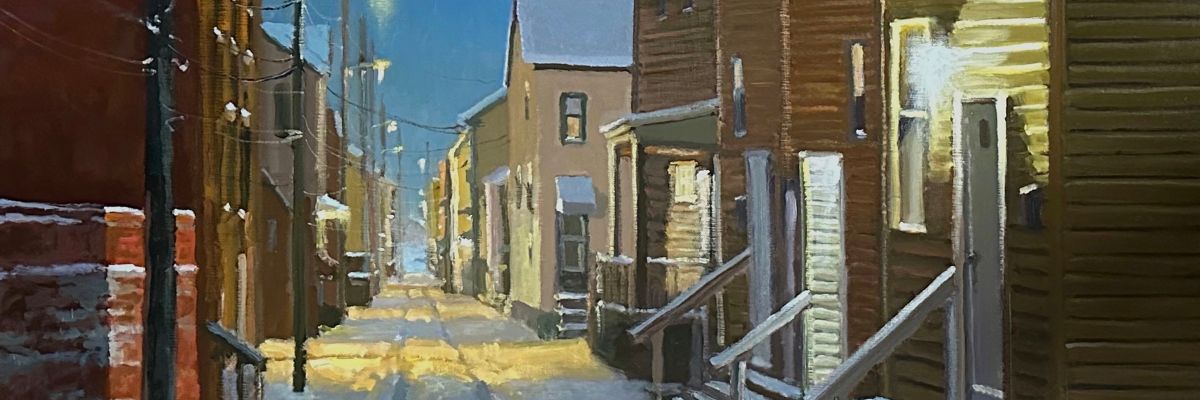
Ron Donoughe’s beautiful paintings are so full of shifting light and shadow that they feel like a portrait of a time and place — of a certain time of day or time of year. They are full of affection for the in-between places and the sense of rediscovering the familiar. We were grateful for a chance to ask Ron a few questions about his work, and to share his thoughtful answers.
T.o.M.: With cityscapes, I always wonder how the artist decides how much humanity to include. Almost everything about a cityscape was made by humans and for humans, and there’s evidence of our care and neglect in every part of the space. But though we feel the warmth and coolness of human presence in your work there are no people portrayed. How does the presence or absence of humanity play out in your paintings?
Ron Donoughe: The paintings of urban landscapes do suggest the presence of humanity. For me, people can become the focal point of a painting and I’m after a feeling of timelessness. I want the viewer to become part of the scene through memory and experience. A lot of what makes a painting interesting is what the viewer experiences. I like the idea of people seeing themselves in the work.
Also, I paint on location. People move about and so do vehicles. What is left out can be just as important as what is included.
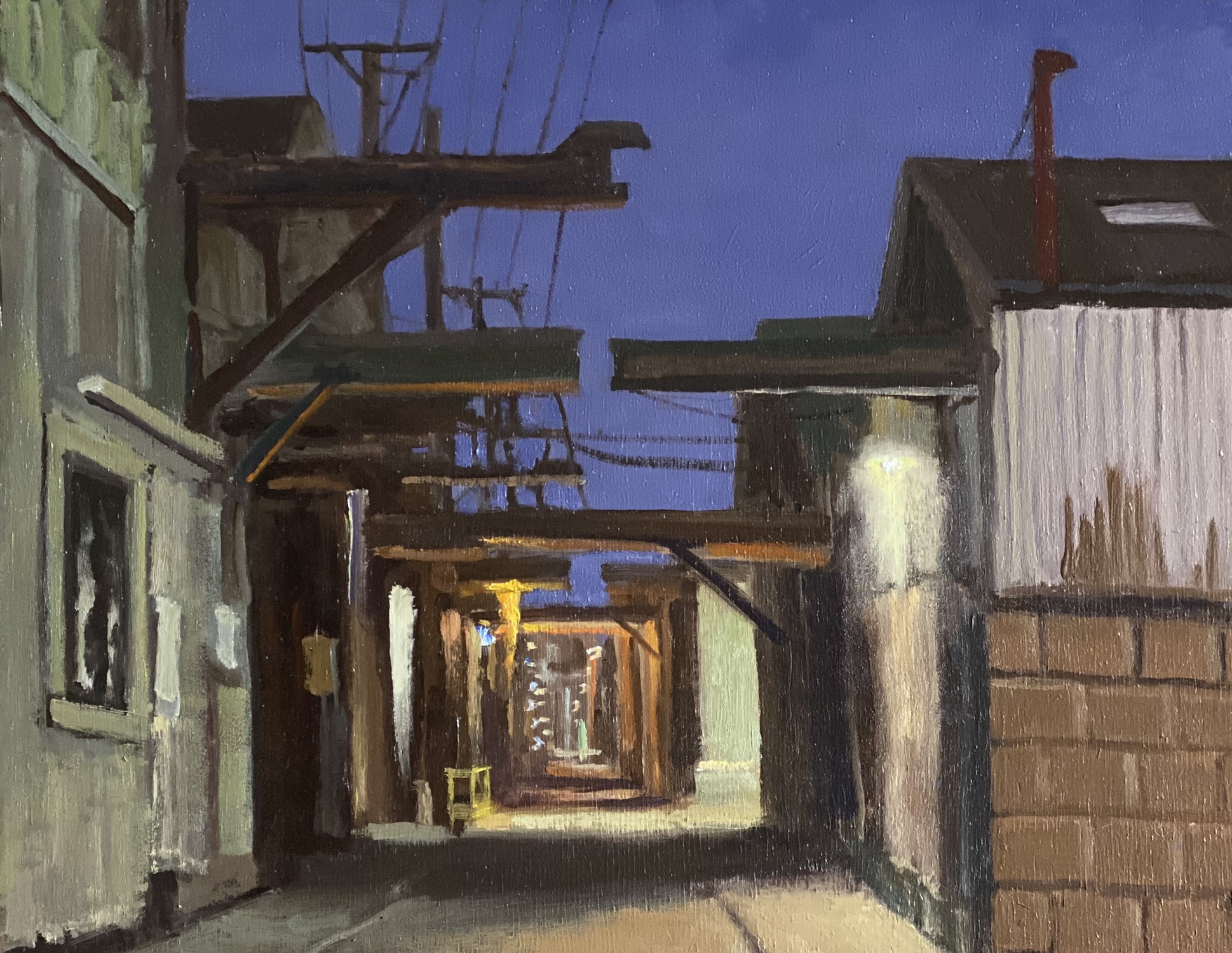
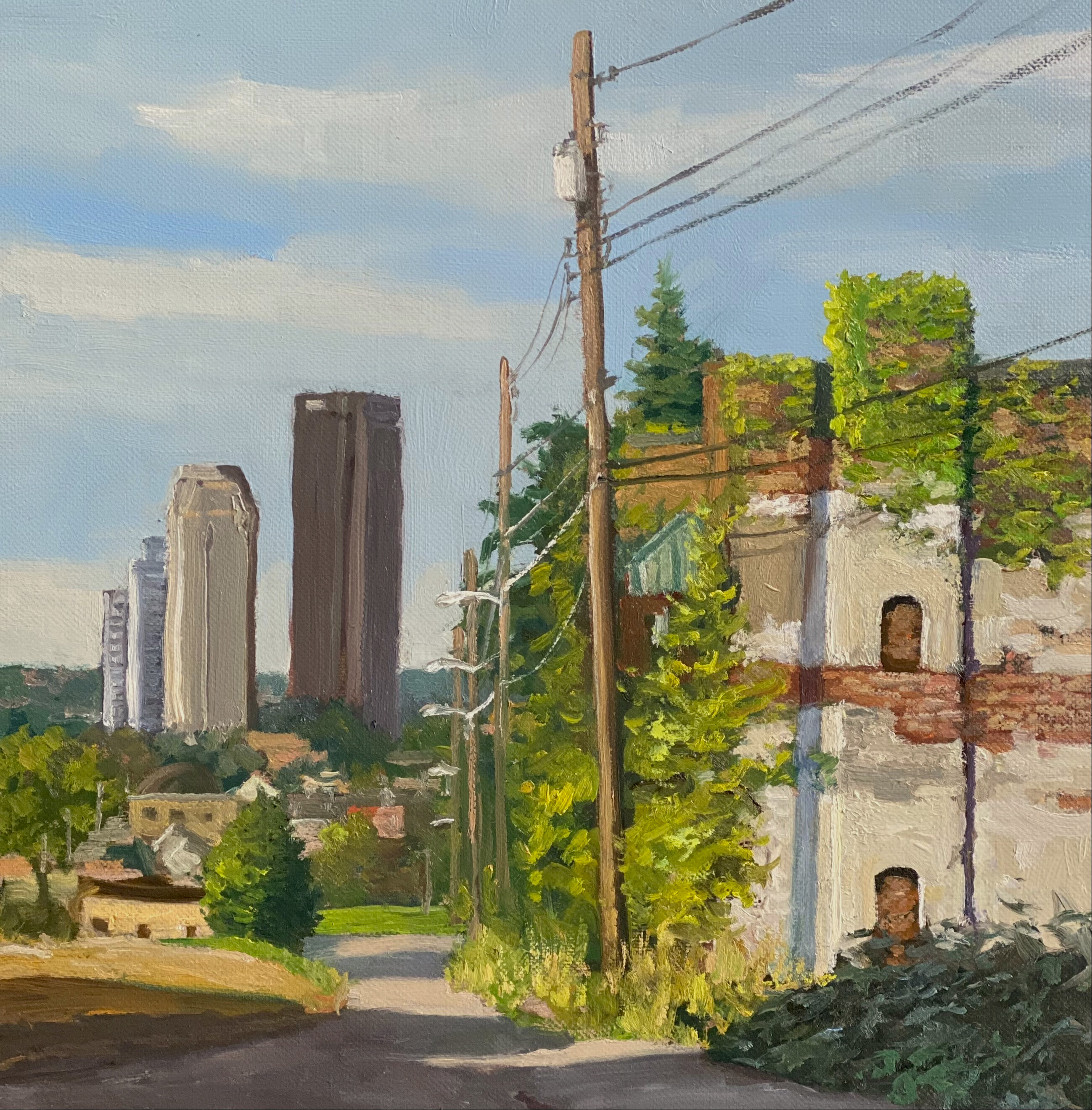
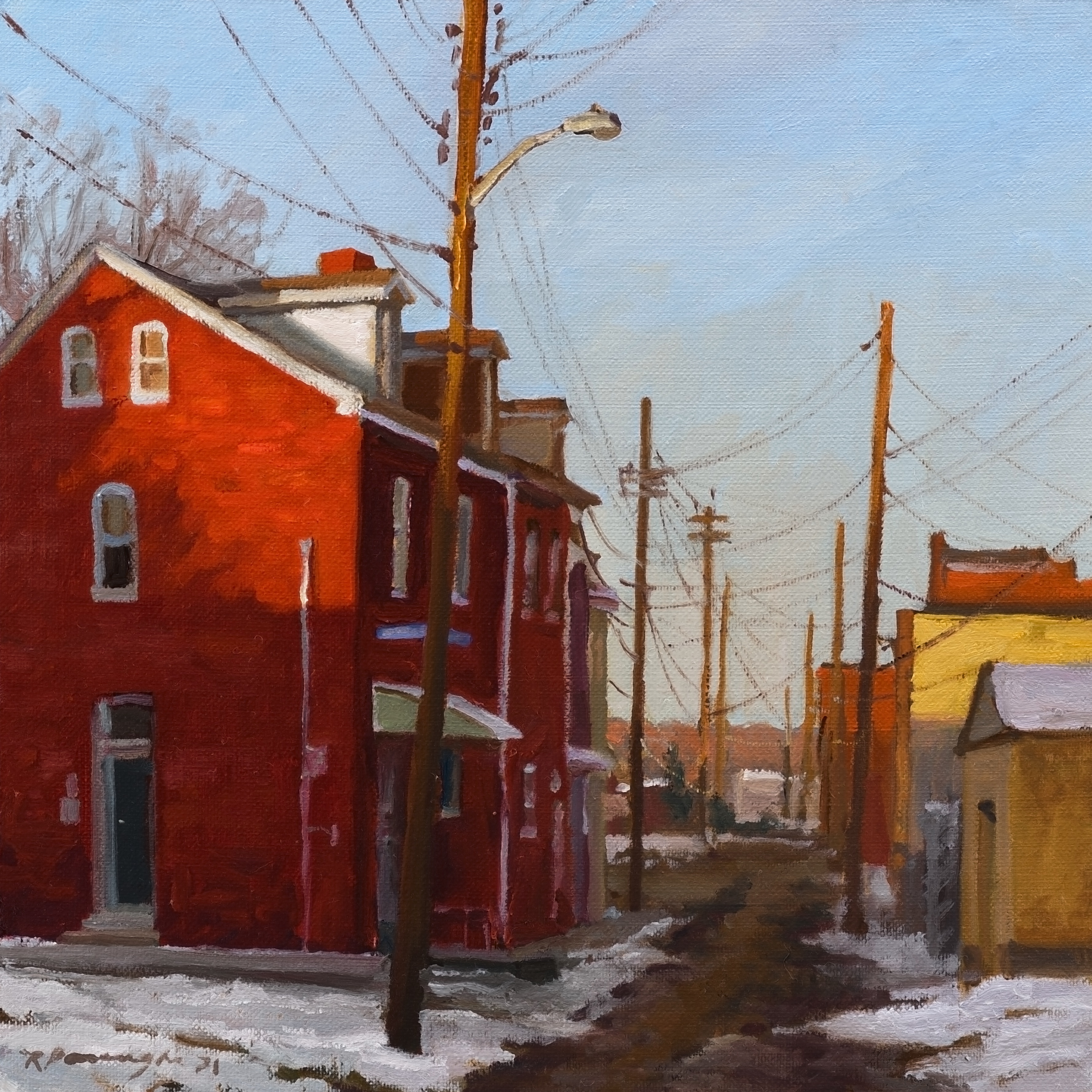
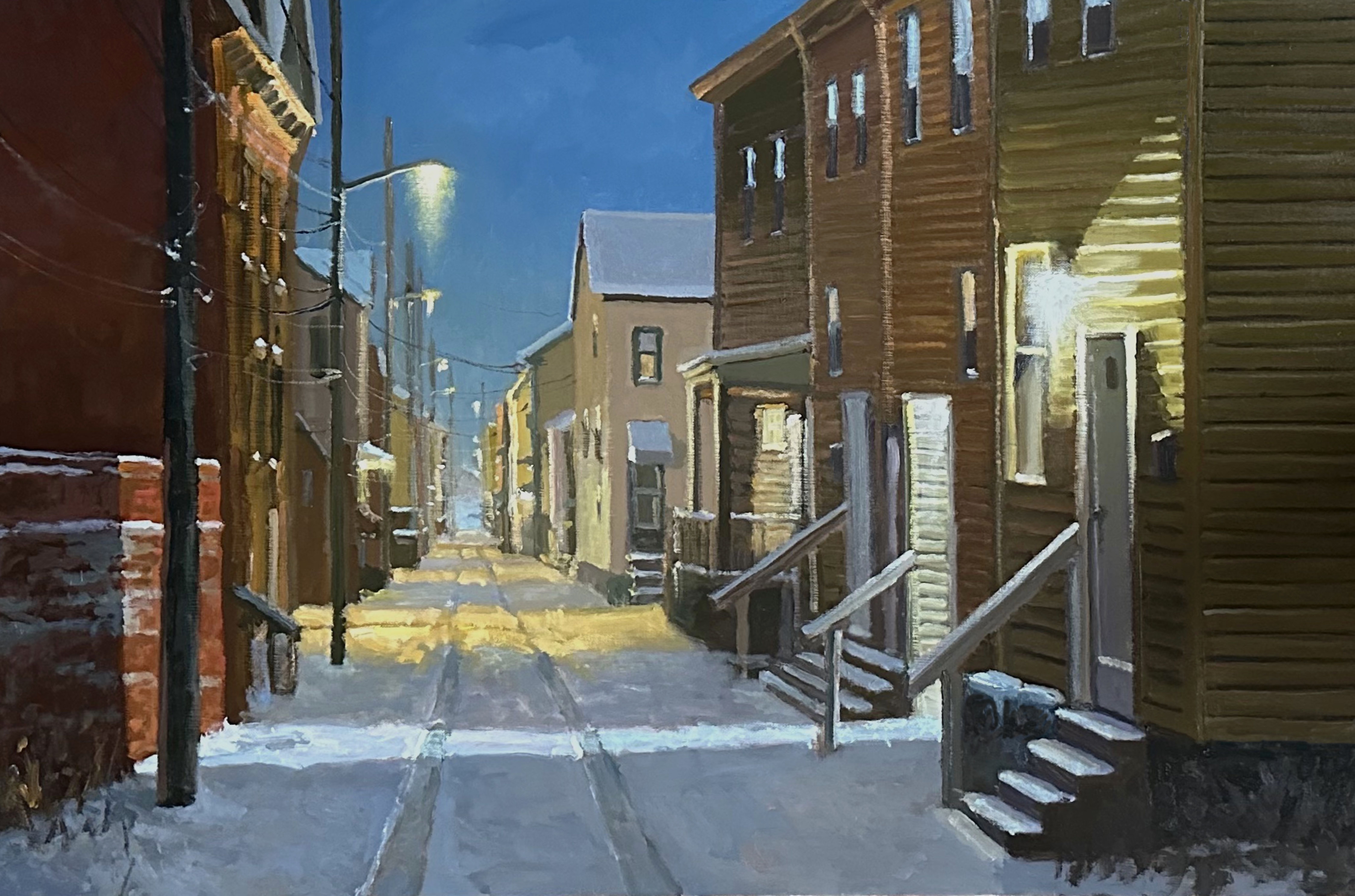
I love the walkways and alleyways. I’m always drawn to the in-between spaces – like Ozu’s pillow shots, which often occur in the corridors between the action. They might be the most traveled spaces in the city, but the “main” stories don’t happen there, they happen through the doors and windows we glimpse just off to the edge of our vision. Can you talk about what it’s like to paint these spaces, and what they mean to you?
I’ve often found myself off the beaten path to make paintings. Sometimes a scene with a certain light and shadow situation will inspire a painting. But mostly a hunch or inner voice whispers to me and suddenly I’m having a dialog with a place. We get to know each other a little bit at a time and then I start to imagine the possibility of a painting. The approach is open-ended. I prefer to discover a subject without preconceived ideas, and that happens by confronting it directly.
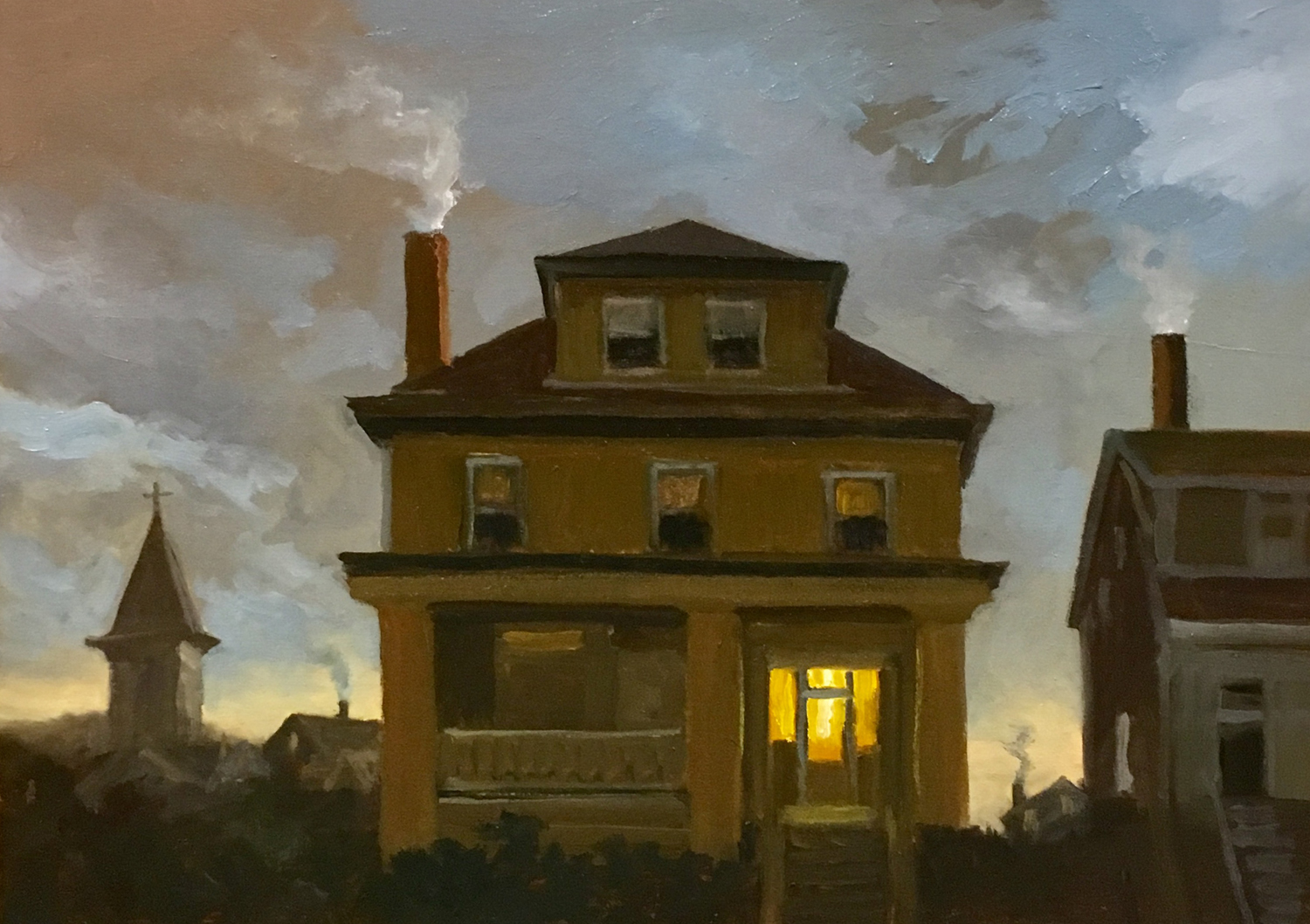
A recent series, Ways of Pittsburgh, was inspired by these less-traveled corridors. Here in Pittsburgh, the alleyways are simply called “ways.” These skinny streets provide clues to how people really live, and the backyards are often full of odd items, such as gardens, hanging clothes, decks, and discarded items. A tiny plot of yard can often be someone’s secret sanctuary. I sometimes feel like a voyeur to someone’s special place. These “Ways” are full of texture and the long, confined spaces also allow me to explore how colors change over distance. I’m really interested in the space between the subject and myself. As an added benefit these places have a lot less traffic.
Similarly, I love the fact that we’re often looking at the back of a house or the side of a building: Where life is lived. You’re finding beauty in the dusty and overlooked spaces. What do you look for in a building or house or steel mill? Are you doing a portrait, or is it more of an idea of recording a certain part of the world in documentarian style? Are we looking at the lives of the people who have lived/live or worked in the building or the life of the building itself?
All of that. I’m thinking about creating a connection between me and the world I inhabit. And yes, I’m considering the past lives that occupied these structures. The steel mills especially captivate me. I’ve had many people approach me as I work to relate their harrowing experiences in a mill, sometimes next to a blast furnace. These stories have infused my work with human joy, sacrifice and pain. There is so much that I find interesting here in Pittsburgh: the history, the architecture, and the incredible vistas. Getting the essence of it is important to me. I do want to document, but I’m also holding up a mirror to what everyone already knows. My intent is to show the unbelievable beauty in the ordinary.
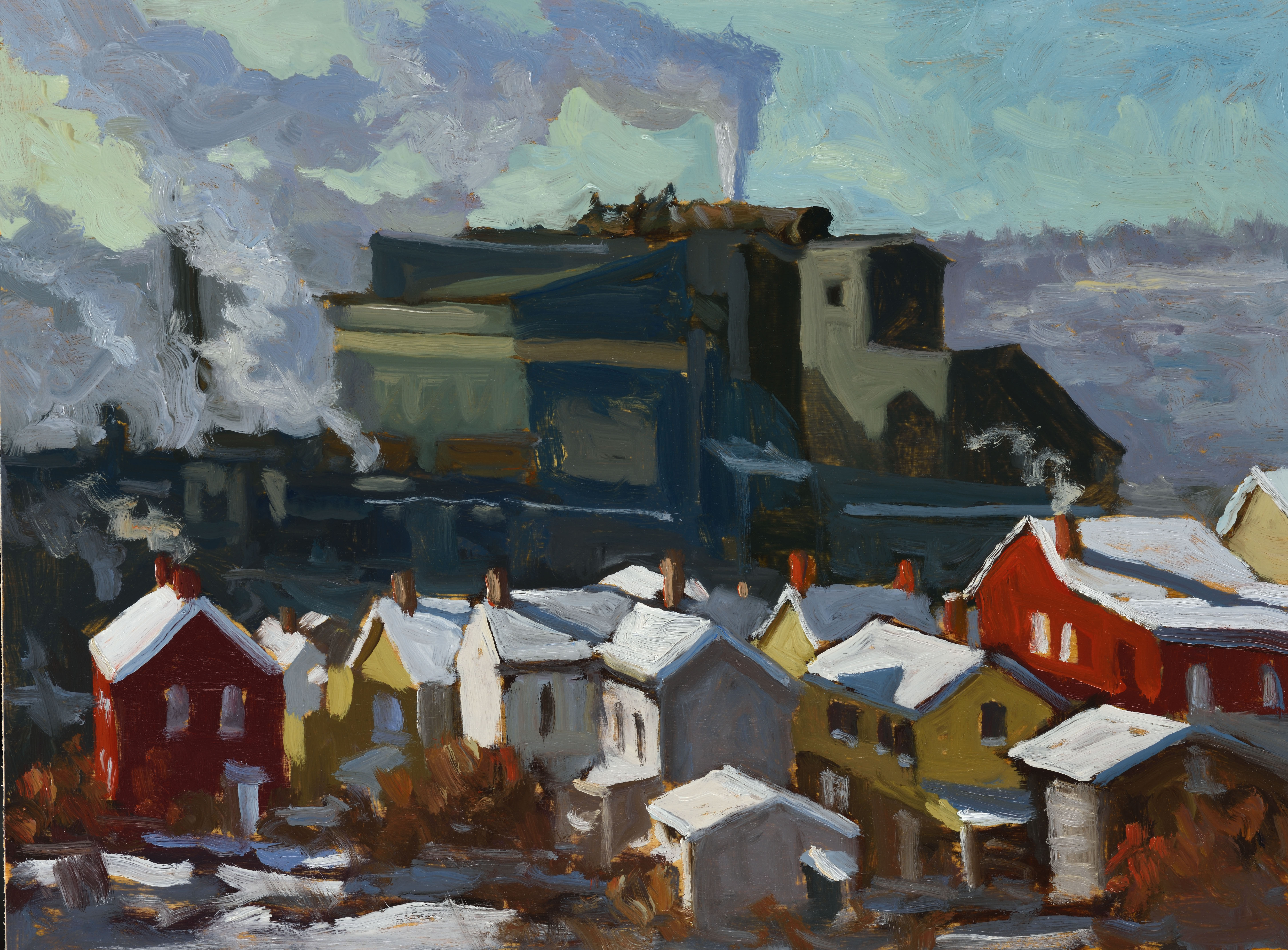
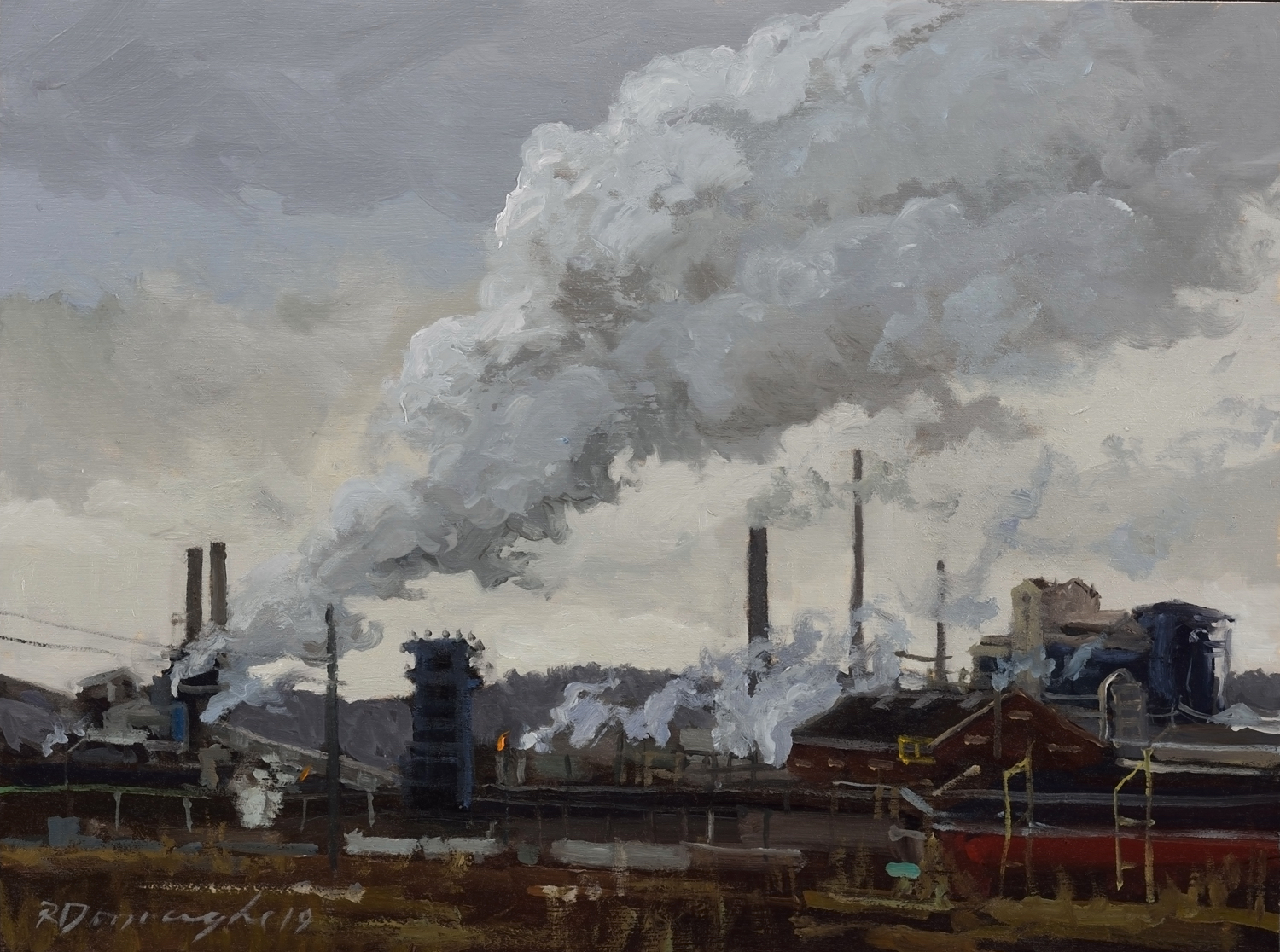
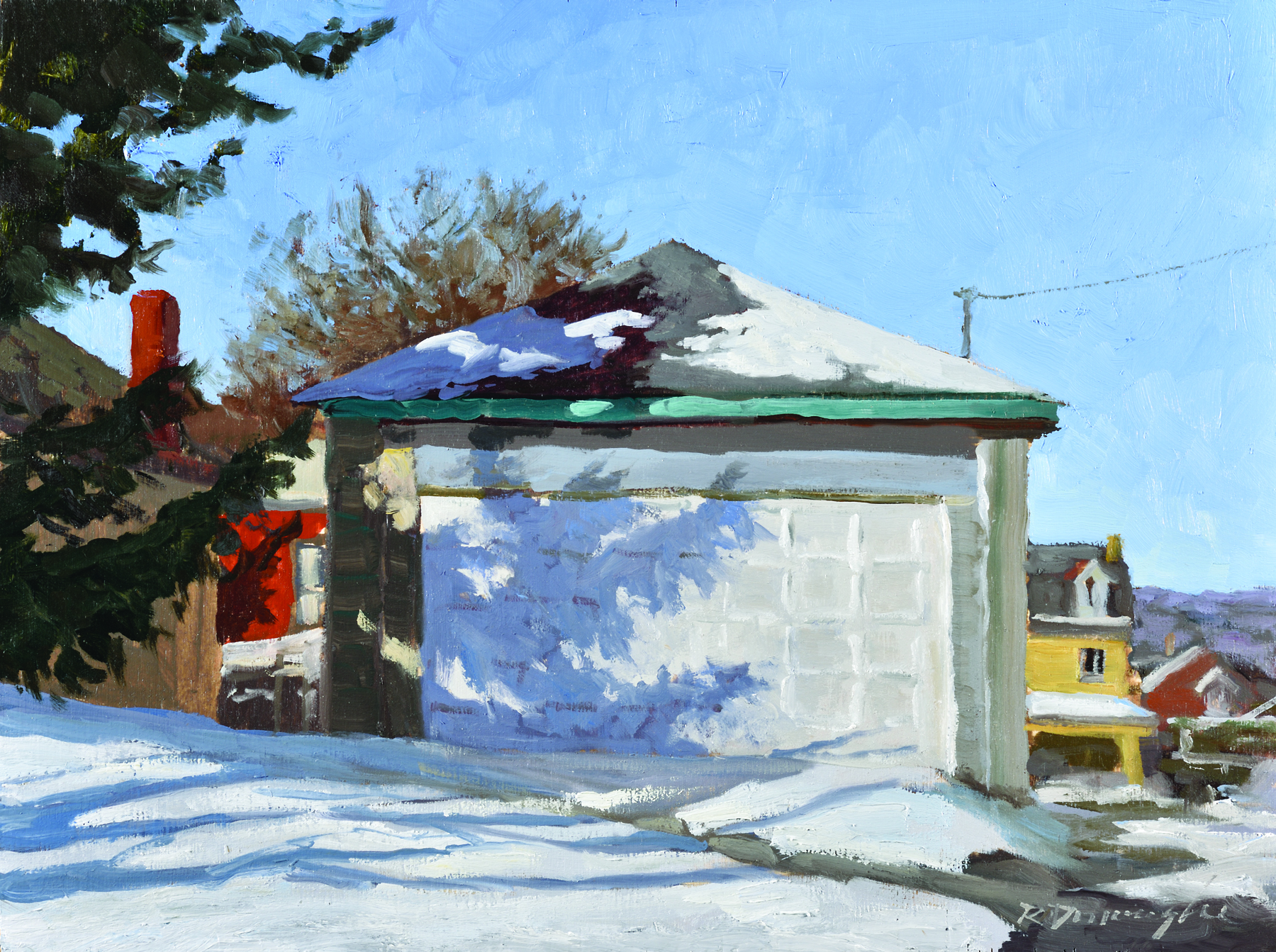
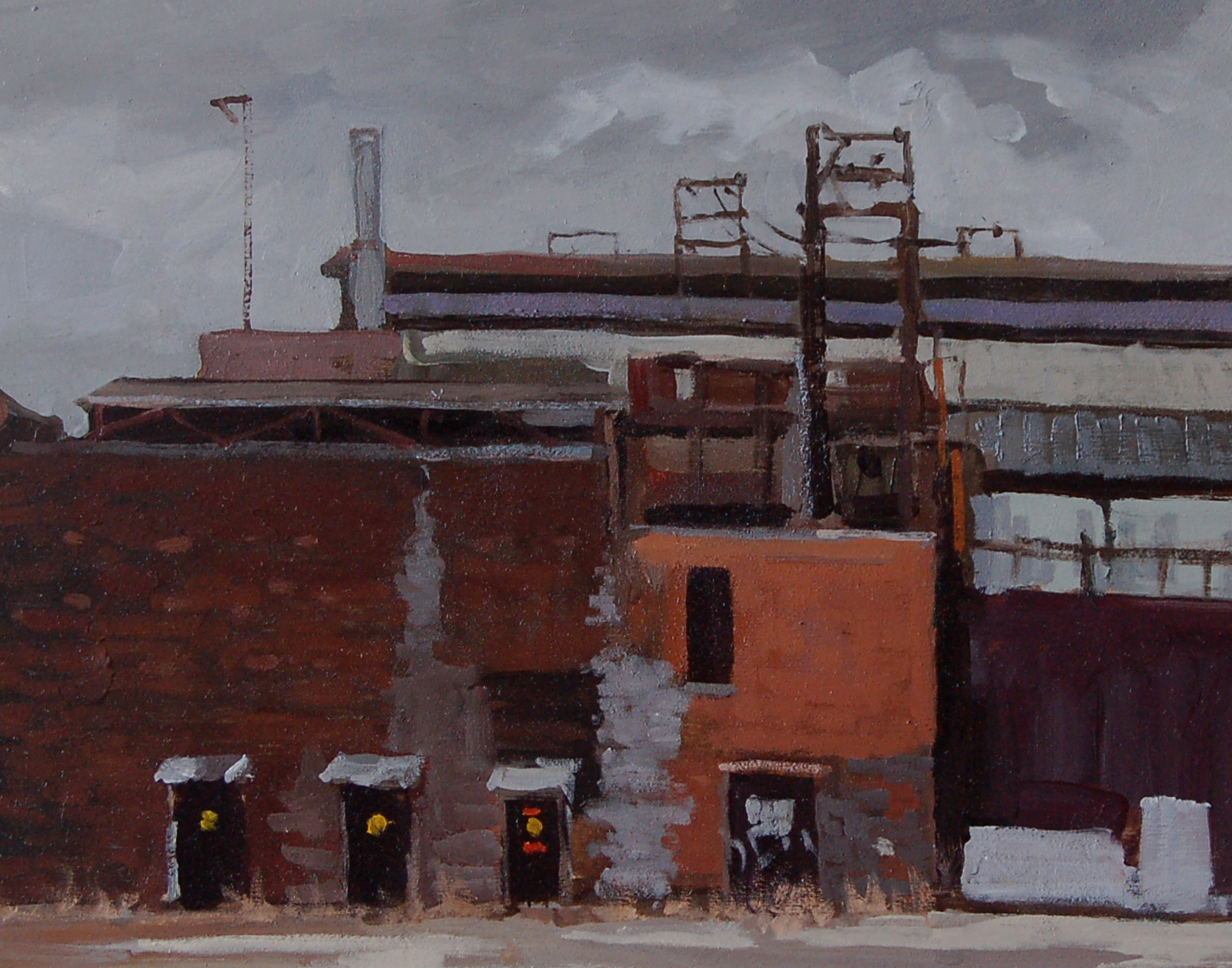
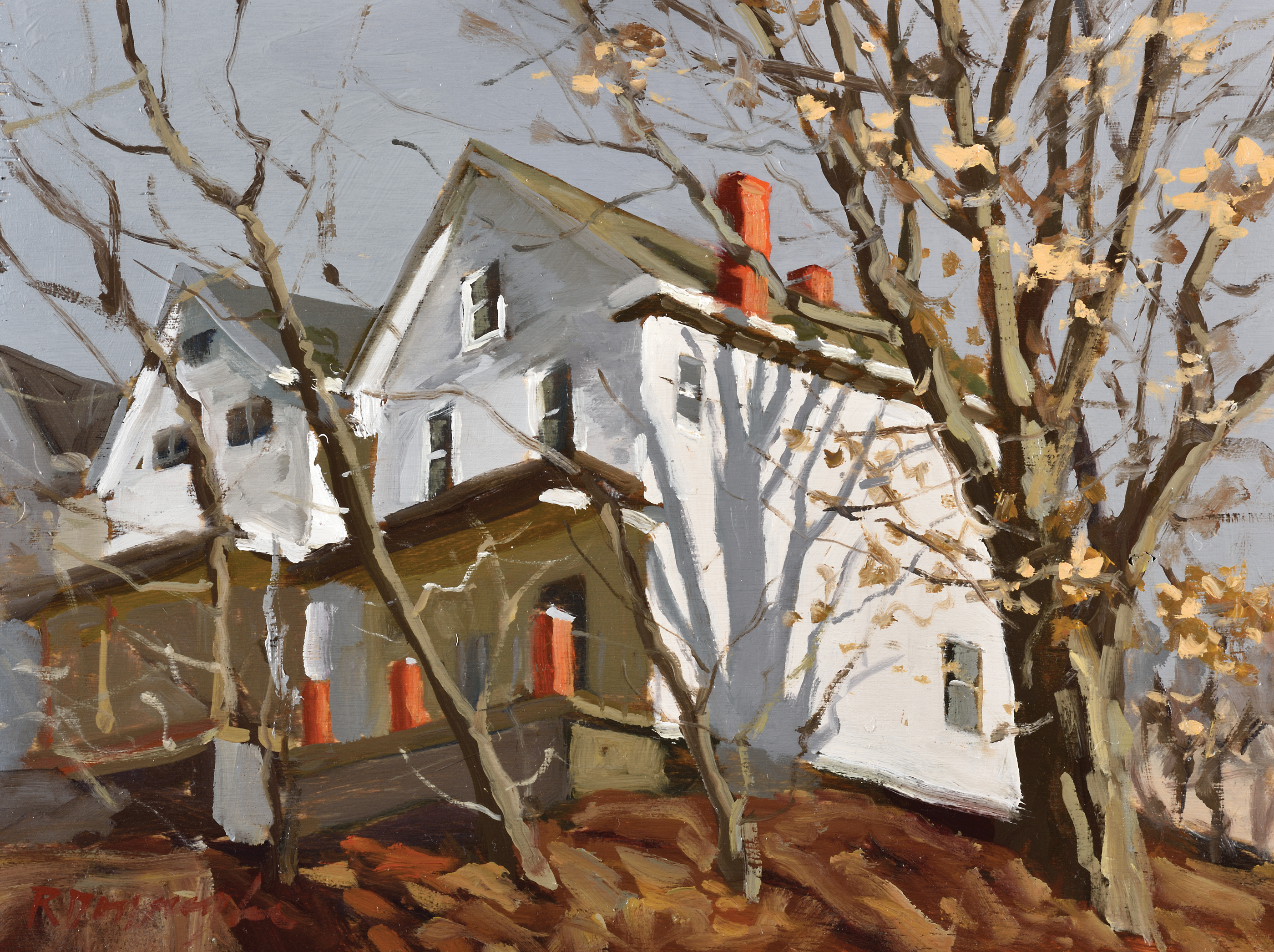
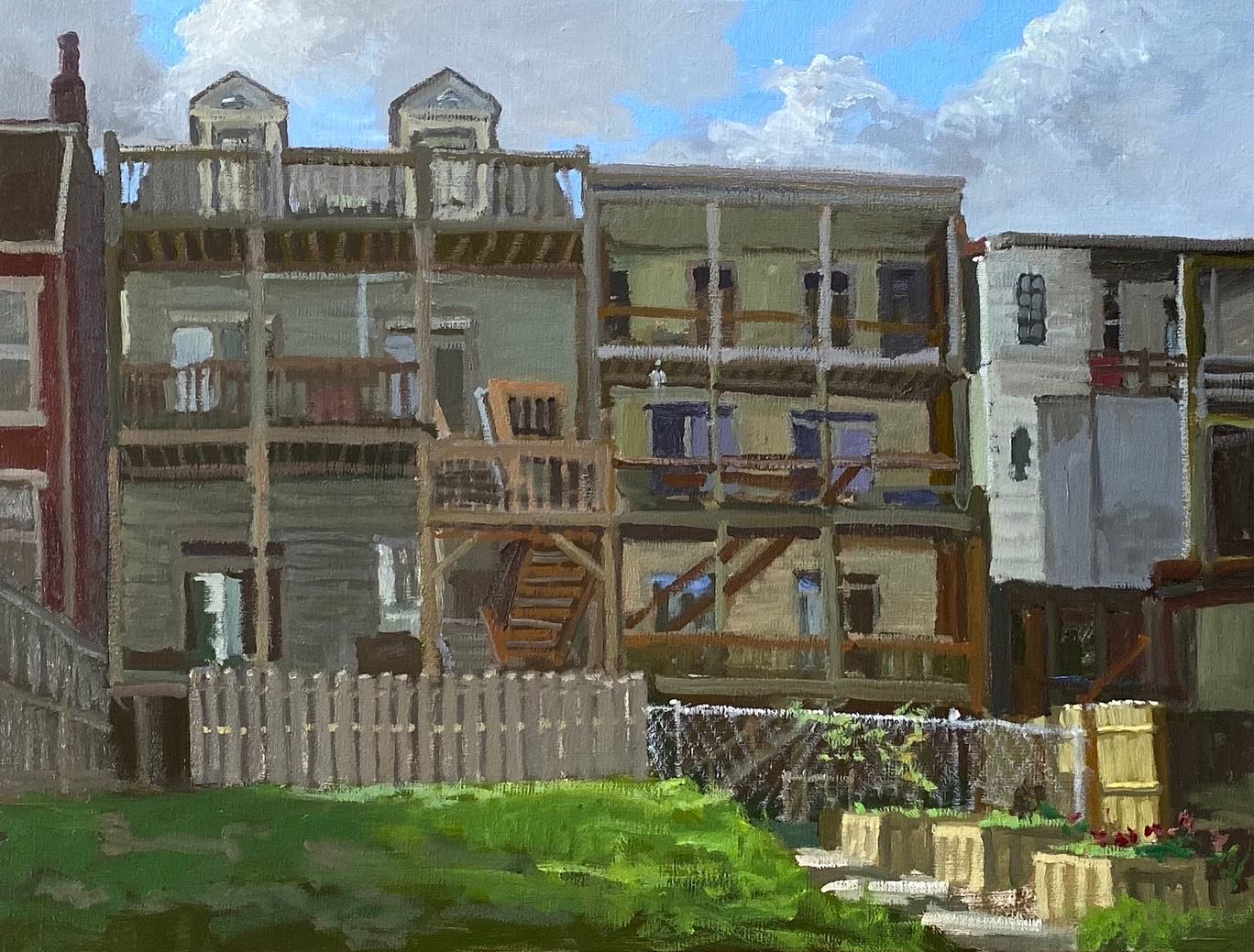
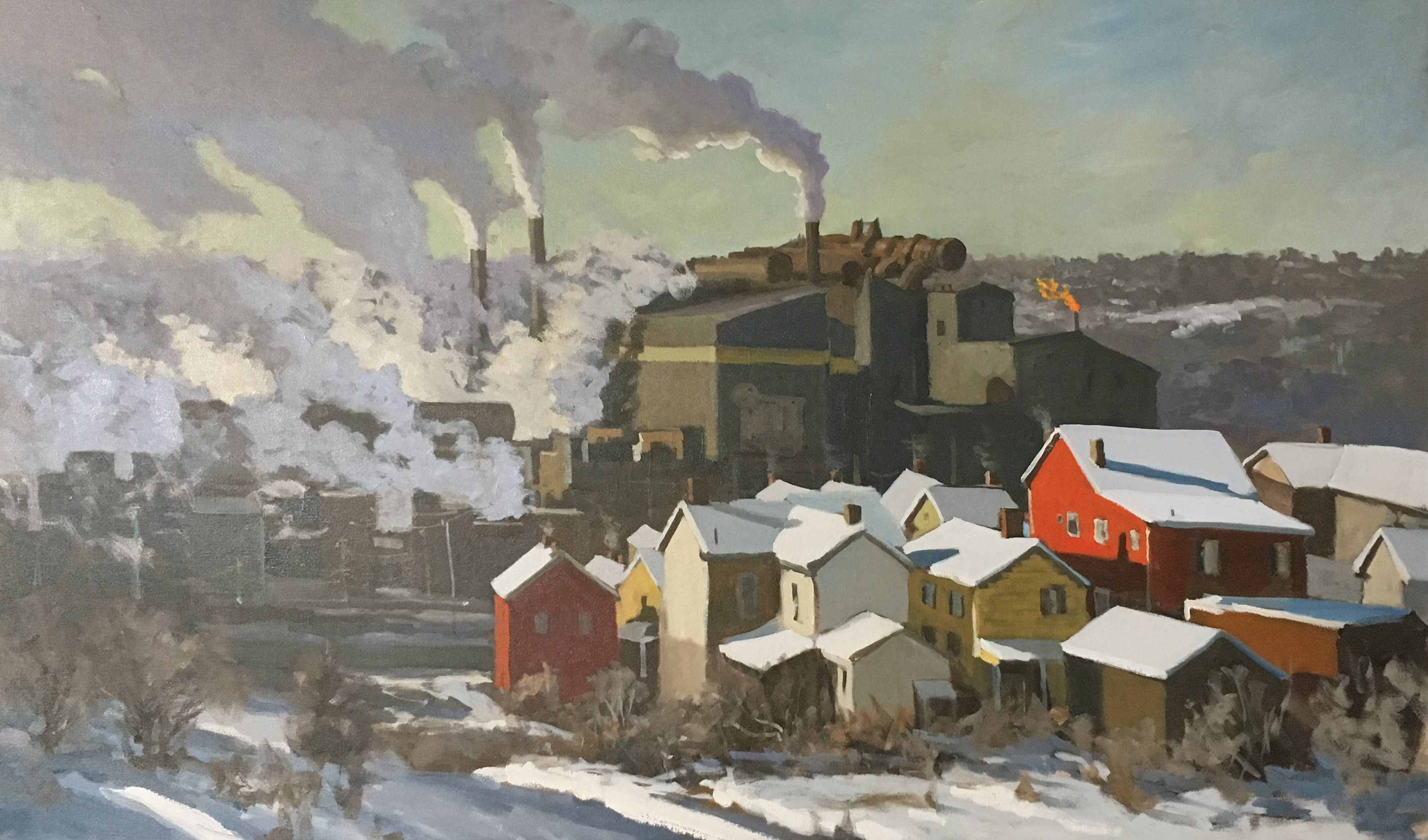
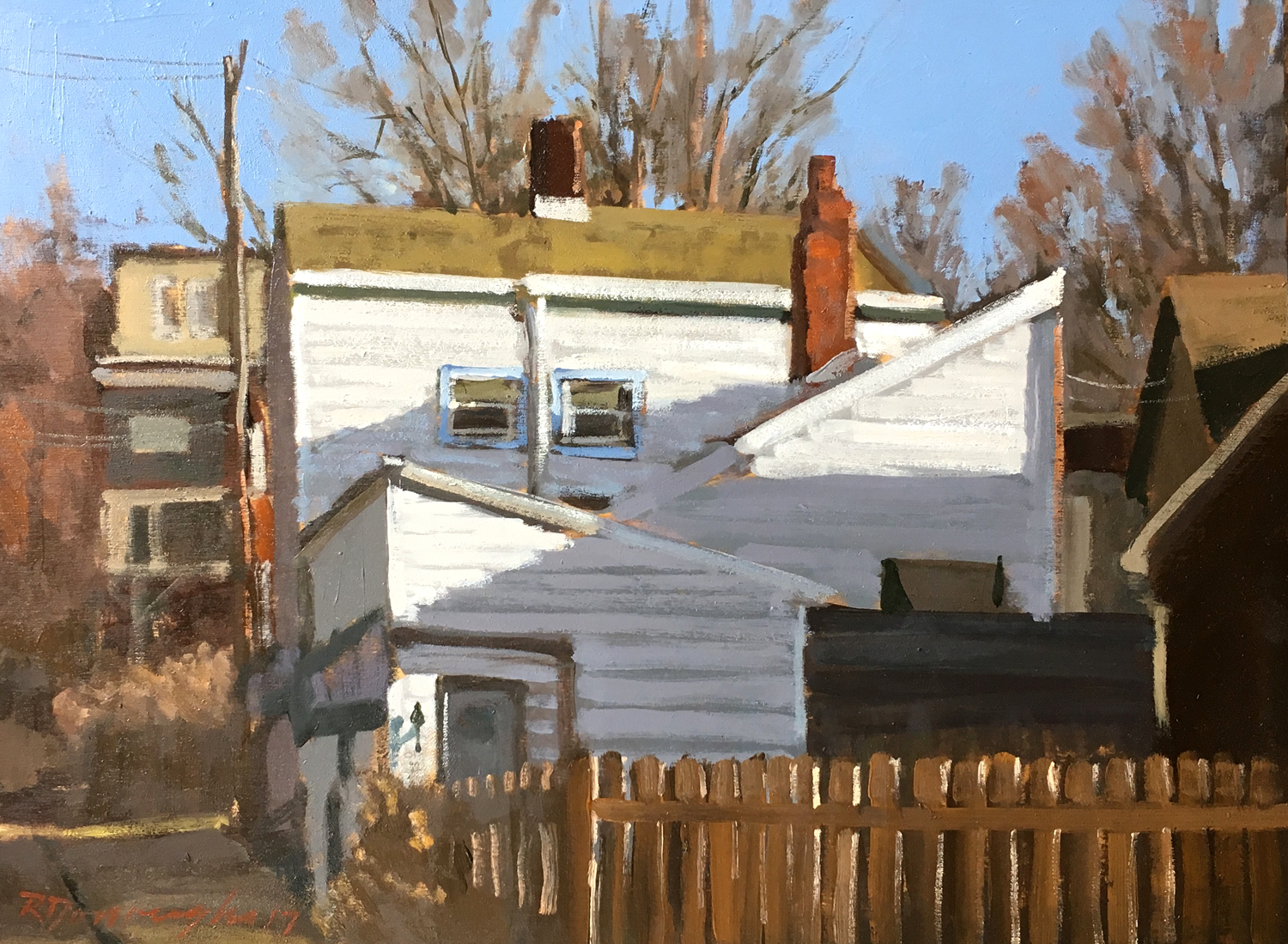
I love the idea that you’re painting shifting light and shadow – the windows glowing with a certain time of day as night is falling, or morning light that changes so fast. How do you record something so changing and transitory? How do you record time and light and life changing?
Light and shadow is my subject. I make a lot of small 6 x 8-inch oil studies, which are done rapidly, usually in about 45 minutes. These serve as ideas for larger pieces. I’ll return a few times if necessary to finish a painting on a similar day. There is only about a 2-hour window to paint before the light and shadow will change everything. An overcast day allows for some longer sessions because of the consistent light. If I’m working on a really large piece I’ll start it inside my studio. Normally I’ll have a couple small oil versions and photos available as reference. I’ll visit some locations many times to calculate the exact time the painting will represent. These visits will determine the direction of the sun’s path, where the easel will be positioned, size of the canvas, and where I’ll park. Basic stuff but important as the idea for the piece percolates.
Same vein – there’s a very strong and beautiful sense of trying to capture something in your work. The fading light, a decaying neighborhood, a changing way of life in the certain history of part of the world. How much does this idea of capturing the passing of time influence your work?
The city is always in a state of flux with demolition and construction. Much of the beautiful architecture and history is being destroyed. My mission is to save what I can through painting. I want people to know what Pittsburgh looked like during my lifetime. George Bellows, John Sloan, and Edward Hopper set the bar pretty high. We sense a sincere investment from each of them. The entire Ashcan movement made a significant contribution to American art. They were recording history with a paint brush. It is something I strive for in my work as well.
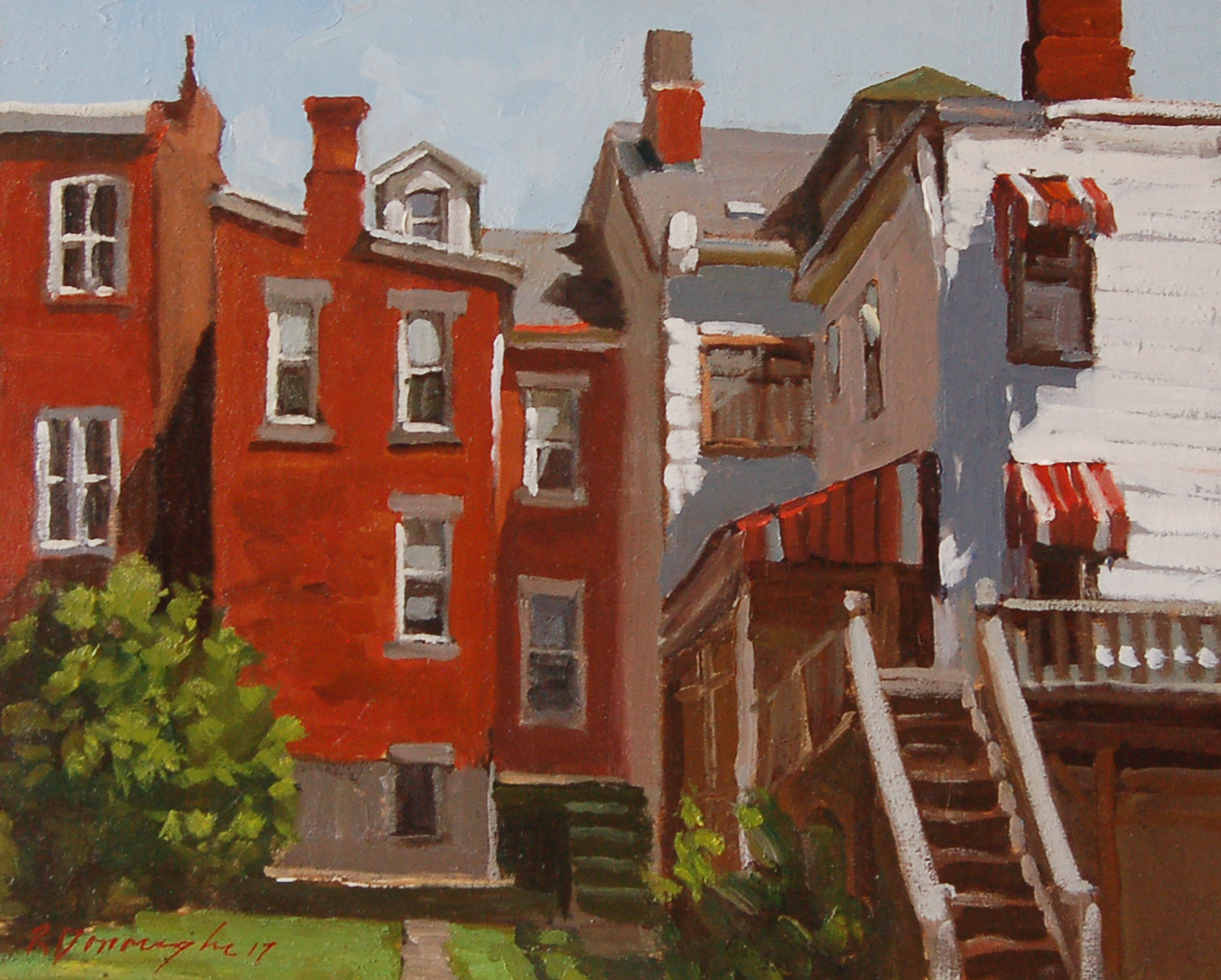
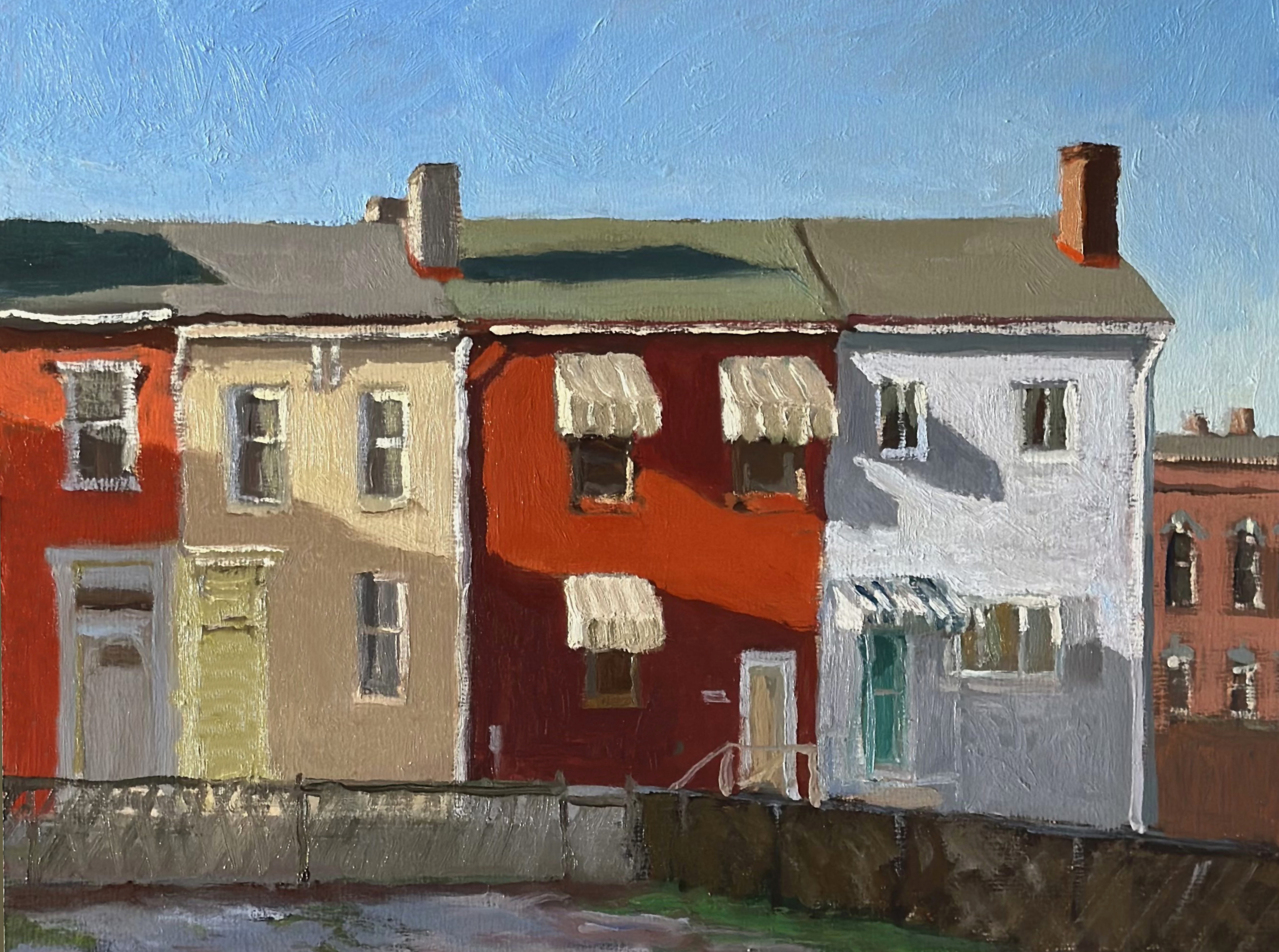
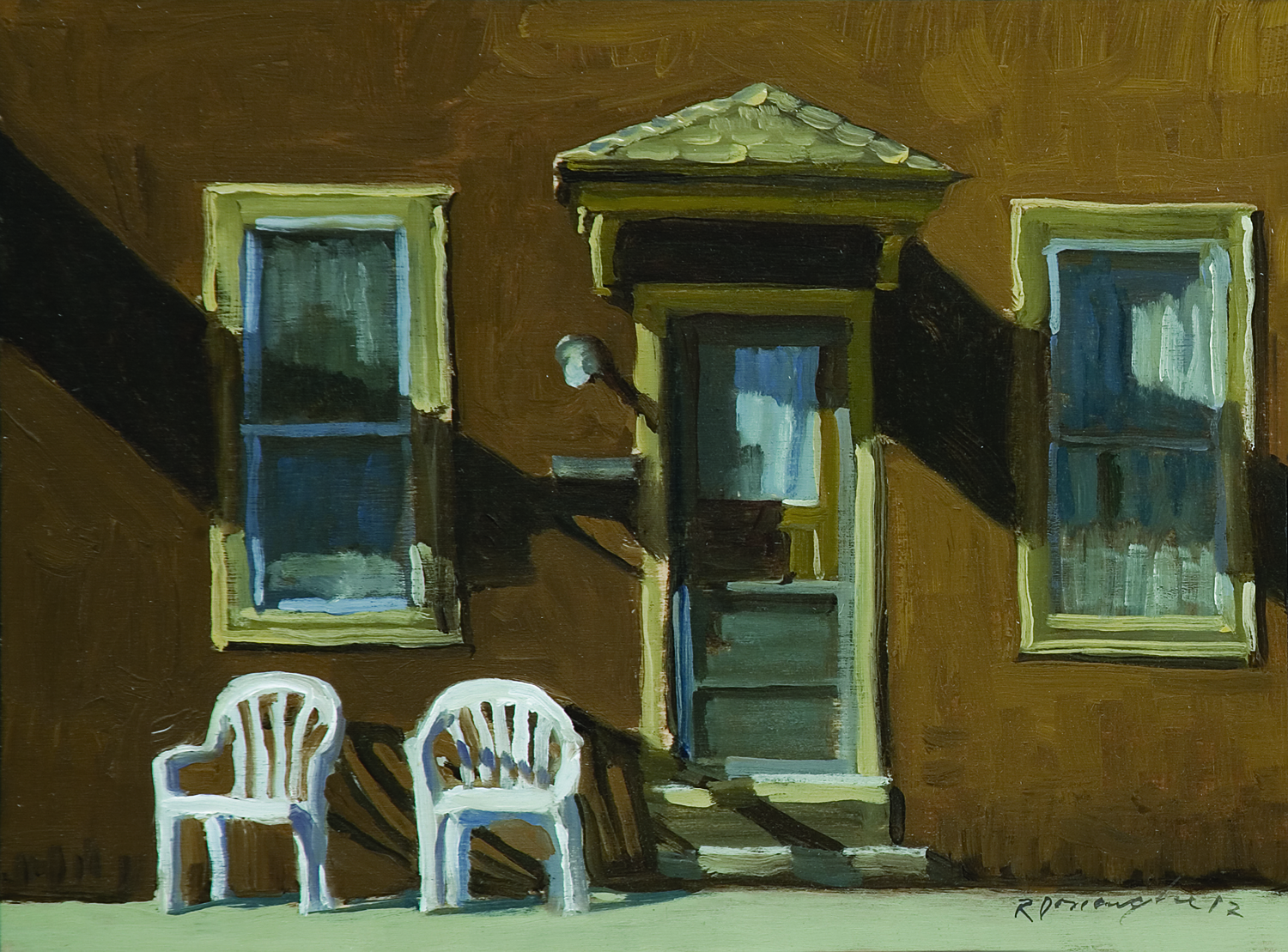
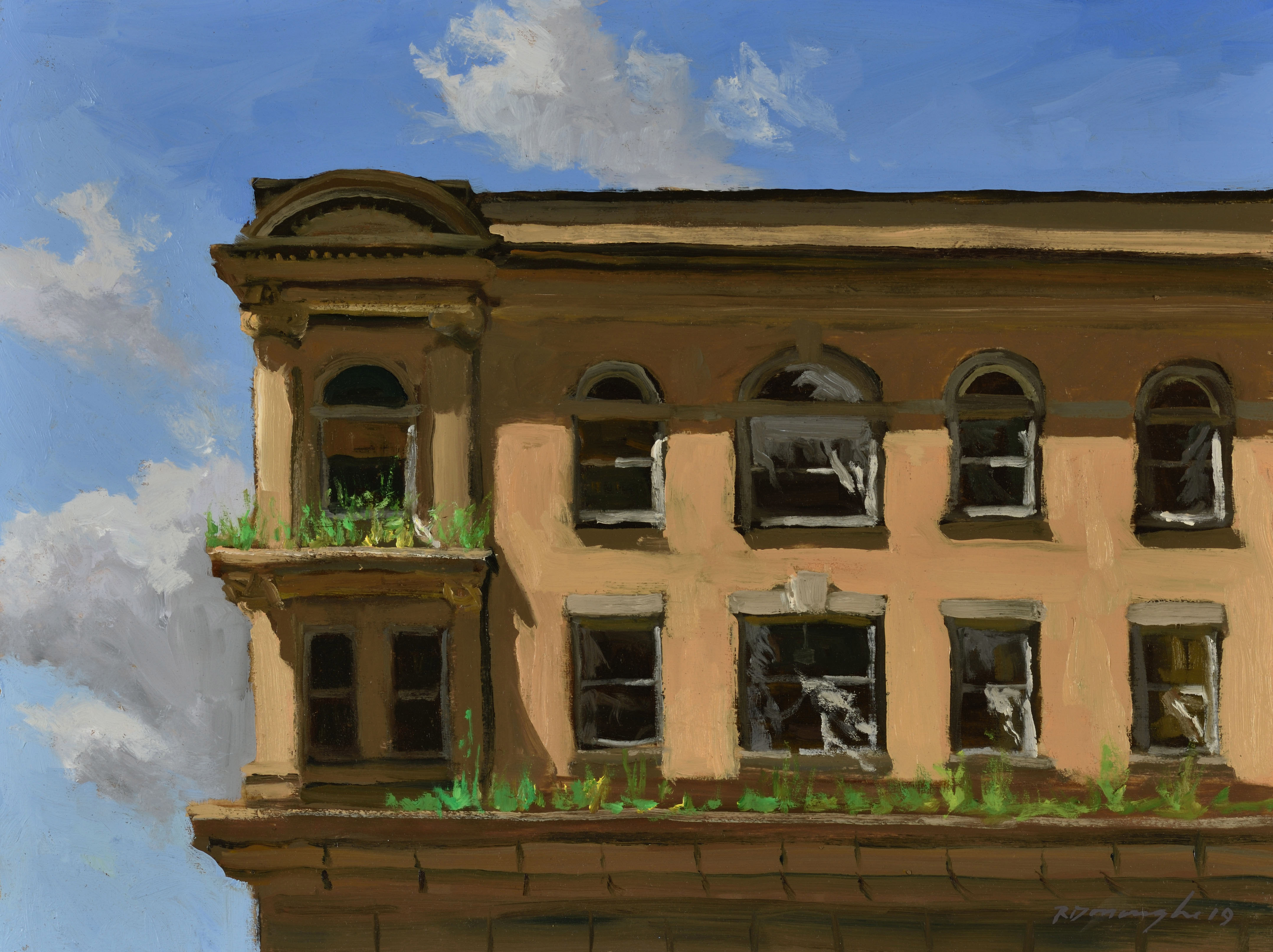
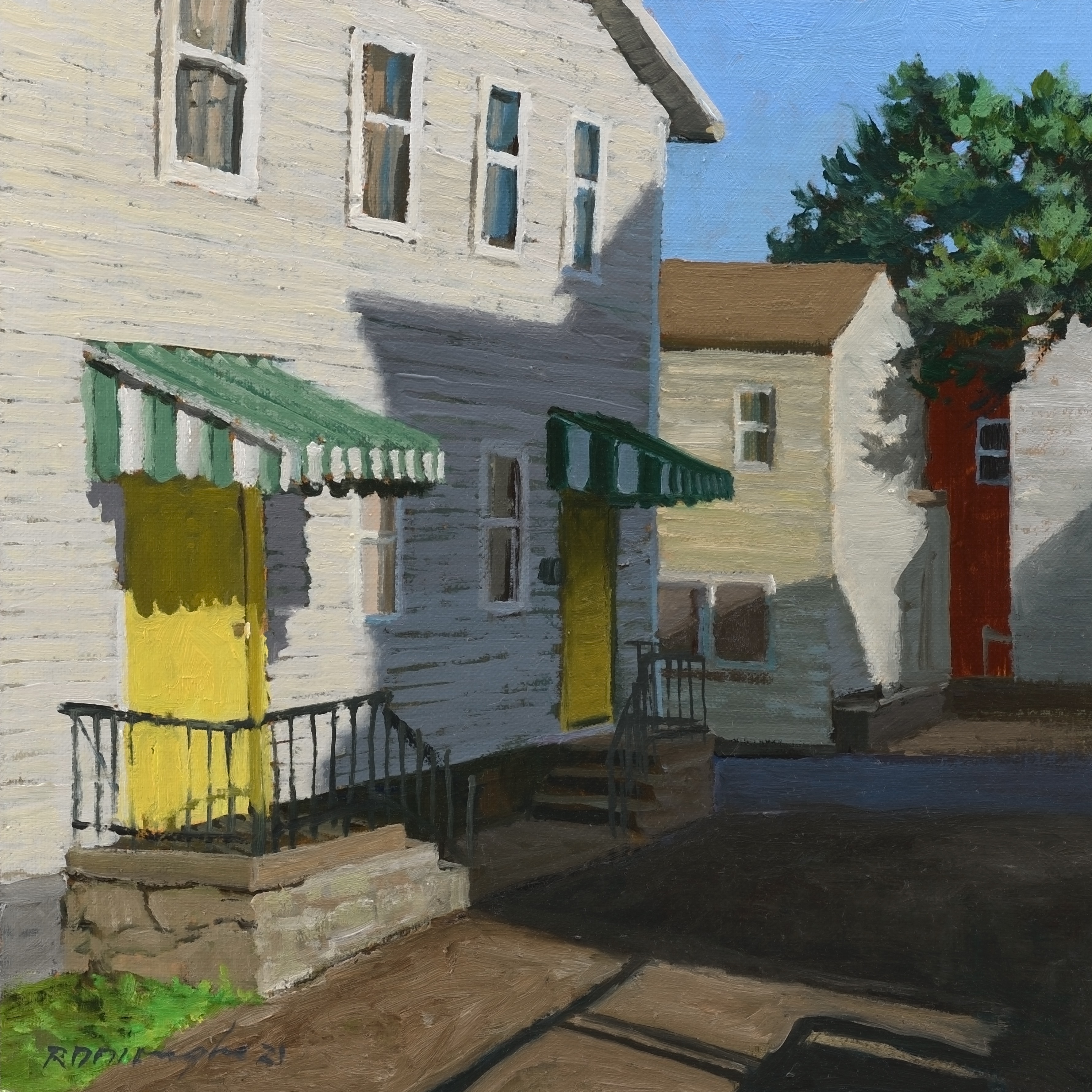
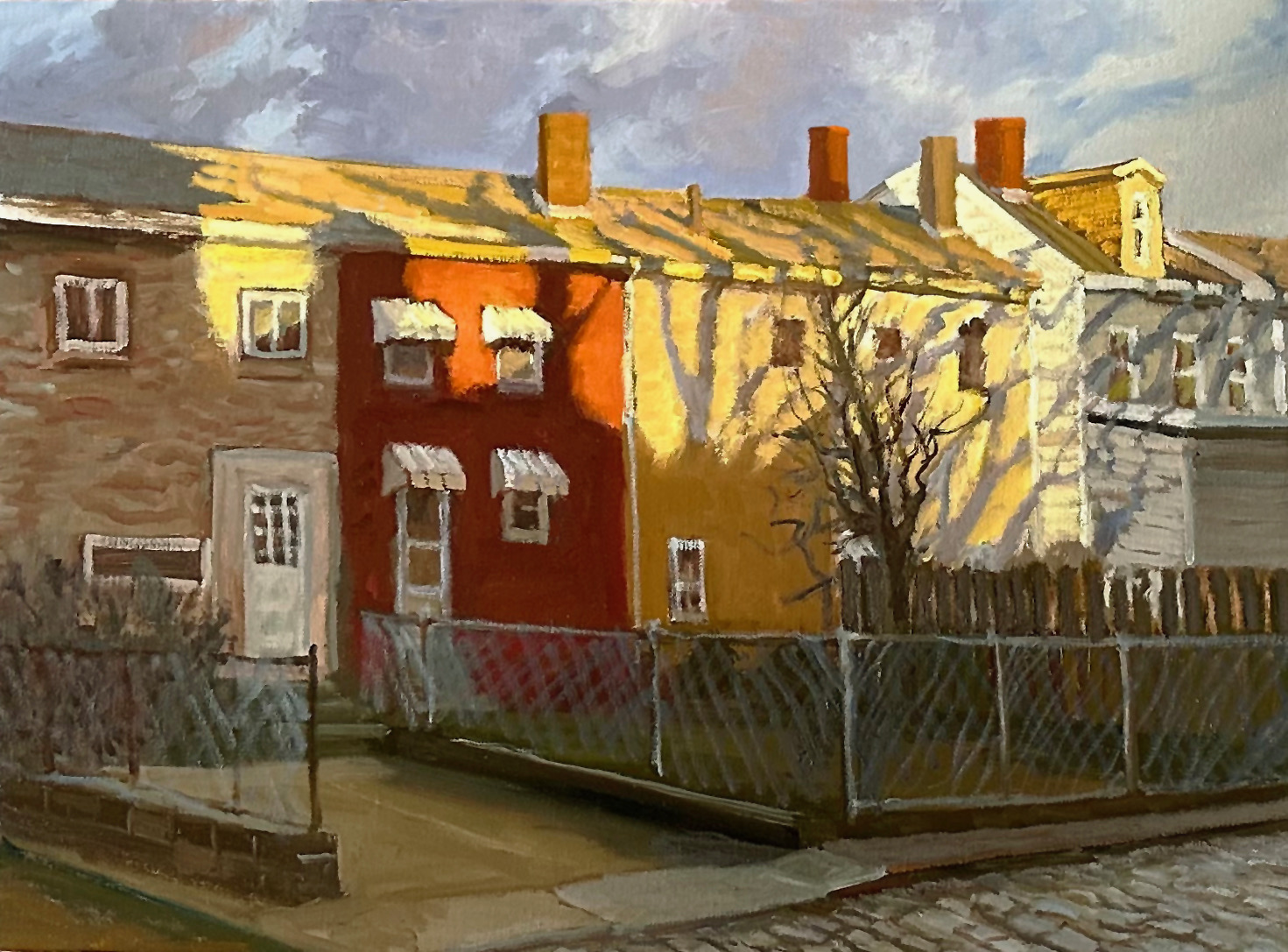
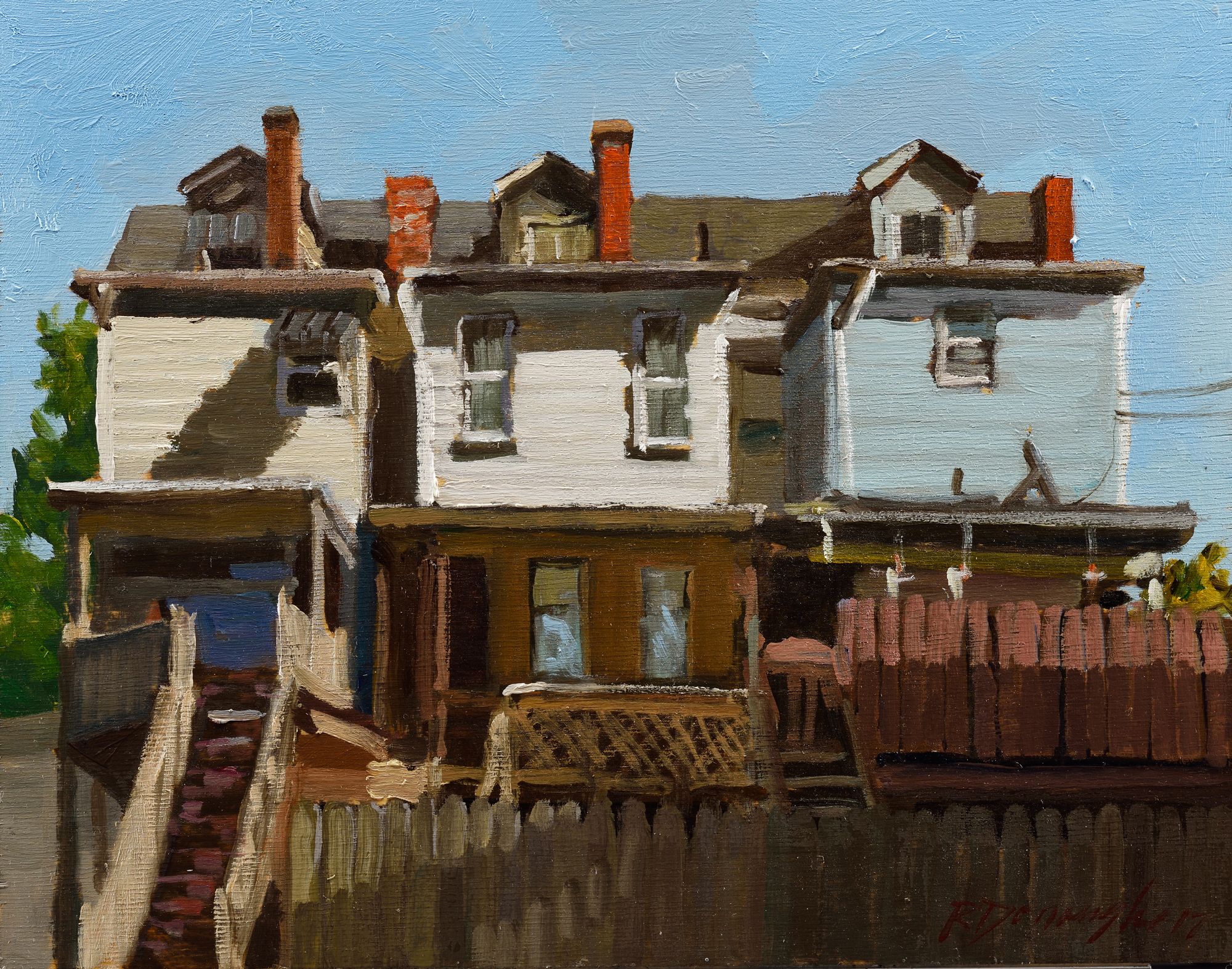
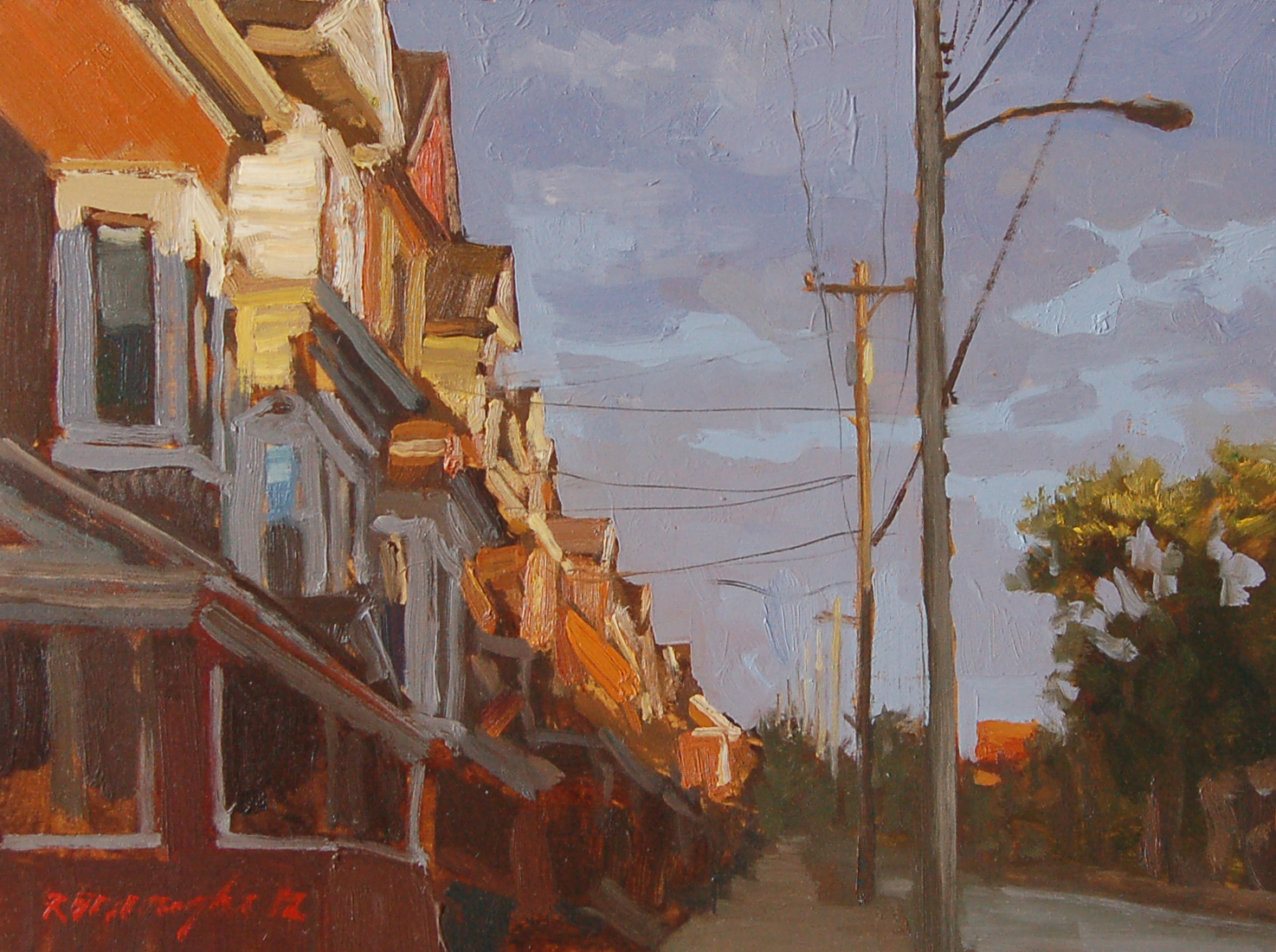
You seem to work in series – it almost starts to feel like frames in a film, part of a whole. Do you start to see connections between the paintings to make? Do you feel compelled to keep the works together as a collection?
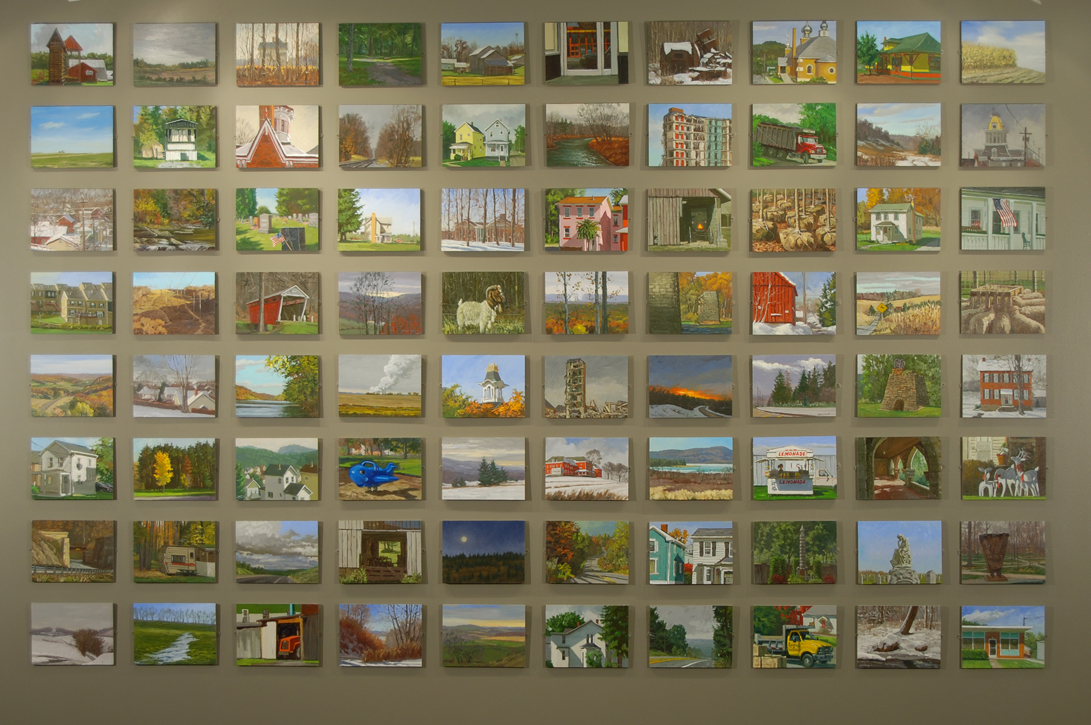
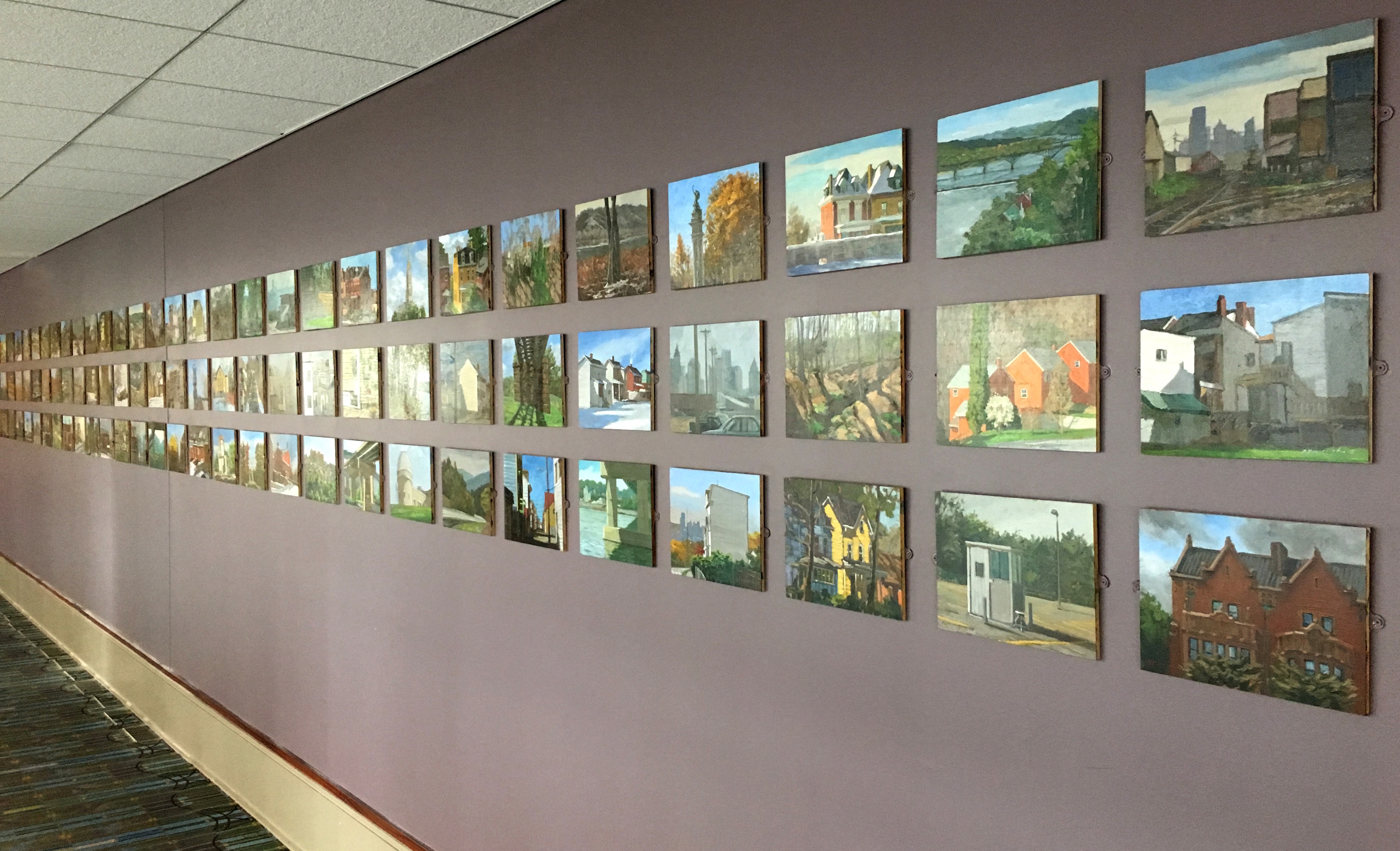
Absolutely. I’ll take a year or more to explore a single idea. Each series can consist of 50 to 100 small paintings. These have resulted in six books, each one focused on a single subject. It is my way of keeping them together as a document. The works are displayed together and unframed as a single piece of art. The whole being greater than the sum of its parts. It is like a crazy quilt of explorations and careful observation. Each piece represents what I call the Zen of seeing. How often do we just look at something for 2 or 3 hours that isn’t a device?
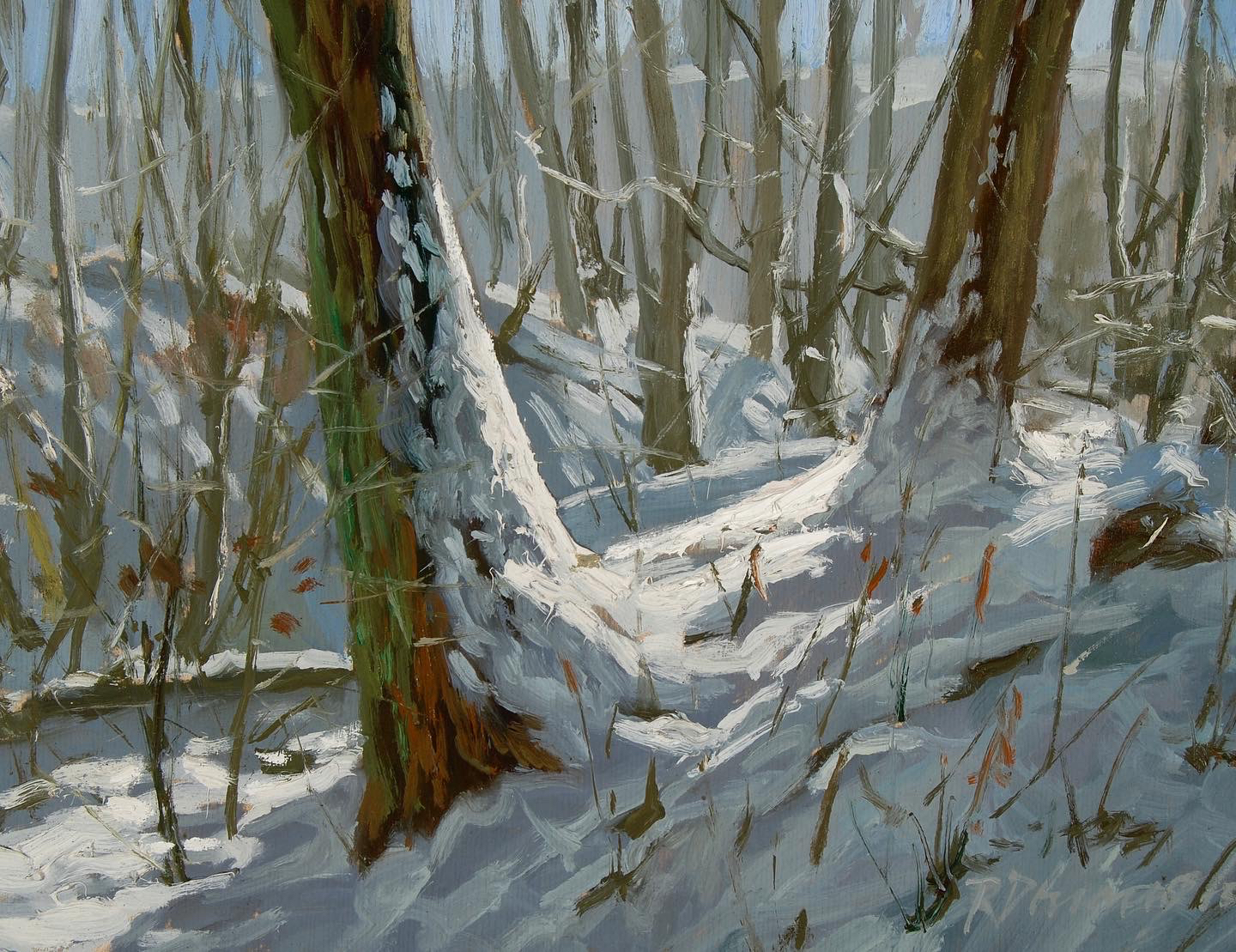
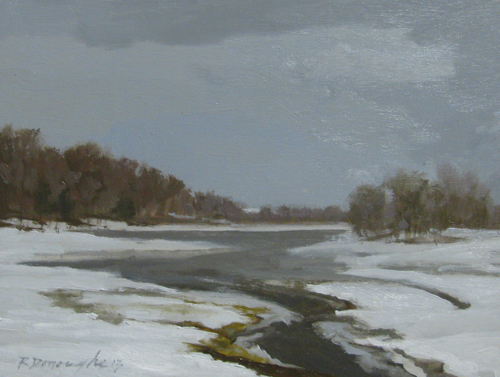
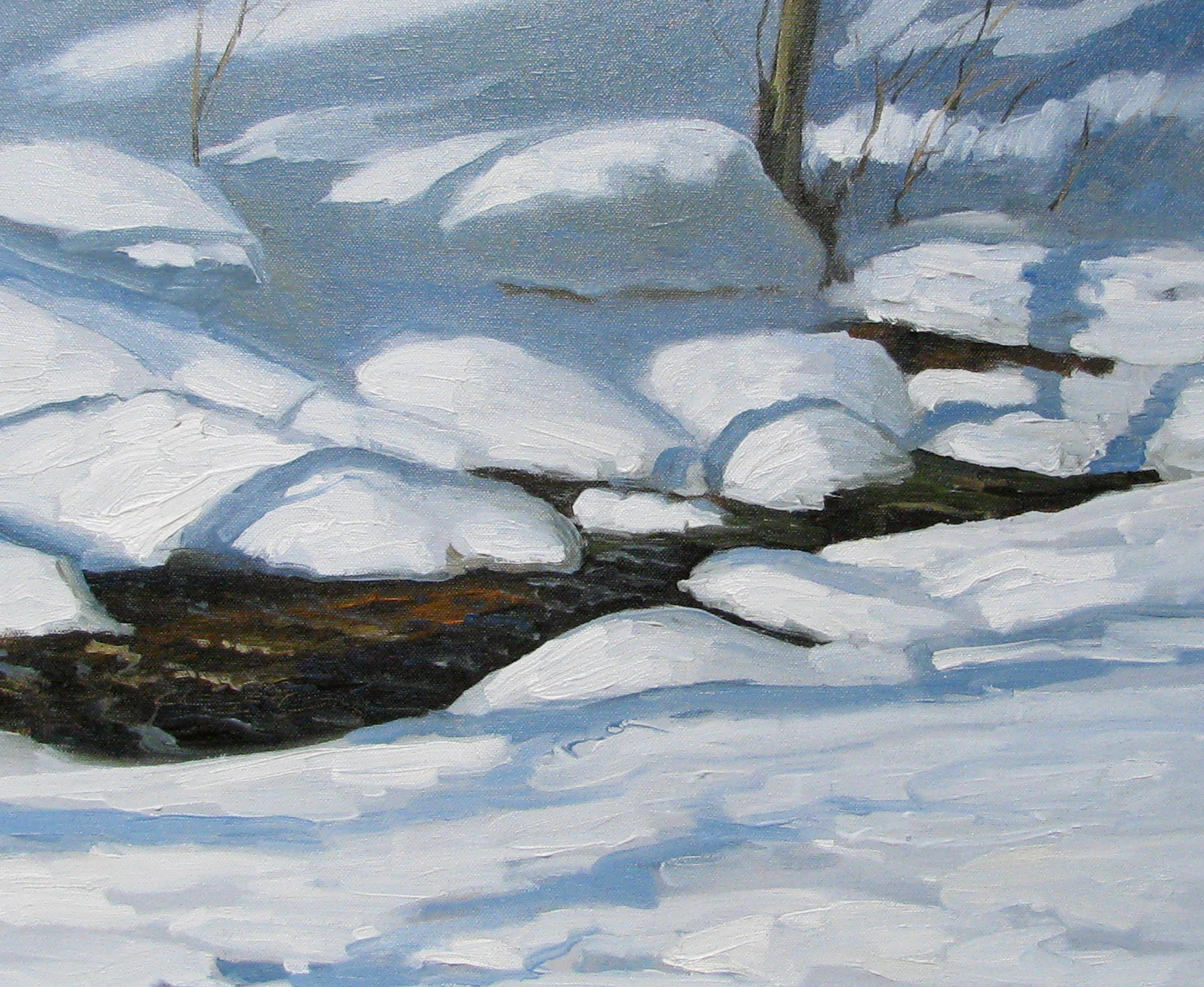
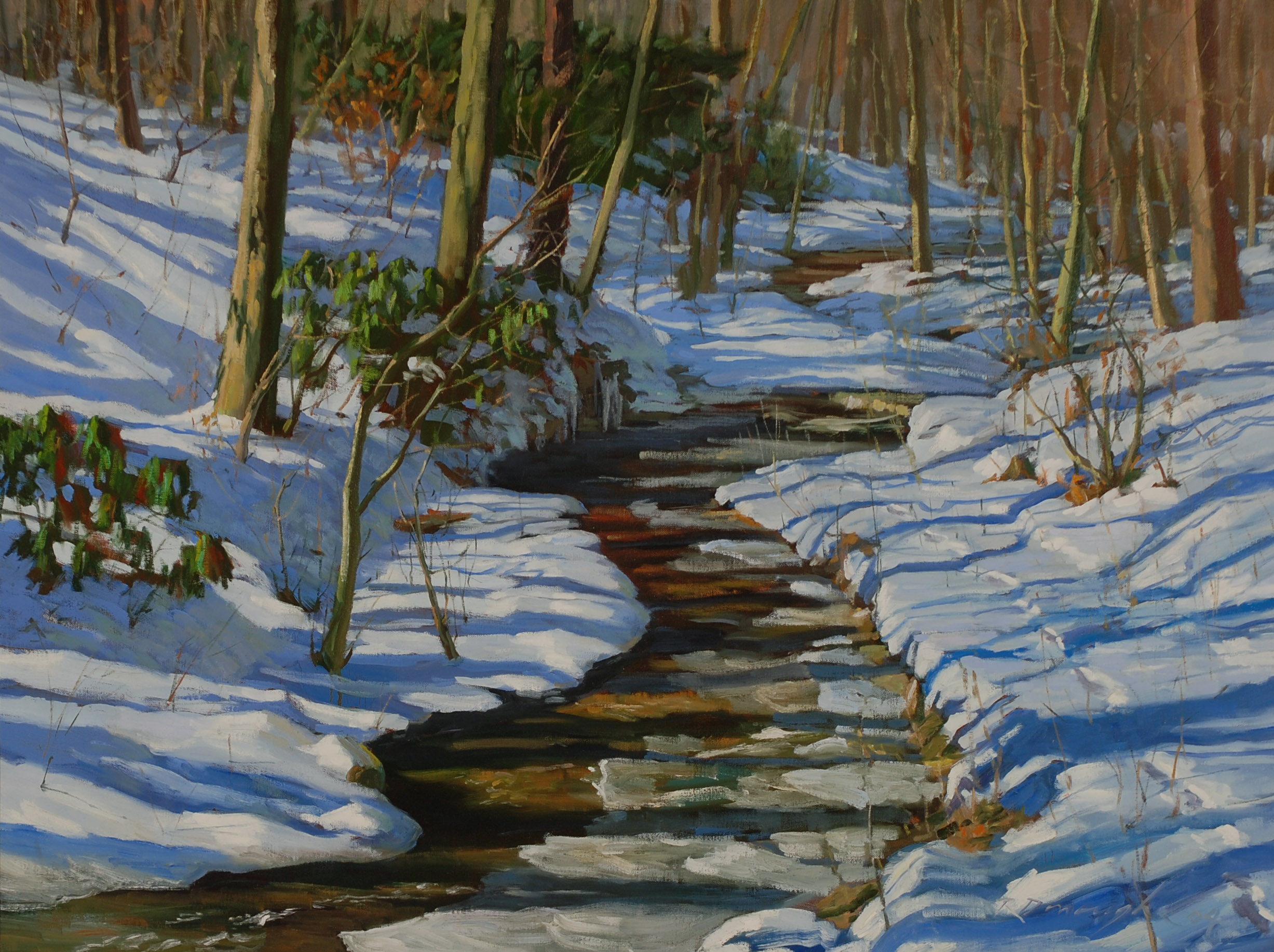
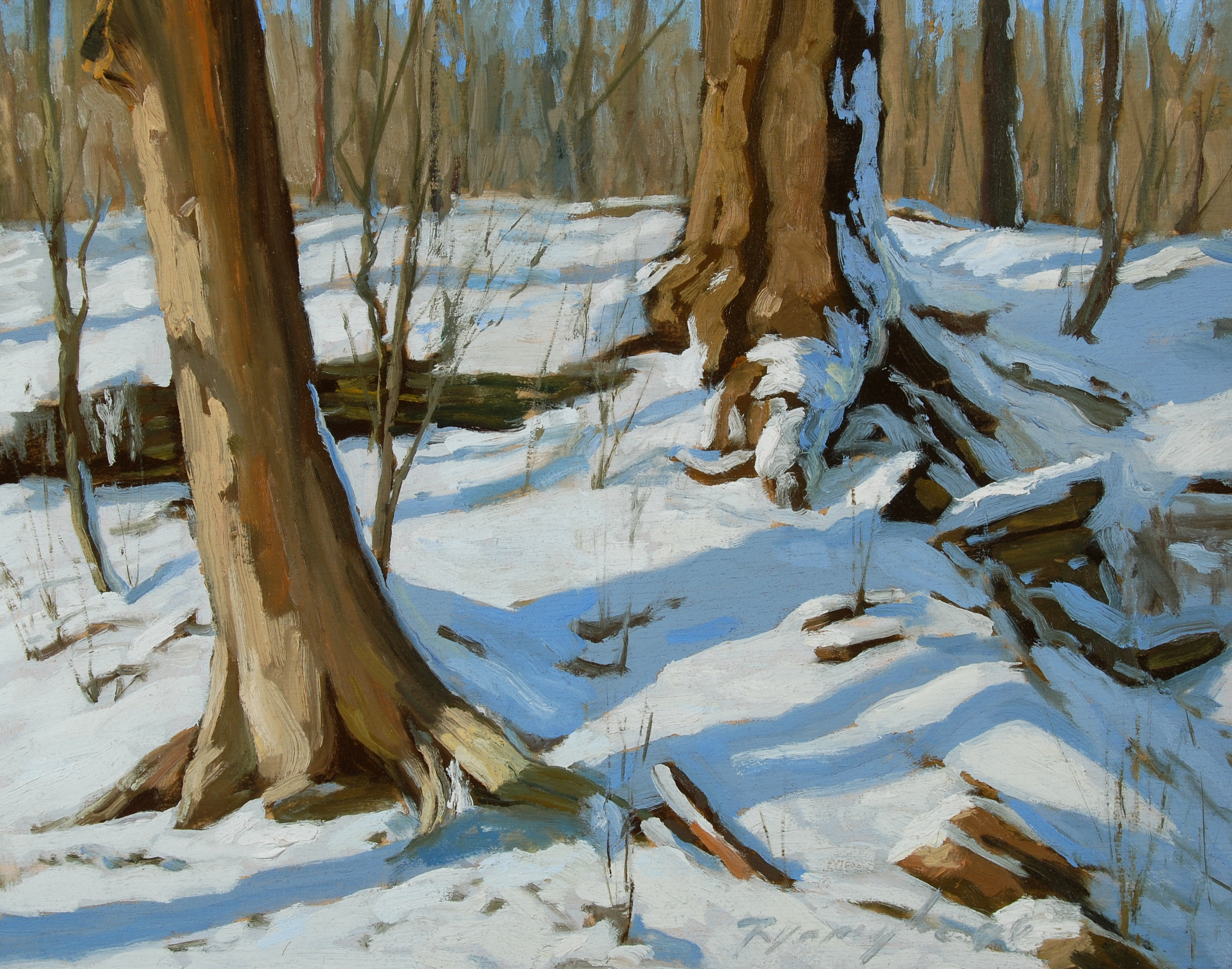
You capture the magic of snow shadows so beautifully – that almost indefinable blue verging on pale purple. But some of your paintings also capture that pale hopeful springtime light, or the moving autumn light in trees. Do you have a favorite time of day or time of year for lights and shadows? Do you have favorite kinds of shadows?
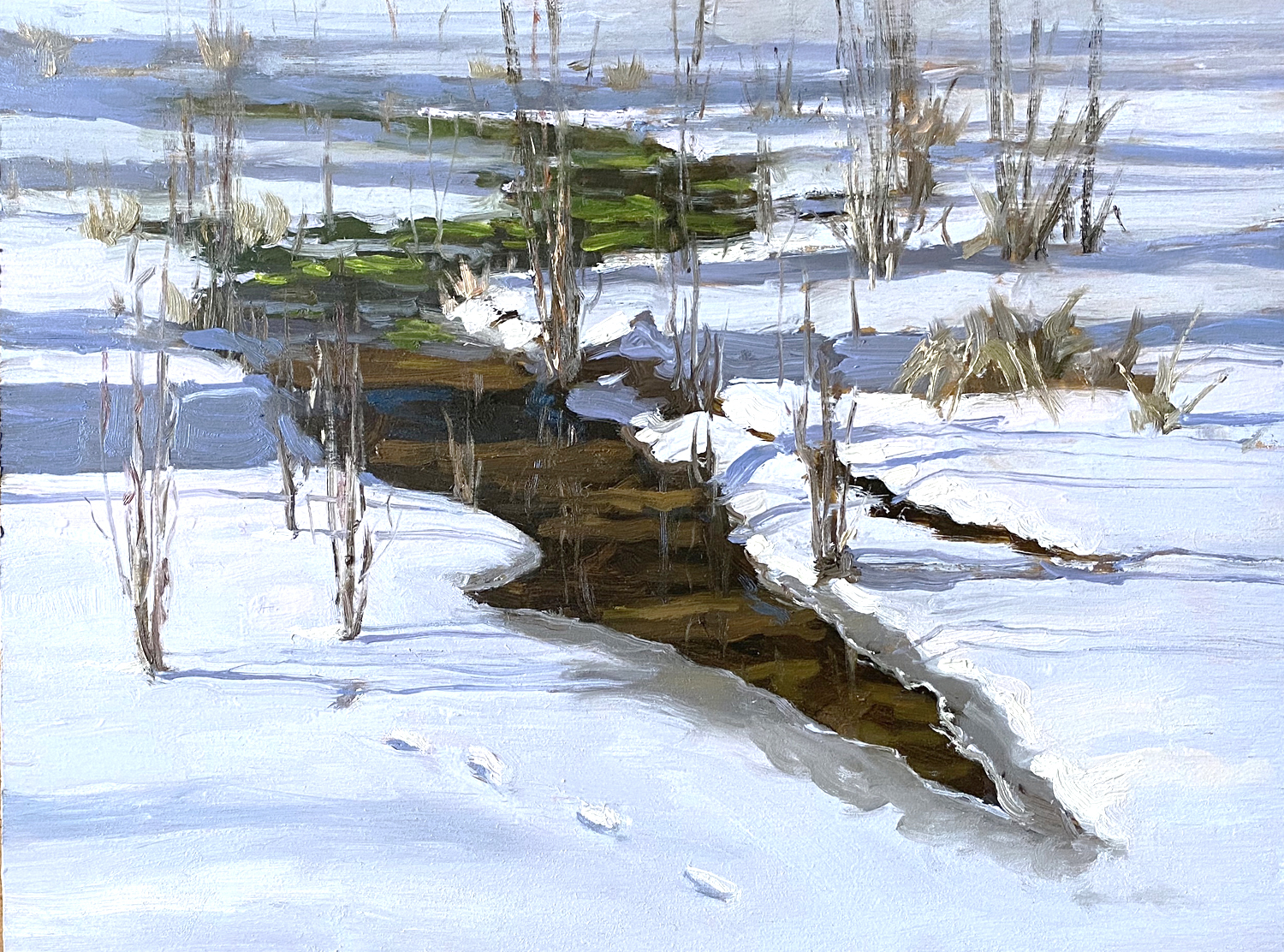
Snow is such a special element to paint. It really changes how the landscape feels. The ground becomes lighter than the sky, while it reflects the sky in such a subtle way. The artist can easily identify the contour of structure and the snow blanket unifies the scene. I believe snow is best painted by standing in it, feeling it, absorbing the beauty. Only then does it come off as authentic.
Morning is probably my most productive time. The light can often carve shapes that call out to be painted. Evenings can be poetic as well. Who doesn’t enjoy the golden hour? It’s a tricky time to get it down however. I usually premix several oil colors in anticipation of working on location. It’s something I’ve done to save time and give the painting an overall sense of volume.
Who are your inspirations in painting, photography, film, etc? Your paintings seem so deeply rooted in place, I wonder if you have a sense of carrying on or fitting into a regional artistic tradition.
Hopefully regional painting will continue as an important tradition. American painters such as, Andrew Wyeth, Winslow Homer, and Fairfield Porter continue to inspire me. I’m especially interested in painters who spent much of their creative lives exploring one of two places. Photographers such as Hew Charles Torrance and Luke Swank captured the grit and grace of industrial Pittsburgh in the early 1900s. They are both worth a look.
You say that you paint what you know, but to me, that phrase, or the phrase “write what you know” has often implied a sort of artistic honesty or integrity rather than a certain choice of subject matter. You speak of “truthful observation,” and I wonder how the idea of honesty or truth is important to your process.
Most of my work is done in two locations: Pittsburgh and my childhood home of Loretto, which is located just 90 minutes from Pittsburgh in a rural setting. My father built the humble house when he was 23 years old. It belongs to me now and I swim in the memories of growing up in a family of 10. I firmly believe that working there a couple days each week keeps my work fresh. The contrast of rural landscape and cityscape is important to me. Finding heartfelt connections is my secret sauce. Places are special and I think you can be more truthful with subjects you care about.
A lot of the plein air painters attend competitive events that are held around the country. They have become a big deal for many towns. Artists are invited to paint and compete for cash prizes. I’ve participated in these and have been selected to judge some events. However, something about them doesn’t feel right for me. My mission is to document a particular region, my region, in an honest and unvarnished way.
I think it’s this honesty that allows something quite local to become universally moving. The houses and neighborhoods might be different, but we’re all thinking about home, community, time passing. Is this something you think about when exploring your region through your art?
Yes. Over the last 40 years I’ve tried to work consistently to find a visual voice that expresses my inner life. The joy comes from getting outdoors, exploring what is already known, but discovering something new every single day. The bonus is when others begin to see the world through my eyes.
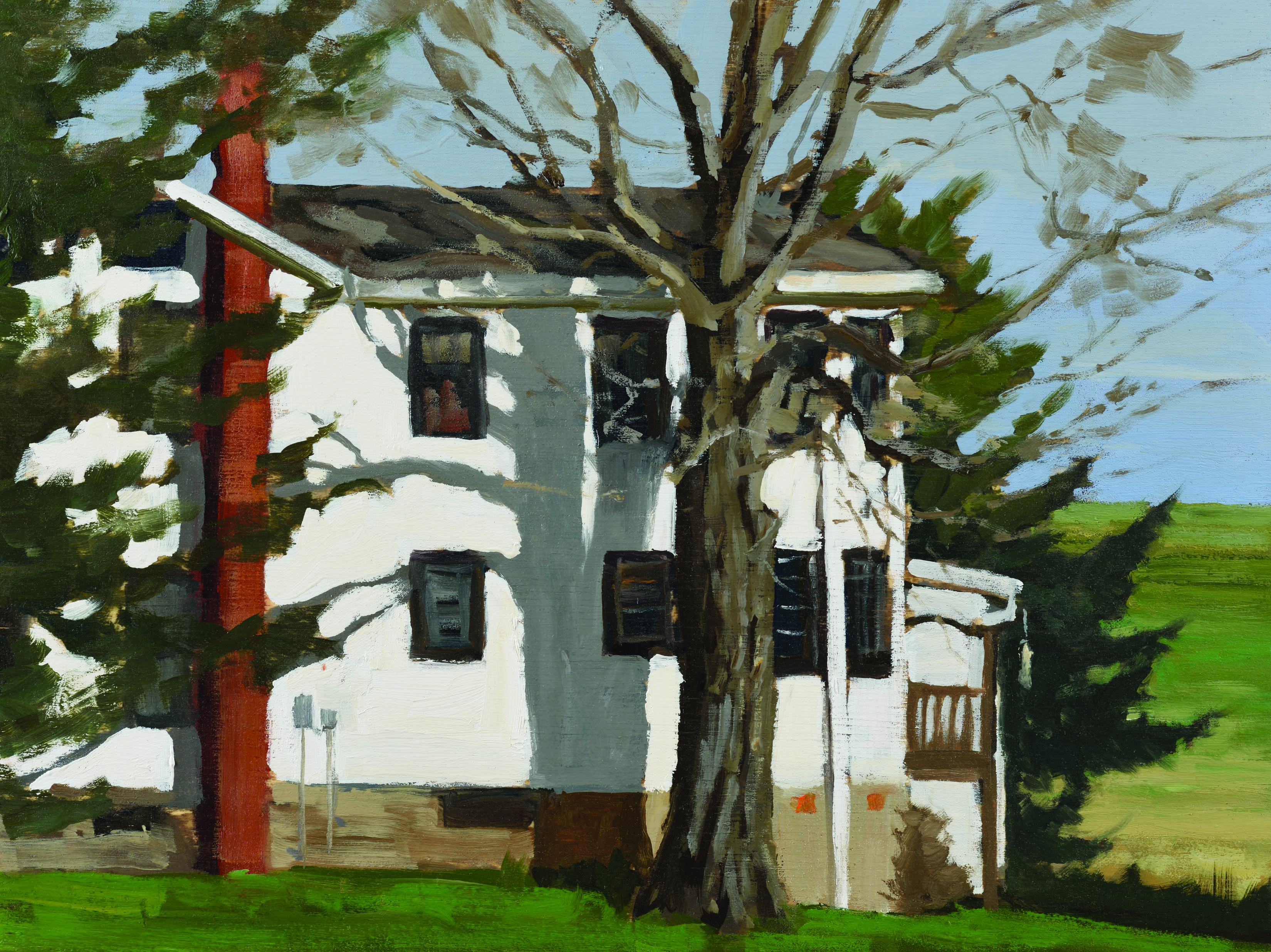
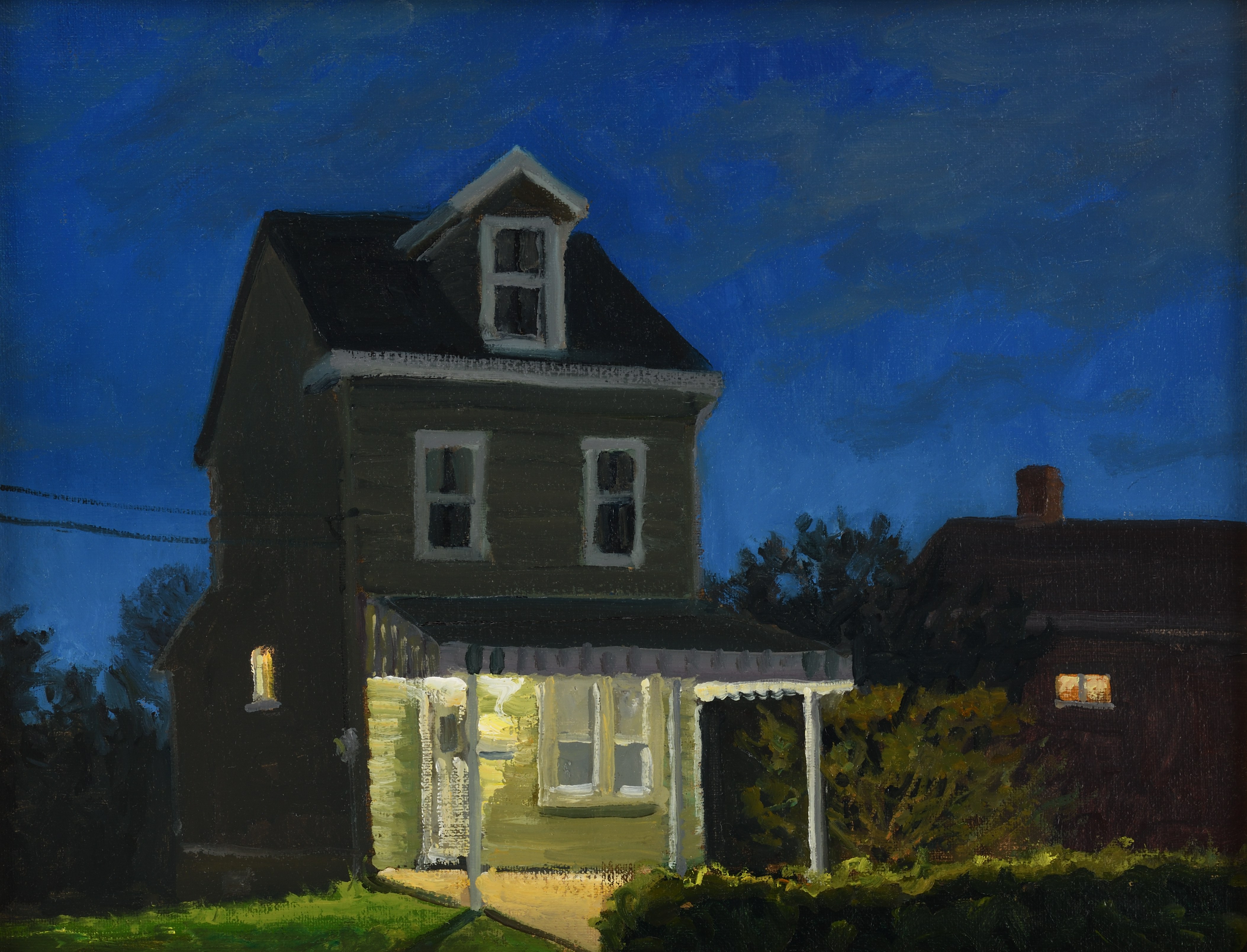
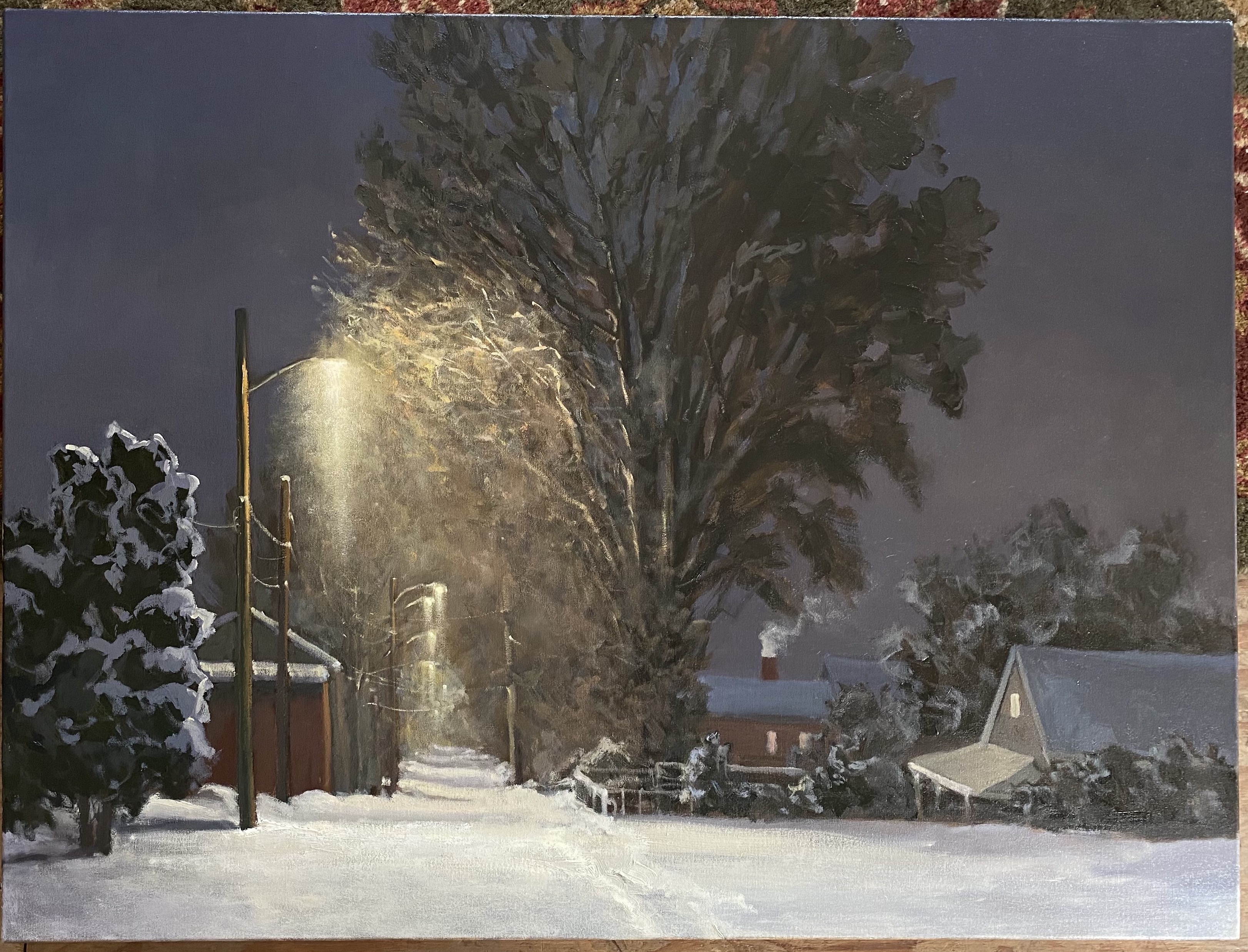
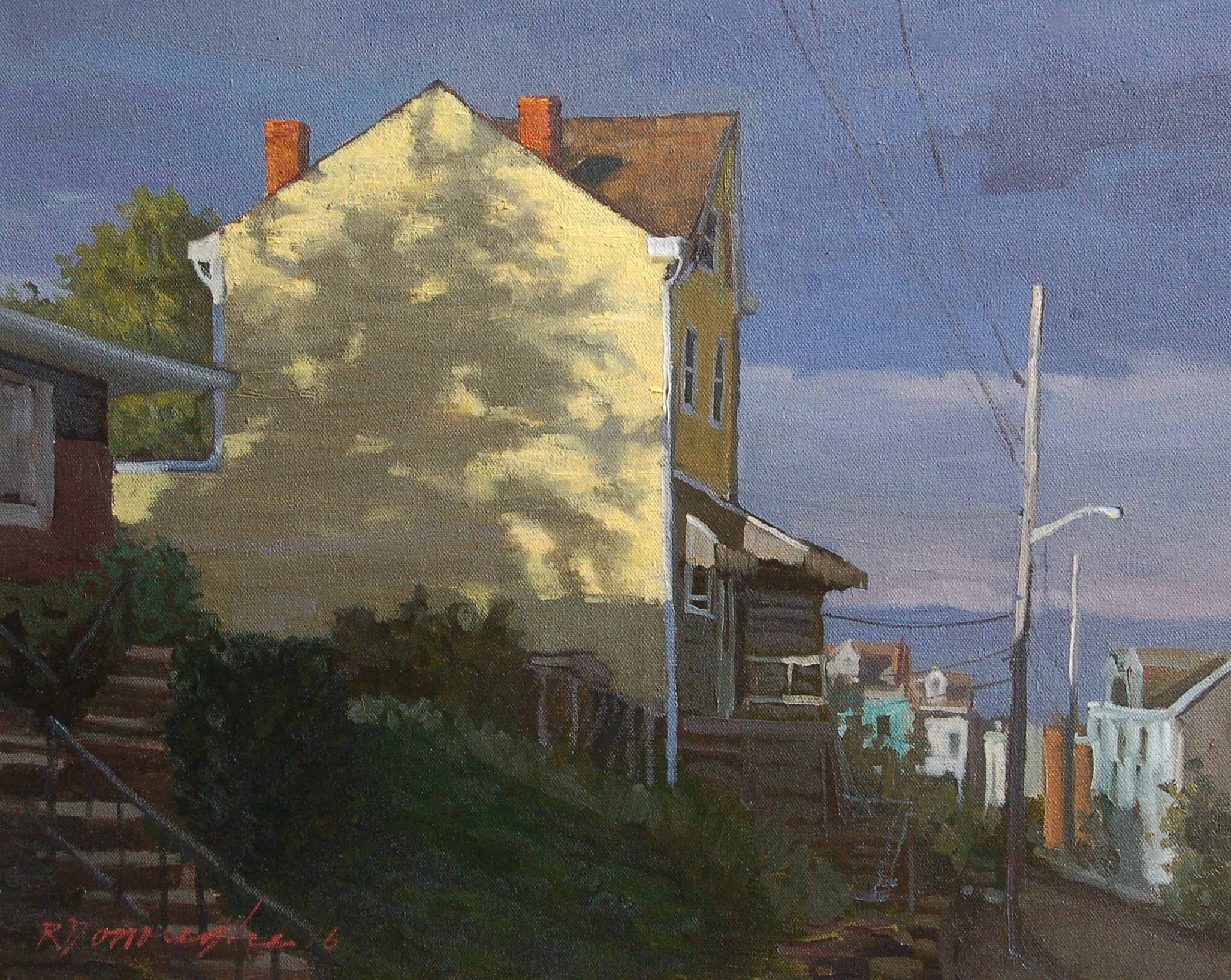
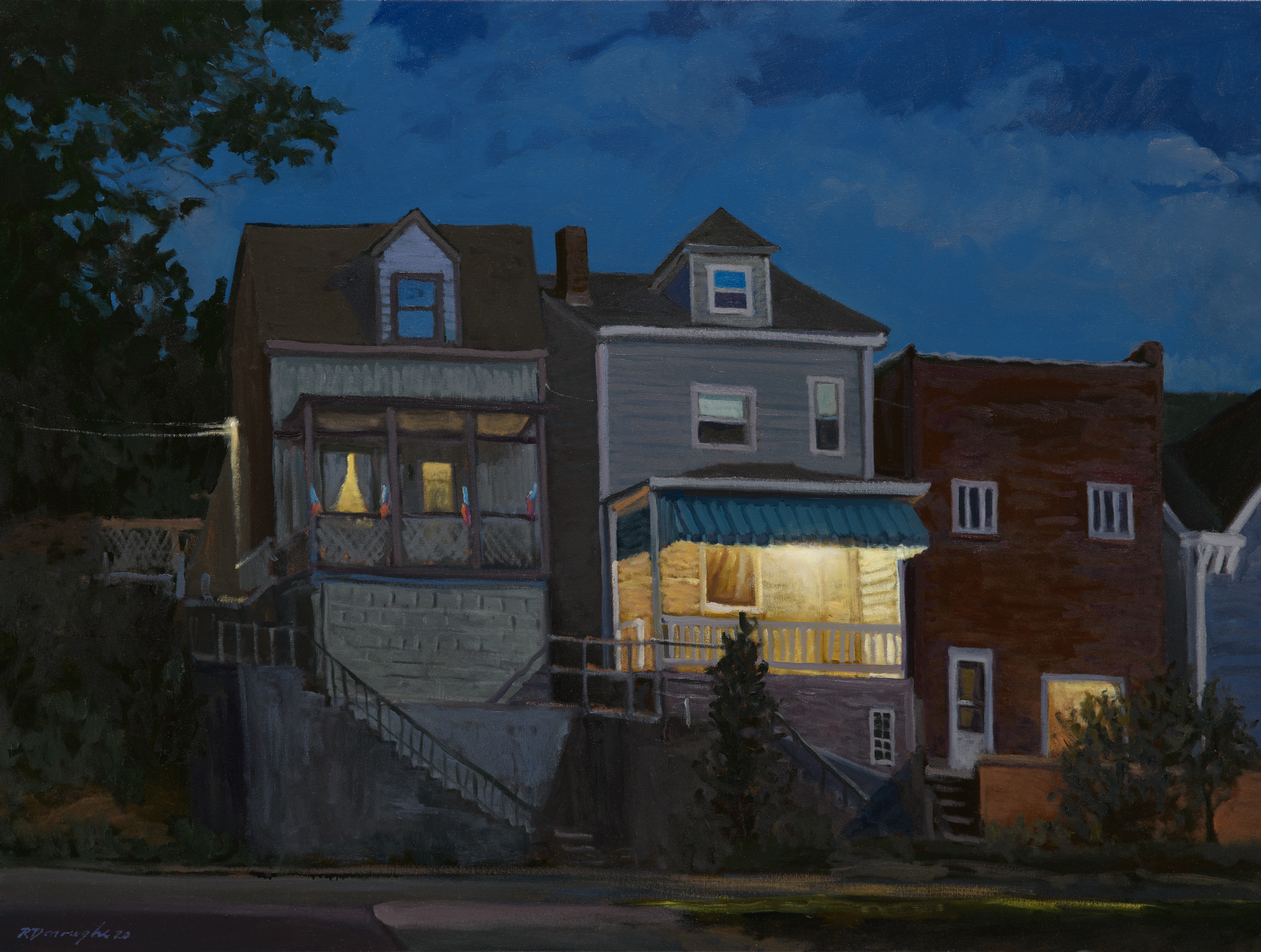
“I’ve been a painter working mostly in and around Western Pennsylvania for most of my life. My main focus is capturing how the landscape feels – at different times of the day and in different seasons. I paint every single day so you’ll see many different subjects, but they are unified by a single theme: truthful observation.
After painting for 30 years, I’ve come to appreciate what my first painting instructor said: paint what you know. I do not seek postcard scenes; I seek an intensity of feeling that comes only from being in a particular place at a particular time. So many things in the landscape are interesting, especially here in Western Pennsylvania: steel mills, city skylines, snow-filled parks, twisting side streets, and even back yards. For me, it is a painter’s paradise.” – Ron Donoughe
See more of Ron Donoughe’s work on his website. See his 90 Pittsburgh Neighborhoods Project on Tumblr. Find him on Instagram @rdonoughe
Categories: art, featured, featured artist, interview

 magpiesmagazine.com
Glorious paintings!👏👏👏
LikeLike
Ahh the light he captures!
LikeLike
A profound interview. So glad to have found this artist and publication. Trying to follow you on Instagram but the icon doesn’t seem to take me there?
LikeLike
Thank you! I’ll have a look into the IG button.
LikeLike