

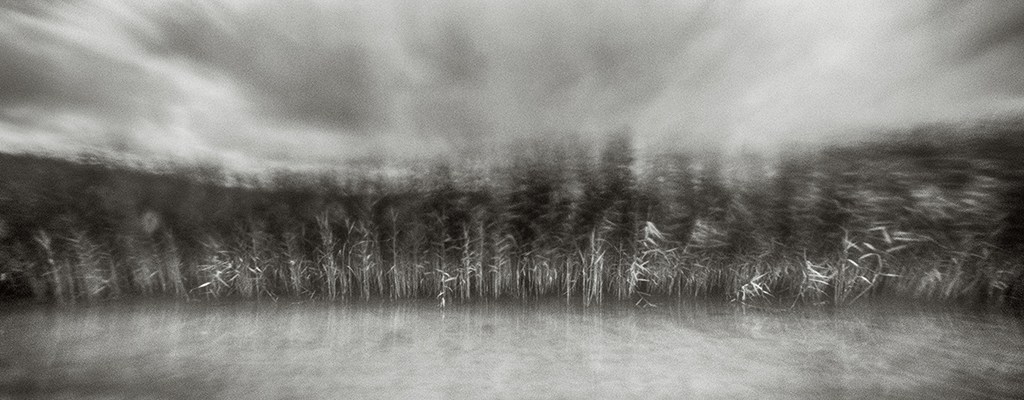
Torsten Richter’s graceful and mysterious pinhole photography is full of a singing silence. It feels important to listen to it, but not necessary to understand it. Time passes strangely in the world of these photographs, as it does in the world around us, giving us plenty of space to reflect on how we’re apart from it all but a part of it all. We were grateful for a chance to ask him a few questions about his work.
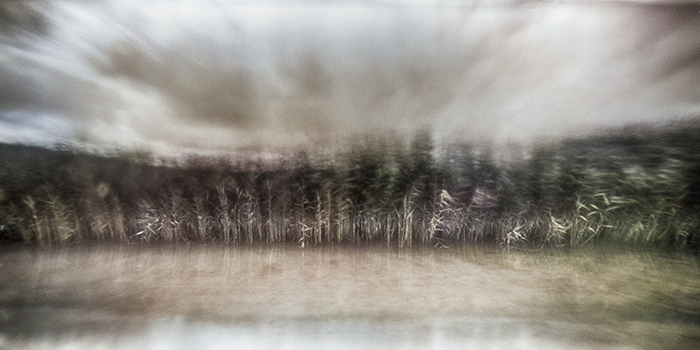
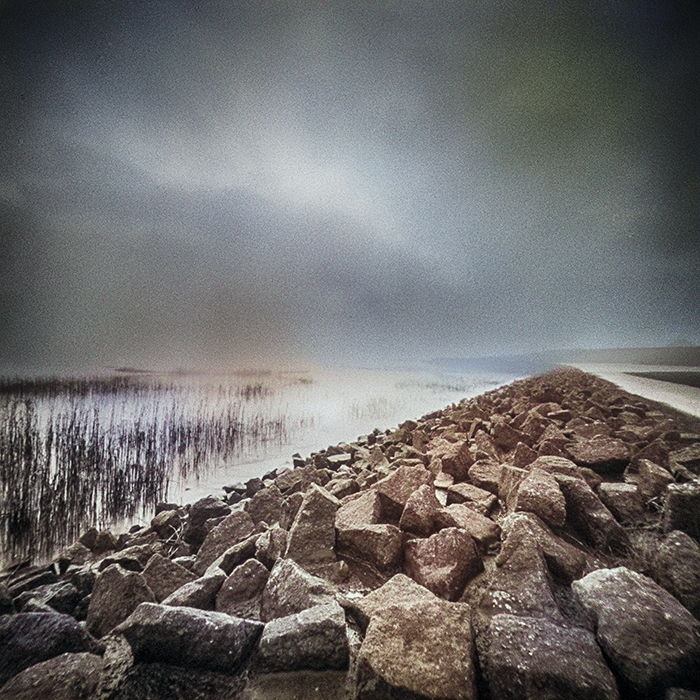
Magpies: I’m struck by the way nature seems to speak in your photography. I was recently reading about marsh reeds as a symbol in Japanese poetry of a certain era. My understanding was that, in poetry, the noise of the wind in the reeds became an eloquent and evocative voice that echoed or provoked human emotion. Of course your photographs of marshes reminded me of this, but in your work everything seems to speak – the trees, the clouds, the water – all share poetry and revelations that seem somehow deeper than human emotion. Can you talk about the voice of nature in your work?
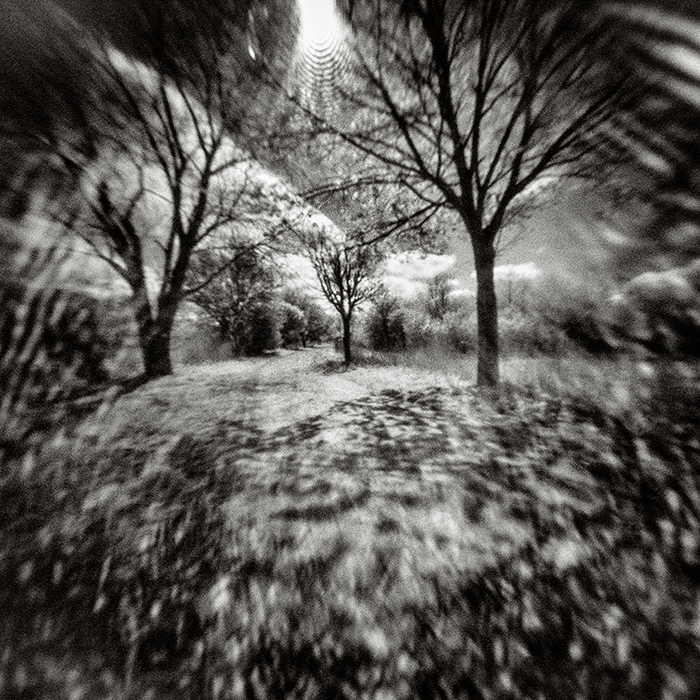
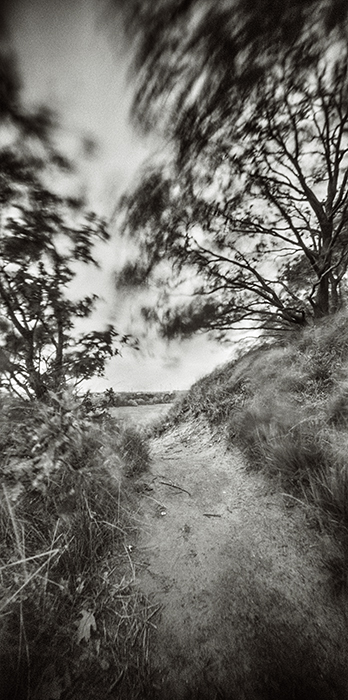
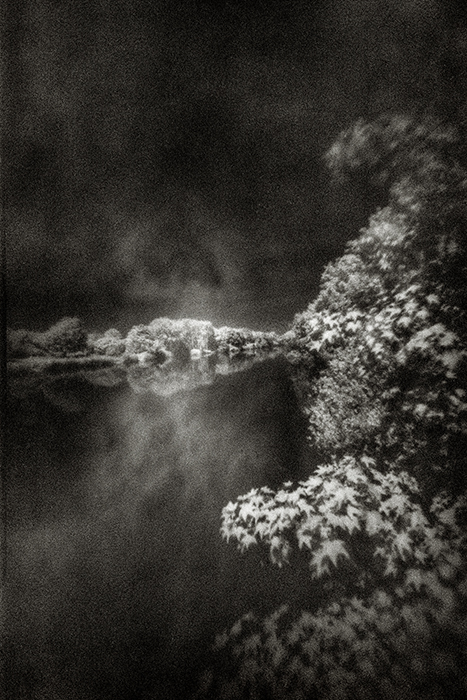
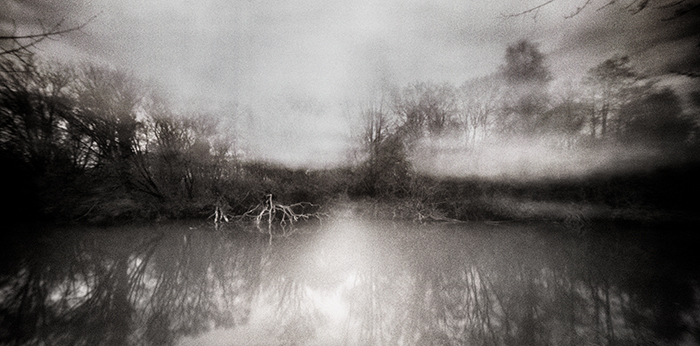
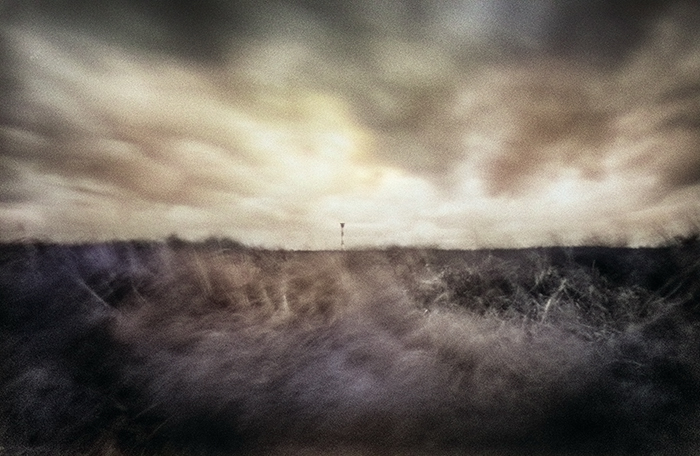
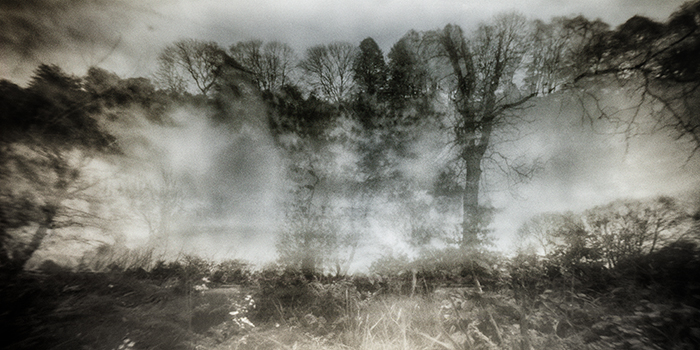
Richter: A few years ago I reached a critical point with classic photography. I was totally bored with the technology and the results that could be achieved with it. It felt like I had lost touch with the essential core of my artistic approach. So I took a break in my work and started thinking about what this essence actually is. Actually, not surprisingly, I came to the realization that my work is not really about depicting my surroundings, but rather about their sound. and not sound in the acoustic sense, but the sound of a perception as a whole. Assuming that there is no matter at all but everything is vibration. Everything moves in waves … sound, light, matter, colors, etc. So all I had to do was listen. If everything is energy and vibrates so that sounds are created, then we are a huge symphony orchestra and the interesting thing is: It is possible to implement that in pictures.
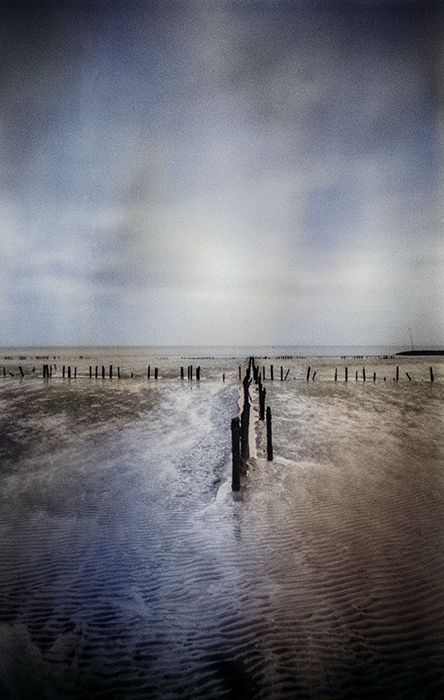
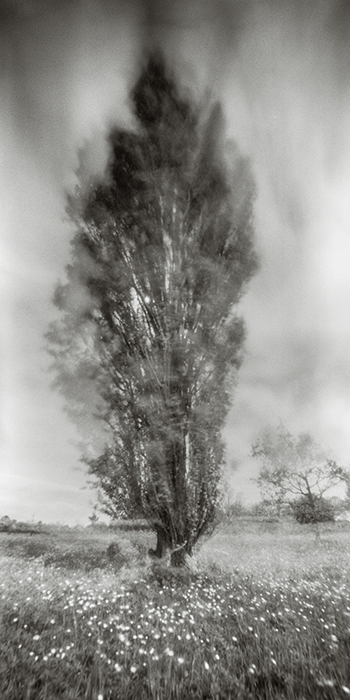
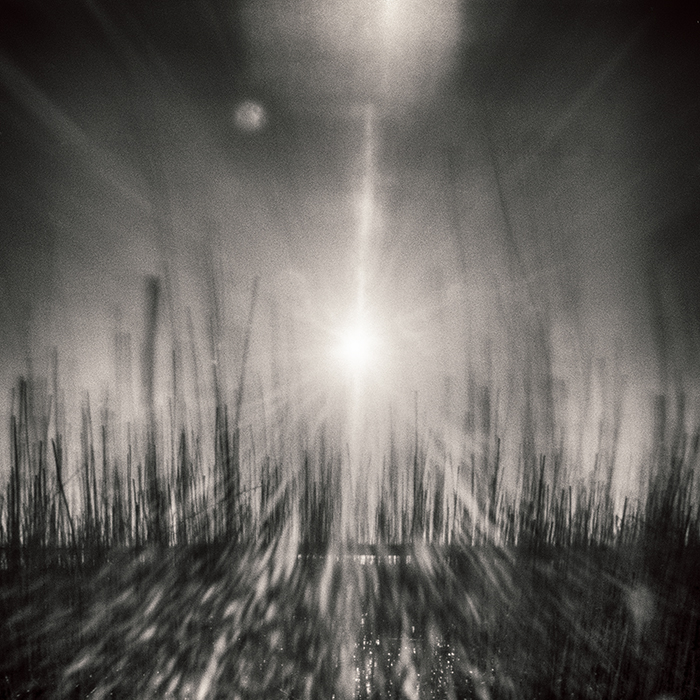
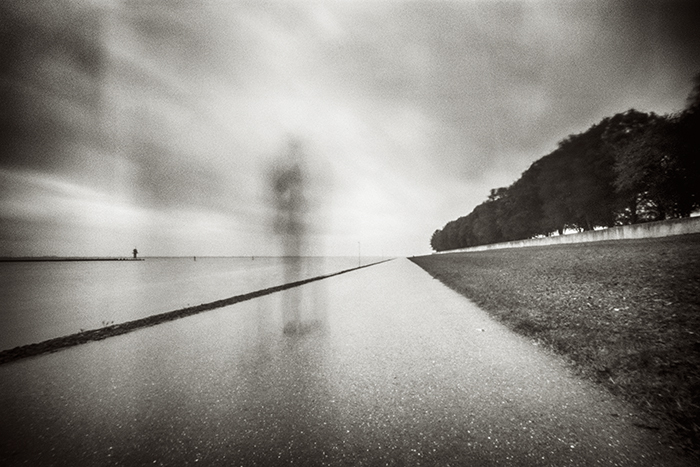
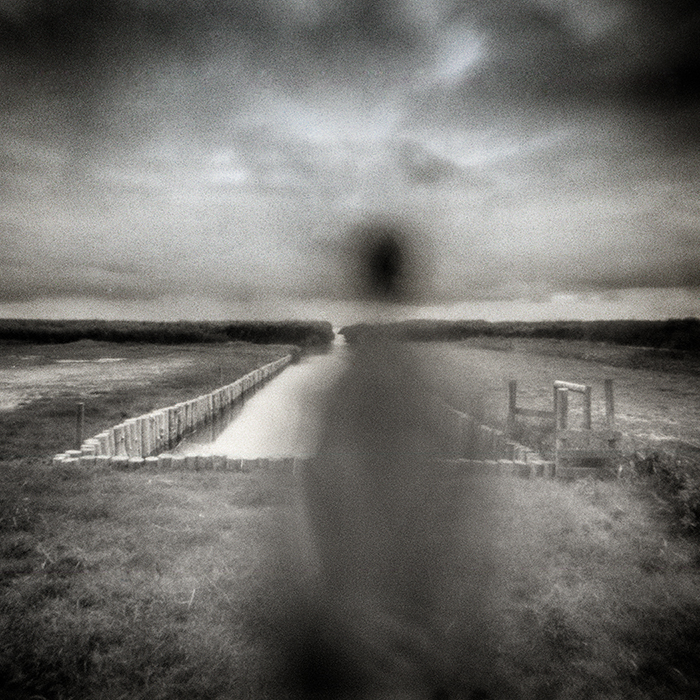
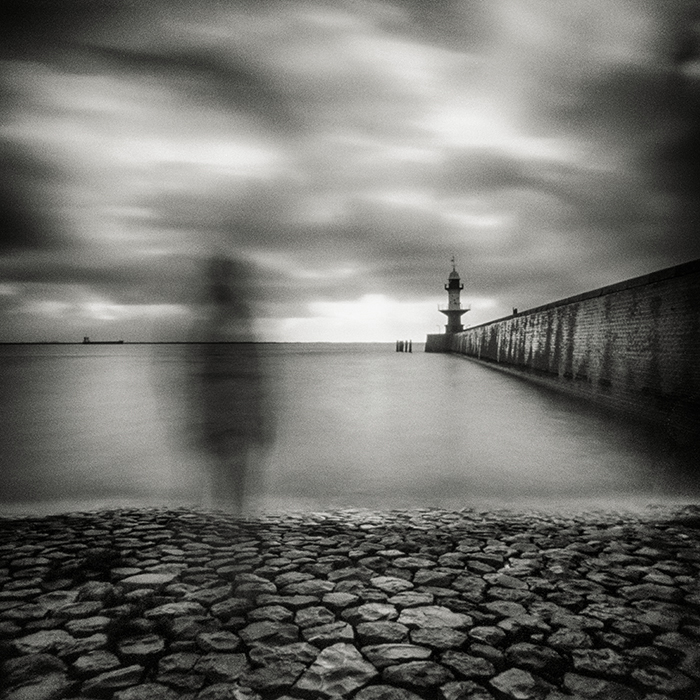
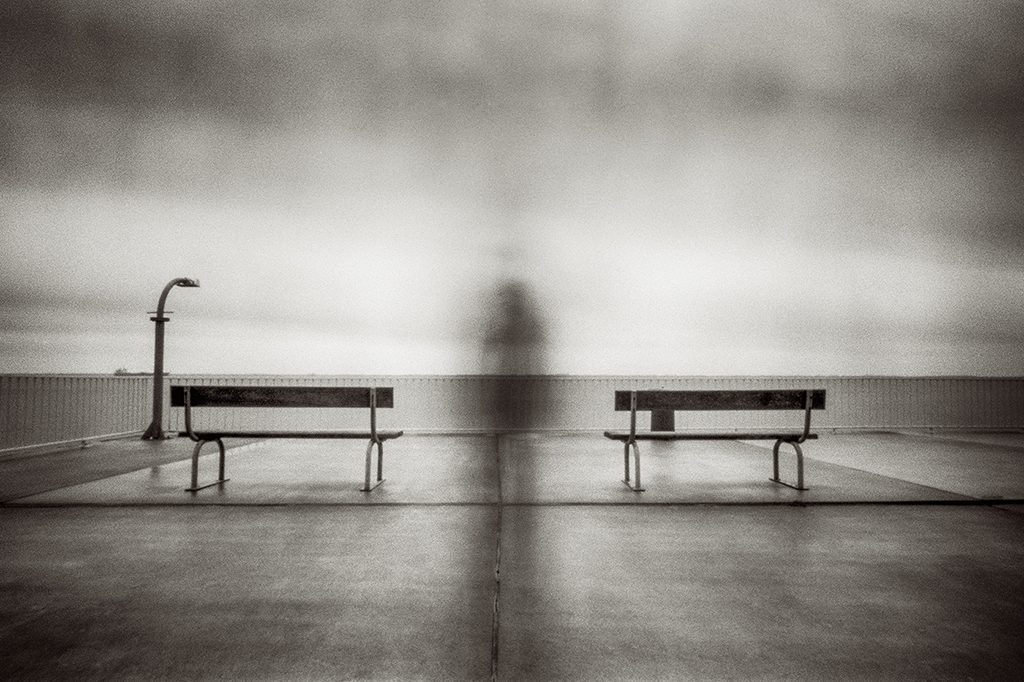
Similarly, I’m curious about the place of people, because we can’t help but see the world through human eyes, and our eyes are drawn to human figures. I love the Ghost Tourism series. How much of the ghostliness is calculated and how much is a function of your method?
The ghostliness in this series depends on the one hand on the amount of light and on the other hand on the intensity of the movements of the human body within the required exposure time. The idea for the series and the way it is implemented is ultimately based on a mixture of technical limitations and a relatively precise calculation of the possibilities within certain parameters. As a rule and with a few exceptions, I avoid the appearance of human presence in my pictures. In most cases I consider their presence to be disruptive and unnecessary.
For the “ghost tourism” concept, however, I wanted to try to include people (in this case myself) as a transient and irrelevant part of nature. The human body here is actually nothing more than rotating molecules in a landscape that is longer lasting and more important. Therefore the bodies seem do dissolve or assemble.
Can you talk a little about your method? What sort of cameras do you use, what sort of film. What are the processes of capturing the photos and of developing them? Both with the pinholes and with the cyanotypes.
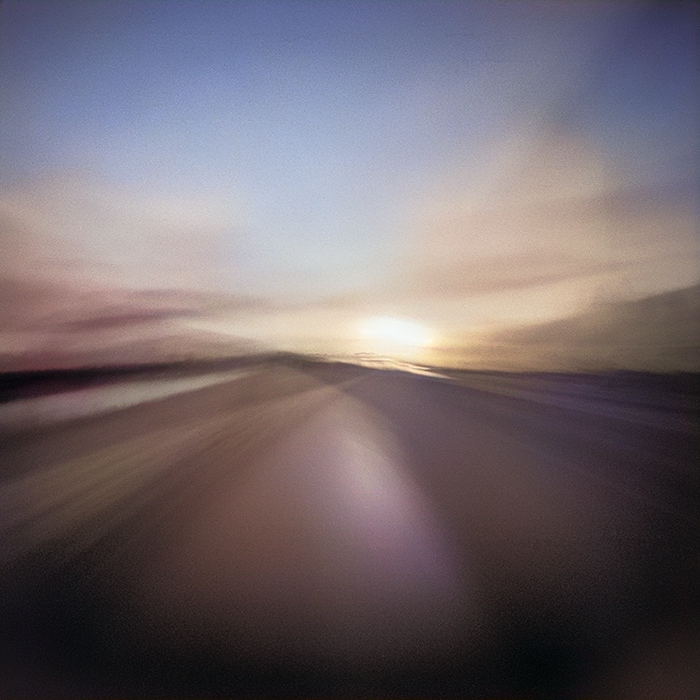
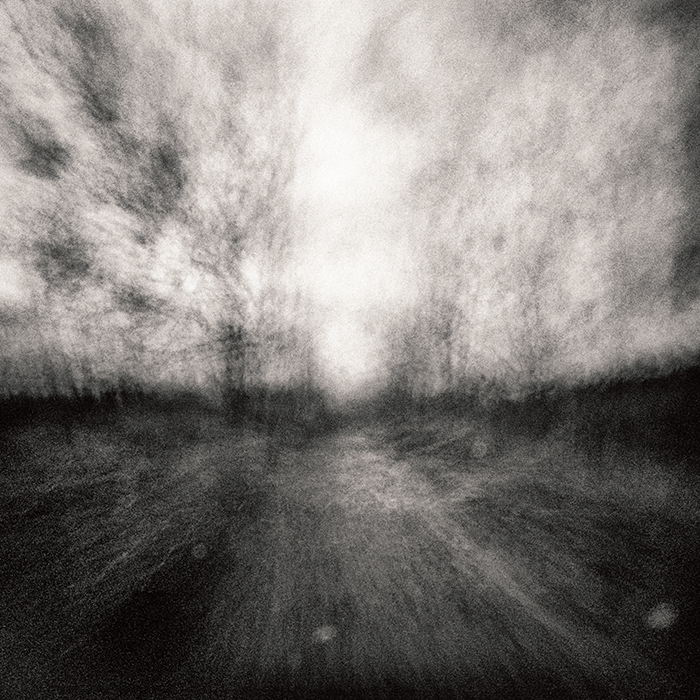
My photographic methods are constantly changing, depending on what and how I want to interpret something. I use all sorts of different techniques (and formats) for the captures: intentional camera movement, multiple exposures, low light situations, motion blur, infrared, tripods, mounting the camera onto moving objects and so on.
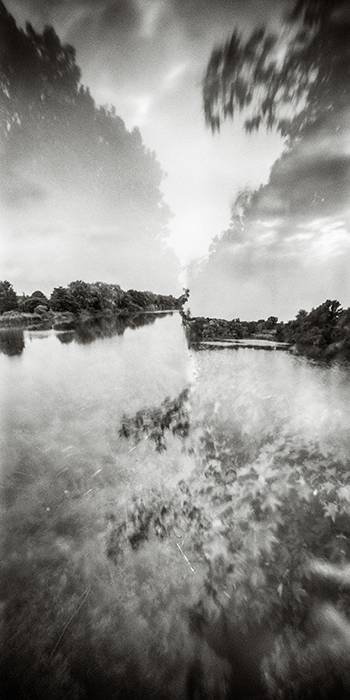
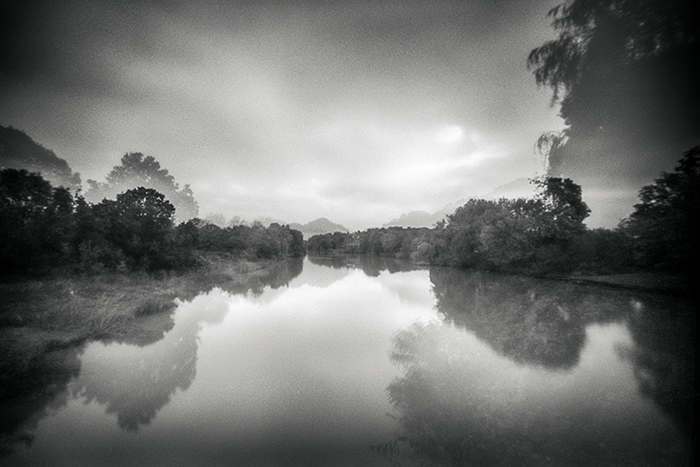
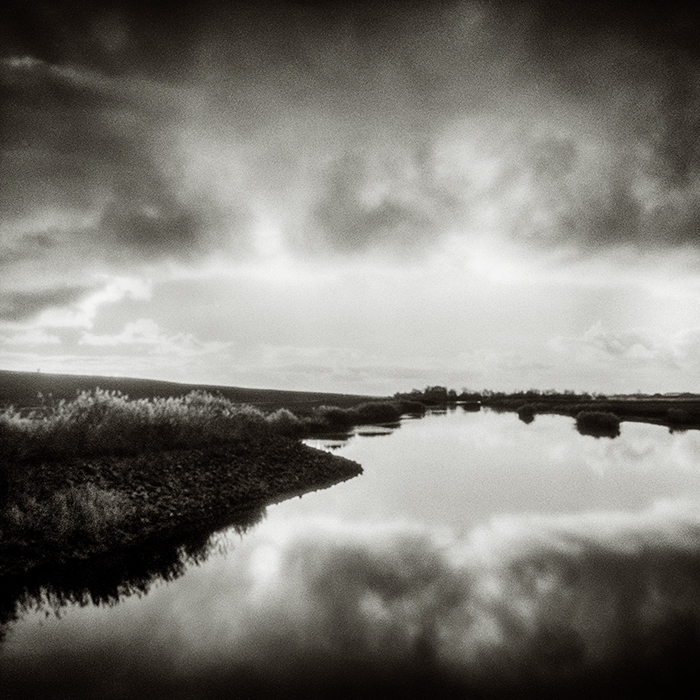
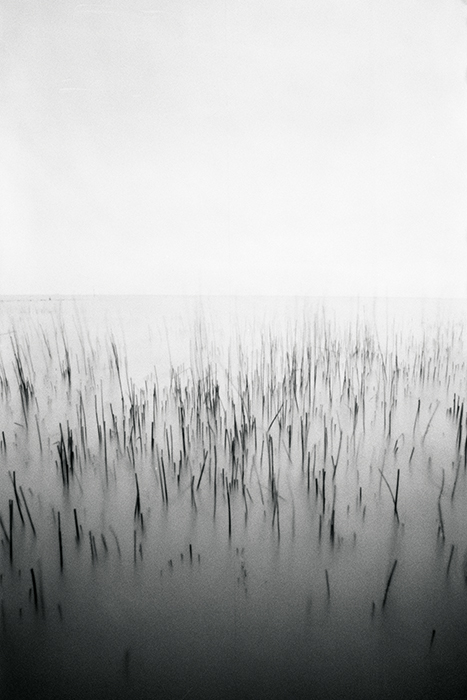
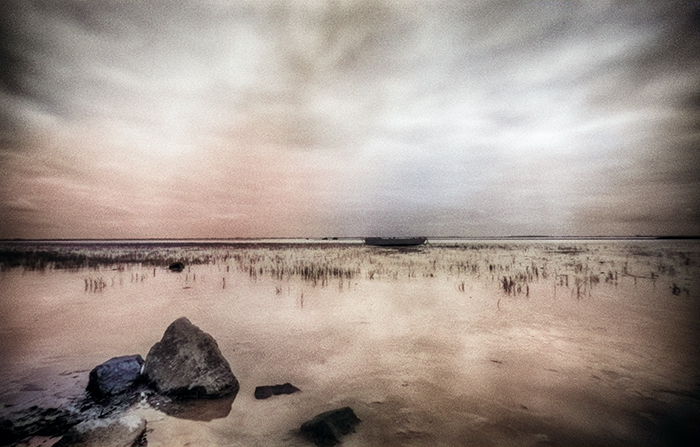
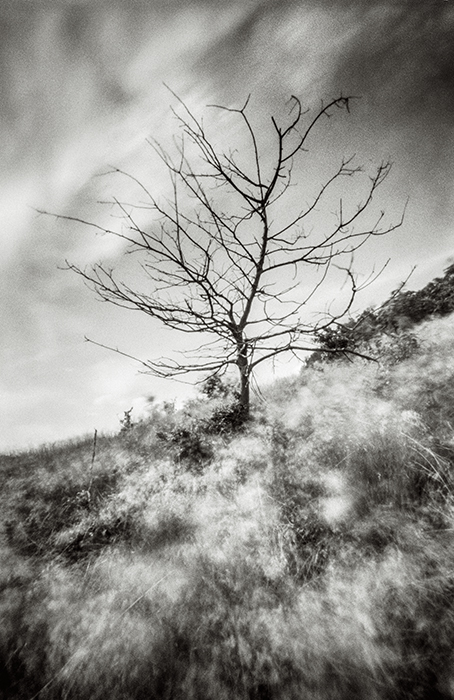
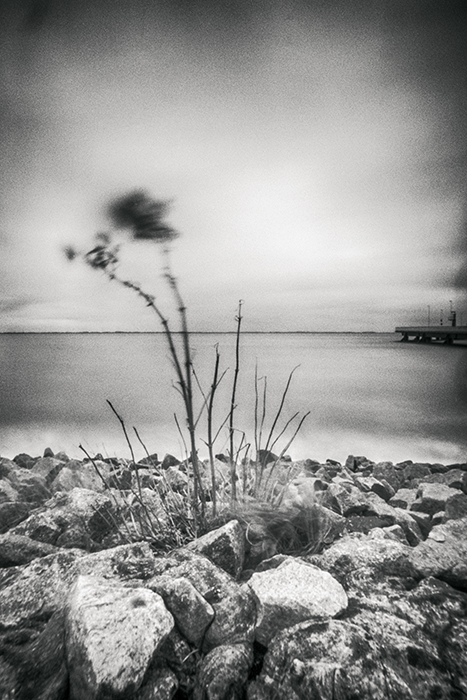
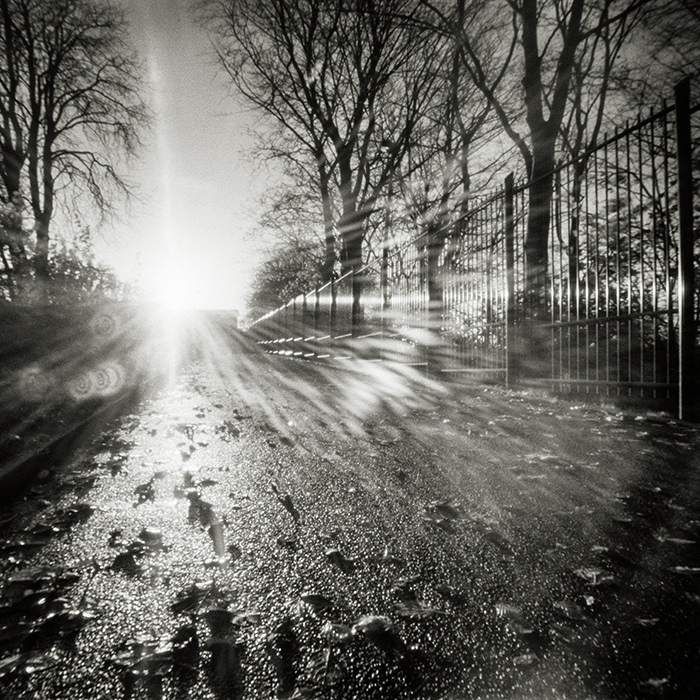
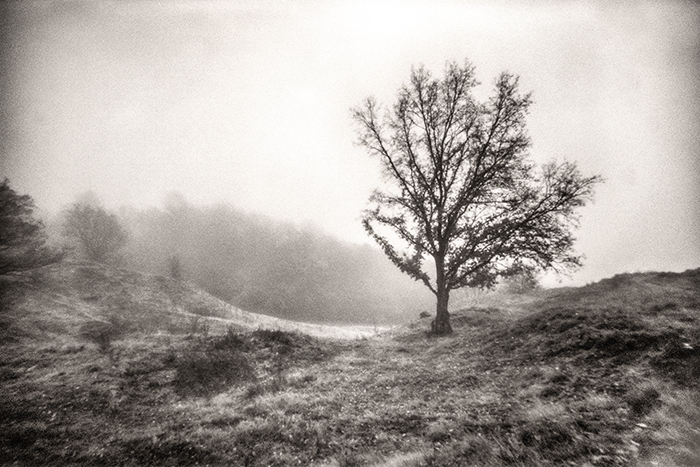
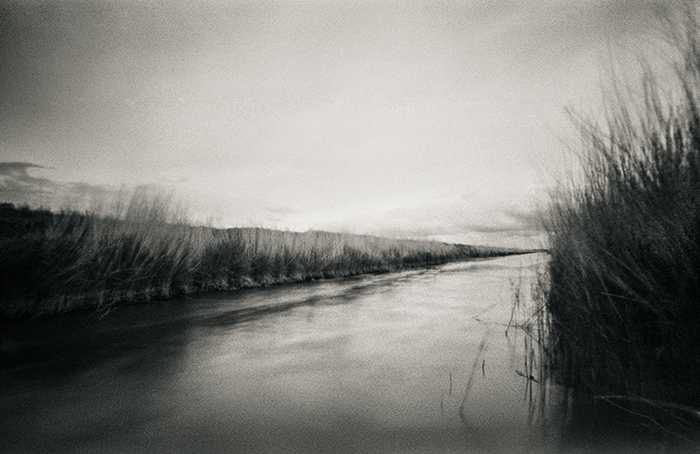
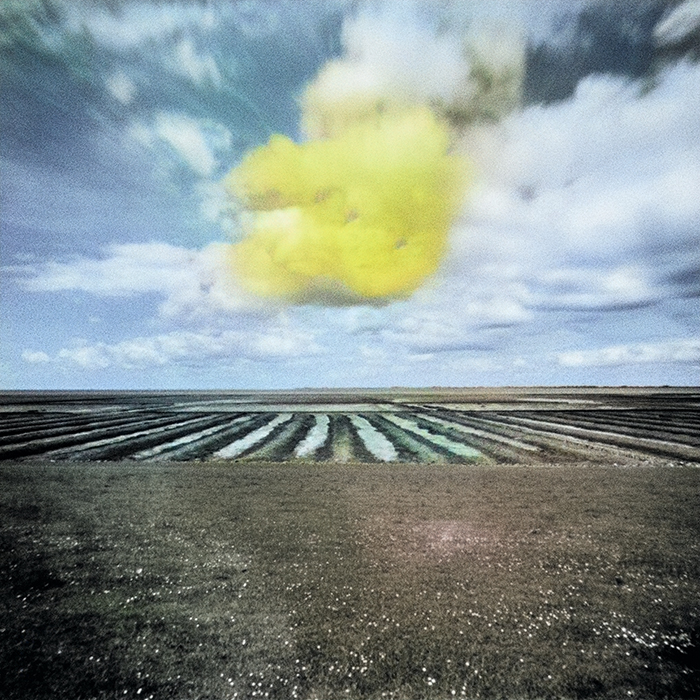
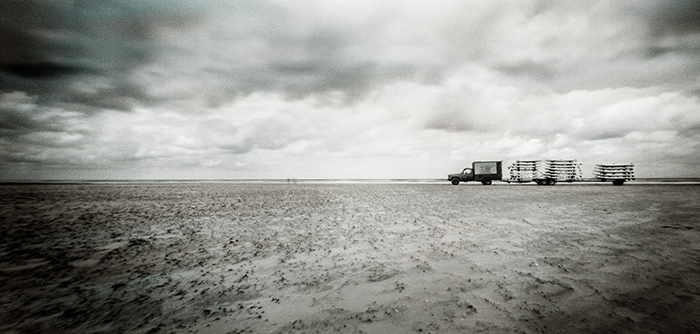
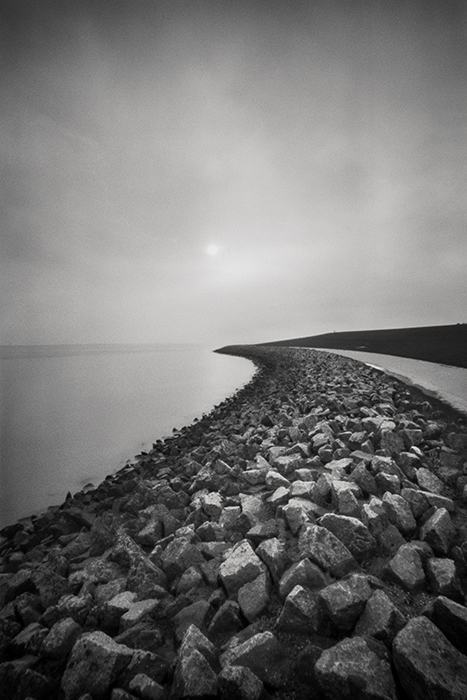
Since I almost exclusively use pinhole medium format cameras, this practically always leads to long exposures. Which I very much welcome because I prefer to capture a temporal sequence. My photography has nothing to do with the commonly known “freezing of a moment” or “decisive moment”.
My most used film is the Fomapan 100, simply because it is the cheapest film on the market that still has great tonal properties. And I really make a lot of exposures due to the fact that there is a lot of experimentation necessary. But sometimes I also try other brands and films with different characteristics. The development is usually standard development in Rodinal or ID-11 or Fomadon LQN. Nothing too fancy in that part of the process.
The cyanotypes are something different. There is a lot of extra work involved. Especially the toning process takes incredible effort and failed attempts.
How do smudges and flares and other effects of light and shadow evolve with your method? How much can you control the resulting image, and what is your idea of “perfection” in a photograph?
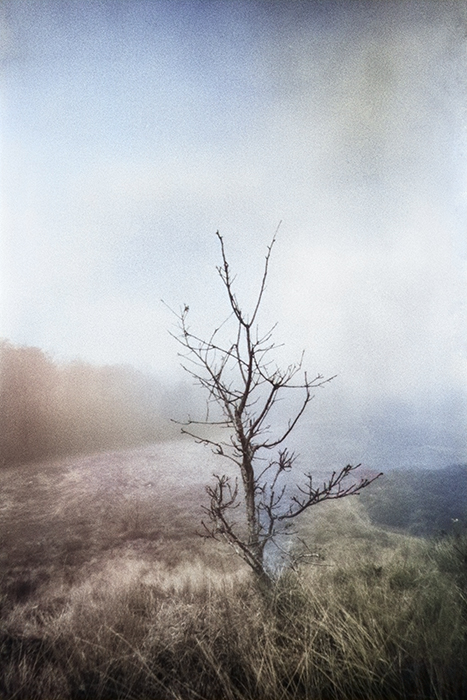
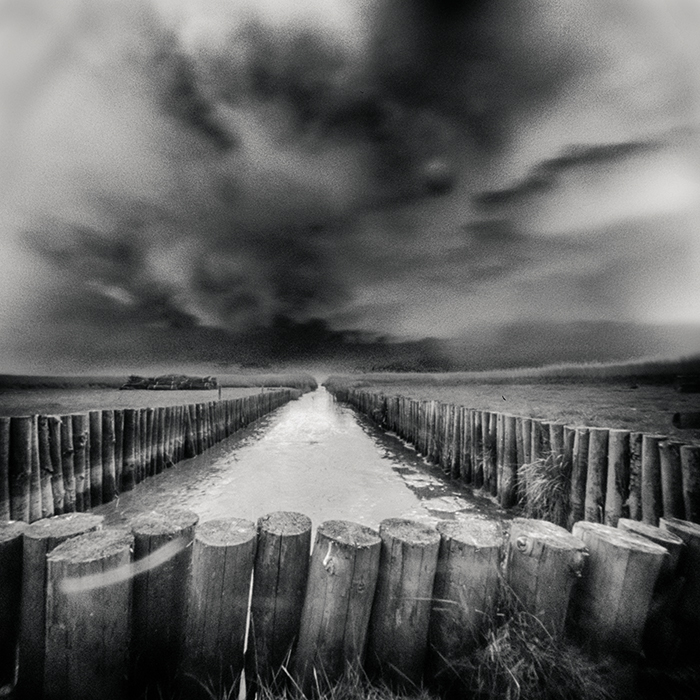
One of the best and most interesting things about pinhole photography in general is the lack of control. You really need some experience even to roughly estimate the outcome. Of course, you could always do the same or try to look for similar situations. But that would prevent you from finding new opportunities and paths.
So “perfection” is a strange concept for me, and really not interesting. It´s the imperfection and the risk of failing that is way more interesting. Sometimes I mess up a complete roll of film but you just have to take that on the chin.
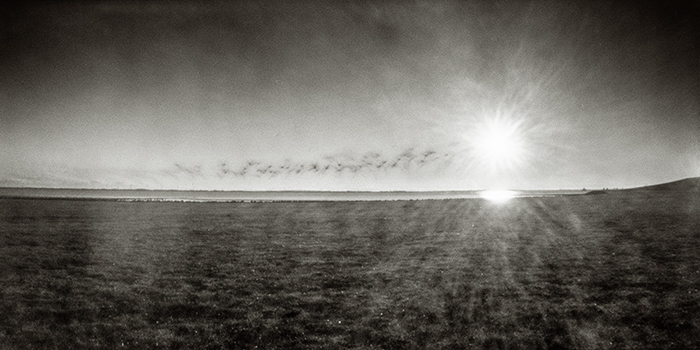
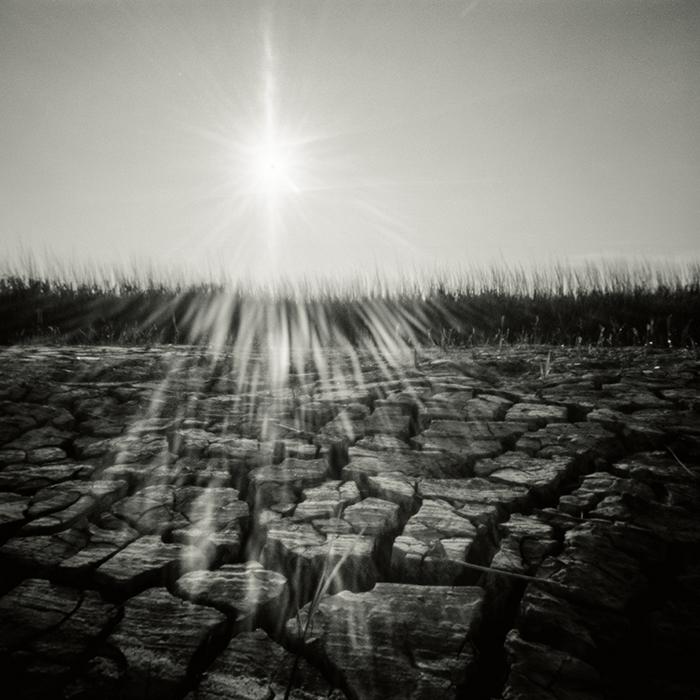
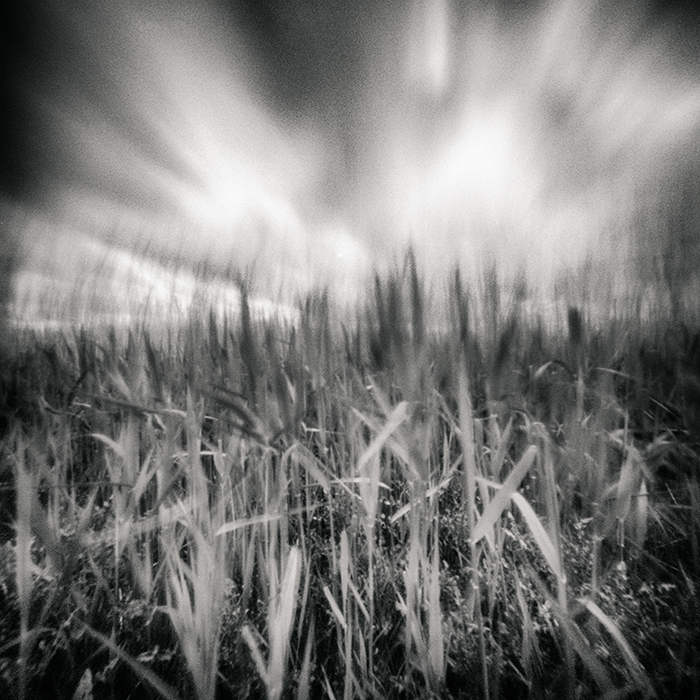
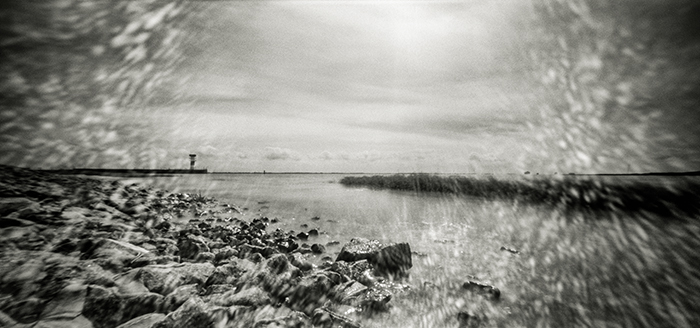
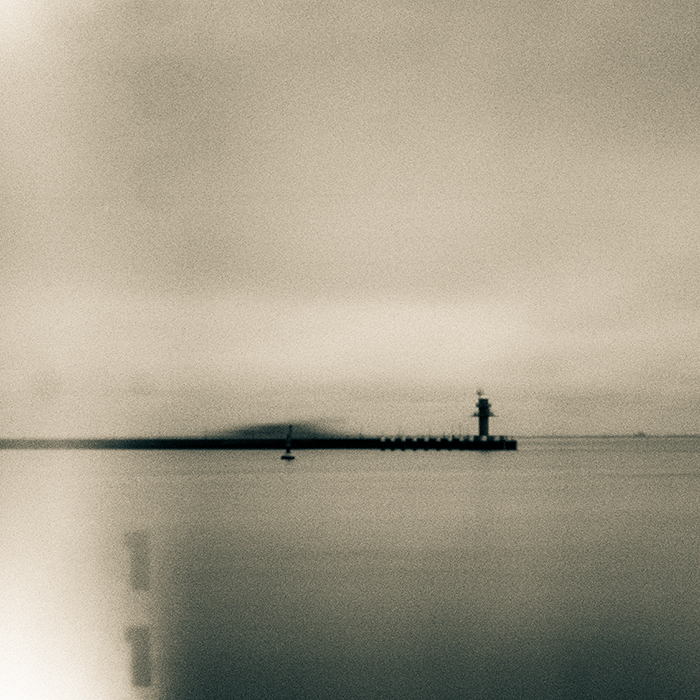
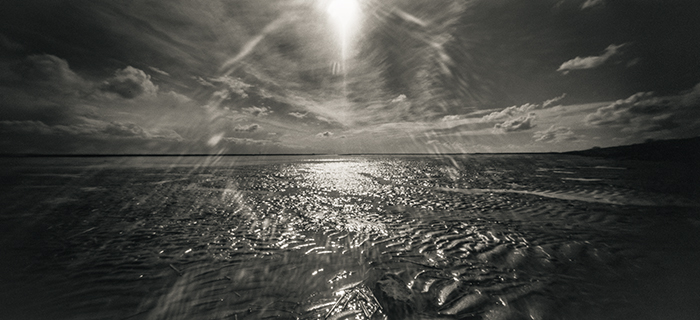
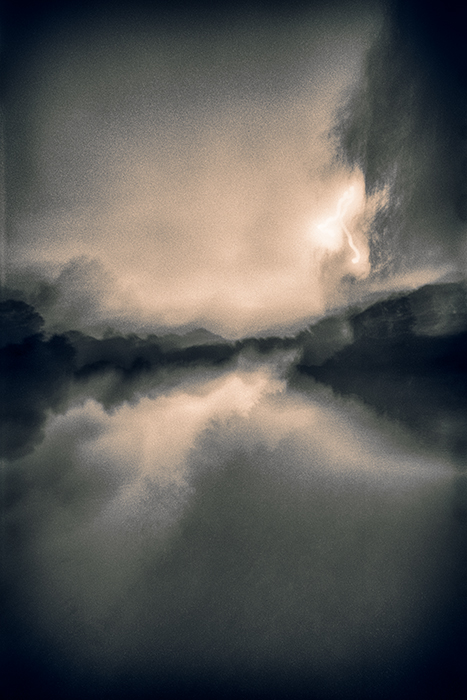
I’m fascinated by the use of symmetry, asymmetry, and space in your photos. Sometimes the sky and the water become one glowing body, other times there’s clear, even dark and stark, delineation. Can you talk about how you compose your photographs? Is it a question of seeking certain landscapes or moments, or of responding to what you find. Or a bit of both?
Composition with a pinhole camera can be tricky sometimes. Most of my cameras have a quite wide-angled view. So you have to consider that there will be loads of information on your negative. Experience is the only thing that helps here, too. Since these cameras do not have a viewfinder or any kind of image control, I´m using some sort of pre-imagination technique paired with taking the time it needs.
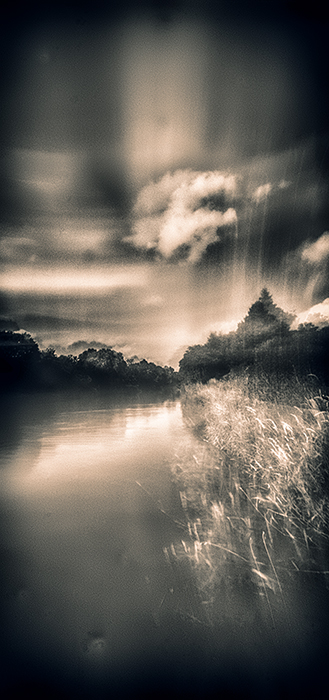
Sometimes I’m following the light. Sometimes I’m following the clouds. And sometimes I’m looking for something I do not know beforehand.
Most of my work is created where I live. That’s why I don’t really have to look for the landscapes or lighting situations, I just have to wait for the right day. And I have the great luxury of knowing the locations very well, so I often know when the lighting situations are going to turn out well, or even when it’s not worth taking a photo. But in general, I prefer not to think too much about what I will do.
I load a camera, pack my things and go out to let things happen. Sometimes I’m following the light. Sometimes I’m following the clouds. And sometimes I’m looking for something I do not know beforehand.
Speaking of space, I love the sense of almost floating in your work, as if in space or on the ocean, or on waves of light. There’s something so dreamlike about it, and there’s a poetry in the idea of an (im)possible landscape. Can you talk about the way that photography, particularly pinhole photography and other alternate-process photography can make us see what’s in front of us in a new light, as if it’s a new world?
I wish I could say something smart about this. But I guess I´m just using the process of photography to reassure myself that there are still mysteries around the corner. Things you can not see at first glance.
Which brings us to the idea of paying attention, of noticing the world around us, as it is or as it could be. How does taking photographs change the way you notice your surroundings, and how do you hope your photography will change the way we see ours?
There is always a little hope that people get a more empathetic view on nature and the environment. But I’d rather not be too optimistic about this. Most people are not poets.
So on the one hand I’m trying to preserve what’s still there, and on the other hand I’m trying to figure out what could have been.
For me, this type of photography is an essential tool of survival in a world of hardcore capitalism and environmental destruction.
The more I discover things out there and their beauty, the bigger the realization that developments will go in the wrong direction. So on the one hand I’m trying to preserve what’s still there, and on the other hand I’m trying to figure out what could have been.
Pinhole photography, as I understand it, takes time for each shot, and with a photograph you are, in a sense, capturing time or freezing it: Marking the passing of hours, days, years. Your work seems to have a lot of the rhythm of changing seasons and ebbing and flowing tides. How do you achieve this with what is essentially a static medium?
Rhythm, change, seasons, tides, weather, light, time … these are all the elements that exist independently of us and define the impression and feeling that we call “flow”. All you have to do is try to be a part of it, give up a little bit of control and just find that rhythm.
It may help a lot that I am living in a rural area where all this is part of everyday life anyway. And I have to admit they I hate statics. So I had the need to leave the static behind me early on. Observing nature is the key.
Torsten Richter is an artistically oriented photographer from northern Germany. He works primarily with analog pinhole cameras and other alternative processes. The goal is to create an expression that is as intuitive as possible, and the results can be of a surprising nature. Self-developed film, multiple exposures, over and under exposures, rough grain, intentional camera movement and handheld long exposures provide a good basis for unexpected images.
Photography must remain an adventure.
See more of Richter’s work on his website and on Instagram @trchtr.
Categories: art, featured, featured photographer, interview, photography

 magpiesmagazine.com
A wonderful series of images and an equally interesting interview! Congratulations.
FariNelly
LikeLike