

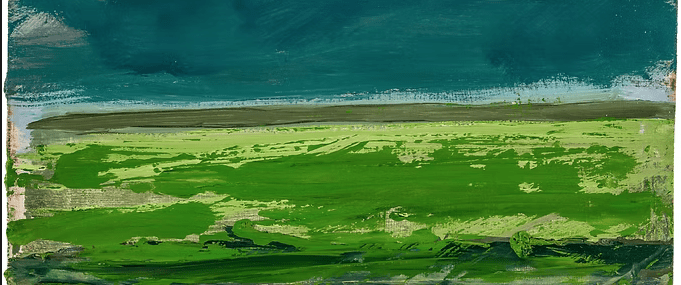
Joel Adas will have a solo show, “Darkness Visible,” at the B. Beamesderfer Gallery in Highland Park, New Jersey. The opening reception is Thursday, March 26th, from 6-8pm. The show will be up until May 16th.
In swirls of paint and layers of texture — as brooding and hushed and bright and gentle and harsh as the wind and the water and the sunlight — Joel Adas seems to express the uncanny, the unknowable. His paintings glow with a sort of longing or desire to capture something — not to master it or control it or pin it lifeless under glass, but to understand it in that sort of glancing way we understand things beyond our understanding. We all know about the power of the light at a certain time of day, the change of weather, the change of seasons. It’s not that he captures just the color or shape of these things, but he distills the fundamental way that they hit us, that they change us. And along with that comes some nod to the absurdity of being human, of the world we make that somehow clutters our view of this deeper thing, this moving beauty in the world around us that is soulful, that is full of some inexpressably glowing grace. We were glad to have the opportunity to ask Joel a few questions about his work.
MAGPIES: One thing people can’t tell from a photo of your paintings is how beautifully textured they are – their surfaces feel very moving and full of meaning. Can you talk a little about how those textures come to be? Is it something you achieve intentionally in each painting, or something that happens along the way?
Joel Adas: The texture in my paintings really comes about through the process of making them. I am very interested in layering, particularly in the paintings on canvas. I start with acrylic, and then move on to oil and oil stick as top layers. The idea of seeing through more opaque layers to a bright underpainting is something I have always been fascinated with and have tried to achieve in my work. I love how the flat acrylic underpainting interacts with the thick opaque oil marks on top. Sometimes I take a tube of oil paint and just make a thick line of paint straight from the tube. It is incredibly liberating and fun to work this way!
I guess follow-up question, you use a variety of different mediums on a variety of different surfaces. Can you talk about why/how you choose which medium you will use for a particular painting and how the process/mood/result is different for each?
Sometimes the medium is chosen out of necessity. For instance I often paint over old paintings, sanding them down first to achieve a smoother ground. By necessity I can only use oil or oil stick to paint over these. Part of the fun is letting the original colors come through. The gouache paintings on paper are different. The surface is more matte and not as built up. It unifies the image and to me somehow lends itself to a more detailed, defined painting. The oil paintings are increasingly about drips, accidents that happen, scraped areas. That kind of physicality is much harder to achieve with the gouaches.


Do you have methods for unslumping when you’re feeling discouraged about painting or you just don’t have the time or energy?
Great question! Sometimes I walk away from the paintings for a while. If I have a really bad stretch where I just feel uninspired, I think it’s better not to paint. For me, I have to see something in a painting that makes me want to begin to work on it, to go into it, so to speak. If I can’t see that and the whole thing looks blah and yucky, I put the canvas away for another day. Pushing around paint for no good reason other than to say I painted really seems like a waste of time and material to me.
What are some perfect skies?
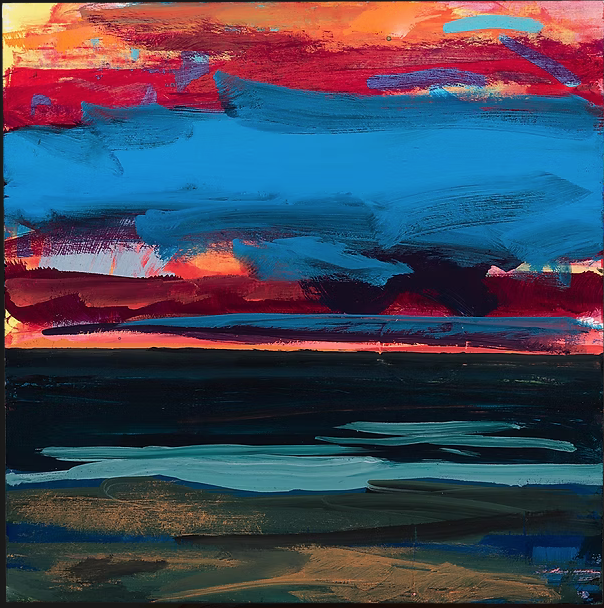
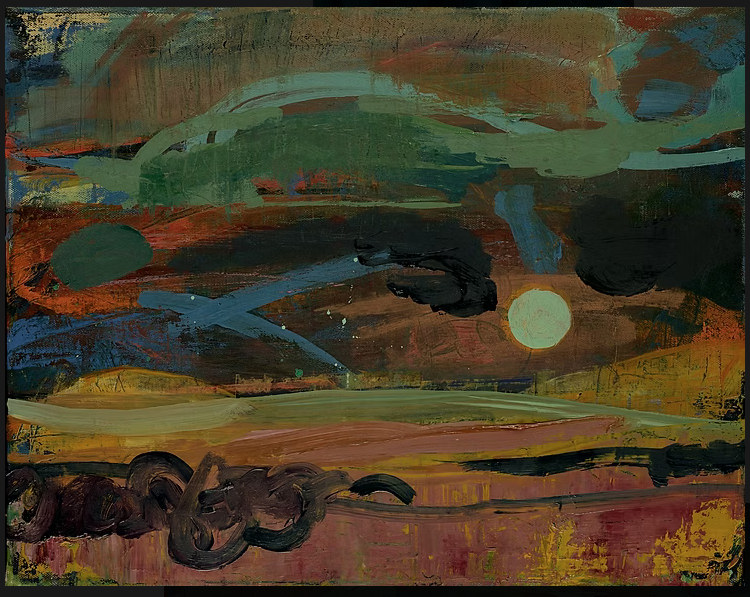
Skies are wonderful. For a time back around 2010, they were all I painted. Now I think they are the perfect vehicle for almost fantastic abstractions. The colors in a sky can be incredibly intense and still believable as sky. In fact I think it’s impossible to match the colors you can see in a sky, particularly at sunset and sunrise. A perfect sky for me lately is an intense pink. Still, you can’t rule out a night sky, so much mystery and depth there!
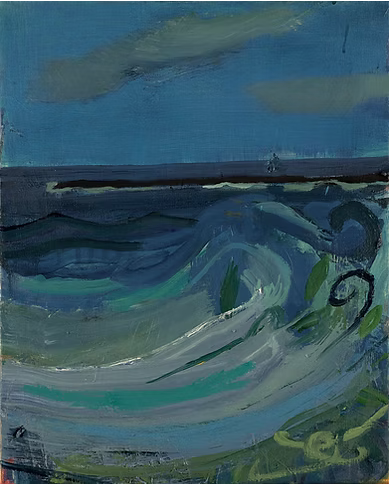

I’ve always associated you with water: creeks, rivers, the ocean. And there’s something flowing, maybe, about your paintings, too. Is that a connection that you feel? How is painting like fishing?
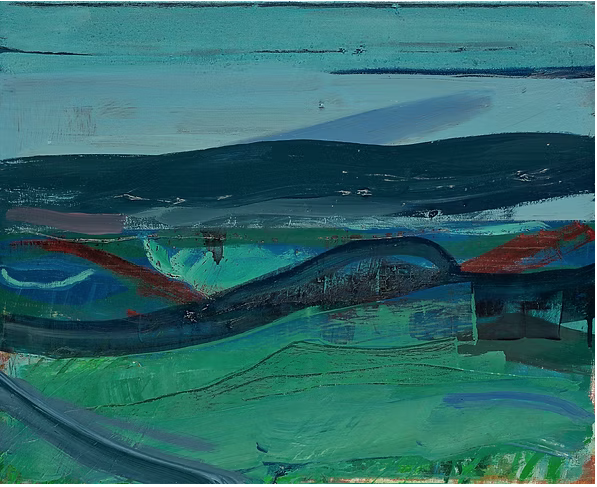
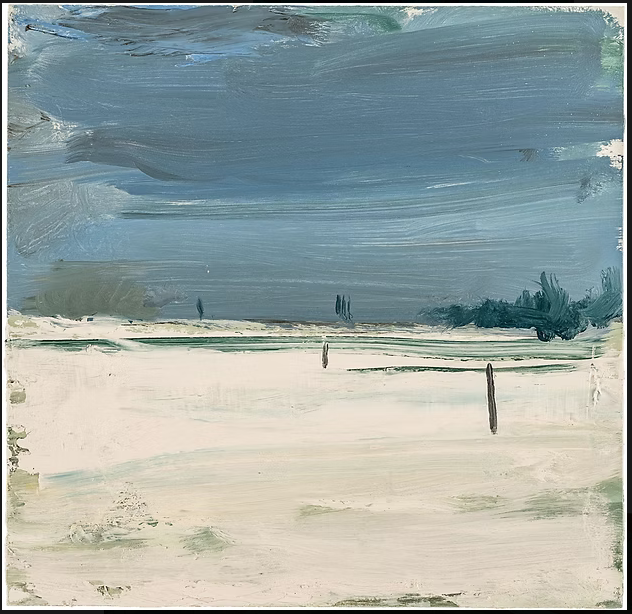
Yes for certain water is everything to me! I am an aquarius and have Minoan waves tatooed on my left arm. The flow of a painting is what I hope to achieve, being in that flow. It is much like fishing on the beach or on a lake. You are in the landscape, a part of it. There is mystery there, what lies beneath, and with the almost invisible line you are trying to connect with it. I often improvise when I paint, trying to see what image emerges as I work. Time and time again it is a lake, an ocean, a pond. These bodies of water have always been completely fascinating to me and never tire of looking at them. Fishing for me is as much about looking and being near water as it is about actually catching a fish.
Are there places in the world or times of day that the light and the air feel just right to you?
Yes for sure! Two come to mind. The first would be sundown on a beach. It seems cliche to say but we often go for walks at that time, we call it the magic hour. Sometimes in the summer we even bring a glass of wine for the walk. The air and skies we see then are beyond magical. No painting could capture them. The second would be a different setting, walking through the woods around the Kensico Reservoir just as dawn breaks. The boats are like ghosts gathered around the trees on the ground, the air has that feeling of coming alive with a new day beginning. I have driven for an hour and a half with a good friend in the darkness, first through sleeping city streets which transform into trees, cliffs and scattered houses as we approach the reservoir. The day fishing is about to begin but there is a hushed awe about the way nature is coming alive that just hangs in the air beautifully.
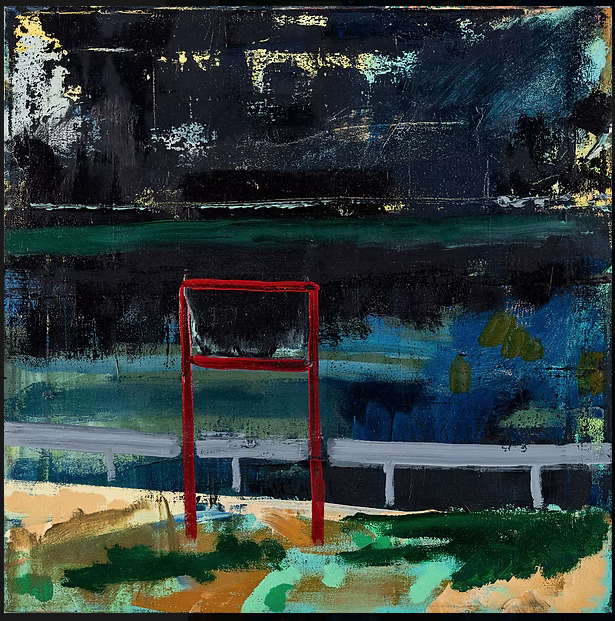
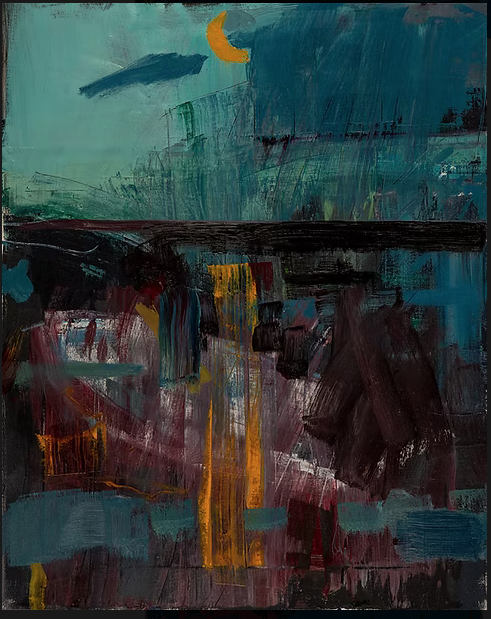
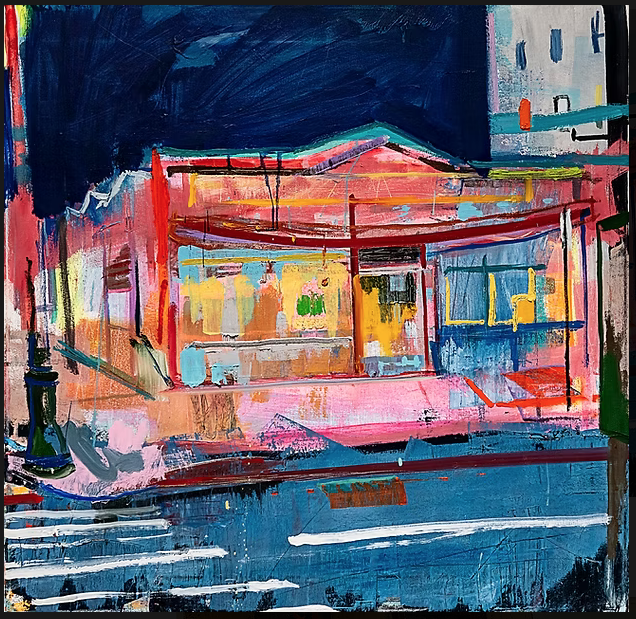
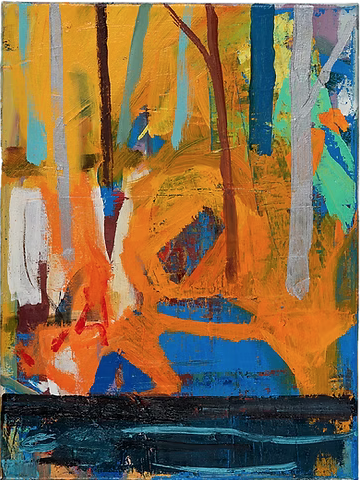
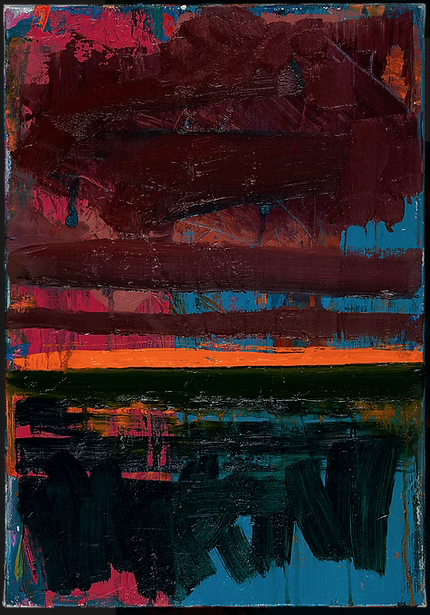
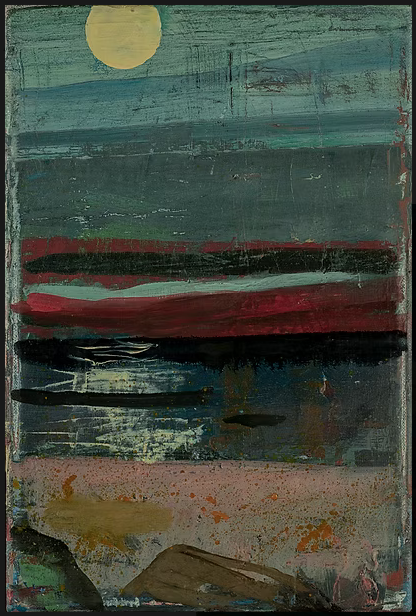
One thing that comes to mind when I think of your paintings is a beautiful feeling of light through darkness … whether that light is a neon human creation or the moon or the sun. Is that something that you recognize as a pattern or theme in your work?
Yes, totally! The light in the dark is something I want to capture more and more. The breakthrough for me over the past few years is that the neon colors you can get with acrylic paint can capture that light perfectly. There is always a point early in the process of the painting where the neon tones are too much. Only when I go over whole areas with darker, more opaque oil layers do the neon areas come through and really shine.
What’s the last interesting interaction you had with a stranger?
I love this question! Two days ago we were going out to eat at our favorite restaurant here in Cape May. There was incredibly dense fog everywhere and you could only see about five feet in front of you. It was like clouds descended on the whole area and were swirling around everywhere. It was almost dark and as we walked through the parking lot toward the restaurant, a couple came out of the fog. The man turned to me and gestured, “can you believe this, I’m just waiting for some strange primeval creatures to appear out of the fog.” This was exactly how it struck me!
Your paintings used to be more precise and detailed, and (I guess it would be termed) realistic. Now they feel looser, more abstract. Does any part of you ever want to return to that style at any time? Or is there a sense that you’re conveying something more real, though less realistic, with your current style? Whatever reality may be.
Honestly, when the paintings start to veer towards more detailed and realistic now I start to feel uncomfortable, like I’m wearing a suit that doesn’t fit with too much starch so I can’t move freely. Nothing against realism and detail but for me when it comes to painting I love looseness, happy accidents, letting the paint be the paint. I agree with Edvard Munch on this one, “no fingernails, no twigs.”
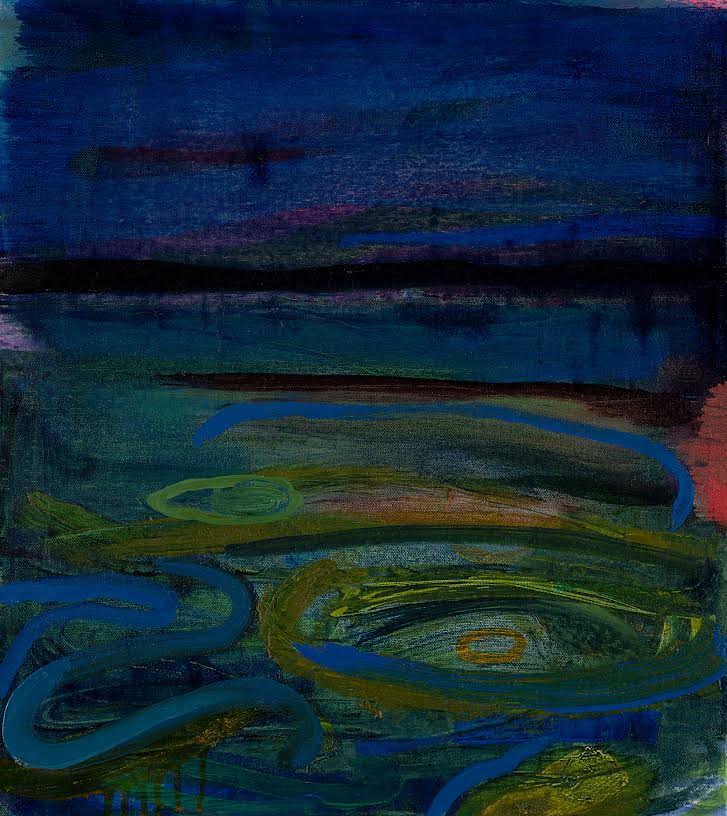
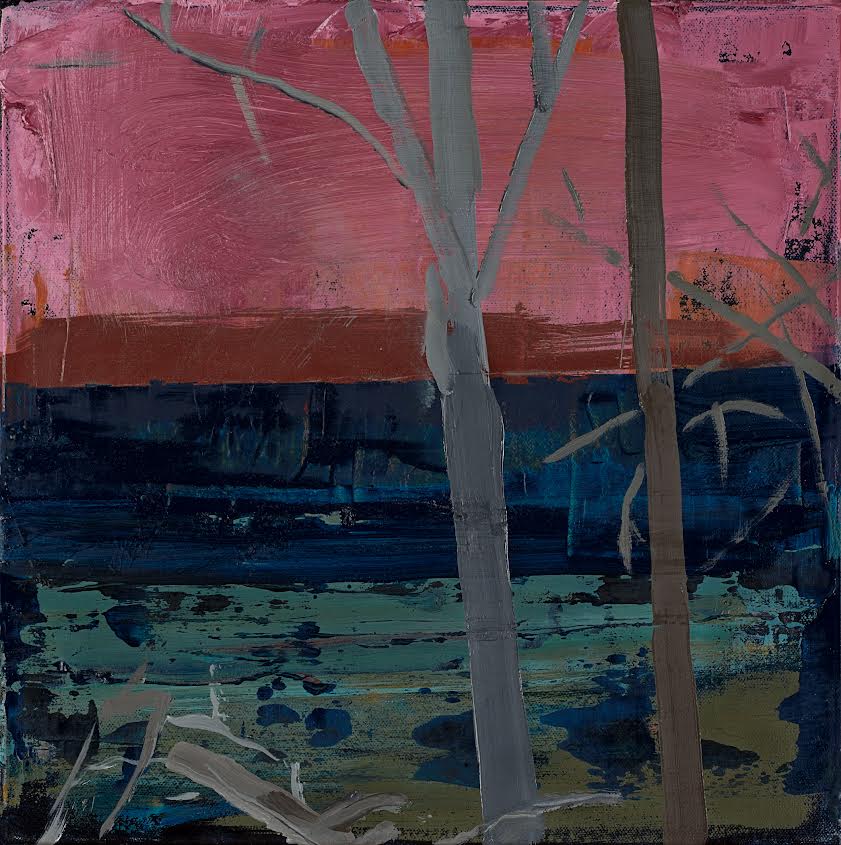

There’s a Mos Def quote I like a lot, “Visions occupy my synaptic space/ Command and shape, to illustrate my mind’s landscape/ The tall grass, the low plains, the mountainous ridges/ Thickets among the forests, rivers beneath the bridges/ Presence of hilltops, lit up with tree tops/ Eavesdrop, and hear the incline of sunshine.” I really love the phrase “mind’s landscape,” and I wonder how much of your paintings portrays your mind’s landscape, how much portrays the actual landscape, and what sort of intersection there is between those two things.
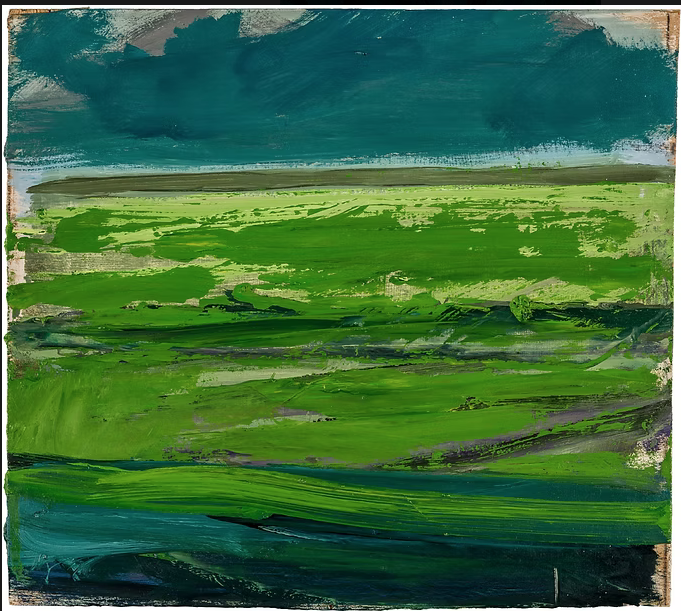
I love that notion of mind’s landscape. I’ve even shortened it to mindscape or memoryscape. One example comes to mind. Back several decades ago when I was living in Brooklyn, I had a rowboat chained to a tree by the Kensico reservoir near White Plains, New York. I would take my city friends, most often painters, up there for a day of fishing and an escape from the city. So many of my paintings seem to drift back to memories of the woods around the reservoir, the lake coming through the trees. It’s as if those images are burned in my brain or better yet my heart. They are real, a specific place, but somehow that place has just become “the Lake.”

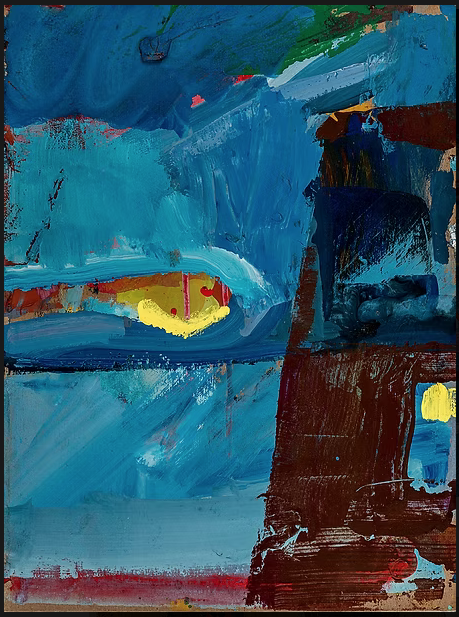
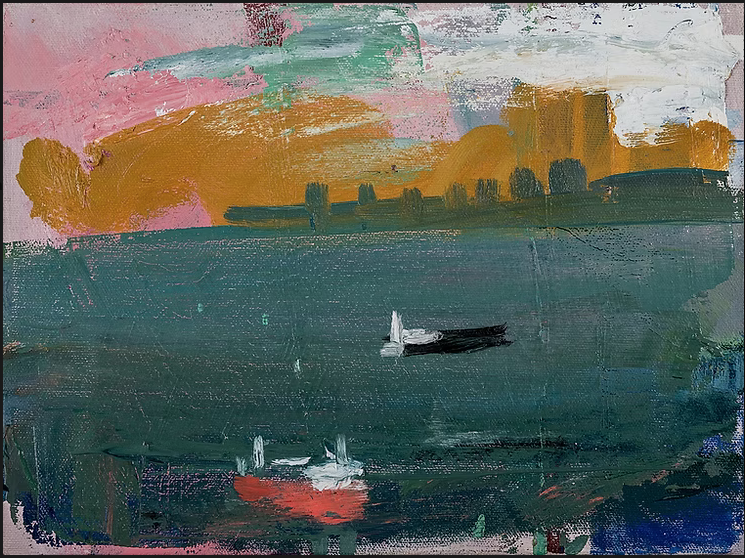
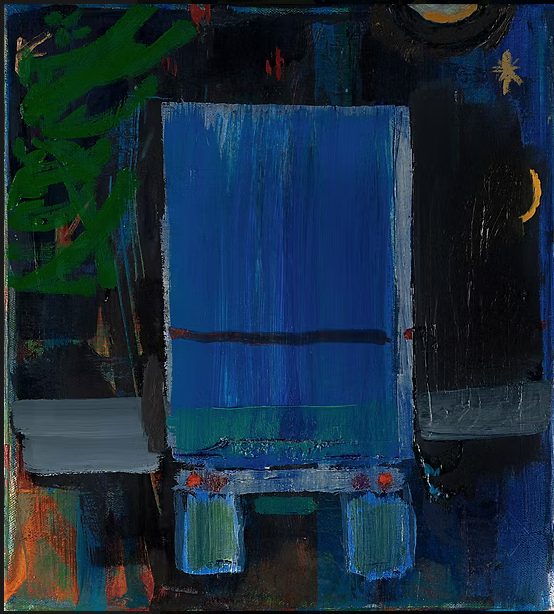
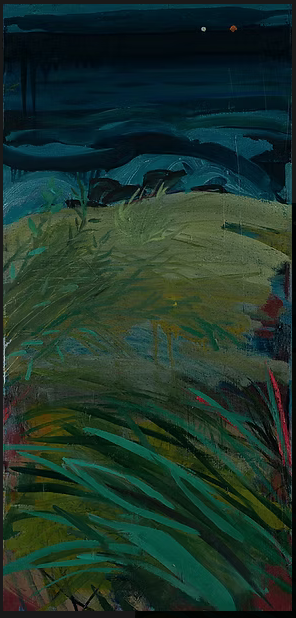

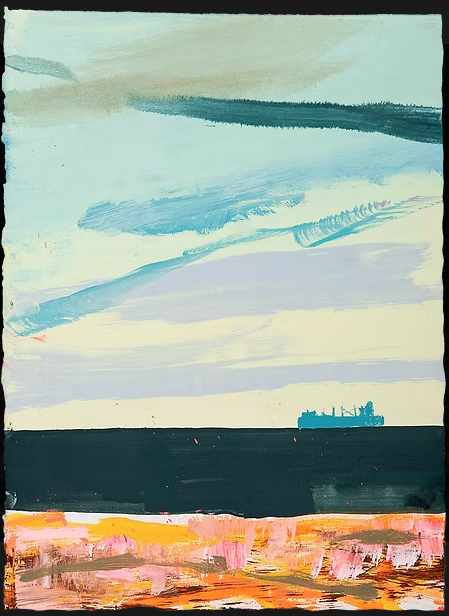
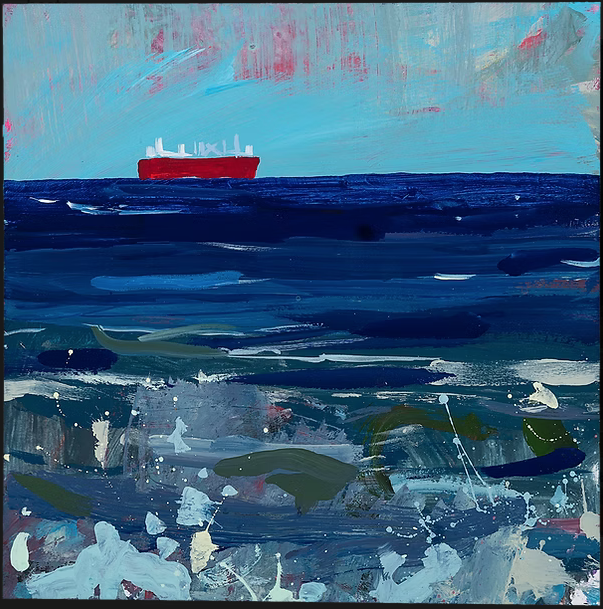

Joel Adas who formerly lived in Brooklyn has recently moved to Cape May, NJ where he shares a studio with his wife, Helen, also a painter. He works in a free-flowing style that relies heavily on improvisation and reacting in the moment to what the image might be or become. Landscape is his favorite genre but people and objects sometimes populate his paintings.
Adas is a particularly drawn to coastal and urban areas where there is evidence of decay and of structures once used now defunct. The conjunction of nature and human constructions figures prominently in his work.
There is a lively play between a sense of deep space in most of his pictures and the surface of the paintings which are often raw with scrapes, scumbles, and areas that have been sanded away to reveal previous layers. Adas has a love of many painters whose work was similarly physical including Soutine, de Kooning, and Biala among others. You can see more of his work at joeladas.com and on Instagram @joelwaves.
Categories: art, featured, featured artist, interview

 magpiesmagazine.com
Wonderful colours. Good luck with the exhibition
LikeLike