

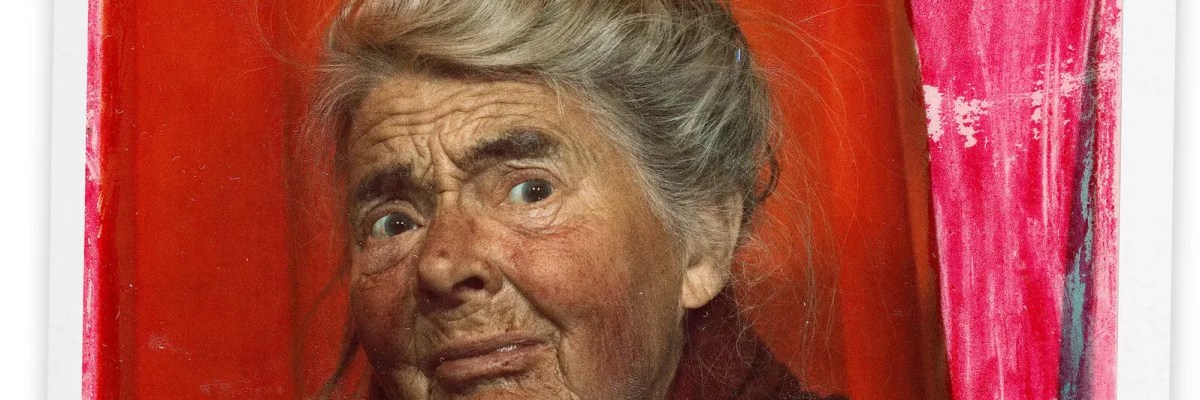
A lot of people have called Lee Godie a lot of things — outsider, eccentric, homeless, a salesperson, a character — but in the end, it really feels like she told her own story, exactly as she needed or wanted to tell it. To read about Lee Godie’s life makes me sad, in the way that reading about the life of anyone — anyone who has lived and died and lost and struggled — makes me sad. But in the end, there’s such a bright humor and archness in her story of herself that it’s hard not to feel that she triumphed, in some way.
She was famously quite private about the facts of her life, but there are some you read everywhere you look that are fairly consistent, which must make them true, right? She was, in theory, born Jamot Emily Godee in 1908 and lived with ten siblings in a Christian Scientist home in Chicago, sleeping in the attic. She maybe had two or three husbands, depending on where you look, and three or four children. But it’s fairly certain that two of her children died of disease, one at 18 months, one at 7 years. It’s fairly certain that grief changes you and turns you inside out. It’s commonly reported that her second husband lied about his promise to support her dreams of being a singer, and instead, she found herself pregnant on his chicken farm in 1948. And it’s fairly widely acknowledged that she disappeared completely from public view and history for a few decades after that.
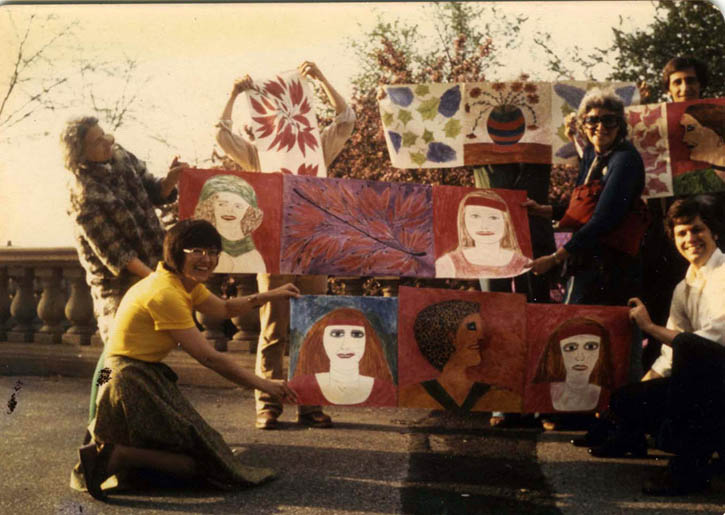
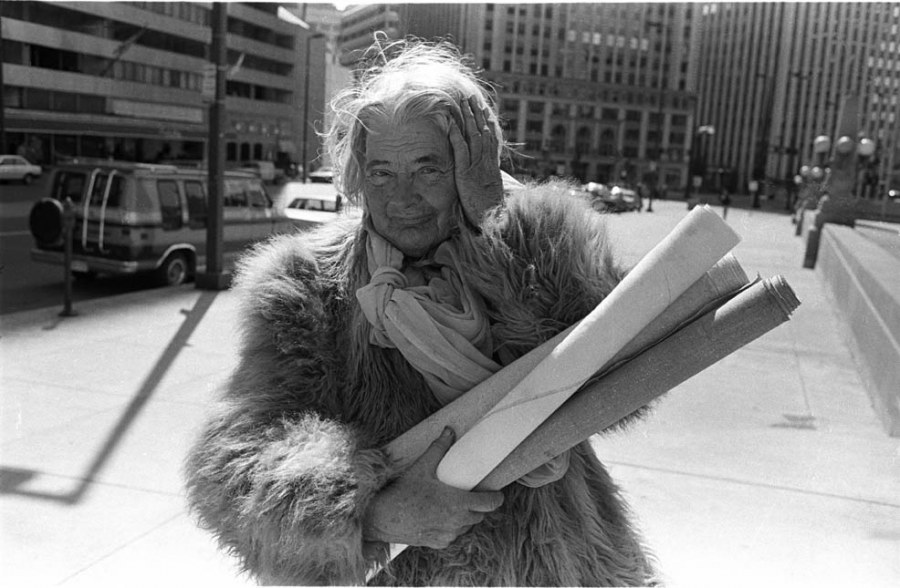
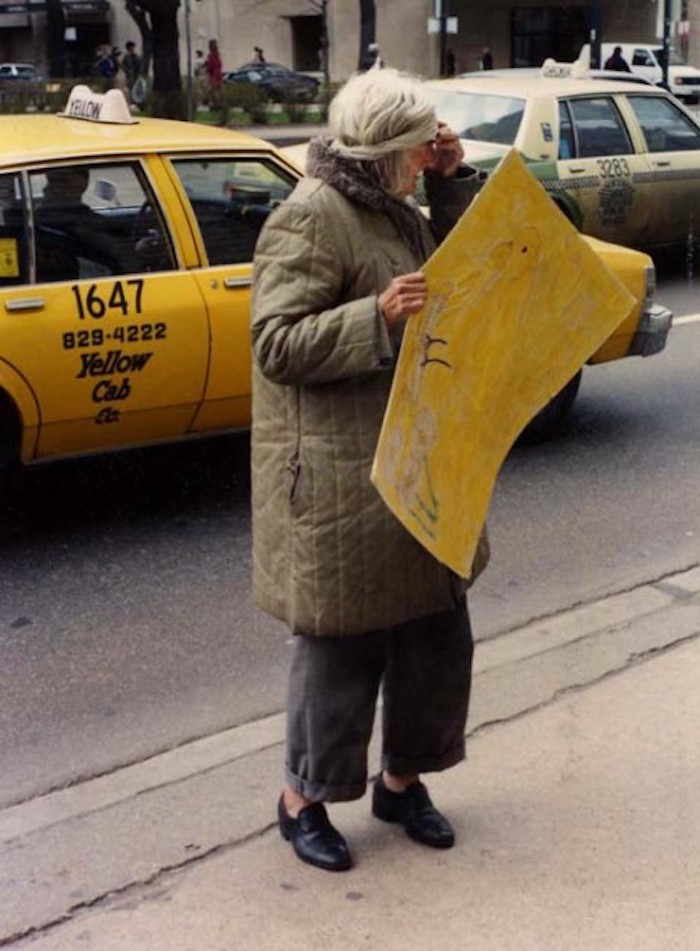
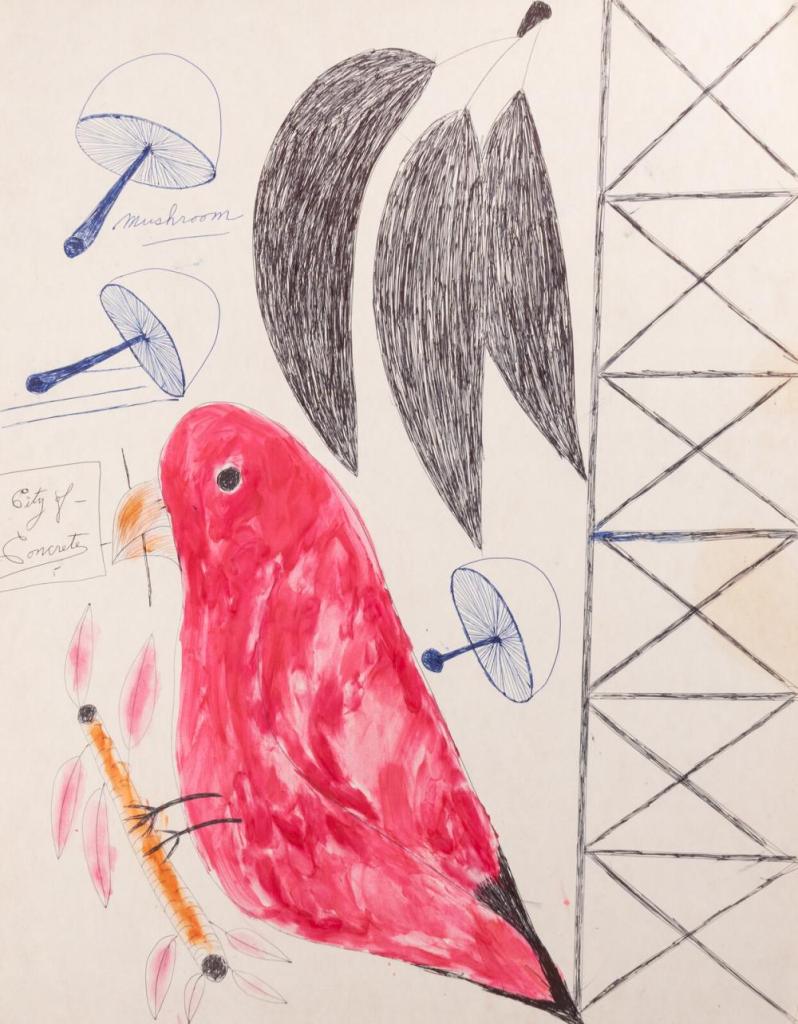
When she reappeared in the ’60s, as her legend goes, she was sitting on the steps of the Art Institute of Chicago, selling her art and calling herself a French Impressionist who was better than Cézanne. She claims that a little red bird told her to pick up a brush, and for the rest of her life, everything about her became a part of her art. She made art from objects found on the streets of Chicago — pillow cases, broken car windows, old boxes — other people’s trash. She dressed in clothes pieced together from bright swatches of fabric, and wore a fur coat cobbled together from other fur coats. She sang and danced to attract customers, and teased her canvases by unrolling them slowly and then folding them back up. Buying a painting from her was an experience in itself. You had to track her down in her usual haunts throughout the city, and depending on her mood, your clothes, or the day of the week she might entertain you or turn you away entirely. She priced her paintings around $50, but on the back she would write their true worth — in the tens of thousands. And strangely, that’s what they might sell for today.
She painted her own face with the exaggerated colors of cosmetics: bright red circles on her cheeks, painted eye shadow and eyebrows above her own eyebrows. She created prototypes of women — the Clara Bow “it girl,” the Katherine Hepburn sophisticate. And her portraits of women have similar exaggerated features, made up with bright red lips and impossibly long eyelashes. It was a sort of ideal of beauty that the cosmetic industry sells to women, the way they play on our insecurities to tell us that we should look. In a way, it portrays the very definition of femininity, but exaggerated to absurdity. In one painting of a woman looking with a troubled expression at another fashionably dressed woman, she wrote the words “staying alive.” And what did that mean to her? What did it mean to stay alive?
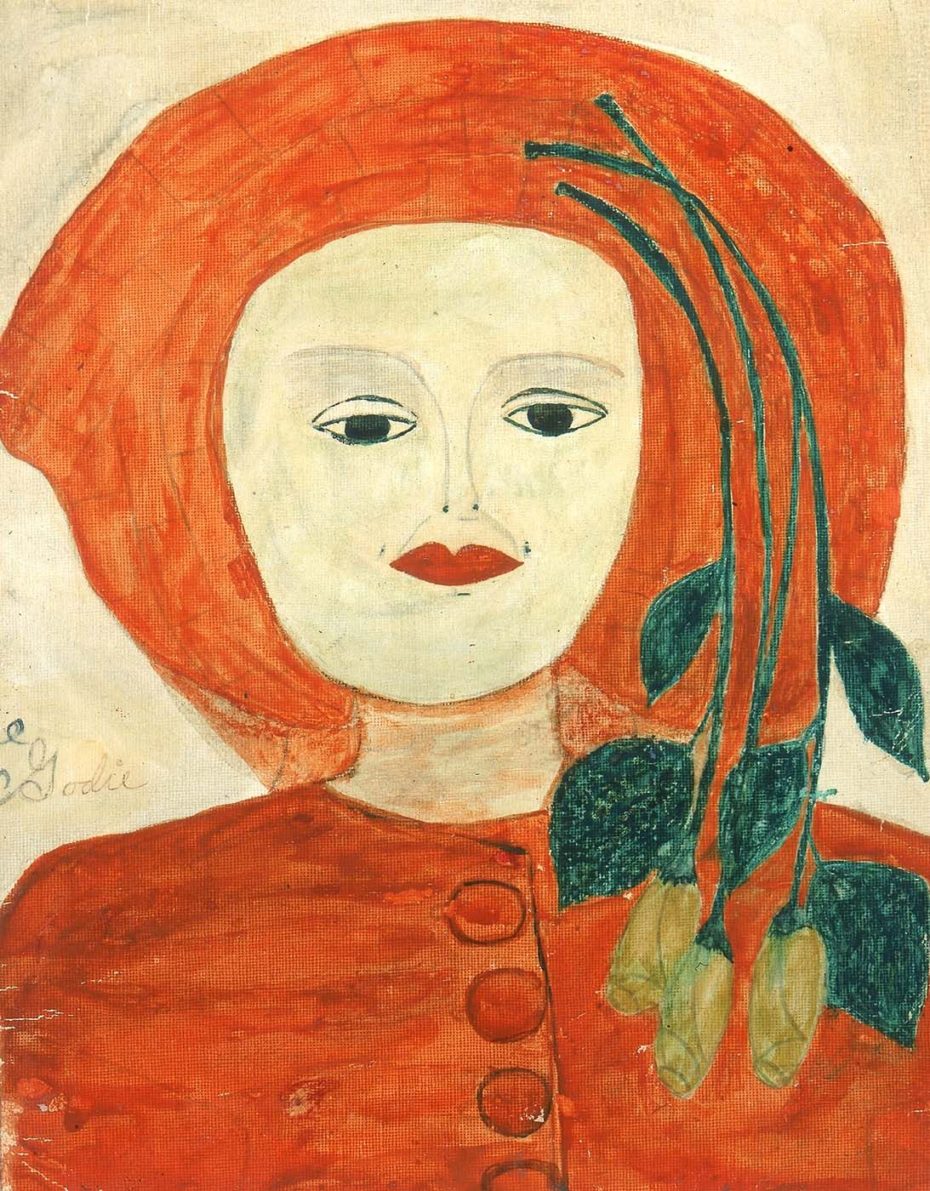
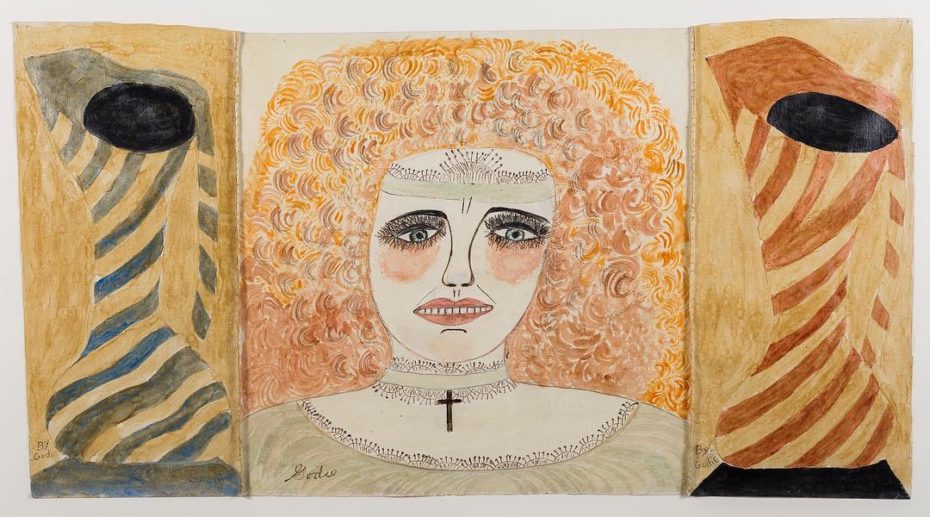
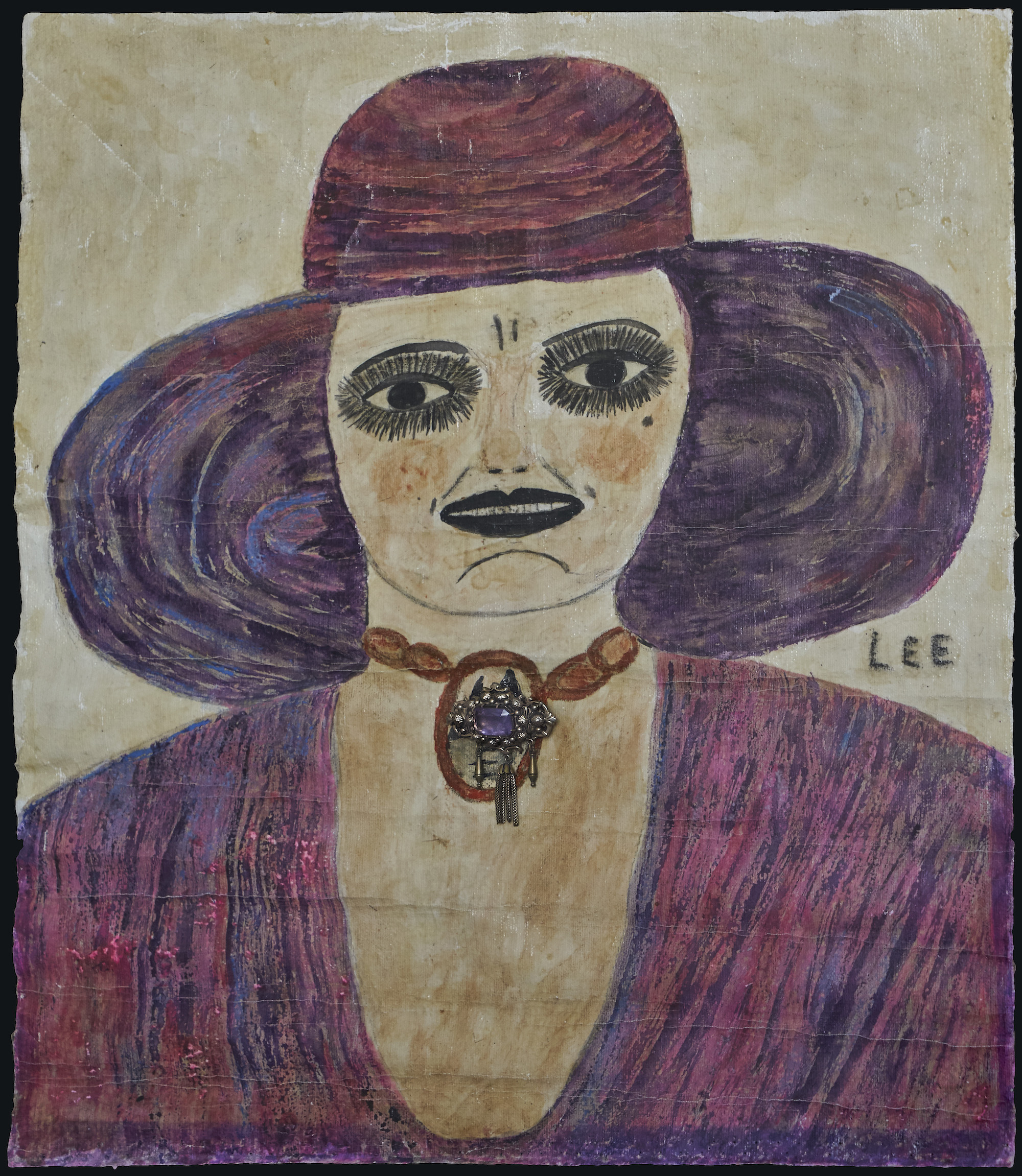
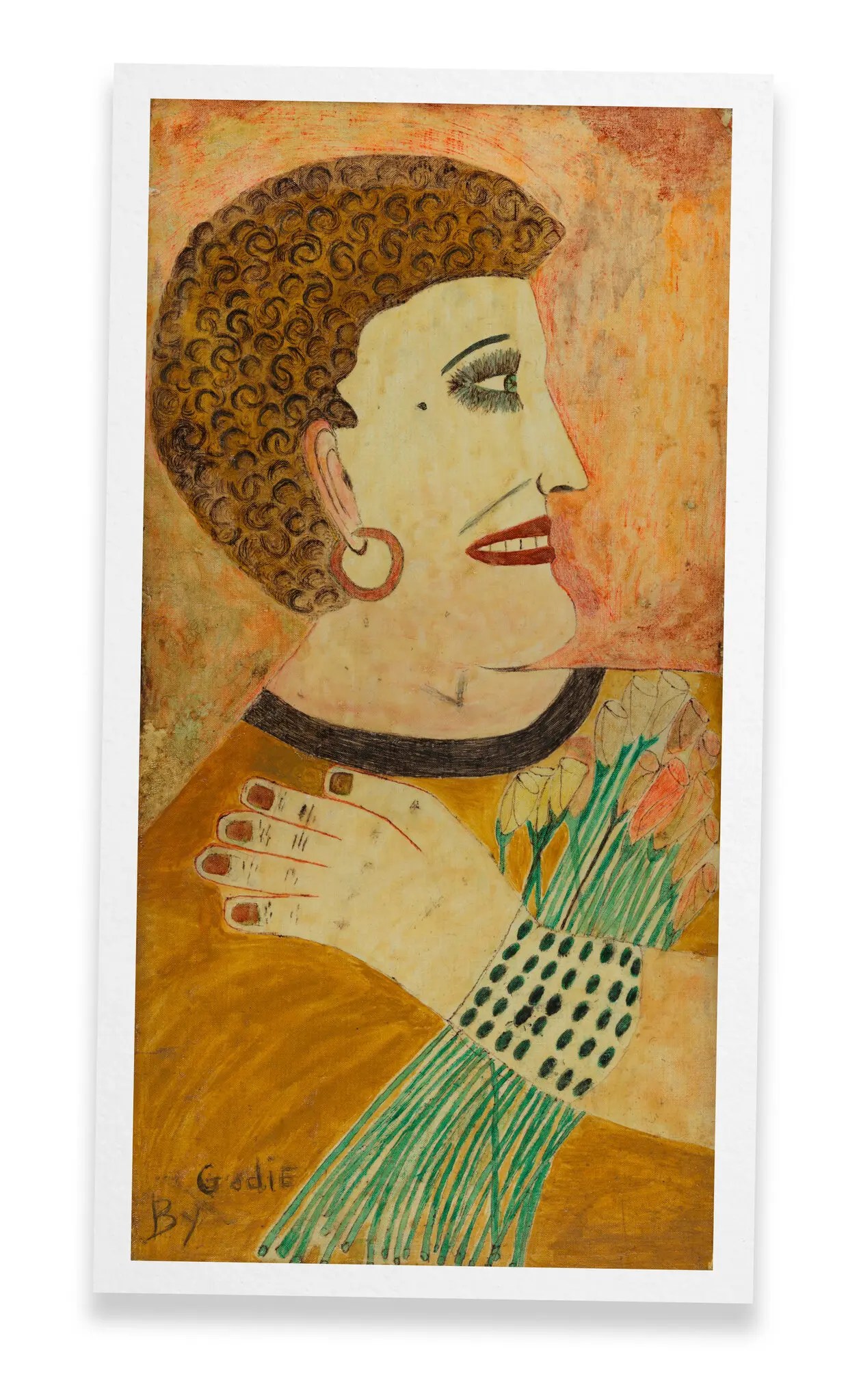
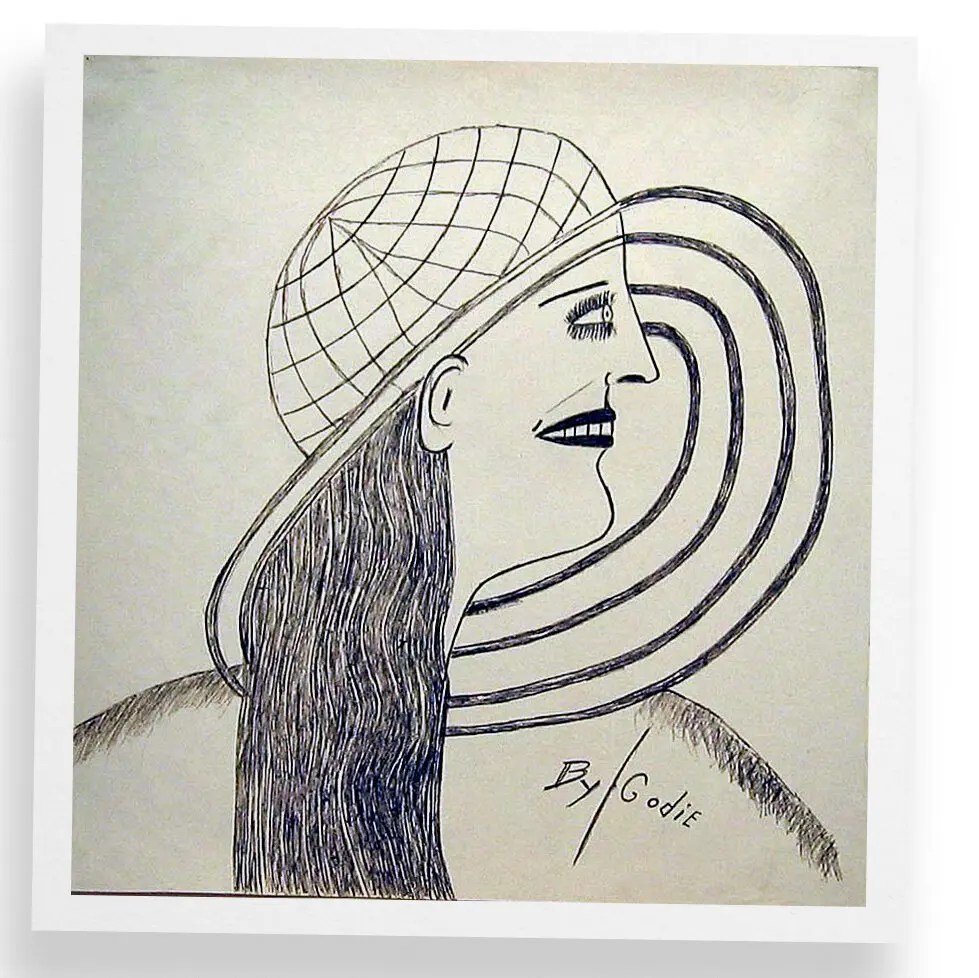
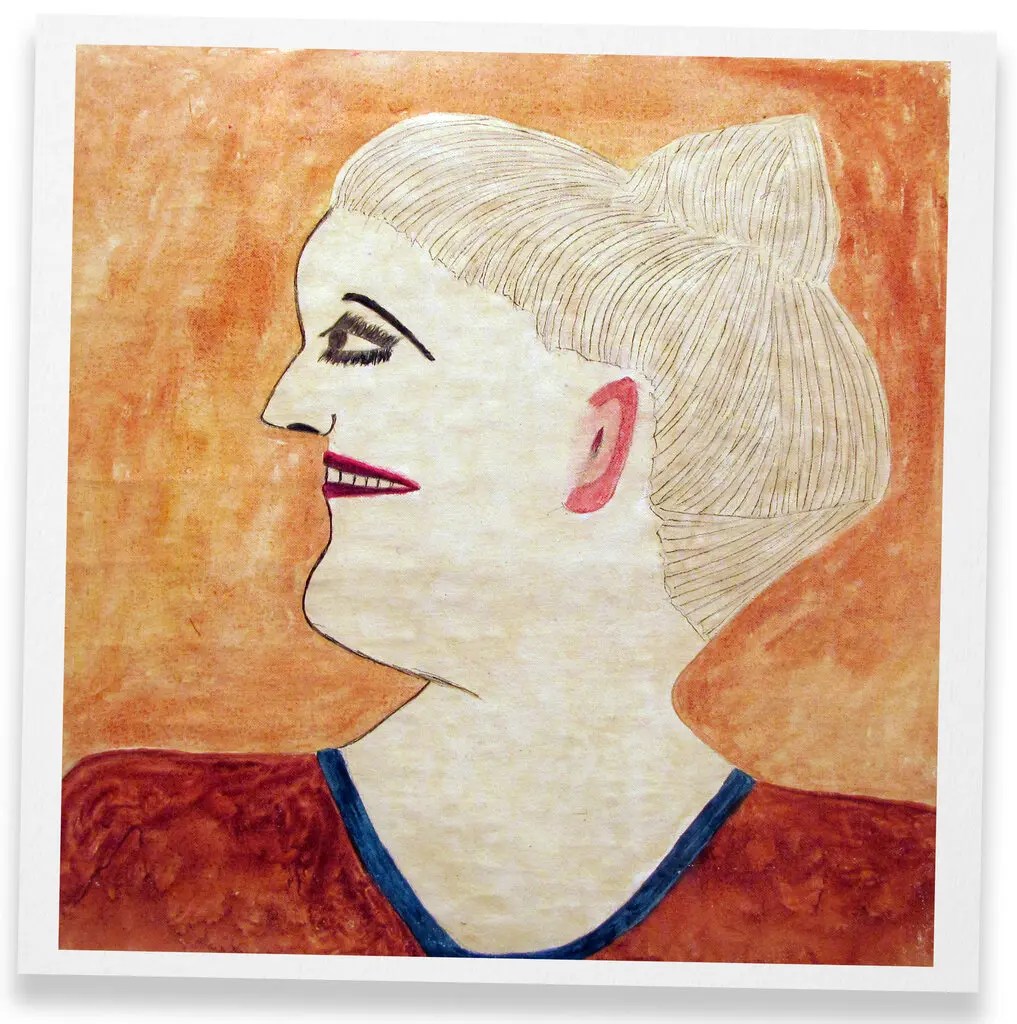
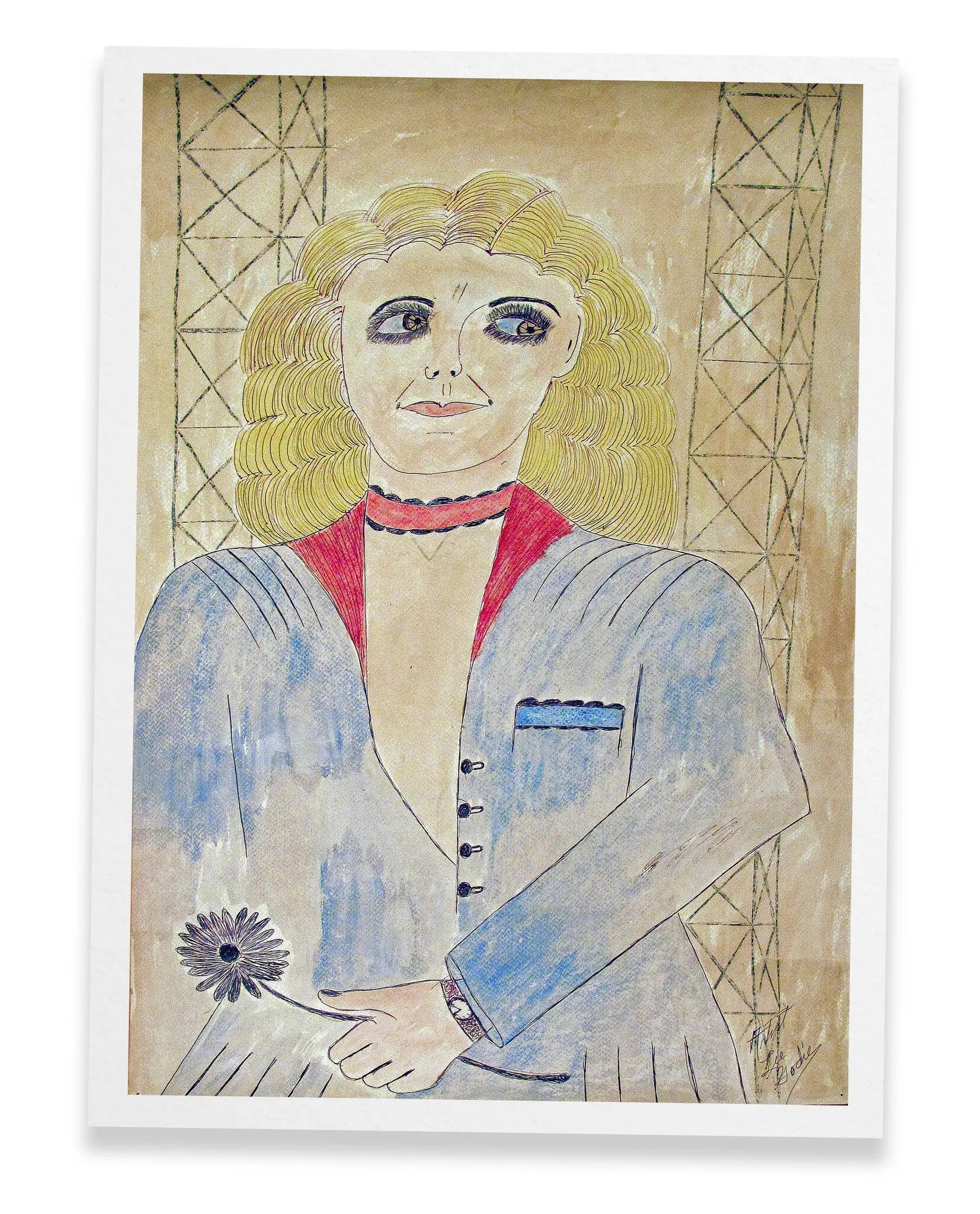
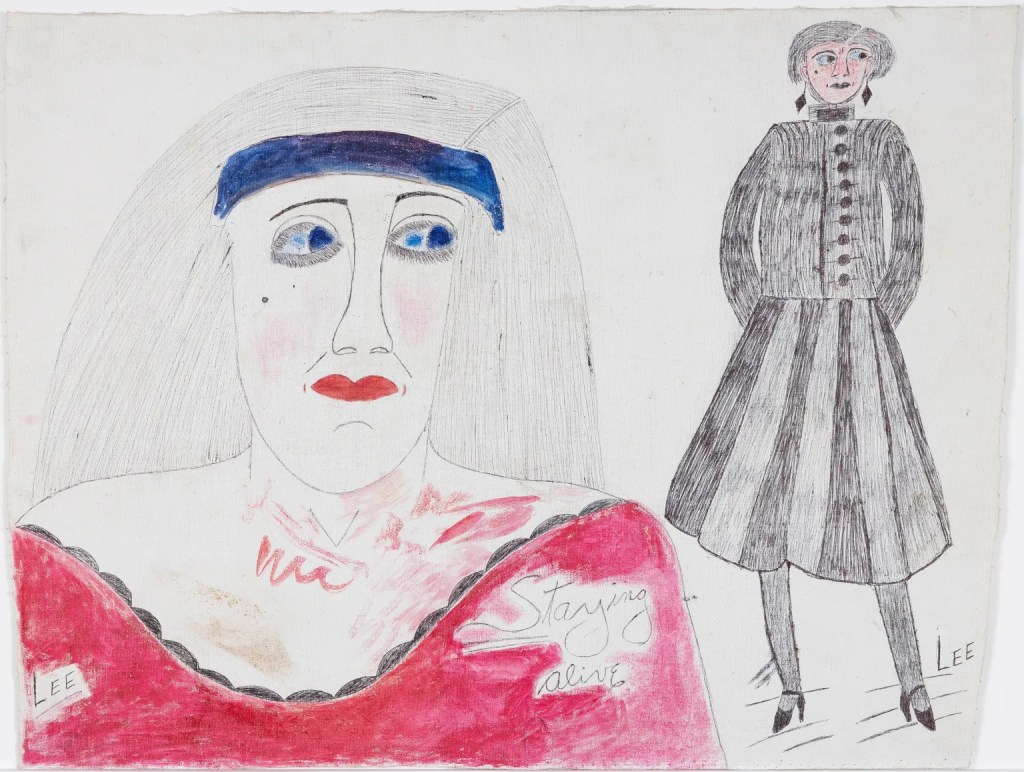
Although she supposedly had money, she lived for many years without a home, sleeping on benches in the park, even in the coldest of Chicago winters, entertaining people in cafés or the lobbies of fine hotels. But in a way, all of Chicago was her home. She loved the city, and she would write paeans to Chicago on her paintings, though she would have seen the worst of it in her struggle to stay alive. She created her own art scene on the streets of Chicago, a world that was strange and wildly, carefully curated, and she reigned there.
Her most fascinating work, to me, is her collection of bus station photo booth self-portraits. This is where she really cultivated her image of herself, and they’re playful and strange and beautiful and sad and strong. She would pose and preen and dress up, and then she would paint or write on the images after they were printed. Adding her name and her title, Lee Godie, French Impressionist. She would hide from the camera for some of the frames in a series, quite literally playing with the space between the images, the silence between the words. She’s often looking to the side, but sometimes she’s looking straight at the camera, straight at the viewer, and the photos are powerful and haunting.
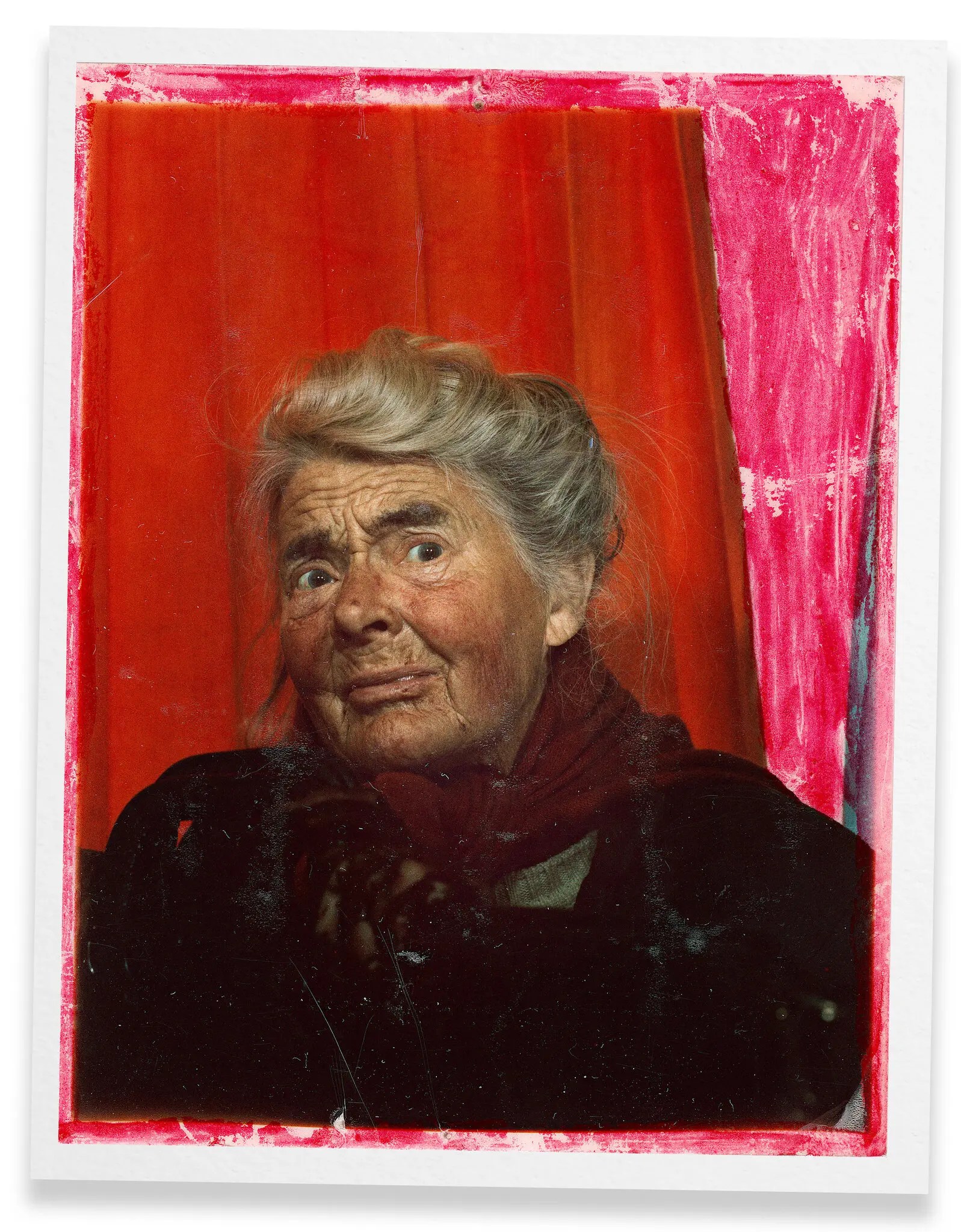
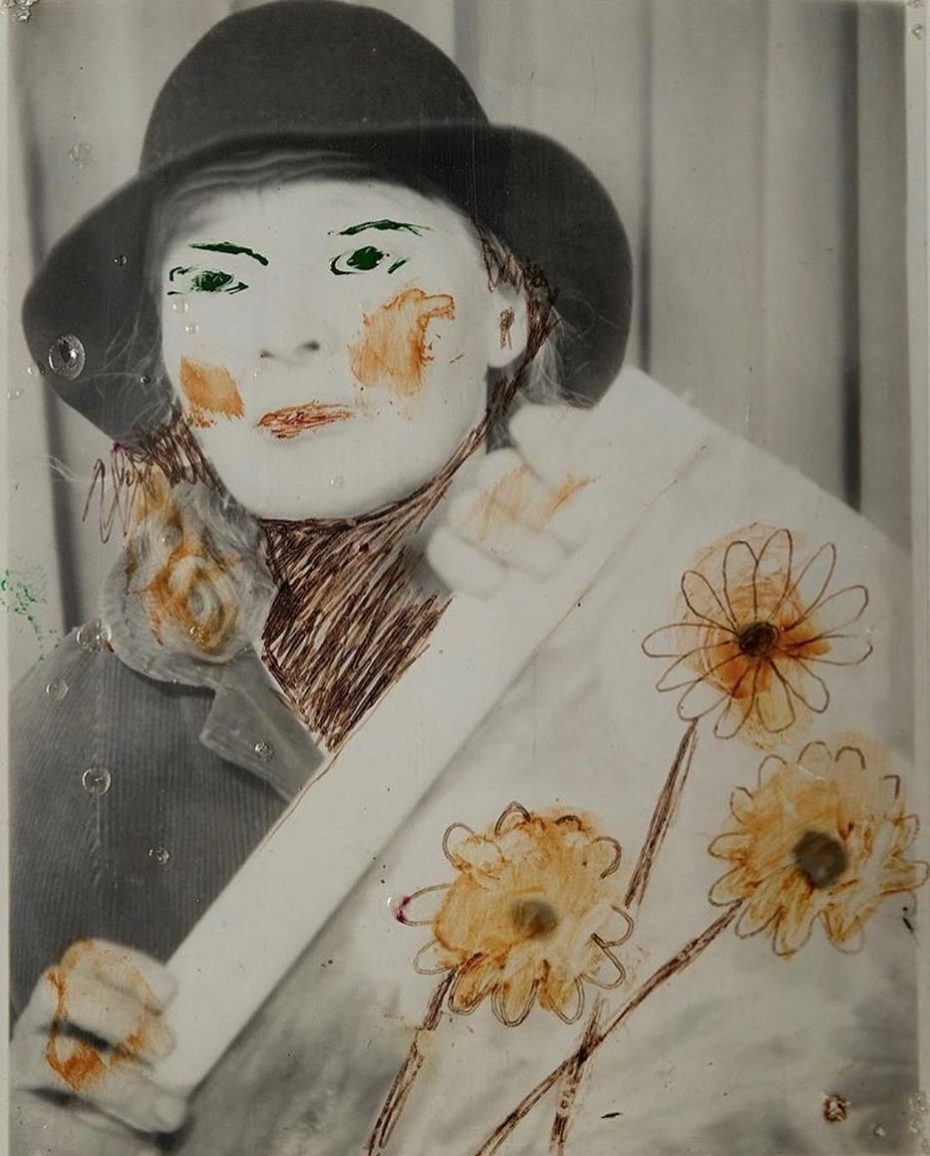
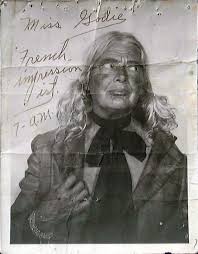
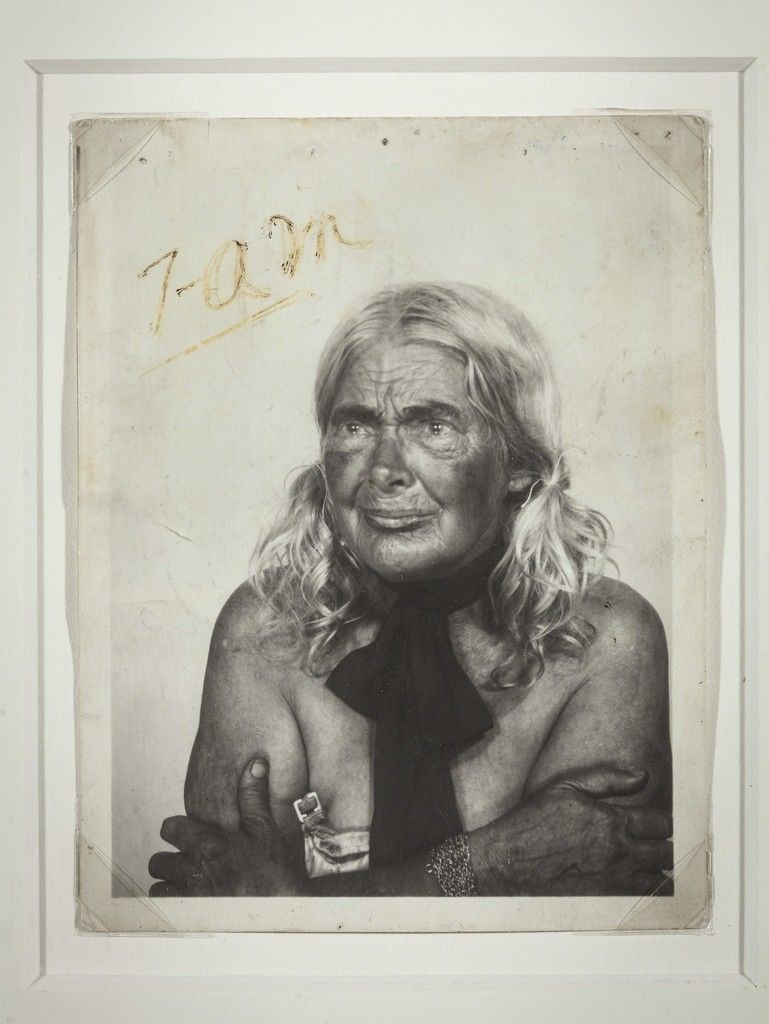
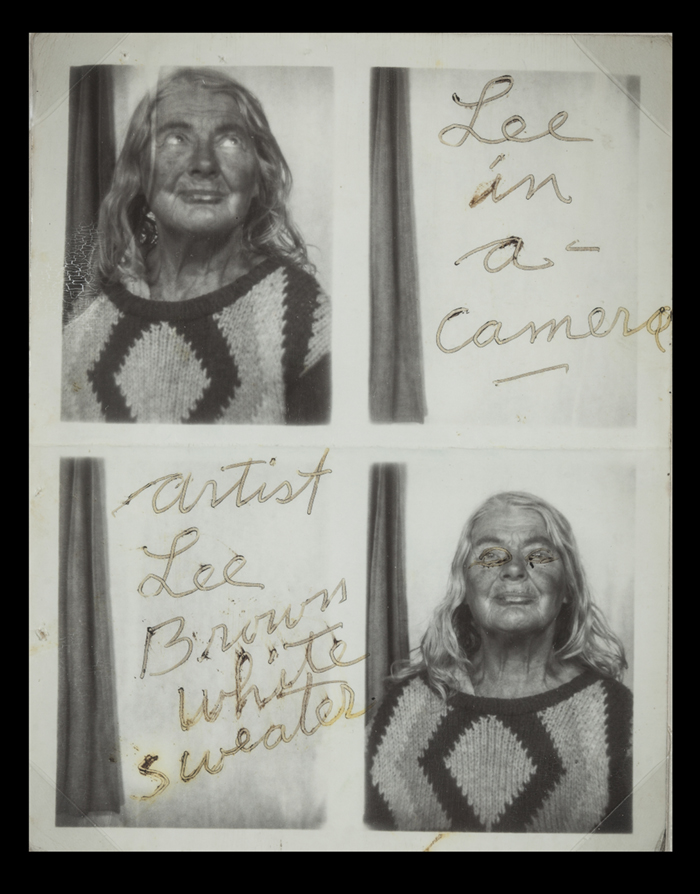
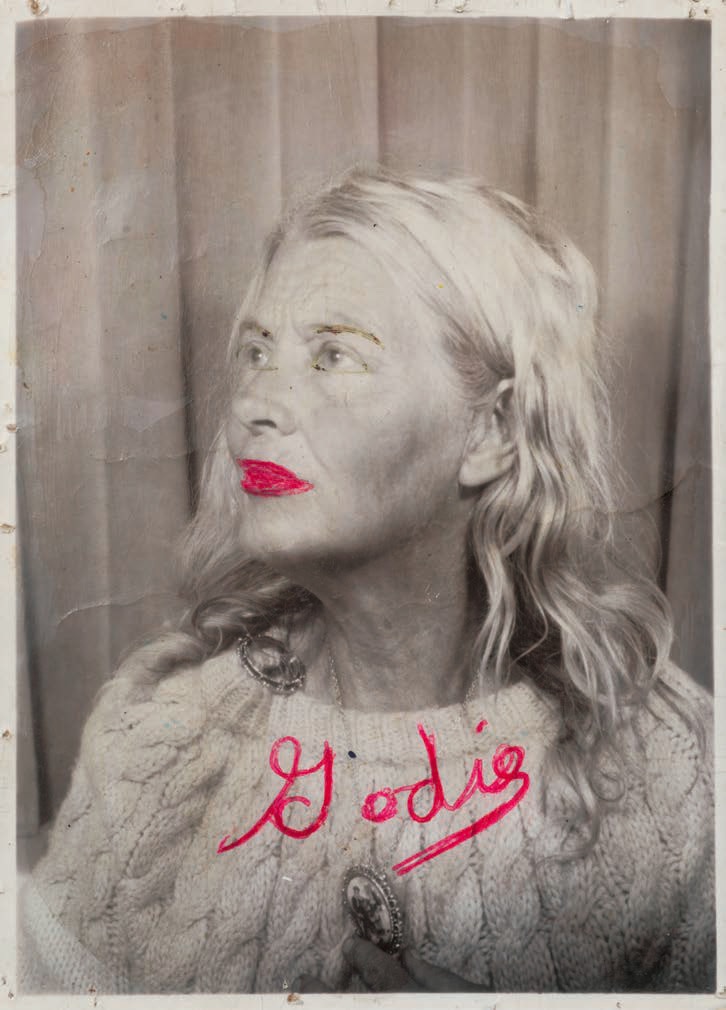
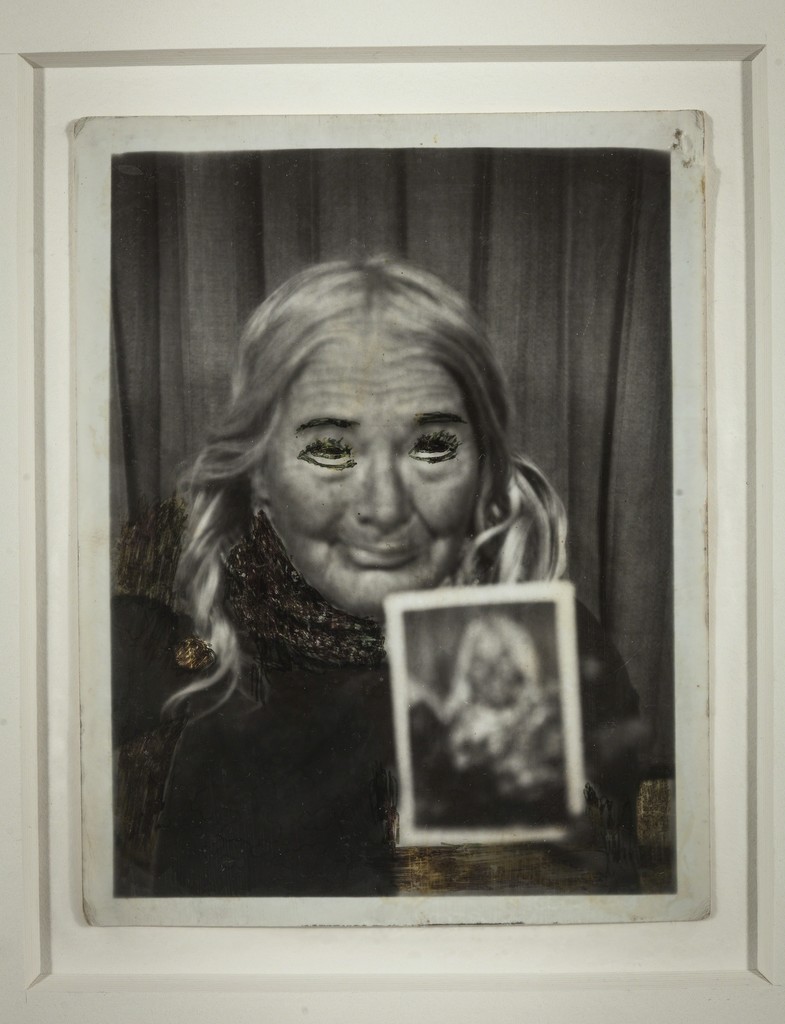
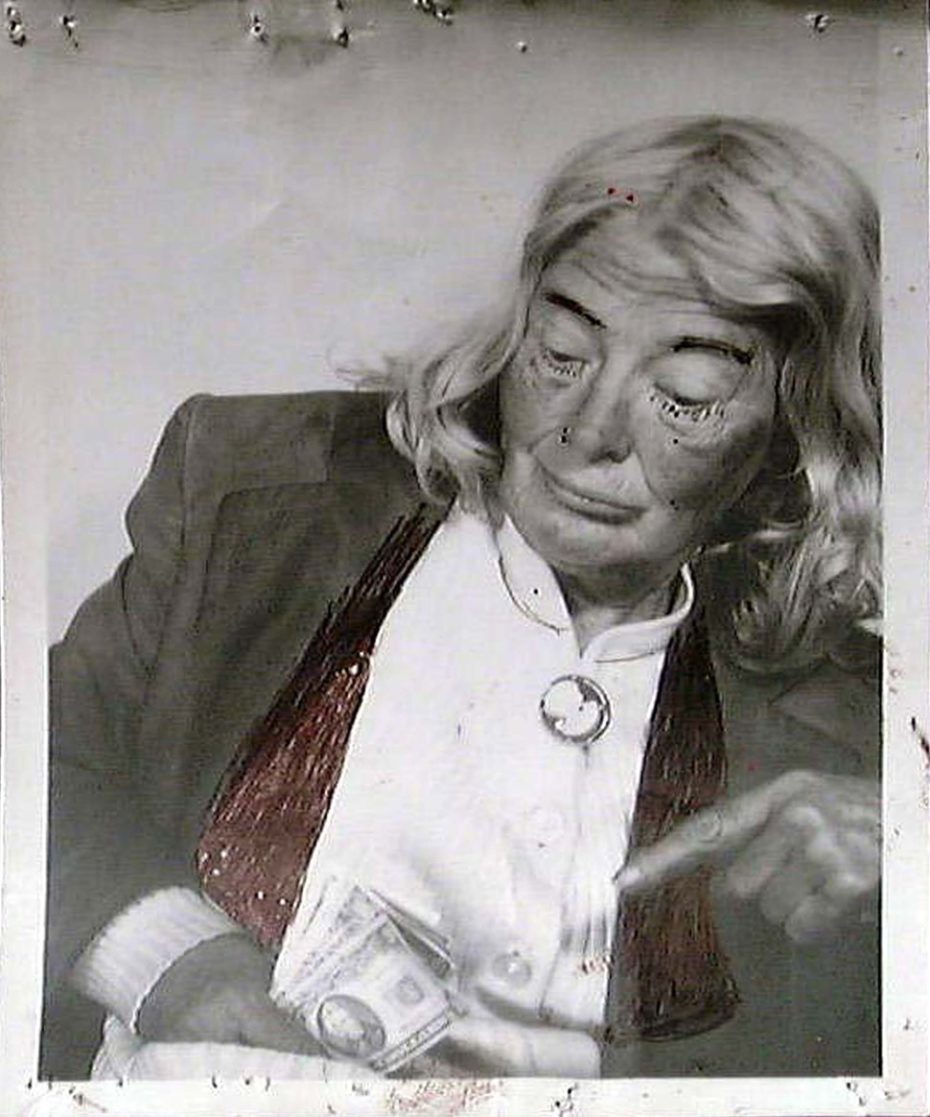
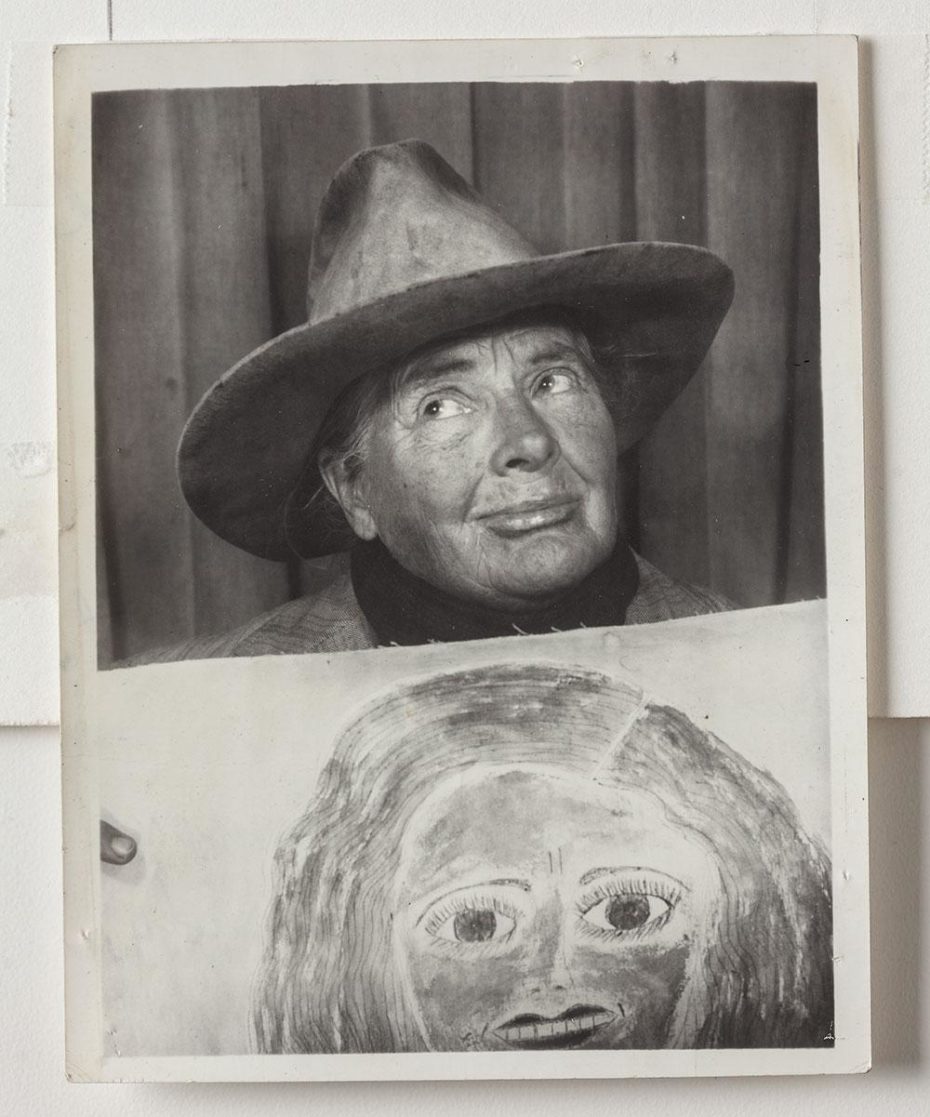
Godie is quoted as saying, “I always try to paint beauty, but some people say my paintings aren’t beautiful. Well I have beauty in my mind …” The world she created for herself, with her art and her life and her life as art, must have been solitary and harsh at times, but there’s such strength in her creative spirit, such beauty. Such beauty in the questions she asks, about what it means to be an artist, what it means to be successful, what it means to have a home, what it means to be a woman, what it means to be alive. What a struggle we all have, all people, to stay alive.

 magpiesmagazine.com