

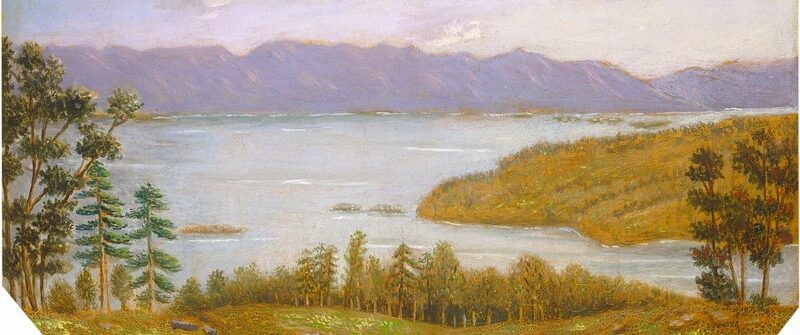
“I saw hope outside the window, and you said something I couldn’t understand.” – a sentence I scrawled in my notebook yesterday but I don’t remember why.
“And their memory’s like a train
And you can see them getting smaller as they pull away
And the things you can’t remember
Tell the things you can’t forget …” – Tom Waits, Time
How strange it is to one day wake up and find yourself the age that you are, whatever age that may be. And find yourself living where you do, wherever that may be, and living with the people you live with, whoever they are. How strange to find that you still struggle with all the things you’ve ever struggled with, although some are stronger or weaker now, some are just nagging shadows of old worries, and some threaten unexpectedly to drown you, on a bad day, after a bad night. How strange to hope for the things you hope for, and work at the things you work at, and find that they haven’t changed all that much since you were a child, but how strange that they’ve changed at all. And how strange that you’re not still a child. And where did this dog come from? How did she end up here, of all places?
And how strange that when my first son was a newborn we were headed to war in Iraq, and everything was so precious and fragile, and how strange that now he and his brother are old enough to go to war and we’re headed to war with Iran. And everything feels so precious and fragile. How strange that we can measure out our lives in war-worries and war-memories, and war-weariness. How strange it is to be anything at all.
How strange is the passing of time, and maybe it’s the time of year or the state of the world or my lack of sleep, but thoughts of who and where I’ve been are haunting me right now. People all over the world have words for nostalgia, for longing, memory, wistful melancholy: hiraeth, saudade, mono no aware, sehnsucht, the list goes on. It’s a universal feeling, something we all share, for better or for worse.
I learned recently that nostalgia was originally considered an illness, a deadly disease, a morbid longing. The word was coined by a German scholar in 1688 and applied through the years to soldiers, and immigrants (it was called “immigrant psychosis”), and slaves. Banzo, it was called in Brazil, when Africans brought over as slaves were sick to death with sadness. Scientists and doctors couldn’t understand why slaves might be so sad that they lost the will to live, so they studied the problem and defined it as an illness, a weakness, something that needed to be cured, an economic problem.
How could we have had such little understanding of the human heart? How tragic that our understanding of the “problem” wasn’t that we were sending boys to war or selling humans as slaves, but that they were sad about it. How depressing that we were evil and greedy enough to start any of this, and had such a lack of empathy to continue it. Sometimes, when we look back on shameful practices of our past, we wonder what we’re doing now that one day we will look back on with horror. This! We’re still doing this. We’re still sending our children to war, we’re still destroying places so that people are forced to leave their home, and then deporting those people to places that are strange and cold to them.
Scientists and scholars are still studying nostalgia, as well, though now many see it as a way to treat a problem rather than the problem itself. Apparently research has revealed that doses of nostalgia — time spent thinking of memories of things that you’re fond of, the food, and music, and people, and places that you love and miss — can make you feel stronger, more cheerful, more optimistic, and even raise your body temperature.
Built into the word “nostalgia” is the word “home,” and notions of returning safely home, of food for the journey there, and of healing when we get there. It’s our memories that make us who we are. As bewildering as it may feel sometimes, when these glancing recollections visit us at the strangest times, keen and dream-like, as strange as it may feel, these memories form a sort of home of the mind and heart, that we carry with us wherever we go. Sometimes they haunt us when we can’t sleep or when the light or the season changes, but they make us who we are and we wouldn’t be alive without them. (That time I climbed a tree behind the neighbor’s garage and was too scared to do the tricks my brother and his friends were doing, but was entranced by the horse’s head I saw in the branches and knots — it was a horse with kind eyes. That time I took Clio to the field before her surgery and the grass had just been cut, the grass smelled so beautiful and she rolled in it with wild abandon, that time we came back there after surgery, and she could barely stand on wobbling legs, but she lay in the grass, which must have been sweet and cool on her belly. That time my son was home sick from elementary school and I took him for a walk in his pajamas in the cold winter sun, and he ate a rocket pop with a sour face. That time when he was very young and I was very tired and he pulled a blanket over me and patted me gently and said, “There there. There there.” That time my other son wished good luck to the eagles nesting on the electrical tower, as we scrambled through weeds into the sunshine. That time he used to rest his hand lightly on my shoulder every time we walked after dinner, while he talked his beautiful nonsense. That time my sons came to visit as adults, arriving unexpectedly, driving together from Philly, sitting at the table with us, drinking wine and talking about the food we made when they were young, the food we made that night — that journey home, for me, just having them there.) I know, I know, that we are the lucky ones.
How strange it is to be who we are, and where we are. The times are troubled. The world feels dark. But I’ve heard that hope is just outside the window, and if we listen we might understand what it is saying.
Categories: featured

 magpiesmagazine.com
beautiful.
LikeLike
Hold on to that hope, I am holding it too xx
LikeLike