

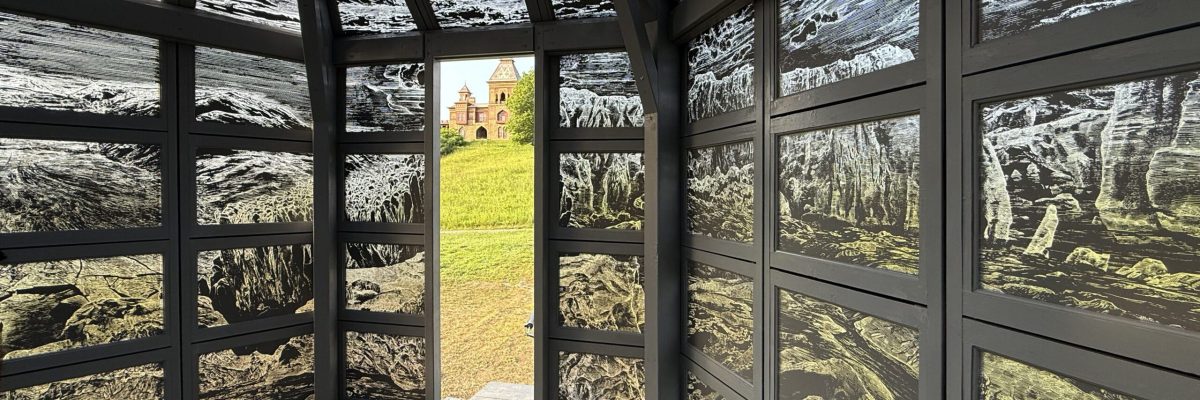
“For several seasons after I selected this spot as my home, I thought of hardly anything but planting trees, and had thousands and thousands of them set out on the southern and northern slopes.” – Frederic Church
Ellen Harvey’s installation Winter in the Summer House seems to hover on the edge that hums between many things. Between imagined, imaginary, and realized; between the thought and the act; between what we perceive from the outside and from within; between reflection and illumination; between our history and our future, and all the lessons we take from one to the other, all the lessons we’re in danger of neglecting. It explores the dichotomy of a man who had traveled the globe and seen (and painted) wonders, but who built a world for himself at home from which to view everything else, from which to think about how everything is connected. And it exists in that space in every creative process in which the viewer becomes a collaborator, it makes that moment glow.
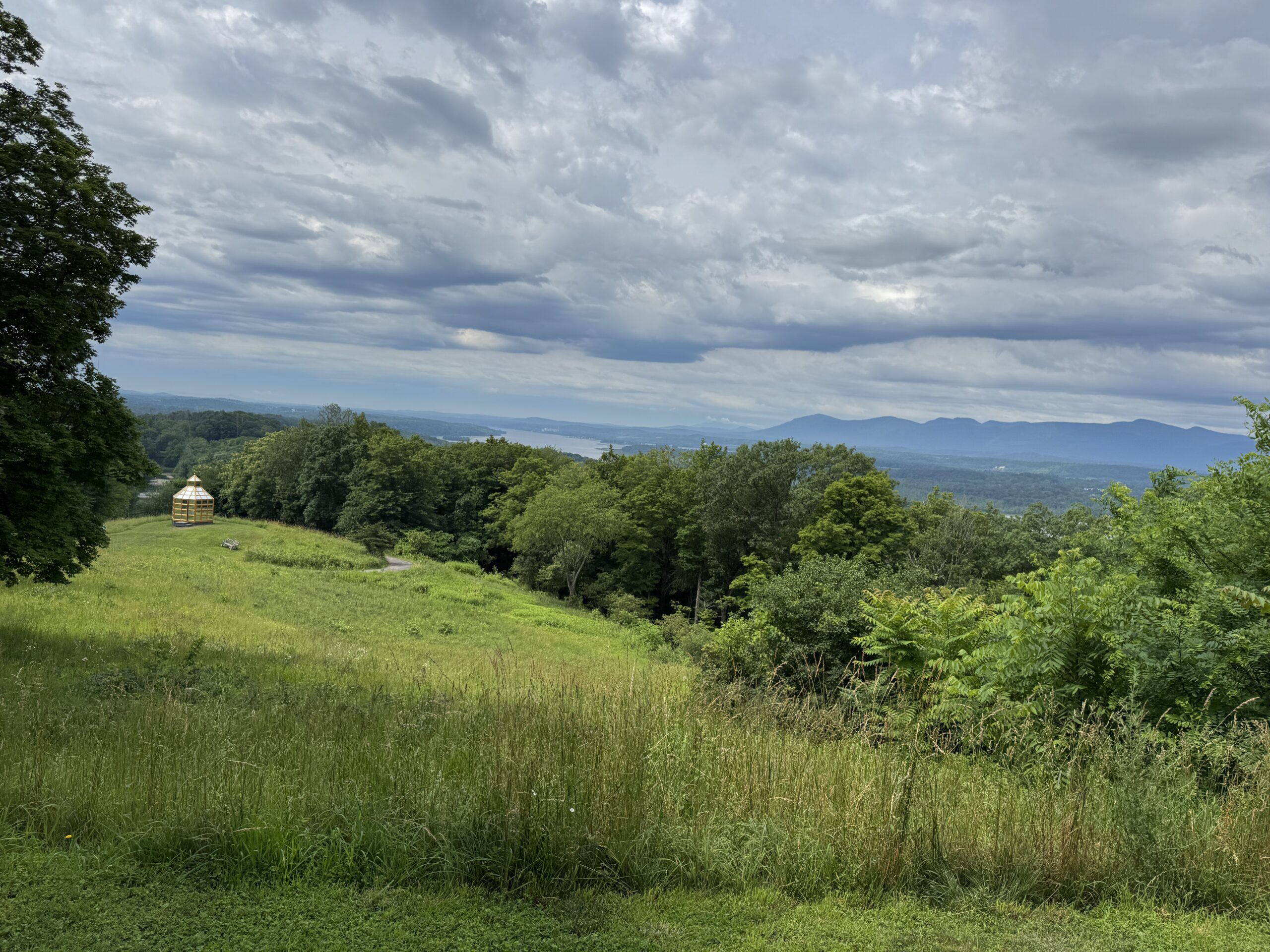
Olana’s 250-acre naturalistic landscape was designed by artist Frederic Church between 1860 and 1900 and is the most intact historic artist’s environment in the United States. Despite this remarkable state of preservation, several structures dating to Church’s time have since been removed, while others exist only in memories and personal accounts. The stories of these buildings remain embedded within Olana’s landscape, offering glimpses of a more complete history of this place and its inhabitants. Artist Ellen Harvey’s Winter in the Summer House activates the site of Olana’s “summer house,” a structure for which no physical evidence remains, but which was depicted on an 1886 Landscape Plan of Olana.
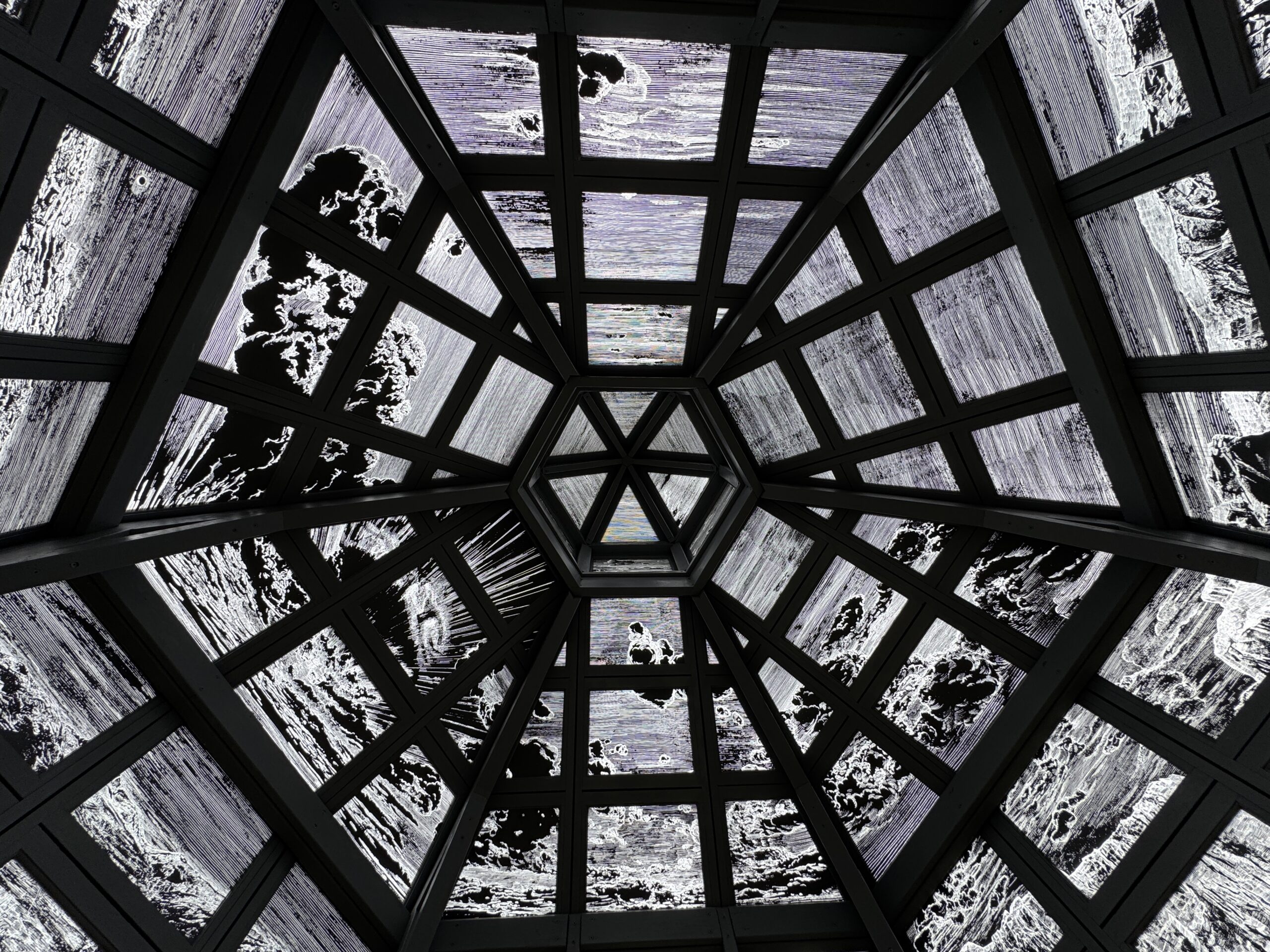
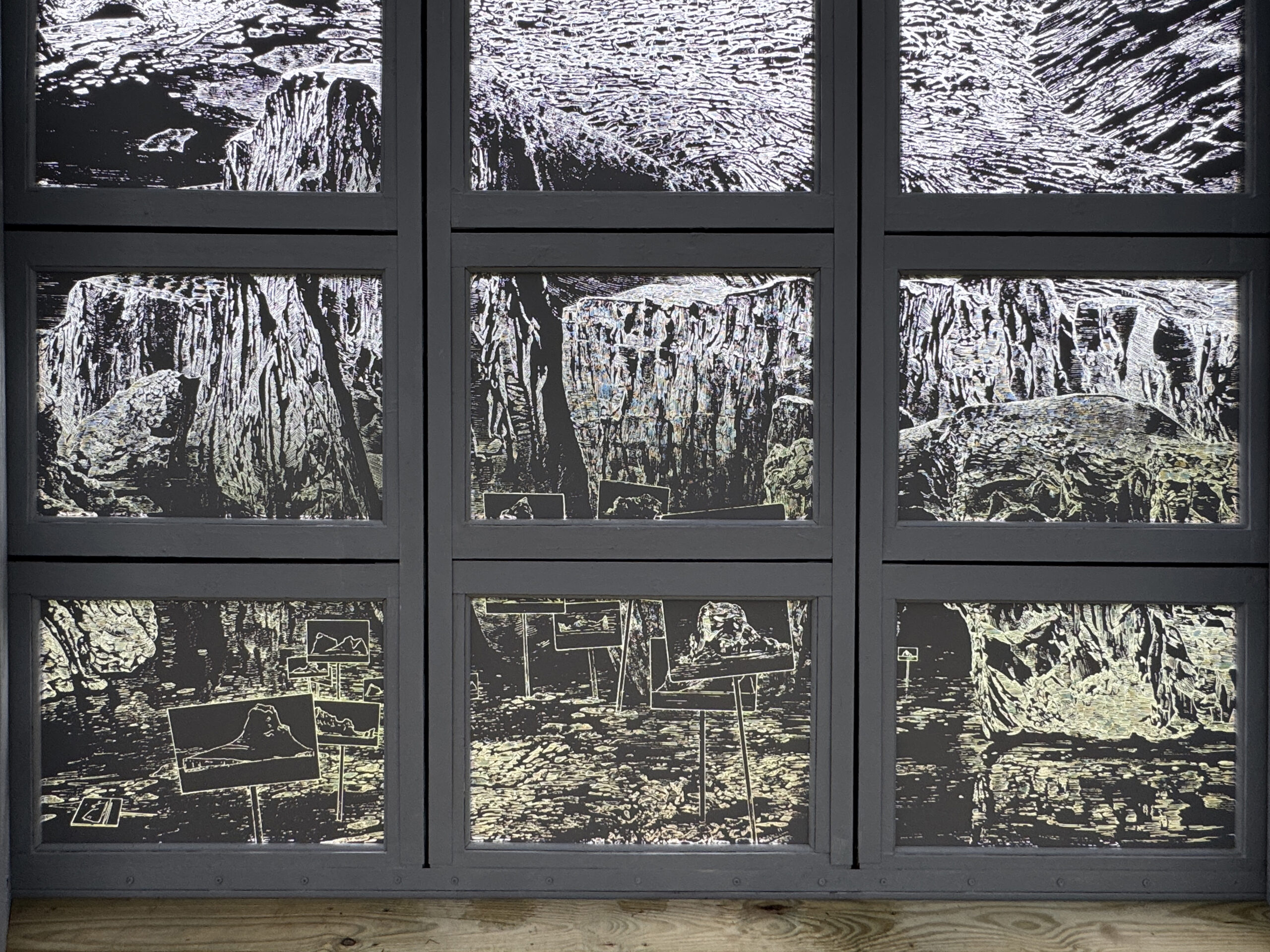
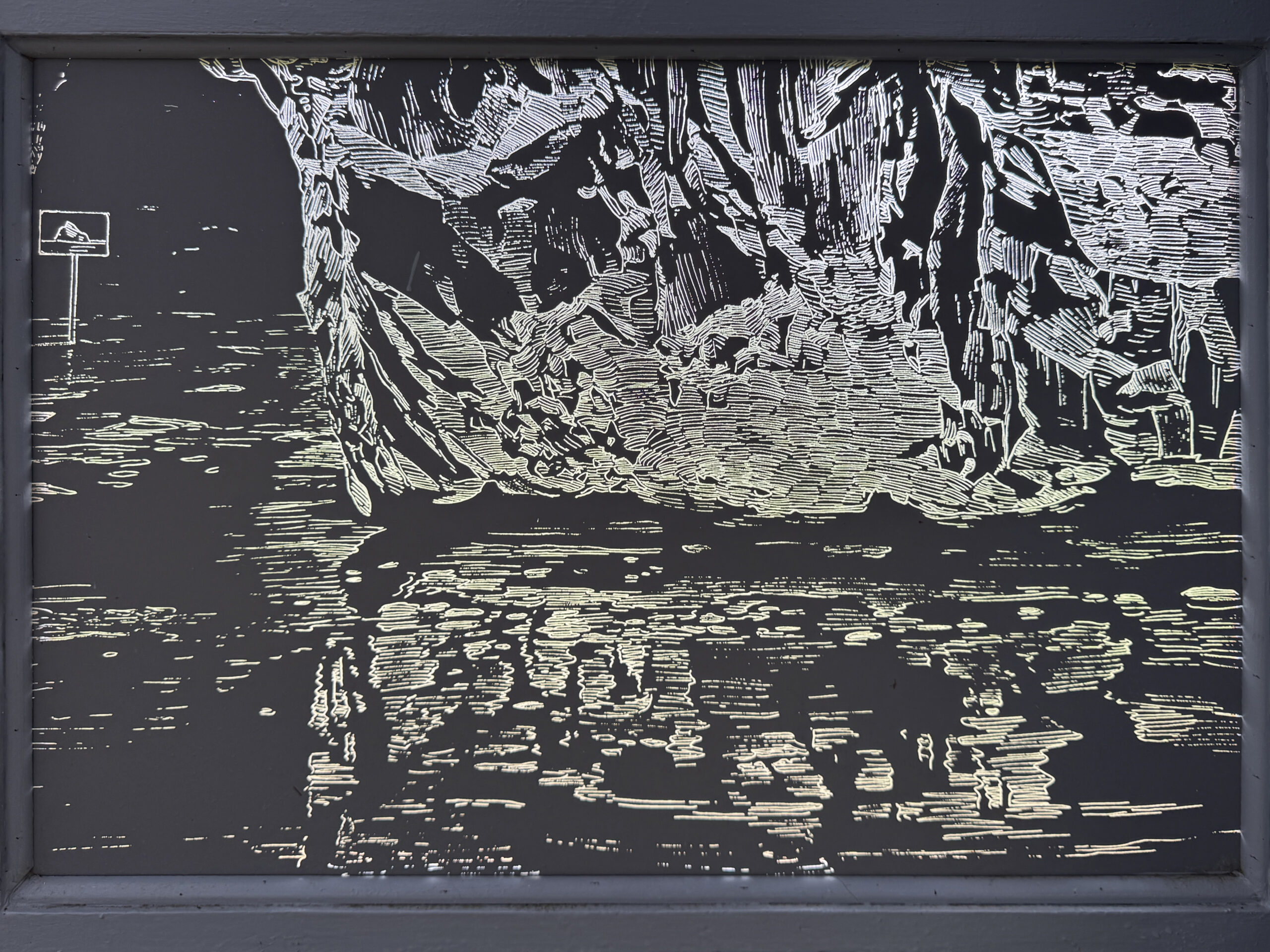
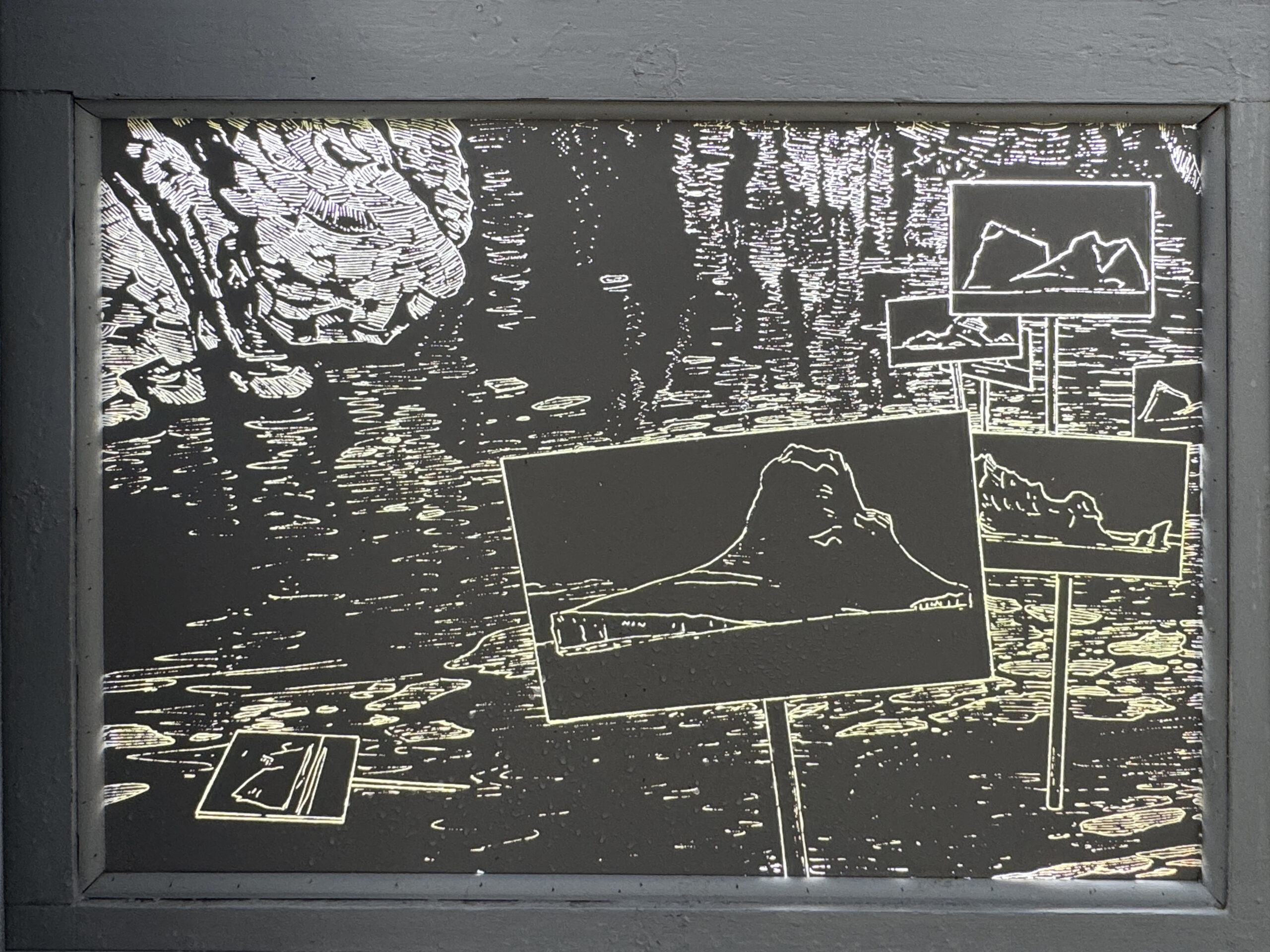
“Winter in the Summer House is my fantastical recreation of artist Frederic Church’s lost summer house. It’s made entirely out of gold-framed mirrors engraved with a hand-drawn panorama of melting glaciers protesting their fate. When you enter, you are transported inside a drawing made by the light filtering through the mirrors. The mirrored exterior honors Church’s love for the Hudson River landscape and the fact that it now belongs to us all, while the interior is a shout-out to his career as a travel painter and early ecologist.
I feel that if Church were alive today, as a devotee of the German naturalist Alexander von Humboldt’s idea of the great web of life, of the interconnectedness of ecosystems, he would be greatly saddened by the melting of our icecaps, so I liked the idea of connecting the Hudson Valley landscape to the distant icebergs and glaciers of our world.
I want people to experience the Olana viewshed the way that Church did — as an artist, literally framing the views. Olana belongs to us all, and this piece is intended to literally and symbolically reflect that. The secret engravings on the inside of the structure are a call-out both to Frederic Church’s famous voyage to find icebergs to paint and also to his ecological legacy. He loved nature and the Hudson Valley landscape so much — and I think we all need to be inspired by that or there will be no icebergs left to paint.” Ellen Harvey, 2025








Inspiration
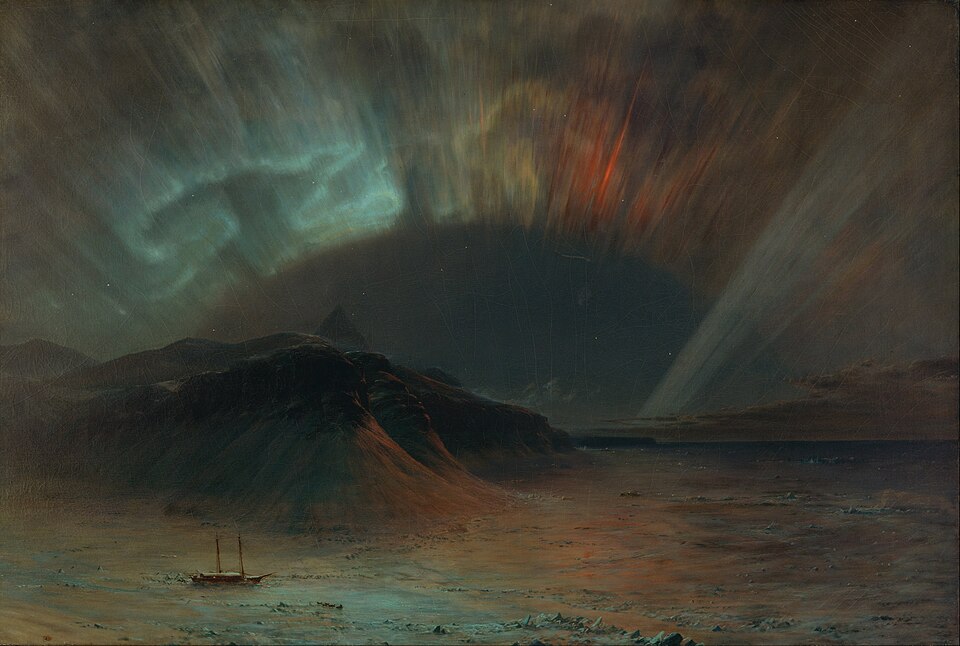
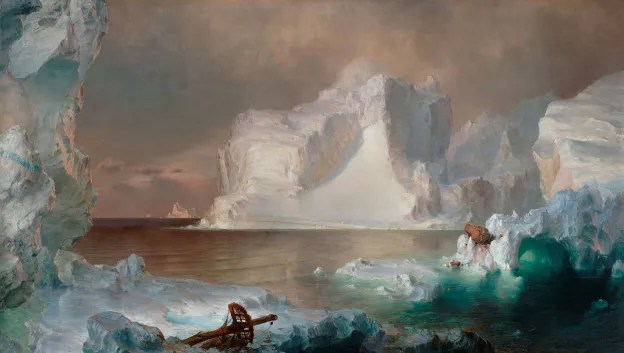
Frederic Edwin Church’s paintings: Aurora Borealis, Iceberg and Ice Flower, and The Icebergs.

Ellen Harvey is a British-born conceptual artist whose work ranges from guerrilla street interventions like her iconic New York Beautification Project for which she painted miniature landscapes over New York’s graffiti sites to immersive institutional installations and large-scale public artworks. Her work is painting-based but utilizes a wide variety of media and participatory strategies to explore several reoccurring themes such as the social and ecological implications of the picturesque, the revolutionary potential of nostalgia, the conflict between advertising and ornament in public space, the relationship between art and tourism and the role of art and the artist in our society. Ellen lives and works in Brooklyn and is represented by Locks Gallery (Philadelphia) and Meessen Gallery (Brussels, Belgium).

 magpiesmagazine.com