

By C.B. Adams
Autumn thoughts on inheritance, impermanence, and learning to harmonize.
As readers, we are grazers — we live our lives nibbling at what life has to offer. We take what we believe we need, riskily leave what we believe we don’t. Yes, we feast occasionally on one writer or one kind of book, but most of the time we graze across the shelves and across the days and hours. Lately our plate has been heavy with memoirs, autobiographies, and biographies, especially those set in Paris in the teens and thirties or New York City in the same era.
But this line, from somewhere else in her work, caught us off guard: “Is not this a true autumn day? Just the still melancholy that I love — that makes life and nature harmonize.”
In this grazing, we came across a line by George Eliot, who, despite the best efforts of several professors in our past, has never resonated with us. Sorry, Middlemarch — still a slog. But this line, from somewhere else in her work, caught us off guard: “Is not this a true autumn day? Just the still melancholy that I love — that makes life and nature harmonize.” We don’t know exactly where it came from, and it hardly matters — it struck us anyway. In our callow youth, we might have clutched the word melancholy, savoring its ache as though it were depth. Today, it is harmonize that lingers. Politics and modern life aside, we work as hard at harmonizing as we do in our gardens, rooms, and walls — pulling the threads of our days into something whole.
The word “legacy” comes from the Latin legatus, meaning ambassador, envoy, deputy — someone entrusted to carry something forward. (Yes, we looked it up.) Over the centuries it narrowed to mean an inheritance of property or money, and then broadened again to include reputation, values, influence — the intangibles that try to endure. Sven Birkerts once wrote that every act of reading is also an act of remembering, and that feels right here — the way a single word can hold both history and longing. It seems, though, that the velocity and number of words whose meanings narrow grows by the year — a shame, really, because we love the robustness of language, the way it can stretch to hold both memory and possibility.


We once assumed legacy meant leaving something for our sons — money, perhaps. A way of giving what we hadn’t been given. But two truths present themselves: A) we may not be fortunate enough to have much to leave (as our own parents didn’t), and B) even if we could, money feels impersonal, tinged with entitlement.
We thought, too, that legacy meant the family line continuing with grandchildren. That possibility seems to have slipped away. Harsh as it sounds, we circle back to the philosophers who spoke to us in college, the ones who seemed to matter. Marcus Aurelius reminded us that all things vanish quickly — the bodies themselves, yes, but even more quickly the memory of them. What feels weighty in one generation becomes faint in the next, then gone. Remembrance, even fame, he warned, is perishable and finally worthless.
Centuries later, Stephen Koch struck a similar chord, though in a modern key: “No matter who you are, whether Peter Hujar or Robert Rauschenberg, if no one is there to mind the story, you are going to be forgotten.” Aurelius stripped remembrance bare as vanity; Koch framed it as inevitability. Both arrive at the same stark place.
Of late, we keep stumbling upon words and ideas that seem to point straight into our long day’s (and night’s) journey through Legacy Land — a Brigadoon-ish territory thick with intellectual and emotional tar pits, where one false step can feel like a hike through Mordor, or, as Tolkien called it, the Land of Shadow. Which brings us to something Ann Patchett wrote recently in The New Yorker: “Why do I think that death would be manageable if I knew in advance it was coming? Death is not manageable, and the answer to the question is never going to be anything more than a good guess.”
Her words stopped us mid-scroll. It struck us that maybe legacy — or our preoccupation with it — is really a response to death’s unmanageability. Perhaps all this talk of legacy is an attempt to tidy what can’t be tidied, to build a story that keeps going after we can’t. Legacy, for some, seems to promise a kind of bespoke heaven — a curated afterlife filled with crystal streams and strolling angels. But that’s wishful thinking. Maybe a legacy can be constructed, but only in the flimsiest sense — one that falters the moment we’re gone, especially if it’s contrived. You can’t control your legacy any more than you can control what others think of you. And maybe that’s what truly unnerves us: the way legacy and mortality hold hands, each reminding us of the other’s shadow.
We have also come to realize that legacy isn’t a tangible thing. It’s not something you can polish, display, or hold in your hand. It lives instead in the minds of others — a territory we have to accept that we cannot really alter. And there’s that word again: acceptance. It seems to circle back often on Snob Hill, like a neighborhood stray we keep trying to coax closer. Acceptance requires diligence and patience — the former we have, the latter … well, that’s still a work in progress.
We read. We write. We photograph. We live. We maintain our small pieces of this planet — proof, we hope, that it is the process, not the product, that counts.
Impermanence takes many forms. Sometimes it’s digital ephemera. Sometimes it’s the old-fashioned permanence of objects — who gets what when the jewelry box or gun cabinet is opened. In our case, one of us received the musket and powder horn, the banker’s table, the watches. To the side, our sister received Mom’s jewelry. Part of our disbelief — sorry to point it out — is how blatantly sexist the whole distribution turned out to be. The men’s line got the heirlooms of history, the markers of lineage and labor, while the daughter was quietly given the key to the safe-deposit box — filled, Smaug-like, we imagine, with Mom’s best jewelry, while the costume pieces were left behind at home. And it wasn’t just this moment. That same sexism has surfaced for both of us, from both sets of parents — a pattern of inheritance that feels less like legacy and more like exclusion. It’s ironic, really, that the sister who inherited the jewelry now earns her living as a business and performance coach — and a succession planner. Oh my. What comes around, indeed. And yet, irony only carries so far. For even though Mother privately passed along her jewelry, the sister at least asked Father to tell us. That small act softened the secrecy but not the sting. Since then, she has apparently felt no need to address the matter herself — no offer of a piece or two, no gesture of amends, however symbolic. To “right a wrong” would be too strong, but still. What is this, if not a rougher sort of legacy?
One father, while establishing his will, fretted endlessly over whom to name executor. His reasoning was pure baronial logic: it should go to the son because, well, he is the son. We were reminded, even then, of that Monty Python moment when a father, gazing out a manor window, gestures grandly and says, “Someday, son, all this will be yours,” and the dimwitted son replies, “What, the curtains?” The comedy fit a little too well. The chosen son was, by then, a drug runner, an addict, an alcoholic with three failed marriages and two bankruptcies — yet still, the patriarch felt duty-bound to hand him the reins.
Despite his real quandary about letting the ne’er-do-well son execute his will — and the real sting to the good child, deserving but of the other gender — we’ve softened our thoughts over the years since his passing. Time does that, mercifully. The edges dull, the hurt loosens its grip, and what remains is a sort of resigned understanding. The same cannot be said of the mother with the jewelry — the one whose legacy had the chance to shimmer. Hers, we’re afraid, has dulled with time, tarnished in a way we never imagined we’d have to acknowledge.
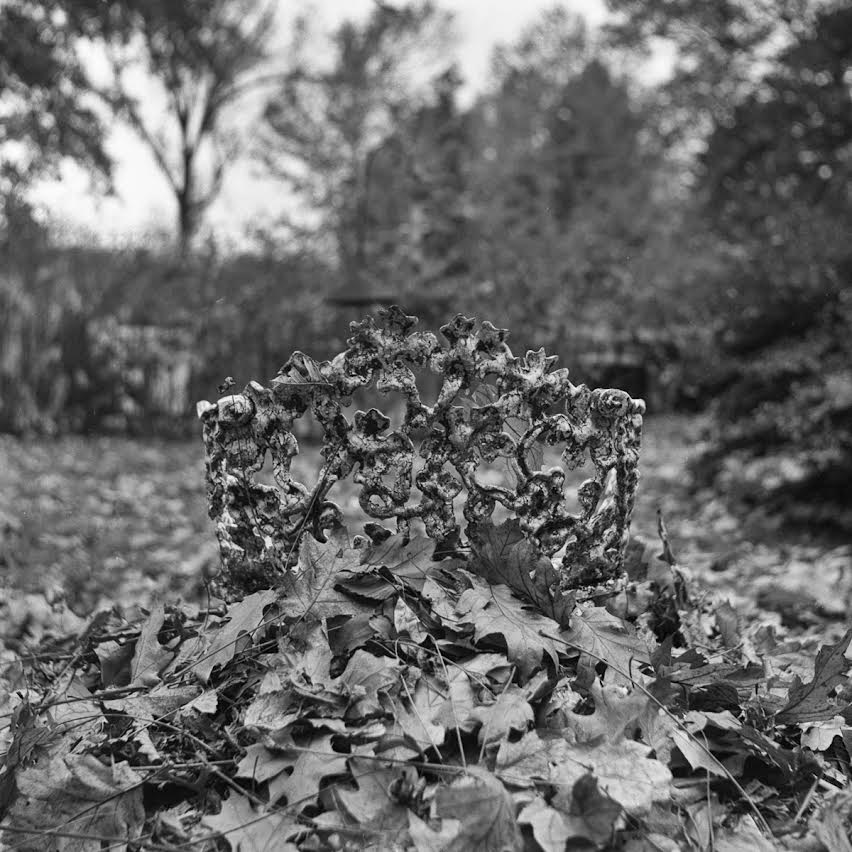
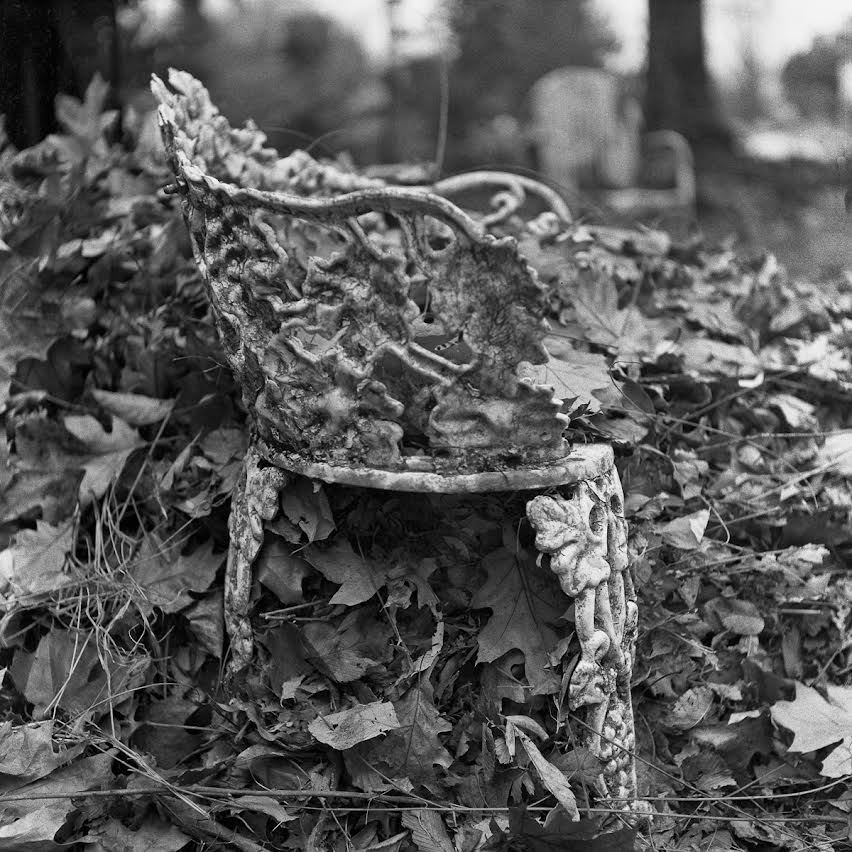
One of our sons has said more than once that there’s too much secrecy in our family. We imagine that’s what he perceives — his version of inheritance, the thread he’s picked up from what came before. And no wonder. Our two family-night shows, the ones we watched together every week without fail, were Antiques Roadshow and Secrets of the Dead. Entire evenings devoted to hidden things and buried treasure. At least it was PBS — the kind of secrecy you could feel smug about. We suppose there are worse habits to pass along, though secrecy wrapped in virtue may be the trickiest of all. It’s part of the legacy he carries, though he hasn’t exactly shown how he’ll avoid repeating it. Legacy has its contradictions — the kind we see reflected in his comment, and, if we’re honest, in the story of the sister too. Which leads us to a larger reckoning. Maybe legacy itself is less about who first said the words or who holds the artifacts, and more about who carries the spirit of a life forward — and whether that spirit can withstand a little irony, a little secrecy, and still endure. That, we suspect, is where the trouble begins. All this rumination on legacy leaves us scared at times, and dreadfully alone if we let it.
We keep thinking of a line from C. S. Lewis, written in 1948 about the atomic bomb: “If we are all going to be destroyed by an atomic bomb, let that bomb when it comes find us doing sensible and human things … not huddled together like frightened sheep and thinking about bombs.”
We keep thinking of a line from C. S. Lewis, written in 1948 about the atomic bomb: “If we are all going to be destroyed by an atomic bomb, let that bomb when it comes find us doing sensible and human things … not huddled together like frightened sheep and thinking about bombs.” Replace “bomb” with “legacy,” and you have the knot we are trying to untie. Better to be found in the act of living — planting, repainting, writing, cooking, laughing — than endlessly measuring what will or won’t last.
Which brings us back, inevitably, to the question we keep circling: so what of our legacy? Perhaps we’ve been watching too many episodes of Gardener’s World — or maybe we’ve spent too long with James Herriot, who found grace in the patient tending of ordinary things — but as stewards of Snob Hill, and of our other patch to the south, we have built things. Sheds, additions, trellises. Things that may last a little while when the properties pass to their next stewards. Maybe someone will fall in love with Snob Hill because of the garden shed that looks as if it has always belonged there, or the trellis in the Zen Garden. Maybe at the new place they’ll cherish the raised beds or the fire pit in the Quarry. That’s as permanent a legacy as we’re bound to get.
The other legacy is quieter, internal, and it won’t go much beyond our own mortal coil. And really, why should it? We raised two good men and sent them into the world — and yes, they will carry our story for at least their generation. Which leads us to think of legacy and lineage in a different way. What if they carry and disperse our story, as we do, among non- family members? We take fleeting comfort in thinking our legacy isn’t tied only to biology but rather to something wider. Perhaps, if we’re lucky, something we have created or discussed or shared will ripple onward in an unknowable, Butterfly Effect sort of way. That feels enduring enough. Or it should be enough. And yet it is clear, even in this piece, that we are grappling hard to make it enough. We were modeled by a different set of life lessons — the “circle of life,” blech! — and it is hard to reconcile that upbringing with our reality.
And this is where Eliot’s word returns to us: harmonize. Legacy isn’t always a musket or a necklace, nor is it a lineage written in stone. It is the harmonizing of what we have built with what we have lived — in our gardens, our rooms, our walls. A shed, a trellis, a fire pit — small, local harmonies, but real. Sons carrying with them our better notes along with our inevitable mistakes.
So perhaps those conservationists were right after all: take nothing but pictures, leave nothing but footprints, kill nothing but time. We have certainly taken plenty of pictures — cameras in hand through gardens and gravel roads, city streets and autumn woods. If those frames are part of our legacy, then so be it. Maybe the truest inheritance is to pass through, leaving behind a few harmonies in sheds and stories, and to take with us only the images and moments we carried in our own minds.
In the end, legacy may be less about the objects parceled out and more about the intangibles that try to endure — affection, character, a sense of place, a way of harmonizing. And so we remind ourselves — chastise ourselves, really — that legacy may be enough in having created and raised two good human beings, that our own legacy might have to be a life well lived, at least as we define it. No outside philosophers required. Just a personal, interior monologue, an acknowledgment that we did, and have done, and hope to continue to do — work toward a life well lived.
We did, and have done, and hope to continue to do the best we could. We feel our mutual mothers’ hands patting our heads at this revelation — no jewelry, musket, or flowers required.
If there’s any legacy left after that, it’s all gravy.
CB Adams, MFA, is an award-winning fiction writer and fine art photographer based in the St. Louis, MO area. Adams works with more than 60 film-based and digital camera formats from 4×5 to 35mm and toy cameras. In addition to works exhibited in more than 30 exhibitions nationwide, recent photographs have been published in Midwest Review, Fatal Flaw, Genre Urban Arts 7, Heirlock Literary Magazine, and Tiny Seed. His fiction has been published in River Styx (twice), Zoetrope All-Story Extra, Missouri Writers’ Biennial, Elder Mountain: A Journal of Ozarks Studies, Conclave 2021, Vision Quest, The Distillery, and elsewhere. The independent weekly Riverfront Times named Adams, “St. Louis’ Most Under-Appreciated Writer.” See more of his work at his website qwerky studio, on Instagram at johnbent61, and on Facebook at Qwerky Studio.
Categories: featured, literature, memoir

 magpiesmagazine.com