

By Keith Goldstein
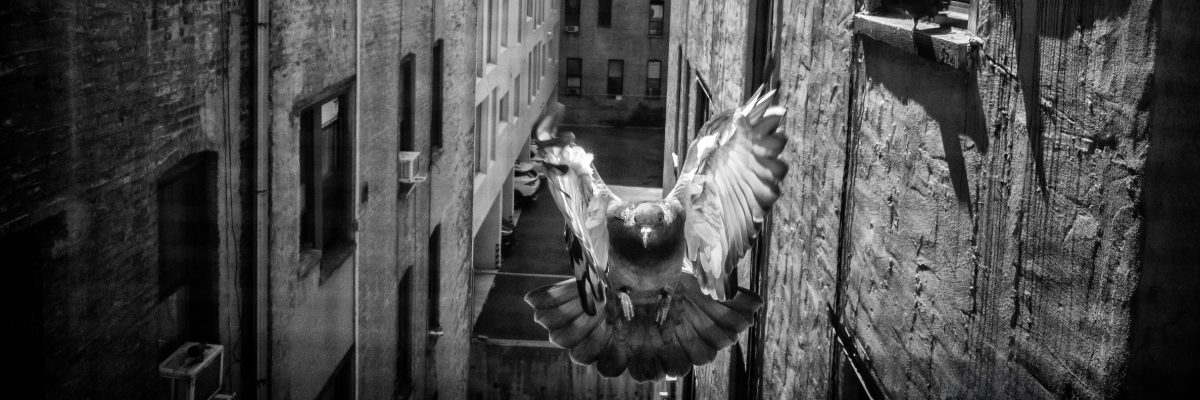
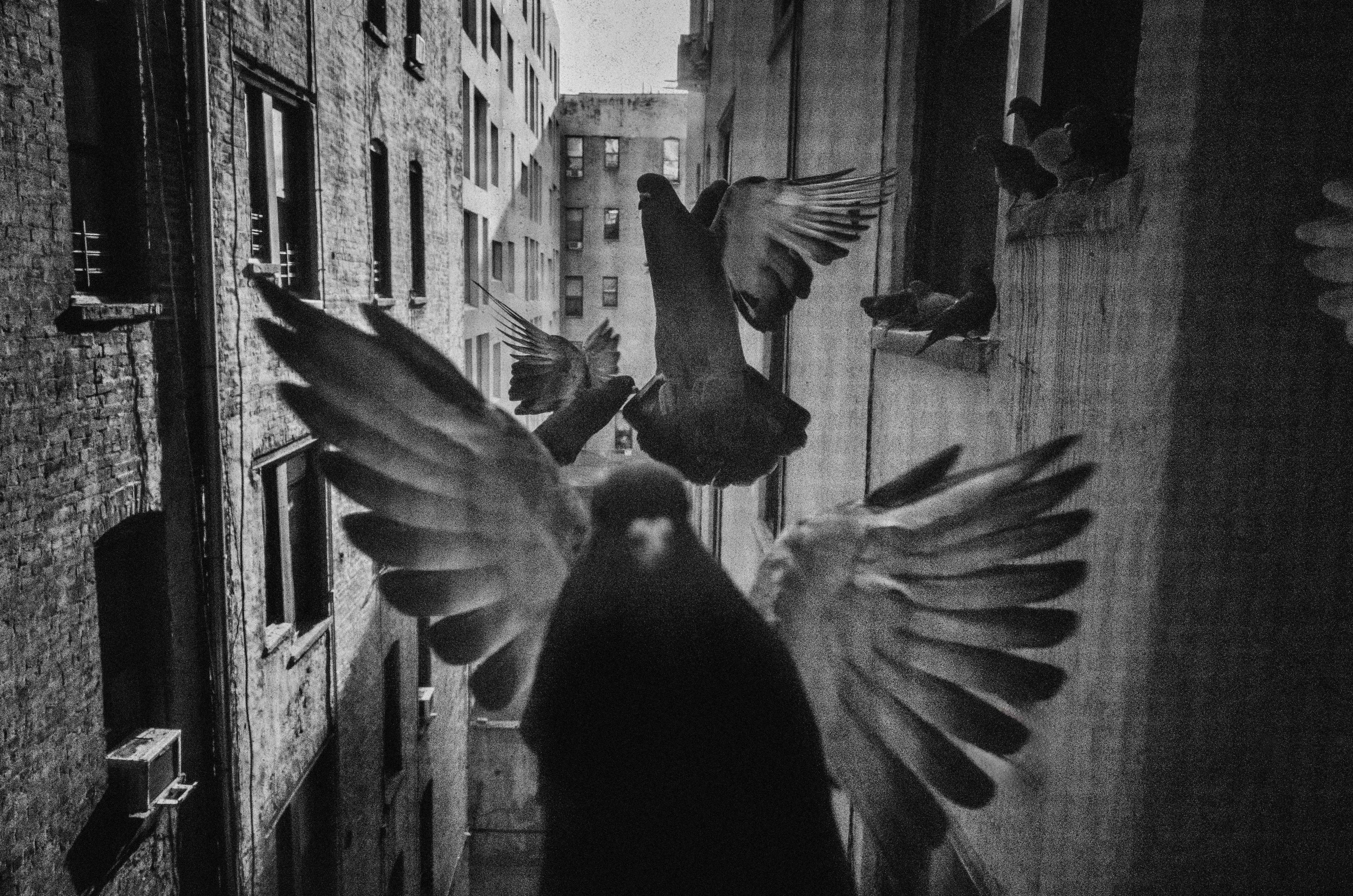
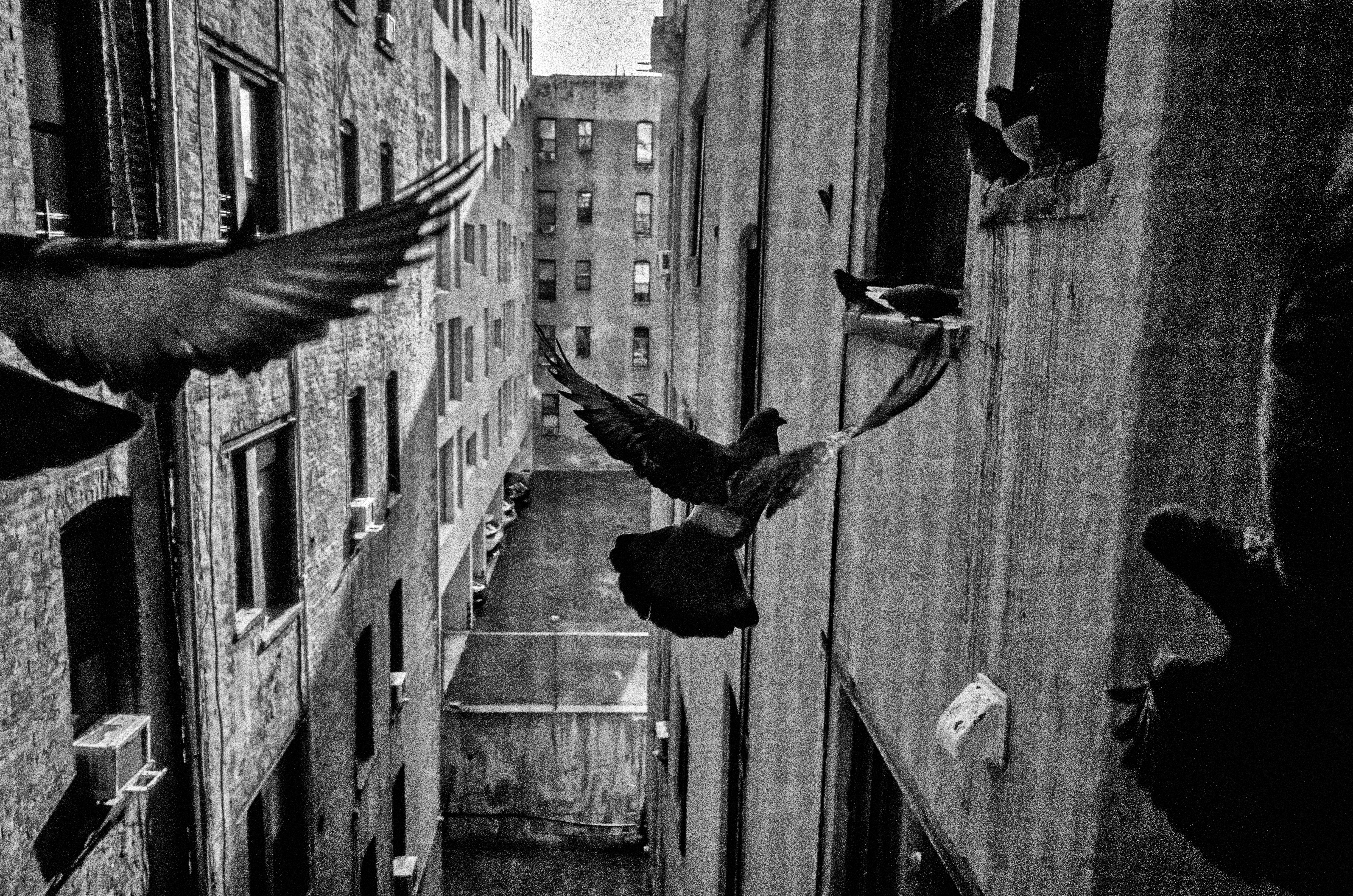
During the early months of the COVID lockdown, when the world fell into a kind of forced stillness, my wife began to feed a pigeon couple who had taken up residence in the alley between the buildings outside our kitchen window. It started simply: two pigeons, perched on the windowsill, watching the world go by as though they had claimed this patch of brick and metal as their kingdom. At first, they were almost invisible, blending into the dull grayness of the alley, just another part of the urban background. But the moment she placed birdseed on the ledge, they transformed into characters with their own routines, their own personalities, their own dramas.
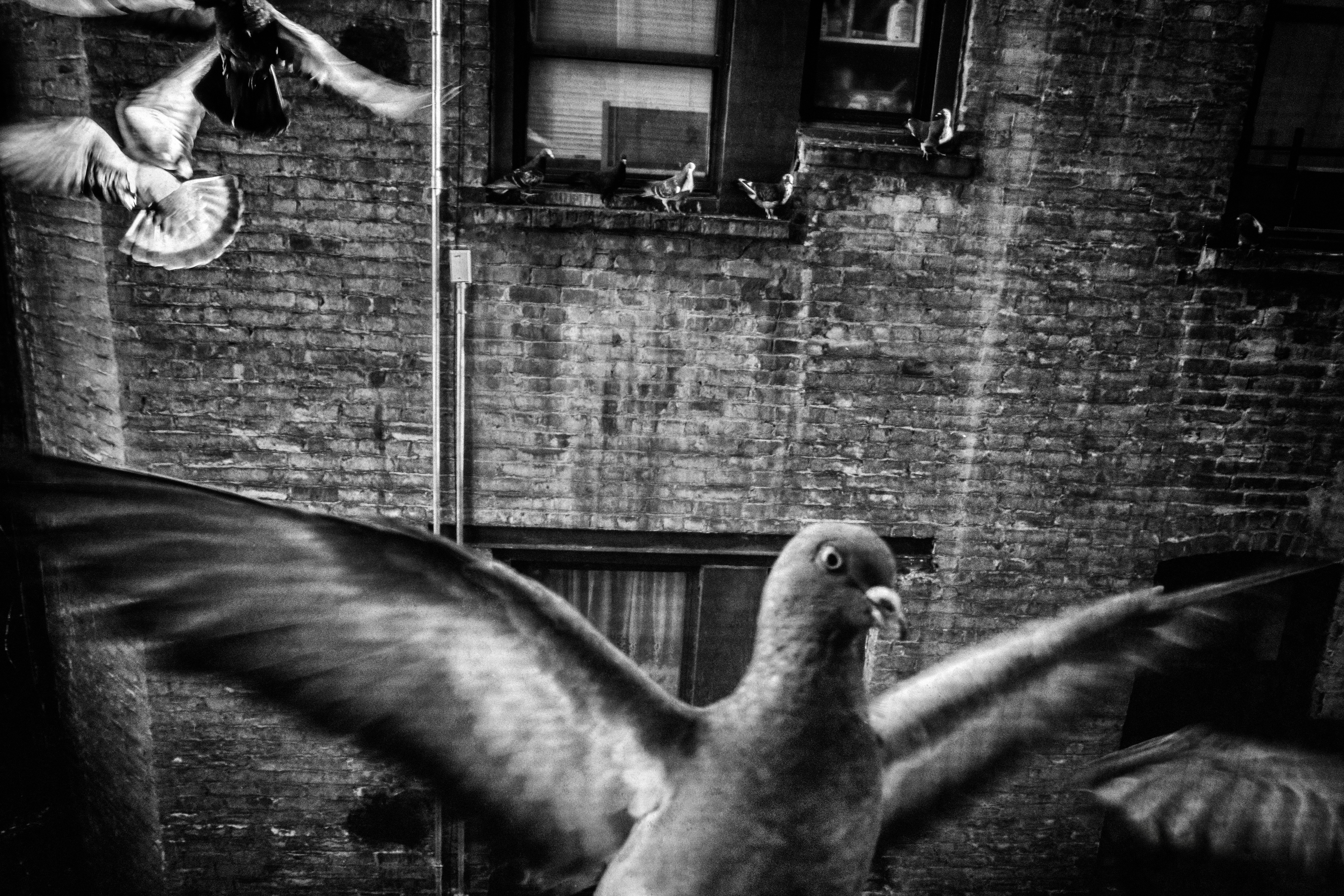
Within a few months, during the morning feeding time, as many as twenty-five pigeons would be flapping and landing in the alley, filling it with a fluttering chaos of feathers, soft wings brushing against one another, claws tapping on the windowsills, beaks pecking greedily at the scattered seed.
I don’t know exactly how pigeons communicate. Perhaps it’s through the low cooing sounds, or through a tilt of the head and a flick of the wing, or maybe by patterns invisible to me but obvious to them. What I do know is that word — or whatever the avian equivalent of word is — got out quickly. The two pigeons became four. Four became six. Within a few months, during the morning feeding time, as many as twenty-five pigeons would be flapping and landing in the alley, filling it with a fluttering chaos of feathers, soft wings brushing against one another, claws tapping on the windowsills, beaks pecking greedily at the scattered seed.
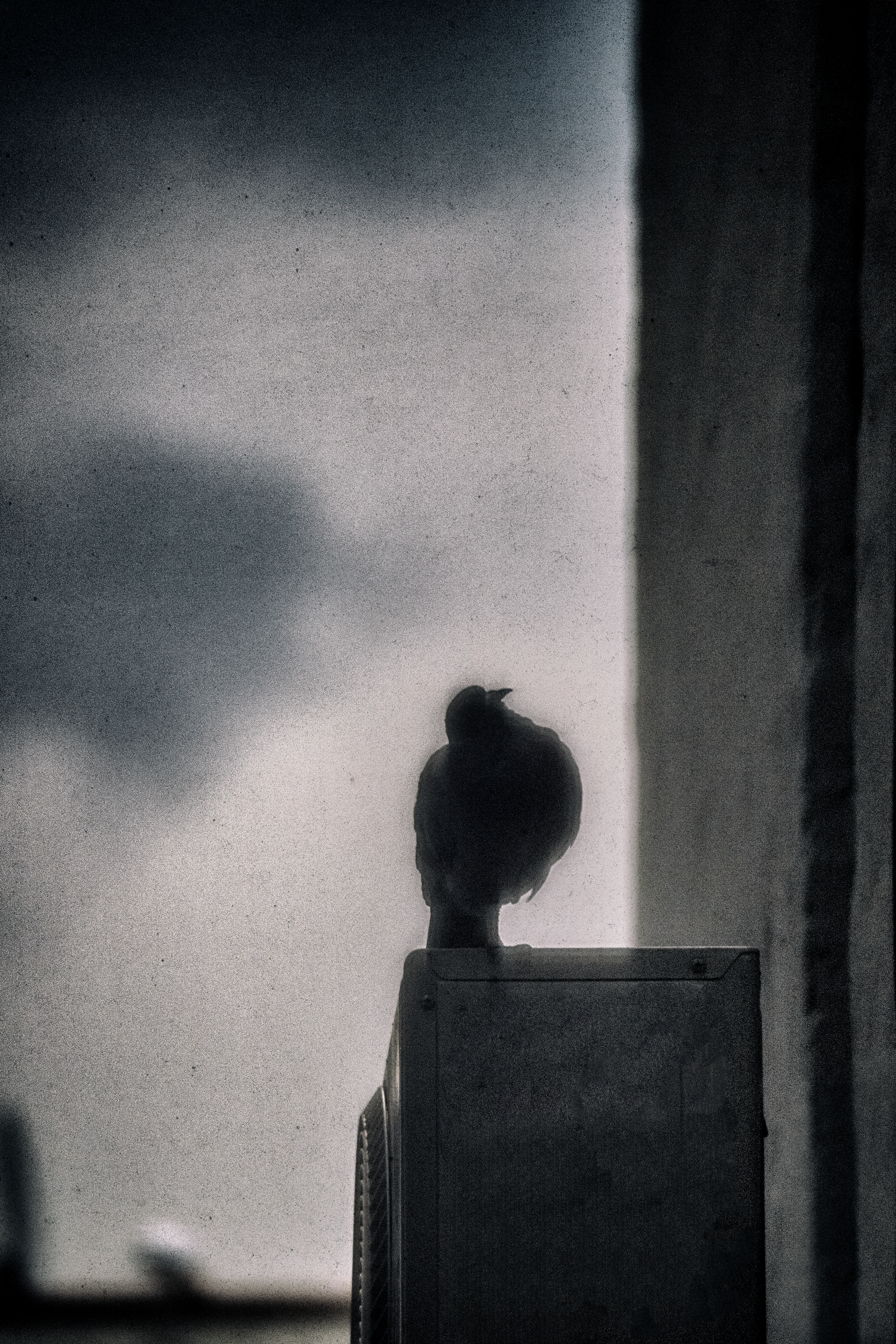
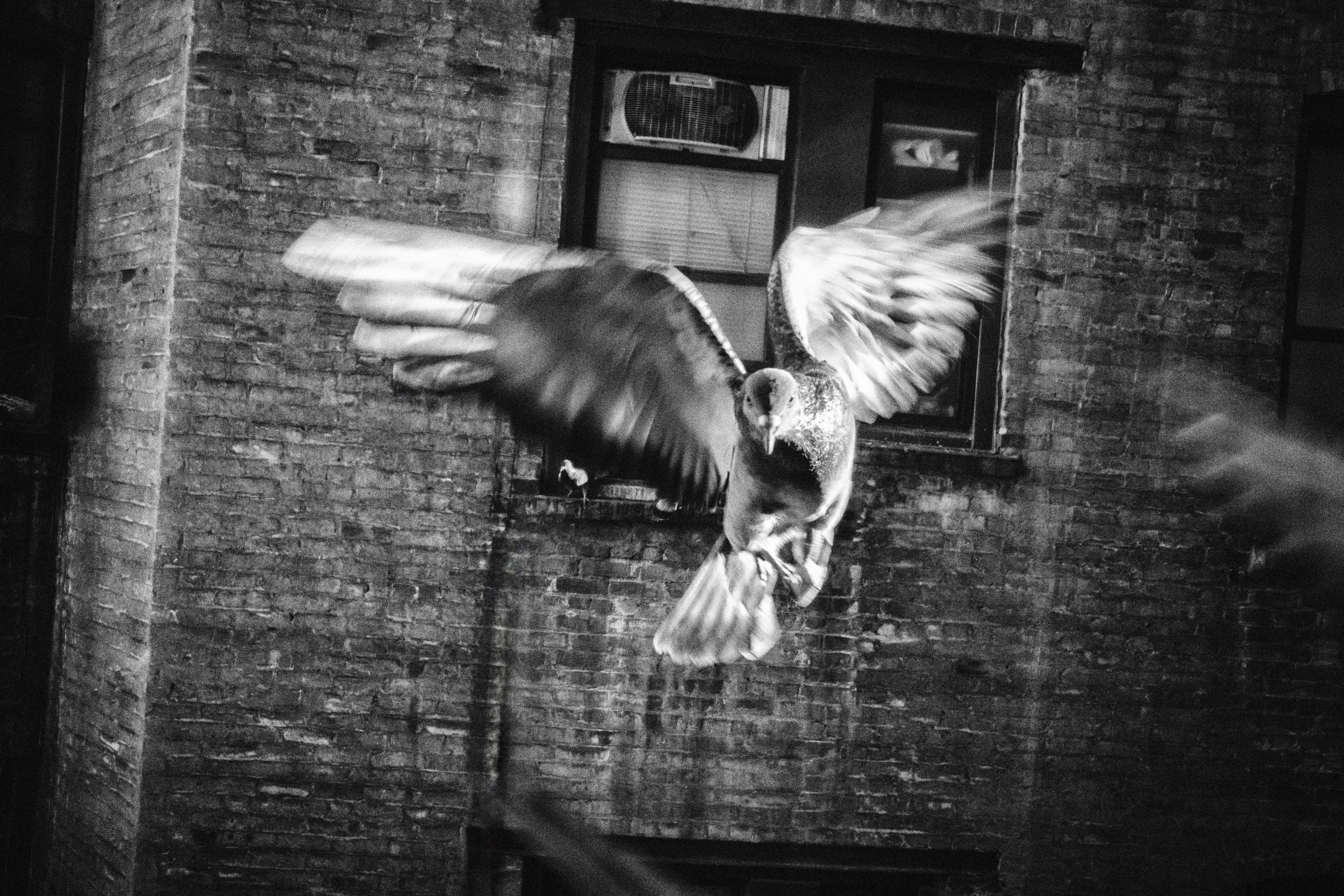
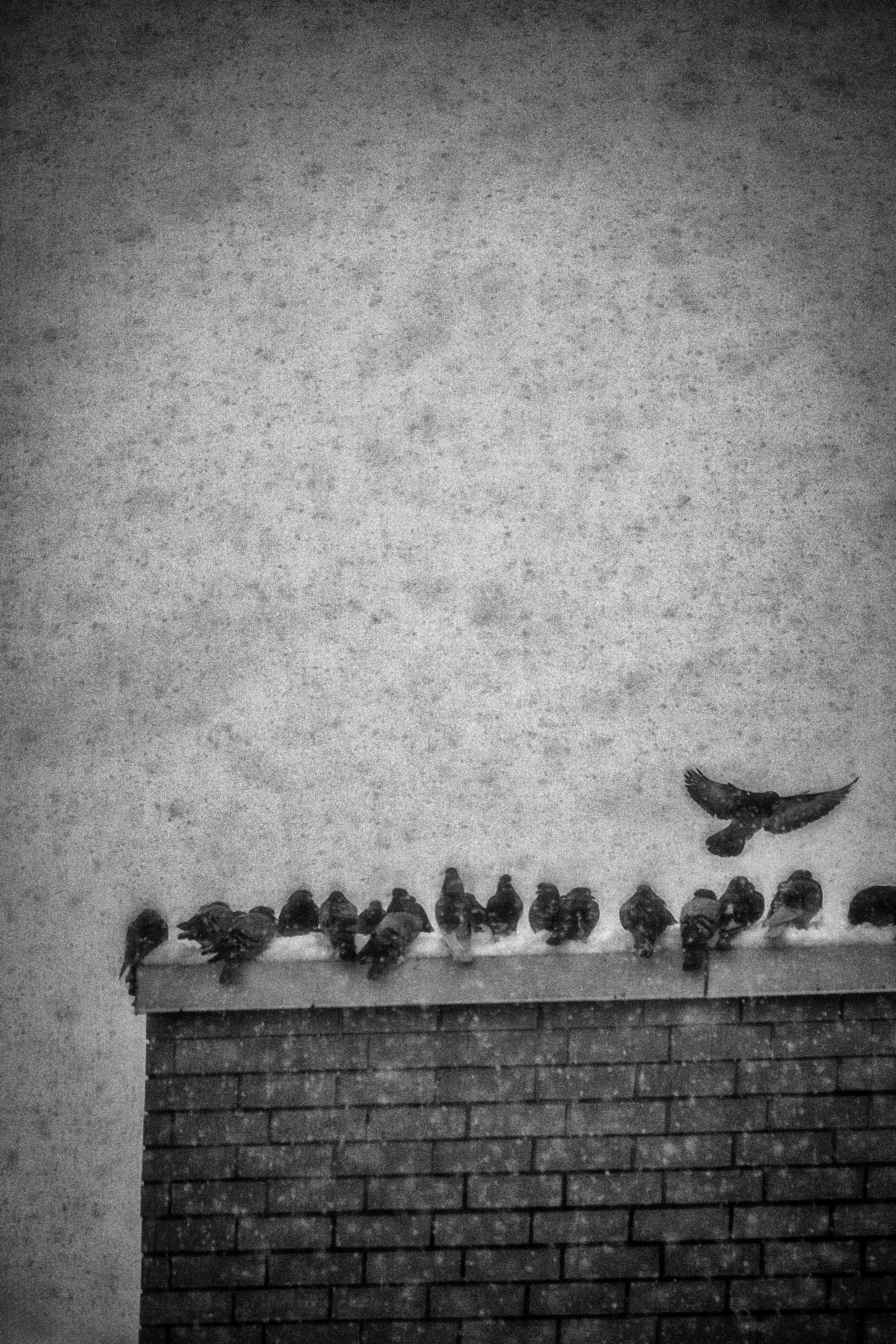
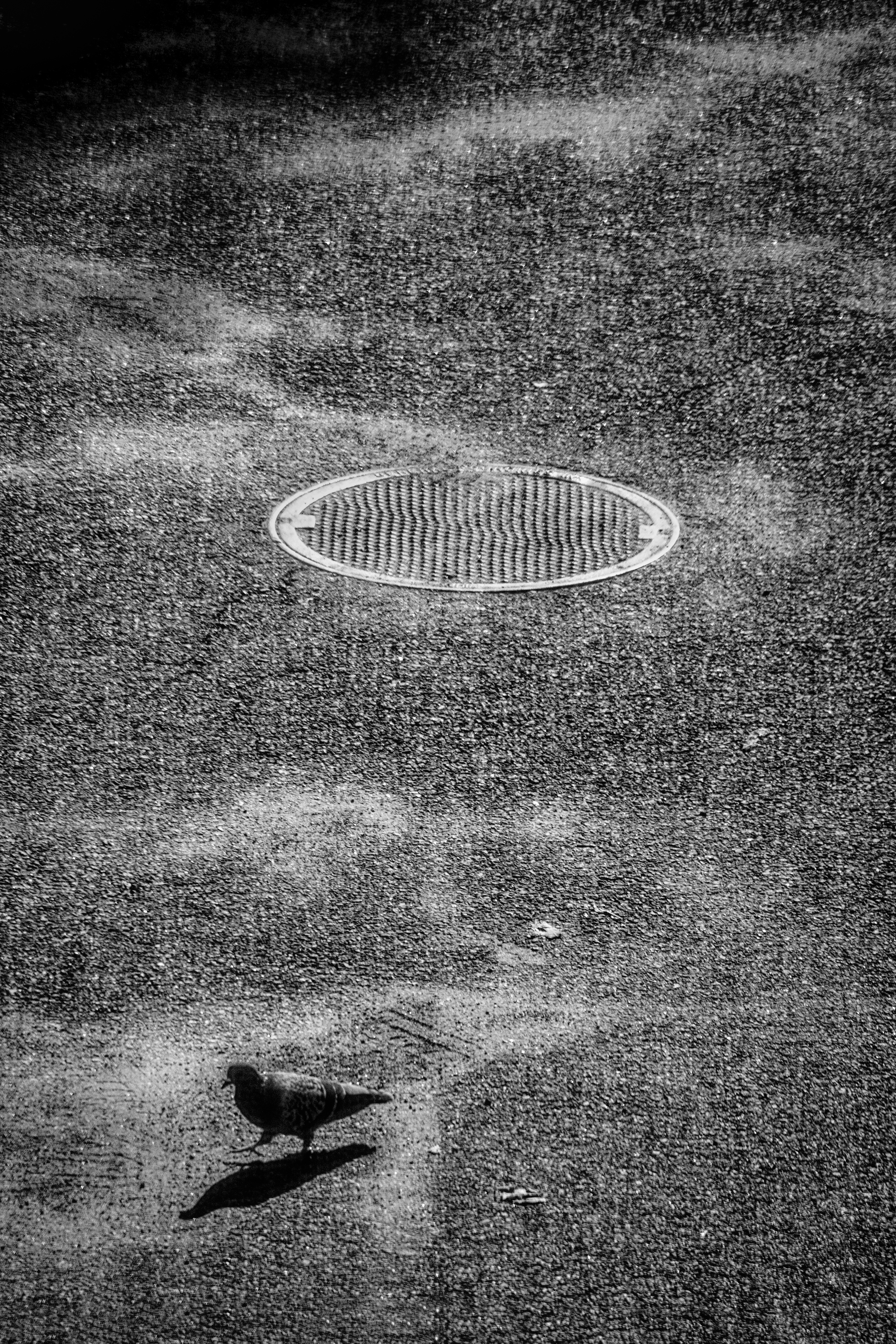
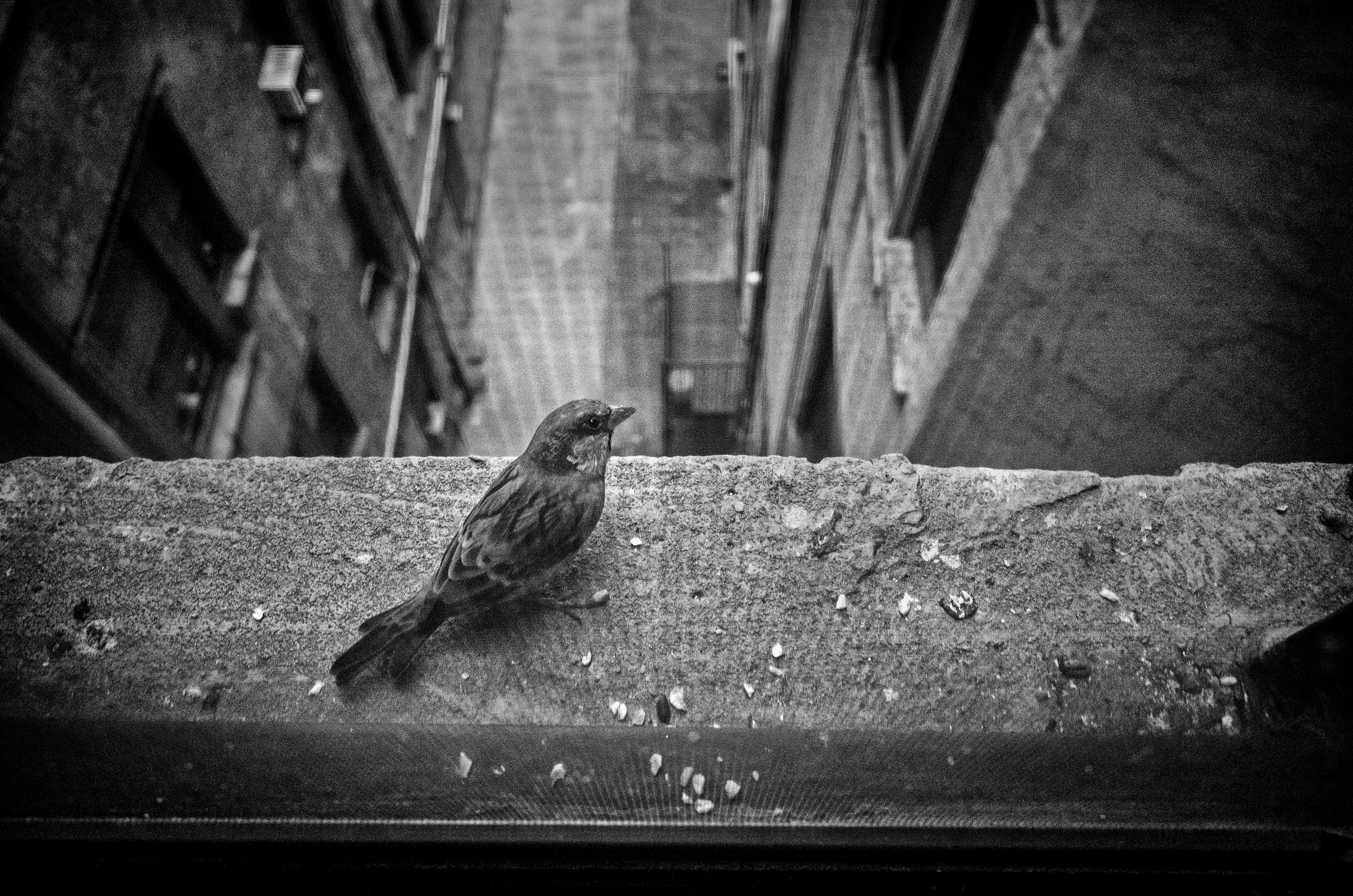
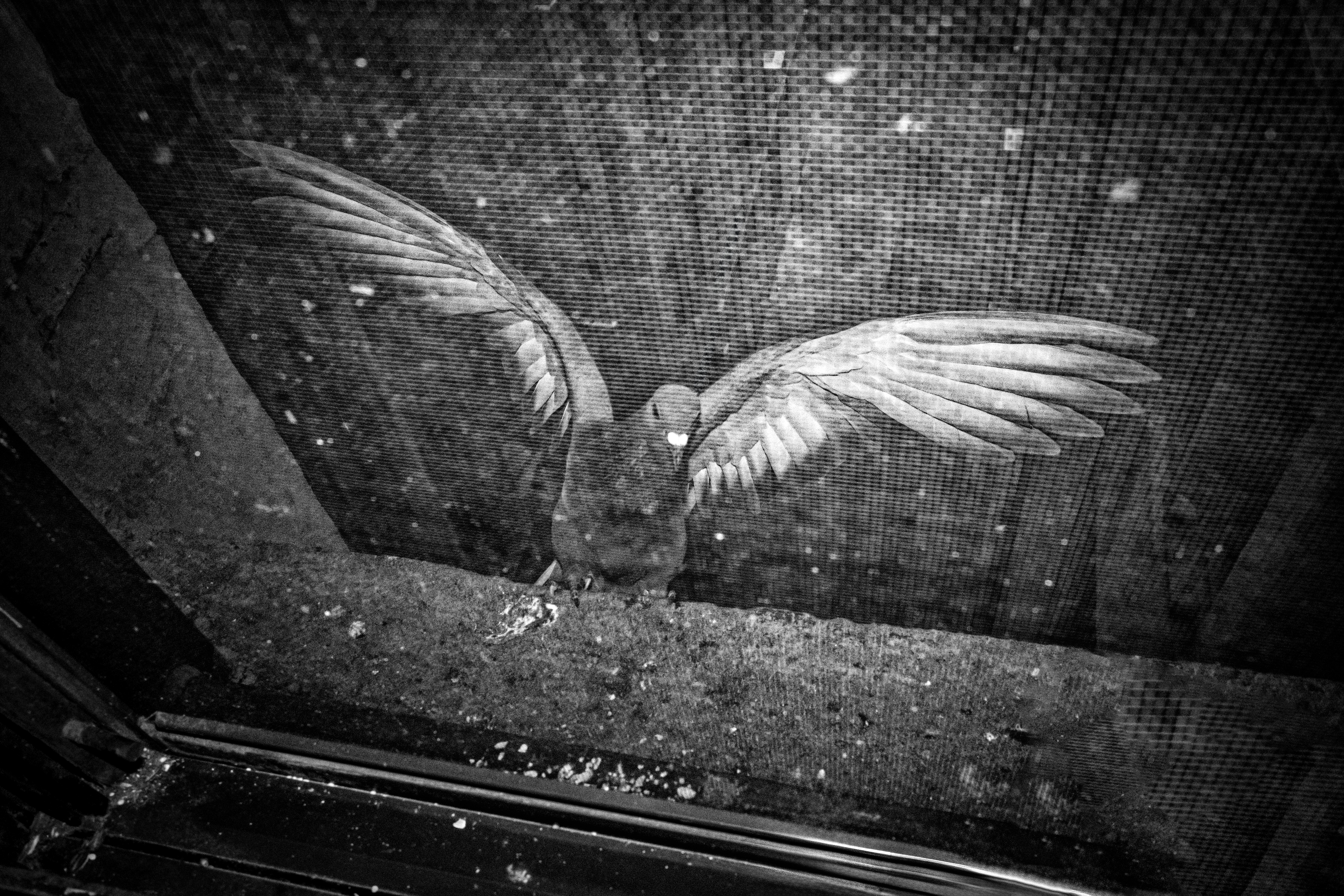
From my desk, which sits catty-corner to the kitchen window, I had a perfect view of all this. My work — whatever it was on any given day — faded into the background as I found myself watching them more and more. My screen would dim, emails would go unanswered, and the pigeons would hold my attention. It wasn’t just the pigeons, either. A pair of sparrows soon appeared, tiny against the bulkier birds. They had made their nest just outside the kitchen window, slipping in and out with the nervous, darting energy of smaller creatures. Unlike the pigeons, they weren’t greedy. They didn’t arrive expecting to be fed, but instead waited until the larger birds had eaten their fill, quietly picking through the leftovers. I developed an immediate affection for them. The sparrows with their delicate frames, quick movements, and subtle colors, so easy to overlook in a city that often celebrates only the dramatic.
From my desk, which sits catty-corner to the kitchen window, I had a perfect view of all this. My work — whatever it was on any given day — faded into the background as I found myself watching them more and more. My screen would dim, emails would go unanswered, and the pigeons would hold my attention. It wasn’t just the pigeons, either. A pair of sparrows soon appeared, tiny against the bulkier birds. They had made their nest just outside the kitchen window, slipping in and out with the nervous, darting energy of smaller creatures. Unlike the pigeons, they weren’t greedy. They didn’t arrive expecting to be fed, but instead waited until the larger birds had eaten their fill, quietly picking through the leftovers. I developed an immediate affection for them. The sparrows with their delicate frames, quick movements, and subtle colors, so easy to overlook in a city that often celebrates only the dramatic.
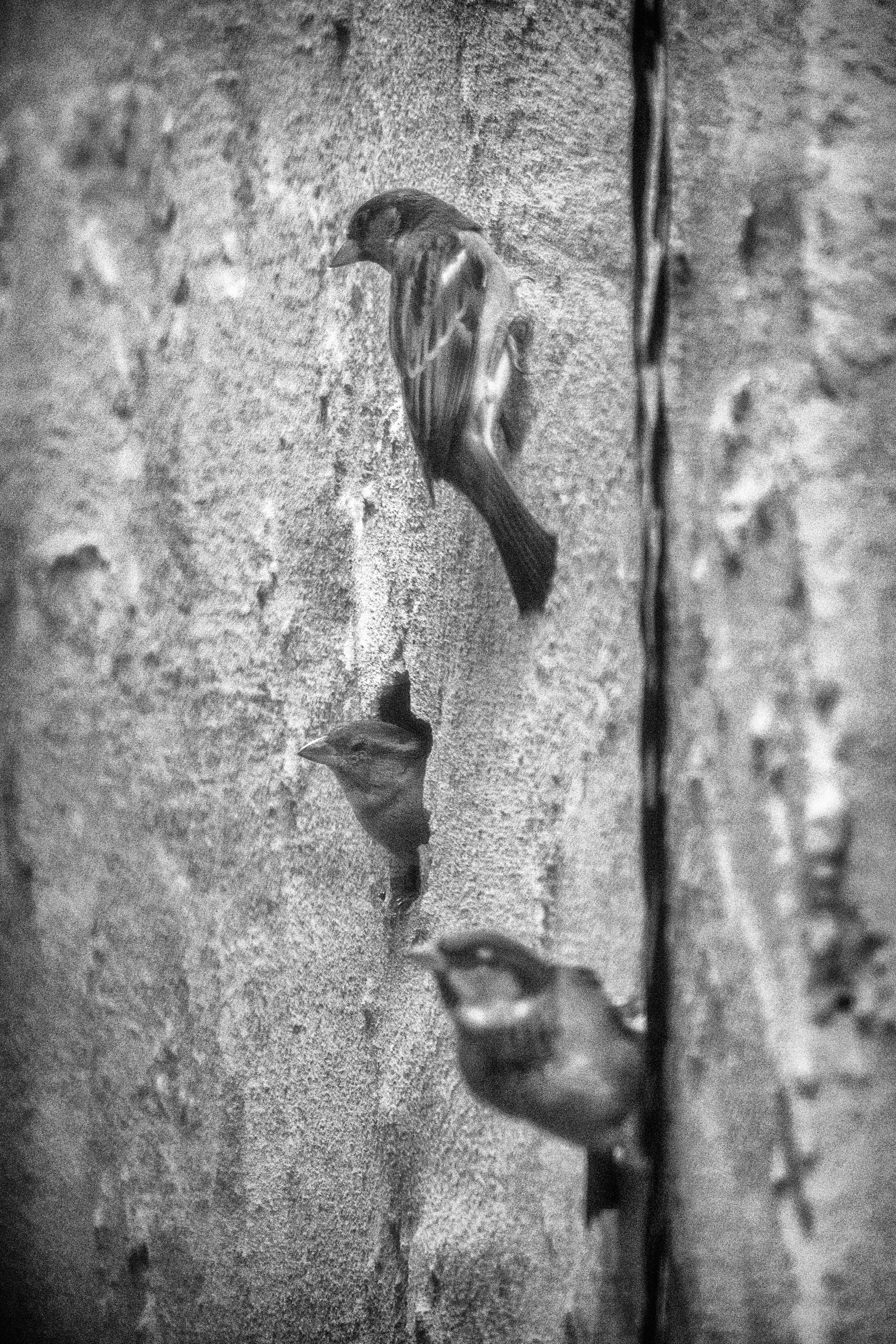
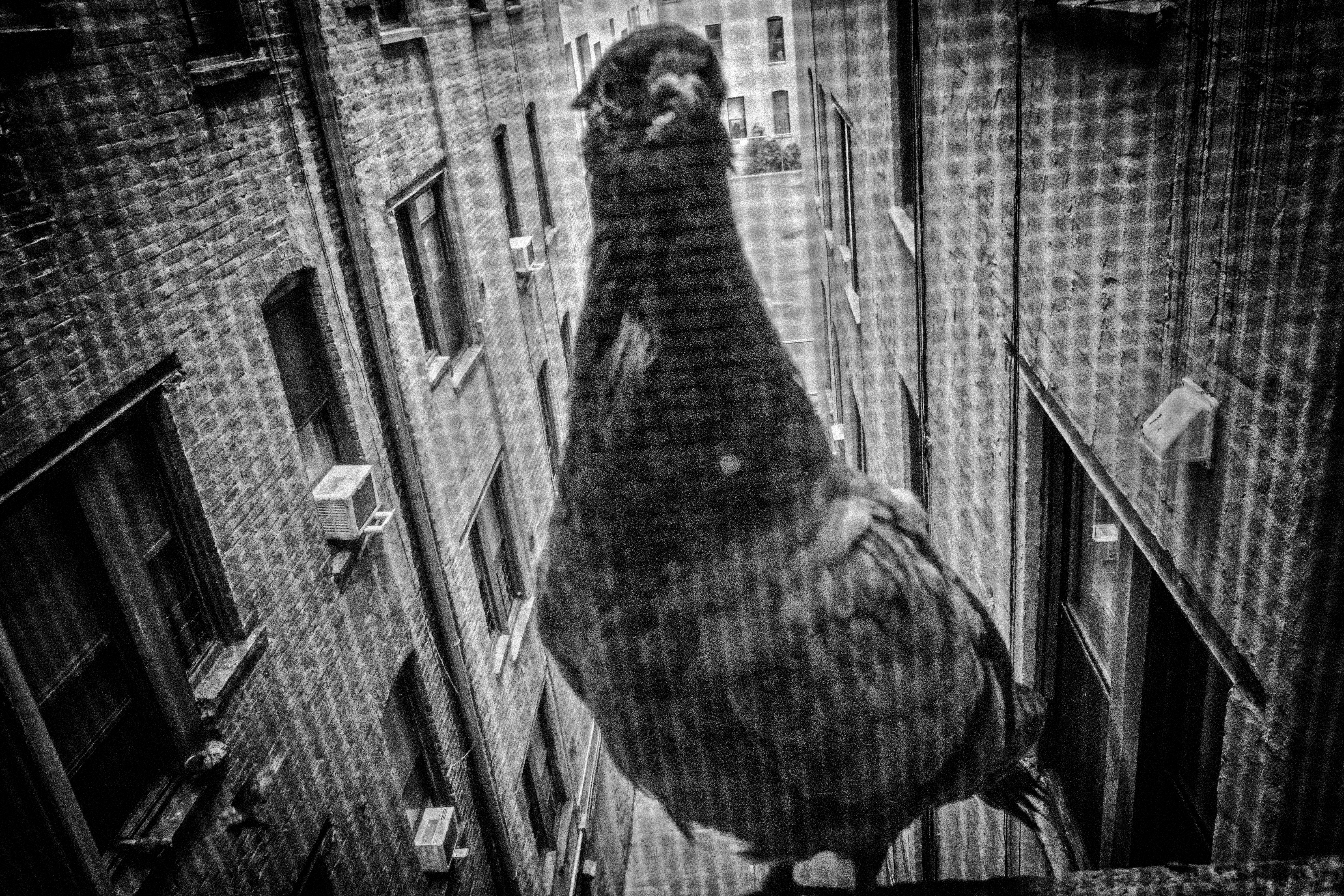
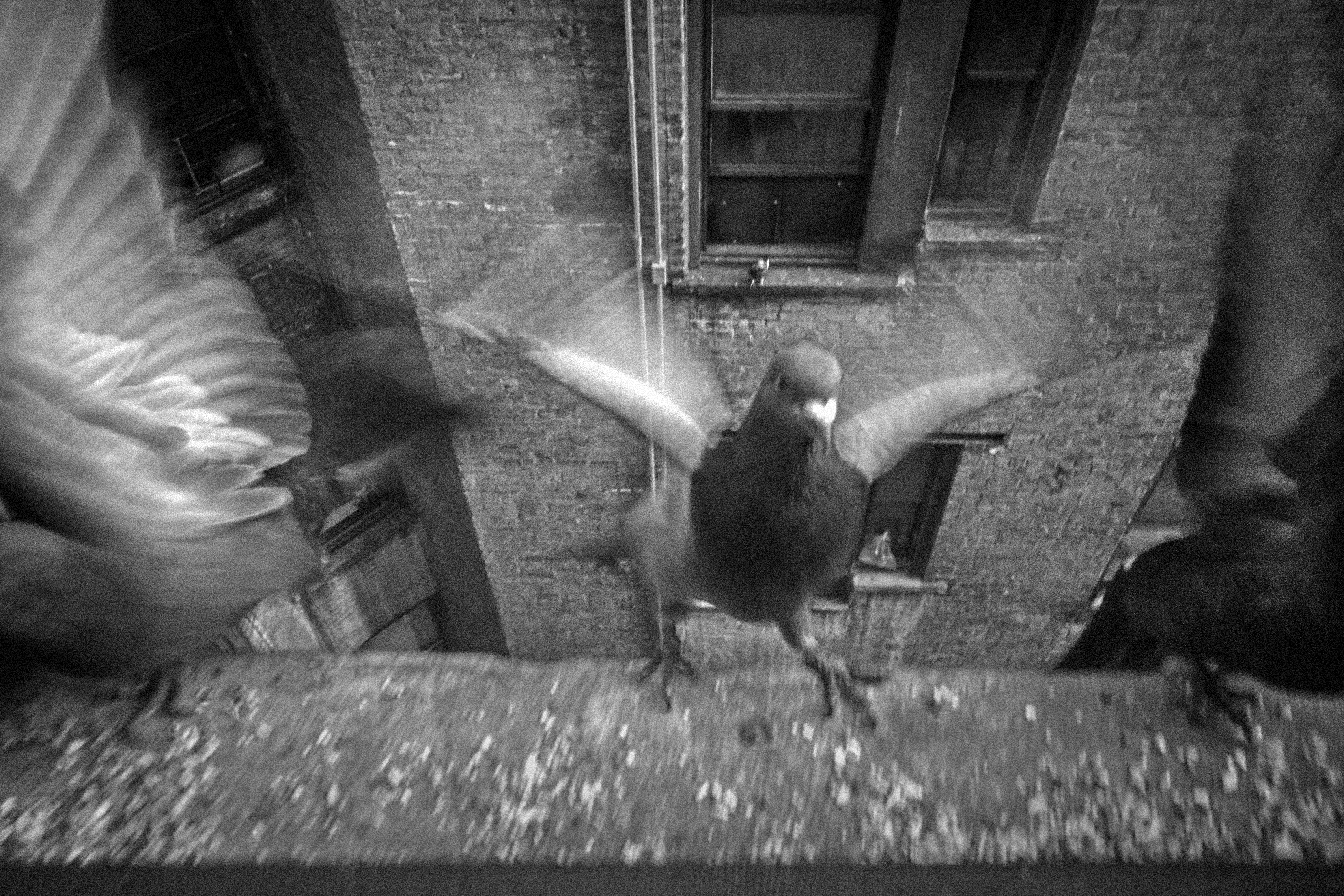
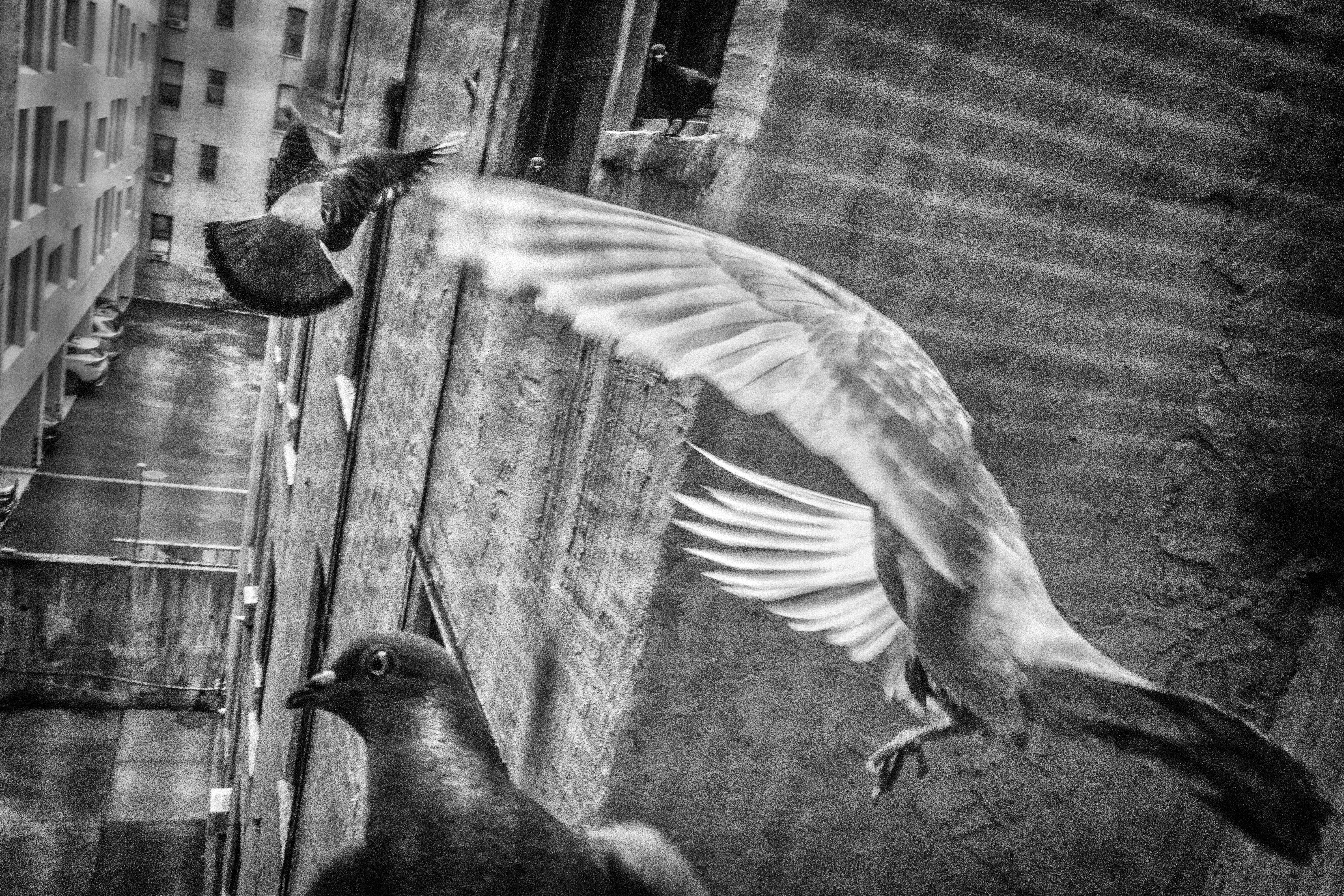
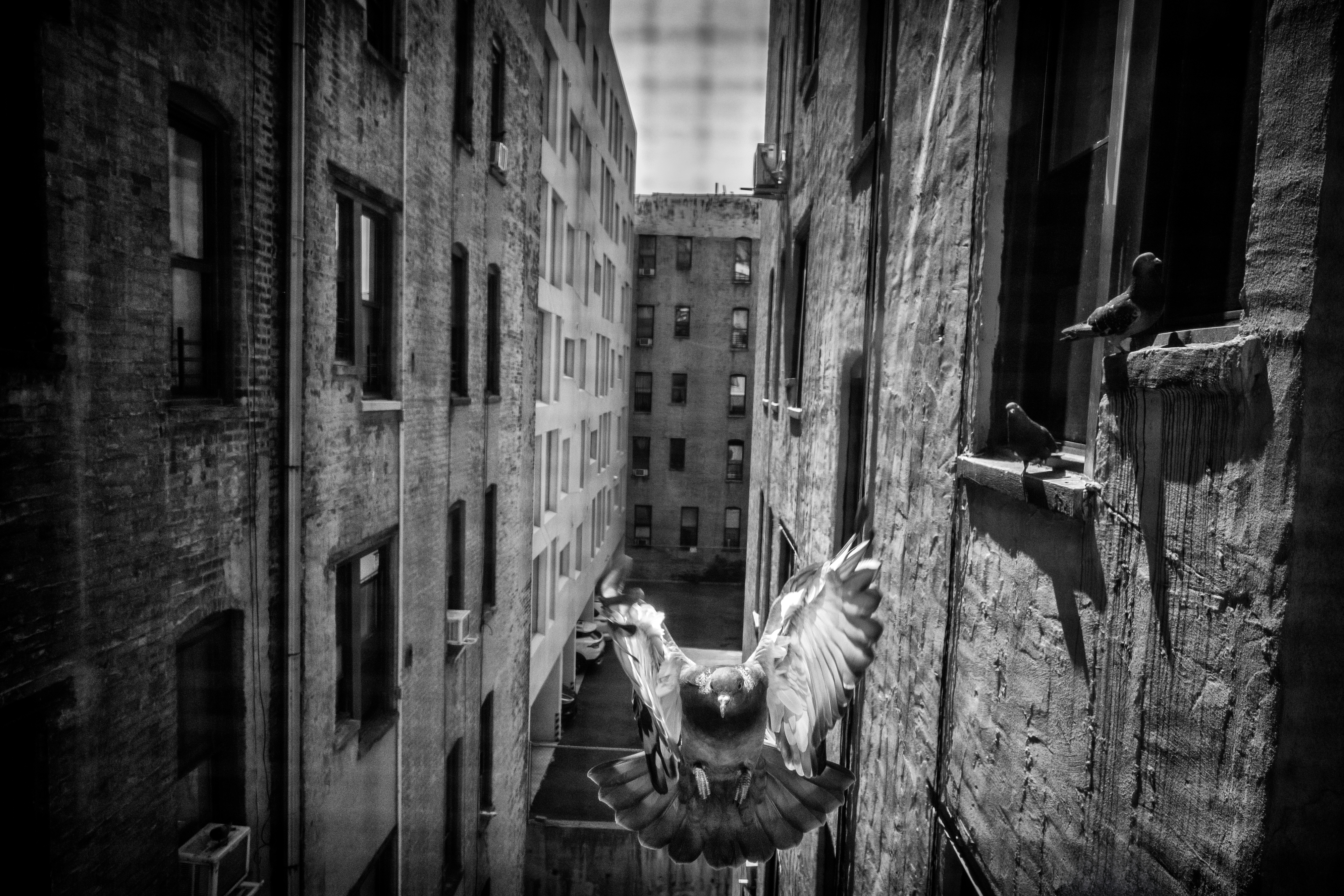
In those first months of lockdown, when human contact was rare, when our city streets were strangely quiet, and when each day bled into the next with a kind of muffled sameness, these birds became a kind of surrogate community. My wife and I began to notice patterns: which pigeons were more dominant, which ones seemed more hesitant, how the sparrows timed their arrivals so carefully. There was rhythm, order, even hierarchy in what had seemed at first to be chaos.
Life in the alley is unforgiving, and yet it continues.
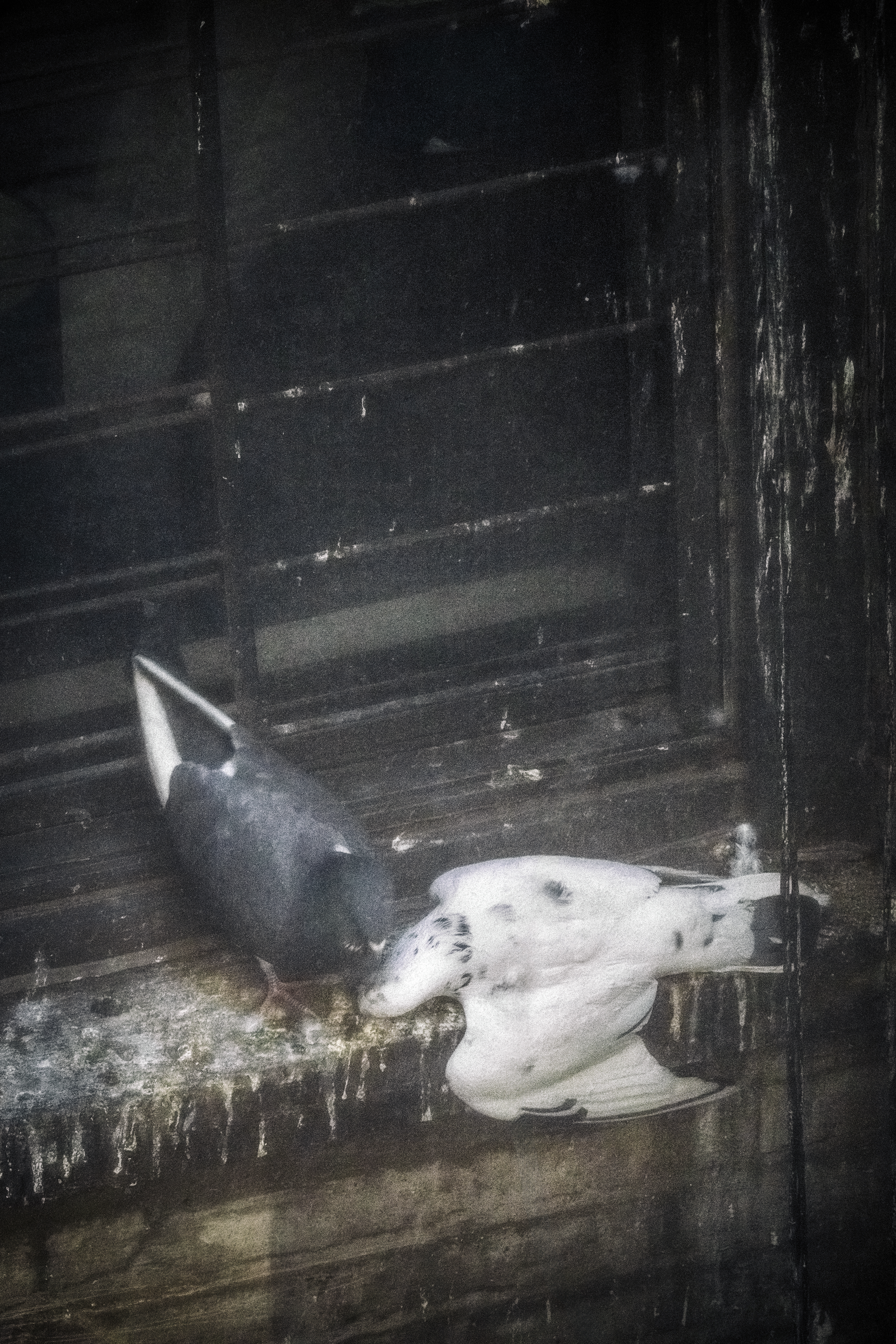
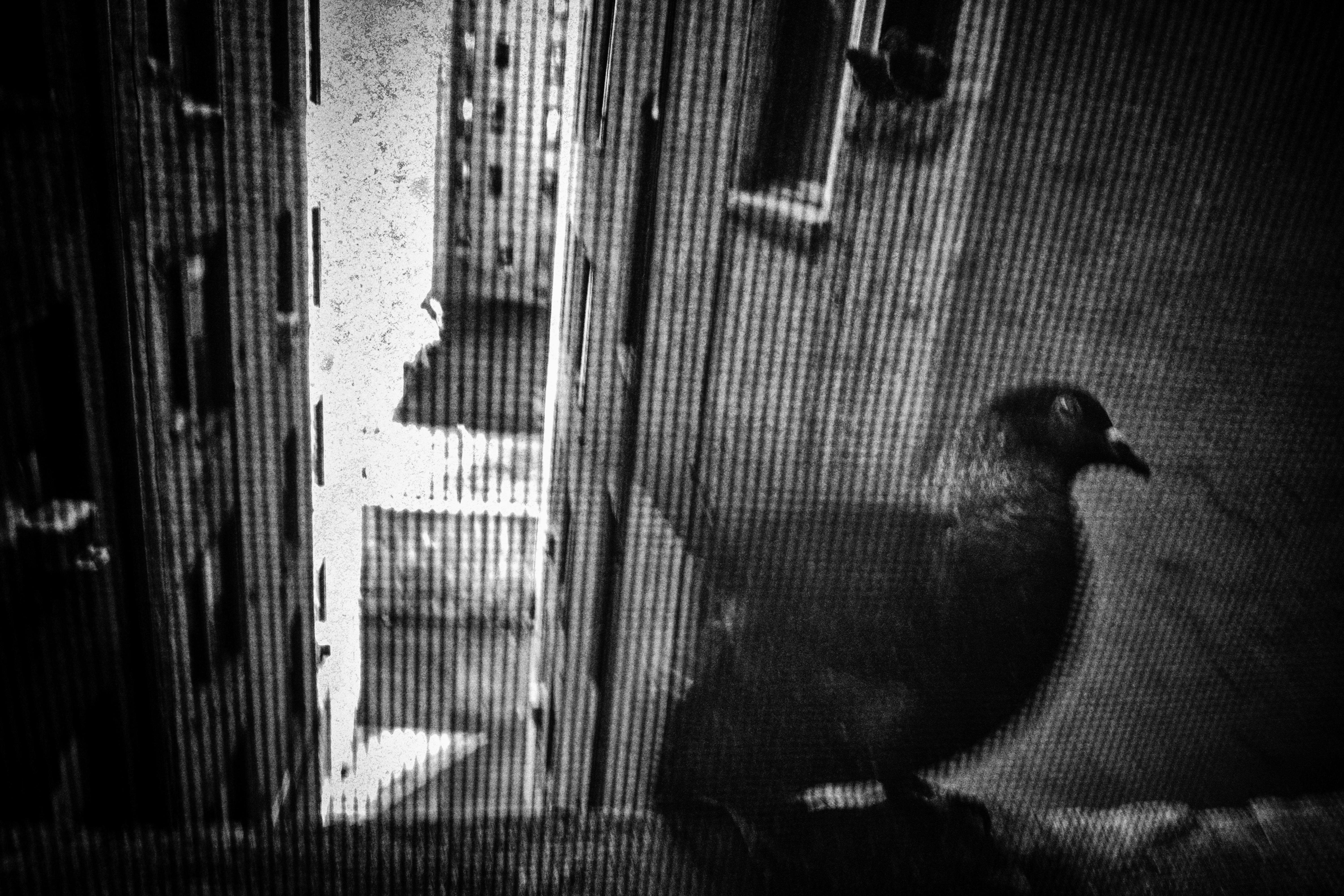
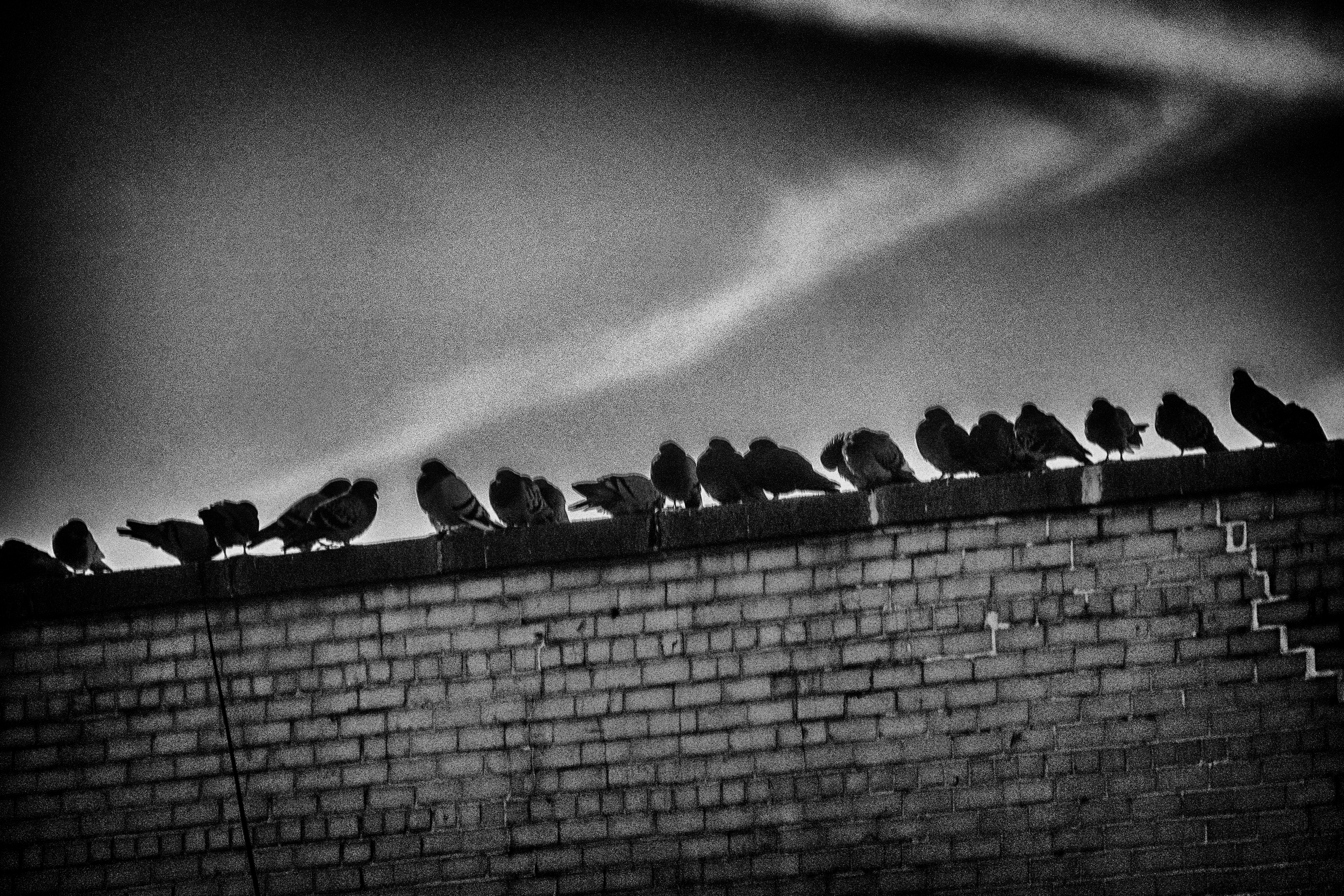
Over the last five years, I have continued to watch them. The feeding is now a ritual, not just for the birds but for us as well. It has become an axis of time: the day begins when the pigeons arrive, and it moves forward as the sparrows dart in and out. I have seen nests being built, twigs carefully carried in beaks and arranged in precarious piles wedged into the brick crevices of the alley. I have seen hatchlings emerge — fragile, uncertain, and then suddenly strong. And I have also seen death. Some pigeons vanish. Others return with injuries, broken wings that never heal properly, missing toes, eyes clouded. In time, they too disappear, and I can only imagine that they met their end somewhere in the city, unceremonious and unremarked. Life in the alley is unforgiving, and yet it continues.
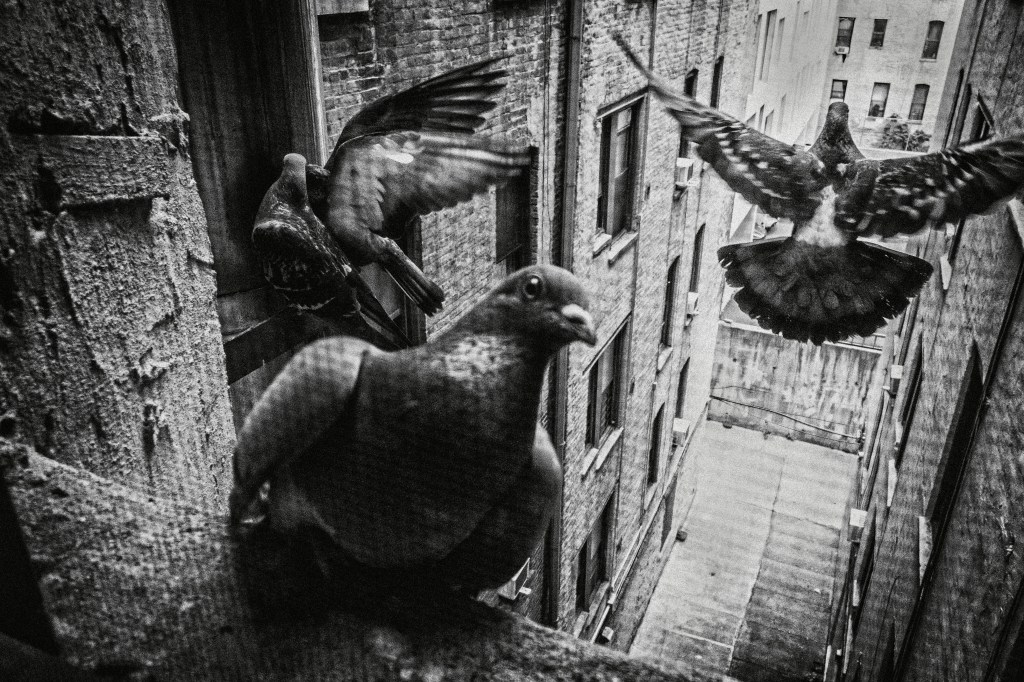
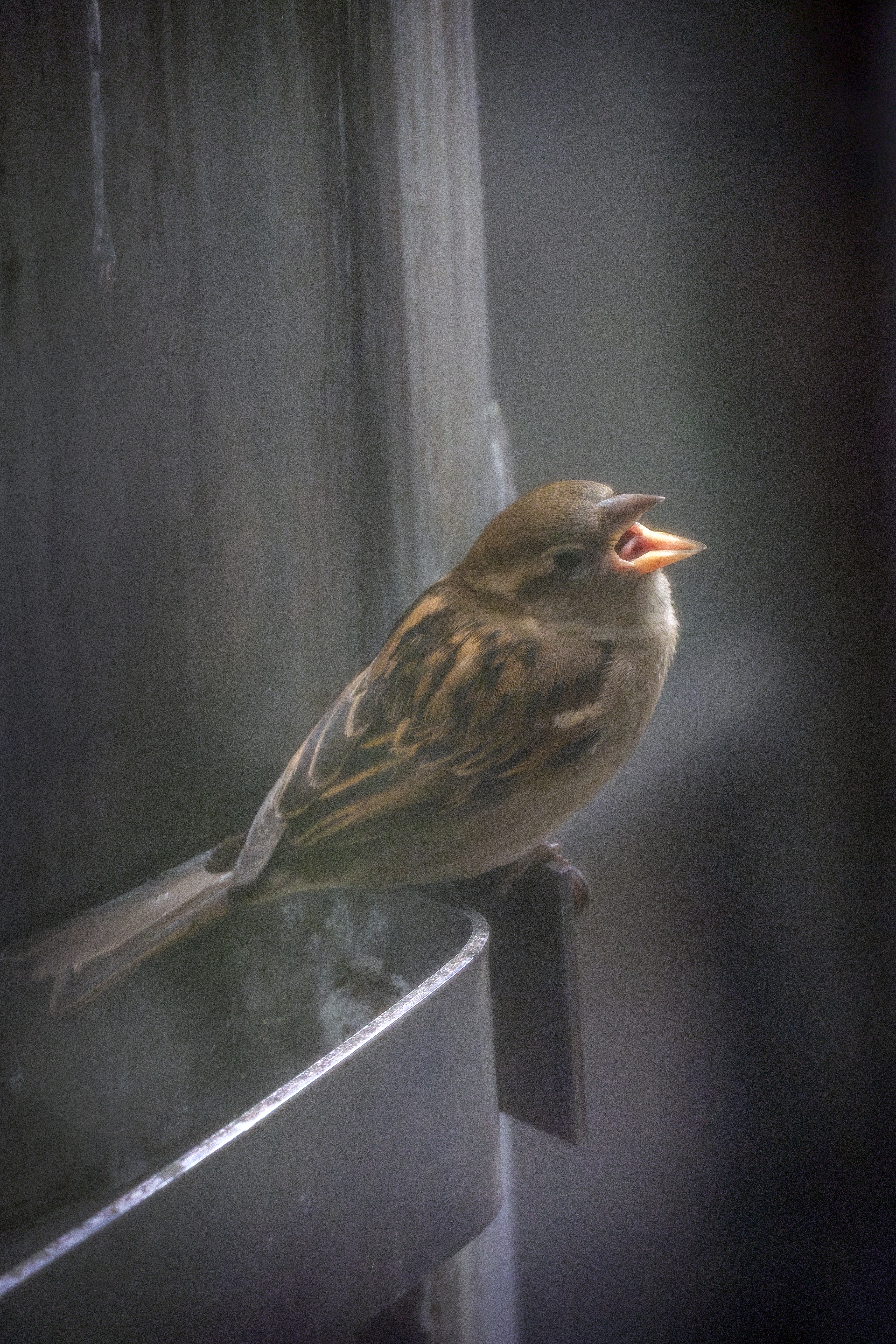
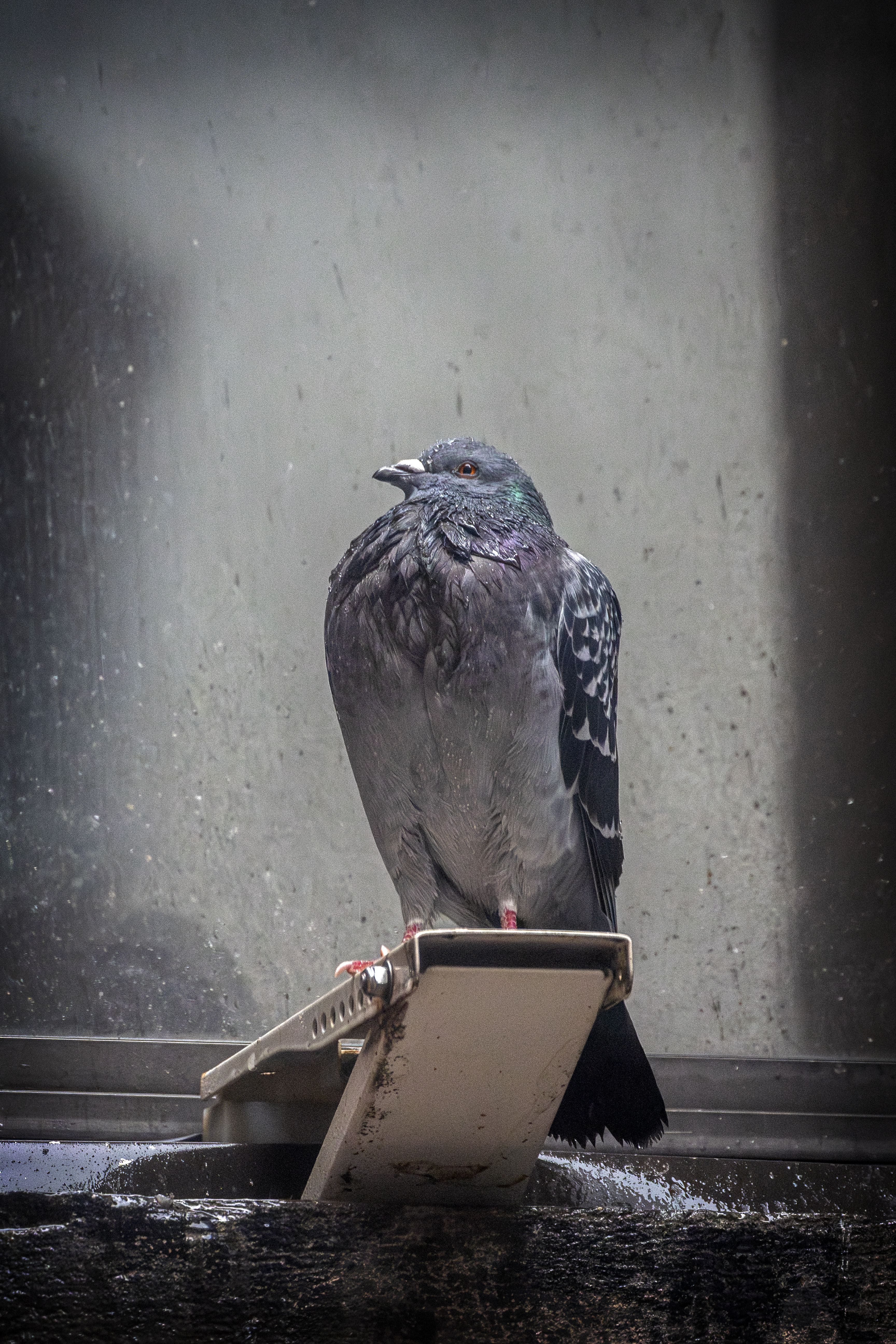

Though I am a photographer by nature and profession, I do not photograph the birds every day. In fact, I only photograph them when I feel a kind of alignment, when their energy and mine are somehow in sync. On some mornings, I look at them and see nothing but the ordinary, and my camera stays on the desk. On other mornings, something in their posture, their play of light, or even in my own mood makes me reach instinctively for the camera. There is a quiet dialogue between us, an unspoken agreement that only sometimes crystallizes into an image.
It has made me think about the continuity of community — the way one generation overlaps with the next, creating an unbroken thread even as individuals vanish.
As the years have passed, the cast of characters has changed. The pigeons who were once regulars are no longer there. Some have simply aged out, others likely fell victim to predators or cars or the quiet hazards of urban life. New pigeons have joined in, and though they look almost identical at a glance, each has its own way of moving, its own presence. It has made me think about the continuity of community — the way one generation overlaps with the next, creating an unbroken thread even as individuals vanish.
The sparrows, too, remain, though I imagine they are not the same ones I saw at first.
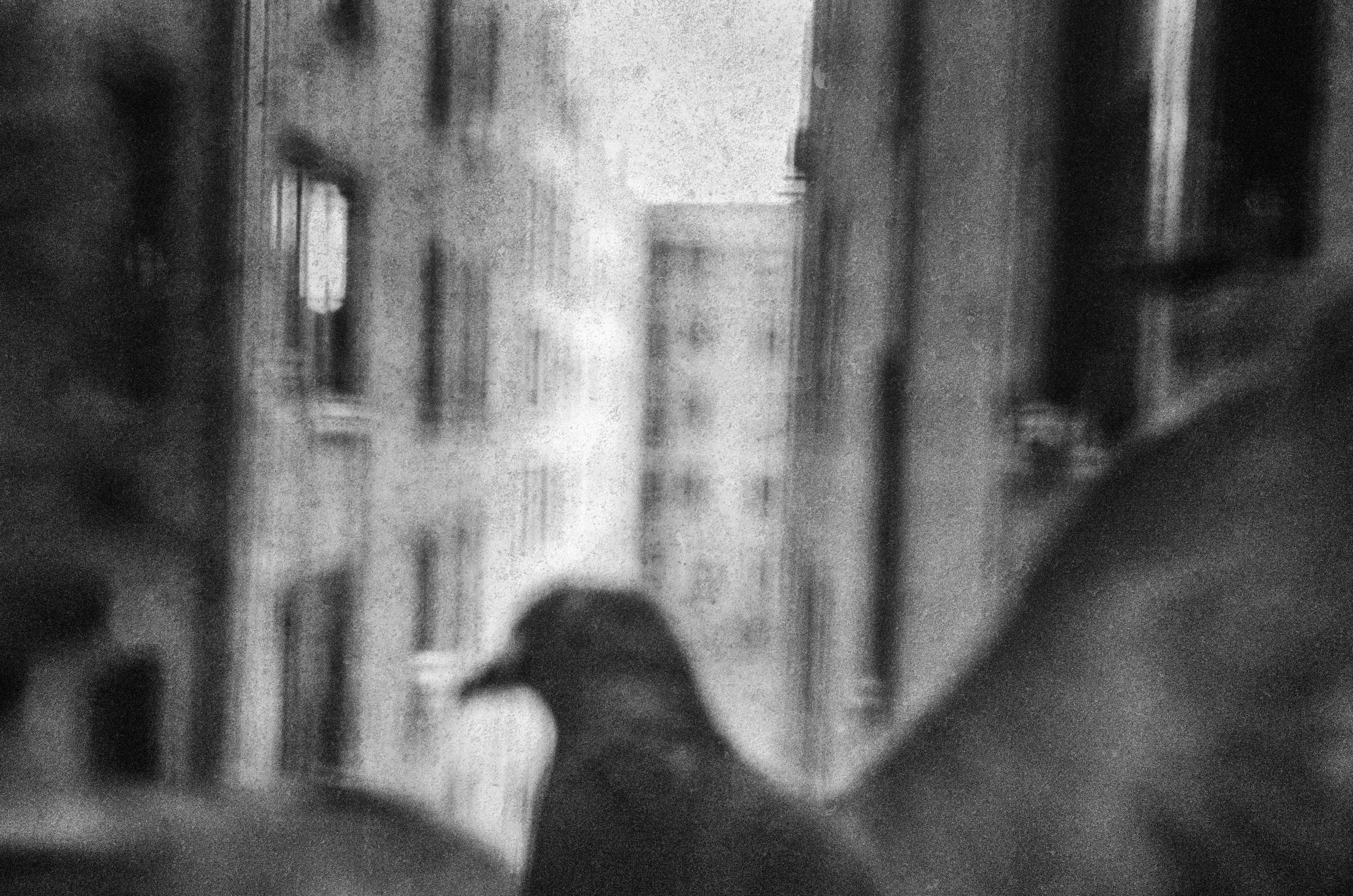
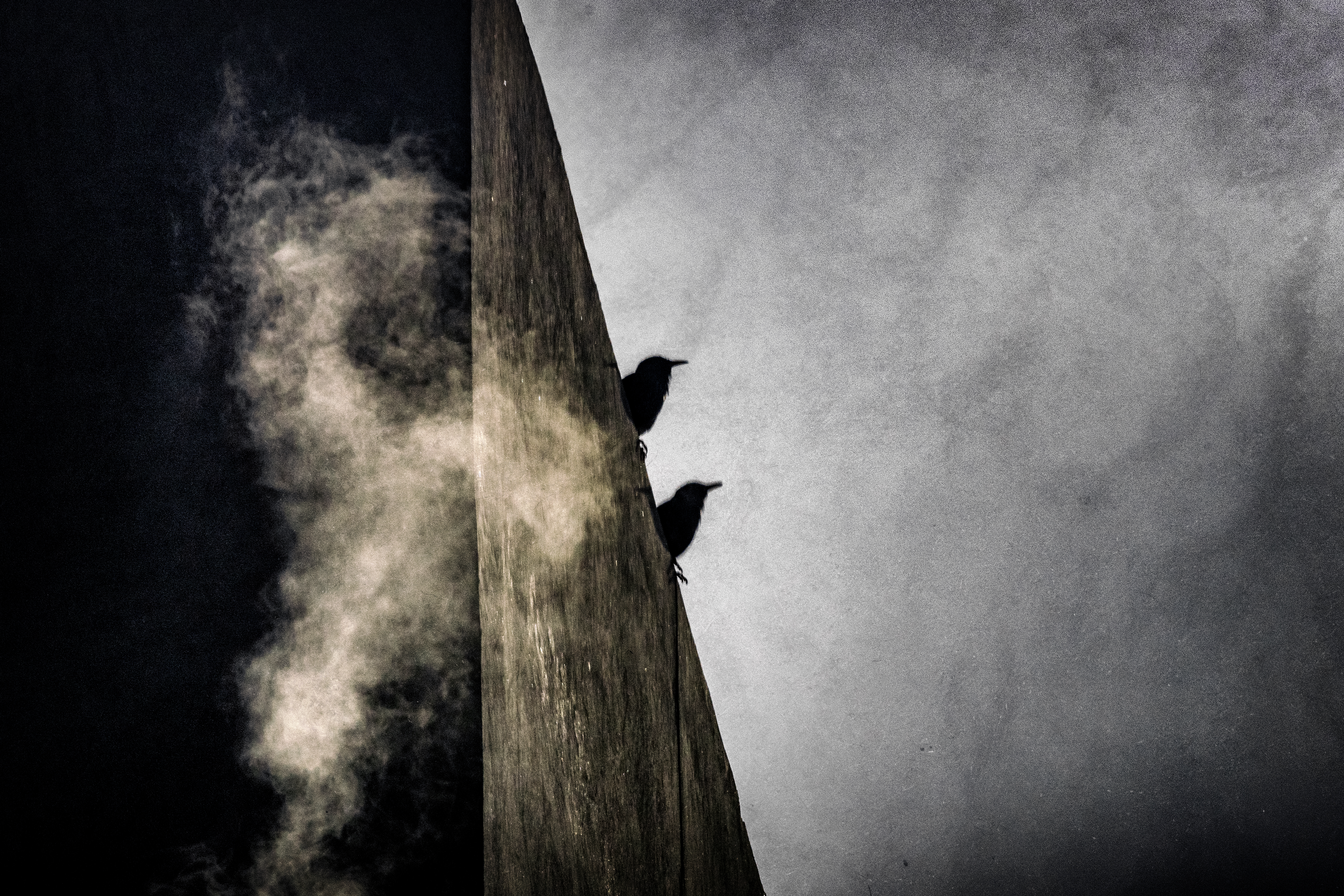
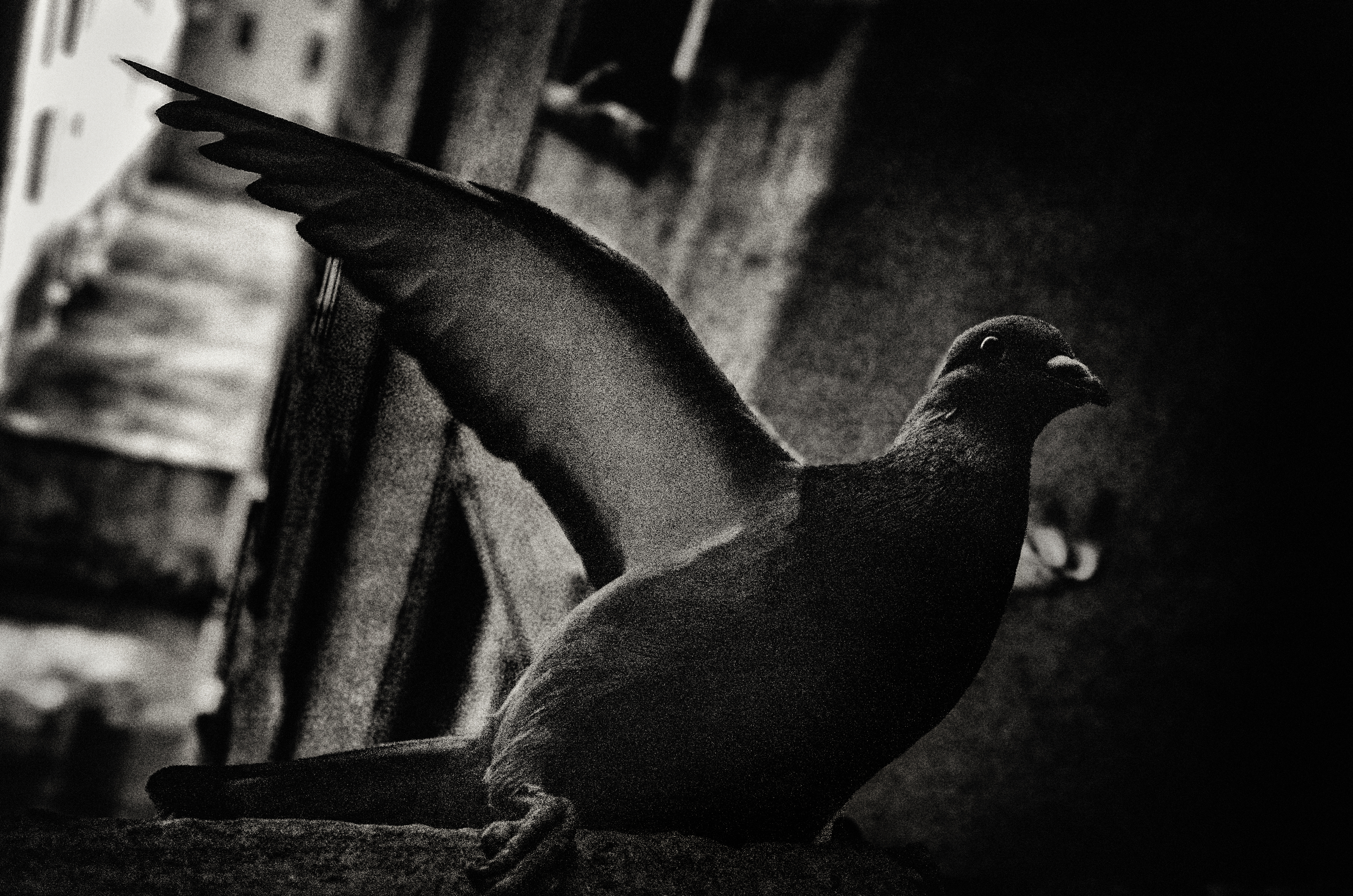
Their lives are short, their world dangerous, and yet there is always a pair nesting near our window. It may be descendants of the original couple, or it may simply be another pair that has claimed the same safe spot. To me, though, they feel continuous. They are part of the same story, part of the same quiet presence that has marked these years.
The alley, which might have seemed like a narrow, grimy space between two buildings, became for me a stage on which all the essential cycles of life and death played out.
During lockdown, I had often thought of the birds as metaphors. At a time when people were frightened, when every outing felt dangerous, and when the fragility of life was on everyone’s mind, these pigeons and sparrows lived on as they always had. They nested, fed, fought, courted, and died without any awareness of the global crisis. To them, our human catastrophe was irrelevant. There was a strange comfort in that. The alley, which might have seemed like a narrow, grimy space between two buildings, became for me a stage on which all the essential cycles of life and death played out.
Now, five years later, the birds continue to ground me in ways I didn’t anticipate. They remind me of time passing — not in the abstract, but in the concrete sense of seeing creatures come and go, seeing new feathers emerge, watching the seasons shift in their behavior. Their presence is not dramatic. They are not rare or exotic. Pigeons, in particular, are often dismissed, called “rats with wings,” and treated as nuisances. But when you live alongside them long enough, when you really watch them day after day, they reveal a quiet dignity. They care for their young. They form pair bonds. They defend territory. They grieve, in their way, when a mate is lost.
The sparrows, for their part, embody resilience in miniature. They are small enough to disappear into the background, but they make themselves known with bursts of energy, quick chirps, and sudden flights. I find myself smiling whenever they dart into the alley after the pigeons have left, as though they know that life is about taking chances where one can.
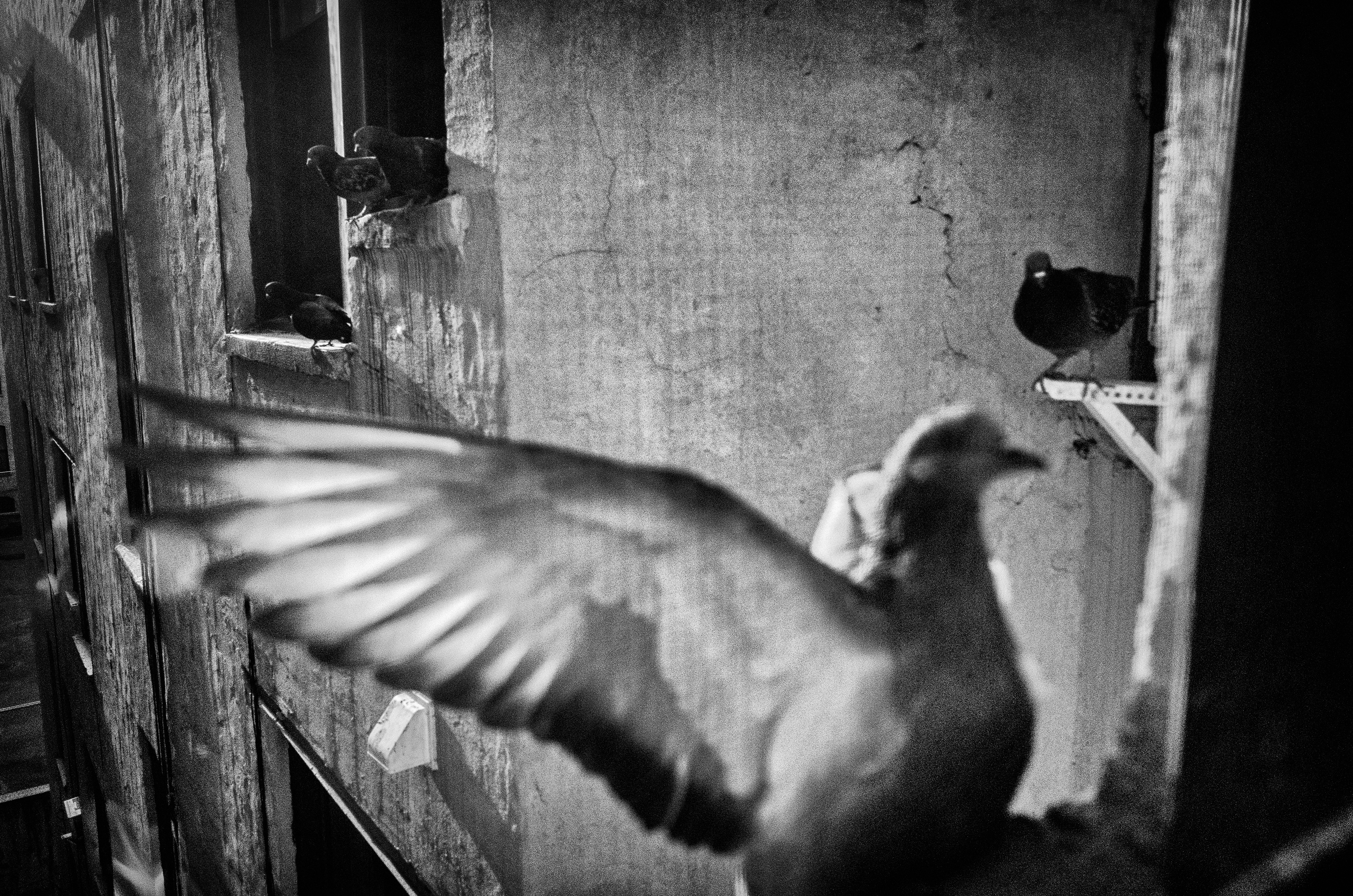
What began as an accidental feeding during a time of crisis has become a long-term companionship. And though I do not anthropomorphize the birds too much — I know they are not here for me but for the food — I can’t help but feel a kind of reciprocal relationship. They bring me perspective, a sense of rhythm, and even solace. I offer them sustenance. It is an exchange, even if unspoken.
They offered a sense of being part of something larger, something that stretched beyond human borders.
Looking back, I realize the birds gave me something invaluable during lockdown: a reminder of continuity when everything felt uncertain. They offered a sense of being part of something larger, something that stretched beyond human borders. Five years later, they continue to remind me that life in the city is not just about people, but about the hidden ecosystems that exist in every corner. Even in an alleyway, even between bricks and metal pipes, life thrives.
And so, every morning, as I sit at my desk and glance out the kitchen window, I wait to see who will arrive. Sometimes it is the familiar gray blur of pigeons swooping in. Sometimes it is the quick flicker of sparrows darting out of their nest. Sometimes it is silence, and I wonder what has shifted in their small world. But always, there is a reminder that we are never alone, even in the most unexpected places.
Keith Goldstein is a photographer living and working in New York City. More of his work can be seen here.
Categories: featured, featured photographer, Nature, Photo Essay, photography

 magpiesmagazine.com
1 reply »