


I have been living ill of late, but am now doing better. How do you live in that Plymouth world, nowadays? Please remember me to Mary Russell. You must not blame me if I do talk to the clouds, for I remain
Your friend,
Henry D. Thoreau.
As the skies appear to a man, so is his mind. Some see only clouds there; some, prodigies and portents; some rarely look up at all; their heads are directed toward Earth. (H.D. Thoreau)
We went to look for eagle feathers, though we knew we wouldn’t find any. As with most things in life, it was more about the journey — the walk on the towpath, over the old train bridge, down the hill through the tall ferns and prickly vines, up to the tower where the eagle had lived. We didn’t see the eagles, we didn’t find any feathers, the prickly vines scratched our ankles. The wild ferns and flowers and vines are taller than me down by the eagle’s tower, and it’s a strange bright green world filled with the sharp smell of nettles and the sweet smell of every green thing warming in the summer sun. We followed narrow paths, some that lead into the woods, some that lead to the river, and some that lead up the hill back to the towpath, straight up into the soft-staring slow-moving bright round clouds. This feels like summer. The dog days.
This time of year, where I live, the weather can change quickly — bright bare skies suddenly bruised on one side with brooding slatey clouds that make half the world as dark as night, so that pale branches and bright green leaves glow against the shadows. In the mornings, the clouds seem lit from within as they slowly move through the hot quiet world. In the afternoon, deep strange clouds rimmed in a glowing light stretch away on a path you could almost follow — castles in the air we can build a foundation under. In the evening, they form lacy patterns, a net stretching across the whole domed sky, catching the rosy evening light in its web. And after the sky glows itself to sleep, through the blue shadowy dusk and the warm purple firefly-lit evening, which slowly deepens until the stars take over from the fireflies, we can still see the clouds, so far away, looking at the world differently than we can, and “reflecting the light of the distant colourless twilight.”
This last quote is from a book by Arthur W. Clayden titled Cloud Studies, published in 1905, which he wrote mostly as a scientist, but also as a fan of beauty, as a person who loves “nature in all her moods,” and I think, as a poet. Speaking of scientists, artists, and human beings in general, he justifies his work, “Indeed, if only a few of them should be stimulated to take up a branch of nature study which has given me many an hour of quiet enjoyment, the labour of bringing these notes together will not have been in vain.” I like to think about Arthur W. Clayden watching the clouds. The photos in the book are all blurry, grainy, and in black and white, of course, it being 1905. They couldn’t have lived up to his vivid visions. But they’re beautiful as a testament to something beautiful he was trying to capture. Something that must have taken on a living, breathing, ever-changing quality to him. We should all have something beautiful we’re trying to capture.
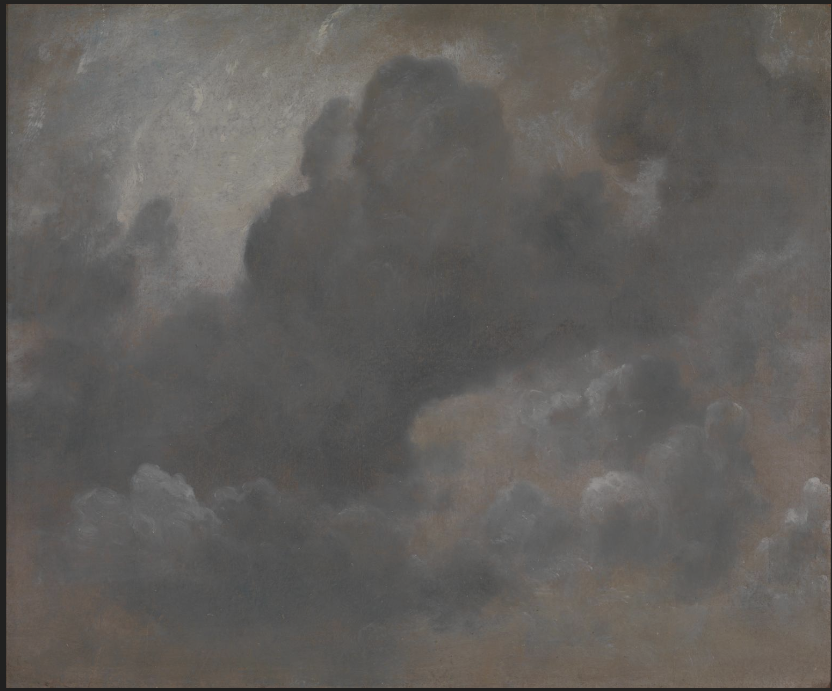
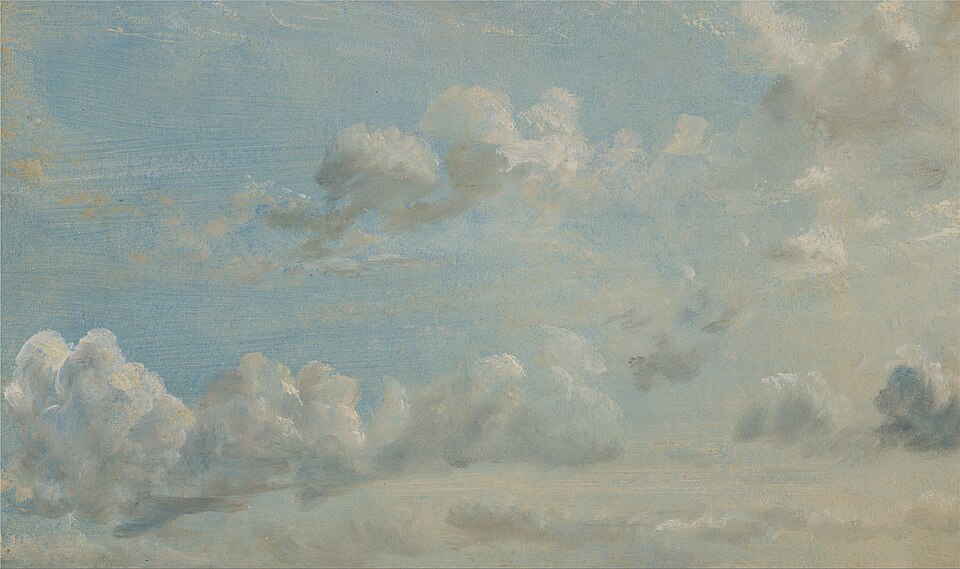
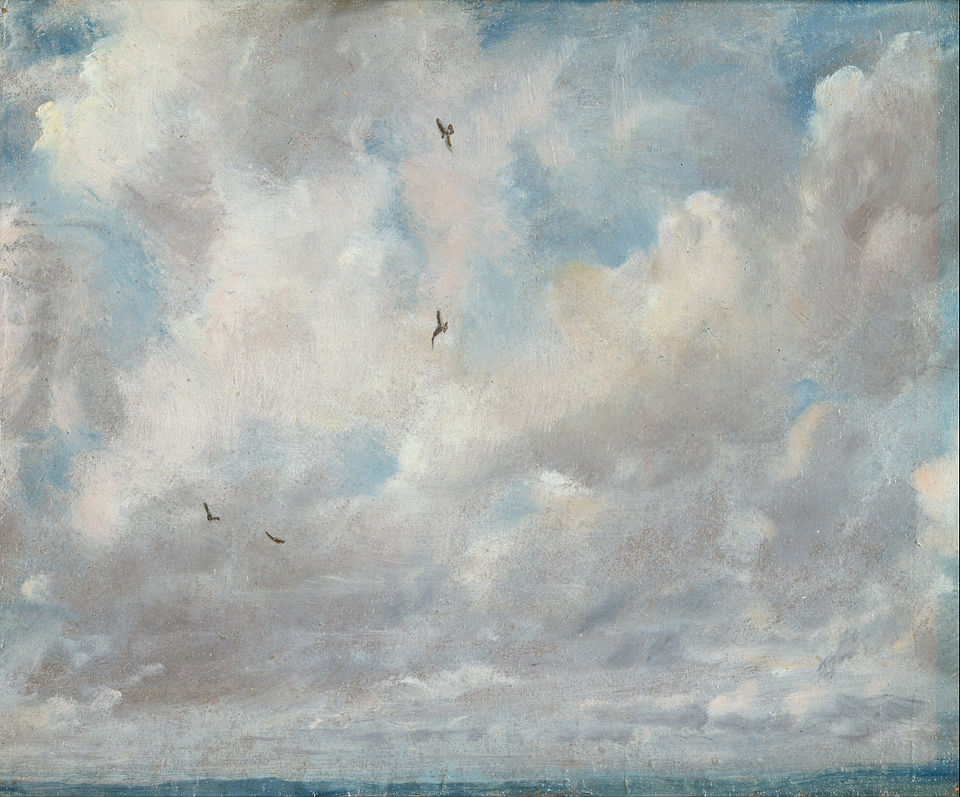
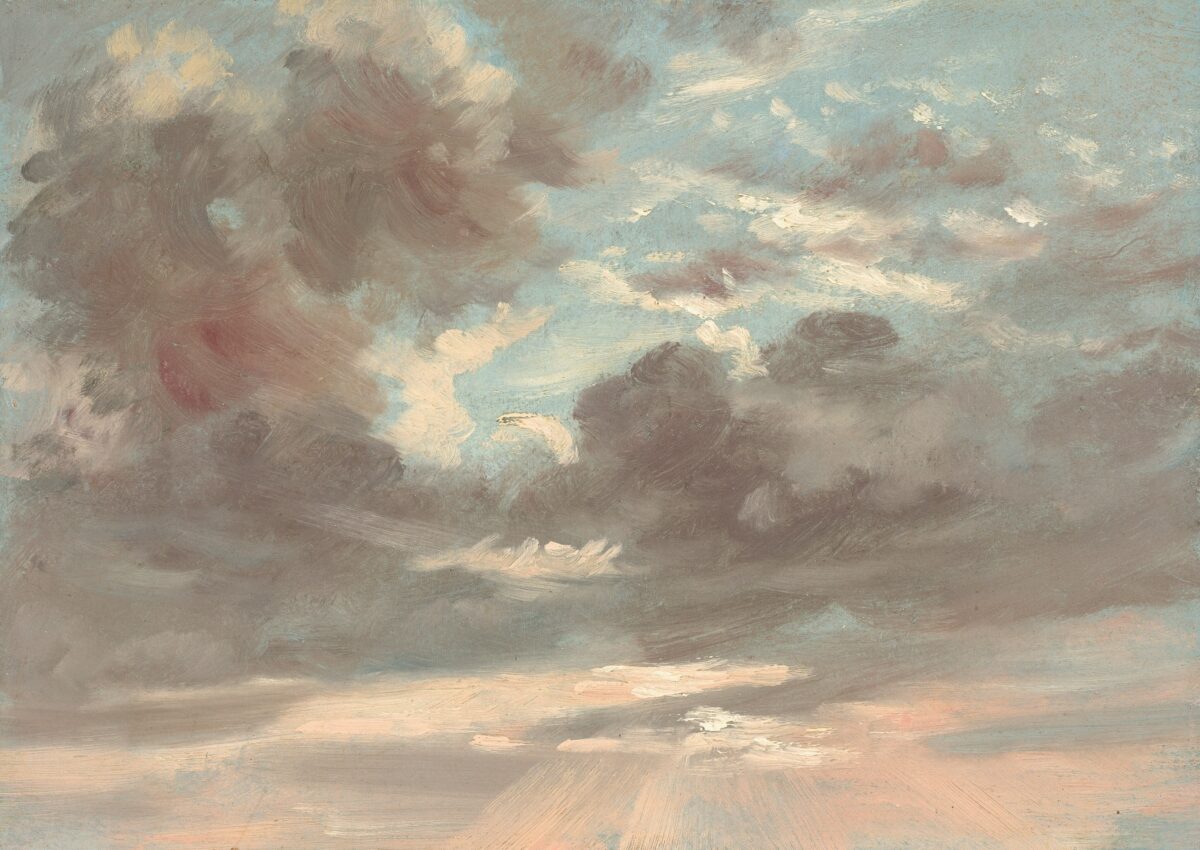
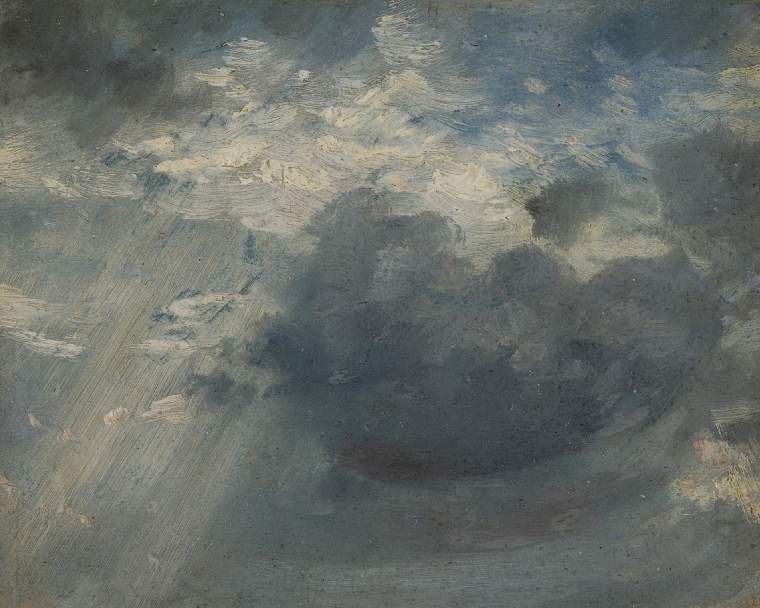
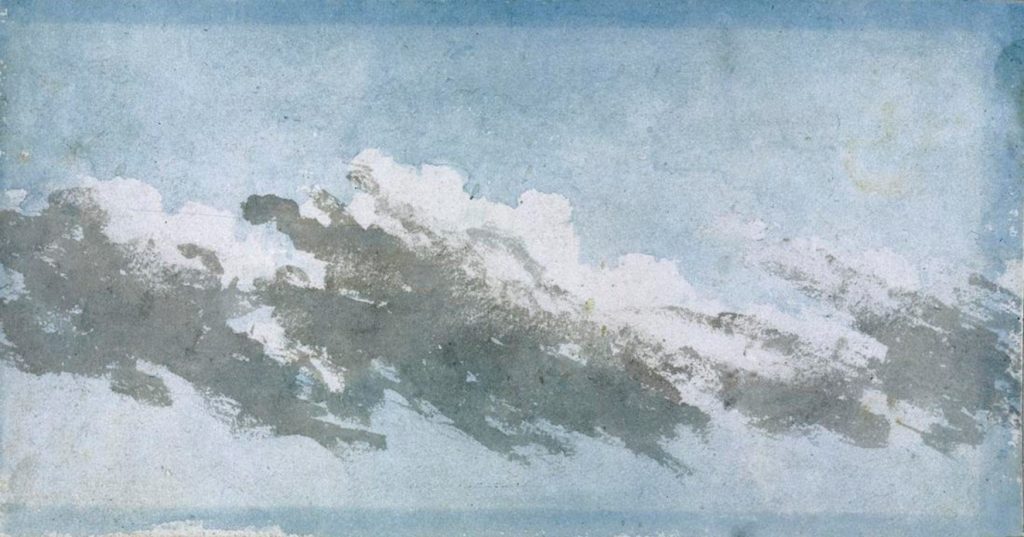
Constable’s Cloud Studies
Artist John Constable famously painted a series of cloud studies, reportedly as practice after somebody expressed criticism of his ability to paint the sky, but, one must believe, mostly out of affection for the clouds themselves. As you watch clouds in all of their moods, they seem like mysterious creatures, allowing the light to stream to us beautifully, just so and just so, floating so slowly you almost don’t notice, or racing and boiling like angry gods. Like Arthur W. Clayden, he must have become enamored of these creatures who move and change faster than brush or pen can capture them. With clouds, within seconds, you’re working from your memory of a thing that is as nebulous and beautiful and temperamental as memory itself. As confusing as memory, seen from within the mist, as perplexing seen from afar.
I love the idea of cloud studies. I love everything about it. From working on one (seemingly) small thing day in and day out — either trying to capture its image or understand it — until it becomes a friend to you. From that studious practice to the moment that while you’re working on that thing, you begin to realize that it’s not small, it’s huge, bigger than we can understand, bigger than the whole world or our puny understanding of it. To the moment that you look at clouds differently, and the sky, and the grass that beautiful beautiful cloud shadows pass over, and the times of day and the times of year, and the water and the air and the light. To the understanding that all of these things are as important as we are, though it’s hard to comprehend that, stuck as we are in our human minds. I love the sense of love that radiates from the writing and the paintings and drawings of clouds. The reverence for something that’s above our heads all day long. If we take the time to go outside. If we take the time to look up into the sky.
If you look at the clouds, every day, through all of the changes of the day, you will begin to feel so grateful for them. So grateful.
Luke Howard also studied clouds, and drew them, and gave them names (whether as friends or subjects of study, we will never know). He gave them the names we call them by today. Pretty names. Lofty names, in all the meanings of the word. Cirrus, cumulus, stratus, nimbus. And he is possibly the first person to record or notice the effect that the lives of humans had on changing the climate. He realized that London was hotter than anywhere nearby, and that this was a product of “heated air … continually pouring into the common mass from the chimnies; … the heat diffused in all directions, from founderies, breweries, steam engines, and other manufacturing and culinary fires.”
And here we are today, with the world on fire everywhere we look, and humans holding the matches.
We’ve always seen auspices and portents in the clouds. We tell ourselves stories about the shapes we see there and try to determine what they mean for us. Will fortune shine on us tomorrow? Will we weather the storm? Will we get the rain we need or more rain than we can handle? We have been taught by science and religion that the whole earth was created for us, to feed us and sustain us, that we have dominion over the birds in the air and the fish in the sea. And here is something as ethereal and incomprehensible as a cloud to bring us down to earth, to an earth we cannot control and we can never fully understand, though we can cause untold damage. Perhaps we should discover what the cloud studiers must have learned as they gazed into the bright round world above them. And when we look up into the skies for some message about what our future will bring, rather than hearing what we want to hear we can listen to the stories the clouds are telling.


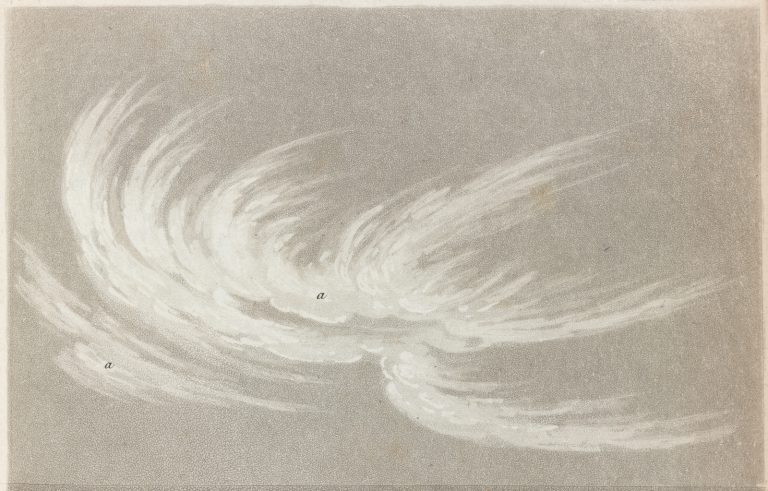

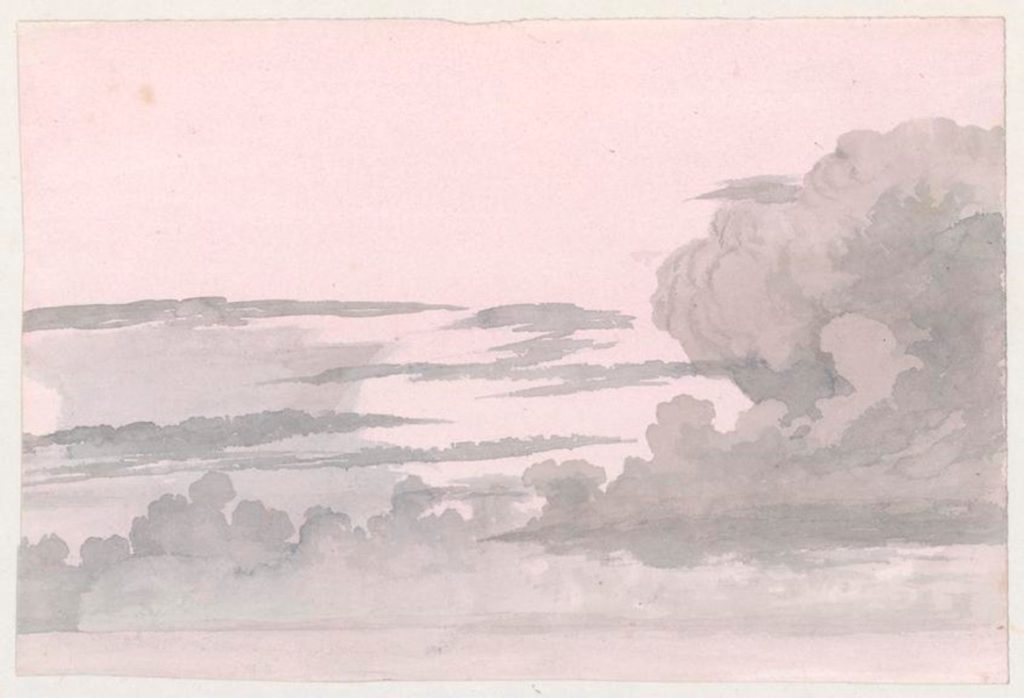
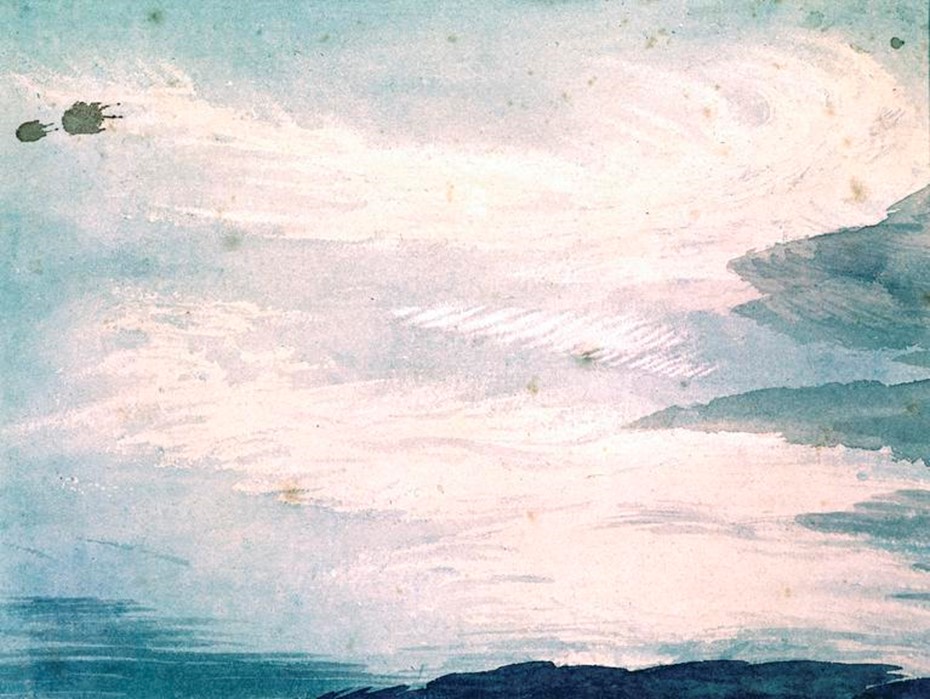
Luke Howard’s Cloud Studies
Categories: featured

 magpiesmagazine.com
I loved reading this! I obsessively paint clouds for two or three years and so wonderful to read about other artists/scientists who loved the realm above our heads too!Sent from my iPhone
LikeLiked by 1 person