

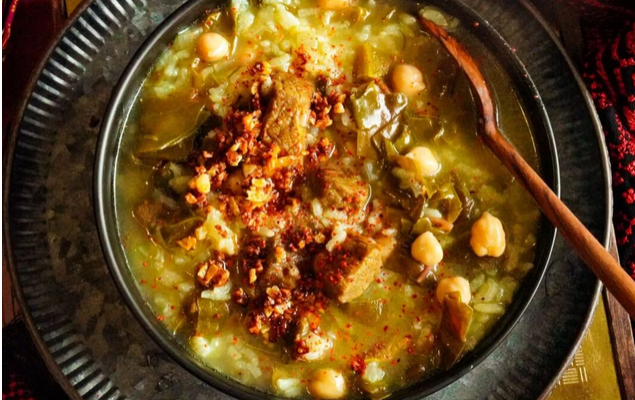
Words, images, and recipe by Fatima of FalasteeniFoodie.
It is widely recognized that traditional foods and dishes reflect the essence of the country they originate from. They are crafted from the core ingredients found within the heart of the homeland and showcase the generosity of the land. Fogaiyya is an authentic Gazan dish that stands as a proud symbol of resilience. It emerges from the Palestinian city of Gaza, representing the spirit of its steadfast people in countless ways.
Gazzawi Fogaiyya is an incredibly easy dish. It is made with simple ingredients that Gazans typically have during the Winter time. With a combination of rice, chickpeas, meat and chard, Fogaiyya has the power to keep stomachs full.
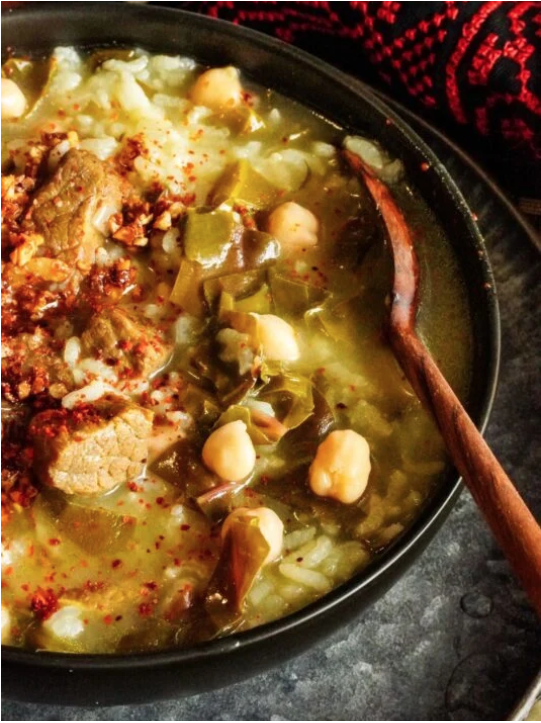
A Taste of Gaza’s Resilience
Fogaiyya, a dish that simply sheds light on the everyday agonies of Gazans. How a simple dish can be so informative, you ask? Well, it is very possible.
When an occupation besieges thousands of people in a very small piece of land, not allowing the importation of essential veggies and herbs, the true people of the land have no choice but to create from what they have available. Do you see now how strong and resilient the people of Gaza are?
Given the heartbreaking circumstances endured by the people of Gaza for so long, this dish has emerged from simple ingredients like rice, chickpeas, meat, and chard. Alongside other filling dishes such as Rummaniyeh and Sumaggiyeh, which also have the same tragic backstory.
The irony of life is evident in how this humble stew is usually prepared by the people in the Gaza Strip in large quantities for Eid El Fitr, meant to be shared with family, friends, and loved ones. However, now, this dish, which is considered the simplest among all, is tragically out of reach for the innocent people of Gaza who are devastatingly being starved by the occupation.
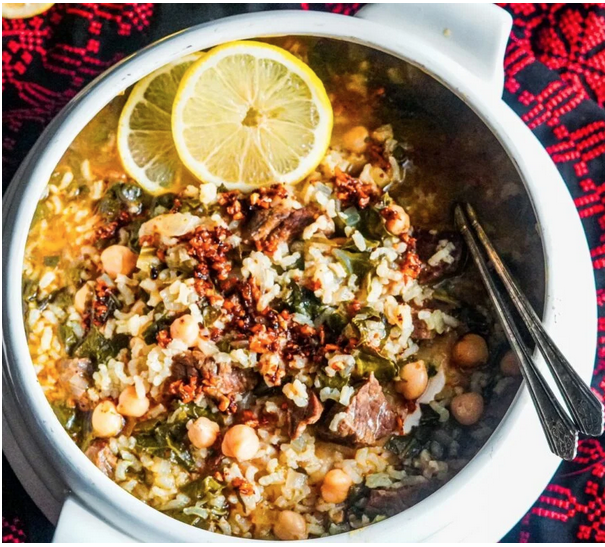
Fogaiyya Ingredients
For the Broth:
Oil of choice
Yellow onion
Cloves
Cardamom pods
Dried bay leaves
Cinnamon stick
Black pepper
Turmeric
Hot water
Beef stew meat
For the Stew:
Extra virgin olive oil
Yellow onion
Swiss chard
Cooked hummus beans
Calrose rice
Reserved broth
Lemon juice
Salt to taste
For the Tasha:
Extra virgin olive oil
Garlic cloves

Steps to Prep
To prepare the Broth:
First of all, heat up the two tablespoons of olive oil along with the chopped onion.
Then, add the beef chunks along with the spices and sauté until it turns brown.
Once browned, add the 8 cups of hot water and let it come to a boil.
After that, boil for 5 minutes before covering and simmering on medium-low heat for 30-45 minutes, or until the beef is tender.
Last but not least, drain the broth and set aside, do not discard!
To Prepare the Fogaiyya Stew:
First, sauté the chopped onion in the olive oil.
Then, add in the cooked and strained beef, the chopped Swiss chard, and the rinsed chickpeas.
After that, add the washed rice before adding 6-8 cups of reserved broth (depending on the consistency you prefer), and mix well.
Next, adjust the salt to taste, let it come to a boil before simmering on medium-low heat for another 15-20 minutes.
Once done, add in the lemon juice.
To Prepare the Tasha:
In a separate pan, fry the garlic cloves in the tablespoon of olive oil until golden. Add it to the stew and mix well.
Finally, Serve with extra lemon juice and shatta.
Top Tips
Don’t skip on adding lemon juice to the stew. It is a vital step that balances out the different flavor notes of the Fogaiyya.
It is very important to note that the rice used in the recipe must be thoroughly washed to clean it from debris and remove the excessive starch. If you do not do this step, you will more likely end up with sticky or mushy rice.
You are free to adjust the consistency of the stew the way you prefer by adjusting the amount of broth you add.
Make sure to trim and remove the Swiss chard’s stems.
Storage Tips
Refrigeration: Refrigerating Fogaiyya is possible. However, you must wait for it to cool down completely before transferring it to an air-tight container. After you do so, store it in the refrigerator for 3-4 days.
Freezing: You can also freeze this homey stew. You only have to transfer it to a freezer-safe container. It can stay frozen for up to 2 months.
Reheating Palestinian Fogaiyya: Step one should be thawing the stew, and to do so, you can either use the microwave, or thaw it overnight in the fridge. Then, you can reheat it on the stovetop over low or medium-low heat until it is ready!
FAQs
What is “shatta”?
Shatta is a super spicy chili condiment crafted by the people of Gaza. It is loved by individuals who prefer a kick of heat in their food. It is so easy to make, and believe me, It packs fiery heat! It can be prepared in advance and added to whatever you want.
Is Fogaiyya vegan-friendly?
This original Fogaiyya recipe has meat in it, so it is obviously not vegan. However, you can make a vegan version by taking out the meat and incorporating more beans or veggies.
What can I use other than Swiss chard in Fogaiyya recipe?
Gazans originally use Swiss chard because this is what is actually available for them to have with this recipe. However, if you can not find it, then you can substitute it with greens like spinach, for example.
Is it possible to prepare Fogaiyya ahead of time?
Absolutely! Stews in general taste 10 times better when prepared ahead of time because time allows the ingredients to meld together, creating a delicious, strong flavor.
Fogaiyya (Stew from Gaza City)
Gazawi Fogaiyya, a dish symbolizes resilience, is made up of a combination of meat chunks, chickpeas, rice, and Swiss chard. Gazans created this wholesome dish to warm them in winter and satisfy their hunger!
Ingredients
For the Broth
- 2 tablespoons oil of choice
- ½ a large yellow onion
- 2 whole cloves
- 5 cardamom pods
- 2 dried bay leaves
- 1 cinnamon stick
- 1 teaspoon black pepper
- ¼ teaspoon turmeric
- 8 cups hot water
- 1 pound beef or lamb stew meat
For the Fogaiyya Stew
- 2 tablespoons extra virgin olive oil
- 1 large yellow onion
- 7 cups Swiss chard chopped into small pieces (1 large bunch, stems removed)
- 1 cup cooked hummus beans rinsed
- ½ cup calrose rice washed
- 6-8 cups reserved broth depends on the desired consistency
- ¼ cup lemon juice
- salt to taste
For the Tasha
- 1 tablespoon extra virgin olive oil
- 5 garlic cloves
Directions
For the Broth
- Heat up the two tablespoons of olive oil along with the chopped onion.
- Add the beef chunks along with the spices and sauté until it turns brown.
- Once browned, add the 8 cups of hot water and let it come to a boil.
- Boil for 5 minutes before covering and simmering on medium-low heat for 30-45 minutes, or until the beef is tender.
- Drain the broth and set aside, do not discard!
For the Fogaiyya Stew
- Sauté the chopped onion in the olive oil.
- Add in the cooked and strained beef, the chopped Swiss chard, and the rinsed chickpeas.
- Add the washed rice before adding 6-8 cups of reserved broth (depending on the consistency you prefer), and mix well.
- Adjust the salt to taste, let it come to a boil before simmering on medium-low heat for another 15-20 minutes.
- Add in the lemon juice.
For the Tasha
- In a separate pan, fry the garlic cloves in the tablespoon of olive oil until golden. Add it to the stew and mix well.
- Serve with extra lemon juice and shatta.
I’m Fatimah. I’m a Palestinian American and I grew up in both the Middle East & in California, all while eating a variety of Arab/Palestinian dishes that I decided to write down to make sure I never forget how to make them. Growing up in California also opened my taste palate and creativity when it comes to making and learning about different cultural foods, hence the intercontinental eats you can find on falesteenifoodie!
This recipe first was posted on Falesteenifoodie, a most brilliant food blog. See more on Instagram at falasteenifoodie and on Facebook at falasteenifoodie.



testing
LikeLiked by 1 person