

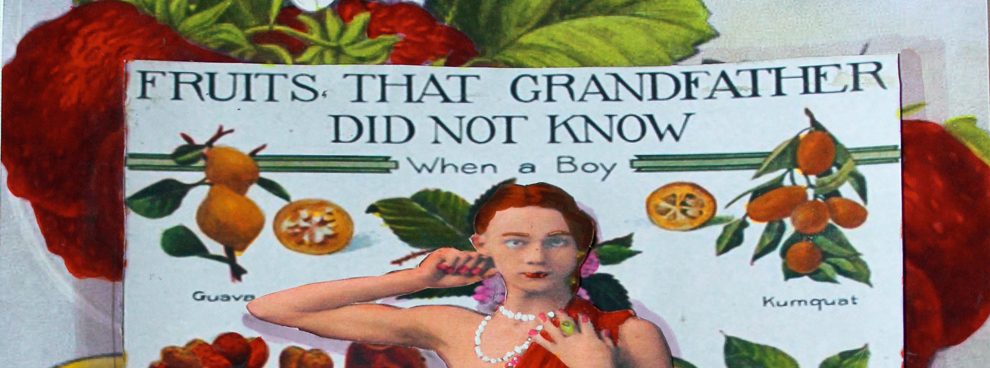
Sometimes, especially lately, it feels as though everything is designed to make us feel powerless. Why bother watching the news? Why bother questioning? Why bother making art? In the dark days of November, I thought about these things a lot, and the artist who kept coming to mind to give me a glimmer of hope was Peter J. Ketchum. His artwork asks so many questions, layer upon layer of questions, and it forces us to ask questions, too, to question beliefs that are so deeply woven into the fabric of our culture we almost don’t notice. Ketchum’s art hits us on the head and wakes us up, peeling back the sad, absurd realities of our society — making us ask the questions we need to ask to avoid sinking deeper into the abyss of fascist oligarchy we are hurtling into.
We were grateful for the chance to ask Ketchum about his art and the ideas behind it.
Since the election, I’ve been thinking a lot about the role of art as a political tool – whether it’s to make a statement or ask questions. Your artwork has always seemed like a powerful example of both. Do you think of your art as political? Is that a bothersome term?
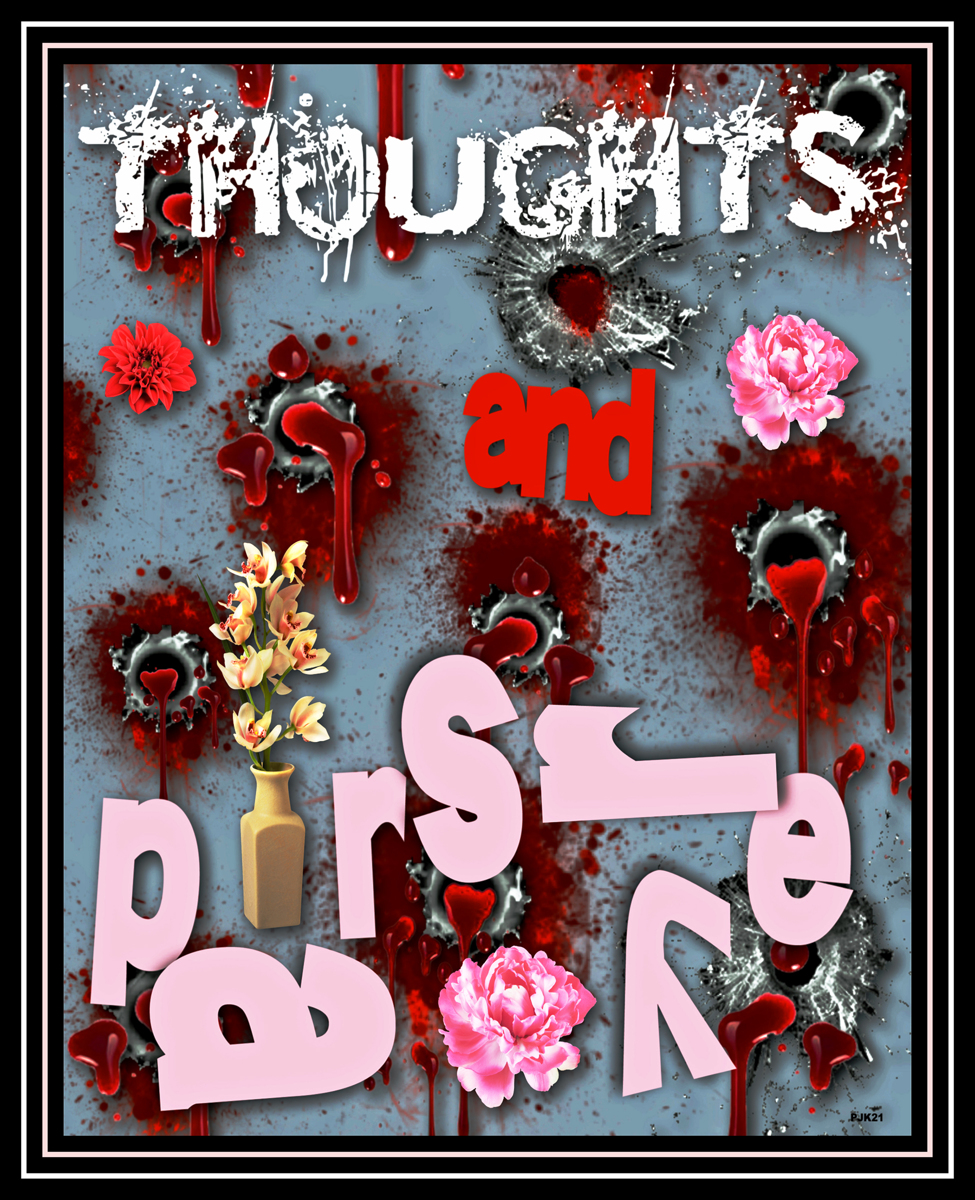
My art is without question a political tool, but a visual, not vocal, one. Whether I’m commenting on politics or the hypocrisy of organized religion or societal ills in general, my art is like a bullhorn used to get attention about things that concern me. Alas, the vicissitudes of various algorithms make my voice unheard beyond the third row. I certainly hope it is bothersome no matter how small the audience.
When things are very bad in America, as it feels they are now or are about to be, it seems especially important to look back at our history to see how we’ve arrived at this point. Your work is particularly effective in using layers of history to show how things have changed and how they have not. Talk about this a little?
I absolutely use layers of history in my work — visual and verbal — but lately the Cultural Police are virulent to the point where I firmly believe the tipping point has been reached. The past cannot and should not be denied. It has become truly obnoxious thanks to online media. I had work censored in two exhibits last year. In my solo Manhattan show, a piece was removed even though it showed what was happening in the 1890s to people of color is still very much happening today. The work had been shown in a museum in 1991 in a solo show that included a Black curator. In another show, the gallerist declined a piece she had originally chosen after a complaint. It had historical context spanning centuries. In both cases the curators were white.
Incidentally, years ago the Arch Diocese in NYC asked that a work be removed from the window of a solo show in Manhattan. Happily, that gallerist did not quiver and cave.
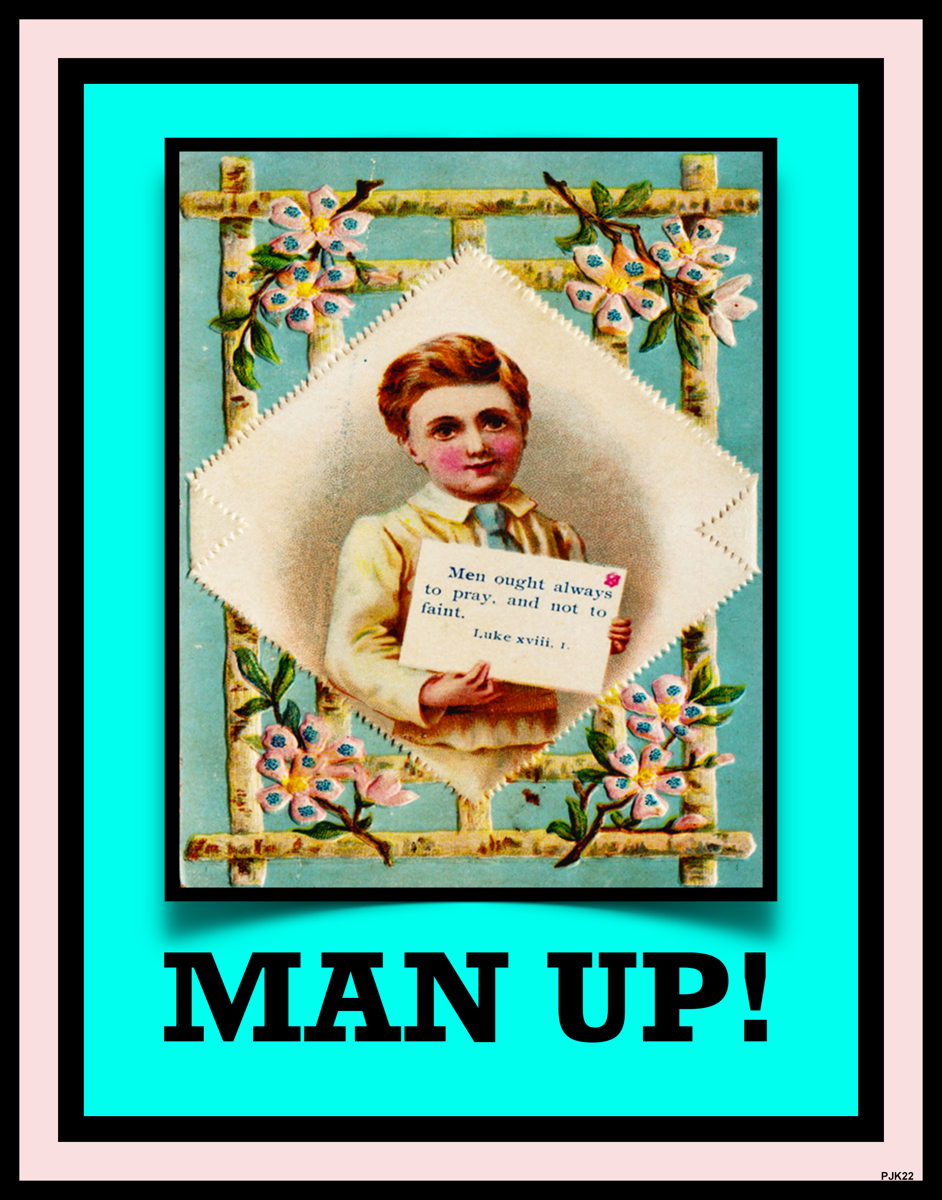
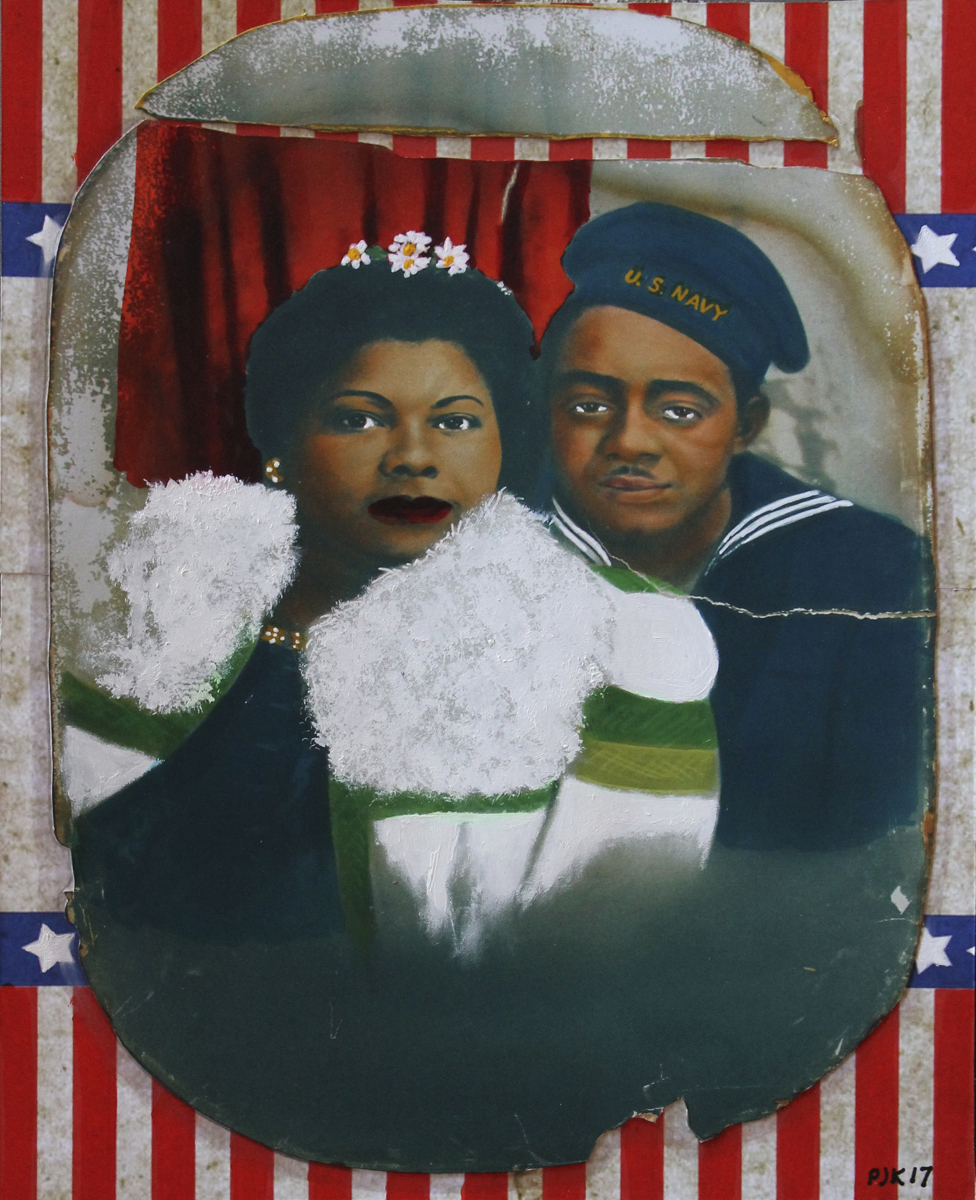
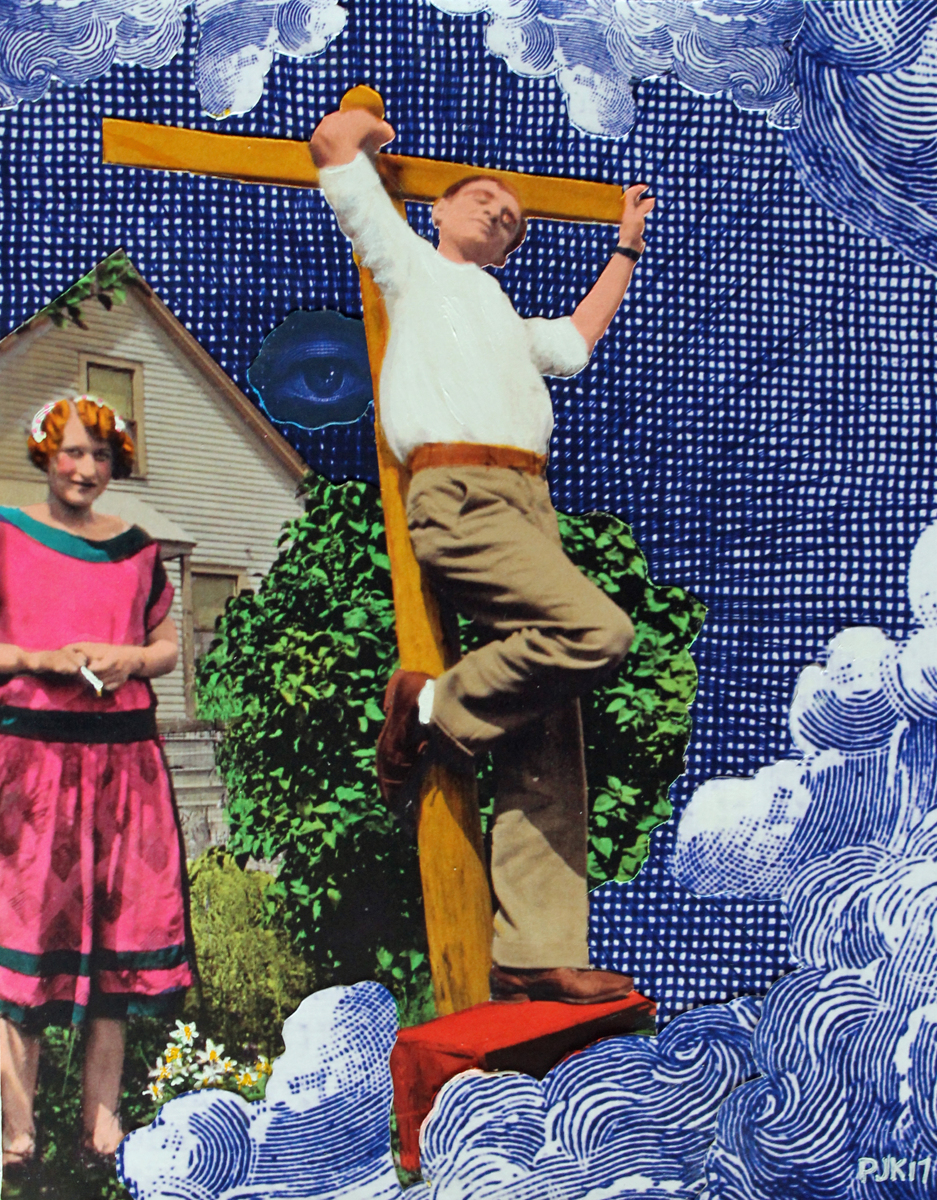
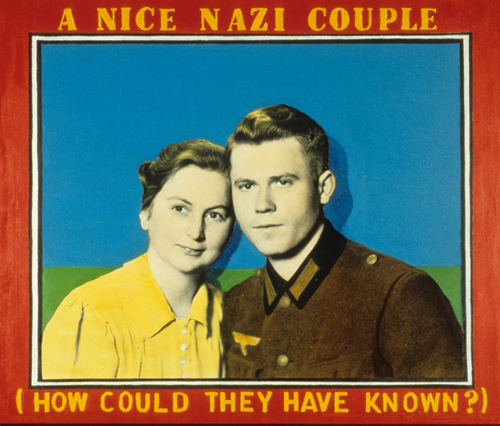
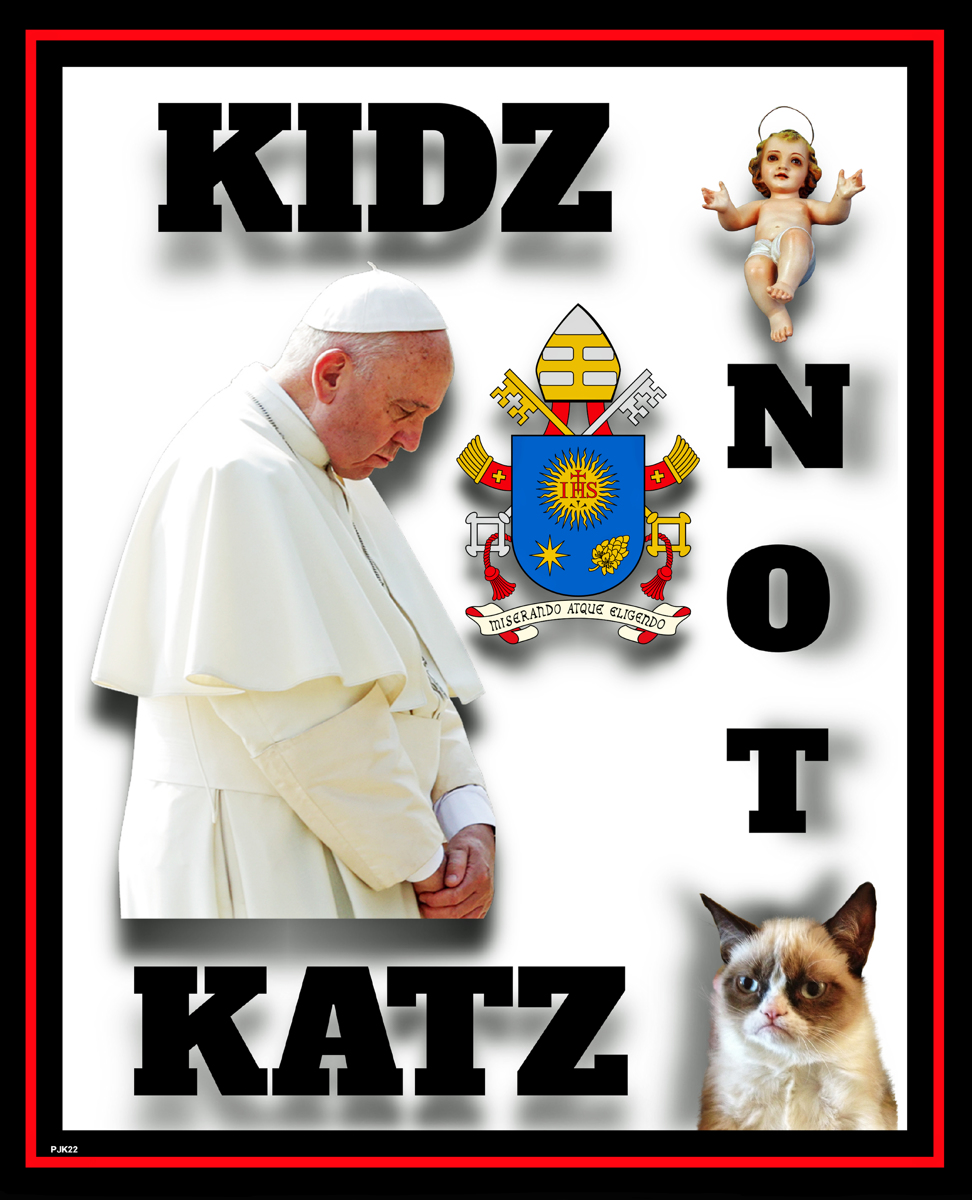
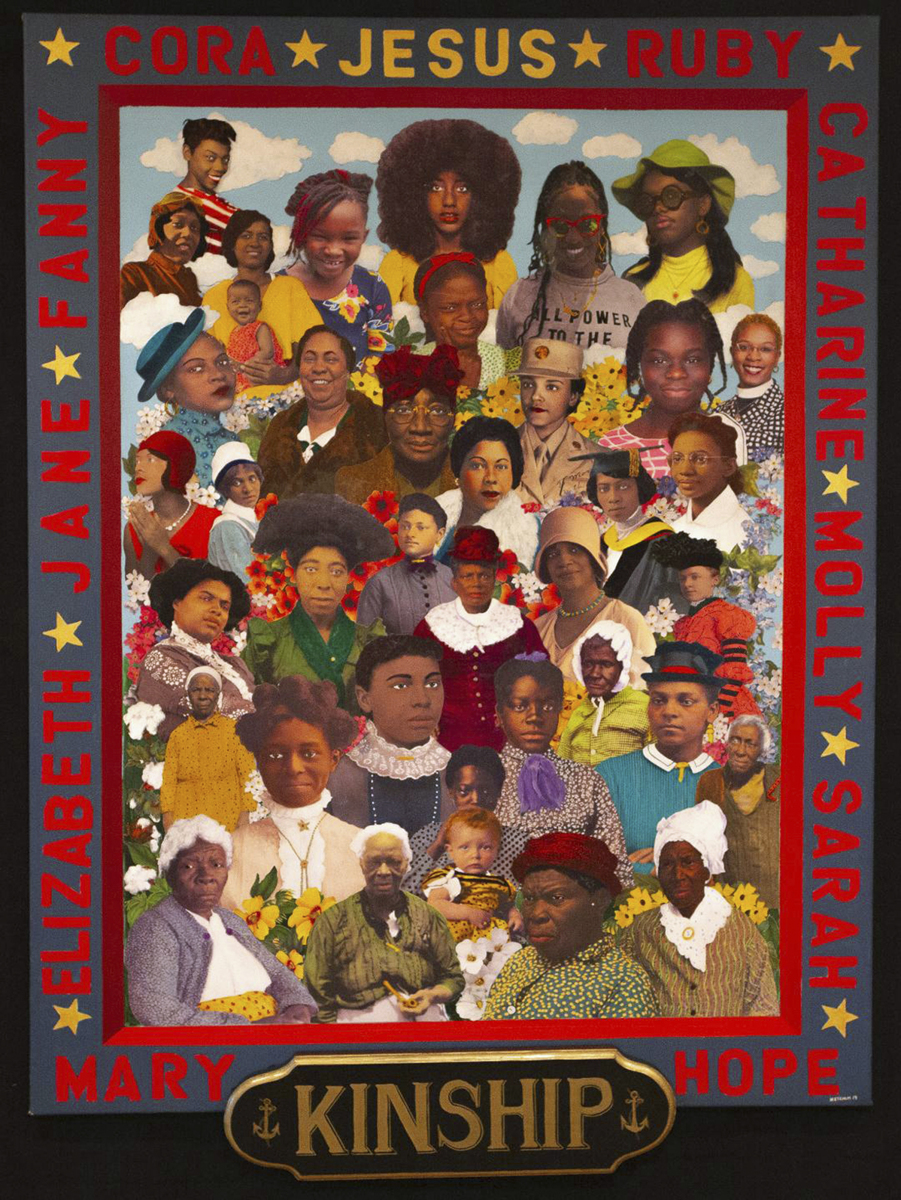
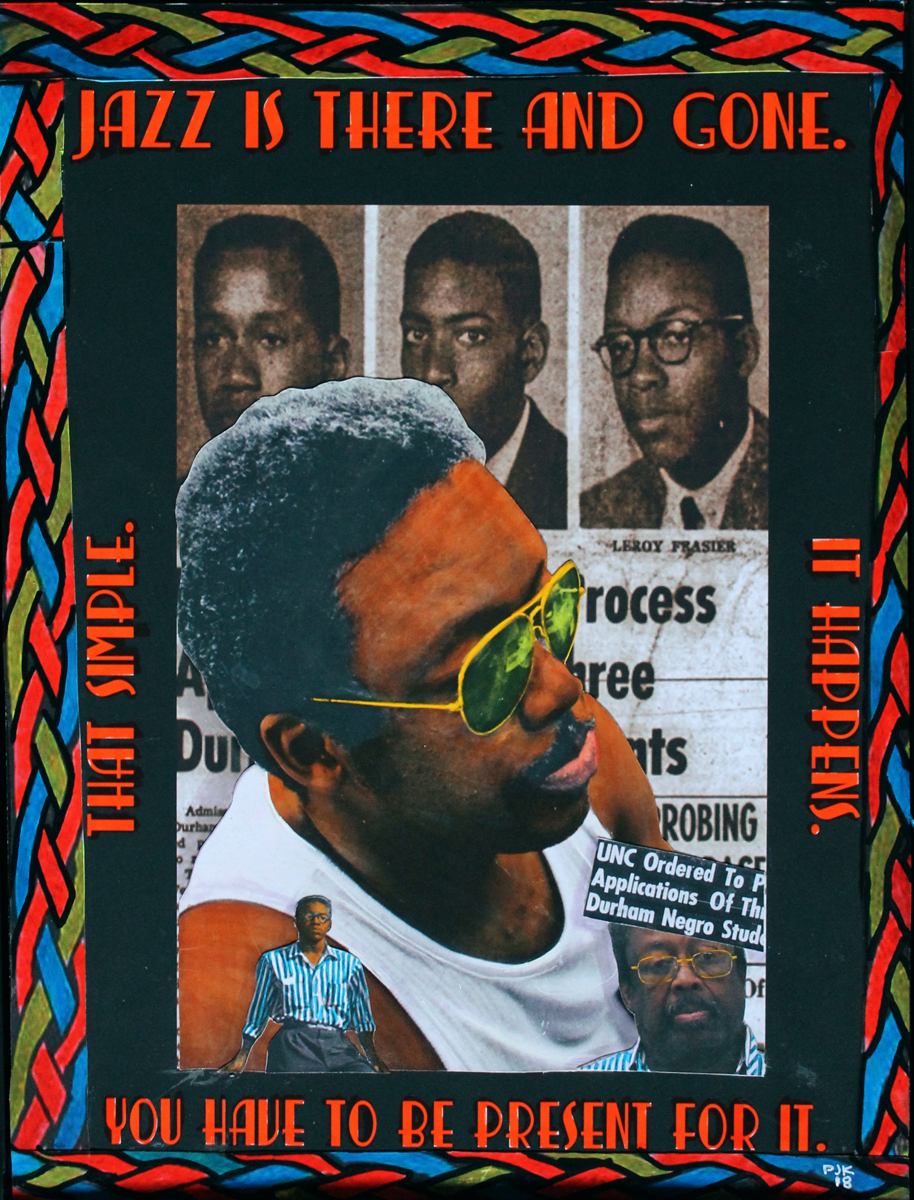

Have you observed changes in the way art functions as a form of resistance/protest changed over the years?
Not really. To me, art is still a valuable red flag being waved vigorously to get people to take notice. But, to a degree, It’s become dangerous. In a year marked by a rising number of politically motivated attacks on art and artists, incidents of violent militants and even peaceful civil groups targeting artists have been reported. The attackers have the same goal: to stifle artistic expression.
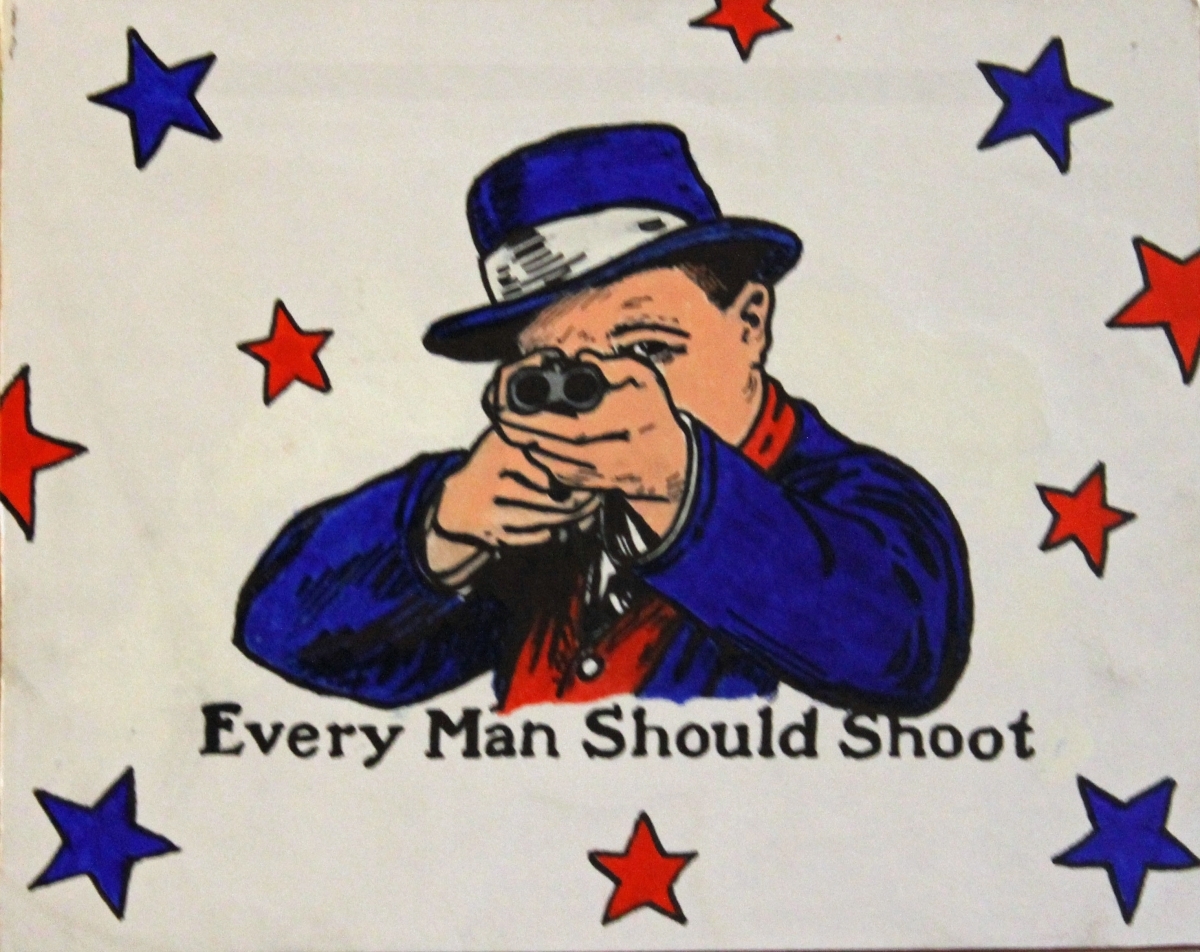
In Italy, there was violence when a man slashed a canvas deemed blasphemous and then stabbed the artist in the neck. Artists were attacked In São Paulo while painting a mural in support of Palestine. In the U.S. a school principal was fired after a picture of Michelangelo’s sculpture of David was hung in an art class. It was, um, pornographic! I recently finished a work about Trump. My eldest son asked me not to post it. He fears a reaction from some Maga maniac. But I feel the same as I did when the Roman Catholic church tried to have my work removed in NYC. Oh PLEASE go to the press. It would help sales.
You also deal beautifully with the balance between permanent and impermanent. Sometimes the most valuable things (human life) are much less permanent than, say, a junk shop trinket. Talk about how this idea plays itself out in your work?
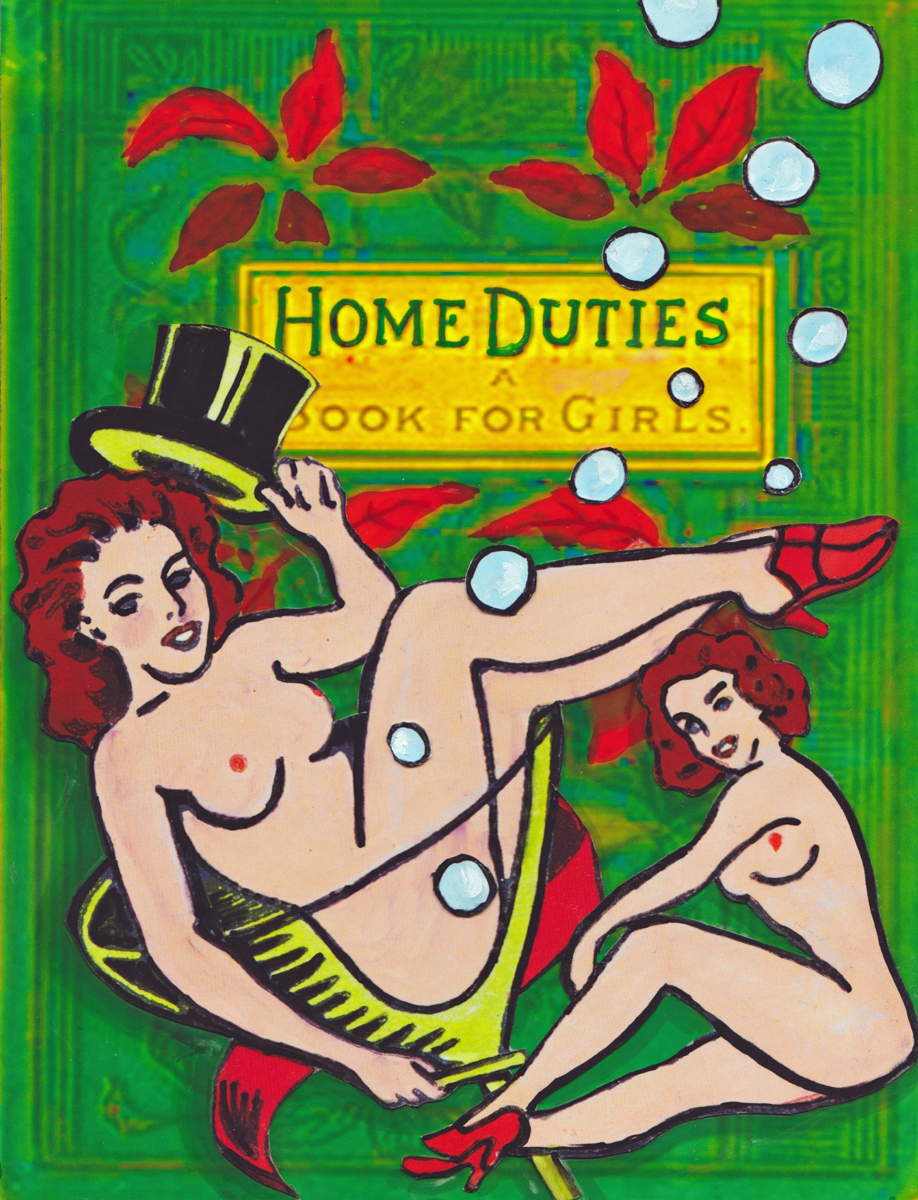
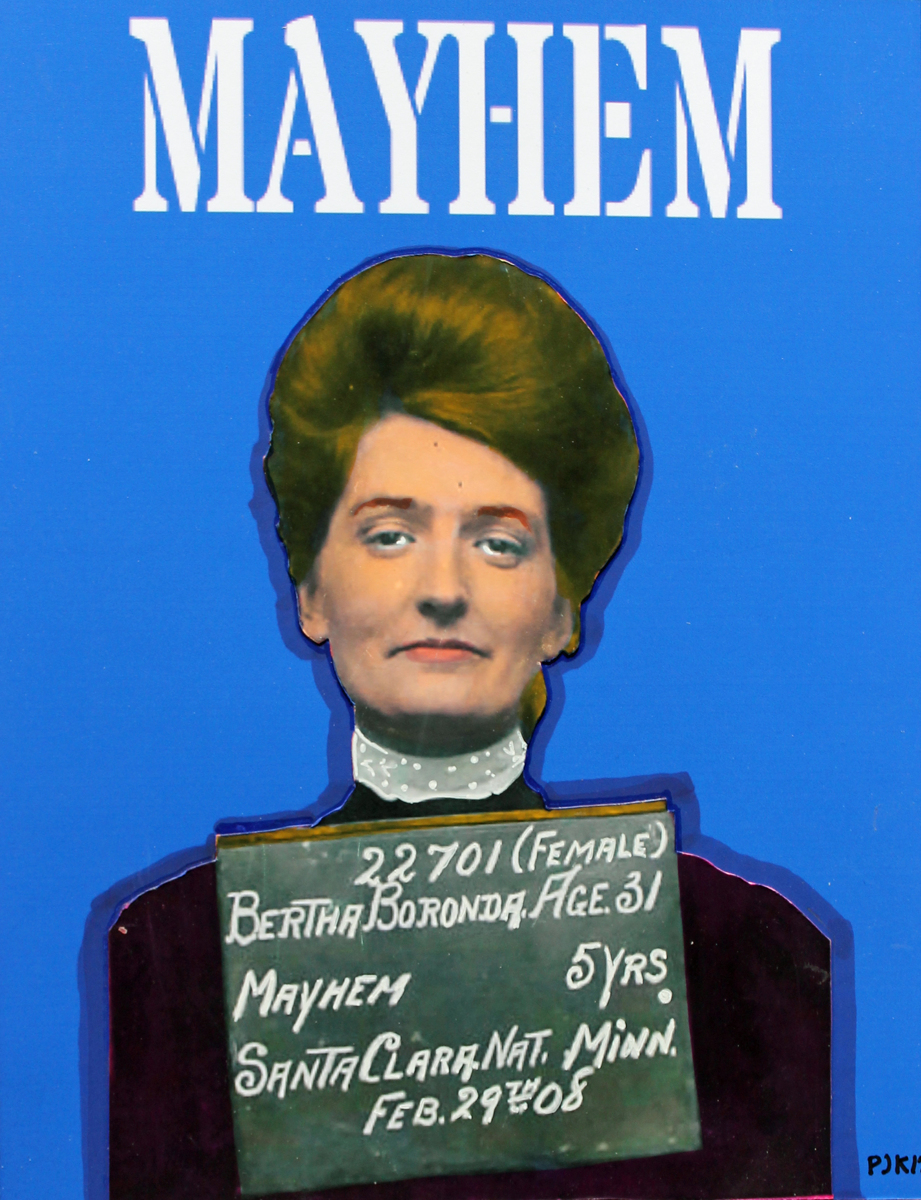
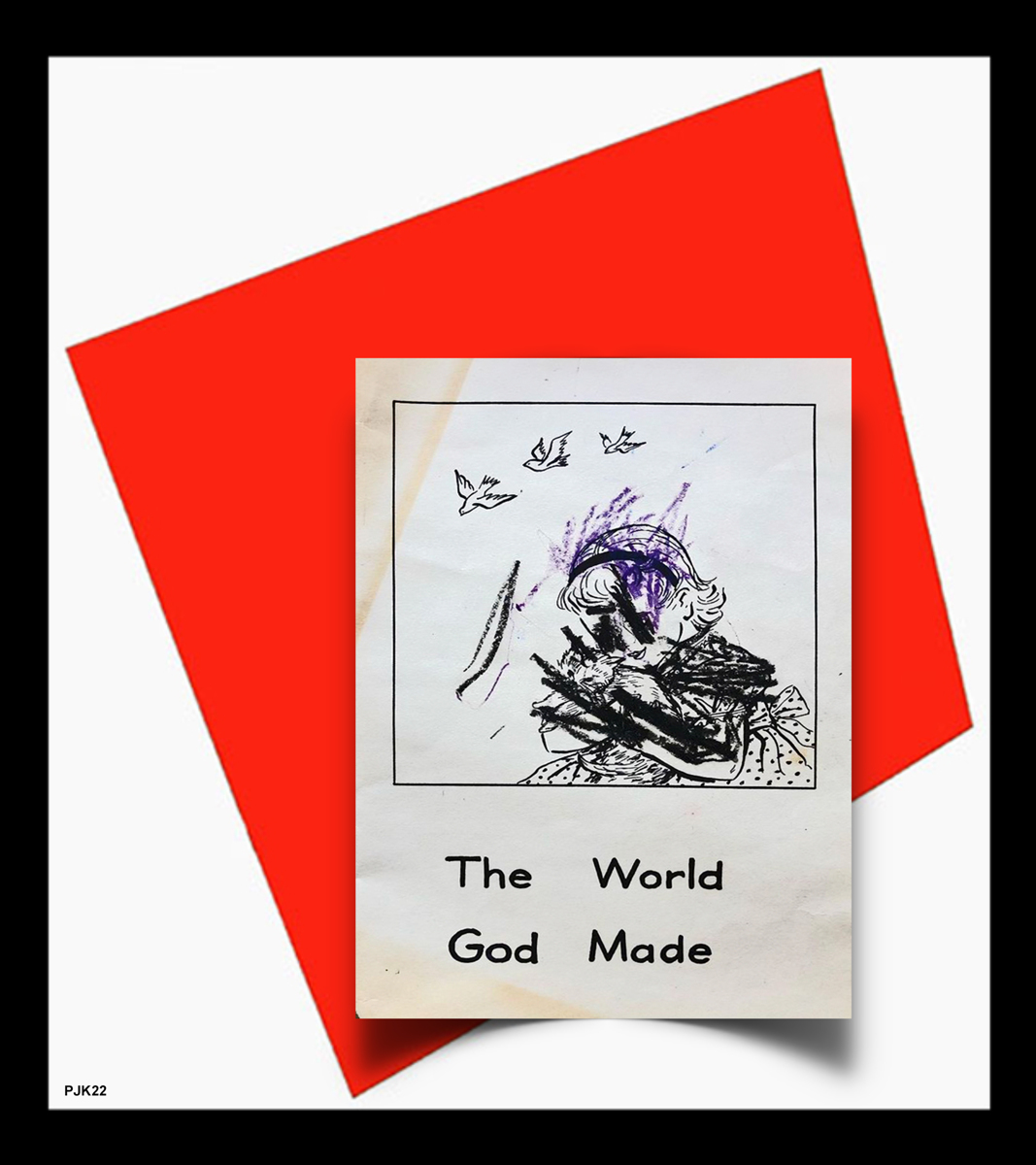
Trinkets are the unearthed fossils of lives lived. I have used a cheap brooch, an old debutant glove, rosary beads, Barbie and Ken dolls, sports trophies, a thrift shop bra,1870s love letters, mug shots, and hundreds of photographic images in my work. I do it because I am a sentimental slob and I do it because of the comfort in continuity and remembrance. People come and go but each trinket says, I was here and this is what remains. Each trinket resonates in us.
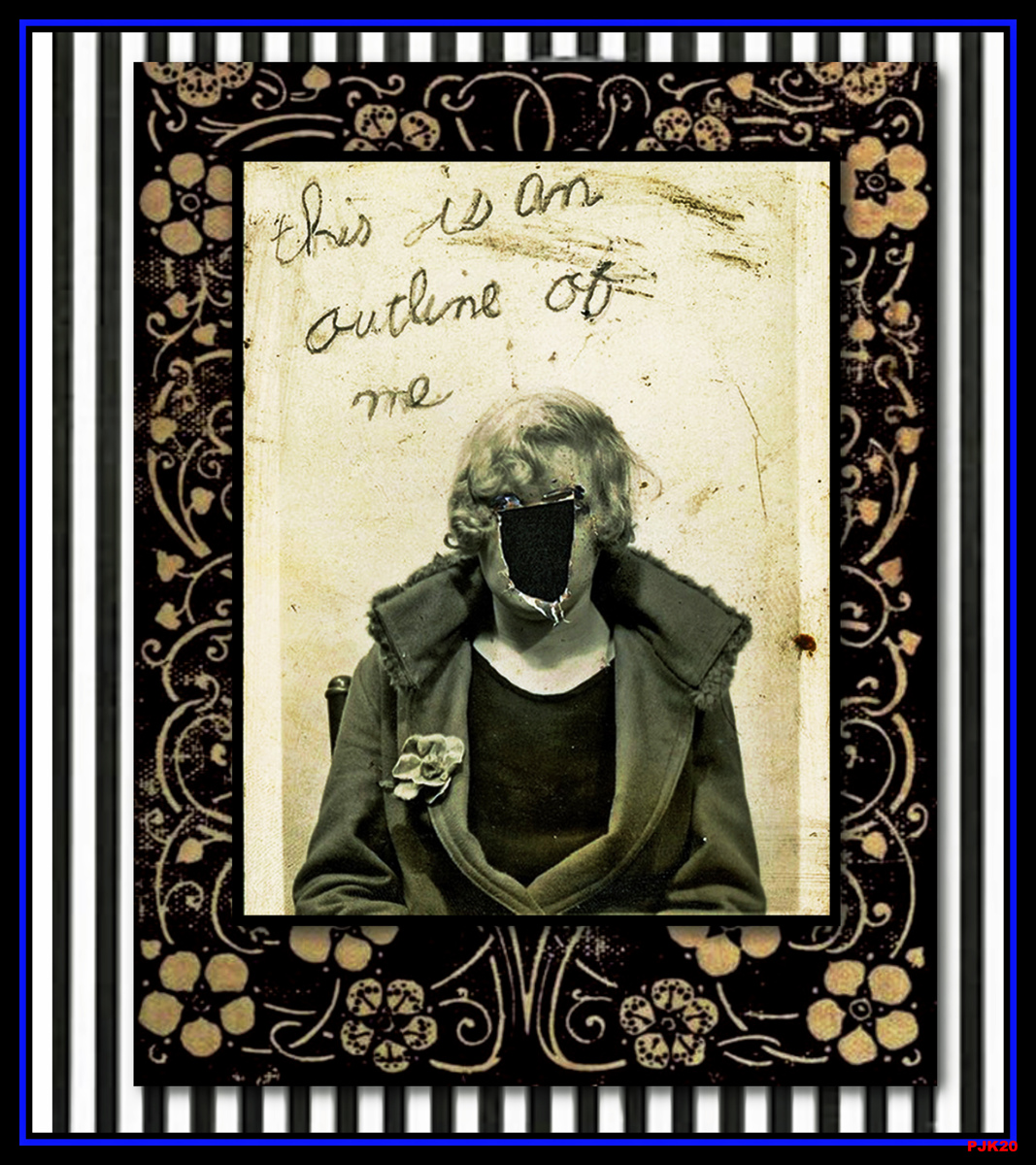
My use of found photos of complete unknowns has a particular emotional weight. In a recent large work made with cabinet cards, I have given each a name tag that says not “Hello My Name Is….,” but Hello My Name WAS…”I have made dead strangers a work of living art.
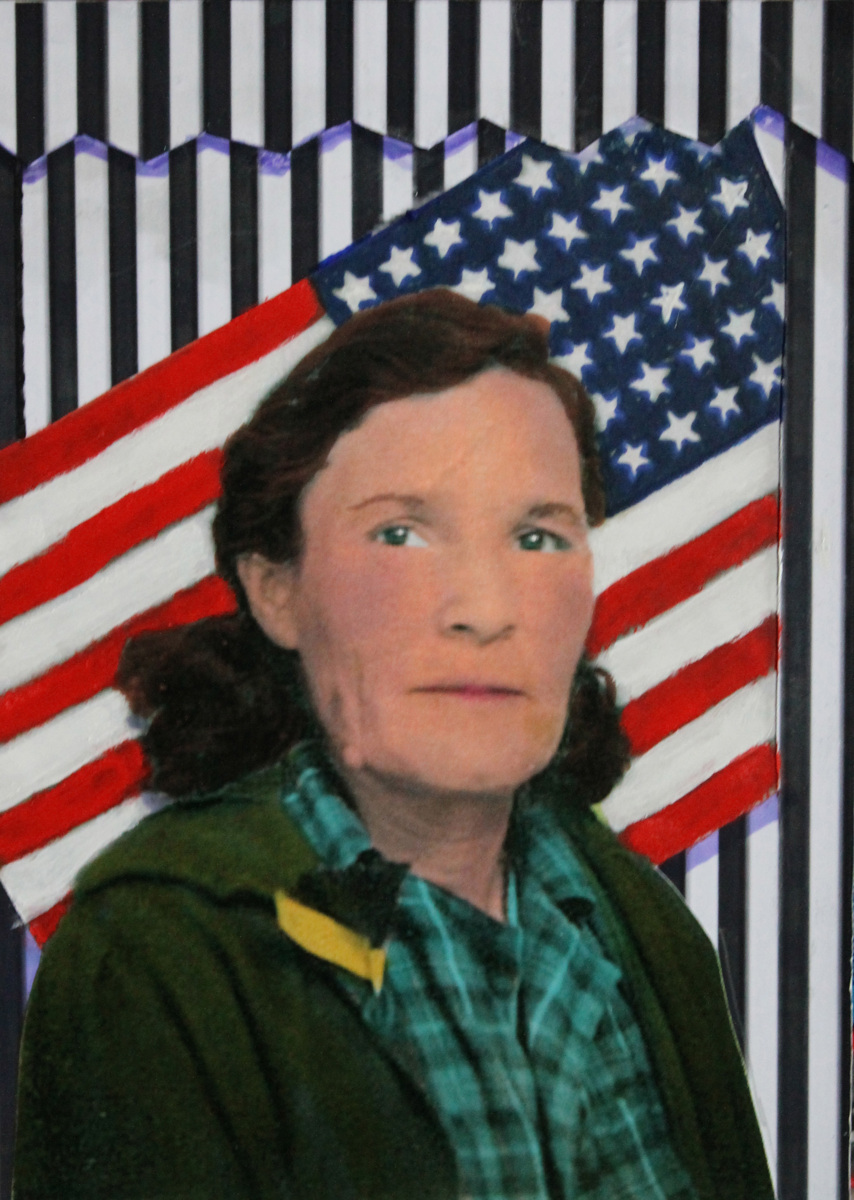

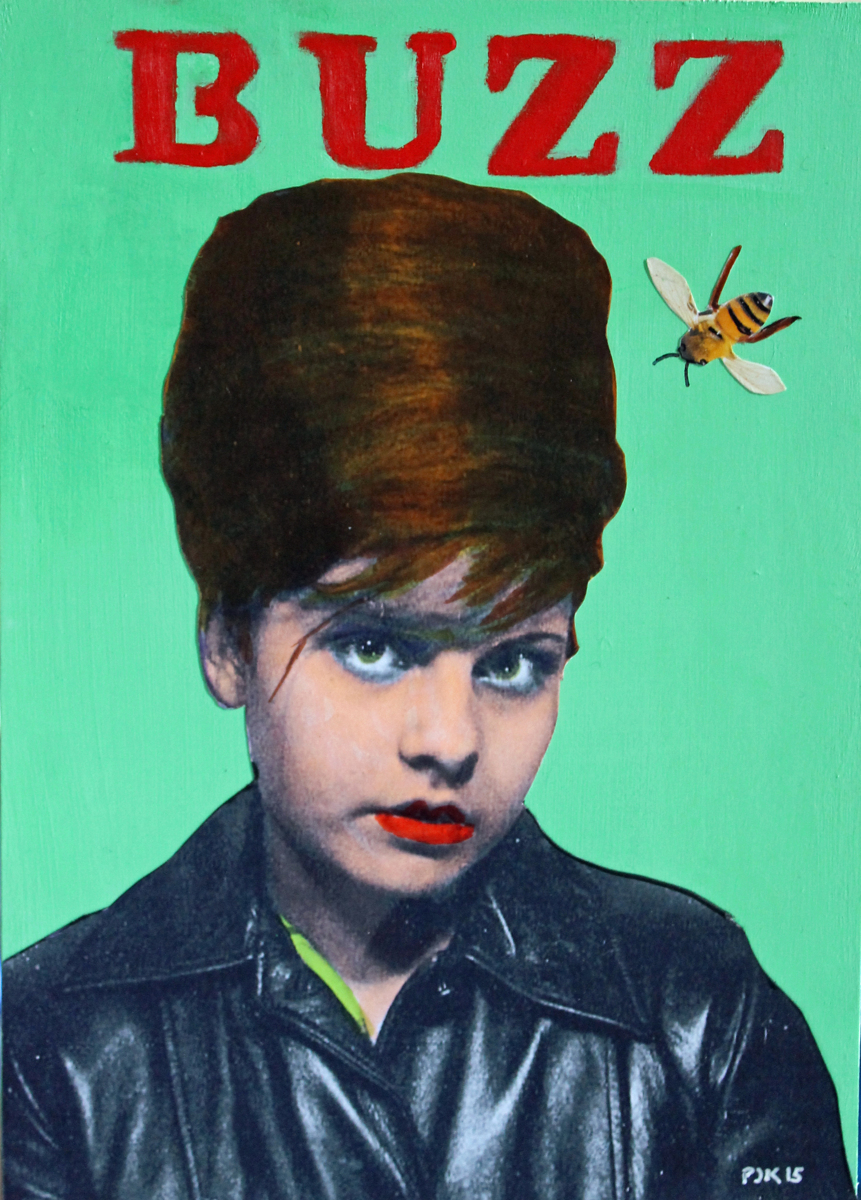
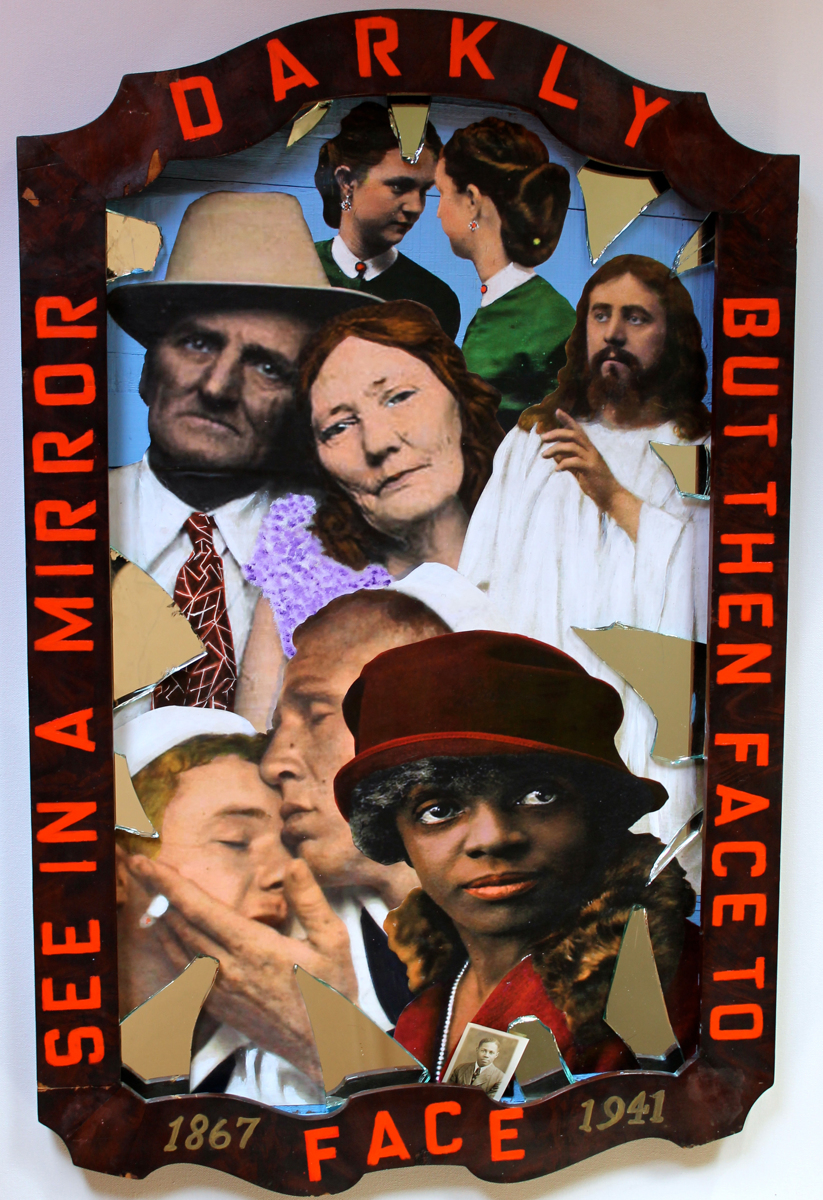
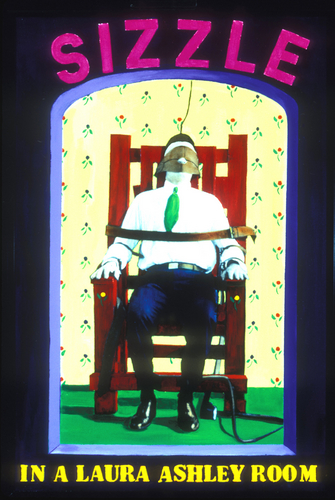

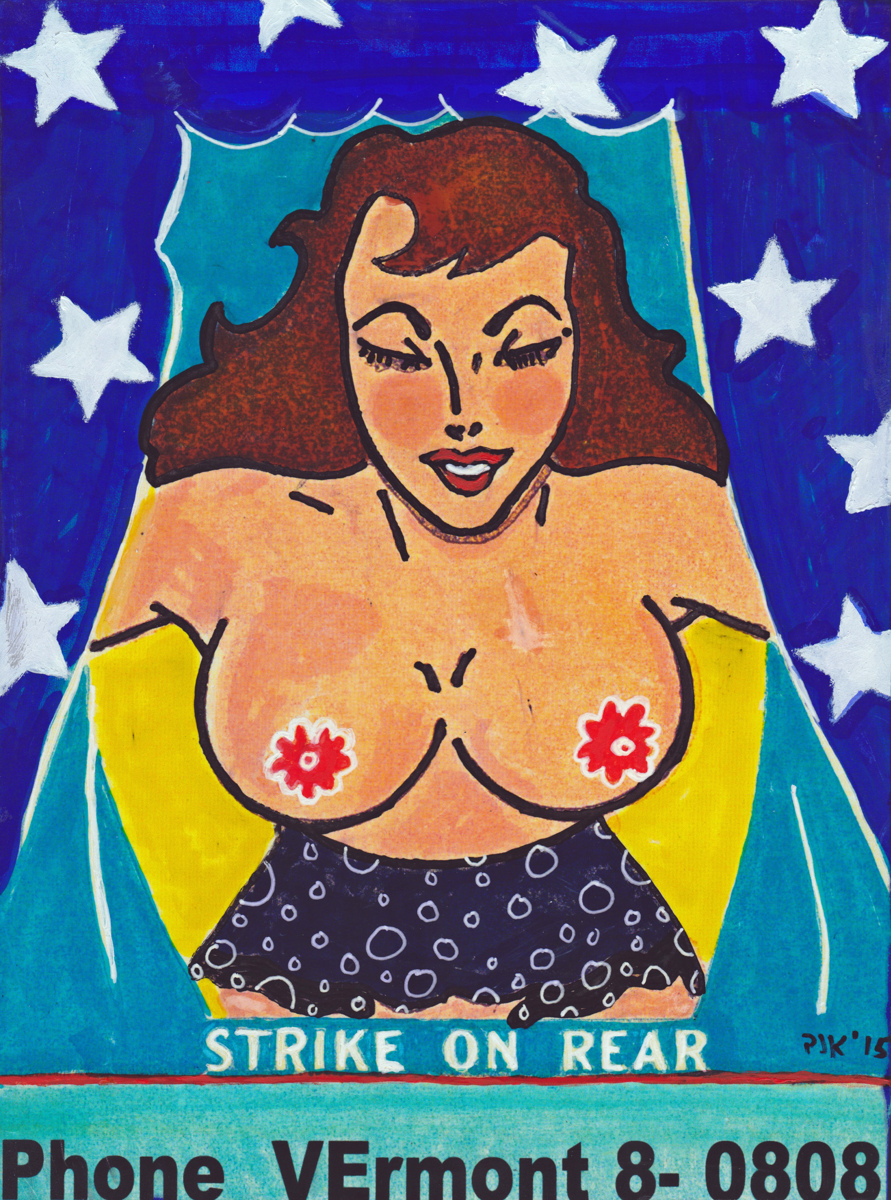
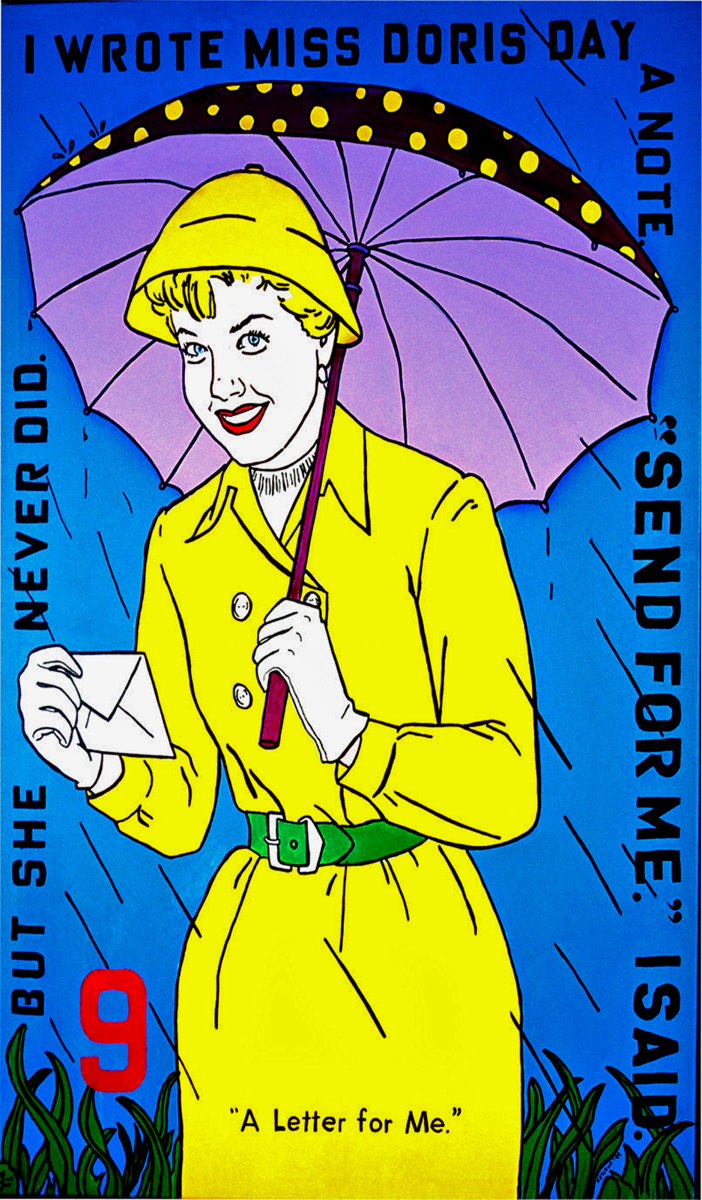
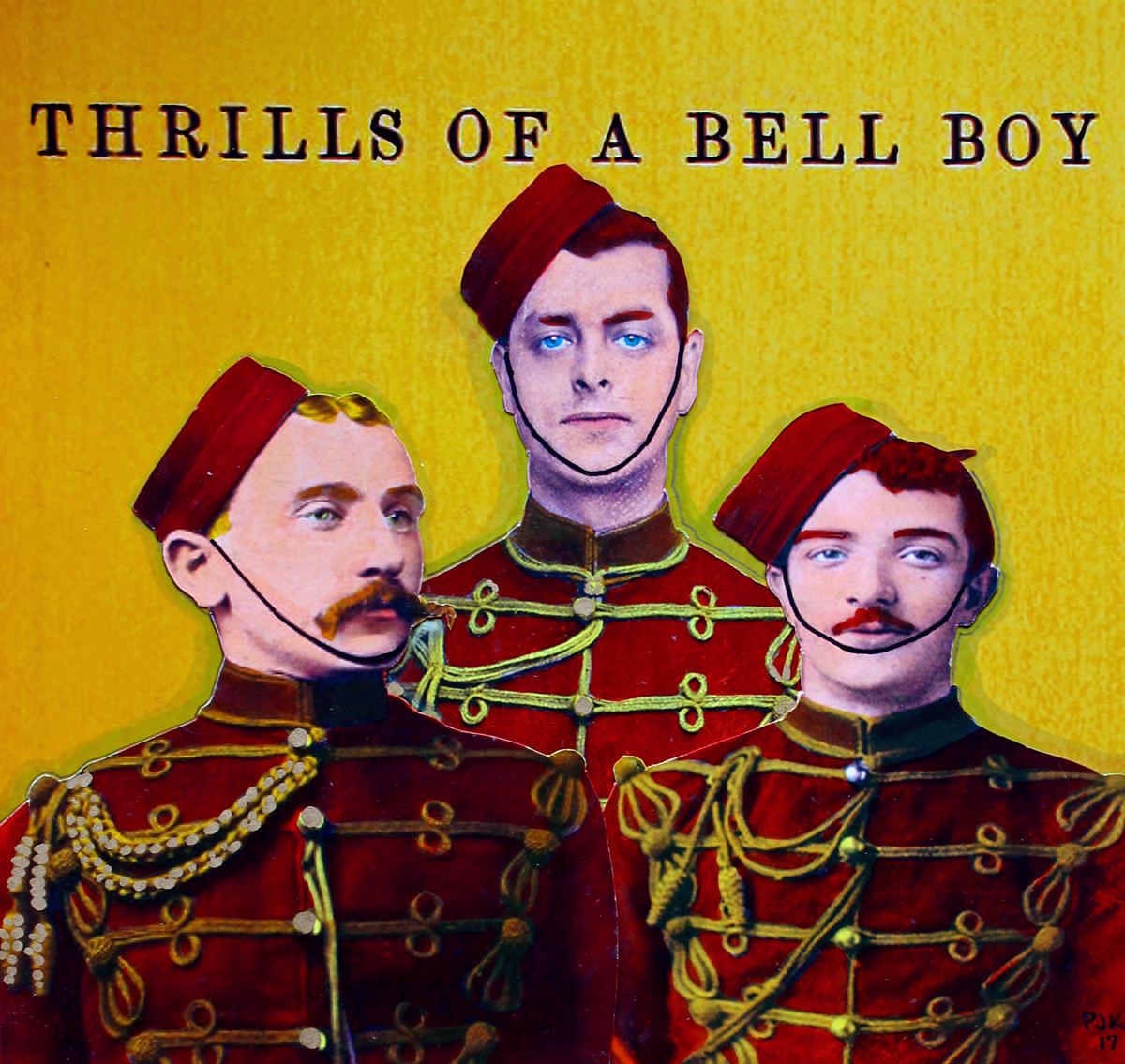
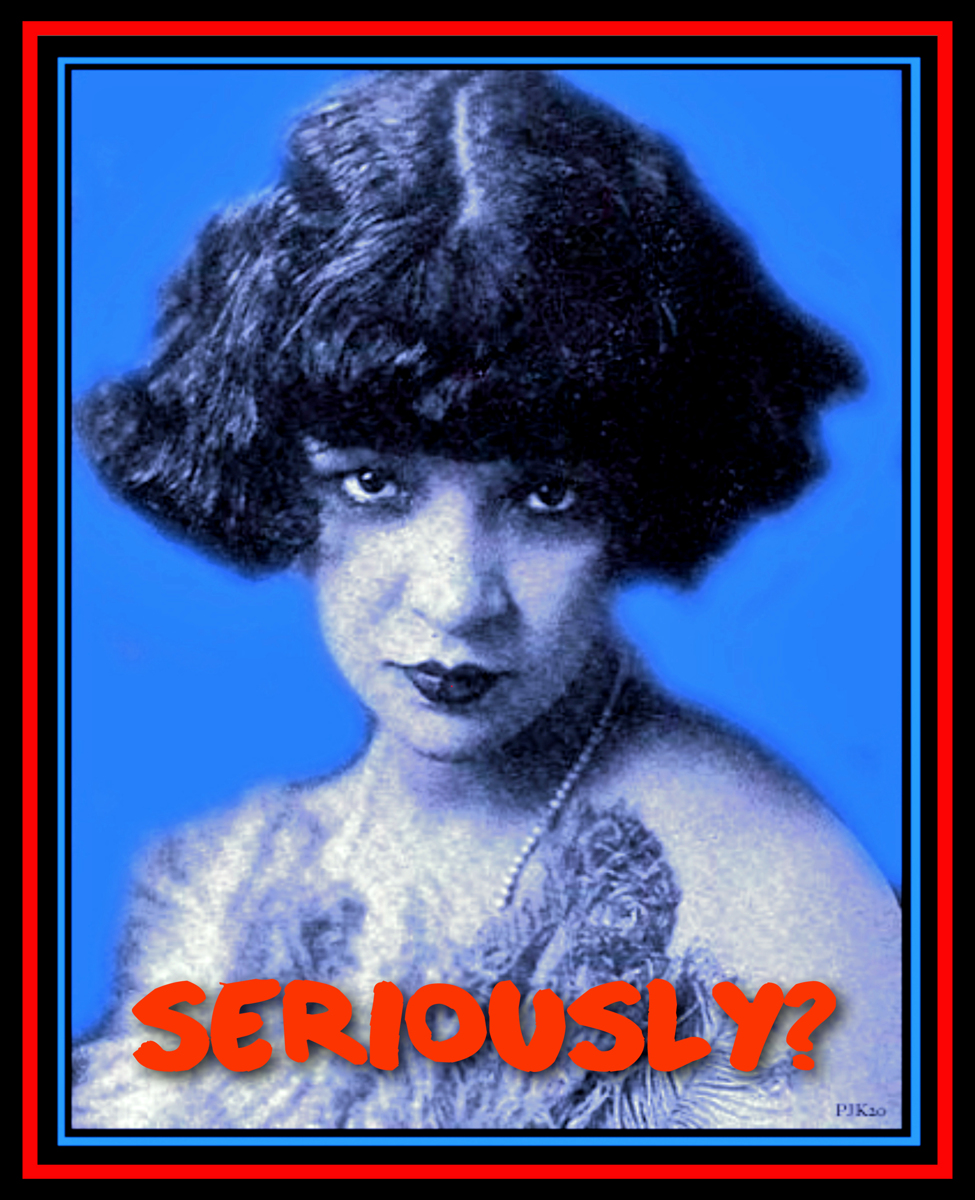
There’s that old saying that the personal is political, and there’s something very touching about your use of postcards – they’re sort of public and personal at the same time. It seems like such a subtle way to make us think about how we’ve gotten where we are. How do you strike a balance between subtlety and obviousness? How much do we trust people to understand?
No one has EVER accused me of being subtle! If a work has thirty postcards on it, each has been carefully picked to smash home my message. That’s what got one work censored this year. Postcards have changed radically in 120 years and their evolution has clear lessons. The sanctimonious Correctness Police would have apoplexy over some of the early ones. But the fact they are offensive now shows that somewhere along the line we actually made progress and we didn’t need to silence or kill each other to bring about change. All we need is a stamp.1 cent then. 56 cents now.
Trust people to understand? Ha! Not until the blindfolds are removed and shoved down the throats of those who will not look or even try to understand
Speaking of which, we live in such a noisy world, more so all the time it seems. It makes me sad and angry that “content” is more important than substance. How has sharing work changed over the years? Is there any point in trying to stand out?
At my controversial show in Manhattan last summer, it was clear that some people reacted to the surface image and not the muscular substance of a piece. They came loaded with absorbed intellectual sludge and lost very little time in hurling it. One piece was actually damaged beyond repair.
But it is the viewers who WORK at mining the substance of my art that give artmaking its powerful pull and make the act of creating worthwhile. Art shows today can be combative in a way they never were. If the artist’s ideas are not the viewer’s take on the world, stand back! We are faced with thinking by committee.
My last show was ego-boasting and thrilling. It was also devastating. The wokeness that gave Trump his win has an echo in the art world. Content policing dominates. Original ideas? Not so much. It’s the establishment, Stupid!
A year in the making, my very large work about the historical strength of women of color resonated UNTIL it was discovered the piece was made by a white person. And a male at that. Realizing this was depressing. It has taken me 8 months to get back to work.
There’s also a lot of humor in your work. Sometimes with an edge of bitterness or sadness to it. I often think humor is one of the most powerful tools at our disposal in terms of catching people off guard, though there’s an age-old debate about whether or not something humorous can be also serious or worthy in some way. Can you talk about the humor/tragedy balance.
Humor is deadly serious. It is often the hook in my work. Draw the viewer in with humor, and then hit them over the head with a (sponge) mallet of ideas. It really harks back to the content/substance idea. IF one can get the viewer to go beyond the obvious and find the substantive.
I use satire in my art because I am living in a Mel Brooks movie. Only it’s not funny. The tragedy outbalances the humor. Now I am making stuff as a desperate distraction.
Peter J. Ketchum received a degree in fine arts from Colby College, did additional study at the School for Visual Arts in NYC, and studied filmmaking at NYU. He also studied privately with George Baer.
The Brooklyn-based artist’s work is in the permanent collections of the Smithsonian Institute,
The Norfolk History Museum, Colby, and the (late great) Guggenheim Downtown. His work has been shown at The Brooklyn Museum, The Bushnell, The Springfield Museum of Fine Art, The Discovery Museum (2 person show), and the Connecticut Sports Museum. Five works were included in “35 Artists of North America,” curated by Thomas Krens, the former head of the Guggenheim. The artist has shown in solo and group shows in Boston and NYC, including Exit Art, Lumina, MetroPictures, SOHO 20, HERE,the Williamsburg (Brooklyn) Art Center, ArtWell, Bachelier/Cardonsky and the Charter Oak Cultural Center, TNC Gallery/NYC, and Saatchi on Line.
Ketchum founded and curated the exhibits at Gallery on Dean. He was also the curator at TNC Gallery NY NY.
Artists To Watch publishes his greeting card series worldwide. See More of his work on his website peterjketchum.com, on Facebook, and on Instagram.
Categories: art, featured, featured artist, interview

 magpiesmagazine.com