

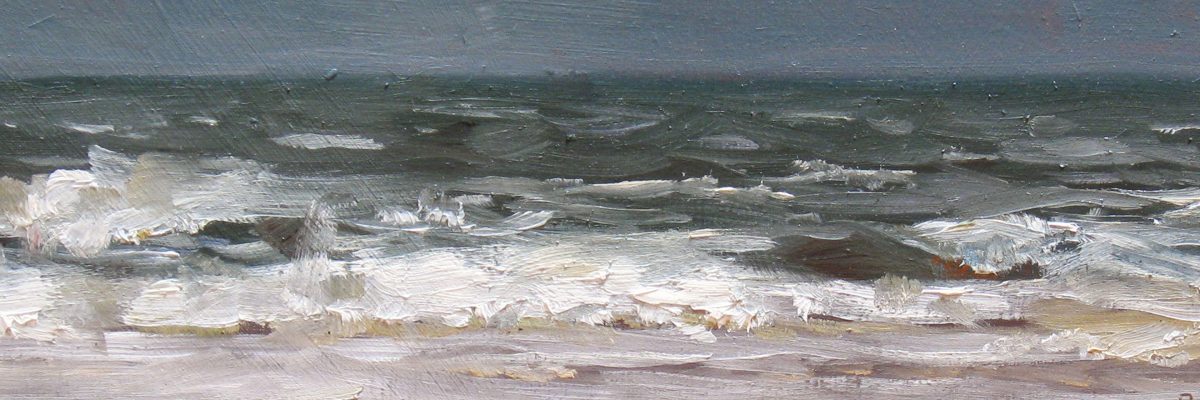
By Robert Beck
1938
Sept.19. Monday. Flat calm. Raining. Bar. 30. Warm. Thick fog, but luminous as though the sun were not far behind it. Four slender cormorants are sitting in a row and preening themselves on a mooring buoy within fifty feet of the boat.
My thoughts have been with William Lathrop all day, from when I first stepped outside and was struck by the dense stillness. There was no breeze, no gentle rustling of leaves overhead, and no birds or squirrels in sight. It doesn’t surprise me that animals know when a big storm is coming. You can hear a lot when it’s quiet.
3:20 P.M. It has been a day of mixed sun and fog, quite warm. Light S.E. wind. So much sun this A.M. that I shook out my main sail, which was very wet.
I keep a copy of these last four pages of Lathrop’s sailing log on my desk where it can catch my eye, and I read it often. It chronicles the last days of his trip off the eastern shore of Long Island, in a sailboat named Widge that he built in his yard just down the road from where I live.
Sept. 20. Tuesday. Slight S.E. wind. Broken sky with some misty sunlight. Bar. 29–95 and falling. It has been a day of beautiful but disquieting skies. At the edge of dark tonight Anderson got a radio report of a hurricane coming up the coast and already north of Hatteras with easterly gales.! It was decided that the best place for me was in the lee of Indian Hill on the east side of the Pond, and that I must get there at once before night set in. I cut my mooring line with the hatchet, got up sail and away in the teeth of a dangerous looking squall coming from the S.E. which broke and drench me just as I was trying to anchor and get down sail. So here I am and feeling decidedly uneasy. It will be an anxious night.
Hurricane Irene made contact with the East Coast today — a rendezvous breathlessly heralded by television non-stop — and it will hit the mid-Atlantic region in a matter of hours. I’m not on a 20-ft. sailboat like Lathrop was but Irene is a dangerous storm that will do a lot of damage. I am feeling decidedly uneasy myself.
Sept. 21. Wednesday. Wind almost due South bringing with it much mist and fog. Bar. 29-65. The night was windy and rough. But not too bad, and tho I did not take off my clothes I got a good bit of sleep. I am anchored directly in front of the Wazey place about 80 yds. from the end of their dock. Indian Hill looms directly behind. I can see cows grazing. Evidently they are unaware of radio alarms. Perhaps they are right and there is nothing to be alarmed about. I am already beginning to feel a bit irritable about the ten feet I cut off the end of my best hawser.
I have gathered everything from outside that could be taken-up by the wind but my big concern is the very tall trees that surround my house, and the wet, soft ground. High winds could continue for 20 hours or so. Trees are going to come down, we will lose power, and roads will be impassable. There are questions many of us who live in the woods or near creeks and the river ask ourselves: do I stay to monitor damage; am I taking too big a risk?
10:15 A.M. Bar. 29-6. Blowing hard from S.S.E. But sun is shining brightly and I have my just washed dungarees drying in the rigging. I have the big anchor down with a long scope and it seems to hold perfectly.
Part of my attraction to Lathrop’s account is that I know what he didn’t. His handwriting deteriorates in the last two entries, I assume from the rough seas, the final one written heavily and probably with great effort. William Langson Lathrop’s log survived the hurricane, as did Widge, but his body washed up on shore a month later.
1 P.M. Bar. 29-36. Anchor still holds tho wind is ferocious. The two big trawlers have just come in to hug the eastern hills for shelter. Others are here or coming.
The log is a reminder of the spirit and vitality of the 79 year-old Lathrop, a man who left a big mark on the art world and without whom the history of painting in Bucks County would have taken a different direction. It also reminds me that regardless of thoughtful preparations there is often a point — not always visible — that once passed steals your ability to shape the future, leaving you without alternative, a passenger on the deaf and indifferent winds of fate.
2:30 Bar. 29!!
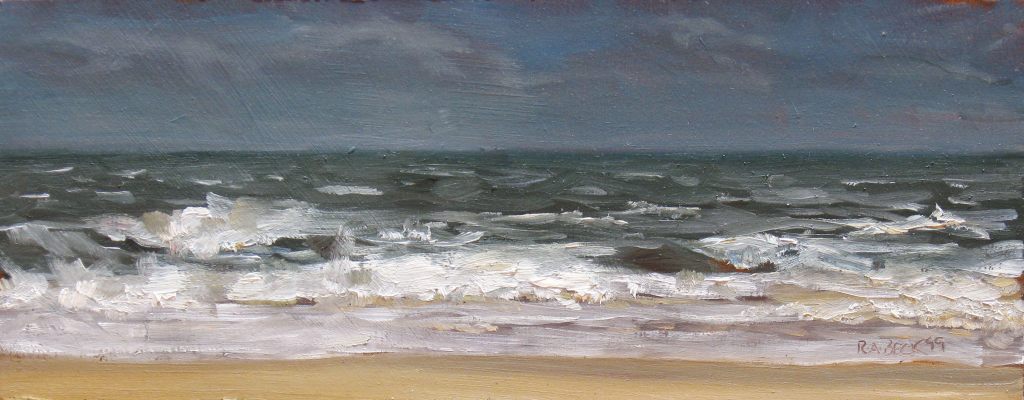
Robert Beck is a painter, teacher, curator, lecturer and writer who divides his time between Bucks County, PA and New York City. See more of his work at Robertbeck.net, on Instagram @illhavecoffeethanks, and on Facebook .

 magpiesmagazine.com