

By Alice Courtright
“Mercutio’s soul
William Shakespeare, Romeo & Juliet
Is but a little way above our heads.”
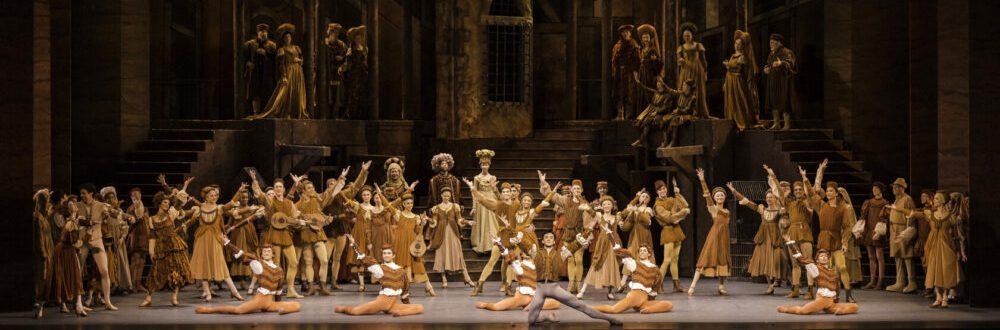
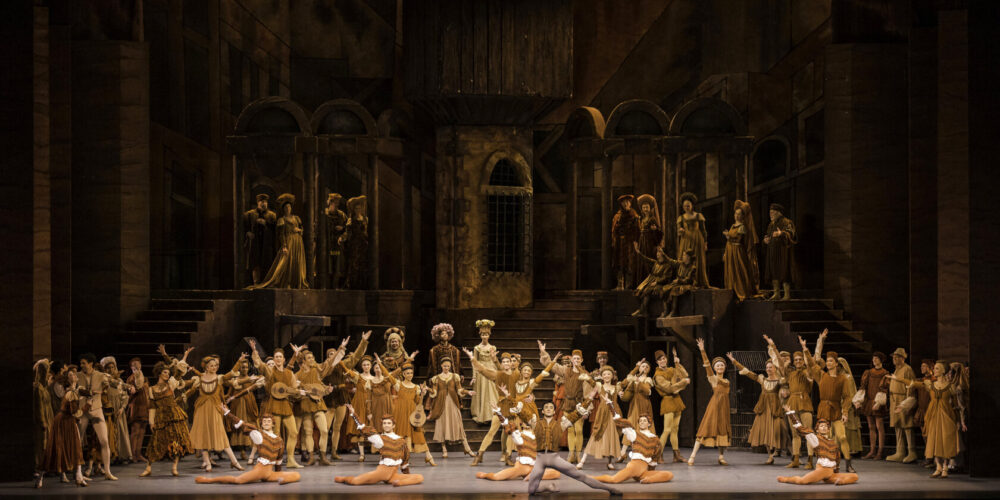
This summer, American Ballet Theater staged Kenneth MacMillan’s 1964 adaptation of Romeo and Juliet. I’d read the play in the ninth grade and watched the Baz Luhrmann film as a teen. Who could forget Leonardo di Caprio spotting Claire Danes through a fish tank? In college, I was an English major; I studied Shakespeare, I revisited the play. So, when I settled into a velvet seat in the Metropolitan Opera House before the curtain rose, I felt I was familiar enough with the famous, tragic plot. I was ready to receive a new interpretation of the lovers, to have my heart break, to enjoy the dancers express the roles in their own way.
What separates a good artist from a great artist might be that a good artist allows you to feel or remember something. A great artist can make you forget what you know. When Carlos Gonzalez took the stage as Mercutio, charging the forlorn Romeo to dance and drink, I remembered him from Swan Lake. He was as charming and inviting as before, a dancer who carried and lifted whole sections of the performance with distinction. He has, as the dance writer Marina Harss has noted, “an inherent nobility.”
But it was in the marketplace scene, in Act II, when the whole plot began to twist and climax toward the inevitable, bitter end, that Gonzalez gave me an astonishing experience. Romeo, who has by now fallen in love with Juliet, refuses to fight her cousin, Tybalt. In his place, Mercutio, repulsed by what he perceives as Romeo’s cowardice (“O calm, dishonorable, vile submission!” the play reads), unsheathes his rapier and fights.
On stage, a menacing Tybalt (Joo Won Ahn) fenced with and then stabbed Mercutio. The whole crowd gathered in a semicircle around Mercutio as he reckoned with his wound. Gonzalez staggered around the stage, gripping his side. Death is coming soon, I thought, wincing in my seat.
But Gonzalez did not die at that moment. He stood up straight and cocked his hands in the shape of guns at Romeo, grinning. Fooled ya! the gesture exclaimed. His whole demeanor was so convincing, I recoiled in confusion. Oh! I thought, reeling. I must have the plot wrong. It’s been too many years. Maybe it’s Benvolio who dies? I didn’t know what would happen next. Gonzalez chatted with some of the crowd, took a swig of mead, and rejoiced in his joke and the pleasure of being alive. Then, his countenance fell. He danced droopily around the stage, grabbing his side once more. The wound was indeed fatal. Mercutio dies in Romeo’s arms, and the violence passes into the male protagonist, who looks into the eyes of his friend’s killer, and challenges him: “Either thou or I, or both, must go with him.” Romeo becomes a murderer. Tybalt dies and the final tragedy is set in motion.
In his poem, “Mercutio,” Christian Collier writes,
I knew the wound ran deeper than I let on
when it first appeared, but
I kept the truth in
as long as I could.
I carried the horror & wore it in such a manner
no one knew where I’d been or what had been taken from me.
When I could sprint no longer or stay beyond its reach,
my damage brought me wholly into its den & pinned me.
Gonzalez so embodied Mercutio that I, too, was taken in. His compelling acting allowed me to forget that the wound ran deeper. I was with the characters in real time. This is the joy you desire as an audience member, coming to see the renewing of an old story. The question is suspenseful: will anyone enter the form so totally that they transcend it, and break open the tale for us once more?
The rest of the show was heartbreaking. When, at the end, in the cold, dark, overbearing tomb, Romeo (Thomas Forster) danced with the lifeless body of Juliet (Christine Shevchenko), I wept. I cried tears for all the violence in this broken world, for the waste of precious life in the face of entrenched hate. Death was an ever-present specter between the Capulet and Montague families. Life after life fell, body after body—each one a testament to the families’ unrelenting, unrepentant animosity. From the moment Gonzalez made Mercutio real for me, I was inside the story, experiencing it as if for the first time. I was affronted: the cost of hate was too high, the sacrifice of youth beyond justifiable. Let them live! my heart begged. As I left the theater, I felt a strange, sad gratitude for the artists who captivate; who somehow balance making something lovely and telling the ugly truth about violence, death, and human nature; who allow the viewer to grieve through their work and remember what’s really important: laying down our weapons, asking for forgiveness, looking to a higher good, allowing love to triumph.
Alice Courtright is a poet and writer living in New York. She thinks about literature, dance, grace, and the natural world. Alice has received degrees from Yale University, Sewanee’s School of Theology, and Yale Divinity School. She is ordained in the Episcopal Church, and her writing has recently appeared in The Hedgehog Review, Mockingbird, and SAGE Magazine. She lives with her husband, Drew, a parish priest, and their three daughters, about an hour north of the city. Read more at alicecourtright.com.

 magpiesmagazine.com