

“There are more things on heaven and earth, Horatio, than are dreamt of in your philosophy.”
If you’ve ever wondered if you have a philosophy of your very own, publish a magazine like Tidings of Magpies. I’ve realized over the years of sharing art and essays that I have a very particular set of interests and affections. I have a constant stream of unformed thoughts, half-remembered quotes, and dreamlike images circulating in my brain, and they’re connected in some strange way. It’s these things I try to write about, and they inform the art and writing I share, and the way I move through the world. Not consciously or purposely, but decidedly nonetheless. I’m sure I repeat myself plenty of times, but it’s all part of a process of trying to understand.
And there’s something beautiful about realizing that others think about the same things, feel the same feelings, ask the same questions. That’s been part of the great joy of sharing work in Tidings of Magpies. But it’s often true that people have been thinking about those things for as long as people have been recording their dreams and thoughts and visions. You experience this realization when you find a word in another language that perfectly describes a feeling that you thought couldn’t be described — one of those words to describe vague longings or regrets or thoughts on time passing. One such word seems to describe so many tenets of my philosophy, or maybe it does because that’s how I understand it or because I want it to.
I love this word: “selah.” It’s a word of ambiguous history and meaning, and the mystery only adds to its beauty. It’s a very old Hebrew word found frequently in the Psalms, but it’s also a word in modern Arabic and Syrian Aramaic, and I’m fascinated by all of the ideas about what it might mean. (I haven’t done very scholarly research on this, but when you’re dealing with ambiguous words, precise meanings and careful citations are not desirable, I think, and in my case, they’re just not possible, because my brain is a vague and muddled place). It’s funny how when the meaning is obscure or indefinable, it feels more like somebody is talking to you, or expressing your thoughts. The Psalms (also a lovely word) were apparently sung and accompanied by music, and it’s possible that the word “selah” was a notation to the choirmaster, possibly to take a break in the music, to pause and reflect on what’s been said, to change the rhythm, or to signal a change in thought or theme.
In a world full of noise, a world in which we’re always talking and rarely saying anything, what a value there is in taking time to think about what has been said or what might be said. What a value there is in saying something or in sharing our silence with an idea of the weight of the words or the spaces. What is the use of talking and there is no end of talking, there is no end of things in the heart.
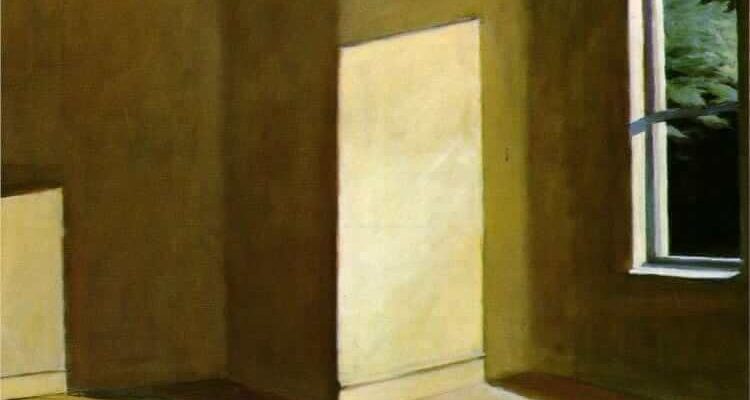
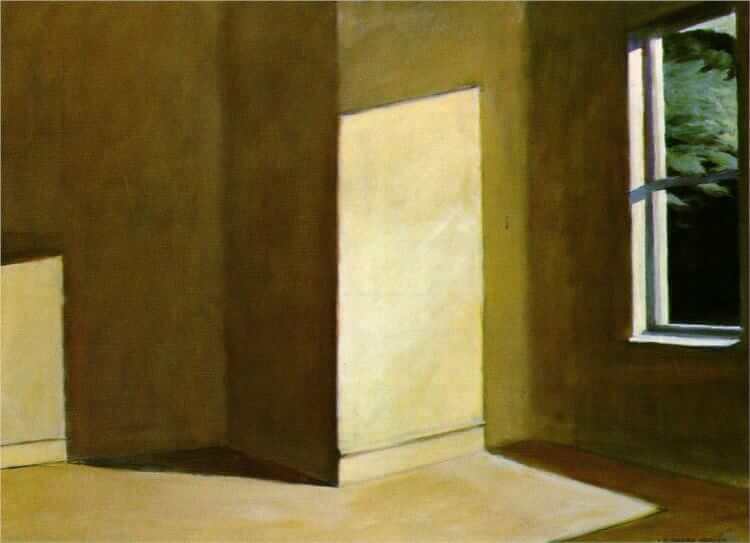
Selah also means to lift up, or hang, or to measure. So perhaps it means the person singing the psalms should lift up their voice, in pitch or volume. Of course, things were measured by being lifted and weighed against something else, so that’s part of the meaning, as well. I like to think about the weight of words, the weight of a speaking silence. I like to think about the tenderness of that moment between thought and expression, between sense and feeling, like slanting light hanging impossibly heavy in an empty room. (Why does this thought conjure this picture? I don’t know!)
Back in the day, when I was in school, I read a lot of feminist film theory, and I found it very thrilling. It was difficult to understand, but it was frequently about language, about the language of film and the language of vision as well as the language we speak with. I think the authors used purposely obscure language, but I found this funny, it was a sort of joke, and it was a pleasure trying to decipher their meaning. Many writers spoke of the necessity of using the spaces between words or between shots to tell the story. To inhabit the silent moments to tell a more interesting story than the words or actions could. That’s what “selah” reminds me of – at least as I understand it. It’s about the words that have come before – it gives them more meaning and value, because you’re measuring them, and pausing to think about them. But it’s about the pause itself as well. That space between, again. That moment between
I can picture meaning hanging in the air, floating just above our grasp, before it’s set down again and we can reach it. Apparently in Arabic and Syrian Aramaic, the word means “praise,” and specifically praise beyond expression or understanding. It’s a word to describe what can’t be described in words. “Selah” is also a word used by Rastafarians. For them, it gives weight and importance to the words that have come before, and it “seals them up.” In this sense of the word I like to think about the phrase “who feels it knows it.” I think this gets to the fundamental honesty I always seek in art and life, in the words and silences and images and dreams. In their uncanny weight and lightness, speaking or silence. You don’t need to feel what I feel or know what I know. But I love the idea of taking a moment, whoever we may be, to value the fact that we feel what we know we feel. That’s important. I hope always to take a moment to weigh the words and silences, what came before and what will come after. What will happen between the before and after, what is happening now and now and now.
I came to the word through The Ethiopians’ song The Selah.
What a remarkable issue of Tidings of Magpies we share this month! Full of such treasures. As ever, I am beyond grateful to everyone who shared their remarkable work and words with us. Please take the time to read, and, as ever, submit, support, subscribe. And have a look at Tidings of Magpies on Instagram.
Categories: featured

 magpiesmagazine.com
Really well stated!
LikeLike
Thank you!
LikeLike