

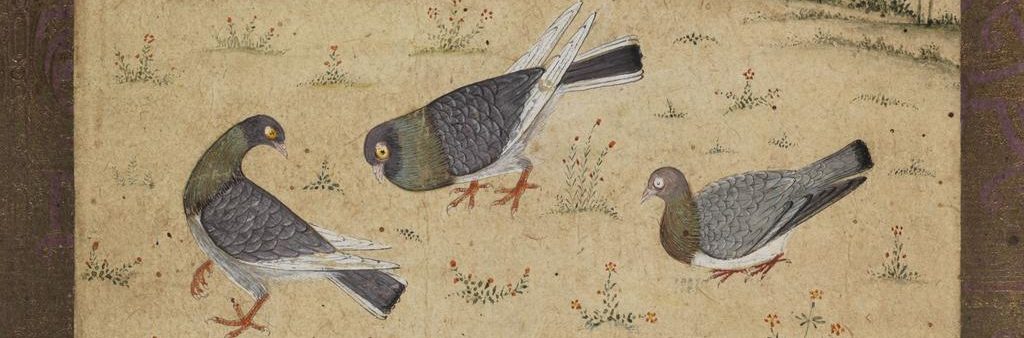
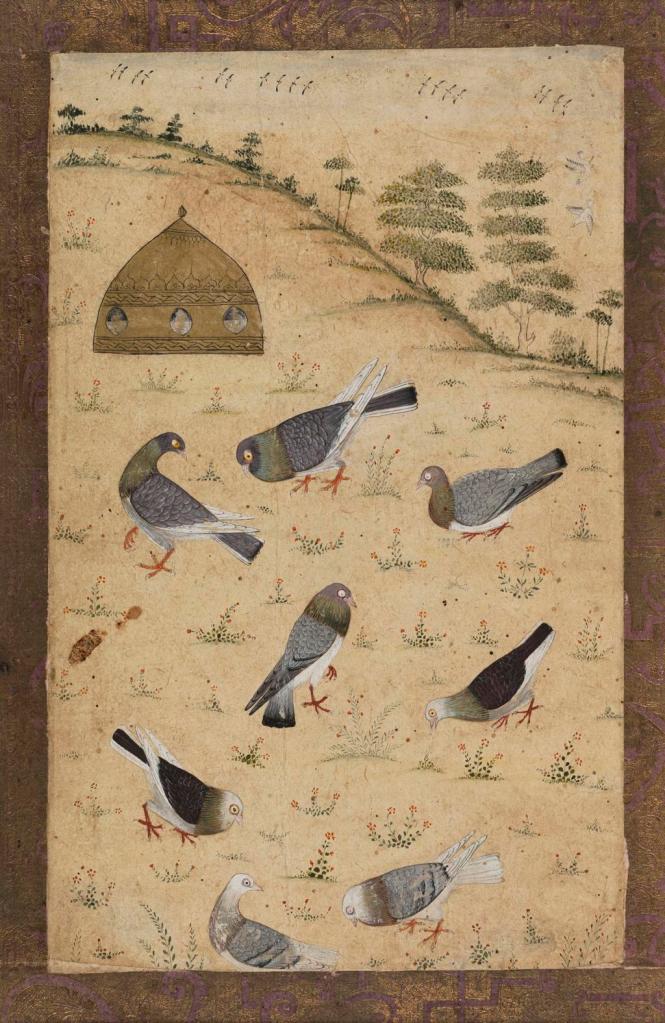
I feel as though I’ve been spending most of my time, lately, in the pigeon spaces of the mind. The dusty dusky in-between overlooked spaces and moments. I’ve been in the alleys, doorways, and window sills. Under the bridge and the overpass and up in the roof-top dovecotes, in a soft wing-beating hush far above the fray, aside from the fray. The liminal places, in all of the many beautiful senses of the word. Between sleeping and waking, knowing and wondering. From the things you can’t remember to the things you can’t forget. We’ve been having strange weather lately.
In the kitchen with the door open on a late winter morning, the unseasonably warm air came through with the promise of rain, but there was no rain yet. Liminal. Stirring up so many memories and half-memories — the moment between a feeling and a clear recollection. It stirred up so many ideas of what I want to write, what I’m writing in my head but might never write on paper.
Between the idea/And the reality
Between the motion/And the act
Falls the Shadow
Between the conception/And the creation
Between the emotion/And the response
Falls the Shadow
Leap day is such a perfect day to reflect on this strange in-between moment. I feel it should be a national — international — holiday, for the people who spend time in the pigeon spaces. A day when we can all reflect on where we’ve been, where we’re going, where we are and are not now. Where we are in between. A day when we can reflect, as a species, on all that we don’t know. Perhaps, for some, creativity comes not from deciding and explaining, but from trying to understand, from catching a glimpse of something that seems true and following where it leads.
Liminal comes from the words for threshold or sill, and so many of my favorite moments in life, and so much of my favorite art — paintings, photographs, films — frames one thing through another. A darkened room with fading light in the window outside. Or a cool blue darkened nightime light with the warmth of inside lights through a window. There are times of day and times of year when the shifting light and conflicting temperature play against each other to a maddening extent. It’s the thing on the other side, just out of reach, and the space between you and that feeling or that memory or that hope.
“People talk of natural sympathies,” said Mr. Rochester. And we all know that he was just trying to seduce Jane Eyre, but he wasn’t wrong — people do talk of natural sympathies. Not just between people, but between colors and musical notes as well. Certain things just look or sound pleasing when they’re combined. But there can be just as much beauty in small differences, close contrasts.
Artists through the ages have tried to understand the world through mathematical rules — they tried to understand it in order to draw it, and they understood it by drawing it. Apparently, Paolo Uccello would stay awake at night after his wife had gone to bed, searching for vanishing points, and he’d say, “Oh, what a sweet thing this perspective is!” And Piero della Francesca believed in a perfect geometry underlying God’s creation. He saw everything as defined by measurements and numbers, which had mystical properties. Everything was carefully planned, in his art and in the world as he saw it around him, to be pleasantly harmonious.
Certain colors “hum” when they’re next to each other. Contrasting colors, opposite sides of the spectrum, even create a beat when placed in proximity — almost a flashing in your vision. Some artists believe that each painting should have one “keynote” color, which stands out from all the others and doesn’t blend with the rest of the picture. We can search for meaning in the differences, and create our own harmony.
The visual world is often spoken of in musical terms — humming and beats. In musical history, people believed certain chords together had magical powers. People used to believe that you could be driven to certain actions — saintly or diabolical — according to what you heard. Octaves and fifths were pure and safe, but the tritone was the devil in music and could cause terrible unrest. But even saintly fifths could be tricky. If you take perfect fifths, and sing them perfectly in tune, by the time you get four octaves up, you’ll be a half-step flat. People developed tunings to solve the problem (well-tempered tuning) and now we use equal temperament tuning, in which we adjust by making everything equally out of tune in order to stay in tune in the end.
And so it is with leap year. The way we measure our days and months doesn’t work with the way nature measures her seasons. And if we left it unchecked then nothing would be the way that we comfortably define it. We think that we’re controlling the seasons, but we’re not. We’re just struggling to keep up, but that space between our understanding and the reality could be a beautiful one, and it gives us the gift of an extra day in our year. The gift of extra time.
We don’t understand, but that’s okay. We don’t need to, we’re not supposed to. We can find the beauty in the spaces between the notes or the words or between our perception and our understanding. We can try to catch a glimpse of the colors that we, as humans, can’t see though others can — the earth, the trees, the animals, the birds. And the sounds we can’t hear, the ideas we can’t comprehend. We can cultivate sympathy, and make the small compromises necessary to end up on pitch.
We often get nature wrong, but the pigeons don’t care. If you find yourself in the pigeon spaces of the mind, in that yearning and bewildering twilight light, you might listen. You might listen for the gentle busy rolling pigeon song of your thoughts and ideas, as they settle and shift and resettle. And as the pigeons under the bridges with their soft voices will eventually wheel out into the sky, together in their own mysterious harmony of movement, so might your thoughts and ideas, to create a beautiful pattern, a beautiful, liminal, half-felt, half-heard noise of their own.
As ever, submit, support, subscribe. And have a look at Tidings of Magpies on Instagram.
Categories: featured



I spend much time looking out of my window, watching the birds and wildlife. Their antics, their quest for food and shelter. The different colours of the seasons. Greens and yellows of Spring. Delicate feathers. Barred feathers from the woodpecker. Blue gilded feathers from the jays. Iridescent feathers from the magpies. My mind trails to books and paintings. In the evening the sun sets behind the trees like a Jan Pienkowski illustration. My mind soars like Fevvers, the be-winged aerialiste foundling, discovered in a basket of eggshells outside a London brothel. Feathers sit in my pen pot on the desk. They are tucked into bureau drawers and they escape from my duvet and float around the bedroom. Wool gathering, they call it. But I think my mind is full of feathers, like the sisters in the room of roots.
LikeLike
This is beautiful! I would publish this in essay form. I’ve never heard of Fevvers, but what a story!
What beautiful writing.
LikeLike
Thank you. Fevvers is from Angela Carter’s ‘Nights at the Circus’, I can send you a copy if you are interested. I love her writing.
LikeLike
I’ll look for it at the library!
LikeLiked by 1 person