

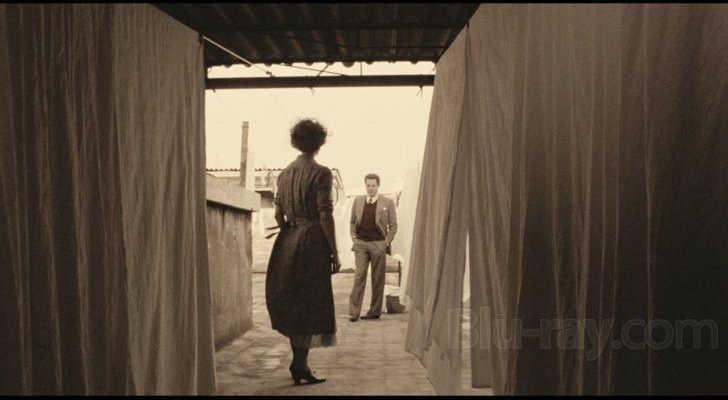
Una GIornata Particolare, A Special Day, is a 1977 movie directed by Ettore Scola.
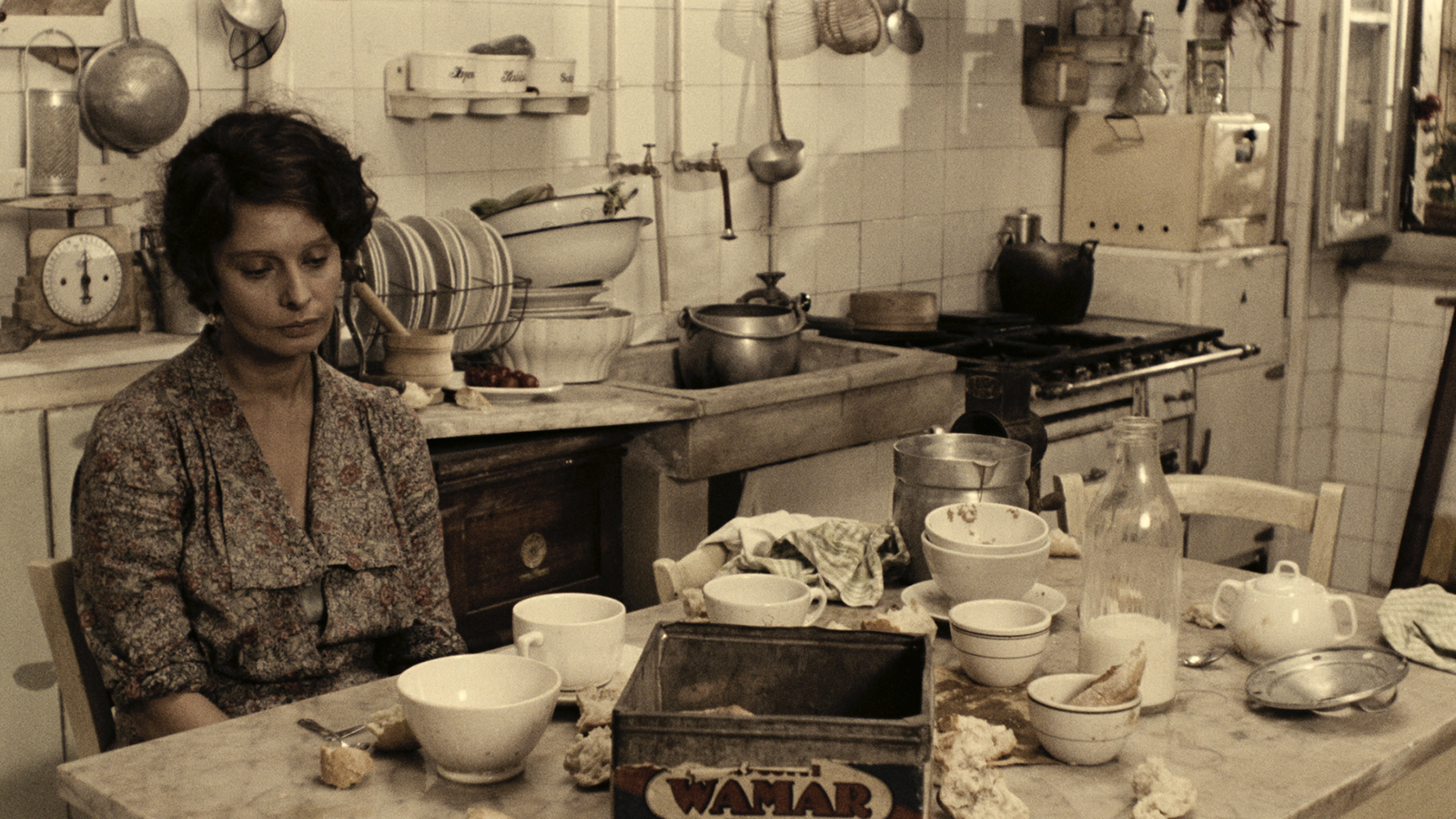
Emanuele looks in the mirror, pleased with himself, and slicks back his hair with dark pomade. Then he wipes his hands on his wife’s drab housedress and tells her she should take better care of herself. The quiet of Antonietta’s morning, alone in the semi-darkness with only the chirping of a myna bird, has given way to excited chaos, as Emanuele and their six children prepare themselves to go to a parade. It’s May 4, 1938, and Hitler is taking the train to Rome to visit Mussolini. Emanuele is a bully. He thinks that treating his wife with cruel casual criticism makes him a stronger man, and his children follow his example. He berates her for waking him up too early and then for waking him up too late, he does his exercises, he tells the kids not to use foreign words. And then he leaves, they all do, leaving the morning’s mess in their wake.
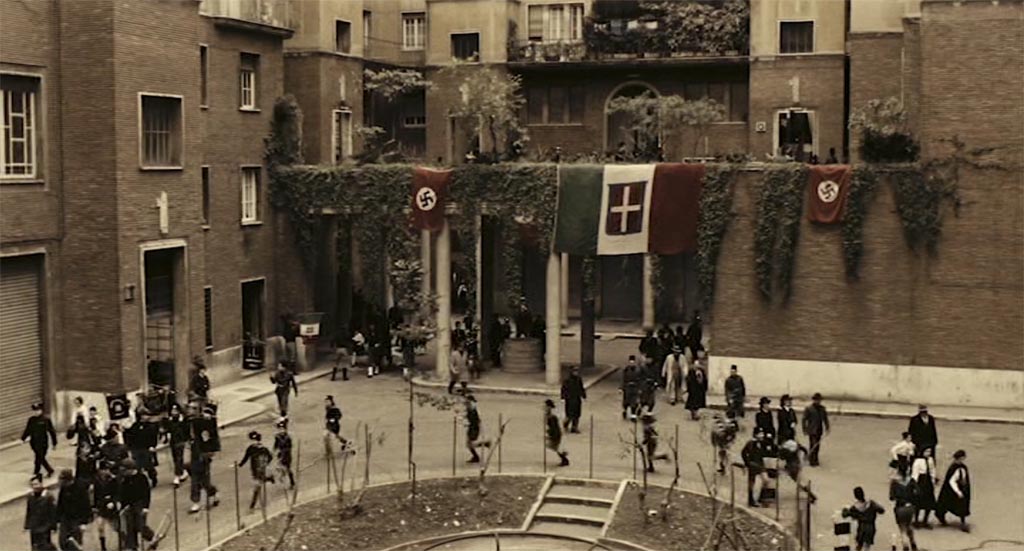
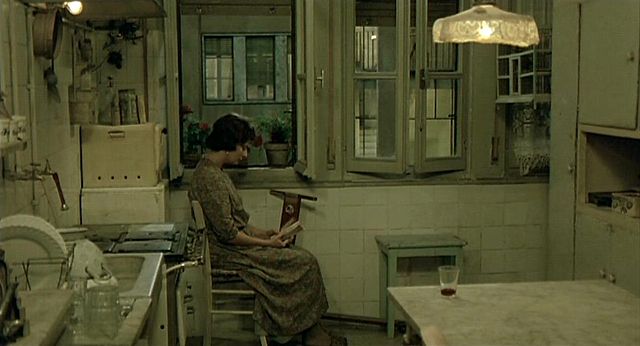
Everyone is going to the parade — it’s a national holiday, and school children’s grades will suffer if they miss it. People stream down the stairs of their apartment building like water down a drain, the building empties out. Except for Antonietta, Pauletta, the building’s crotchety caretaker, and Gabriele, the man who lives across the courtyard from Antonietta. Though they’re not at the parade, it is omnipresent and inescapable. The caretaker listens to the radio commentary of it loud enough to fill every space in the building, every moment of the film. The strident excitable voice is a terrible stark contrast to Antonietta’s quiet weariness, as she begins cleaning the mess others have made. In the opening scenes, we watch Antonietta much of the time (beautifully) through her windows. She’s a pretty bird in a cage, with fading plumage and flagging hope of freedom.
As she’s sitting at the table cleaning up everybody’s breakfast she nods off for a moment, but the myna bird calls her name and wakes her up. Rosamunda, the myna, is one of the few characters in the film who says her name, and she says it often. Antonietta speaks to the bird and opens her cage to give her some food and a cuttlebone. Rosamunda flies away. Antonietta follows the bird to Gabriele’s apartment where she sits perched just outside his window. When Antonietta knocks at his door, he’s contemplating a gun on his desk before him, contemplating suicide. But he lets her into his apartment to catch her myna bird, and they spend the day together, like two kids playing hooky. They catch the myna bird, they talk, they dance a rumba to the pattern of footprints on Gabriele’s floor. Somehow you believe that Sophia Loren is a shy and awkward dancer as she shuffles along, worried about the holes in her slippers, clutching the myna bird to her chest. This is just one of many perfect, perfectly balanced scenes in the film. The buoyancy of stubborn hope and the warmth of human connection rise above the darkness and the coldness of human cruelty. The whole film, like this scene, is moving in a way few films are.
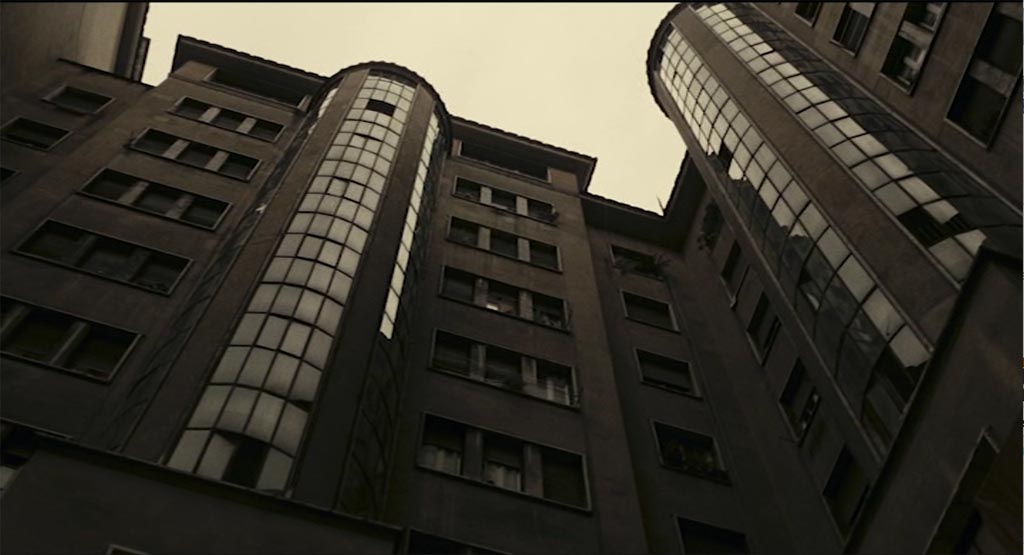
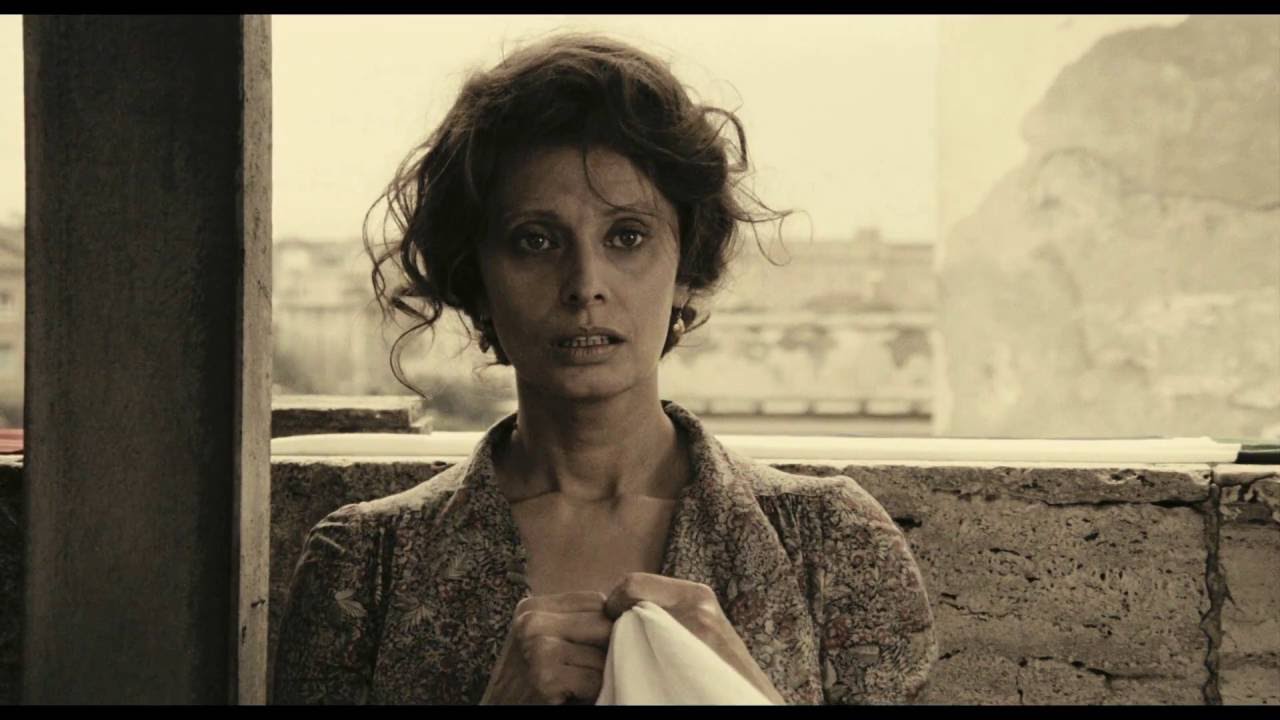
Like children playing hooky, they’re both childish in their own way. Gabriele for his unguarded enjoyment of things that might be considered unsophisticated to adults or unmanly to fascists: Rumba dancing, myna birds, Antonietta’s son’s scooter. And in his enjoyment of talking with Antonietta herself. And Antonietta is childish in her innocence. She doesn’t realize he was contemplating suicide when she interrupted him, she doesn’t realize he’s gay. She doesn’t understand why fascism is bad for her, for him, for everybody.
He visits her later in her apartment to bring her a copy of The Three Musketeers, though she says she won’t have time to read it. As she’s making coffee he wanders around her apartment, and he finds a scrapbook carefully filled with pictures of Mussolini along with Il Duco’s sayings, hand-written in silver marker. Gabriele is amused by the book, in a kindly way — he thinks one of her children made it. But Antonietta proudly says that she made it herself, along with a portrait of Mussolini constructed entirely of buttons. The sayings in the book are all about the roles and duties of a man and of a woman. Fascist women must be keepers of the hearth. The man who is not a husband, father, and soldier is not a man. Genius is incompatible with the psyche and physiology of the woman and is always strictly the domain of the man. Gabriele asks her if she believes this, and there is a long pause before she says, “Of course I do.” And she says aren’t the history books full of men? And he replies si, si, maybe too much, there’s no room for anyone else. Least of all women. And he tells her that his mother was a genius, who wrote and painted and supported the family and made all the decisions. The only thing she couldn’t do was hold onto her husband, or maybe she didn’t want to. But to the fascists, this would have made her a failure, because it was her only job.
Later in the film, Antonietta tells Gabriele that her husband visits brothels more than he’s at home. But that doesn’t really bother her. What upsets her is that he’s having an affair with an educated woman. She says that she found a letter from his lover, and that she herself couldn’t or wouldn’t have written letters like that to him even when she cared for him.
As they’re talking, the caretaker Paulette shows up at her door. Ostensibly to ask for the key to the roof, but mostly to peep and spy and to warn Antonietta about Gabriele. She says a lot of terrible vague things about him, but her direst warning is that he’s an antifascist. And Antonietta says he can’t be because he’s so decent. A kind man can’t be antifascist. She’s more guarded when she goes back to speak with him again, and he understands why but she doesn’t. He follows her to the roof where she’s collecting the laundry drying there, white bedsheets floating in the wind that carries the noises from the parade below and the military planes flying in formation overhead. He finally makes her laugh. She thinks, she’s always thought, that he’s being kind because he’s flirting with her, and she likes him so much and she’s so flattered by the attention and kindness that she’s confused. And this is when he explains to her that he’s “deviant,” and that this is why he was fired from his job at the radio, and that he’s not antifascist so much that fascism is anti-Gabriele. She’s shocked and hurt. She slaps him, and he chases her down the stairs yelling terrible things to her and at her.
In her own apartment alone, she’s quiet. She moves about quietly, thinking, learning, understanding. This is one of the great strengths of the film. The time it takes to rest on Antonietta’s face when everything is going on around her or when nothing is going on around her. When her family is spouting fascist sayings in the beginning. When Gabriele is going on cheerfully about nothing and everything in the next room while she’s making coffee. When the myna bird is calling her name. These hanging moments when the camera rests on her face, so beautiful and inscrutable, these moments track the slow progression from a sort of self-protective ignorance to vulnerability, understanding, and caring. Antonietta is played by Sophia Loren and Gabriele is played by Marcello Mastroianni. Critics at the time said they were too glamorous for the roles, but I think they’re perfect. The subtlety of changing expressions on their faces, as their mood changes and their opinions change, is the most beautiful poetry. I could watch Loren stacking coffee cups and wiping up crumbs and I could watch Mastroianni scrambling eggs for hours.
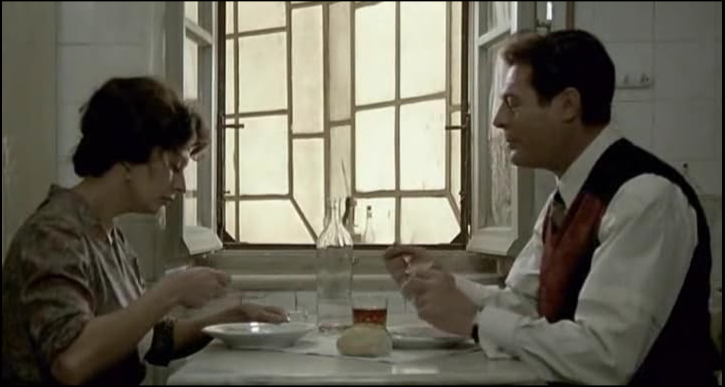

He’s making himself eggs when there’s a knock at his door, and there’s a prickle of fear in him, because of who he is and how he lives and who this might be. But it’s Antonietta, with her back to him in the doorway, telling him sorry. She comes into his apartment. They don’t talk. In a scene that must have inspired Big Night, he continues making his eggs, and they’re framed separated by the doorways in his house. Silent. And then we see them sitting together with two plates, both eating eggs, and he tells her his story. She’s starting to understand. She cares for him, and she’s starting to understand all this and more. They make love. That’s not the right term, there is no right term for it in our language. They make friendship and kindness, though there’s much love in it. He is being generous, and she is accepting, asking for, desiring what she needs, maybe for the first time in her life. There’s a sense that no matter how awkward and complicated and strange this is for both of them, it’s the most connected two people can be in the short time they have. She tells him it was never like that with her husband, she didn’t know it could be like that, and all that that implies. They sit in silence for a while, and he tells her that today of all days it was important to him to spend the day with her, to talk with her. As much as she is needed by her six children — you see that they need her and one day they will understand that — you wonder if anybody has ever told her this before. But she hears it now, on this peculiar day. This special day.
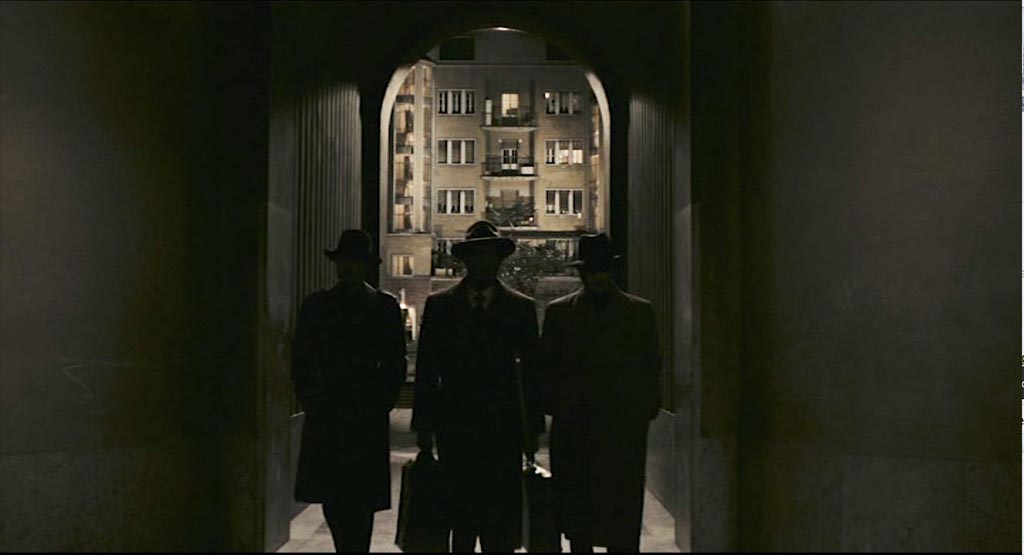
Everybody returns from the parade, singing and waving flags, and Antonietta escapes home over the rooftops. Her husband berates her for not making a hot dinner or cleaning the house, but she doesn’t care. Night falls and the lights come on and we see through windows into apartments and stairwells. It’s so beautifully shot: so much movement and drama, and all so quiet, so glowing. Antonietta sits at her window and tries to read The Three Musketeers, but she’s really watching across the way as Gabriele is taken away by two fascist policemen: He’s been exiled to Sardinia, a trip he’s been preparing for all day, though she didn’t know it. And then she sets aside her book and moves to her bedroom, where her husband is waiting to make their seventh child, to be named after Adolph Hitler. They will finally qualify for the tax deduction given to large families. (Gabriele, in his turn, pays an extra bachelor tax, “You would think that loneliness is some kind of luxury.”)
Earlier in the film, when Gabriele is in Antonietta’s apartment, he catches sight of his own through her windows and he says “How odd, looking into your own apartment from your neighbors.” And this is the crux of the film. How strange to glimpse your life from somebody else’s point of view, how peculiar to make a strong connection with a stranger you’ve seen every day but never met and to feel yourself forever changed by it. It is this human connection — this warmth, affection, empathy, understanding — that changes the whole world, and that helps to fight off ignorance, prejudice, and hatred.
This summer there was a horrible forest fire far off in another country. The smoke traveled to where I live. The light was amber, the air smelled wonderfully of burnt wood. Everything seemed hazy and dreamlike, and it was difficult to see at times. It’s almost as if it made it difficult to think. To me, it was beautiful and strange. To others it was deadly. The light in Una Giornata Particolare is like that light. Sepia, almost monotone, with an odd glow. It’s a strange sort of nostalgic light, from another time but not a better time. Everyone is moving in this light, the light of fascism. The frightening thing about the movie is how much everybody accepts fascism. Hitler is powerful and good, Mussolini is powerful and good. This is something to celebrate. There’s no reason to question that, and in fact, it’s not safe to question that. Today, around the world, there are frightening signs that we’re moving farther and farther to the farthest right. Fascism is increasingly accepted and even embraced, or at the very least it is not challenged or questioned. We need to shake off the daze of acceptance. We need to fight back by embracing those moments of connection that make human existence bearable, or even wonderful, at times.
As Gabriele tells his lover in a phone conversation before he leaves, “Life, however it may seem, is always worth living. And a myna bird always comes along to make sure you don’t forget.”



Wow – can’t wait to check it out!
LikeLike
Beautifully written.
LikeLike