

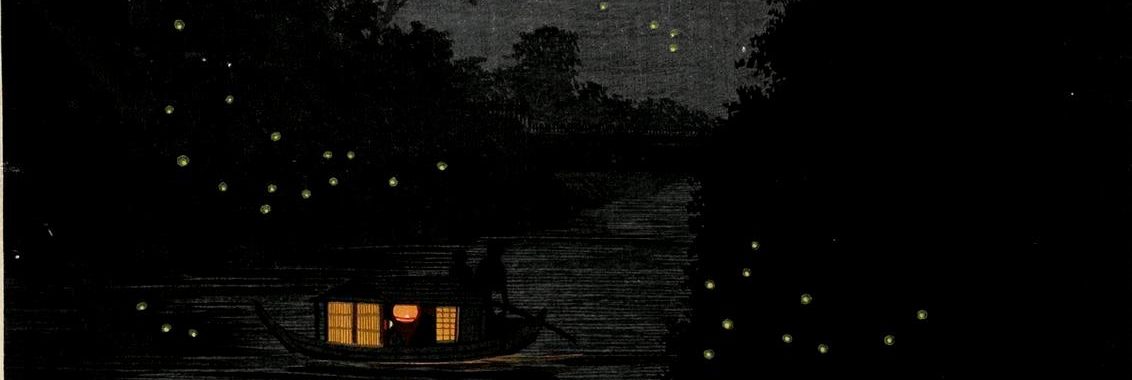
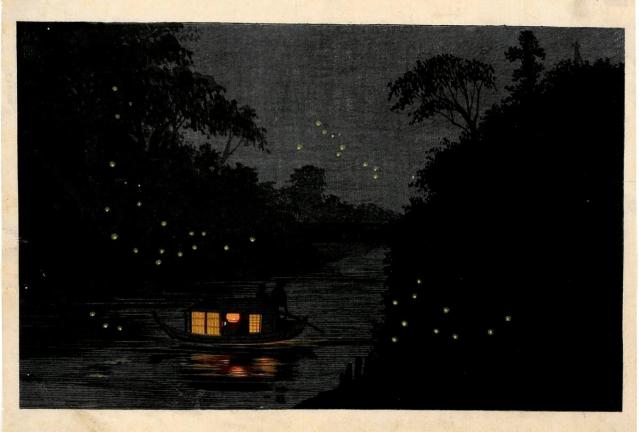
One of the deepest and strangest of all human moods is the mood which will suddenly strike us perhaps in a garden at night, or deep in sloping meadows, the feeling that every flower and leaf has just uttered something stupendously direct and important, and that we have by a prodigy of imbecility not heard or understood it. There is a certain poetic value, and that a genuine one, in this sense of having missed the full meaning of things. There is beauty, not only in wisdom, but in this dazed and dramatic ignorance.
G.K. Chesterton, Robert Browning 1903
When I was little I believed that there was something in the earth — in the trees and water and grass and dirt; call it spirit (for lack of a better word) or magic (for lack of a better word). Obviously, the animals can hear it and understand it. But I believed that humans, in all their arrogance, didn’t acknowledge that it was there, or were frightened of it, and so they became unable to sense it. And then we bound it up and strangled it with roads and buildings, and made it sick with chemicals and garbage.
But it’s still there, or I hope it is, and though we can’t understand it, that doesn’t mean we shouldn’t listen for it, and appreciate it.
We don’t need to understand it. I too, think there is beauty in dazed ignorance. Sometimes we comprehend something best when we don’t focus on it, when we see it glancingly from one side, when it flies off with a rustle of bright feathers into the shifting leaves. The less we can capture and hold something, the more beautiful it is. The more something grows and changes and decays, the more beautiful it is. And the more beautiful something is, the less we can imitate it or make a replica of it, because in freezing it we destroy it.
I was reading about Yasujiro Ozu, a while back, and I came across the phrase mono no aware, a very ancient term, but one revived by 18th-century Japanese scholar and ancestor of Ozu, Motoori Norinaga. According to my feeble understanding of the concept, this is a sort of sighing recognition of the transient beauty of all things — an idea that everything is more beautiful at the beginning and the ending, as it grows and as it decays, as it changes. And this understanding extends to all things that live and die, however inconsequential they seem. They have beauty worth noticing — they’re made beautiful because they’re noticed.
And this feeling, this poignance, washes gently over a person, almost without their effort…it’s the feeling itself that is beautiful and important, but it can’t be studied or captured in words. Historically, in Western art, we try to define aesthetics, and seek symmetry or embellishment, and try to capture beauty in marble or oils. But maybe the beauty is in sensing imperfection, irregularity or decay, in feeling the sweetness and the sadness of it. Maybe the most important art is created to ask questions that have no answers. To explore the inexpressible feelings, and to express wonder, confusion, bewilderment, perplexion.
I find it pleasant to be perplexed, to puzzle over something that I don’t understand. It makes me feel awake and alive, although of course sleep and dreams are perplexing as well. Something perplexing doesn’t need to be solved or fixed, but can linger raising questions, indefinitely. I love this quote from the Hagakure, “There is something to be learned from a rainstorm. When meeting with a sudden shower, you try not to get wet and run quickly along the road. By doing such things as passing under the eaves of houses, you still get wet. When you are resolved from the beginning, you will not be perplexed, though you will still get the same soaking. This understanding extends to all things.” I love the idea that rain is perplexing, because of course it is. The very smell is unsettling and stirring, because it signals a change. It reminds me of an interview with Tom Waits in which he said he named his album Rain Dogs because he liked to think about how perplexed dogs must be after a rainstorm, when everything smelled different to them. He imagined them saying, “Hey, who moved all the furniture.”
I like the etymology of the word “perplex,” which means entangled, intricate, or braided. I believe that everything is interwoven, and this is both what makes the world so perplexing, and what makes it worth puzzling over. I believe this to be a beautiful summation of the complicated fact that words will never be adequate to describe our perplexities, but they’re all we have. “I am perplext, and know not what to say.” “What canst thou say, but will perplex thee more?” Indeed.
Surely this place on the edge of understanding, sensing something but not trying to capture or define it because this is not possible, is “one of the deepest and strangest of human moods.” This is the graceful, ever-changing, incomprehensible voice of the garden at night and the sloping meadows, which we love because we can never fathom it, we can only soak it in with dazed ignorance.
Categories: featured

 magpiesmagazine.com
Beautiful! Thanks for the Chesterton. He was wise.
LikeLike
Beautifully stated!
LikeLike