

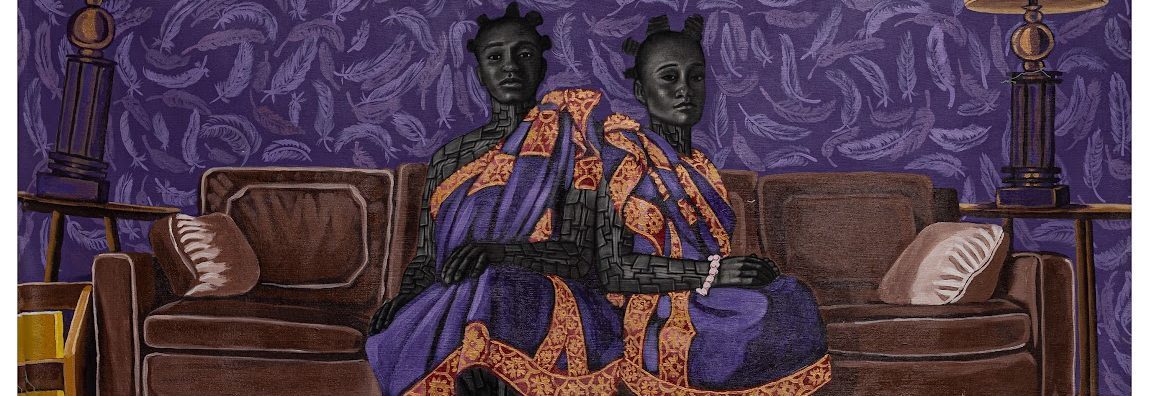
The art of Paul Ayihawu makes this world otherworldly. Vibrant and striking, dreamlike but firmly grounded in our terribly flawed reality, his work examines moments of everyday stillness to discover their significance and beauty, and to record their transformative power to change history. We were grateful for a chance to sit down with Paul Ayihwu to discuss his remarkable artwork.
I understand that you’re self-taught. Can you talk a little about the process of discovering art, acquiring technique, finding your own voice and visual vocabulary and a way to express your own vision?
My artistic style can best be described as an ongoing journey of growth and exploration rather than a singular discovery. The realization of my role as an artist came to me during the pandemic in 2020, prompting me to venture into various mediums such as gouache, fabric material, and charcoal. Evolving from there, I transitioned to working predominantly with acrylics while still incorporating charcoal elements.
Your work is so technically fine, but I love that there’s also a joyfully playful aspect to it, in the jumble of different colors and perspectives, and in the combination of charcoal, acrylic, and textiles. How do you balance artistic or stylistic restraints and freedom of your technique?
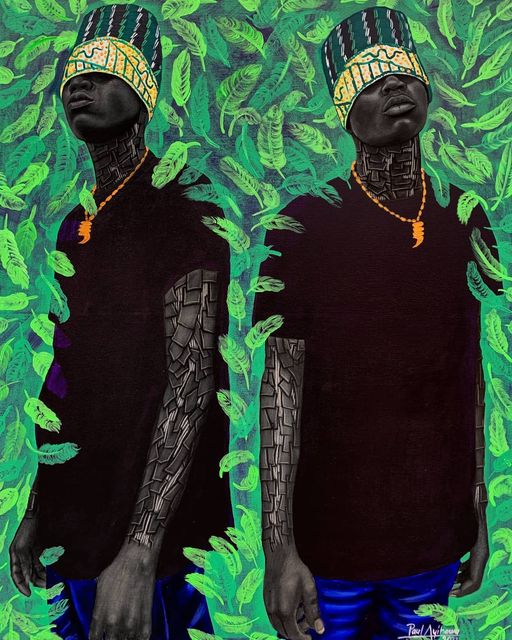
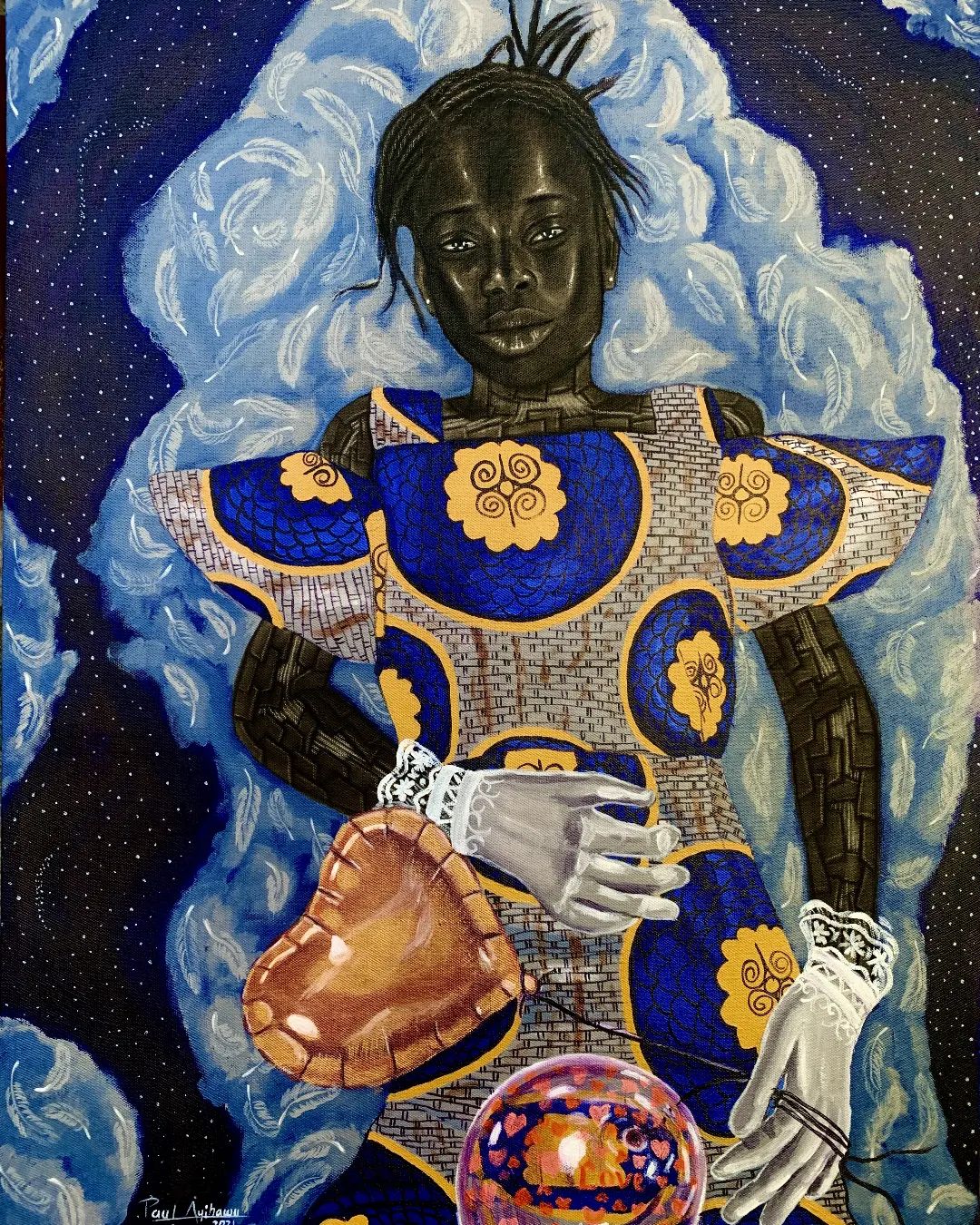
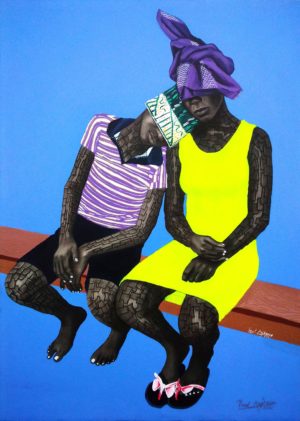
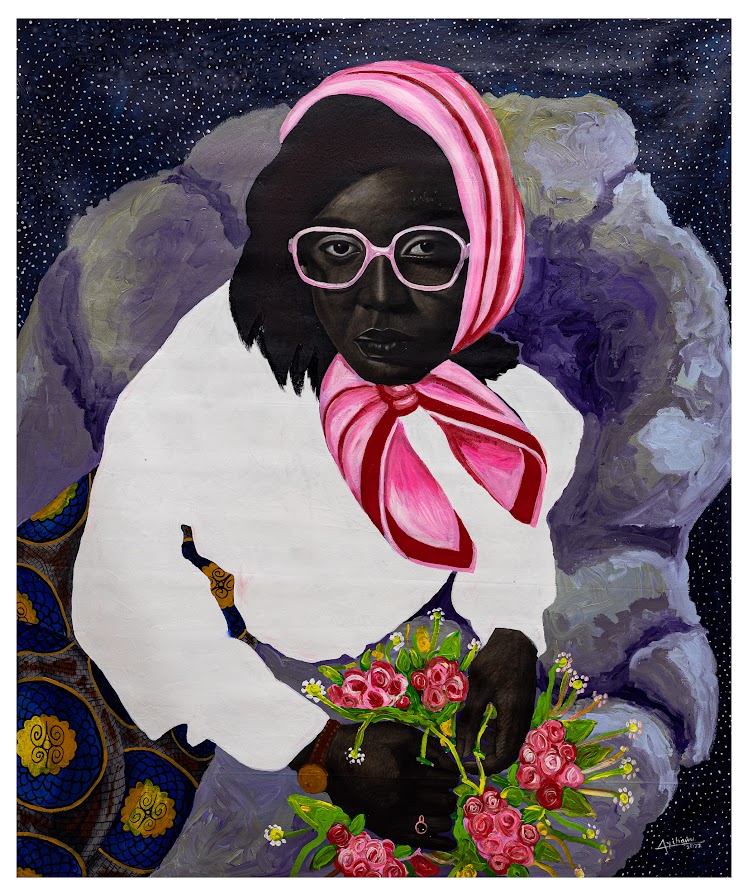
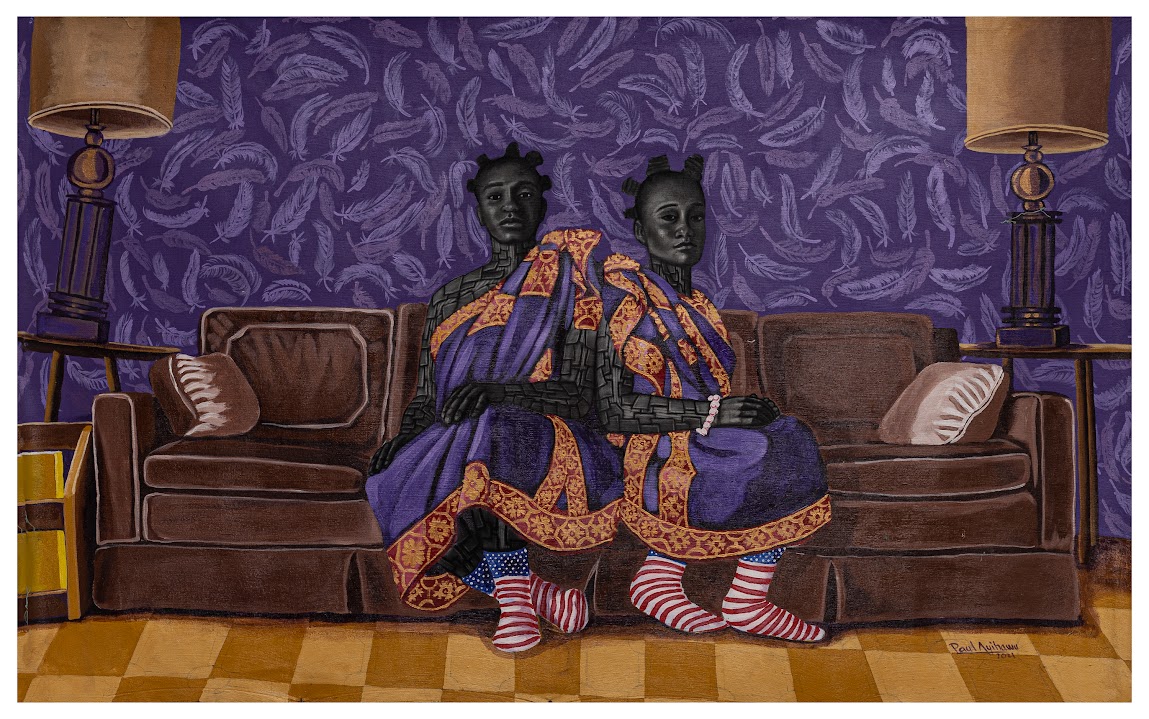
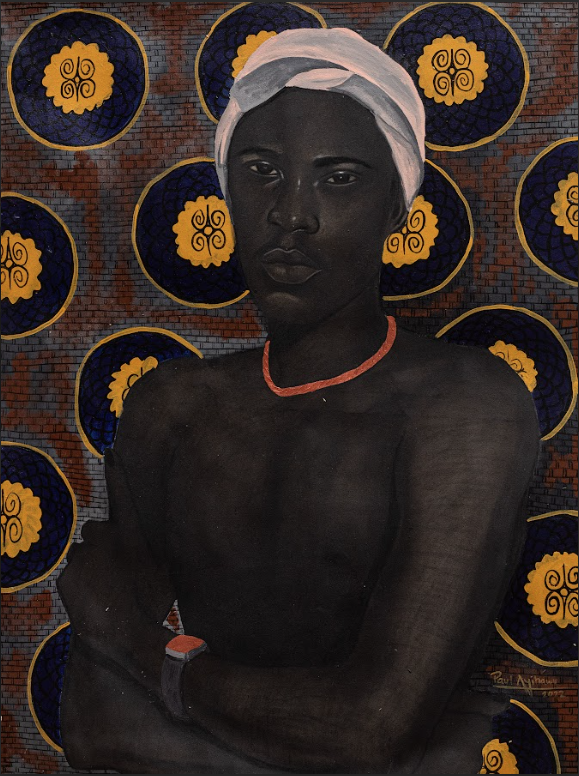
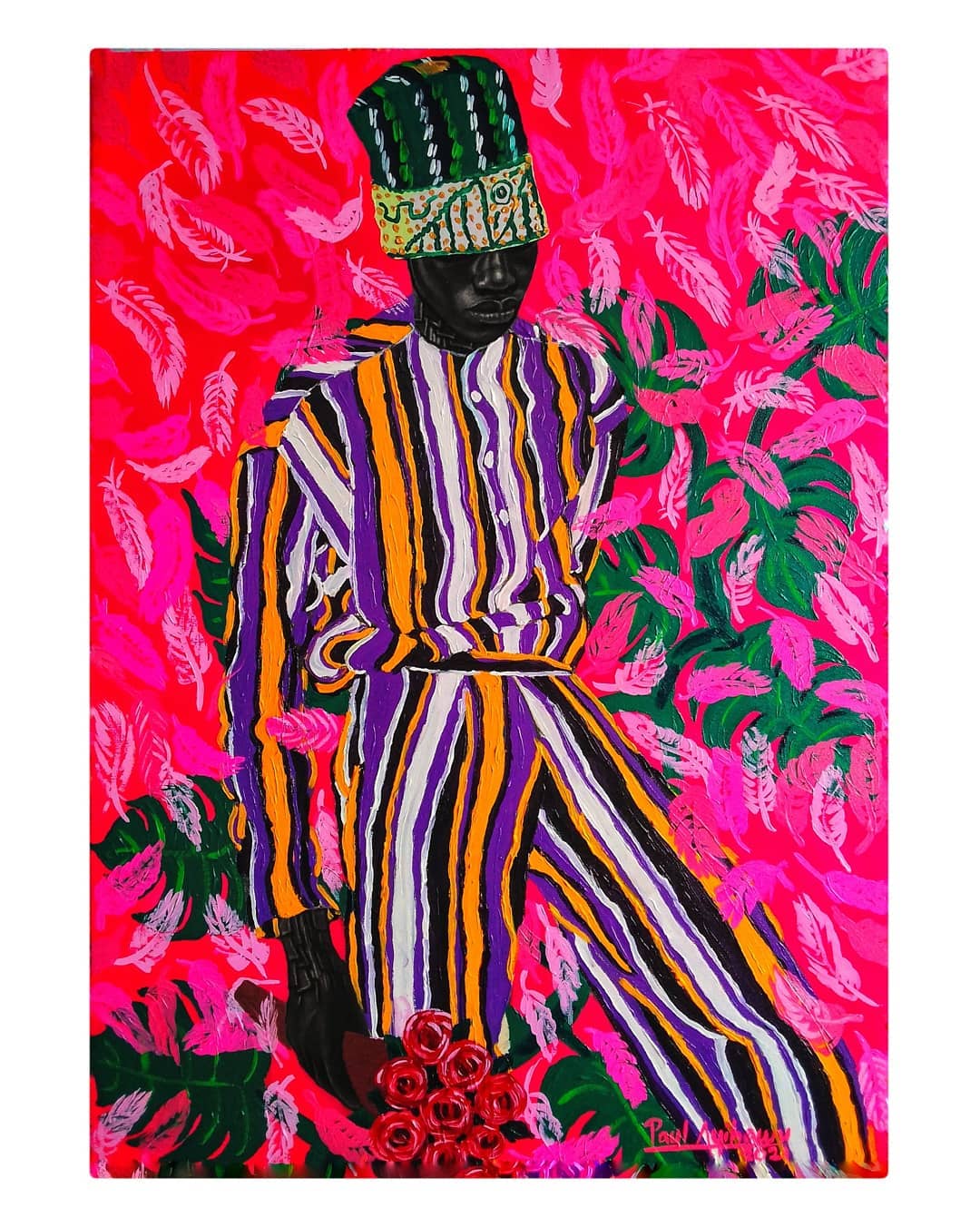
In my artistic process, I utilize charcoal for capturing the nuanced skin tones of the figures, while employing acrylics to embellish the figures themselves and the surrounding backgrounds. This combination allows me to strike a balance between stylistic constraints and the freedom of expression. The use of charcoal grants me the liberty to playfully explore the contours of the body, as it offers a certain fluidity and spontaneity. To maintain a structured workflow, I begin by working with charcoal, recognizing that its application can be a bit messy during the creative process. Once I have established the desired foundation with charcoal, I then proceed to utilize acrylics to intricately detail the clothing, adornments, and backgrounds, bringing the composition to its completion.”
I love your statement that your work expresses a “dream state of the mundane,” elevating small moments, which you describe as a form of activism. Can you talk more about this idea?
I often incorporate this prolonged state of stillness. It is within these quiet pauses that my art resonates with the idea that “silence is louder than noise.” By elevating the ordinary and magnifying the significance of these subtle moments, I aim to challenge societal norms that often overlook the beauty and transformative power inherent in the everyday.
In response to your question about the idea of expressing a “dream state of the mundane” and how it serves as a form of activism, I would like to elaborate on this concept. I have discovered profound significance in the small moments that occur within our daily lives. These seemingly ordinary instances, filled with unplanned joy, introspection, and nostalgia, hold the power to shape our life trajectories. It is precisely these moments that I have chosen to explore in my artwork. Through my creative process, I strive to capture these fleeting instances so that they can be relived and appreciated time and time again. For me, this approach represents a unique form of activism- one that emerges from the realm of understated, extended silence. In the composition of my works, I often incorporate this prolonged state of stillness. It is within these quiet pauses that my art resonates with the idea that “silence is louder than noise.” By elevating the ordinary and magnifying the significance of these subtle moments, I aim to challenge societal norms that often overlook the beauty and transformative power inherent in the everyday. This act of focusing on the seemingly mundane can be seen as a form of activism, as it encourages viewers to pause, reflect, and reassess their own perspectives on what truly matters in life.
Speaking of activism, there’s a saying that “the personal is political” and I think that applies to your paintings in many ways, in the way you explore the inner world of emotion and imagination. Nothing is more personal than our dreams, and you seem to capture people in the middle of a daydream. How do you think about the role of politics in art?
Politics in art is a multifaceted concept, and individually, they hold significant meaning for society. When one intersects with the other, their meanings become intertwined and influenced in unique ways. In my paintings, I strive to focus on the intrinsic value of the figures I represent and question who gets to decide this value and to what extent. It is, in a sense, a form of body politics, where I explore the dynamics of power, representation, and the complexities of personal identity. By delving into the inner world of emotion and imagination, I aim to evoke a sense of introspection and challenge the viewers to reflect on how personal experiences intersect with broader socio-political contexts.
What inspires you? What filmmakers, photographers, musicians, or artists do you admire?
I draw significant inspiration from the African figurative movement, known as black art. However, my approach diverges from colonial perceptions by portraying African individuals in their authentic essence. I strive to present figures that are emancipated from mental slavery, as Bob Marley expressed in ‘Redemption Song,’ and present a more genuine representation. In my artistic journey, I am inspired by the works of Kerry James Marshall, Lynette Yiadom-Boakye, Gustav Klimt, and William Adolphe Bouguereau. These artists resonate deeply with me, contributing to my ongoing exploration and development as I seek to capture the true essence of my subjects.
I’m fascinated by the use of fantasy in your work, and by the term afrosurrealism. To me, surrealism is a way to create worlds using your own particular vision, separate from reality as defined by (mostly) white men. Can you discuss the use of fantasy and surrealism in your work?
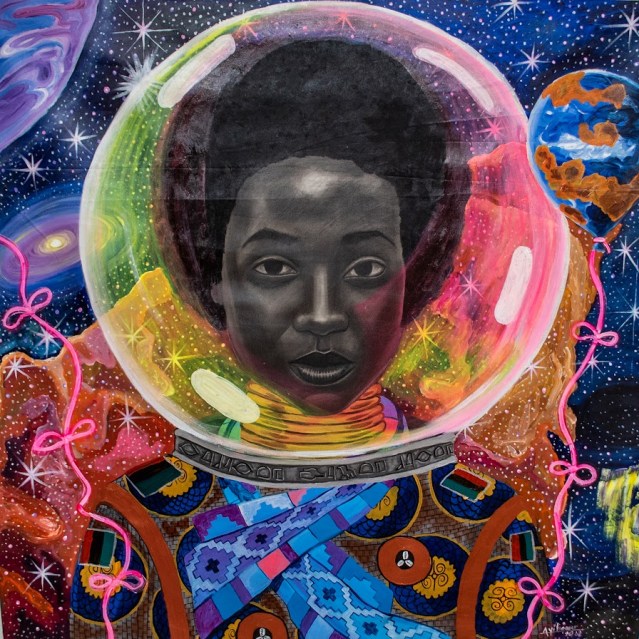
In one of my painting series, ‘Finding Utopia,’ I delve into the realms of fantasy and afrosurrealism. This body of work envisions a world where astronauts adorned in Ankara textile suits embark on an intergalactic voyage, specifically in search of a perfect world. These astronauts, whom I refer to as Afronauts, symbolize the fusion of African culture and the exploration of alternative realities beyond the constraints of our earthly existence. Through the use of fantasy and surrealism, I aim to transcend the limitations imposed by societal norms and offer a fresh perspective that is rooted in my own cultural heritage and experiences.
Possibly a connected question: I’m also curious about your idea of reexamining history, and specifically art history, and maybe imagining a timeline in which Africans weren’t burdened by the weight and oppression of colonialism. Is that a theme you examine in your work?
While colonialism is indeed in the past, its legacy and the aftermath continue to impact African societies today. The emotional constraints and mental slavery that persist are the aspects I subtly address in my artwork.
Indeed, my work delves into the concept of reexamining history, including art history, and envisioning a timeline where Africans were not burdened by the weight and oppression of colonialism. However, I approach this theme from a slightly different perspective. While colonialism is indeed in the past, its legacy and the aftermath continue to impact African societies today. The emotional constraints and mental slavery that persist are the aspects I subtly address in my artwork. By exploring these constraints, I aim to shed light on the lingering effects of colonialism and challenge the narratives that have shaped our perception of African identity and culture, ultimately envisioning a future where Africans are free from the enduring constraints of historical oppression.
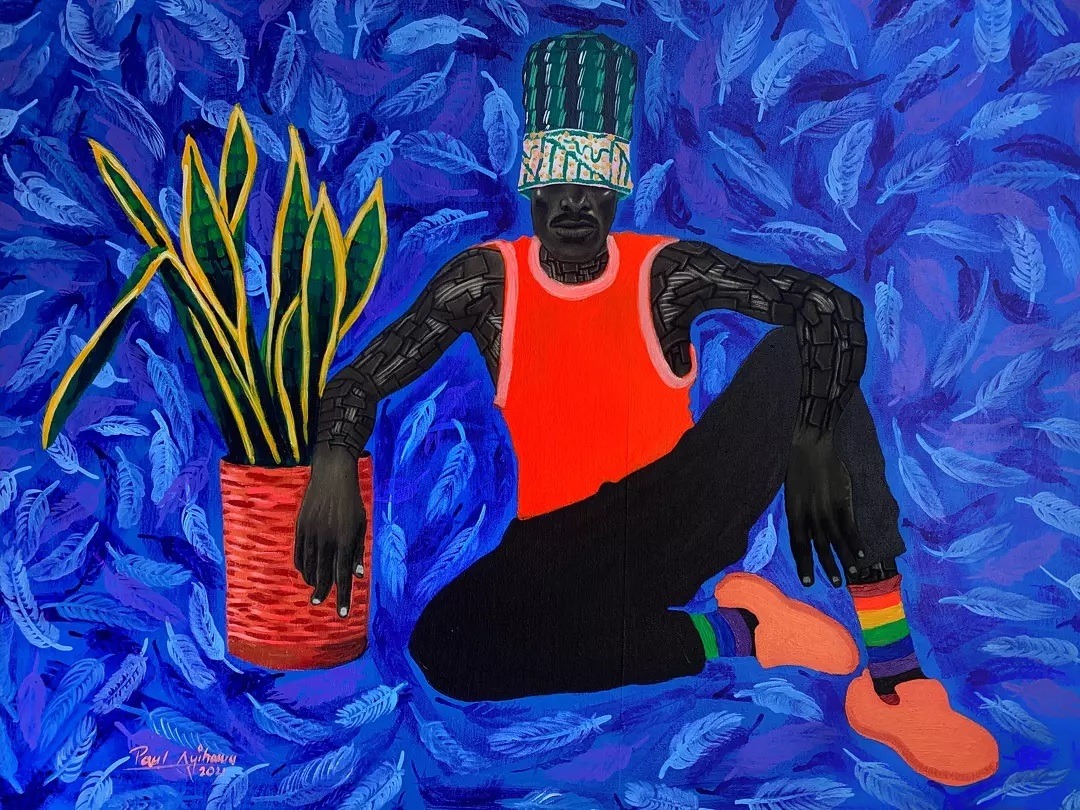
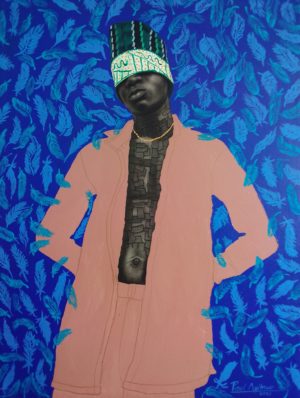
The expressions on the faces of your subjects is so beautiful and intriguing to me. A bit melancholy, but full of some secret meaning. Do you have an idea of the thoughts going through their heads when you’re painting them? And the faces with the eyes covered by hats can you talk about the meaning behind that motif?
The figures I depict are often poised in positions of elegance and power, subtly reinstating the idea of an emancipated self. They gaze directly into the eyes of the observer, creating a profound connection and inviting introspection. As for the motif, it carries a specific meaning. It serves as a hint at the cultural heritage that lies beneath, symbolizing the layers of identity and the deep-rooted connections to history and tradition.

Congratulations on your fellowship at the Noldor Residency. What was that experience like? How did it further your career and your sense of yourself as an artist?
Thank you! The experience at Noldor Residency was truly invaluable. It provided me with a dedicated period of time to delve deeper into my artistic practice and gain a better understanding of my work. The residency allowed me to immerse myself fully in my creative process, experimenting with new techniques, exploring different concepts, and refining my artistic vision. Moreover, being part of the residency exposed me to the workings of the art market and its intricacies. It gave me insights into how to navigate the industry and effectively present my artwork. Overall, the Noldor Residency has not only contributed to my artistic growth but has also expanded my career opportunities and enhanced my sense of self as an artist. I am grateful for the support that the residency provided.
I love the sense of space in your work – the skies and clouds, and the dreamy floating feeling of the composition. Can you talk about your use of space – outer space and the space on your canvas?
“Thank you! The sense of space in my work, both outer space and the space on the canvas, plays a significant role in conveying the themes and concepts I explore. Drawing inspiration from surrealism, I aim to create a dreamlike and otherworldly atmosphere that invites viewers to contemplate the possibility of finding a better place beyond our current reality. The vast skies and clouds symbolize the boundless potential and the yearning for something greater. Through the use of space, both literal and metaphorical, creating a contemplation, imagination, and a longing for new horizons.
You say, “Sometimes I infuse signs and symbols of the rich West African heritage into my work to further illustrate my rich ancestry as a Nigerian/Beninoise.” What are some of those signs and symbols?
In my earlier works, I delve into the incorporation of various signs and symbols from the rich West African heritage to further illustrate my ancestral roots as a Nigerian/Beninese artist. One notable symbol that I explore is the Adinkra Symbol, which holds great significance in West African and Ghanaian culture. These symbols were traditionally used as a form of communication, representing different values and social classes within African societies. You can often find these symbols integrated into clothing attires, serving as a visual representation of cultural identity and heritage. By incorporating these symbols into my artwork, I aim to pay homage to the rich traditions and values of West African culture, while also exploring the complexities of identity and the connections between past, present, and future.
Nigerian-based contemporary african artist Paul Ayihawu uses charcoal and Acrylic to tell the story of african in a new light. His work focuses more on the social-cultural issues and the impact of colonialism on African cultures and values. He expressed this often with flipped portraits of black people dressed in a hybrid of western and african dresses majorly in ‘ankara’, an african print cloth. He is fervent about telling the untold, unheard and silent stories of the black community. His works are in private collections in the USA, South Africa, Ghana and Nigeria. He was 2022 Visiting Fellow at the Noldor Residency. See more of his work on Facebook at Paul Ayihawu Arts and on Instagram at paul_ayihawu.
Categories: art, featured, featured artist, interview

 magpiesmagazine.com