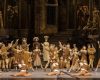
From the moment Gonzalez made Mercutio real for me, I was inside the story, experiencing it as if for the first time. I was affronted: the cost of hate was too high, the sacrifice of youth beyond justifiable.
“As a form of resistance to the unblinking long take, Maria smashes her eyelids tightly shut, inhabiting her own privacy for the first time that night.”
A selection of music we find oddly perfect, to celebrate a different kind of freedom this Independence Day.
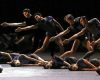
“The biography became, in effect, two stories: one, in which Harss deftly traces the formative patterns of Ratmansky’s distinctive and prolific career, and a second shadow story, in which Harss herself grapples with the unfolding conflict, the changing international landscape of the ballet world, and, most compellingly, the shifting identity of her subject.”
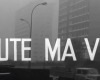
A wonderful essay on Chantal Ackerman’s first film Saute ma ville by film critic Adrian Martin.
The film is like a poem of a dream, composed in movements, and alternating between scenes of blissful young lovers naked in bed, surreal and frightening images that serve as worrying metaphors for pregnancy, and documentary footage of people on the Rue Mouffetard. In 17 minutes the film covers the cycle of life — childhood, youth, old age, infirmity, death — but in not in any logical order, rather in the bewildering way that life moves or that we move through life.
“Folklore rules the mythical landscape of Mike Ejeagha’s music; his lyrical calibrations are more about the prosody of folksongs and folktales; his language of the music is Igbo, and the purpose is didactic,” Brilliant essay about Mike Ejeagha by Chimezie Chika.
Wha, man? Wha’ppen?
Some thoughts on Female, a pre-code film starring Ruth Chatterton.