
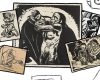
Eighty years after the victory of the World Anti-Fascist War, we remember how artists from China to Mexico have used art as a practice of solidarity and a tool for revolutionary social transformation.

Eighty years after the victory of the World Anti-Fascist War, we remember how artists from China to Mexico have used art as a practice of solidarity and a tool for revolutionary social transformation.

“The empire never intended that this testimony should be heard, but, if I hold my peace, the very stones will cry out… neither the citizen-subject within the gates nor the indescribable hordes outside it believe in the morality or the reality of the kingdom anymore — when no one, any longer, anywhere, aspires to the empire’s standards.”
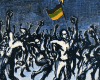
Dr. Gavin Brown speaks about the way in which the role of music in black South African society translated into its becoming a powerful tool in its political culture.
History doesn’t disappear when you shut down a website, threaten a museum’s funding, or remove museum exhibits. We carry the past within us.

“To see the dignity, strength and enthusiasm of the students, their refusal to be drawn into violence, and their commitment to spreading compassion and unity is remarkable.”
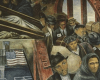
Historians of American art are engaged in a search for ways in which to speak meaningfully and broadly about contested traditions and about both the promises and limits of the country’s national iconography and history, to a nation fragmented along racial, ethnic, class, and religious lines.

Morgan Totah of Handmade Palestine interviews Palestinian artist Rand Dabboor.

 magpiesmagazine.com