

By Amir Zadnemat
Chapter 1: The World Before Witness
There was a time when nature did not require advocates. It did not need to be defended, explained, or preserved in language. It existed outside what we call the “economy of attention”—vast, indifferent, unrecorded. Life unfolded in its intrinsic cycles, from birth to decay, without need for an audience. Mountains were not symbols of endurance; they were simply masses of rock and earth, standing according to their own geological logic. Forests were not metaphors for mystery; they were complex ecosystems of symbiosis and competition. It was a world of “being,” not of “seeming.”
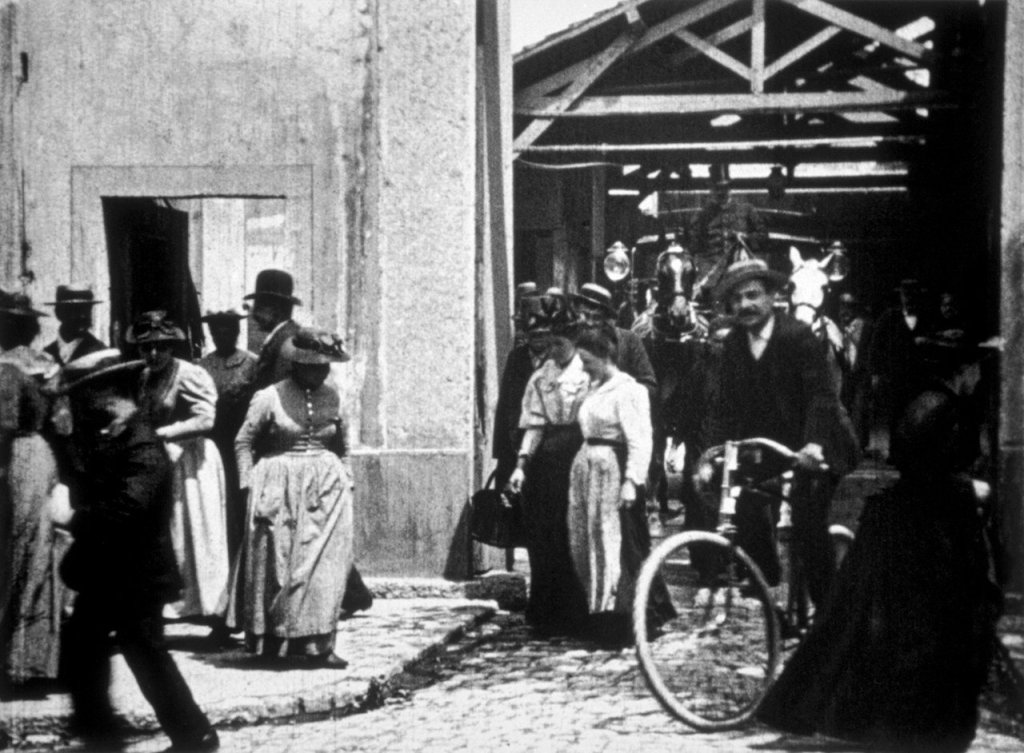
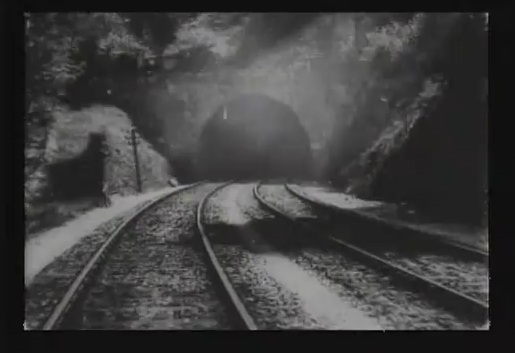
Cinema arrived late to this world. An invention born at the end of the 19th century, at the height of the Industrial Revolution and the belief in humanity’s absolute dominion over nature. This mechanical art, this glass eye capable of capturing and replaying motion, carried from its very beginning an instinct for holding on to what slips away. The camera is, in its essence, a time machine; a machine designed not to travel to the future, but to trap and embalm the “now.” From the earliest images of the Lumière brothers—workers leaving a factory, a train arriving at a station—cinema revealed its obsession with recording fleeting moments. But this obsession was initially directed toward the human world. Nature was the grand, self-evident stage for this human drama.
What cinema could not protect, it learned to remember. This sentence is the cornerstone of a complex and tragic relationship. Cinema, as an unwitting witness, was at first unaware of the responsibility that would be placed upon it. Like a child who happily films their parents, only to realize years later, after their passing, that those simple, joyful films have become a painful and irreplaceable treasure. Cinema looked upon nature with this same initial innocence, oblivious that one day these images would be the sole relics of a lost world.
Chapter 2: The View from a Train Window
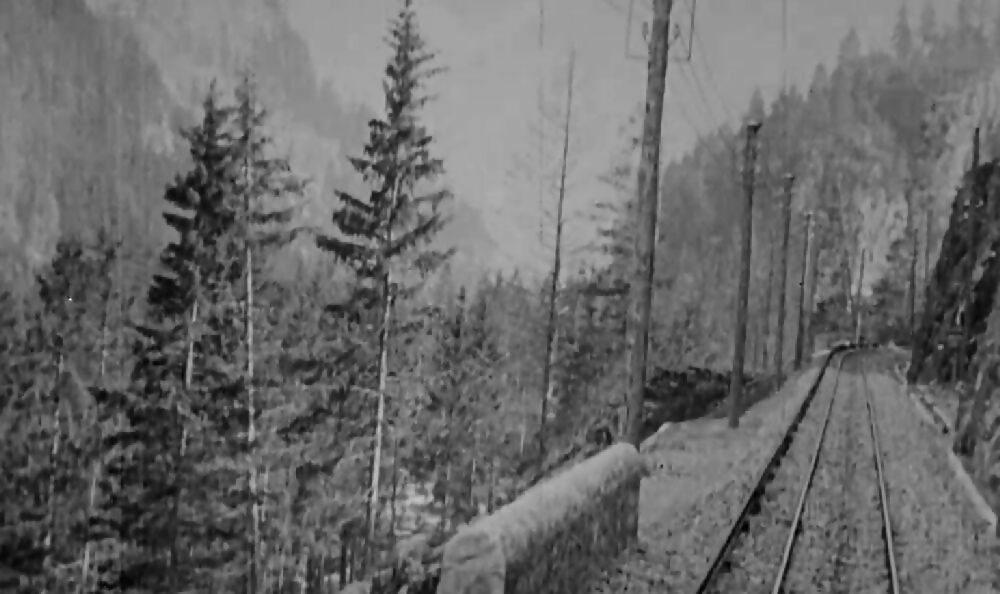
Early cinema looked at nature the way a traveler looks from a moving train: briefly, aesthetically, without consequence. This gaze was a consumptive and colonial one. In early Westerns, the vast landscapes of Monument Valley were merely a majestic backdrop for the confrontation between law and lawlessness, civilization and savagery. The mountains, plains, and deserts had a monumental presence, but this presence was used to challenge the human characters and highlight their resilience or vulnerability. Nature was a “resource”—a resource for aesthetics, a resource for narrative, and a resource for extraction. Its presence was taken so for granted that it did not seem capable of loss.
This perspective was rooted in the tradition of 19th-century landscape painting, particularly the Hudson River School, which depicted nature with a divine and untamed majesty. Cinema inherited this vision of the “Sublime” but added a new dynamism with the element of motion. Oceans in adventure films suggested infinity, not the limitation of marine resources. Forests in fairy tales or horror films became a space for projecting humanity’s unconscious fears and desires, not a vital network of life under threat.
This inattention was not a simple oversight; it was a reflection of a dominant worldview. A worldview in which man was the center of the universe and nature was a passive stage for the realization of his destiny. Only when the cracks in this worldview began to show, and ecological instability became an undeniable reality, did cinema gradually realize it had been filming something fragile all along.
Chapter 3: The Obsession with Time and the Unsettling Awakening
The essence of cinema is bound not with space, but with time. The great film theorist André Bazin considered the photographic image to have an “ontological” link to reality; a trace, a fingerprint of what was once present before the lens. Cinema exponentially enhances this idea by adding the dimension of time. Every frame is a document of a one-twenty-fourth of a second that has passed and will never return in the same way. Every image quietly screams the sentence: “This is happening now, and it will not happen again in exactly this way.”
When this temporal awareness is applied to natural landscapes, it acquires a deeply unsettling quality. A river on screen flows moment by moment, unaware that its course will soon be diverted by a dam. Polar ice reflects light without knowing it is already melting. Animals move through territories that still seem open, though the borders and fences are already closing in.
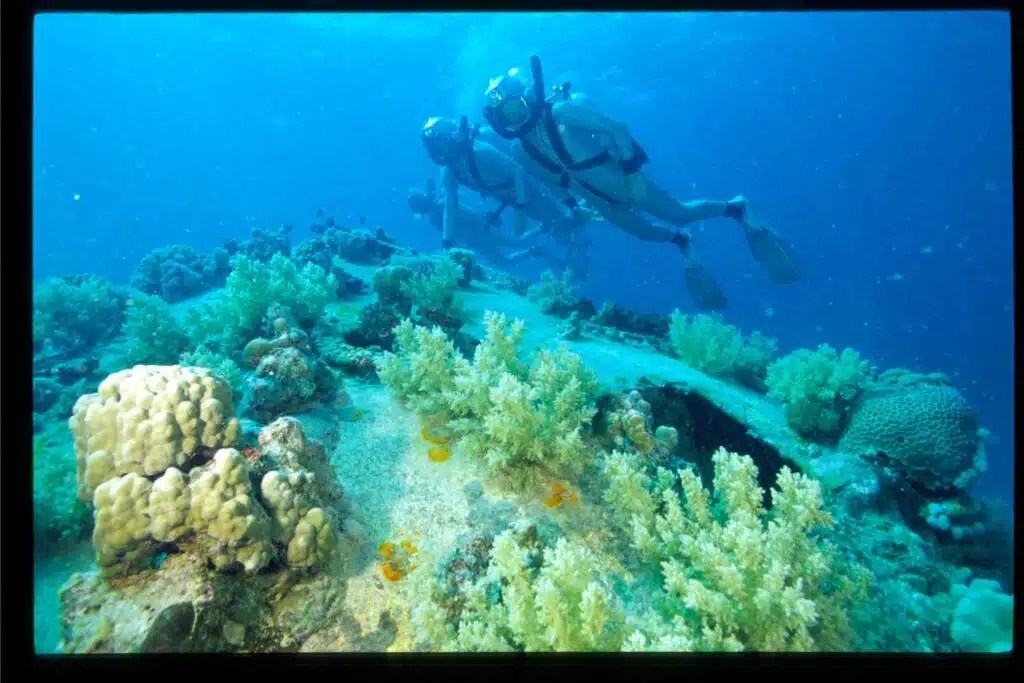
It is here that cinema acquires a kind of reverse-prophetic power. Old films of cities, nature, and people are moving not for what they show, but for what we know today about their fate. Watching a documentary from the 1960s about a colorful coral reef has now become a painful experience, because we are aware of the widespread phenomenon of coral bleaching. The image that was once a document of beauty has now become an elegy for loss.
Cinema does not predict catastrophe. It records the moments just before certainty arrives. These films are an archive of our age of innocence, or perhaps more accurately, our age of ignorance. They confront us with a version of the world where choices were still possible, even if those choices were never made.
Chapter 4: The Accumulation of Disaster and the Resistance of Duration
Environmental destruction rarely enters history as a spectacular, cinematic event. It does not erupt; it accumulates. It advances through routines and permissions, through economic logic and postponed responsibility. This is what Rob Nixon calls “Slow Violence”—a violence that is dispersed across time and space, a violence that rarely makes the news because of its gradual and invisible nature. A wetland shrinks year by year. A coastline retreats by meters rather than miles. A species quietly slides toward extinction. A silence gradually lengthens until it no longer feels strange. These changes resist outrage because they resist immediacy.
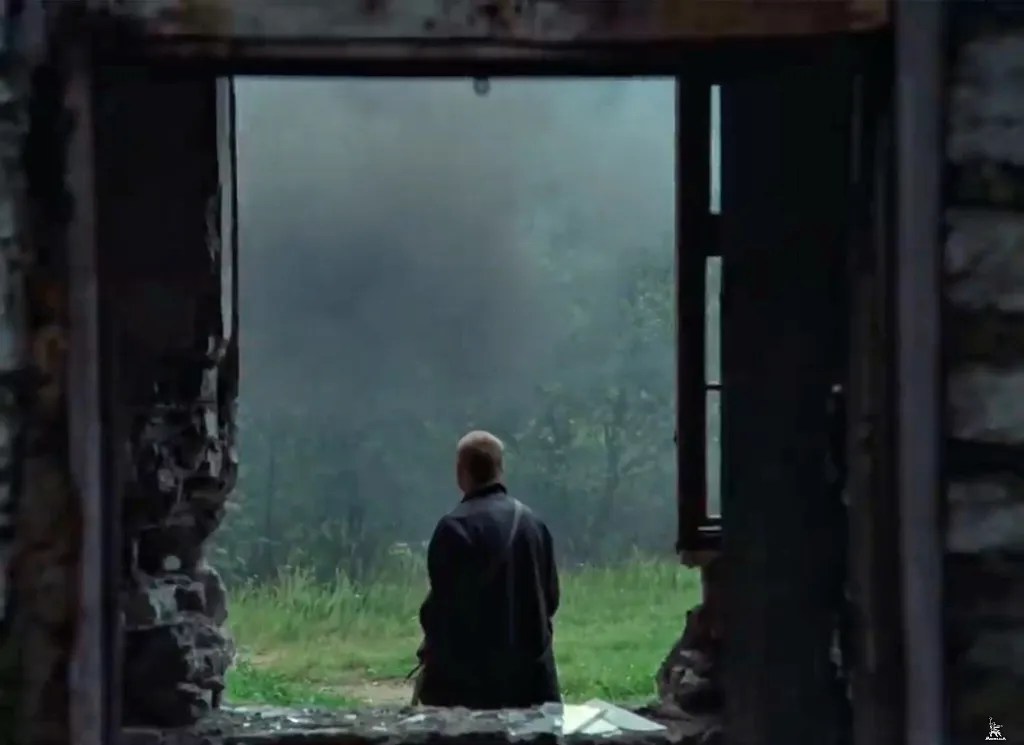
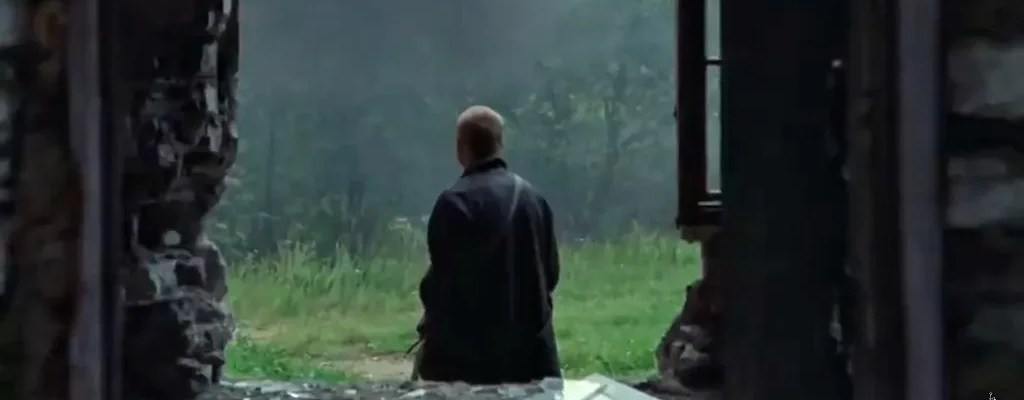
Cinema, particularly in certain artistic and documentary currents, challenges this logic by insisting on “duration.” It asks us to stay with an image longer than comfort allows. In the long takes of Andrei Tarkovsky, such as in his film Stalker, characters wander through post-industrial, damp landscapes. The camera moves with deliberation, or sometimes remains static, allowing us to immerse ourselves in the texture of the image—in the sound of dripping water, the movement of grass in the wind, the rust on metal. This pause, this refusal to cut quickly, shatters the illusion that decay is an abstraction. The camera lingers. The viewer feels time passing. A relationship begins between the spectator and the place.
This insistence on duration is an ethical choice. This cinema tells us: “Look here. Really look. Do not rush. Pay attention to the details. This process matters.” In doing so, cinema helps us to perceive “slow violence” not as a statistic, but as a sensory experience. We feel the erosion.
Chapter 5: A Shift in Cinematic Grammar
For much of its history, cinema treated nature as a passive surface—beautiful, expressive, but ultimately expendable. Human drama occupied the foreground; the non-human world existed to frame it. Only when the ecological crisis grew impossible to ignore did filmmakers begin to question this arrangement.
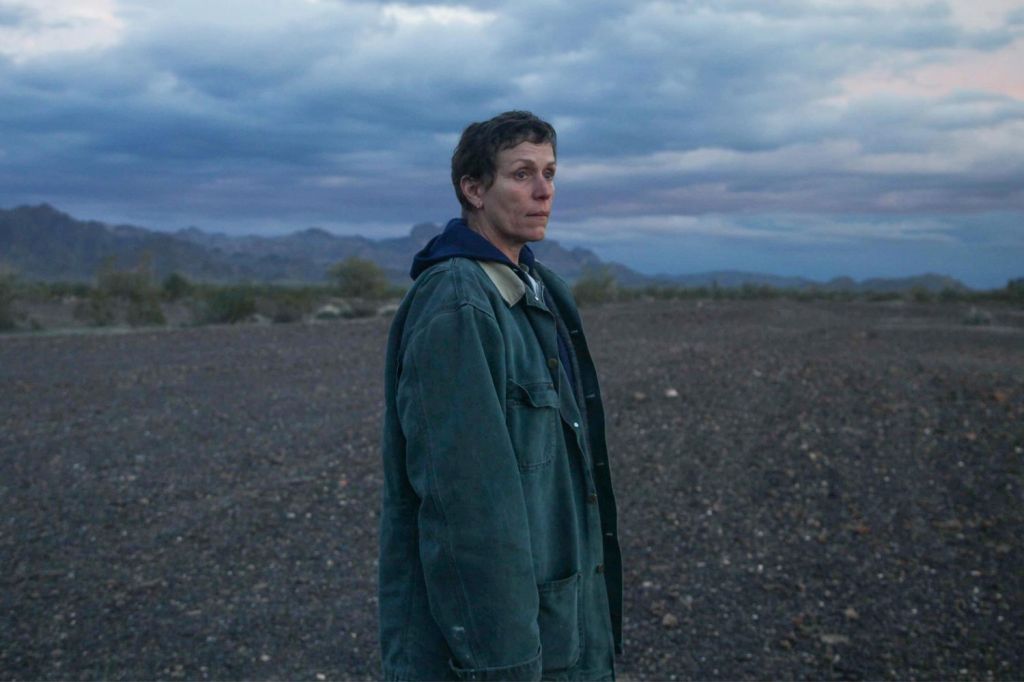
When nature moves from background to an active presence, the grammar of cinema shifts.
- Landscapes acquire narrative weight: In a film like Chloé Zhao’s Nomadland, the vast and harsh American deserts are not just a pretty backdrop; they are a key character that both gives life and takes it away. The landscape does not merely reflect the protagonist’s inner state; it shapes her economic and social condition.
- Weather becomes consequential rather than decorative: In Alejandro G. Iñárritu’s The Revenant, the snow, the cold, and the frozen rivers are the primary antagonistic force of the story. Survival is defined not against a human enemy, but against the formidable indifference of nature.
- Silence is no longer empty; it thickens with meaning: Environmental cinema often uses silence to draw our attention to the soundscape. In a forest, silence is not the absence of dialogue, but an opportunity to hear the wind in the leaves, the song of birds, or, conversely, the alarming sound of a distant chainsaw. This silence forces us to “listen” to the world.
These films do not ask us to admire nature. They ask us to notice it—and to feel the discomfort of noticing too late.
Chapter 6: The Refusal of Redemption
In environmental cinema, particularly within fictional narratives, there is often no redemption arc. No final restoration. No promise that balance can simply be re-established. Paul Schrader’s First Reformed ends with the absolute despair of a priest facing the inaction of the church and corporations regarding the climate crisis. The film offers no easy solutions.
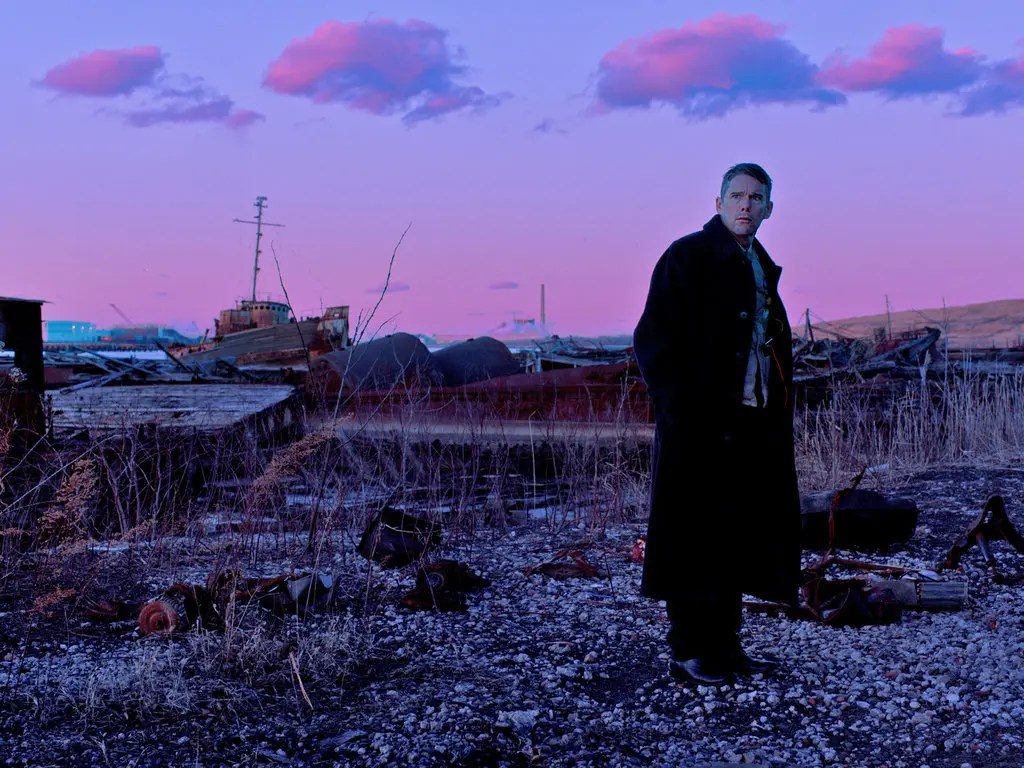
Damage remains visible. Loss is neither reversed nor justified. This refusal to resolve is not a failure of imagination; it is an ethical choice. Cinema, here, aligns itself with reality rather than consolation. Traditional stories often end with a return to balance and the triumph of good over evil. But in the ecological crisis, “evil” is not a distinct, external force, and “good” does not have a simple solution. By resisting Hollywood’s happy endings, these films remind us that some wounds do not heal and some losses are permanent.
Chapter 7: The Banality of Catastrophe
What unsettles the viewer most is not destruction itself, but its familiarity. The ruined landscape looks recognizably ours. The damage unfolds through ordinary decisions. No villain announces himself. Progress remains polite. Cinema mirrors this banality with terrifying precision, revealing how catastrophes emerge not from malice, but from habit.
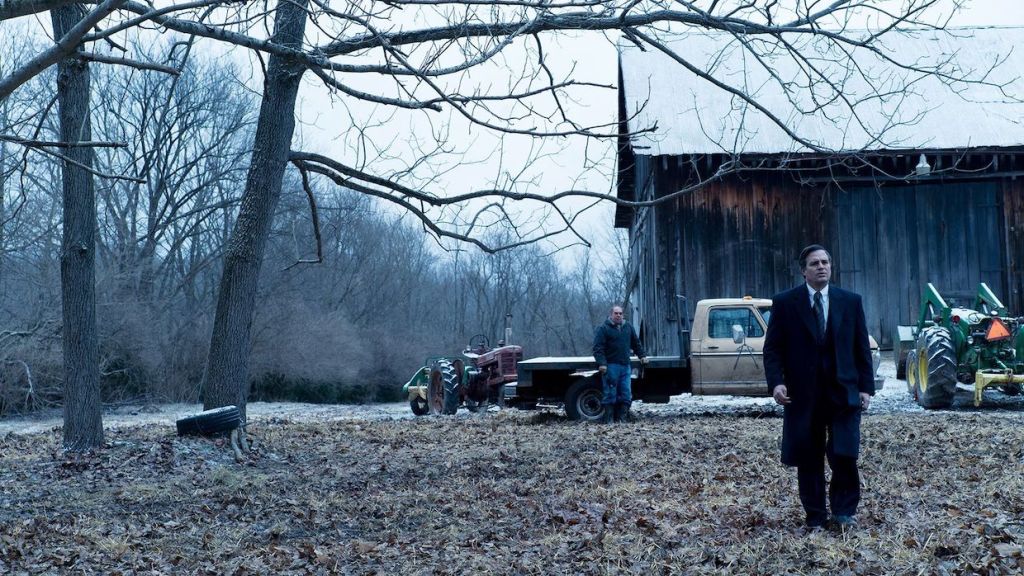
Todd Haynes’s film Dark Waters tells the story of a lawyer who fights a major chemical company for contaminating a town’s drinking water. The film shows how this environmental disaster continued for decades through a series of bureaucratic decisions, corporate cover-ups, and a community’s willingness to ignore the truth to preserve jobs and economic stability. The monster of the story is a faceless system and the logic of profit.
Although these films appear to be about nature, they are—almost without exception—about humans. About impatience dressed as necessity. About extraction framed as development. About the desire to move faster than consequence can follow. Nature, largely silent, responds not through dialogue but through absence. What disappears from the frame speaks as forcefully as what remains.
Chapter 8: Making Absence Visible
Cinema has a particular capacity to make absence visible.
- A fixed shot held long enough to feel wrong: Imagine a camera staring at an empty plain where a dense forest once stood. The camera doesn’t move. Nothing happens. But our knowledge of the place’s past fills this empty frame with the ghosts of trees. Absence becomes a heavy, tangible presence.
- A landscape once crowded, now emptied of movement: Documentaries that juxtapose archival footage of vast herds of bison on the American plains with contemporary shots of those same empty plains use this technique to show the scale of loss.
- A soundscape reduced to wind: When the sounds of insects, birds, and animals are erased from an environment, what remains is not silence, but the loud sound of loss.
These moments resist interpretation. They are not lessons; they are experiences. They do not argue. They remain. This is where cinema diverges from both activism and pure documentation. It does not instruct the viewer on what to do. It does not even demand concern. It creates a space in which indifference becomes difficult to sustain. The image stays. The viewer changes—or does not—but cannot claim not to have seen.
Chapter 9: Memory as Texture, Not Sentiment
Memory, in this context, is not sentimental. It does not romanticize what has been lost. Cinema does not soften extinction or beautify collapse. Instead, it preserves “texture”: the light, the movement, the rhythm of a living system. The details of a leaf in the wind, the scales of a fish in the water, the way dust settles on a dying plant. These details resist simplification. They prevent the past from becoming an idea rather than an experience.
When we speak of the “Amazon rainforest,” we might conjure a general concept. But when cinema takes us inside the Amazon, showing us the humidity, the ceaseless sounds, and the dappled light filtering through the canopy, it transforms that “idea” into a sensory reality. This is why the memory cinema creates is so powerful. It is a memory of the body, not just of the mind.
Chapter 10: The Unofficial Archive of Evidence
As ecosystems collapse, images increasingly function as their last refuge. A coastline that no longer exists continues to breathe on screen. A forest eradicated in reality still moves with clarity and depth. Cinema becomes an unofficial archive—not of triumph, but of evidence. It records not what we achieved, but what we allowed to disappear.
This archival function is not neutral. To remember is already to take a position. In a world where destruction is normalized through repetition, sustained attention becomes a radical act. Cinema offers this attention—not loudly, not efficiently, but persistently.
These films become time capsules that will show future generations not only what a Caspian tiger or a Pinta Island tortoise looked like, but will attempt to convey the feeling of that creature’s presence in its world. They will be our last witnesses.
Chapter 11: Time as Resistance
Environmental cinema often feels slow because it resists the tempo that enabled the crisis in the first place.
- Long takes oppose acceleration and momentary consumption.
- Stillness counters the logic of endless production and movement.
- Silence interrupts simplistic explanations and quick fixes.
These formal choices are not aesthetic preferences; they are ideological refusals. The film refuses to rush. It refuses to simplify. It refuses to resolve. The viewer, in turn, is asked to adjust. To watch without mastery. To remain with uncertainty. To accept that bearing witness is sometimes the only available action. This demand is subtle but profound.
Chapter 12: The Quiet Promise
Cinema cannot repair ecosystems. It cannot replant forests or lower temperatures. It cannot undo extinction. Yet it can resist one final violence: forgetting. Forgetting is efficient. Forgetting is convenient. Forgetting allows repetition without guilt. Cinema disrupts this process by insisting on memory.
Perhaps this is the quiet promise cinema makes to nature—not salvation, but presence. Not recovery, but recognition. The film does not say: “This can still be saved.” It says: “This was here, and it mattered.”
In an age where environmental loss increasingly occurs beyond the limits of our direct perception—in the deep oceans, in the layers of the atmosphere, in the genetic codes of extinct species—cinema returns perception itself to the center of responsibility. To look carefully becomes an ethical act. To remember becomes a form of resistance.
And sometimes, memory is the last place where responsibility can still begin.
Amir Zadnemat is an Iranian writer with an MA in Literature from the University of Gilan, Iran. His writing engages with cinema as a poetic language shaped by light, shadow, and narrative.

 magpiesmagazine.com