

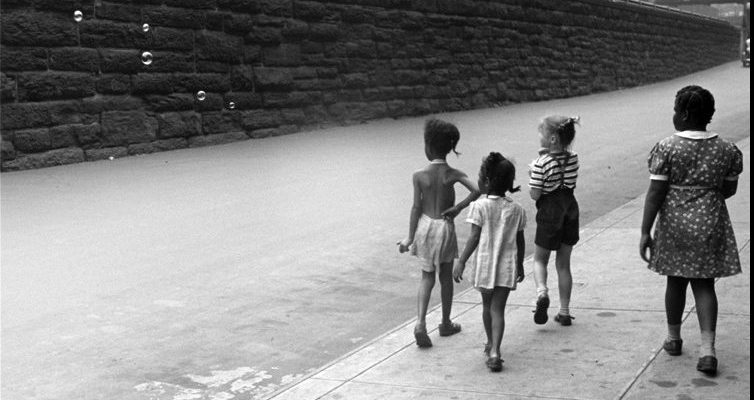
“The children are always ours, every single one of them, all over the globe; and I am beginning to suspect that whoever is incapable of recognizing this may be incapable of morality.” -James Baldwin
“Terrible things are happening outside… poor helpless people are being dragged out of their homes. Families are torn apart; men, women and children are separated. Children come home from school to find that their parents have disappeared.” – Anne Frank
In my memory, my boys’ grade school years were punctuated by walks to and from school. I looked forward to it so much. On the way to school they would talk sweet nonsense and I’d field a litany of questions about my preferred superpowers, my favorite animal, whether or not the universe has a universe, if all bats are soft and furry, if a bat flaps its wings can you hear it on the other side of the world. I’d watch them splash through puddles and take umbrella-powered flight. I’d watch them delighted by a new fuzzy hat with bunny ears that shot up when you pressed a button.
They would tell me about worlds they’d created, worlds that had rules, rules that were constantly shifting. As in the real world, their place in their world changed with the rules, as did their powers and abilities, their actions, and their fates. At pick-up, we’d look for our children in the sea of bright faces passing us by. On the too-many days of school shootings, we’d hold our children close. On the walk home from school, I’d try to sort through their nonsense for any actual news of the day, for any signs that they were worried by strict teachers or teasing classmates. I was — I am — grateful for these walks, these moments spent with them.
I worried about them all the time, but I never once thought they would be taken away from me on the way home from school, I never once thought they would come home from school and find me gone.
It saddens me that so many people in our country are willing to lie to us about what we see with our own eyes. It saddens me that anyone believes them. It saddens me that so many people can be so cruel.
“The children are always ours, every single one of them, all over the globe; and I am beginning to suspect that whoever is incapable of recognizing this may be incapable of morality.” This is a quote I’ve seen a lot lately, a perfectly poignant and eloquent quote such as only James Baldwin could write. Because I have a deep distrust for random quotes making the rounds, I searched for the origin of this one. It’s an article from The Nation published in 1980 titled Notes on the House of Bondage, and the whole thing is searingly, sadly relevant today. He’s talking, ostensibly, about his choices for presidential candidate, but he muses on the state of the country as it was then, as it had been for years, and unfortunately, as it still is.
“The American institutions are all bankrupt in that they are unable to deal with the present — resembling nothing so much as Lot’s wife. When Americans look out on the world, they see nothing but dark and menacing strangers … and white Americans really do not know what to make of all this, except to increase the defense budget.” And here we are, today being told that the “other” wants what is ours, wants to take it away from us. So we send an army of armed untrained thugs. Fear and hatred are still sickeningly powerful weapons. Of course, “The white person of the West is quite another matter. His presence in America, in spite of vile attacks on ‘the foreign-born,’ poses no real problem. Within a generation, at most two, he is at home in his new country and climbing that ladder.” When the desired order is upset, “…whenever there was trouble in the ghetto, white America, as one man, cried, What does the Negro want? Billy clubs, tear gas, guns and cold-blooded murder imposed a sullen order, and a grateful Republic went back to sleep.” And here we are. “Yes. The Final Solution. No black person can afford to forget that the history of this country is genocidal, from where the buffalo once roamed to where our ancestors were slaughtered (from New Orleans to New York, from Birmingham to Boston) and to the Caribbean to Hiroshima and Nagasaki to Saigon. Oh, yes, let freedom ring.” And here we are, again.
But there is a fierce sort of hope towards the end of the essay, as well, which still feels powerful despite the fact that things haven’t changed all that much 46 years later. Or perhaps they had taken a few halting steps in the right direction but now they are turning back again towards the darkness. The hope — the strength — is in speaking out, and the hope is in the youth, and I think that still feels powerfully true today. “I am speaking of the breakup — the end — of the so-overextended Western empire. I am thinking of the black and nonwhite peoples who are shattering, redefining and recreating history — making all things new — simply by declaring their presence, by delivering their testimony. The empire never intended that this testimony should be heard, but, if I hold my peace, the very stones will cry out… neither the citizen-subject within the gates nor the indescribable hordes outside it believe in the morality or the reality of the kingdom anymore — when no one, any longer, anywhere, aspires to the empire’s standards.”
Baldwin could be speaking about this very day when he says, “This is the charged, the dangerous, moment, when everything must be re-examined, must be made new; when nothing at all can be taken for granted. … The irreducible miracle is that we have sustained each other a very long time, and come a long, long way together. We have come to the end of a language and are now about the business of forging a new one.” We must work to ensure — it is not enough to merely hope — that this new language is one of empathy.
When an event occurs that’s hard for us to understand or explain, we find ways to connect ourselves to it, to make sense of it through our experiences. We do this almost without thinking; it’s our first reaction. And our second is to share those connections, to tell others about them, to talk and talk and try to understand. We’ll say, “I’ve lived in that place,” “I knew that person,” “I knew someone who knew that person.” We’ll make connections to other similar events that we’ve lived through, that we’ve survived. The cynical and manipulative might amplify the ways we’re not the same, might try to drive a wedge in any fragile connection that we make. Might lie to us about the truth we know we are seeing. It’s tempting, in a less generous moment, to say, “We only talk about violence when it happens in a place where we love, to people like us, who look like us and believe what we believe.” But I have faith in the human ability — the human need — to make connections. Maybe this is our way to lend our strength to strangers we may never meet, to suffer with the sufferers and explain the inexplicable. It can be our way to give hope for a better time after a strange, sad time. It’s our way to connect ourselves not just to events but to people, our way to extend our sense of family, to create new bonds of responsibility and affection through compassion and empathy.
It’s probably facile and foolish to say it, but it seems that if we could expand these connections to reach beyond similarities of geography or experience, if we could make a larger more universal connection — if we could sympathize with somebody not because we lived in the same place, not because she, too, has a daughter, or is a daughter, but because she is human, or, simply, is alive — if we could do this then we would have fewer of these incomprehensible events to explain, and fewer people to mourn. If we could, like Alyosha’s elder said (yes, again) care for all people as if they were children, and then if we could extend that to understand that the children are always ours.
Categories: featured

 magpiesmagazine.com