

by Carloss James Chamberlin
Fashion. Why, I am Fashion, your own sister.
Death. My sister!
Fashion. Aye; don’t you remember that we are both the children of Frailty?
Death. What have I to do with remembering—I, who am the sworn enemy of memory?
— Giacomo Leopardi from The Dialogue Between Fashion and Death, 1824
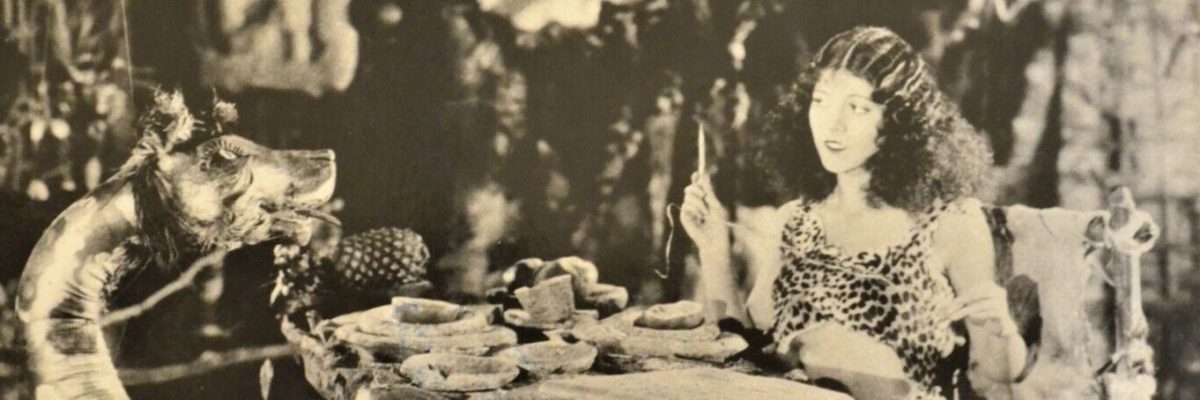
Somebody wrote it was my year of apogee. Huh? 1926. I am playing Eve, the mother of all men. This picture is called Fig Leaves. It’s a stupid and silly scenario. An endless bunch of jab you-in-the-Adam’s rib jokes about the modern woman, marriage, and how she forever needs to get some new clothes. For this my salary is one thousand five hundred dollars per week.
My lover, George O’Brien, plays my husband, Adam Smith. We’re husband and wife in a way we will never be in life. Adam Smith — says Howard, who is directing it — was a famous economic philosopher. Howard Hawks is a very handsome and charming man who wants to take me to bed. He’s told me so. He is making a point of humiliating George at every turn. Dear Howard seems to think men are either louts, bumpkins, or queers. And that women are scheming harpies or just like him, but in a dress. I’ll never make a film about a goddamn mother, makes my balls shrivel, he says. Give me women I can fuck. His eyes shine. Meaning me.
My mother, that sweet little thing, gives me a free rein in town. I think that she suffers a bit that she roughed me into this game. But $1500 a week is nothing to laugh at, I tell her. She looks up from her book, which tends to be the Bible: We can’t get used to living like this. She’s a scold. Well, I can, I say.
He always pretended that he wasn’t an office man. They all do. Mr. Hawks likes me in that snooty, condescending way of his. Never lets you forget he’s a college man. He likes especially that I could drink, that I was wild as a goat and stubborn too and wouldn’t back down. Lemme teach you a word, Howard. Insolent. That’s what this girl strives to be. Howard knew his job was to sex up the high-tone stuff but mock it good at the same time. But he was bored at the slapstick and the domestic scenes with George and I. I recall that George wanted a big violent scene where he takes the fancy man, Monsieur André de la Rue de Fifth Ave. down a peg, but Howard dug in, and just sent Adam Smith back home to cool his heels. “George, the scene belongs to Olive. We built it up to this point and she has to decide what’s right for her.” Well, this was the funniest thing George had ever heard. He actually whistled. Being the biggest star on Western Avenue at the time.
Jack Ford discovered my darling George and made him a star in a picture called The Iron Horse. And they were inseparable since then. George and Jack would joke about their “Boston Marriage”, but I could tell that Jack was in love with George, and it frightened me. Just a little. One time, Jack and George were quite drunk and I came back from splashing the dogs at the beach and George was lying down with no shirt and Jack was running his hands over his body. Barely touching him. Like the wind on a hot day. The Chest, the image-chiselers called him. When I asked him about it later, George said he was lights-out, but I don’t suppose that was true. But we are happy, George and I. In the garden of eden. “Plaisir d’amour ne dure qu’un moment; Chagrin d’amour dure toute la vie…” Ha-Ha. He adores that I speak French.
The year before, we had so much fun shooting 3 Bad Men. We lived like motherless men on location under those Grand Tetons. George and I didn’t have to carry the whole show so we could just be a couple, learn each other, go off book and trail. I was just about the only woman in the county. I was a queen there. I got to be a fair rider and shooter. Jack took rather sentimental sometimes and wished this could go on forever, the three of us, under the stars. The story is hokey as hell, if you ask me, three lovely saddle tramps who lay down their lives so that George and I can marry to further the race. Jack even rustled a baby for me to hold. It was strange holding that little babe as punctuation. My hands got trembly. When Mr. Schneiderman got the shot, I took the baby over to its mother. “How’d I do?” The mother gets a giggle, says she barely knows a thing about it herself. They make you do some odd things for the pictures. Well, the movie was a cross-country smash, rapids of money, with Jack complaining all the time that it was the worst picture he’d ever had the bad luck to make. Enough to make an alligator cry, that one.
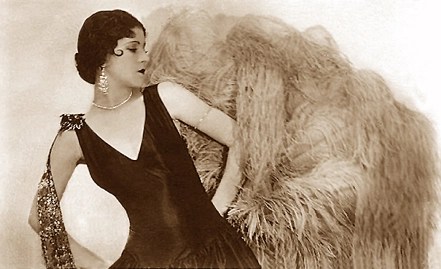
At the premiere, Fig Leaves turned out to be an Olive Borden picture through and through. I thought all my pictures were going to be like that. Standing in Adrian’s finest, I told Howard: “We gotta hate the sinner, but love the clothes. And love me in the clothes.” It was a helluva puritan picture, though. Exalt and condemn something at the same time. And nail it right on the line. Howard wagged his finger at me. “That’s this whole picture business, Olive, and don’t you ever forget it.” It’s class warfare with a little smear of the war of the sexes thrown in like a cherry on top. Well, I listened but didn’t quite hear. The whole fashion industry comes to be because George and I were thrown out of the Garden of Eden. That was the joke of the film.
Fox has brought us a German named Murnau to direct a film. The film is to be called Sunrise. The story is lovely. George and I are to be cast it in. Jack loves Murnau, calls him the greatest man to ever work in pictures. Howard thinks Murnau is a goddamned fairy. But Jack has more picture sense than Howard, I think. And so does Mister Fox. George and I test for Herr Murnau. He likes what he has seen in 3 Bad Men. Murnau is queer, but looks rather like Howard, but with more sensitive eyes. This is the role I was born to fucking play. George’s adoring dishmop of a uxoricide’s wife. But suddenly there is some bad news. Murnau won’t have the freundin. He wants Janet Gaynor. Or somebody does.
Mother has never seen me so mad. This violence shatters something in my love for all things. It shatters something in George, too. He doesn’t much want to see me anymore. Not much. He is off to Europe with Murnau. Murnau seems to want him lonely and vulnerable. For the character, of course. We break up, I suffer, he suffers, we get back together. We’re engaged, but then it’s broken. It’s some work digging for romance in the ashes.
Did mention that Fig Leaves was an awful hit? The stupid things that people will laugh at. I start to find it rather hard to laugh. Did you know, I am related to the Bordens of Fall River, Massachusetts? Distantly. The fashion show in the picture is in technical color, a marvel. It looks stunning. Adrian, outdoing himself, creates a whole lovely wardrobe for me, nothing but top rigs. I am being wooed, Eve is, with it. People still talk to me about that last dress, a-shimmering in the light. Howard put me in front of a mirror, and he said let every woman in the audience see herself in you. I tried. I really did. The only thing I like about the movie now is the odd scene where instead of confronting this woman who has nearly ruined my marriage to George, we dash back through the ages to the Garden of Eden and I am hitting this ridiculous rubber serpent Menzies dreamed up with a neolithic broom. I could feel this rush of mad energy through my whole body. That was the most fun I ever had in pictures, I realize now.
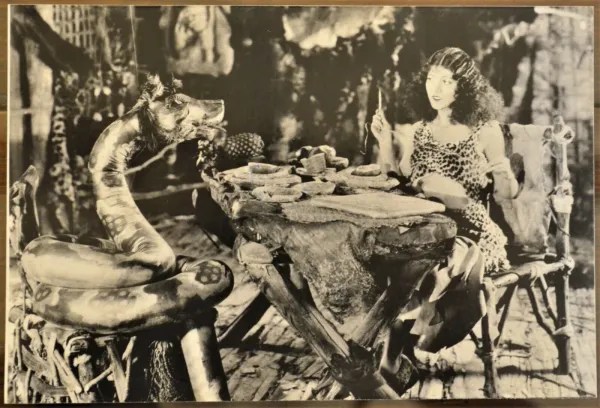
I puzzled over that moment. A month later, I had a dream where I was fighting a snake that sported Mister Fox’s hissing head. I was grinding my teeth so hard that I broke one, shattered the crown. I told George what the dream was and he smirked and said, it only means you’re sex crazed, Olive. Lucky for me, I said. I ran my tongue dancing over and over the living crack in the tooth. It felt damned exotic, like a foreign country.
The next day the telephone rings. They want me, the boys in the office. They are much worried about the coming of sound. They want me to take a salary cut. It’s not just me. Everybody. I don’t have to think about it. Nothing doing, I say. Jack Ford wants me for Hangman’s House, his next film. I know I’m holding all the aces. They can’t believe it. “You’re some girl, Olive.” They say they’ll have to take it up with Mister Fox.
No one ever calls back. I read in the Variety that Jack has cast June Collyer in the part. That is a shock. I hurl over in my Lincoln cabriolet to ask George what happened. “They wanted a Fox girl, Olive. You’re a headache that won’t powder sometimes.” I divine he means that I’m a headache for him. I flip a bottle that’s handy in the vicinity of his perfect, almost sculpted head. He holds my arms crossed over my skull. It ends with us in a kiss. It’s easy for him. Like everything else.
On the lot, Howard won’t quite look me in the eye. He smiles halfway like he’s forgotten something trivial, and looks away. Seems I am getting on as a pariah. I now realize that André, the fey seducer in Fig Leaves, is a portrait of Howard. I remember the actor ducking behind a chair. That got some real laughs.
Mother has a thin, weary smile. She knows it is up to me. I leave Fox. I freelance. I wander. I try the stage. I make a sound film. This town is filled with ghosts who can’t talk. I see them. But I can talk. My dialogues are fresh and natural, the papers say. I marry another man. It’s a mistake. This man has a wife, there is a spot of scandal, a trial for bigamy. I still see George on the sneak. We move to a smaller house, Mother and I. Santa Monica.
Something else that was odd happened after that. The market crashed, and William Fox got into a car wreck and lost control of his empire. In ‘31, Murnau died in another car accident. Remember how I was stunt-hit with a limousine in Fig Leaves? I remember Howard saying “you’re so fascinated by the damn money that you don’t see the car coming.” Howard was good at making things look dangerous, though they weren’t. Once when I was frantic with booze, I shrieked out that I cursed him, the German, and now he’s dead. Mother reminds me it’s just a coincidence. Maybe it’s true.
George goes and marries. Another actress. Not as pretty as me. That same year, George has a nasty fight with Jack about something he won’t ever, ever tell me about. Jack cuts him dead. And poor George spends the next ten years in exile like me, starving from one crumby western to another. But at least he’s working. I never go to see his films, because it is too sad. It’s a shame because I like westerns.
I have read Adam Smith now. His Theory of Moral Sentiments. A corker, isn’t it? Comes in handy these days. I work on Skid Row tending to people who weren’t as lucky as me. Mission work. Mother and I went to see The Big Sleep. It’s a Bogart picture that Howard has directed.
A month later I am dead. So, girls, if you want my advice, never play Eve, the mother of all men. Nobody needs that kind of luck. But remember this: I am shimmering in that dress. In color, for once, & never again.
Notes:
Olive Borden (1906-1947) was a silent film star known as “The Joy Girl” and one of the
“WAMPAS Baby Stars.” Miss Borden had a very unique, almost post-modern air about
her.
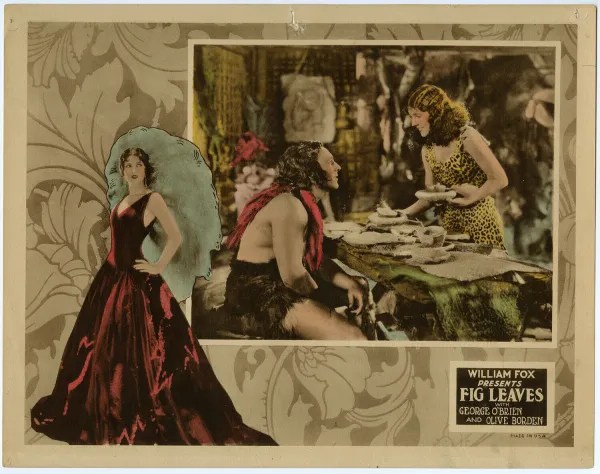
Fig Leaves (1926) was an early Howard Hawks film using the biblical Garden of Eden story as
allegory for modern marriage. Notable for its early Technicolor fashion show sequence.
Carloss Chamberlin is a Delaware corporation, flying a Liberian flag, with assets in Switzerland and The Cayman Islands. See more at nodeunkowed.com.

 magpiesmagazine.com