

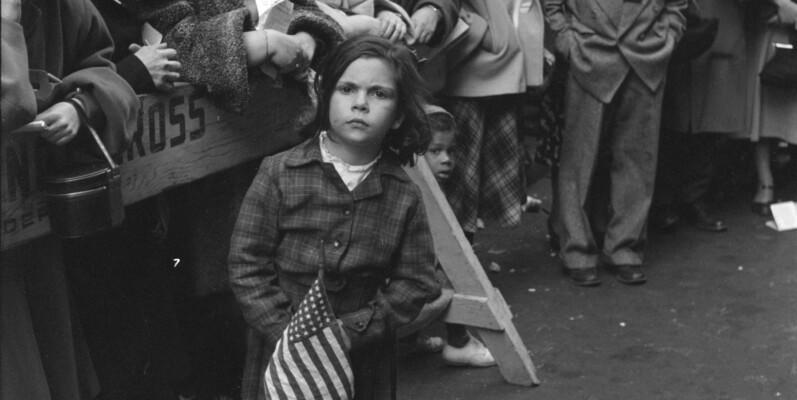
In America, we’ve woven such a tangle of stories to explain ourselves to ourselves and the rest of the world that it’s almost overwhelming. It seems important, though, to take a step back from time to time and to try to unravel them to arrive at some truth. Some ever-shifting, never-reachable truth. These are our American Mythologies, stories or adages we turn to to justify our actions or stake some claim or sell some idea of ourselves, or just to maintain the status quo. One such mantra is “you get what you get and you don’t get upset.”
It all starts in pre-school, when they’re handing out crayons or cookies. The fundamental idea, of course, is to be content with what you’re given, and to shut up and stop whining. At its most basic, it’s toddler crowd control. As life goes on, it becomes class control. It becomes a way to tell the downtrodden to stay down there and let people tread on them, and to be grateful for the chance.
At its most basic, I like the idea because I admire the ability to be capable of contentment, which is a difficult state to achieve. If everything were fair, we should all be grateful to get anything at all. We don’t need many things. We should understand the idea of enough. And I would like to live in a world where these qualities are rewarded. But everything is not fair, it never has been, and it feels like it never will be.
And the truth is that we don’t live in a world where these qualities are rewarded, not in this country. We can send an army of five-year-olds home chanting the catchy little rhyme, but if they absorb the lesson too completely, how will they ever become successful modern Americans? We’re not supposed to be happy with what we have! We’re supposed to want more! Too much is never enough! We’re supposed to want whatever other people have. It’s one of our older myths, as Americans, that if we work hard and strive for more, for better, we can achieve success and riches. And, importantly, we can have more and feel better than other people who just don’t deserve it, for one reason or another.
How would advertising work if people were content with what they had and who they are? It wouldn’t! It wouldn’t work, and billions of advertising dollars would be wasted trying to manipulate people based on desires and insecurities they didn’t really feel. In America, we award the loud people, the talkers, the salesmen, the people who want what they get and want what everyone around them gets, too. We don’t admire people who settle. We’re scornful of people who don’t strive to better themselves, even if they face insurmountable odds such as we can’t even dream of.
Because this advice to settle for your lot isn’t meant for everyone in the country. It’s not meant for the entitled. It’s not meant for the rich white men. It’s meant for the people who are expected to be grateful for minimum wage, no-future jobs. People who don’t have centuries of wealth and scores of rich relatives to bail them out. The people who are accused of not wanting to work anymore (another enduring American myth — they have been saying this for as long as we’ve been a country). Why can’t they accept their lot? Why can’t they do the shit jobs nobody else wants to do? Why aren’t they grateful? You get what you get, and you don’t get upset.
I wonder if they teach this clever little rhyme at the private schools, at the schools where the politicians’ children go to learn the value of their privilege as their fathers brazenly strip us of our fundamental rights and deprive us of resources to deal with our basic human needs. Deprive us of our health, our education, our environment, our justice, our hope for the future, or our children’s future.
And don’t get upset. We don’t like people who get upset. In the long history of our country, we’re scared of those deep, troubling fault lines, and we hate when people get upset about them. We don’t like people who point out the flaws in our mythologies, who call out injustice when they see it. But we are getting upset. Protests are growing and gathering strength. It feels too little, too slow. It all feels pointless sometimes, ineffective in the face of the tidal wave of greed and evil washing over the nation. But we have to believe it will grow, our voices will be heard, our unrest will bring about change. For we are the upsetters. Remember that “upset” doesn’t just mean unhappy or discontented, it also means to knock something over, to turn things upside down, and we have to believe that we have that power.
As long as we’re telling stories about the world we inhabit, I’d like to tell this one: We get what we get, and we change it to make exactly what we need. And if we don’t get the right parts to make what we need, we share with our neighbor. We share. We trade them the parts they need for the parts we need, and everybody creates exactly what they want. We’re all in this together. Obviously, if everyone makes a picture with the one crayon they’re given, which might not even be a color they like, it won’t be as satisfying as if everybody shares all the colors to make their pictures, which are, after all, all connected. Everybody makes something beautiful. And still, nobody gets upset.
Categories: american mythologies, featured

 magpiesmagazine.com