

By John Clayton
In Depression-era Appalachia, a tiny, feisty woman takes a stand for the vision of nature she believes in.
In autumn of 1935, on a lonely mountain outside of Drehersville, Pennsylvania, Irma Broun watched the car pull up to her gate. When the car doors opened, beagles piled out and ran off into the woods. Then a man stepped out, carrying a rifle. The way some people tell the story, he had four companions with him. They were all drunk.
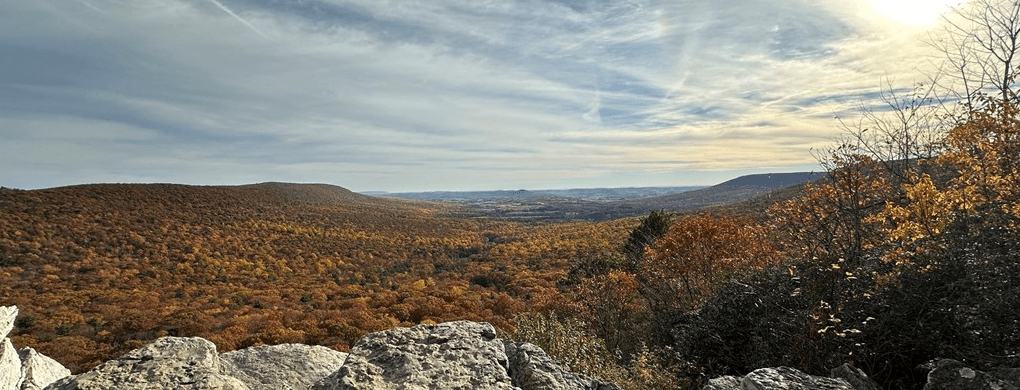
It was the depth of the Depression. Drehersville lay about 75 miles northwest of Philadelphia, along Kittatinny Ridge, the southeastern edge of the Appalachian Mountains. There wasn’t much going on in the town, which lay downstream from a coal mining area. Its river ran black. The land atop the mountain, which had been clearcut decades previously, was slow to reforest due to chestnut blight. Rumor had it that anyone could buy the whole mountain for back taxes.
Irma was a newcomer to town, raised on Cape Cod in Massachusetts. She was five feet tall and weighed barely 100 pounds. She explained to the man in the car that the land was now a bird sanctuary that didn’t allow hunting.
“Who’s going to stop me?” he said.
The man may have heard that rich lady from New York named Rosalie Edge had leased the land. He must have seen the “No Hunting” signs that Irma and her husband Maurice, hired by Edge, had posted all along the property boundary.
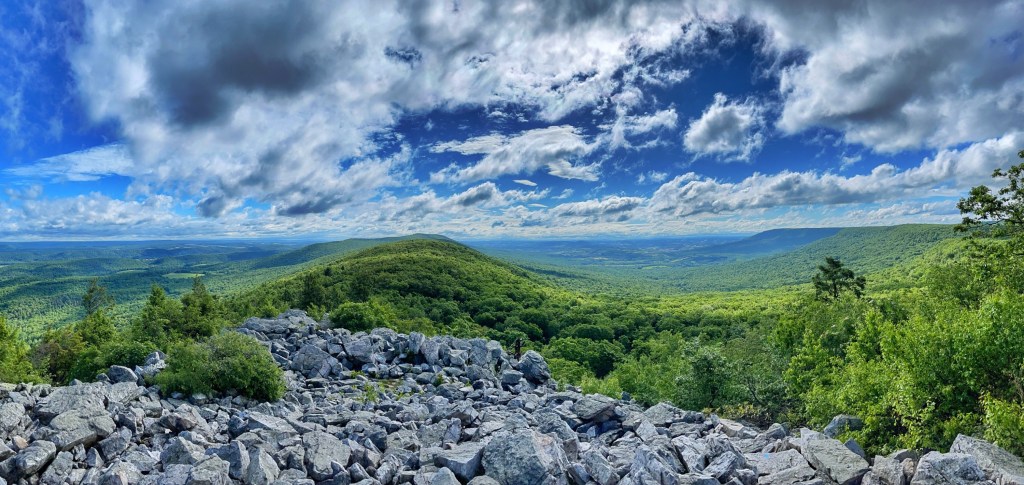
This piece of land contains a spur in the Kittatinny Ridge that looms 1,000 feet above the valley below. Winds, deflected upward by the ridge, buoy broad-winged hawks and other raptors on their autumn southern migration. Hawks rise slowly up, then pass just a few feet above the ground at the edge of the mountain. They’re in full, close view. A hunter can blast them out of the sky.
There isn’t much point to such shooting. You don’t eat or make money off a dead hawk. Scientists hadn’t yet learned about these migration routes—only locals were familiar with the unusual bird behavior at the ridge—so nobody could make money guiding out-of-towners. All they could do was watch the hawks. And, since hawks were perceived as vermin, they could get a thrill out of killing them.
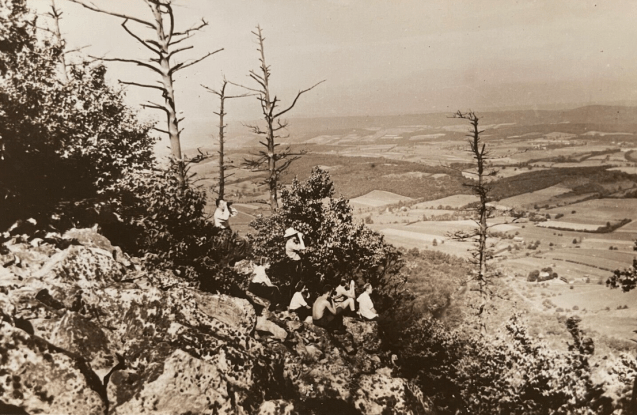
Today the sanctuary, called Hawk Mountain, is famous among bird lovers. Rosalie Edge gets, and deserves, a lot of credit for founding it. She and her allies grasped that hawks killed not only quail and domestic chickens, but also far more rodents and other undesirable creatures. Hawks were part of a balance of nature. In the 1930s, when government officials refused to enforce laws, and large bird-protection organizations dithered, Edge took action. She used an innovative property-rights approach. She leased and eventually bought the land. In America, she knew, a landowner has the right to do whatever she wants with her land—including keeping hunters off it. To make sure, and to invite non-hunters to see the hawks, she hired the Brouns to live there.
Maurice Broun also gets and deserves credit for the success of Hawk Mountain. He’d grown up in poverty, a Romanian Jewish orphan, but thanks to his dedication and skill as an ornithologist, became one of the more respected bird scientists of the century. What kind of dedication? As newlyweds the previous year, Maurice had signed the couple up for this job in a place where they knew nobody and would be resented by nearly all. That first year he took no salary, only living expenses. Their cottage lacked electricity and running water, and wouldn’t acquire either one for nearly two decades.
Notes:
- Irma Broun’s version of this story is at the Hawk Mountain website and in a local newspaper story on her death. Maurice Broun told his version—in which the hunters were five and drunk—in Hawks Aloft: The Story of Hawk Mountain (Stackpole Books, 2000). Both versions mention that the dogs were beagles.
- A great biography of Rosalie Edge is Dyana Z. Furmansky, Rosalie Edge, Hawk of Mercy: The Activist Who Saved Nature from the Conservationists (University of Georgia Press, 2009).
John Clayton (johnclaytonbooks.com) is the author of books including Natural Rivals, Wonderlandscape, and The Cowboy Girl. His essays about nature appear weekly in Natural Stories.

 magpiesmagazine.com