

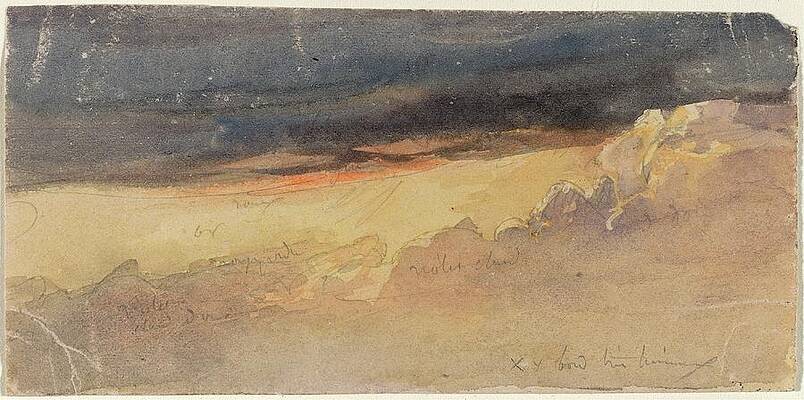
“I’ll look to like, if looking liking move”
Alyosha got up, went to him and softly kissed him on the lips.
“That’s plagiarism,” cried Ivan, highly delighted.
These are two things that are in my head a lot, and have been for years. Fragments I have shored against my ruin. They might not seem connected, but somehow, they are for me. The first, of course, is from Romeo and Juliet. Thirteen-year-old Juliet is going to be married off to her cousin Tybalt, and she’s being instructed to look upon him with a favorable eye. This ended well for everybody. Aside from the tragic events that unfold, something about this line has always appealed to me. The language is beautiful, for one. But I also just like the idea of looking with the aim of liking, approaching something new with a generous spirit. I mean, not your cousin as a potential husband when you’re 13 years old, but, in an entirely different context, anything somebody wants to share with you.
I like when people share things with each other, when they recommend things, when they love something so much they want other people to love it, too. Because sharing something makes it even better — that connection of mutual appreciation is a powerful spark. One of my favorite things that someone can say is, “I think you would love this.” Whether it’s music, art, food, or even a friend, when someone tells you this it means they understand the things you like, and the things you like make you. We are defined by the things we love.
And when someone wants to share something, whatever it may be, I love when a person enters into the situation enthusiastically: when a person looks to like. In contrast, one of the saddest things to me is when a person wants to share something and it’s met with coldness, disparagement, or scorn. It’s easiest to respond this way. Not liking something can be a way of establishing that you’re more discerning, more knowledgeable, or more cool. I understand how easy it is to respond this way, because I’m a person of strong opinions and I like other people who are as well. I value honesty and enjoy frank discussions of differing opinions. It’s just that if someone cares for something and shares that with someone else, it feels like a precious fragile thing. At least start out with the idea of protecting and nourishing that thing. At least before you see or taste or listen do so thinking you will love it, too.
Ivan Karamazov is not a person who looks to like. He is a bitter, depressed, and nihilistic individual. The “poem” he shares with his brother is a long, difficult, and depressing story that questions Alyosha’s faith. Ivan is cruel in telling it, and he knows he is, and Alyosha interrupts him from time to time to protest and question. ‘”And you, together with him? You too!” despairingly exclaimed Alyosha, while Ivan burst into a still louder fit of laughter.’ This is a strange scene, and I’m not entirely sure why it’s so powerful to me. Why, to me, it’s one of the best-written passages I’ve ever read. Something about the way Ivan’s bitter coldness, which serves to protect him from his depression, something about the way it is melted by Alyosha’s warmth is so beautiful to me.
Because in the end, I think Alyosha recognizes that Ivan is desperately miserable, and he understands why. He understands that the cruelty and seemingly cold laughter arise from that. He understands that Ivan is nervous about telling this story and about how it will be received. And the fact that Alyosha, who has been gratifyingly upset and offended by the story, suddenly sees through all of that and “plagiarizes” the story by kissing Ivan on the lips is so beautiful. And the fact that Ivan is delighted, against his will … well, that kills me.
I’ve been thinking about the word “delighted.” Things are very terrible right now, in the country where I live and all over the world. Things fall apart, the center cannot hold. I know that. And yet I’ve been thinking that I want to use the word “delighted” more often. I want to be delighted more often, and I want to enter situations hoping to be delighted.
As a balm to our worries, we’ve been re-watching The Makanai, directed by Hirokazu Kore-eda (of Shoplifters fame. See it!). The character of Kiyo in The Makanai is a delighted person. Food is her language, and she expresses love and worry and joy by the care with which she prepares it. She is delighted when people are delighted by her food. She is delighted by almost everything. By the shops of the people who prepare her ingredients, by the ingredients themselves, by the way that the ingredients are prepared, by her best friend’s accomplishments, by grocery-store lottery tickets, by her memories, by her hopes, by the snow, by the shoveling of the snow. She has a ringing sort of warmth that I admire, and I’m grateful to this fictional character and everything that went into creating her. She’s just a character in a tv show, but that’s not nothing. Ivan would laugh at her, but I think Alyosha would love her. And that’s all I have to say about that.
So as we trudge forward in the sludge of this strange, sad, discombobulating winter, let’s look to be delighted and share what delights us. Let us look to like.
Categories: featured

 magpiesmagazine.com