

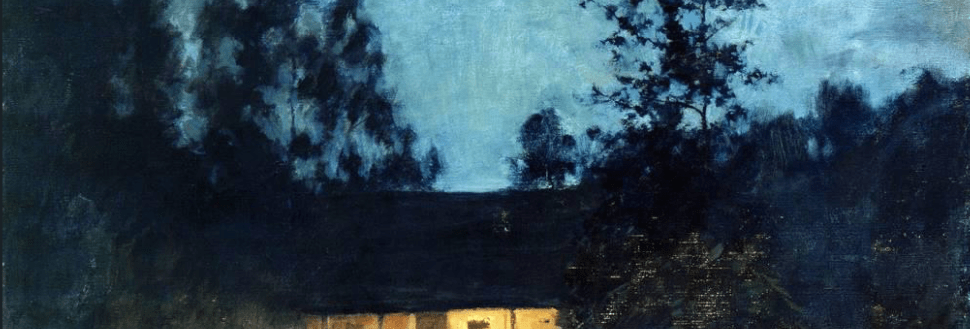
A few years ago my son asked me how to spell “hearing.” Because he and I never give each other a straight answer, I told him h-e-r-e-ing. The more I thought about it the more I liked the word, and I thought about it a lot. I wake up in the middle of the night sometimes and feel perplexed. I think about all of the places people live, all over the world. I imagine you could cut away the sides or tops of houses and apartment buildings and tenements and you could see the people inside, living their lives. I hope they are being kind to each other and their children and their dogs, but sometimes I middle-of-the-night fear that many are not. I am bewildered by the thought that I could be anywhere, but I am here, I could have been born anywhere, grown up anywhere, had any kind of life. But I am me, and I am here.
On some days, at the change in seasons, or when you come back from time away, you can walk into your own house and it feels strange to you. You can pass through your home and imagine that all of it is new to you. You can imagine the you from years ago, walking through the house, never knowing this life would be your life. Some strange days — during a snowstorm or a heat wave, or when you’re recovering from illness or injury — you might find yourself spending long days inside, the time passes quickly and not at all, and you can take that time to think about how it feels to be here, wherever here is for you.
I’ve been told that I give the pandemic too much blame or credit for how we’ve all changed, but I also think we sometimes underestimate how strange those years were. We were all stuck in the same place, our own space, our here. We were relentlessly here, relentlessly hereing. I think (and write) so much about time passing, about marking it and being aware of it. It’s mildly discombobulating to think about space and place as well. And small wonder that after years of hereing during the pandemic, we found ourselves imagining other places and visiting them in our dreams. All this hereing became a tether for the strangest dreams: We learned to travel by imagination, or we couldn’t stop ourselves from doing so. After the long littleness of being stuck in the same few rooms for over a year, you can float through your own life as in a dream, allowing everything to feel new and unexpected to you.
One of the great pleasures I’ve had in editing Tidings of Magpies is sharing artwork that people made during the pandemic. I see patterns and connections in the way artists reacted to long days of hereing in the strange nothingness, in terms of both method and manner. Many adapted to the shifting passage of time, the long-stretching hours, by adopting techniques that took a while to execute — cyanotypes or other alternate process photography, embroidery, papier mache, quilting. And most also looked at their world, their here, with new eyes. As the here of the everyday became their whole world, they became explorers of it. Perhaps this is how hereing should actually be defined.
Artists began to notice beauty in their home or neighborhood that might have escaped them when given a bigger scope of movement. When you walk the same path every day, you notice the small changes. You’re alive to the vagaries of the season, the changing waves of light and warmth, the particular peculiar smell and color of growth and decay.
The pandemic has abated, for now, and a new normal has replaced the new normal that replaced the new normal, that replaced the new normal, in a world where nothing is ever really normal. But we can still take the time to notice the small changes, wherever our here may be, however often it shifts from day to day.
All of this hereing conjured the phrase “hereness of dusk,” which is never far from my mind. It is, of course, from Ralph Ellison’s Invisible Man, and is from one of the most beautiful passages of literature I have ever read. The narrator knows he is in trouble, that he’s about to be expelled from college, and he imagines himself in another place and another time. But he’s almost painfully (though beautifully) aware of the space and time he is moving through. In these dreamlike moments, the here becomes the now, the space becomes the time. He is occupying, moving through, taking up space in the dusk. He is hereing.
I leave it for you, here:
“As though even here in the filtering dusk, here beneath the deep indigo sky, here, alive with looping swifts and darting moths, here in the hereness of the night not yet lighted by the moon that looms blood-red behind the chapel like a fallen sun, its radiance shedding not upon the here-dusk of twittering bats, nor on the there-night of cricket and whippoorwill, but focused short-rayed upon our place of convergence;
…And my mind rushing for relief away from the spring dusk and flower scents, away from the time-scene of the crucifixion to the time-mood of the birth; from spring-dusk and vespers to the high, clear, lucid moon of winter and snow glinting upon the dwarfed pines where instead of the bells, the organ and the trombone choir speak carols to the distances drifted with snow,… But in the hereness of dusk I am moving toward the doomlike bells through the flowered air, beneath the rising moon.”
As ever, I am privileged to share such beautiful words and images in this month’s issue. As ever, submit, support, subscribe. And have a look at Tidings of Magpies on Instagram.
Categories: featured

 magpiesmagazine.com