

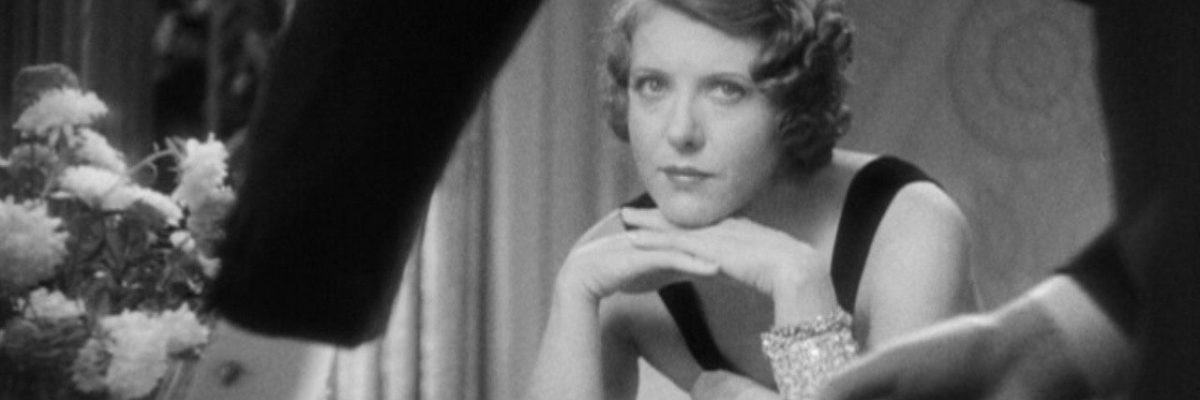
Female, starring Ruth Chatterton, is a pre-code movie. This means that it’s sassy and salacious and upturns accepted values and morals. This, in fact, means that it was made before the enforcement of the “Hays Code,” a set of strict rules imposed upon the film industry in the early 1930s by Will H. Hays and a group of (mostly Catholic) men. These rules determined what you could show in a film and what you could say in a film, of course, but I find it fascinating that they also controlled the plot of a film. You could get away with showing a “bad girl” or a “fallen woman” if she was punished by the plot — if her immoral actions resulted in death or redemption (and marriage).
Pre-code films are full of messy humanity. As in life, evil people are often rewarded for their bad behavior. Women are allowed to be confused, angry, hurt: They’re allowed to have needs and desires. Pre-code films show life more as it really is, in contrast to post-code Hollywood movies, which set out to shape the world as a small group of men believed it should be. I love to watch post-code movies and see the way that humanity, in all of its imbalance, seeps through the cracks in the plot, to watch for moments when it’s obvious that the outcome of the film has nothing to do with the characters in the film, with their desires or fears. It’s fascinating to see the sly and subtle ways writers and filmmakers can subvert the more overt message. (Watch Some Like it Hot, and remember that “the code” discouraged the depiction of gay characters.)
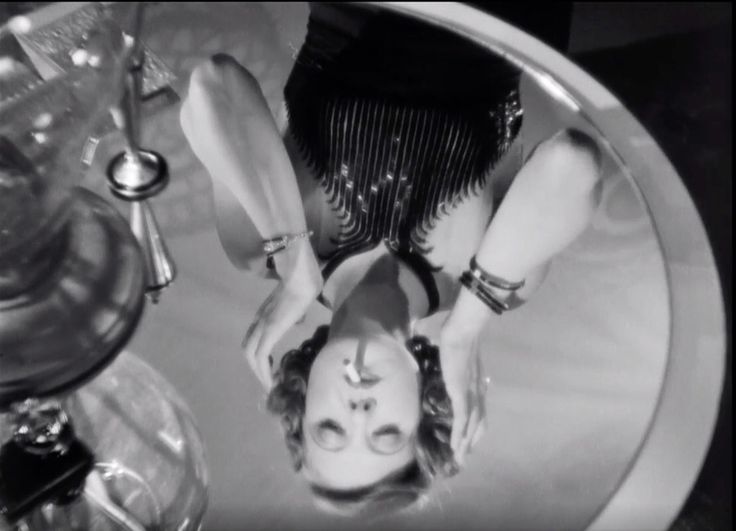
Female (1933) is something of a cusp film — the code had been introduced, but was not yet strictly enforced (as it will be a year later in 1934). It tells the story of Alison Drake, the boss of a large auto plant, who long ago decided to “travel the same open road that men travel.” An old college friend who is now married with three kids comes to visit. She tells Alison that she doesn’t know what she’s missing with no husband and no children. “I have two boys and a girl,” Harriet announces proudly. “Two girls and a boy?” a distracted Alison replies, “I’m sorry.” She tells her friend that she plans to treat men exactly as they’ve treated women all of these years. And her friend replies, tellingly, “You don’t have much respect for men, do you?” Alison declares that a husband would be of less use to her than a canary. And so she does treat men the way women have always been treated — she has brief affairs with any young thing that catches her eye at the office, and she forms no emotional attachment and expects that they’ll do the same. If they fall in love she transfers them to the Montreal office.
In the end, she’s tamed by Jim Thorne, a strong “dominant male,” who looks alarmingly like Ronald Reagan. After one night of lovemaking, he shows up at Alison’s office, marriage license in hand, to inform her she’ll soon be Mrs. Thorne. She, quite reasonably, says “Hold on a minute.” He’s furious and tells her she needs to be married and have children, the “things a woman is born for.” He storms off, some other plot stuff happens, and eventually, she finds him and tells him she wants to marry him and have nine kids.
And so, in a sense, it could be a post-code movie, despite all of the innuendo and despite her shocking behavior throughout, because she’s redeemed by marriage and because she decides to be soft and feminine. But the film struggles against this tidy ending. The film raises questions, but it doesn’t make simple judgments about the characters or their actions. For instance, throughout the film, it becomes obvious that Alison Drake’s servants like her very much. They talk to her like an equal, and they take an interest in her life and she in theirs — the chauffeur goes so far as to fight for her honor in response to a slur on her character. These conversations give her extra dimensions that make her seem real and human and turn her into a person who cannot be penned in by a simplistic Hollywood ending. She’s told to be softer and more feminine to snag her man, and she tries this approach, but with an unmistakable smile on her face the whole time.
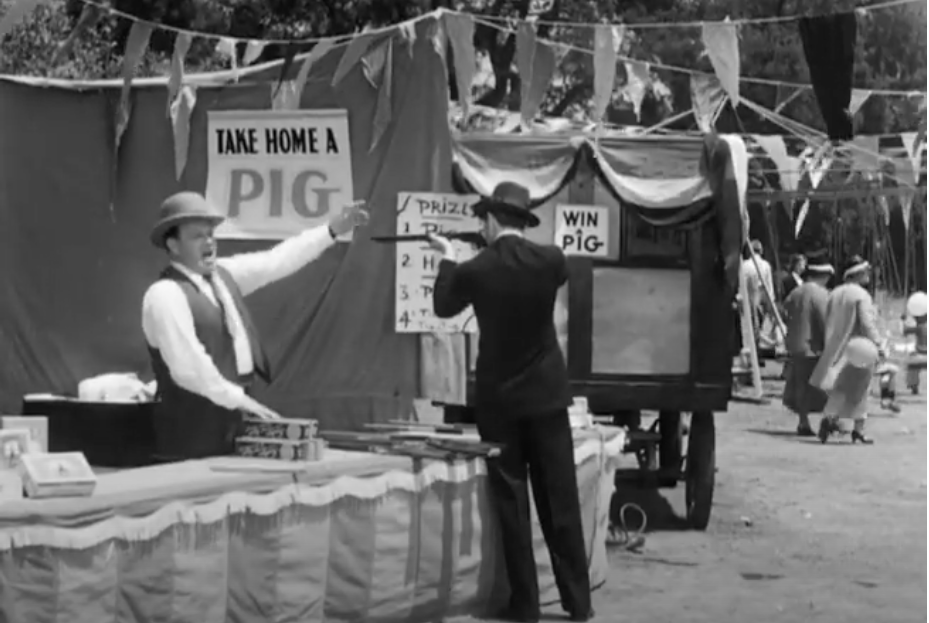
The film is very funny throughout, and when Alison declares her decision to leave her company to her future husband and to have at least nine children, it comes across almost as another joke. And the humor is so clever, subtle, and satirical that it drives huge cracks through the plot. When she tracks Jim Thorne down to tell him she’ll marry him, she finds him at a shooting range. Behind him is a huge sign that says, “Take home a pig.” (He does, and we feel that she does, too, a much larger pig.) He wins the pig, and as they drive off discussing their plans of marriage, parenthood, and Alison’s submission, the pig squeals loudly in the back seat, drowning them out.

 magpiesmagazine.com
Fascinating story/post! I’ve got to check out that movie…
LikeLike