

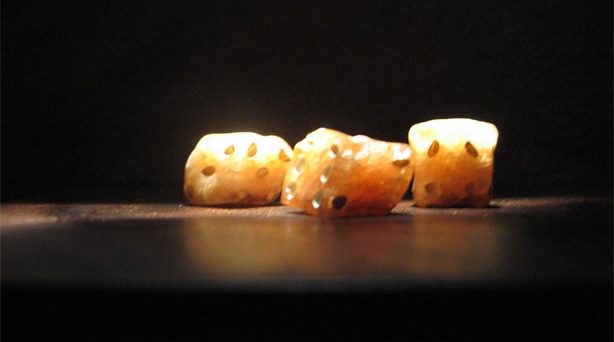
By Ricky Jay with Rosamond Wolff Purcell from the book Dice: Deception, Fate, and Rotten Luck as shared in The Museum of Jurassic Technology
When I first discovered the Museum of Jurassic Technology I found it strange and mysterious and beautiful. The more I read of it and about it, the more beautifully baffling it became. The museum seems to capture the absolute idiot glee of all creativity ever. There’s a hint of madness in it all, but just the madness of ever caring about anything enough to make it, or to keep it. It’s all so honest and human that it achieves some kind of eccentric perfection. We speak a lot, these days, about how it’s impossible to know what’s true or real, with technology allowing falsities to spread apace. But these lines have always been blurred — between truth and fiction, history and stories, art and life.
This story of impermanence and decay was shared on the Museum of Jurassic Technology’s website.
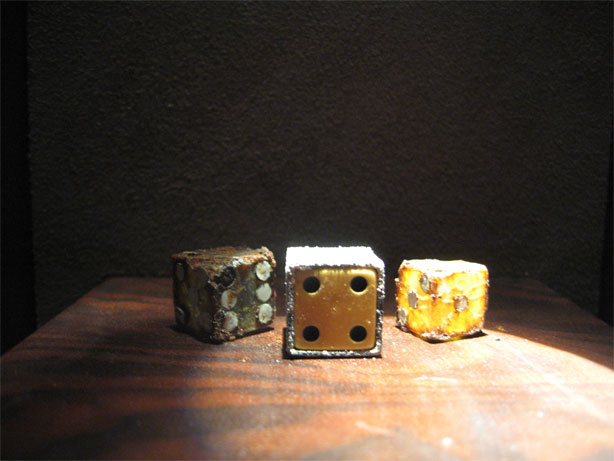
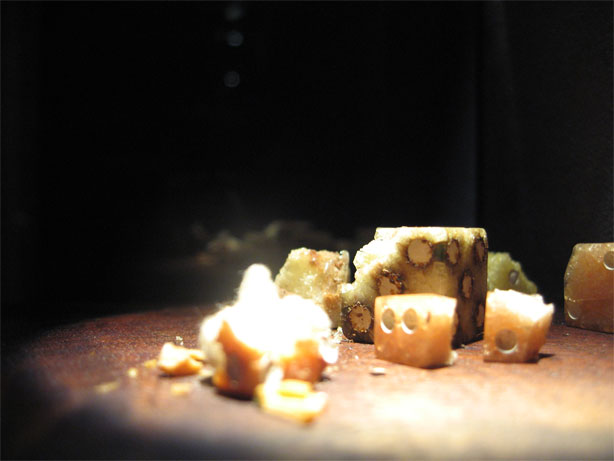
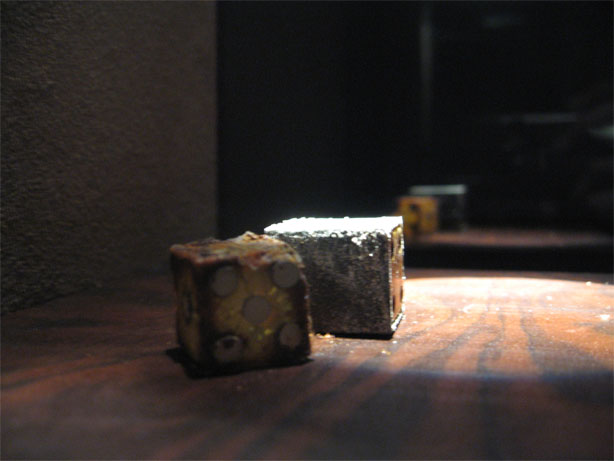
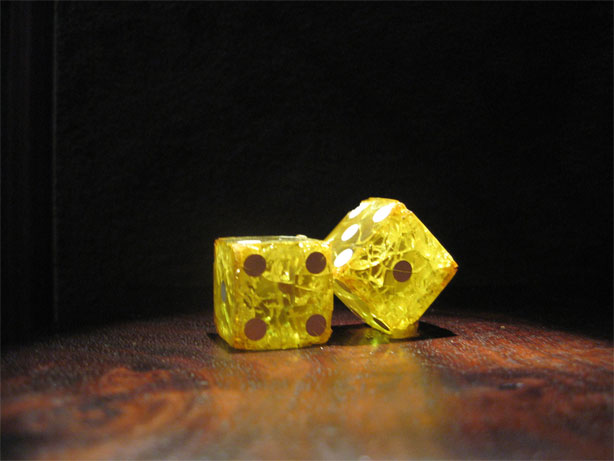
WHEN A DIE DIES
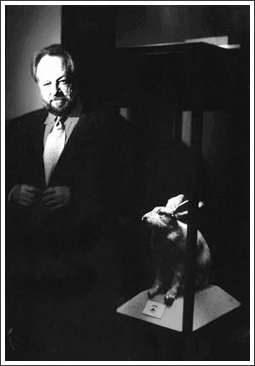
In the attempt to acquire empirical knowledge, I have accumulated thousands of dice over a period of decades. They are of myriad size, shape, and color and daunting variety: birdseye, bullseye, doughnut, barbudi, poker, baseball, golf, crown and anchor, bell and hammer, drugstore, razor, brushed, feathered, weight, hits, missouts, tops, shapes, polyhedrons, teetotums, and rough-cut unnumbered cubes. They come from diverse sources: generous friends, dealers in collectibles, distraught gamblers ready to embrace a new calling. They are fabricated from different materials, but the vast majority are made of celluloid.
In 1868 John Wesley Hyatt formed a substance from a homogeneous colloidal dispersion of nitric acid, sulphuric acid, cotton fibers, and camphor. It was a substance of great tensile strength capable of resisting the effects of water, oils, and even diluted acids. Hyatt’s brother called it celluloid, and it became the first commercially successful synthetic plastic. It was cost-effective to manufacture and could be produced in a variety of attractive colors. Heated until soft and molded into shapes, it became a substitute for products fashioned out of ivory, tortoiseshell, and horn. Perhaps it is best known for its use in motion-picture film, where its volatility has resulted in the destruction of a vast percentage of early footage. But it was also used to fashion removable collars, collar stays, knife handles, guitar picks, piano keys, billiard balls, and, of course, dice.
Heated until soft and molded into shapes, it became a substitute for products fashioned out of ivory, tortoiseshell, and horn. Perhaps it is best known for its use in motion-picture film, where its volatility has resulted in the destruction of a vast percentage of early footage.
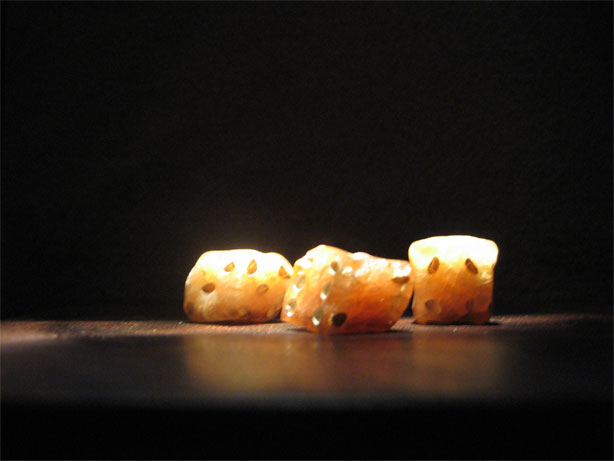
These cellulose nitrate dice, the industry standard until the middle of the twentieth century (when they were replaced with less flammable cellulose acetate), typically remain stable for decades. Then, in a flash, they can dramatically decompose. The crystallization begins on the corners and then spreads to the edges. Nitric acid is released in a process called outgassing. The dice cleave, crumble, and then implode. Unpaired electrons or free radicals can abet the deterioration. The light and smog of Los Angeles, where my dice have resided for many years, are likely accomplices.
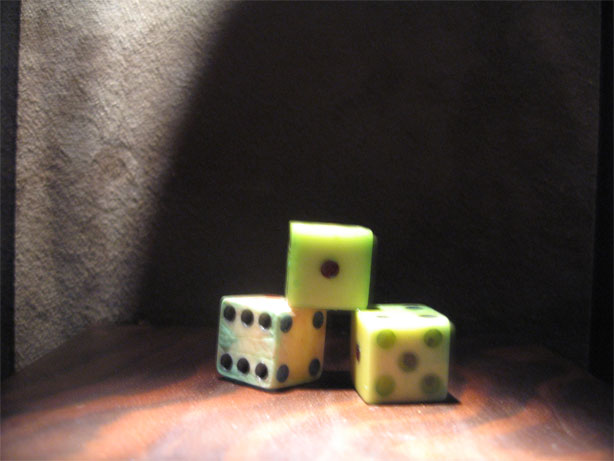
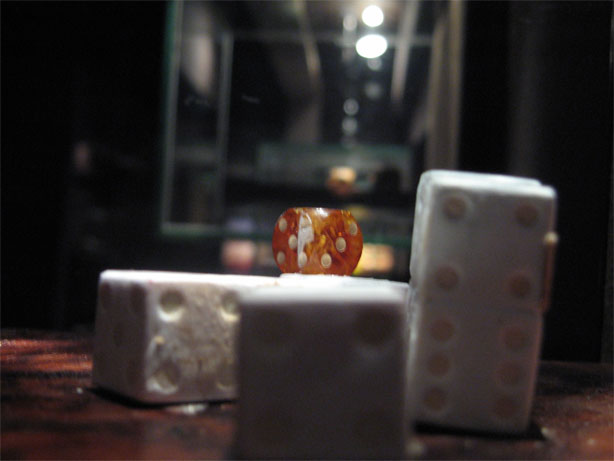
To record the death of my dice I called Rosamond Purcell, doyenne of decaying objects, photographer of taxidermological specimens, memoirist of Wunderkammern. Her studio in Cambridge is bedizened with objets trouvés in various stages of decomposition: Rescued sheets of discarded metal and weather-beaten books that are transformed — by design, by vision, by respect — into objects of great beauty. She has come to know my dice, she has scrutinized them. She has analyzed every nuance of shape and color. She has at once halted their disintegration and catalyzed their resurrection. The dice have never looked better.
She has analyzed every nuance of shape and color. She has at once halted their disintegration and catalyzed their resurrection. The dice have never looked better.
Categories: featured

 magpiesmagazine.com